





Yasushi Ogawa “Medicine” #1
Composition/Writing: Takuro Watanabe
Editing/Photography: Masaaki Mita
Yasushi Ogawa “Medicine” #1
Composition/Writing: Takuro Watanabe
Editing/Photography: Masaaki Mita
In the HIKING AS LIBERAL ARTS series, hosted by Hideki Toyoshima, Yamatomichi HLC (Hike Life Community) director, we consider hiking as a field of study that liberates individuals from preconceived notions and norms, empowering them to act based on their own values. This series delves into physical aspects of hiking ー seeing, hearing, eating, breathing ー for clues to exploring the value of and potential that extends beyond hiking.
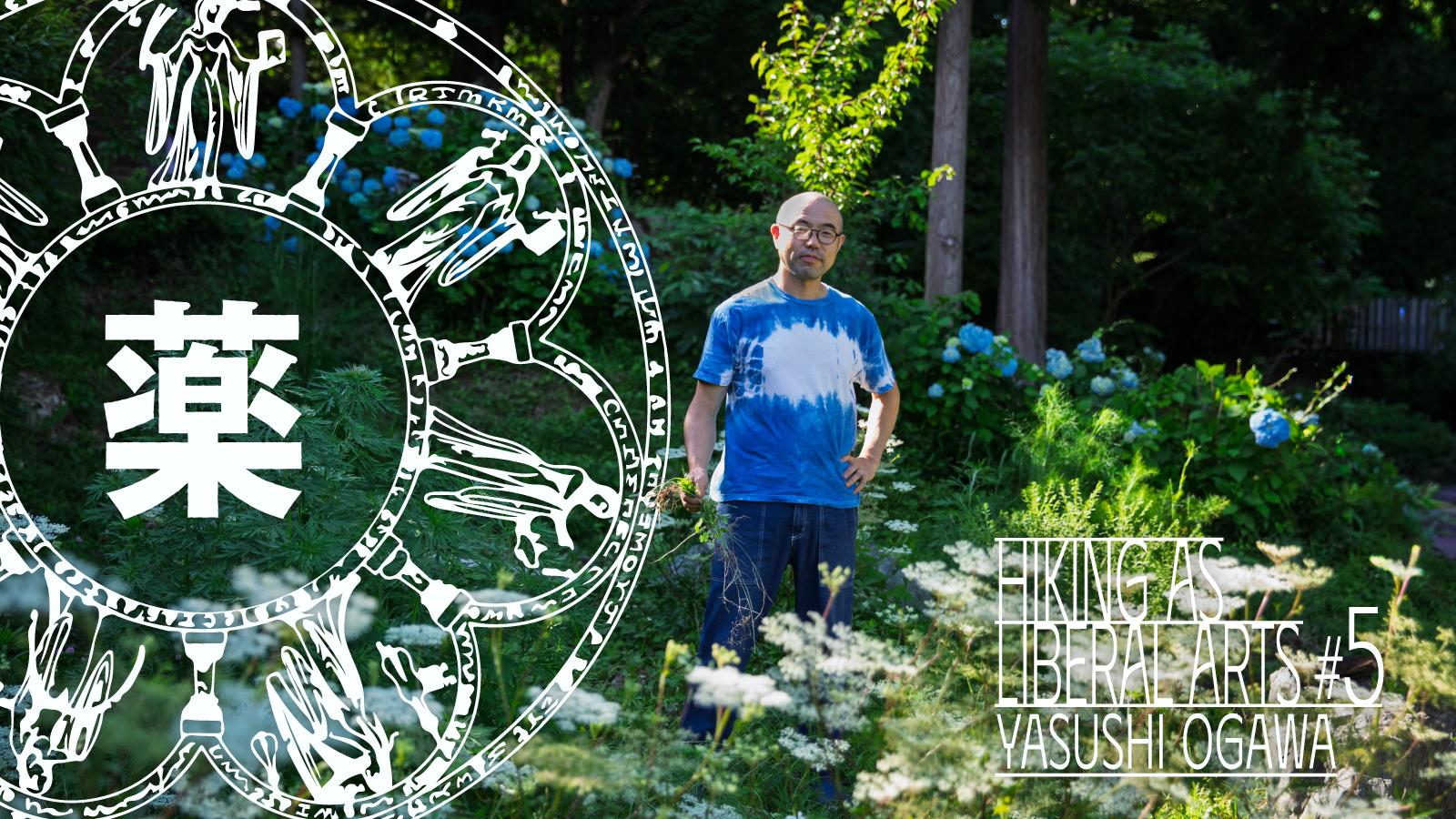
Our fifth guest of the series is Yasushi Ogawa, the first non-Tibetan to become an amchi ー a practitioner of traditional Tibetan medicine ー and the founder of Mori no Kusuri Juku (The Forest Medicine School) in Ueda city, Nagano prefecture, in central Japan. He gives lectures and leads workshops on medicinal knowledge and sells herbal medicines and teas.
Our conversation with Yasushi delves into the concept of “medicine”, its origins in nature and the everyday lives of people, and the ways in which it has become separated from our lives ー and the possible path to reclaiming it for ourselves.
Interview Notes: Hideki Toyoshima
The Hiking as Liberal Arts series isn’t so much about delving into the life story of guests as it is about learning directly from their area of expertise. My hope is that these conversations will have relevance to what we experience while hiking.
For the series, we’ve already spoken with curator Roger McDonald about “seeing”, work-style researcher Yoshinori Nishimura about “listening”, cook Hiroko Mihara about “eating” and yoga practitioner DONI about “breathing”. These are fundamental ways in which we engage with ourselves. This time, in keeping with the theme of the art of living, we explore Yasushi Ogawa’s views on “medicine”.
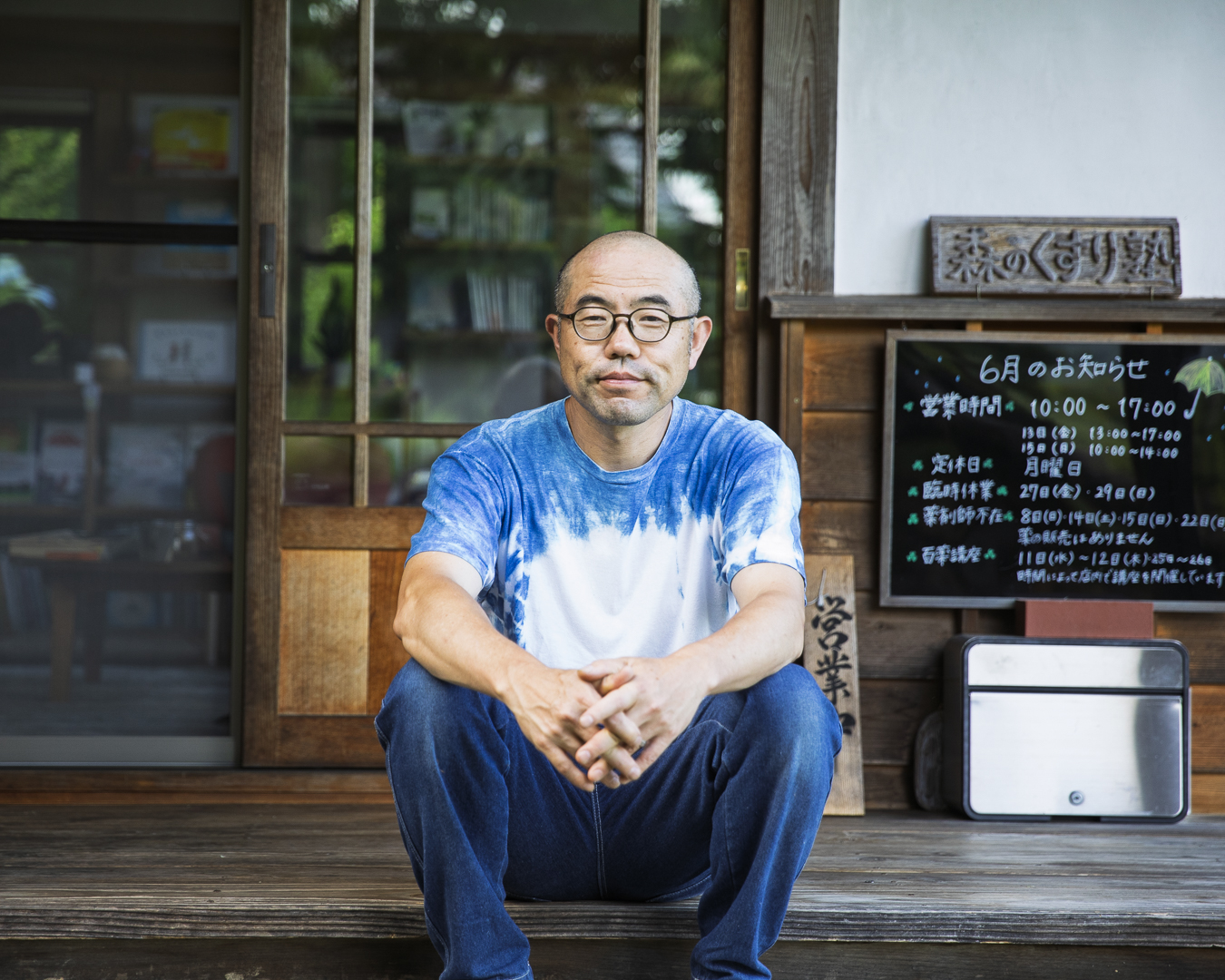
Yasushi Ogawa Born in Toyama Prefecture in 1970. Pharmacist, traditional Tibetan doctor (amchi) and researcher in pharmaceutical and medical education. Founder of “Mori no Kusuri Juku” (The Forest Medicine School). After working with volunteer organizations, herbal medicine companies, pharmacies and farms, he began studying the Tibetan language and medicine in Dharamsala, India, in January 1999. In May 2001, he became the first non-Tibetan ever accepted into the Men-Tsee-Khang (Tibetan Medical and Astro Institute), and when he graduated in 2007, he became officially qualified as an amchi. Later, he returned to Japan and opened Mori no Kusuri Juku (The Forest Medicine School). In March 2015, he completed a master’s degree at Waseda University’s Faculty of Letters, Arts and Sciences, and has written “I Became Japan’s Only Tibetan Doctor: Lessons from Himalayan Medicinal Herbs” (2011, Keishobo) and “A Journey Through Tibet’s Medicinal Herbs” (2016, Mori no Kusuri Publishing).
Nature's medicines
ーWe first met 13 years ago. I still remember your story about kakkontou (an herbal drink, commonly prescribed in traditional Chinese medicine, that’s made from kudzu root and other plants) and I want to revisit that.
I remember saying that kakkontou can actually be made at home. There’s one ingredient that’s hard to find, but the rest are all things you can gather nearby.
ーThat surprised me. I’d always thought of medicine as something made somewhere far away by people I’d never meet. But the idea that you would have the knowledge to gather what you need on your own had an impact on me.
After that conversation, I decided to try digging up the roots of kudzu (also called Japanese arrowroot) myself. I organized an event in Nagano where we made kakkontou from scratch.
Back in 2015, I first came across wild kudzu roots after a heavy rainstorm. They were exposed, on the part of a mountain that had collapsed. I don’t think anyone noticed. Decades ago, when people still made a living gathering medicinal plants, more people probably would have noticed. Once I found the kudzu, I asked whose land it was on and got permission to dig there. The next step was turning the digging and kakkontou making into a community event. With support from the village office, we invited people from Tokyo and more than 20 came.
We dug up the wild kudzu roots and made kakkontou. The event was a success, but the digging was exhausting. Kudzu roots are massive, and getting them out is unbelievably hard work. It was so tough that halfway through I lost track of what we were even doing. The experience taught us that medicine can be part of our lives.
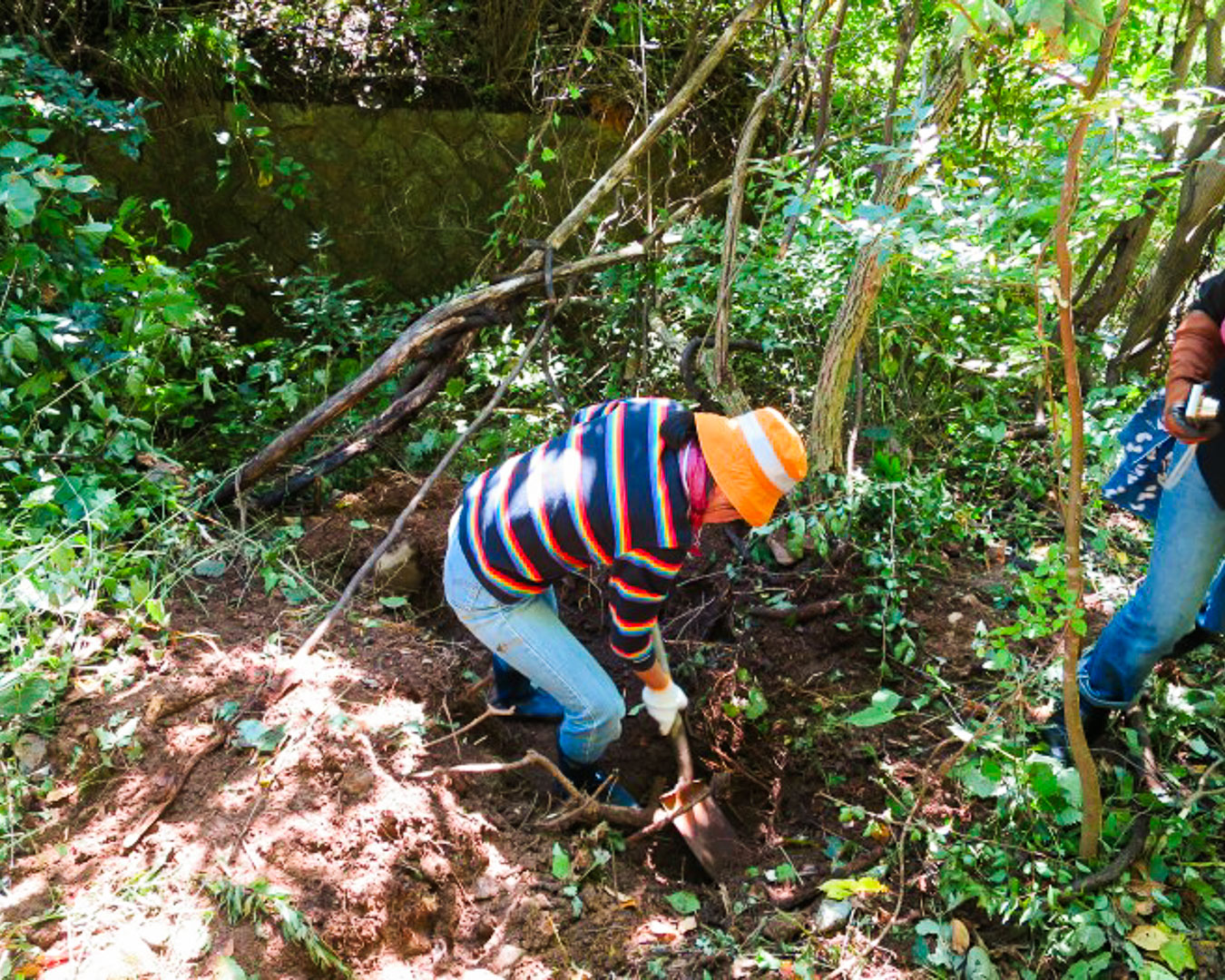
Digging up kudzu for a kakkontou-making workshop. (Photo credit: Yasushi Ogawa)
ーHow did you get the other ingredients besides the kudzu root?
We gathered what we could. Kakkontou is made of kudzu root, cinnamon, ginger, jujube, peony root, licorice and ephedra. (Ephedra is a shrub that’s long been used in China and India to treat colds, headaches, coughing, fever, congestion and other conditions.) Only the cinnamon, licorice and ephedra were hard to obtain locally, so we sourced those three in advance.
ーEphedra is essential for kakkontou?
Every medicinal plant contains roughly 5,000 to 10,000 different chemical compounds. For simplicity, let’s say 5,000. Imagine a village of 5,000 people. If there’s one superstar among them, that person defines the image of the entire village. It’s the same with ephedra. Its superstar compound and the core of its medicinal power is ephedrine. (The US has banned the sale of supplements containing ephedrine alkaloids, stimulant compounds extracted from ephedra, since 2004.) On the other hand, herbs are like “villages” without any superstars. They’re mellow, unassertive, pleasant to be around.
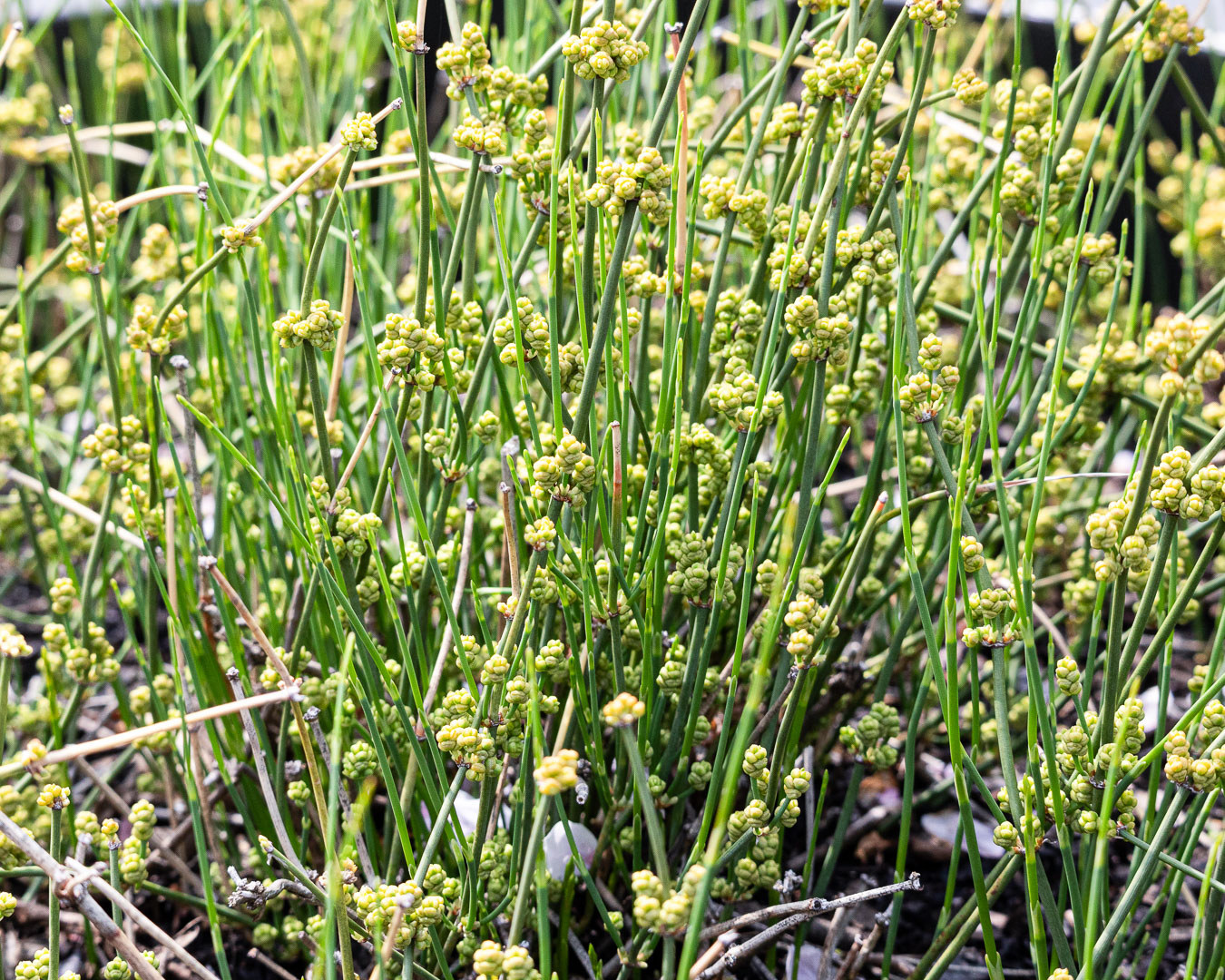
Ephedra flowers contain ephedrine, which is used to induce sweating, reduce fevers, and suppress coughs. The rhizome is used as a crude drug.(Photo credit:Adobe Stock)
ーSo that’s why it’s hard to say exactly how a herb works medicinally.
Exactly. With 5,000 different components, you can’t definitively say what a plant treats or how medicinal herbs work. Modern medicine needs things to make sense because it’s built on single compounds with one-to-one cause-and-effect relationships. Herbs belong to a complex system ー multiple causes and effects intertwined. I studied pharmacy down to the atomic level, and that’s why I clearly see how strange it is to talk about herbal medicine and modern pharmaceuticals in the same terms. They’re fundamentally different.
ーWhat if something doesn’t make sense?
It means you just don’t know ー and that’s okay. If someone asks what effect an herb has I tell them to try it, that it might help, that it’s long been used to warm the body. Everyone tries so hard to pinpoint something specific with herbs, but that’s not their nature.
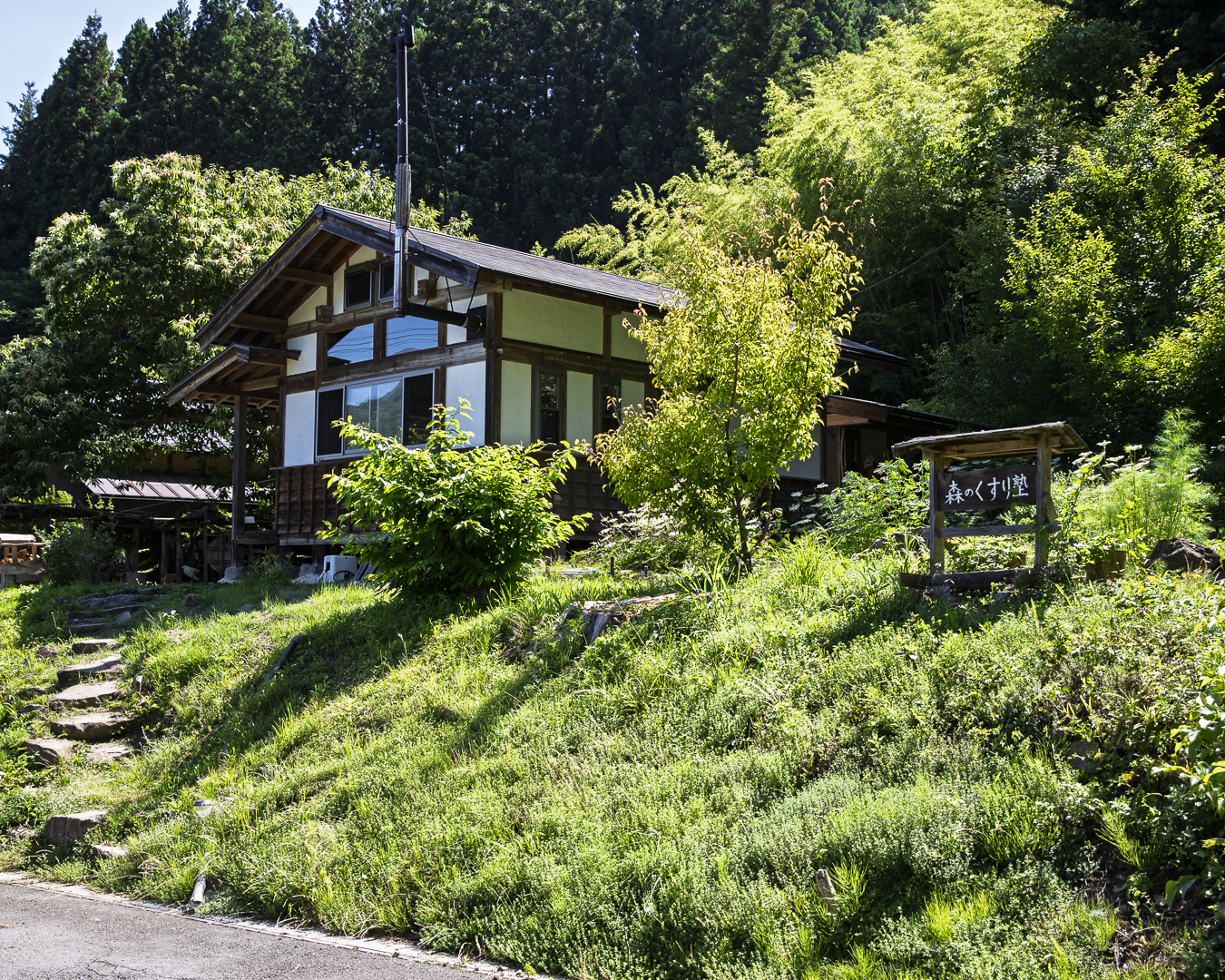
Yasushi Ogawa’s “Mori no Kusuri Juku” (The Forest Medicine School) sits at the edge of a forest in Ueda city, Nagano prefecture.
Oral traditions of herbal knowledge
ーIt would be great if we could incorporate herbal medicine more into our daily lives. Should we be careful about anything?
Modern drugs, like aspirin, are single molecules. It’s a doctor’s job to decide for you how to use them. Herbs aren’t like that. We’re meant to handle them ourselves. It just takes practice. You try something, see how your body responds, and build awareness over time.
The problem is when you read folk medicine books that say, Loquat leaves cure cancer. That sticks in your head and constrains your thinking. You might keep taking it even if it doesn’t suit you. You need to be listening to your body.
ーWhat kind of training do you mean?
Paying attention to your body. Herbs are meant to be learned about orally. Knowledge that’s passed down orally is different from knowledge gained from reading. It’s like baseball. You don’t start by reading Baseball for Beginners. You start with a game of catch. You look at the book later if you get stuck. People studying herbs in the city often start from books. But the knowledge that rural elders have was passed on to them orally. That’s what I try to convey in my workshops.
ーBy listening to your body, do you mean testing things one by one on your own?
Exactly. In her book Two Types of Japanese: The 1960 Fault Line (*1), Nobuko Iwamura wrote that before 1960, childbirth and child-rearing were handled mainly by midwives and elders. Once specialized books became widespread, people started trusting experts more than their elderly neighbors. Local wisdom became equated with superstition. Knowledge shifted from oral, community-based transmission to academic, text-based authority. That’s happened with herbs, too.
(*1)The book argues that Japan’s child-rearing environment changed drastically around 1960, and that the Post-’60 Generation was a “new type of Japanese.”
ーSo you’re saying we should listen to the elders again.
Exactly. My own training takes place at the local hot spring, where I go to bathe daily. At 55, I’m considered a young rising star there. The old guys love me. They have no idea I’m learning about herbs from our casual conversations. Even after years, I still learn something new every day. I can’t take notes in the bath, so it’s great listening practice. The acoustics are awful ー I have to catch the meaning from half-heard phrases and nod along. It’s harder than English!
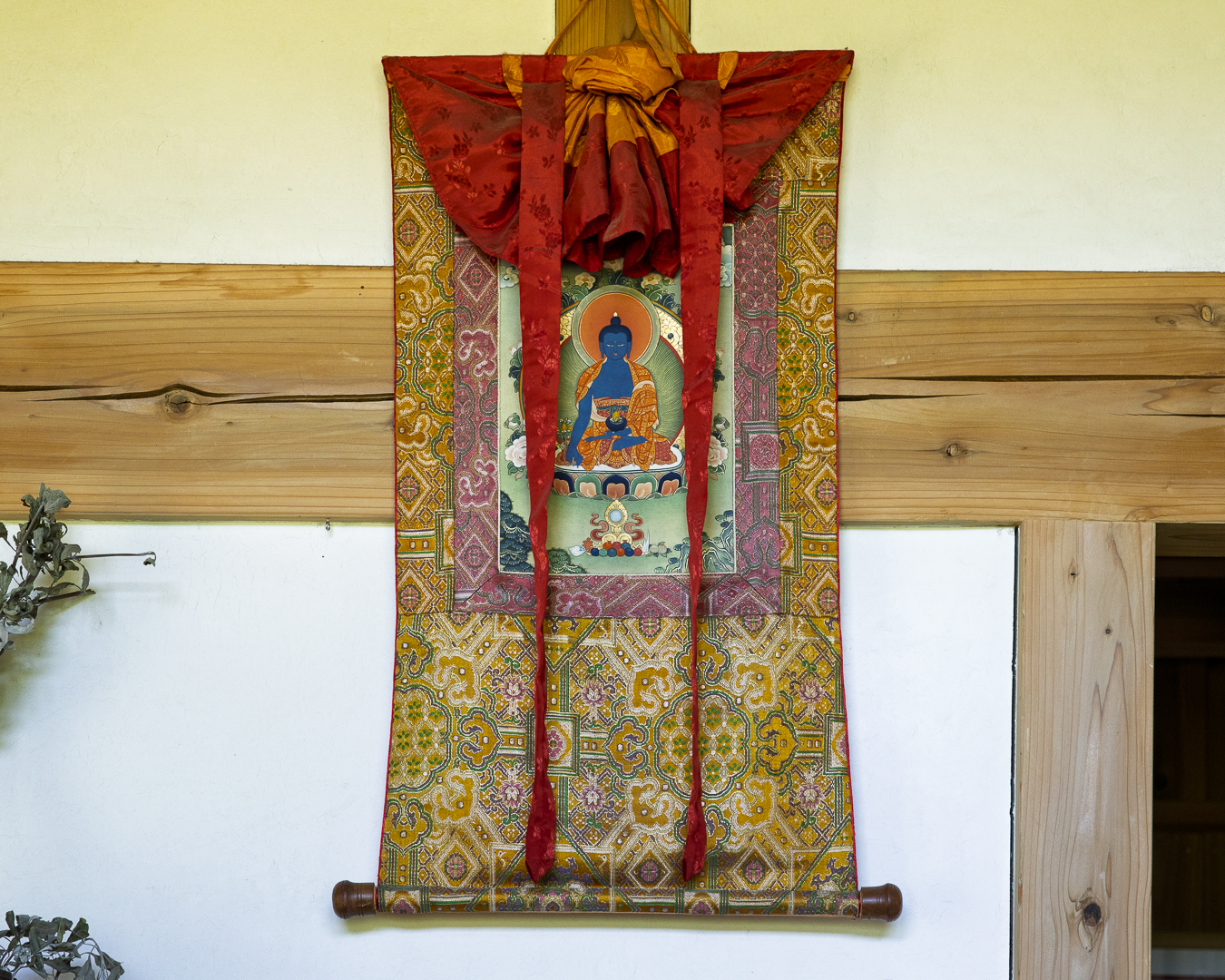
A Tibetan hanging scroll depicting a Buddha.
Medicine and mountains in Japan
ーHow has medicine evolved in Japan’s history?
Over 2,000 years, Japan’s medical teachers kept changing. First it was Korea (around the third to fourth century), then China, then Portugal in the sixteenth century, then Dutch medicine during the medieval period (Edo Period, spanning 1603 to 1868), German medicine from the late 19th century (Meiji Period, from 1868 to 1912), and finally US medicine after World War I.
That’s why I say Japan follows US medicine, not Western medicine. Germany values natural healing and avoids overusing antibiotics. The US relies heavily on antibiotics. Japan follows the US model.
In pharmacology, it’s easy to forget that what you’re making in the lab will end up in someone’s body. I was like that. I never thought beyond the lab. It’s frightening, in a way. That’s something I want to talk about openly.
Most science students rarely interact with the community outside of their university. I didn’t. But in my fourth year, after a setback in archery, I began wandering through the campus herb garden. There, I met local groundskeepers ー men older than me. Through them I finally felt connected to the city. That changed everything.
In Japan, doctors are state-certified professionals. In Tibet, doctors grow up within the community. They’re nurtured by people who need them. Tibetan doctors are more like artists supported by their neighbors, which is the kind of person I want to become.
Building connections
ーI’m finally starting to understand why you do what you do.
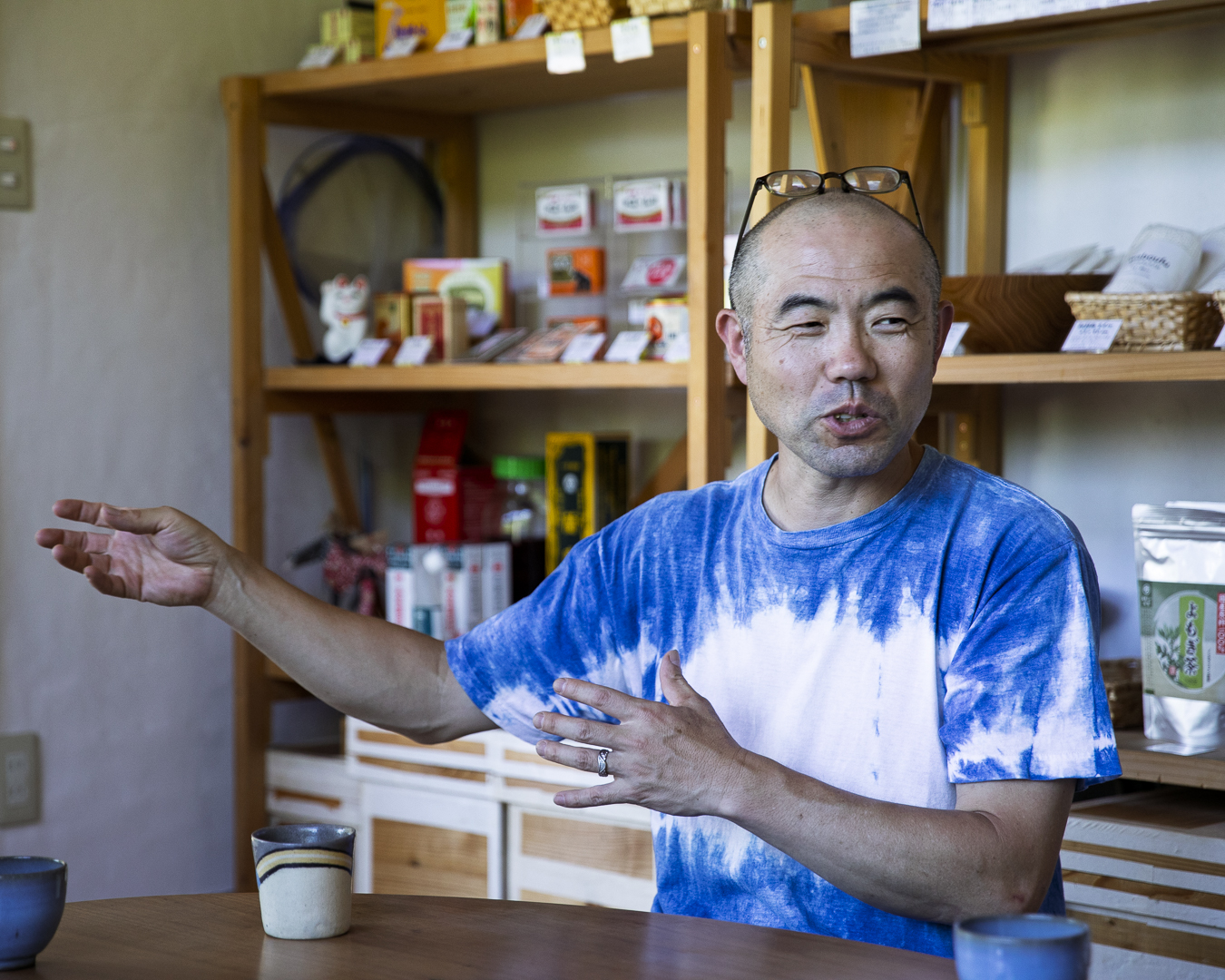
The other day, while I was bathing at the local hot spring, one of the old guys asked me to bring him dokudami (Houttuynia cordata, a plant that’s been used to treat a variety of ailments as a traditional medicinal plant in Japan and China). So I went out early in the morning, cut a bunch, and left it at his door. People call me a Tibetan physician, but sometimes I’m just the neighborhood errand boy. And I love that connection with my community.
There’s also a connection with nature. I walk in the mountains constantly, half-afraid of bears. I even cut down trees sometimes. It’s terrifying, but the fear factor is important. Two or three days before a big lecture, I chop down a large tree. It’s my way of facing fear. Once I’ve done that, I can face an audience. Maybe I could give a talk without having to do that. But I need to feel a sense of vulnerability. That’s especially true when I speak to kids. When I lived in Tokyo for a year while studying for a master’s degree at Waseda University, the safety of the city made me feel as if my words were losing their power. Out here, I make a point of confronting fear and taking a small risk before the world throws one at me. It’s how I keep my spirit alive.