




Yasushi Ogawa “Medicine” #2
Composition/Writing: Takuro Watanabe
Editing/Photography: Masaaki Mita
Yasushi Ogawa “Medicine” #2
Composition/Writing: Takuro Watanabe
Editing/Photography: Masaaki Mita
In the HIKING AS LIBERAL ARTS series, hosted by Hideki Toyoshima, Yamatomichi HLC (Hike Life Community) director, we consider hiking as a field of study that liberates individuals from preconceived notions and norms, empowering them to act based on their own values. This series delves into physical aspects of hiking ー seeing, hearing, eating, breathing ー for clues to exploring the value of and potential that extends beyond hiking.
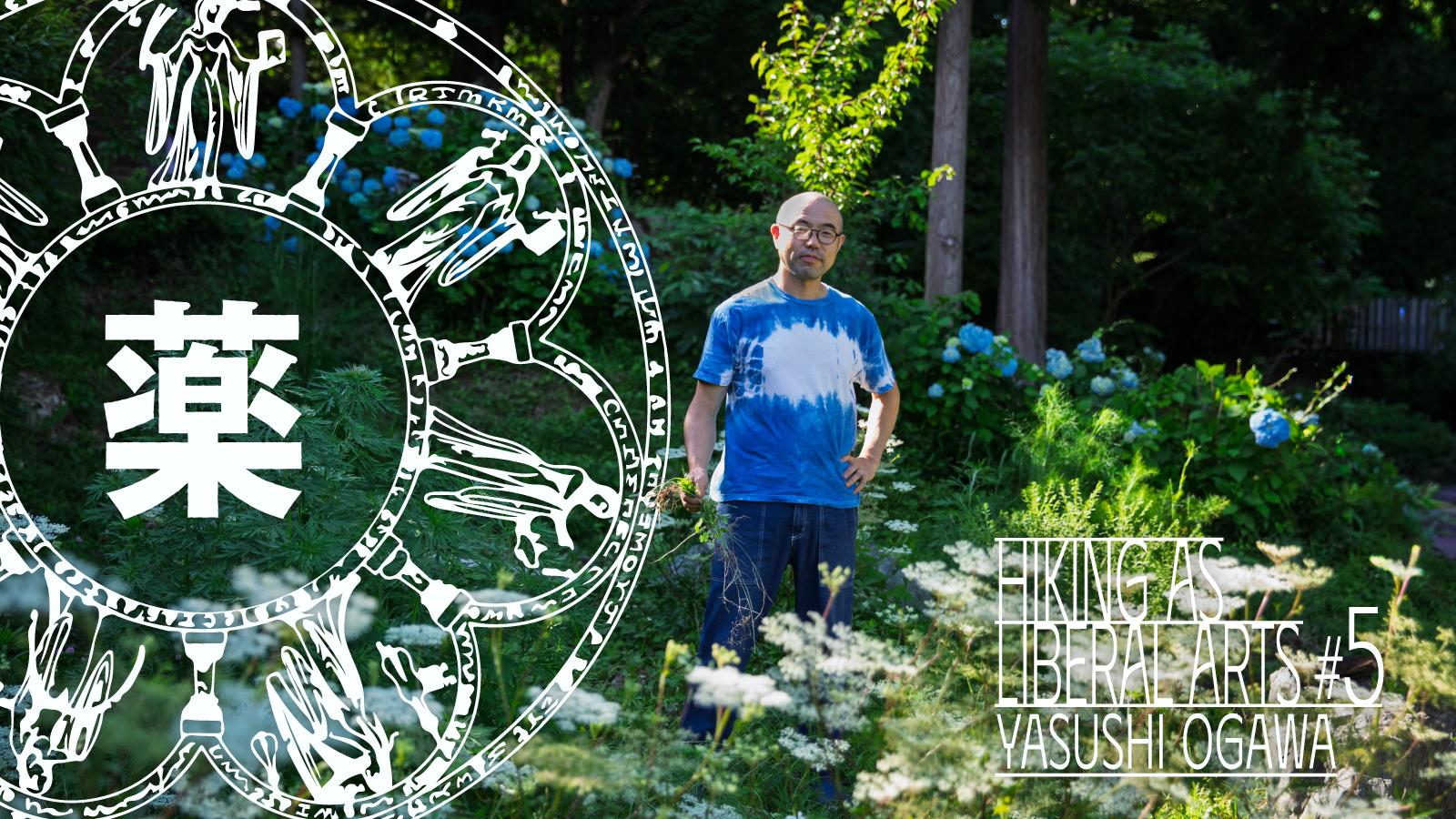
Our fifth guest of the series is Yasushi Ogawa, the first non-Tibetan to become an amchi ー a practitioner of traditional Tibetan medicine ー and the founder of Mori no Kusuri Juku (The Forest Medicine School) in Ueda city, Nagano prefecture, in central Japan. He gives lectures and leads workshops on medicinal knowledge and sells herbal medicines and teas.
In the second part of our conversation, Yasushi explains why the most important thing about medicinal herbs is the ability to find them in wild –– and why this matters for children, local elders and ultralight hikers.
Alternative as essential
ーIn the past, our information about medicines came from limited sources ー media channels or hospitals. Nowadays, people like you offer alternative perspectives, expanding our options. Something similar happened with ultralight hiking. Traditional mountaineering was about reaching the summit, and anything else was a failure. Then a new way of thinking placed greater importance on immersing yourself in nature. You didn’t need heavy gear anymore. So not just the equipment but the philosophy also changed.
In Tibet, people don’t climb sacred mountains for religious reasons. They value mountain passes more than summits, and they’ll casually picnic or pick herbs on the mountainside. They won’t bother climbing to the top.
ーJapan didn’t have a mountaineering culture until the Meiji Period (1868-1912). People who studied abroad brought back climbing techniques, similar to the way scientific technology was brought here. Back then, the West was the authority. Now there are other choices, such as going to the mountains for birdwatching or picnicking.
Medicine is the same. In modern medicine, there has to be a clear cause and effect or it isn’t recognized. Medicinal herbs are more ambiguous than that. Even plants whose names aren’t clearly defined can offer benefits.
ーTibetan medicine is also often categorized as alternative or complementary medicine.
I dislike that. What I am practicing is authentic medicine rooted in Tibet, not a subcultural form of alternative healing. In modern medicine, you study for six years before becoming a full-fledged physician. But in Japan, kampo (traditional Chinese medicine) isn’t part of the medical school curriculum. It gets treated as something you study a little.
If you want to learn Tibetan medicine, you study nearly ten hours a day for five years. The effort is so intense, you feel as if you might lose your mind. Only after that do you master the discipline. It’s not just read a book, got certified. To me, the term “alternative” misses the mark. People need to understand how much time and effort it takes to learn a discipline. I wish more medical schools incorporated complementary medicine into the curriculum, but realistically there’s already too much that medical students must learn.
Medical schools versus medicinal herbs
ーIn Japan’s medical schools, are there no classes on traditional Eastern medicine or herbs?
To say there are none is an exaggeration. But they’re almost nonexistent. Though a professor might mention a personal anecdote, traditional Eastern medicine is not systematically taught. I think it should be. But it’s too late — there are too few people left who can teach about medicinal herbs. It’s similar to the chaos after a war. In medical school nowadays, if you show an interest in medicinal herbs, you’re made to feel like the secret Christians did during much of Japan’s Edo Period (1603-1868), when Christianity was banned. When I’m invited to lecture, students come because they’re interested, but they’re also viewed as eccentrics.
ーHow did things end up this way?
In Tibet, herbs still play a central role in medicine. In Japan, war pushed herbs to the fringes. The first major shift happened during the Satsuma Rebellion, in Kyushu, in 1877. Once firearms were used in warfare, herbs became useless because anesthesia and disinfection are essential for removing bullets. Western medicine began with anesthesia and disinfection. After the rebellion, Japan officially abolished kampo (herbal medicine). During World War I and World War II, the shift became more dramatic. Stocking the battleship Yamato with mugwort (yomogi) wouldn’t have helped. What was needed were disinfectants and anesthetics and vitamin B (to prevent beriberi). On the other hand, Tibet never experienced modern warfare. As a result, modern medicine wasn’t needed. Without war, there are few severely injured people. In the everyday lives of people during the Edo Period, severe injuries were rare, so herbs were enough. Modern medicine became necessary because of war.
Legally, Japanese pharmacy schools are required to have medicinal herb gardens. Many were set up during the pharmacy–school boom in the 2000s, but most existed just to meet the legal requirement. After World War II, under US influence, synthetic chemistry was emphasized in Japan. At Tohoku University School of Pharmacy, where I studied, there were 13 departments and organic synthetic chemistry sat atop the hierarchy. The least popular field was studying crude drugs, and herbs were dismissed. It’s unusual that I got interested in herbs.
War and medicine
ーWe never know when war might break out. In daily life, a traffic accident is one of the worst things that can happen to you. In thinking about everyday interactions with medicine, I feel there should be options outside of Western medicine.
Right. Besides war, infectious diseases are another major factor. Historically, war and disease have been mass killers. War might be preventable, but even with vaccines infectious diseases are not. Without war or disease, the question becomes, Do we really need this many synthetic drugs?
Take mild and moderate burns (severe burns are an exception). There isn’t a big difference between Shiunko (an herbal ointment made from Lithospermum root, or shikon in Japanese) and modern medicine. Modern medicine is essential for treating heart attacks or strokes. Dentistry has seen clear advances, too. But there are many fields that don’t need to rely so heavily on synthetic medicine.
Another big problem: leftover prescription medications, amounting to an estimated ¥50 billion ($321 million). One could even half-jokingly speculate that Japan is subconsciously preparing for war by stockpiling medicine ー an extreme view, but the thought has crossed my mind. During the pandemic, people criticized Japan for not producing vaccines immediately. Japan actually responded quite quickly, thanks to its ability to mass-produce drugs.
ーIt’s like the story about major construction companies in Japan.
Exactly. Construction companies often get criticized. But when you consider the speedy reconstruction after the 1995 Kobe earthquake, these companies’ routine public works projects were a form of maintenance and training. Those dig-and-fill projects at the end of the financial year that attract criticism may in fact serve as rehearsals.
ーIf herbs can treat certain conditions, the option to choose them should be more widespread.
Exactly. If a doctor told you how to make your own kakkontou for a cold, that would be very helpful. In Germany, doctors routinely prescribe herbs. Herbs suffice for minor skin issues, itching or pain. They cover a surprisingly broad range of ailments.
Medicinal herb superstars
ーI want herb culture to spread, but doctors don’t teach it, so maybe we have to learn on our own.
It’s difficult. I can make judgments because I studied it professionally, but ordinary people don’t have many opportunities to learn. There are some herbs that are more useful than the rest.
ーWhich ones?
There are two. One is Coptis japonica, a species of flowering plant, known as ouren in Japanese. According to the book The History of Japanese Pharmacy (first published in 1949), which covers herbs and medicines since the Asuka Period (538-710), ouren was the most used herb throughout Japanese history.
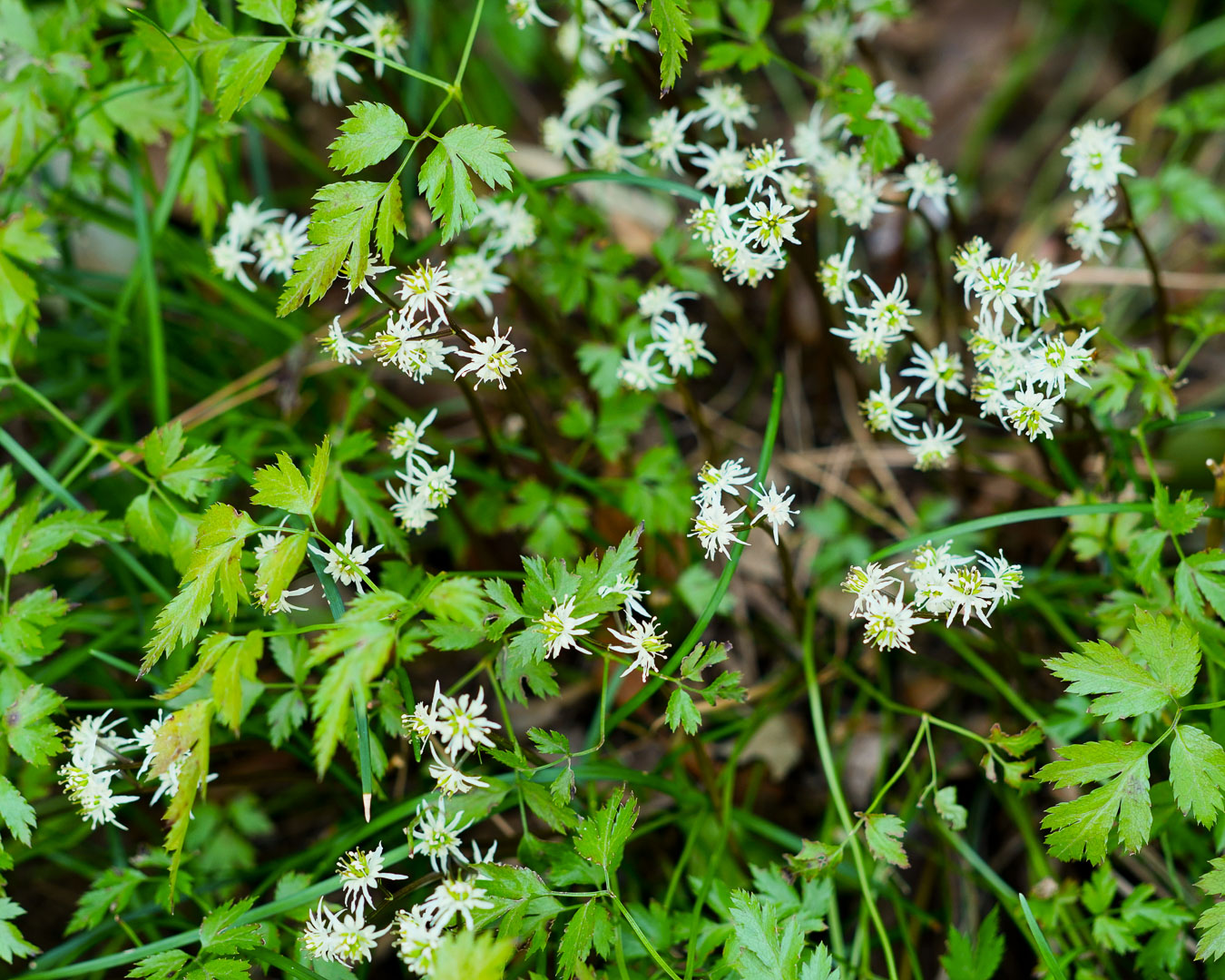
Coptis japonica flower. Its rhizome ー the horizontal underground plant stem that produces the shoot and roots of a new plant ー is used medicinally as a crude drug. (Photo credit: Adobe Stock)
Ouren has digestive regulation, anti-inflammatory, calming and antibacterial effects, and it’s used for gastroenteritis, diarrhea, eczema, mouth ulcers and more. People used it daily to keep internal bacteria under control. It also lowers “rising heat” in the body. Today, with modern plumbing and refrigerators, the conditions that once made herbs essential have changed.
The other is oubaku, which comes from the bark of Phellodendron amurense, known commonly as the Amur cork tree (kihada), which is native to Japan. It has antibacterial and anti-inflammatory properties, and works as a digestive aid and on bruises and sprains. In the past, diarrhea was commonly caused by contaminated water and food, so ouren and oubaku were the core of traditional medicine. There were also animal-based remedies like bear gallbladder.
Both ouren and oubaku contain a compound called berberine. If you go to a drugstore, you’ll find berberine in anti-diarrheal drugs, eye drops and many other products.
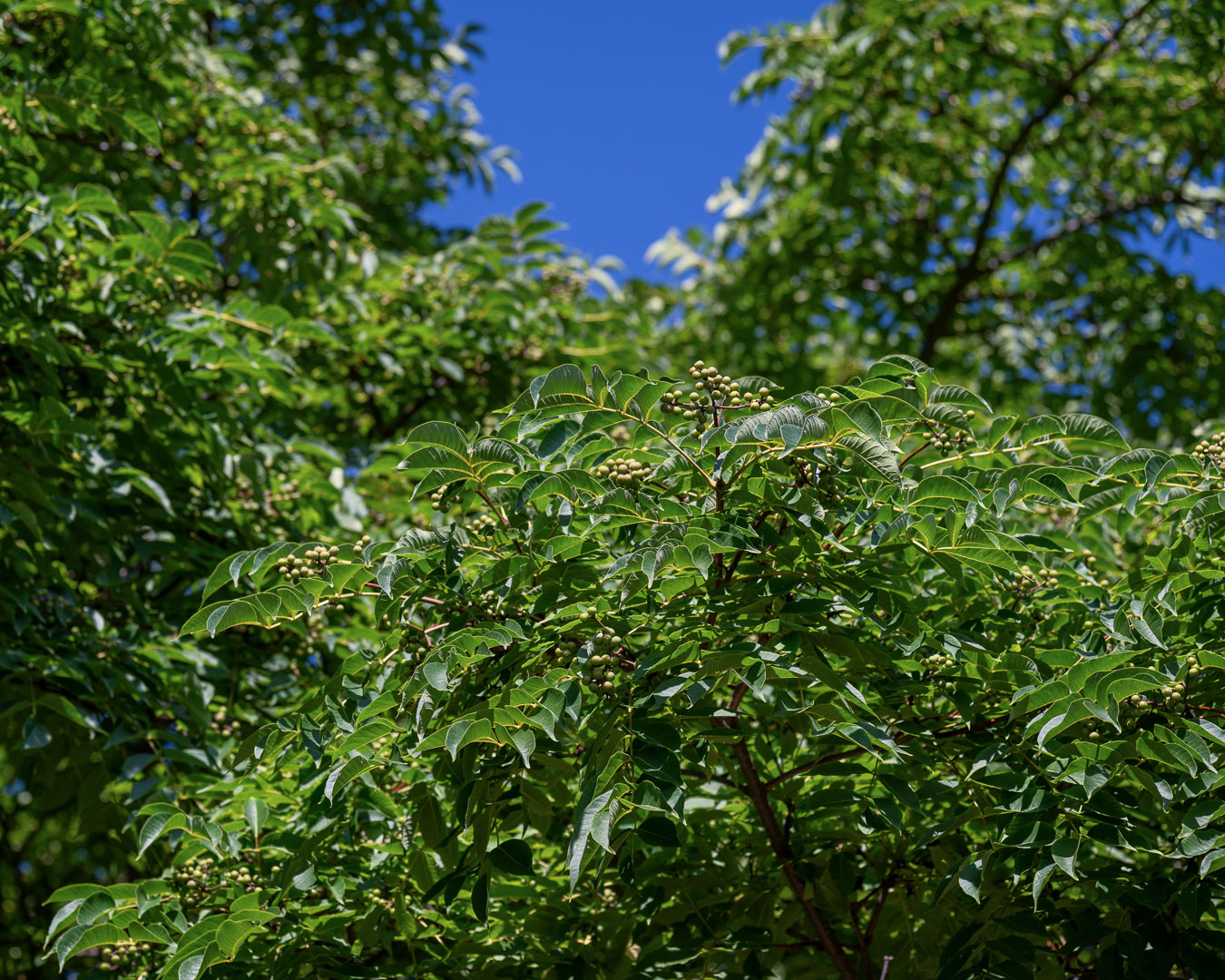
The Amur cork tree (kihada, in Japanese) is a source of ouren. Ouren gets its name from the yellow inner bark, obtained by peeling away the outer bark. (Photo credit: Adobe Stock)
ーIs berberine plant-derived?
Of course. It can be produced synthetically, but plant-derived extraction is cheaper, so it’s usually plant-based. And whether plant-derived or petroleum-derived, the molecule is identical. That used to matter but Dr. Ryoji Noyori’s (who received the Nobel Prize for Chemistry in 2001) research showed that it’s possible for there to be no chemical difference between molecules that are naturally and synthetically derived.
That doesn’t mean synthetic is better. With synthetic drugs comes the potential for mass production without natural limits. Without synthetic technology, vitamin C would’ve been scarce and fought over. Most vitamin C is now synthesized.
People should first learn how to identify ouren and oubaku.* Our elders knew them well. Once you can find them and understand the processing methods, you can use them medicinally. Most people think studying herbs is about memorizing information but what’s most important is being able to find and identify wild herbs.
*Personal use is legal. Selling them is illegal because they are regulated as pharmaceuticals.
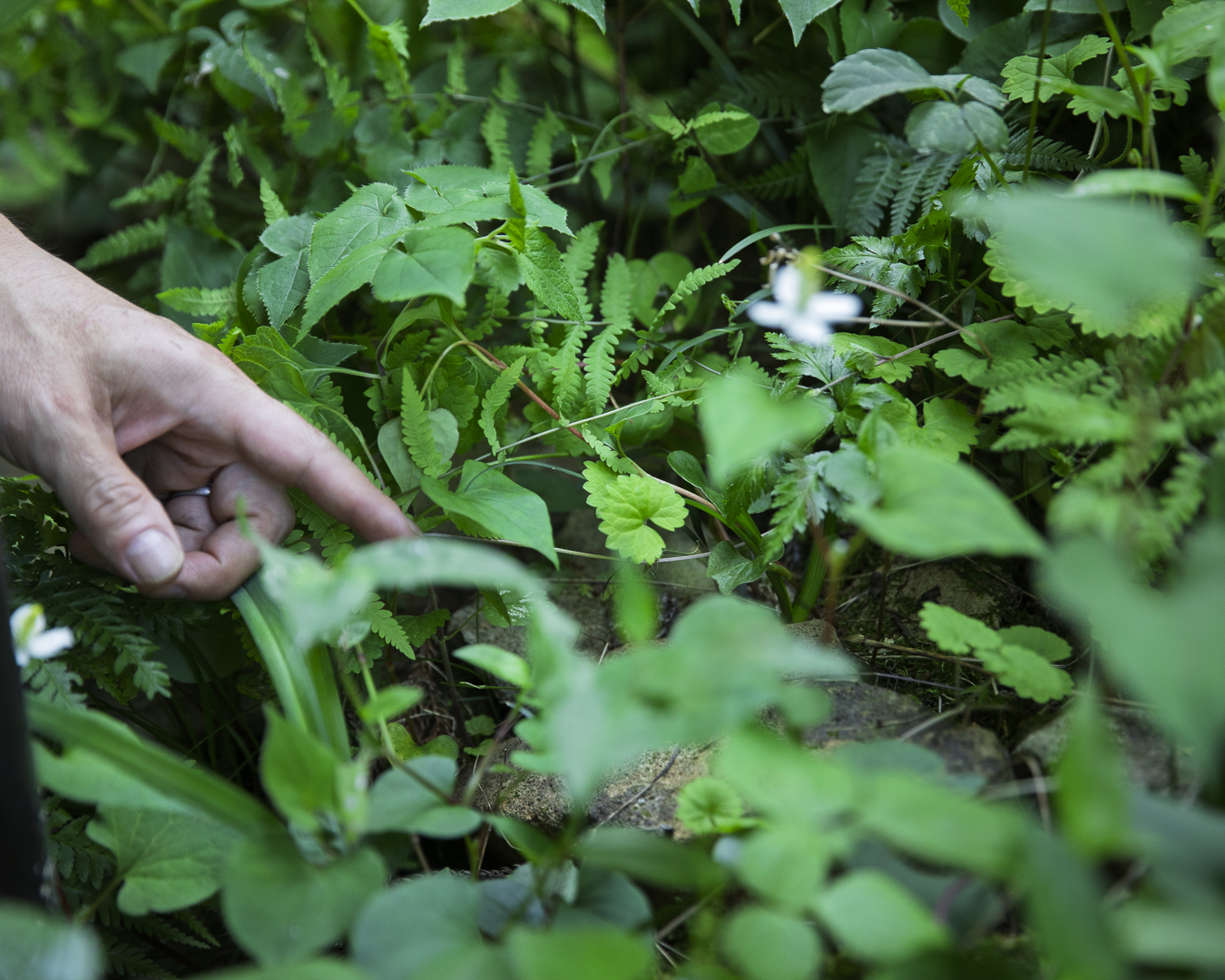
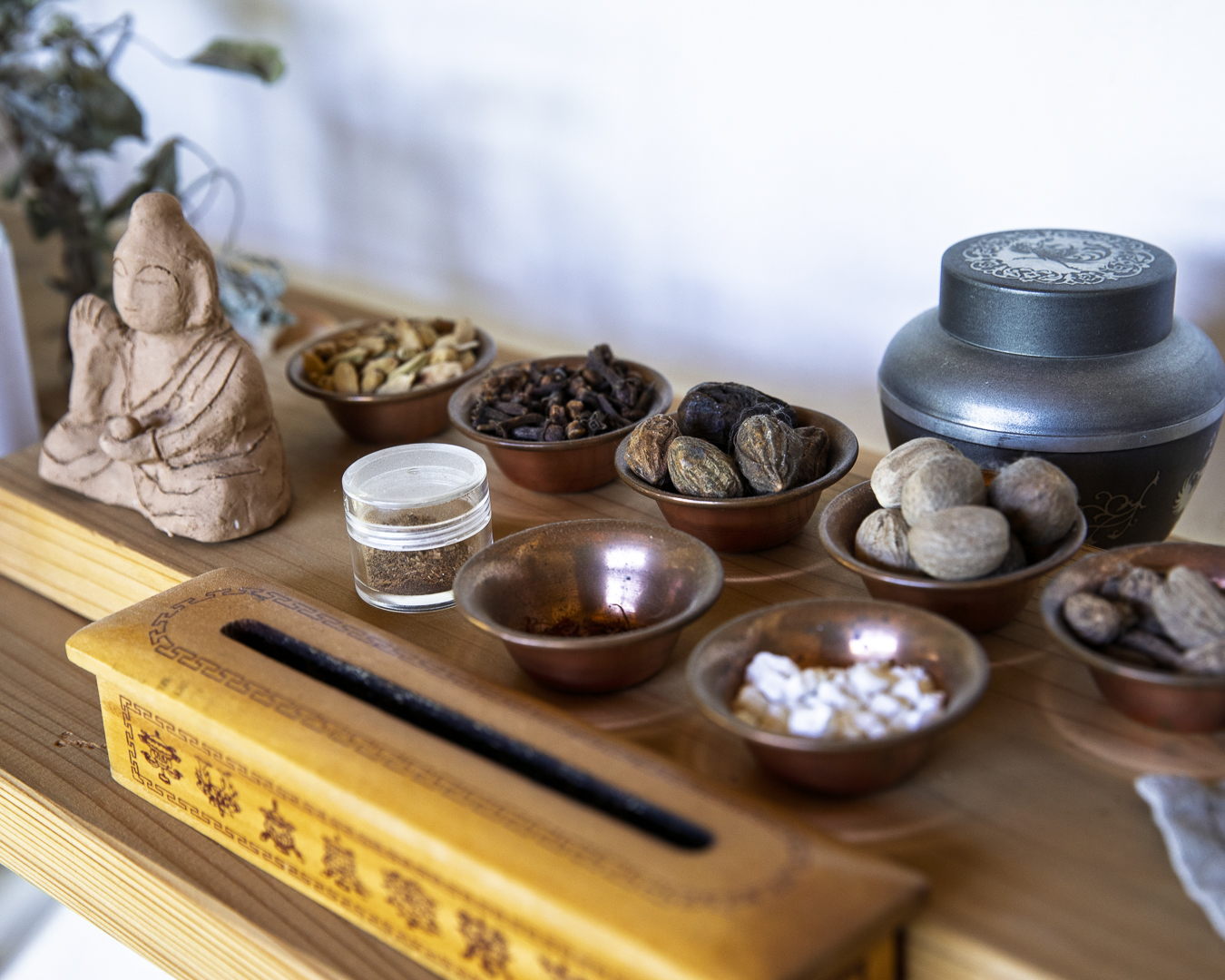
Photo caption Medicinal herbs in the garden at Kusuri no Mori Juku.
ーThat’s wonderful knowledge for survival.
Exactly. In peaceful times when there’s no hunger or war, culinary herbs thrive. But I think about how herbs can be used as medicine in survival situations. For example, if you and I were stranded in the mountains and you sprained your ankle, I’d immediately say, Let’s find oubaku! Oubaku is the bark of the Phellodendron tree, so we’d look for that. Once we had found it, we would shred it, boil it, and ideally mix it with flour ー or even a smashed rice ball ー and then apply the paste to the injured area and wrap it. It would definitely work.
ーIs herbal knowledge that’s traditionally been rooted in each region gradually disappearing?
I once gave a talk in Tamba-Sasayama, Hyogo prefecture. The region is famous for Poria sclerotium (a type of mushroom known as bukuryou in Japanese) and ouren. When I asked whether anyone knew what ouren was, an old man in the audience said that, as a kid, he used to dig it up after school to earn pocket money. But it had been 60 years since he’d done that. When I asked whether he could take me to the place, he agreed and led me to the mountain the next day ー and there it was. He had even brought his old custom-made mini hoe. That’s muscle memory. Awakening the memories of local elders in their eighties or older is the fastest path to reviving herbal culture, but even among local elders, the knowledge barely survives.
ーI’ve probably walked past countless ouren and oubaku forests without noticing.
I’m sure you have. Allow me to brag for a moment: ouren speaks to me. It won’t leave me alone. I don’t know why.
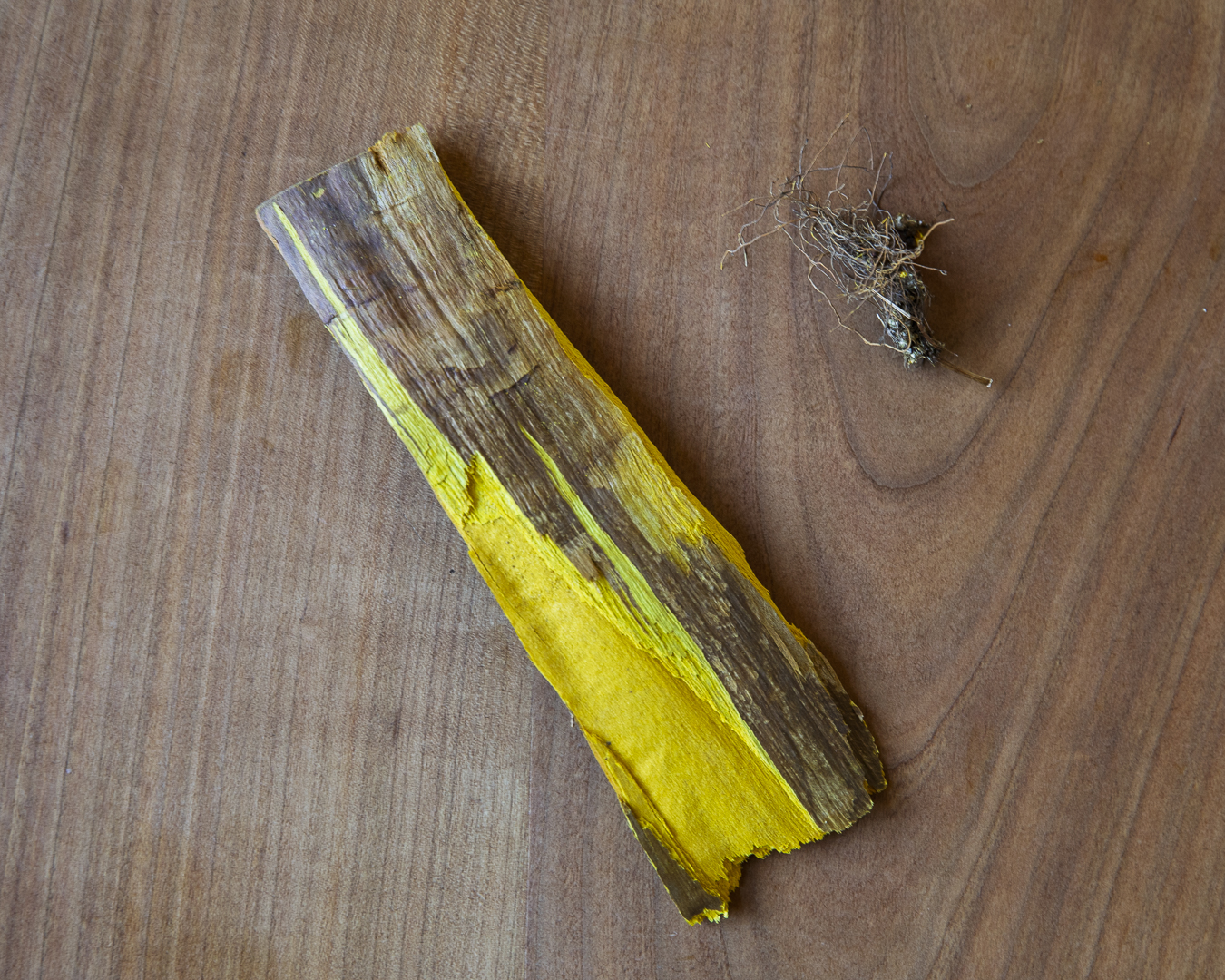
When the cork layer is removed from the bark of the Phellodendron tree (kihada) and dried, it becomes the crude drug oubaku.
Bishop’s weed and horsetail
ーWhat about other herbs, like dokudami (bishop’s weed) and sugina (horsetail)? They’re well-known, too.
They are not dramatically useful. If ouren and oubaku are professional athletes, then dokudami (Houttuynia cordata) and sugina (Equisetum arvense) are high school athletes ー they’re not in the same leagues.
ーWhy did dokudami (bishop’s weed) and sugina (horsetail) become famous?
Because ouren and oubaku were regulated as pharmaceuticals after World War II and could only be handled by professionals. Meanwhile, food companies could only deal in non-pharmaceutical wild herbs like dokudami and sugina, and they promoted them as if they were medicines. It’s illegal to make medicinal claims about dokudami herbal tea but you’re allowed to discuss the plant’s general properties. Companies needed to survive, and Japan’s Health Ministry turned a blind eye as long as no accidents happened. Which is the reason many people mistakenly think herbs like dokudami, sugina, yomogi and kakinoha (Artemisia princeps Pampanini, or persimmon leaf tea) must have dramatic medicinal effects. But they don’t, compared to ouren and oubakut (the ones with the compound berberine that are more useful than the rest). Neither do most dietary supplements heavily advertised in magazines and newspapers.
The fact is, there are no true experts in medicinal herbs because it’s not a subject that’s taught in medical or pharmacy schools, which has made it possible for anyone to call themselves an expert. That’s why I clearly advocate for ouren and oubaku.
ーWhat about loquat leaves (biwa no ha)?
Loquat-leaf folk remedies began spreading with the boom in health books and magazines in the 1970s.* Originally, loquat-leaf tea was popular in Kyoto and Edo (as Tokyo was formerly known) during the Edo Period (1603-1868).
*It was promoted in magazines, such as Sokai (1974), Watashi no Kenko (1976), and books including Yuriko Tojo’s Natural Therapy (1978).
ーPeople soak loquat leaves in shochu and apply it to the skin.
That also comes from the health magazines. Not causing harm is of utmost importance. In a society that blindly pushed synthetic chemicals, the natural-health boom acted as an important brake. There was a claim about loquat leaves and cancer that came from the US in the 1970s. But the FDA evaluated the data and rejected the claim. The claim later reached Japan, after a time lag.
That said, loquat-leaf tea was historically used to prevent summer heat-related ailments and food poisoning. So I do recommend loquat-leaf tea. The popularity of sugina (horsetail) tea also came from magazine features. It was inspired by German folk remedies but was never part of Japanese folk tradition. There are no records of elders here using sugina in daily life. Think about it: If local elders in Japan didn’t practice it, it probably wasn’t part of local culture.
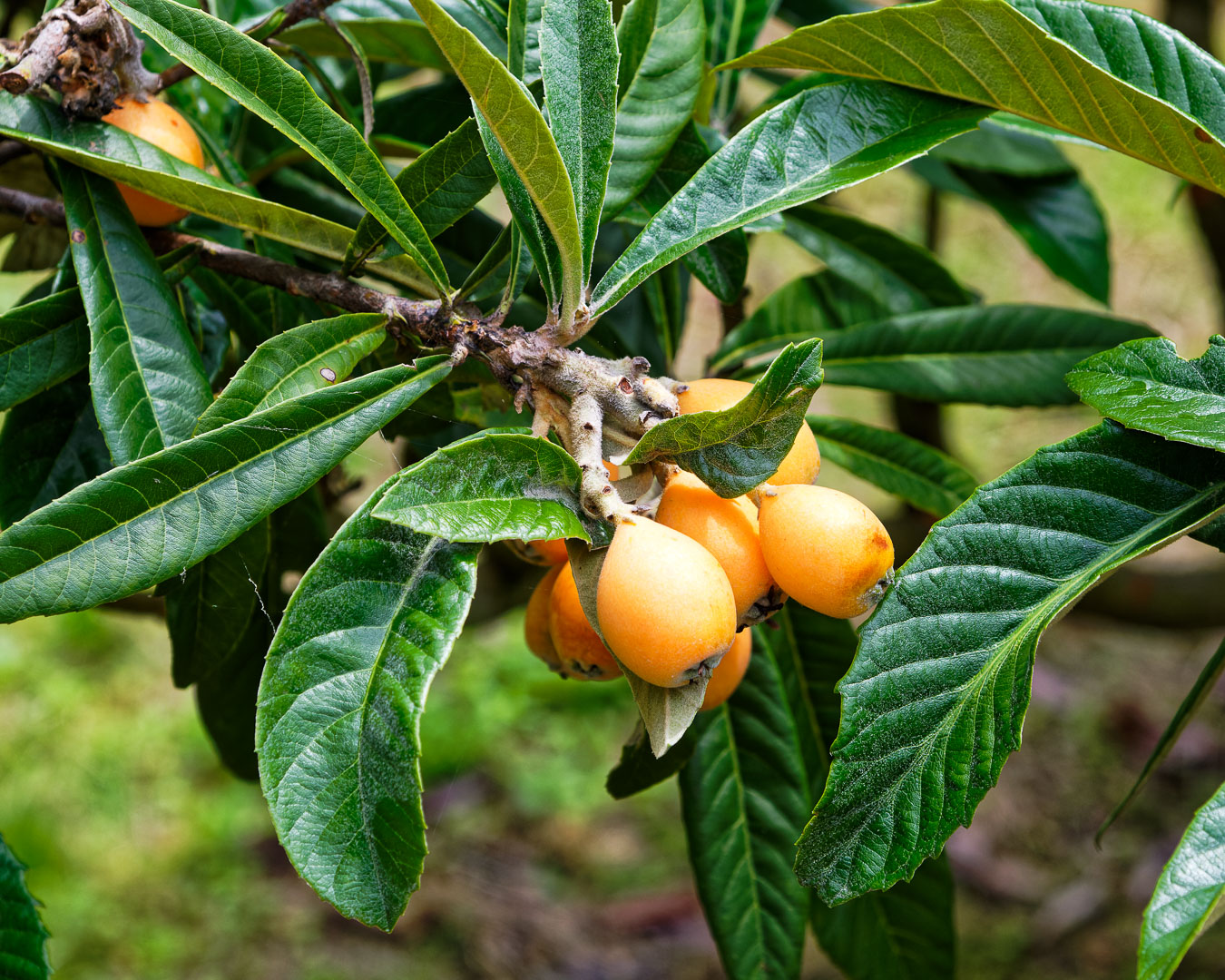
Loquat fruit is edible and its leaves are used to make tea. (Photo credit: Adobe Stock)
ーWhere I live in Hokkaido, we can find kabanohana-take (chaga mushrooms), growing on white birch. People say boiling it is good for your health. I sometimes look for it while skiing in spring. Does it work?
It’s hard to talk about the specific benefits because we have to consider the evidence supporting any claims. In Japan, evidence wasn’t a term that was used much before the 1990s but that people now assume has always existed.
Since the 1990s, evidence requirements have become extremely strict, and clinical trial sample sizes are much larger. When discussing what herbs are effective for, we must ask: “At what level of testing?” Under today’s standards, past claims about the benefits of certain herbs can no longer be made. The difference is that evidence now has to be based on animal experiments and patient clinical trials. There may be individual cases of kabanohana-take (chaga mushrooms) helping someone with cancer, but in today’s evidence-based world, that’s only anecdotal. We don’t know if the mushrooms were what made the difference because people usually try many things—including altering aspects of their lifestyle.
"Deep looking" at medicinal herbs
ーIn the past, people didn’t know about atoms or electrons. These topics were part of your studies.
Right. In the old days, herbs were the smallest unit. Now, we know better. Talking about herbs with an old worldview doesn’t work. If someone asks what an herb works for, I can’t confidently offer an answer. There might be claims based on individual experiences, but they won’t meet modern standards.
While walking around, you can find herbs. The path to Shirayama-Hime Shrine in Ishikawa prefecture is lined with herbs. They look like ordinary weeds so you might not notice them, but I see them because I’ve trained myself in “deep looking*” for herbs. Spending years in Tibet collecting herbs in life-or-death conditions cultivated my ability. Many Japanese people long ago would have had similar abilities.
*From Roger McDonald’s book, Deep Looking, introduced in the first profile of this series.
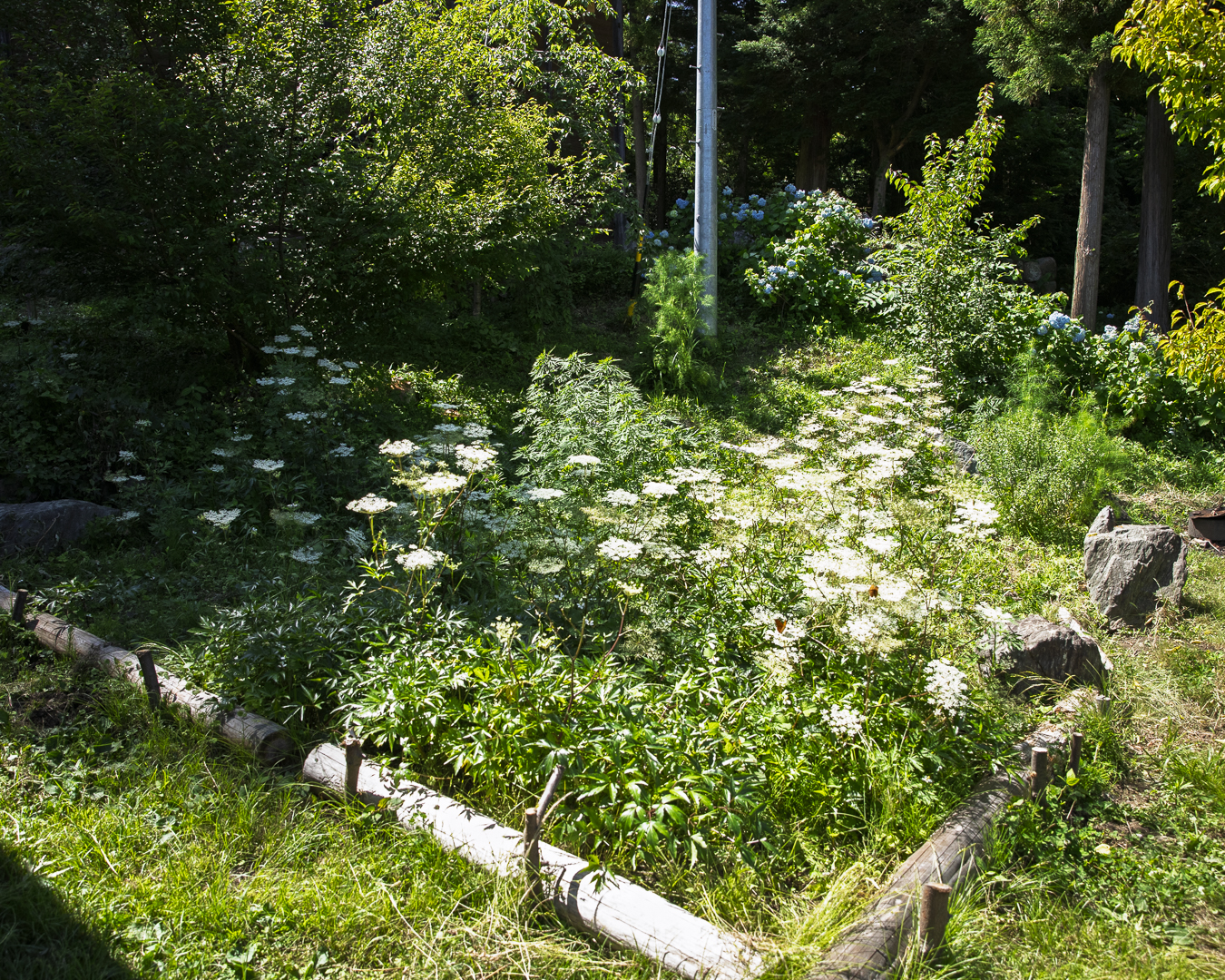
The medicinal herb garden at Mori no Kusuri Juku.
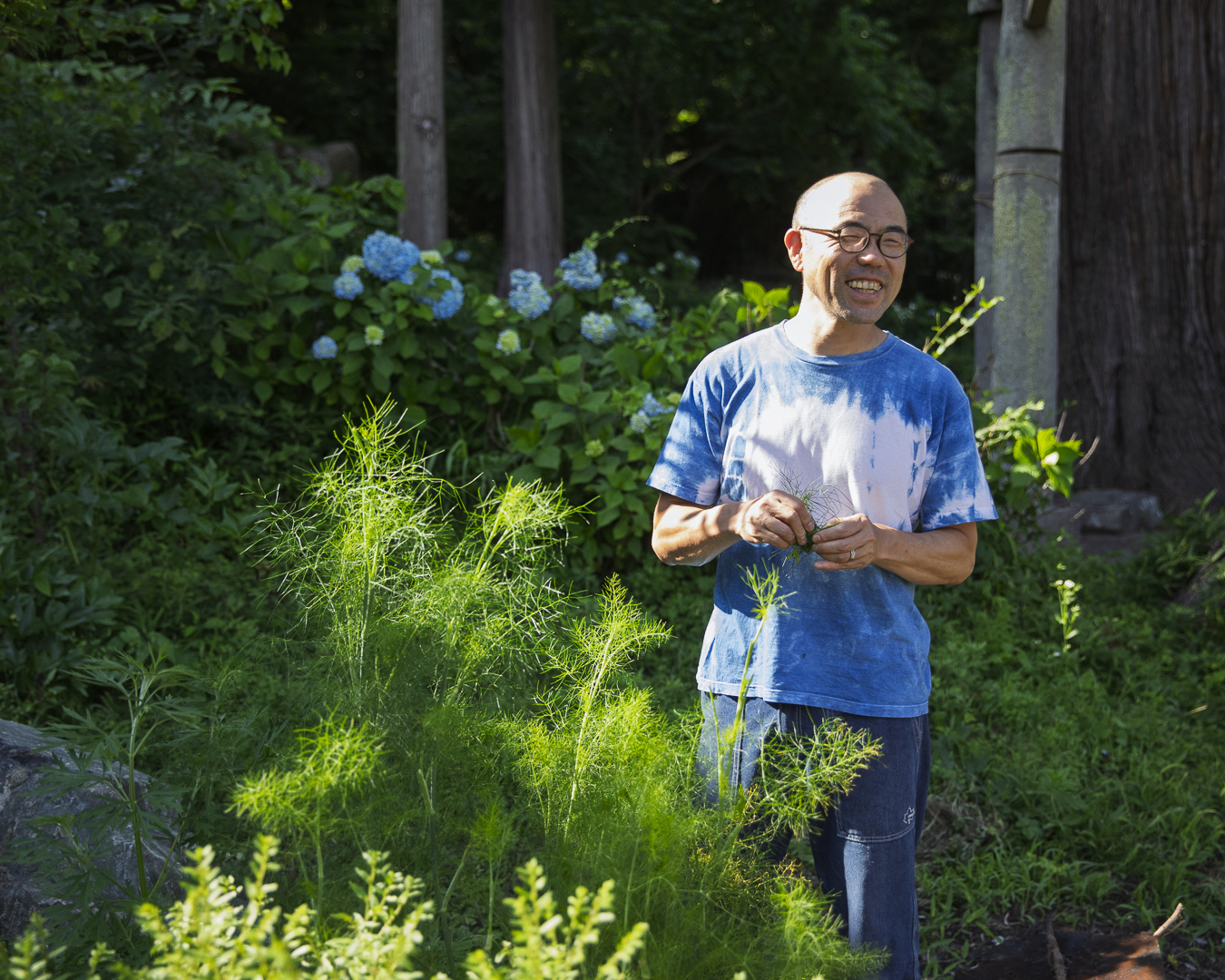
When it comes to contemporary art museums, I’m completely lost. I haven’t trained myself to look at art. The same idea applies to herbs: you have to train yourself to recognize them. So I hope people will visit herb gardens and observe. Herb gardens are essentially museums ー places for deep looking. Your understanding deepens as you observe them. You also find herbs in the satoyama areas ー around rice paddies, farmland and villages that support ecosystems between human settlements and deeper mountain forests in Japan’s countryside. I look at the Phellodendron tree planted in a shop parking lot every day. Plants you plant yourself draw your attention. Ouren seems drawn to me. People I meet will find fragrant eupatorium (Eupatorium japonicum, also known as thoroughwort, or fujibakama in Japanese) and Siberian Motherwort Herb (Leonurus sibiricus, or yakumosou in Japanese) and give them to me. Once you plant herbs and see them daily, you naturally learn what they are ー and even notice them on the side of the road while driving.
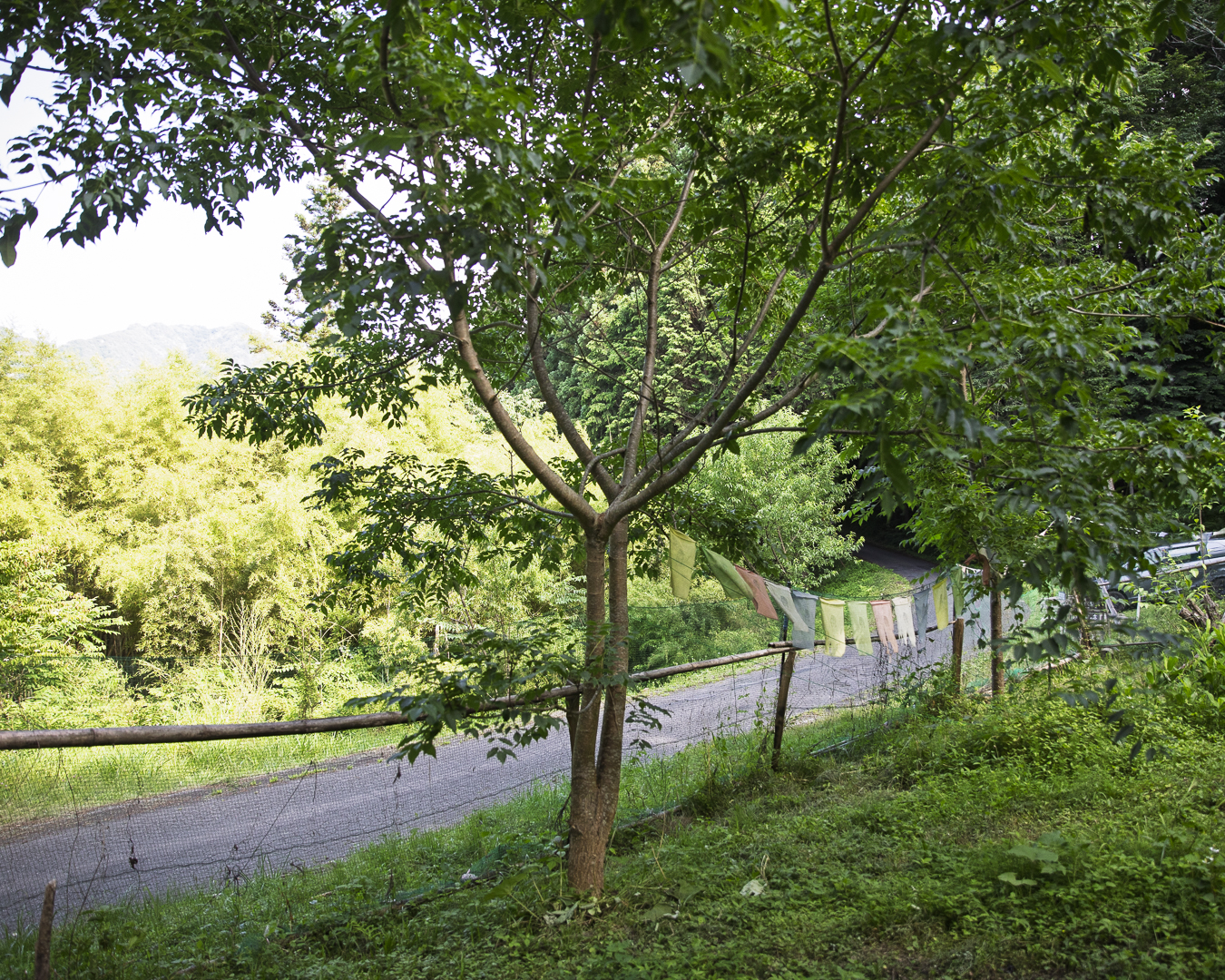
An Amur cork tree (kihada, the source of ouren) grows in the parking lot of Mori no Kusuri Juku.
ーFor hikers and mountaineers, having knowledge of medicinal plants could be life-saving in an emergency, couldn’t it?
Exactly. That’s why I think disaster-prevention maps should include information on, say, where to find ouren. Community centers and elementary schools should plant Amur cork tree (kihada, the source of ouren) instead of Himalayan cedars, and we could teach people about it during disaster-preparedness drills. Infectious diseases tend to spread during disasters. The 2024 Noto Peninsula earthquake struck in winter. If it had been summer, we would have seen far more cases of diarrhea and other illnesses. Antibiotics are best but if they’re not readily available ouren works ー and that’s where the local elders’ knowledge comes in handy. If an elder forages for some and everyone brews it and drinks some, it might raise people’s hopes even in a disaster.
Passing on medicinal herb knowledge
ーThat’s the wisdom of making do with what’s available and realizing that you don’t have to order these things from distant places.
In Japan, people understand the importance of domestic food self-sufficiency ー but not when it comes to medicinal plants. Take the Amur cork tree. It grows abundantly in Japan and yet, due to high domestic labor costs, nearly all of the ouren sold in Japan is imported from China. Mugwort (yomogi), too: It grows wild all over Japan, and yet nobody picks it anymore. The yomogi supply keeps falling now there is talk of importing it from Nepal. Our tradition of gathering medicinal plants among elementary school children and local volunteers is fading. Nobody was compensated for harvesting medicinal plants. It was passed down as a cultural practice. Nowadays, the hourly wage is the measure for the value of everything. I understand why local elders who used to gather plants for pay would say it wasn’t worth their time. Some locals are doing what they can to keep this knowledge alive. But things have changed because COVID-19 led to reduced outdoor learning activities for children. At this rate, even kusa-mochi, pounded rice cakes made with mugwort, will disappear. And yet even if the commercial practice of kusa-mochi making disappears, people can make it themselves. We must not let medicinal herb knowledge die. The covers of children’s workbooks should feature photos of ouren, oubaku, murasaki (lithospermum), senburi, and other medicinal plants. If children see these images daily, they’ll develop the ability to recognize the plants in their natural settings.
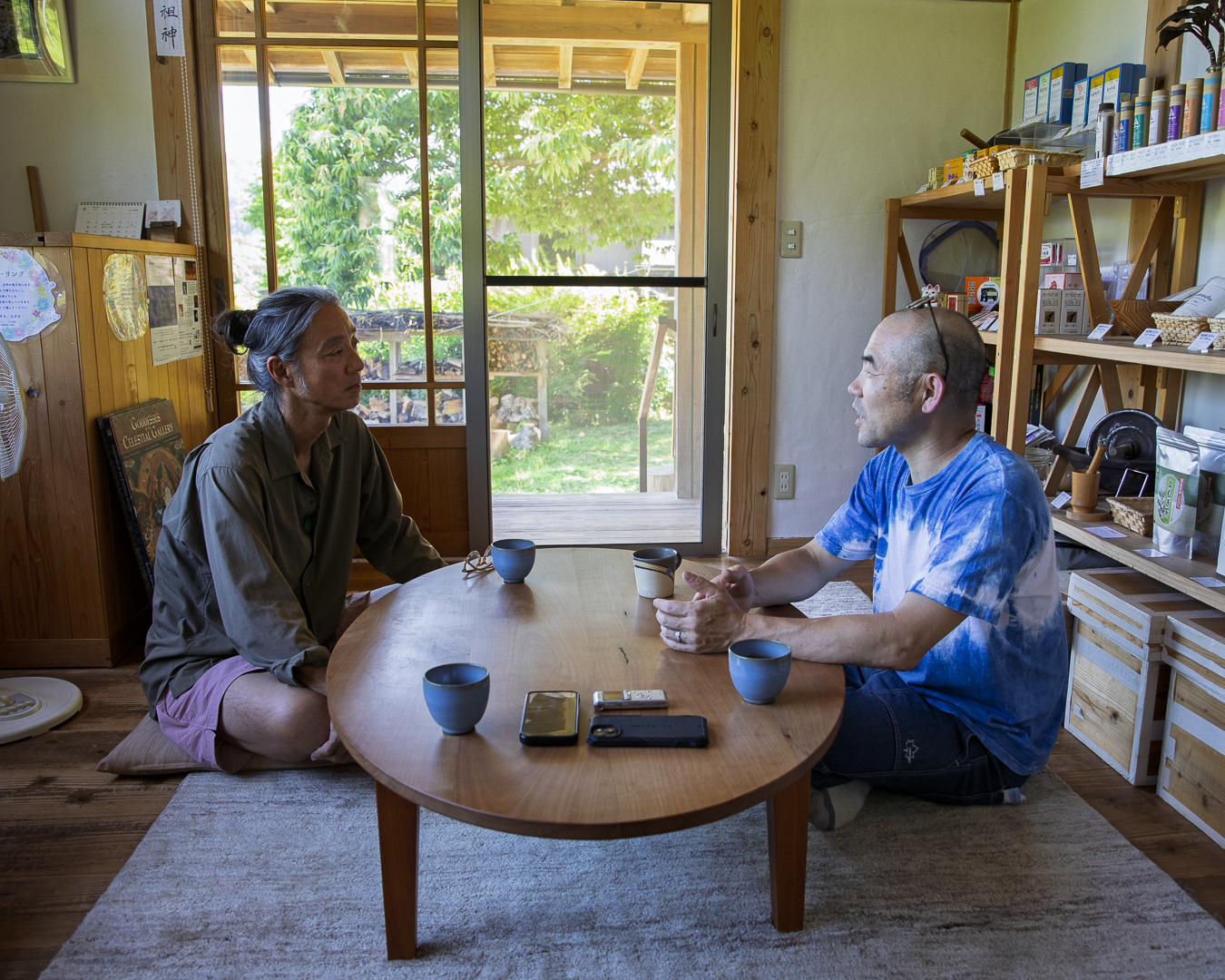
Reflections on Yasushi Ogawa’s story
HIDEKI TOYOSHIMA
Interviewing Yasushi Ogawa gave me the chance to reconnect with him after 13 years. The last time I visited him, he showed me the site of the future Mori no Kusuri Juku and talked about his goals. This time, I saw how those plans have taken shape.
When I was growing up, my father, who worked at a small-town hospital, always brought home medicine. Anytime I had a fever, he gave me Keflex, an antibiotic we always kept in the house, and PL powder. If I had atopic dermatitis, he gave me Linderon. For hives, I took Polaramine. I had no aversion to synthetically made pharmaceutical drugs, which doesn’t seem to have led to any later health issues so far.
But as my lifestyle and my diet changed, I began to question that. It was around this time that I was reunited with Yasushi. His story about kakkontou (the herbal drink, commonly prescribed in traditional Chinese medicine, that’s made from kudzu root and other plants) opened my eyes.
Nowadays, people constantly demand things they can easily understand in words. But in complex systems where causes and effects intertwine, there aren’t always clear answers. Yasushi told me: “You need to train yourself and stay attuned to your body’s signals.” That’s the purpose of this series.
At one point, Yasushi talked about his “need to have a sense of fear.” He deliberately puts himself in scary situations, “because when you live in the wilderness, that’s how you stay alive,” he said. That stung a little for me as a city dweller. I may think I understand this, but the reality is different: I’ve grown complacent.
During our interview, Yasushi mentioned that serious injuries were rare and medicinal plants were enough during the Edo Period (1603-1868). The invention of gunpowder changed everything. The severity of injuries increased dramatically, and medicinal plants could no longer keep up, he said.
Yasushi also made me question what I had considered “alternative”. “So-called alternative ways of thinking are actually quite essential,” he said. This was deeply insightful. “Most people think that studying medicinal plants is about memorizing knowledge and trivia. But what matters most is the ability to find medicinal plants.”
I would say the same about ultralight hiking. Understanding theories and knowing about product specifications is interesting. But what’s truly meaningful is the knowledge that you build up on your walk. For your future hikes, I recommend having pictures of ouren and oubaku as your smartphone’s home screen. And the next time I visit Yasushi, I’ll be sure to sign up for one of his workshops at Mori no Kusuri Juku.