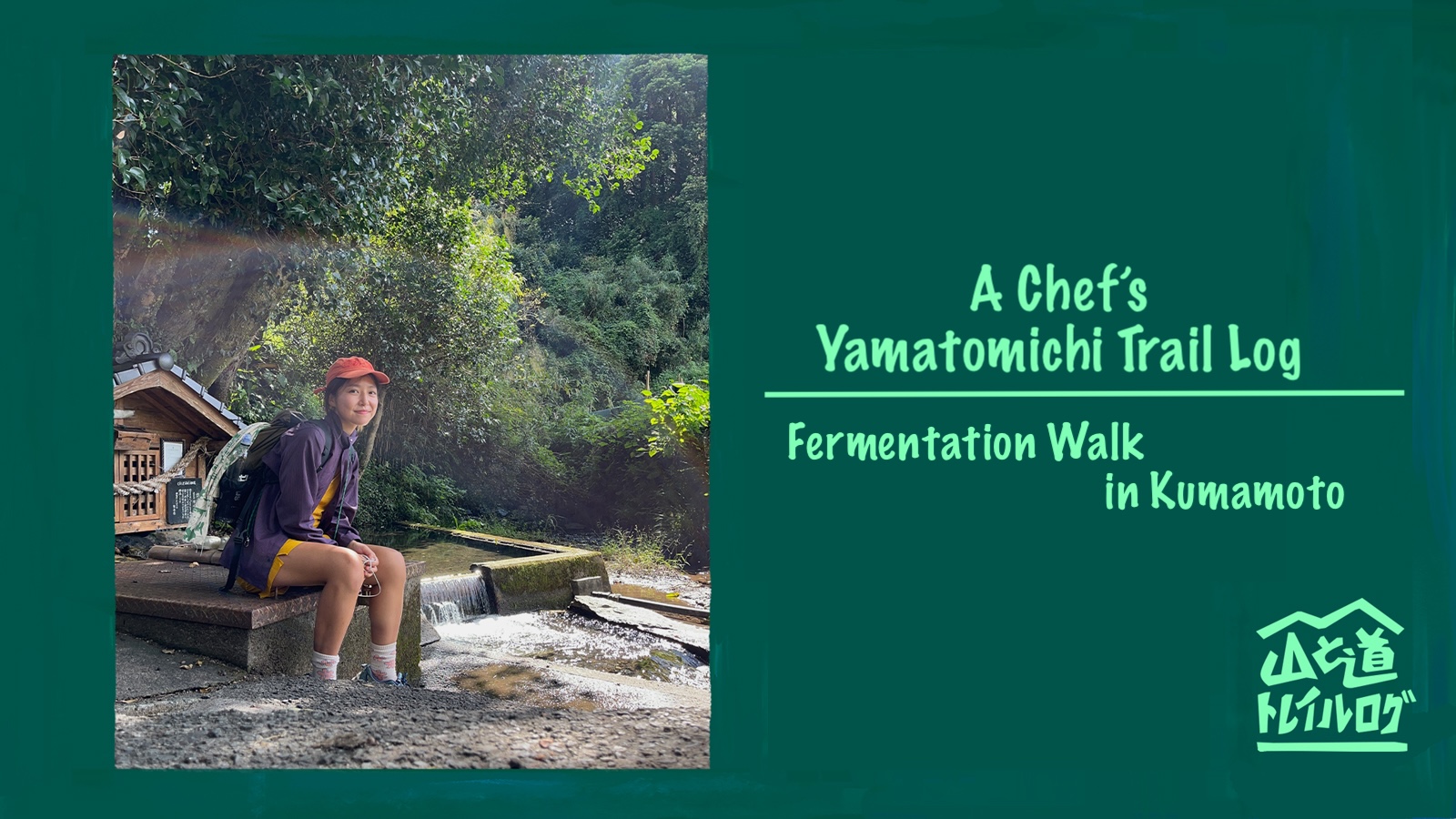





A Chef’s Yamatomichi Trail Log
A Chef’s Yamatomichi Trail Log
At Yamatomichi, hiking isn’t just encouraged — it’s part of the job. Our staff are expected to hit the trails regularly, and for many of us, it’s a dream come true.
In this edition, we tag along with Kanade Sankawa, Yamatomichi’s in-house chef, resident gastronome and author of Yamatomichi’s The Chef’s Picnic Chronicles (Japanese). As part of Yamatomichi’s Ultralight Hiking Research Program, in which our staff go off for hikes and write up detailed accounts of what they experienced, Kanade spent four days and three nights hiking around Mt. Aso, in Kumamoto.
Kanade lives to eat. For this hike, her goal was simple: a series of meals whose flavors would improve over time. Fermentation would be the key to achieving this. But not long after she headed out, loneliness set in. No matter how tasty her food was, she found satisfaction with her meals hard to come by. Battling anxiety, she forged on — and in the process made a few discoveries about herself.
Prologue
I’m the chef of the staff canteen at Yamatomichi Lab, in Kamakura. I take pride in supporting the health, happiness and hiking energy of our staff. At Yamatomichi, it’s not unusual to overhear staff talking about the meals they had on the trail ー typically, something not so appetizing, like instant ramen or pre-cooked rice. This makes sense if walking and minimizing pack weight are the priorities. It’s not for me, though. If the food on the hike isn’t any good, you can count me out.
Food is my greatest joy. I love thinking about it and preparing it. Which is how I decided on an ultralight hike with food as the focus. I’m the kind of hiker who will leave behind gear and carry more food than others might be willing to, if it means I’ll eat better.
On the trail, I like to experiment with my meals while I walk. For example: soaking pasta in water at the beginning of the day so its cooking time is shorter when I stop for a meal. It’s a trick many hikers are familiar with. But that alone doesn’t get me excited. For this trip, I had three things in mind. I wanted the flavor of my food to improve the longer I hiked. I wanted part of the preparation of my meals to occur while I was walking. And I wanted my pack to become lighter as I ate my way through the food.
Fermentation was the solution. I thought of pickles that would boost my body heat and rice soaking in spring water as I walked. Just thinking about it makes my heart skip and my mouth water. I just had to figure out how I’d ferment my food. And I needed to go somewhere I would be sure to find tasty ingredients.
Destination: Kyushu
About 10 years ago, my parents and I went on a road trip around Japan’s southwestern main island of Kyushu. We camped, sat around bonfires and napped in the relaxation rooms of bathhouses. I have vivid memories of Mt. Aso: lush slopes, scattered cows, crisp air, clear skies. It felt surreal, beautiful and alive, not unlike traveling around Iceland.
I wanted to go back to Mt. Aso. I’d heard that crops thrived on the region’s subterranean geothermal activity. I had friends living nearby. Good food and friends ー that was enough for me to go.
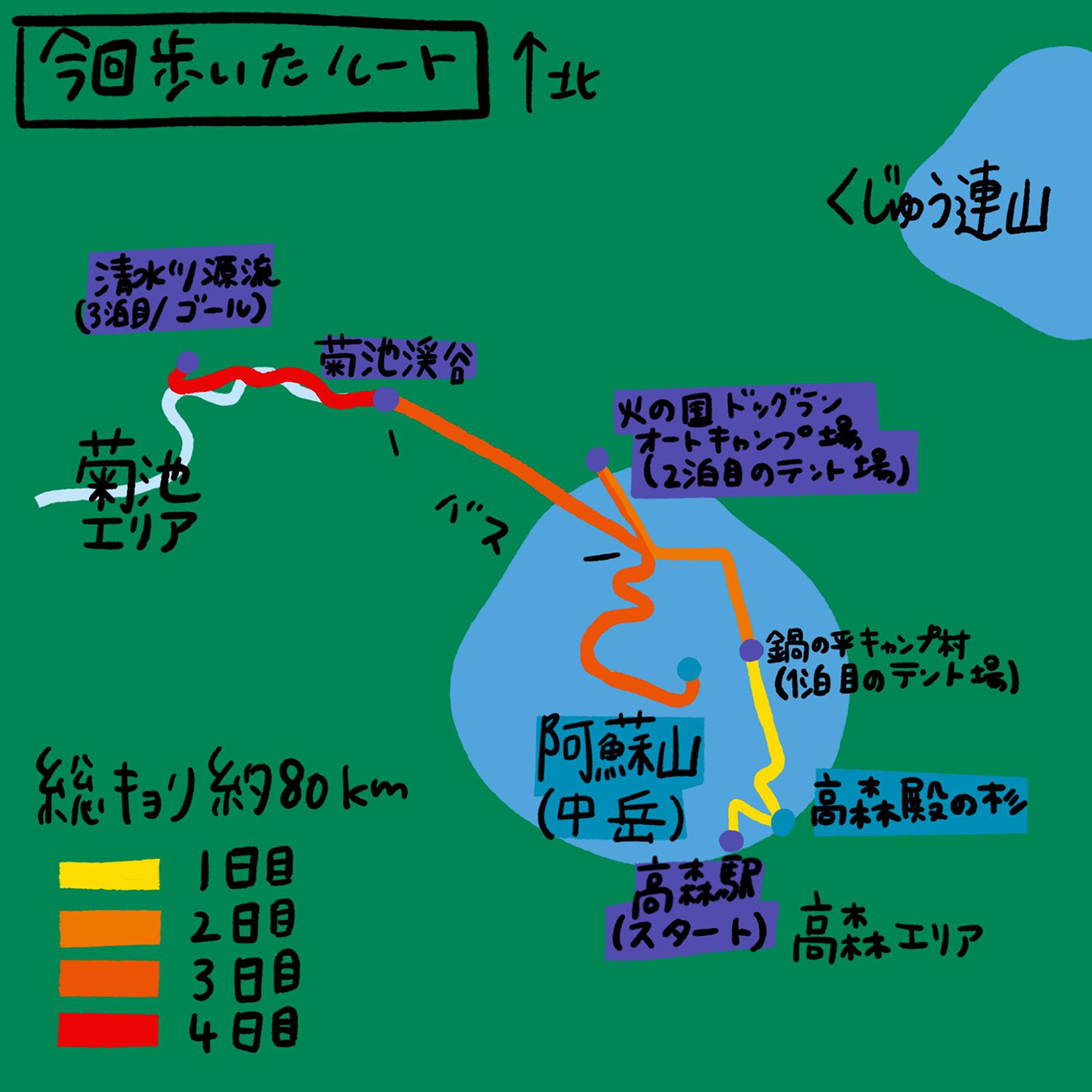
Here’s the plan. Day 1 (yellow): Start at Takamori Station in Takamori, a town in Kumamoto prefecture, heading north toward Takamori-don-no-sugi, two ancient cedar trees said to be more than 400 years old. Camp at Nabenodaira-mura. Day 2 (orange): Head northwest and camp at Hi-no-Kuni Dog Run Auto Campsite. Day 3 (red-orange): Climb Mt. Aso’s Nakadake Crater, descend and then catch a bus to my friend’s house near Kikuchi Gorge. Day 4 (red): Leave Kikuchi Gorge and finish at the source of the Shimizu River.
Grains, legumes, seasonings ー oh my!
The hard part of menu planning is figuring out which ingredients and seasonings to take along. Pickles fermented in nukadoko, a rice bran pickling bed, would be essential. Salt-marinated and honey-pickled items were tempting to carry, too. After careful consideration, here’s what I decided on:
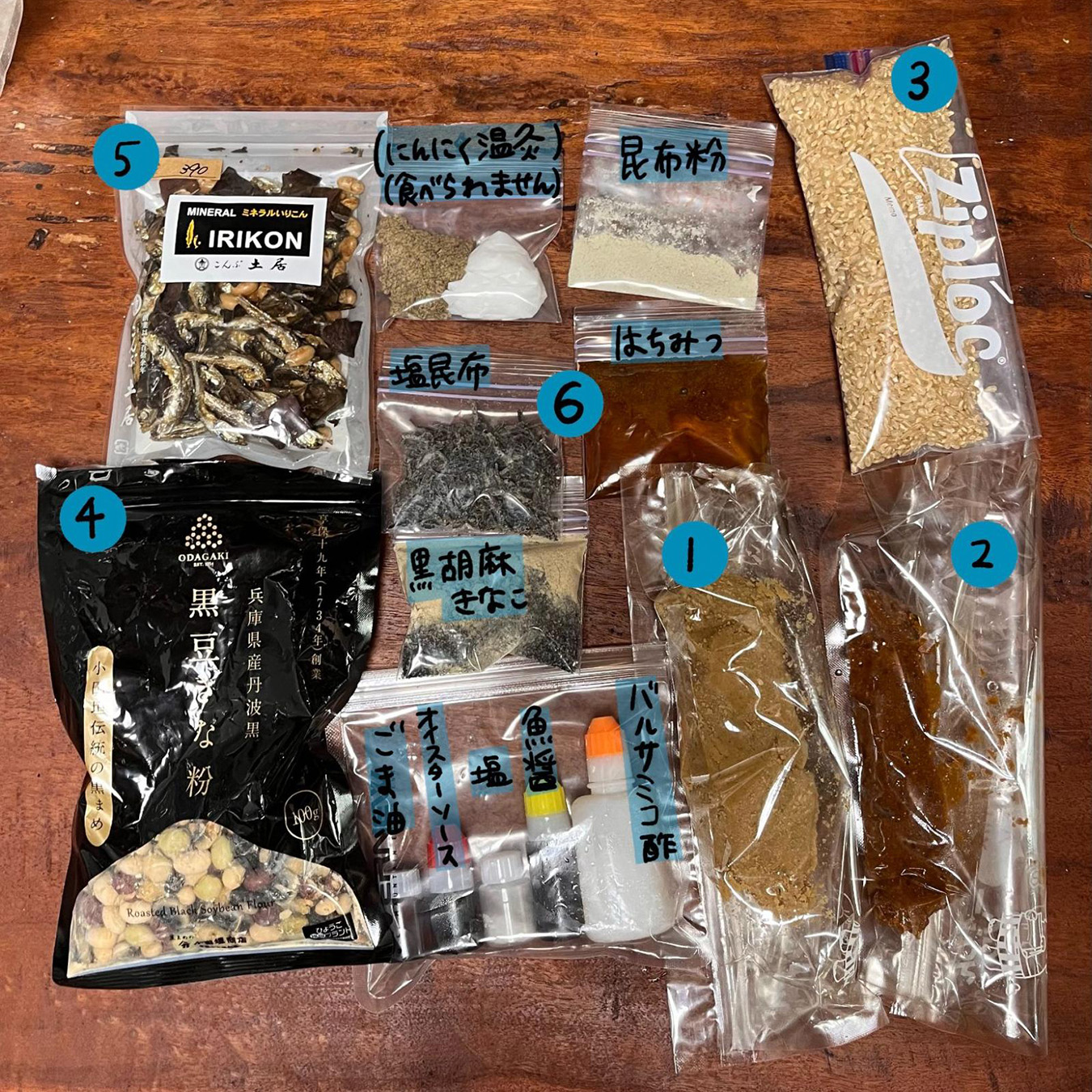
❶ Nukadoko (rice bran pickling bed)
Reliable, stable fermentation; can be stored at room temperature.
❷ Sake-lees miso pickling base
Sweet and fragrant; also works as a seasoning.
❸ Brown rice
Rice with triple the normal germ content for high nutrition.
❹ Roasted beans
Versatile; can be cooked with rice or eaten on their own.
❺ Roasted dried fish (iriko), soybeans and kelp
Rich in minerals, great as a snack or mixed into rice.
❻ Seasonings
・sesame oil
・balsamic vinegar
・salt
・oyster sauce
・fish sauce
・roasted black soybean (kinako) powder and ground sesame
・honey
・shio-konbu (kelp seasoned with soy sauce, salt and sugar)
・powdered kelp
(These are all seasonings that I use daily in heavy rotation.)
Day 1
On October 7, I begin my journey. Two photos show my excitement before and my anxiety not long after I head out:
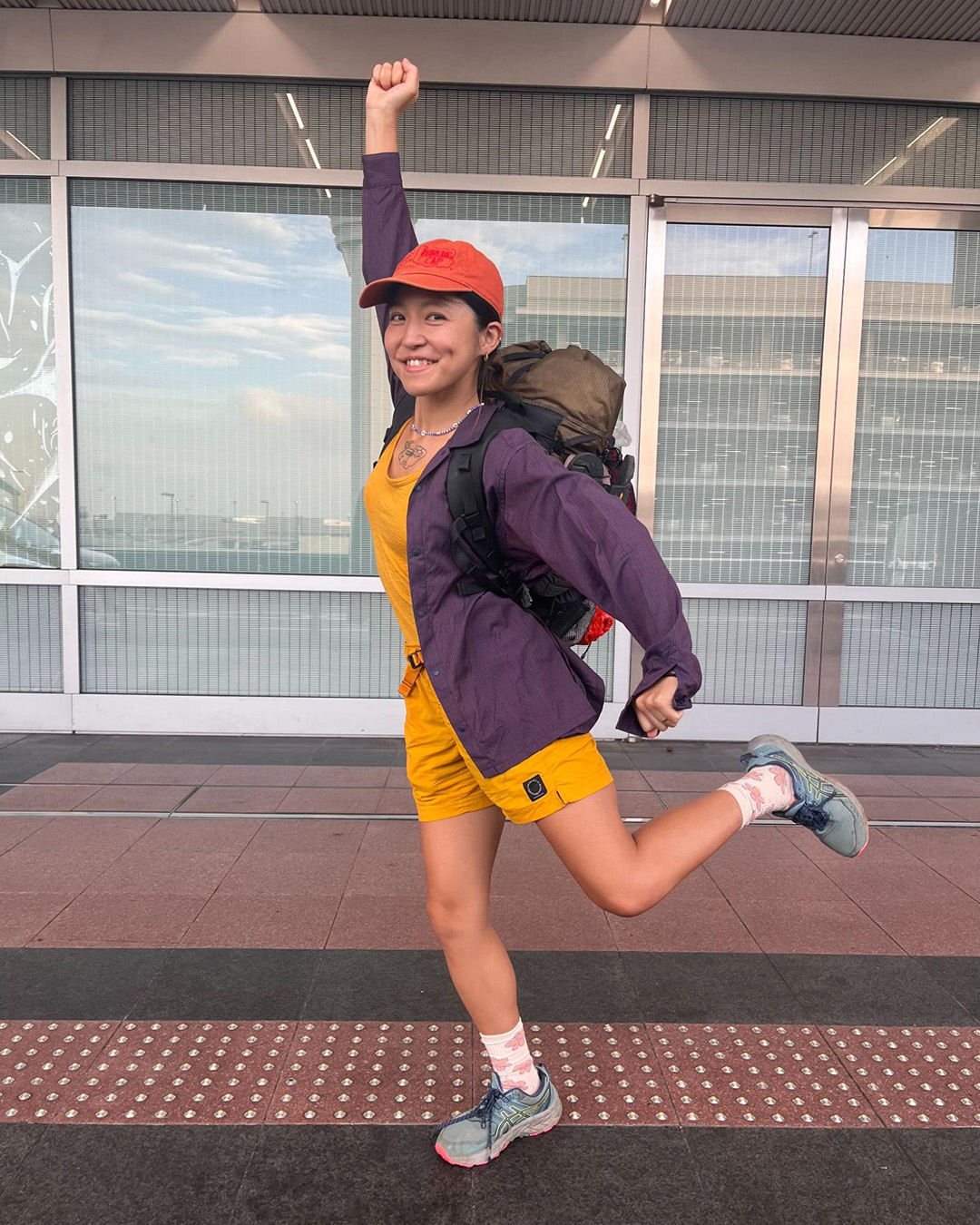
Day 1, Morning: My excitement as I’m driven to the airport ー almost irritatingly too cheerful.
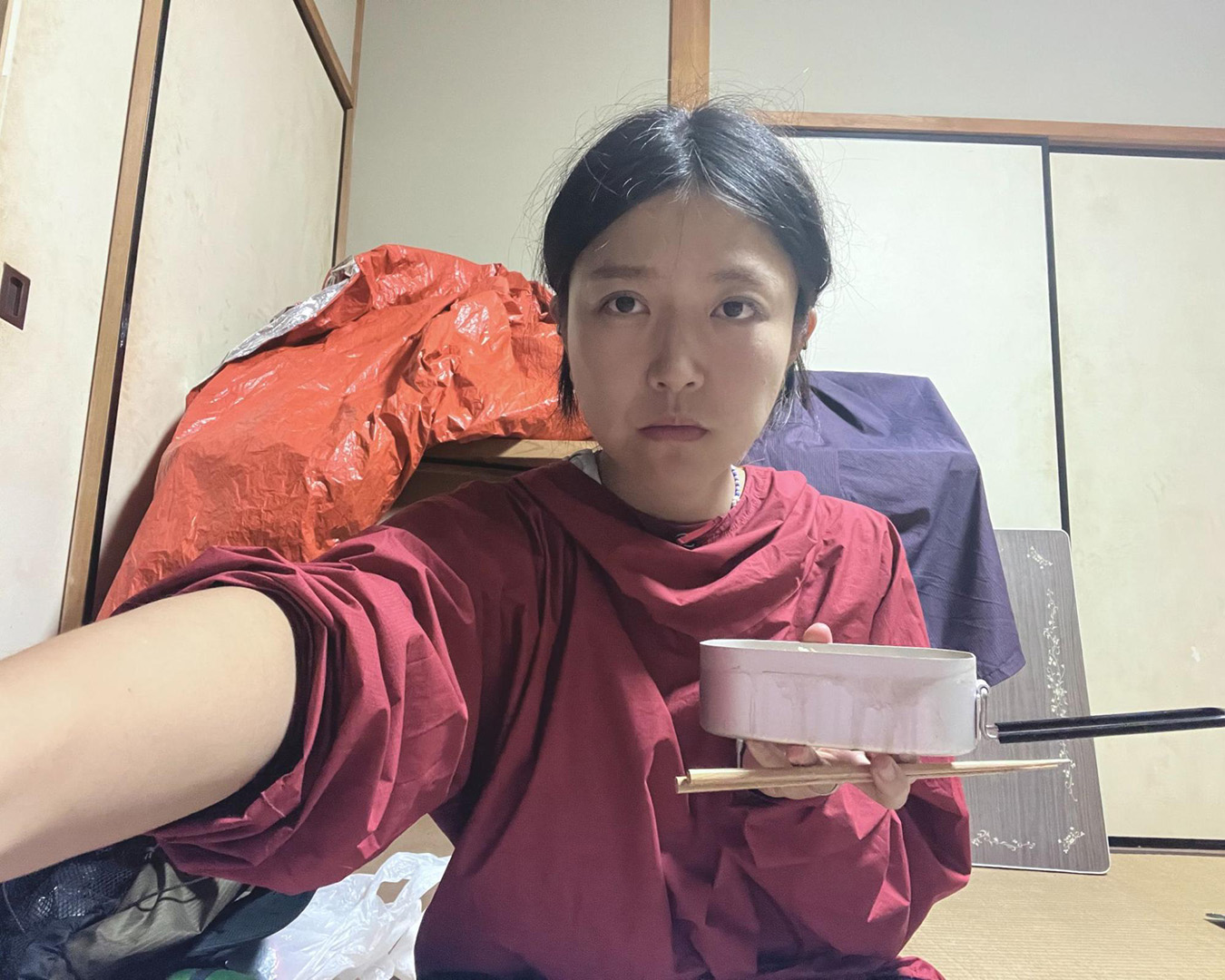
Day 1, Evening: In a day, I seem to have aged years. What happened?
After landing at Aso Kumamoto Airport at 9:00, I begin soaking brown rice and beans, which leads to my first mishap. I later discover that the Ziploc bag with my rice and beans has a hole and my food bag is drenched.
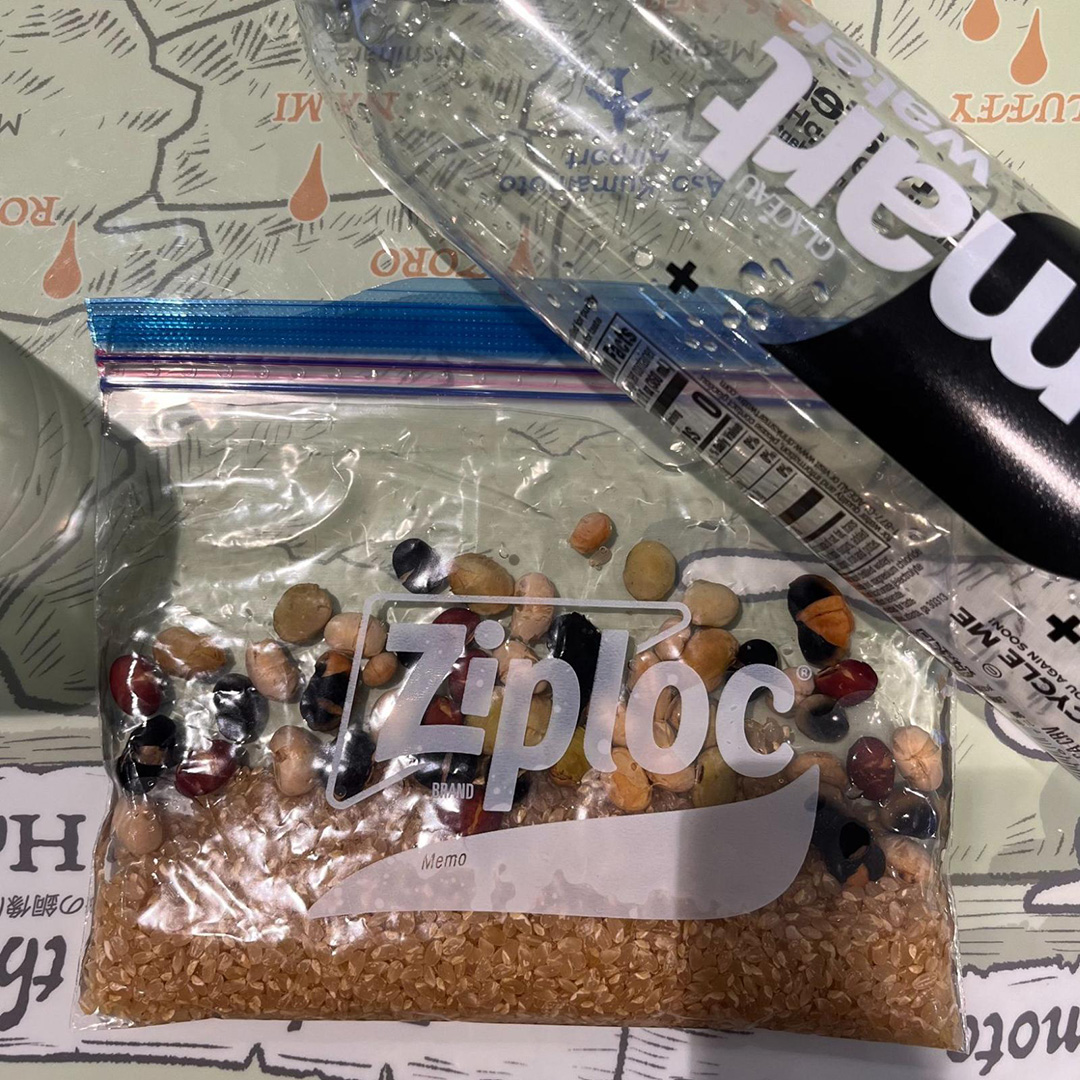
Lesson learned. Check the Ziploc bags you’re planning to soak rice in!
At Takamori Station, I fill up on spring water, stock up on lunch and dinner ingredients, and buy a gas canister for my stove. Then I set off.
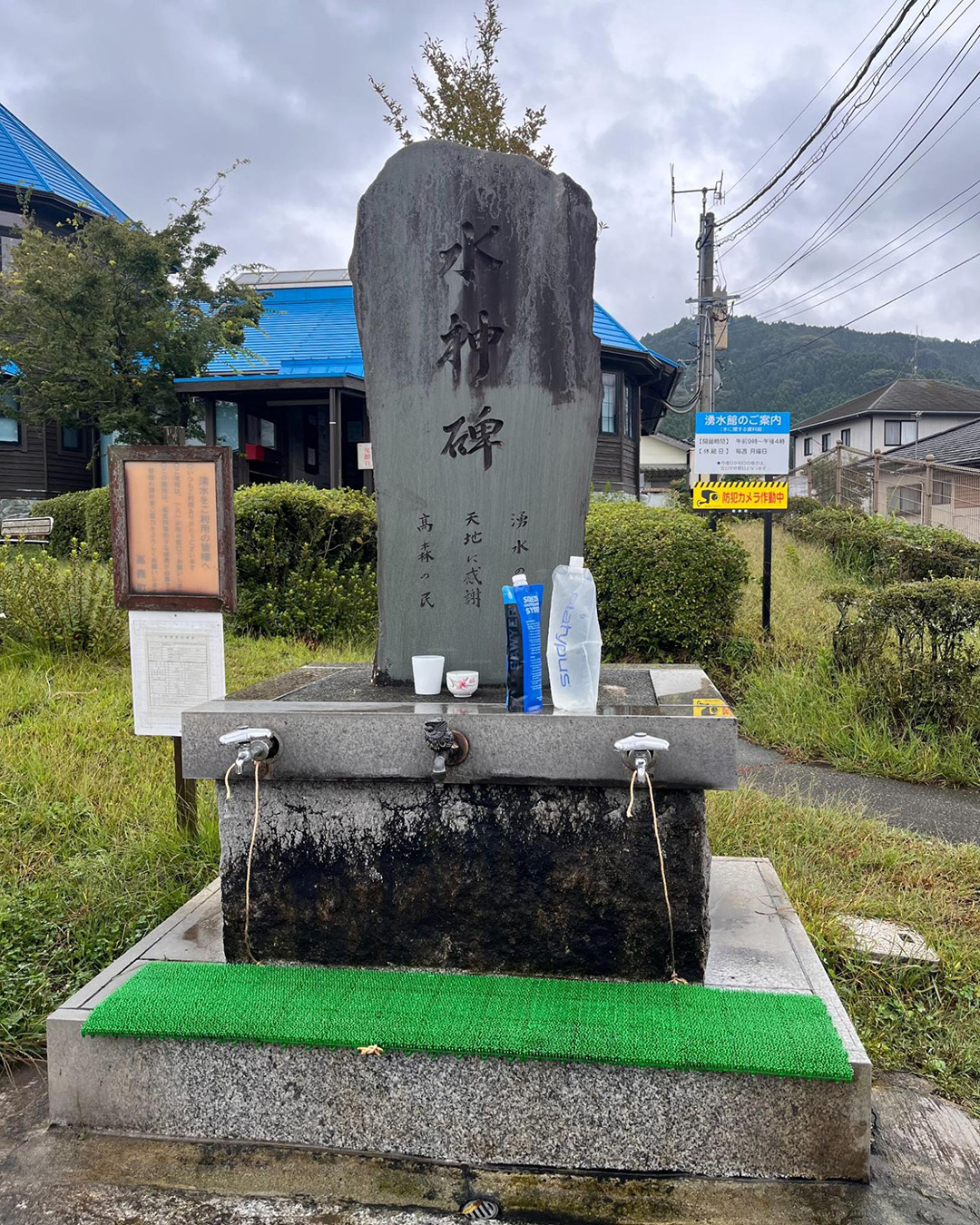
Spring water faucets at Takamori Station.
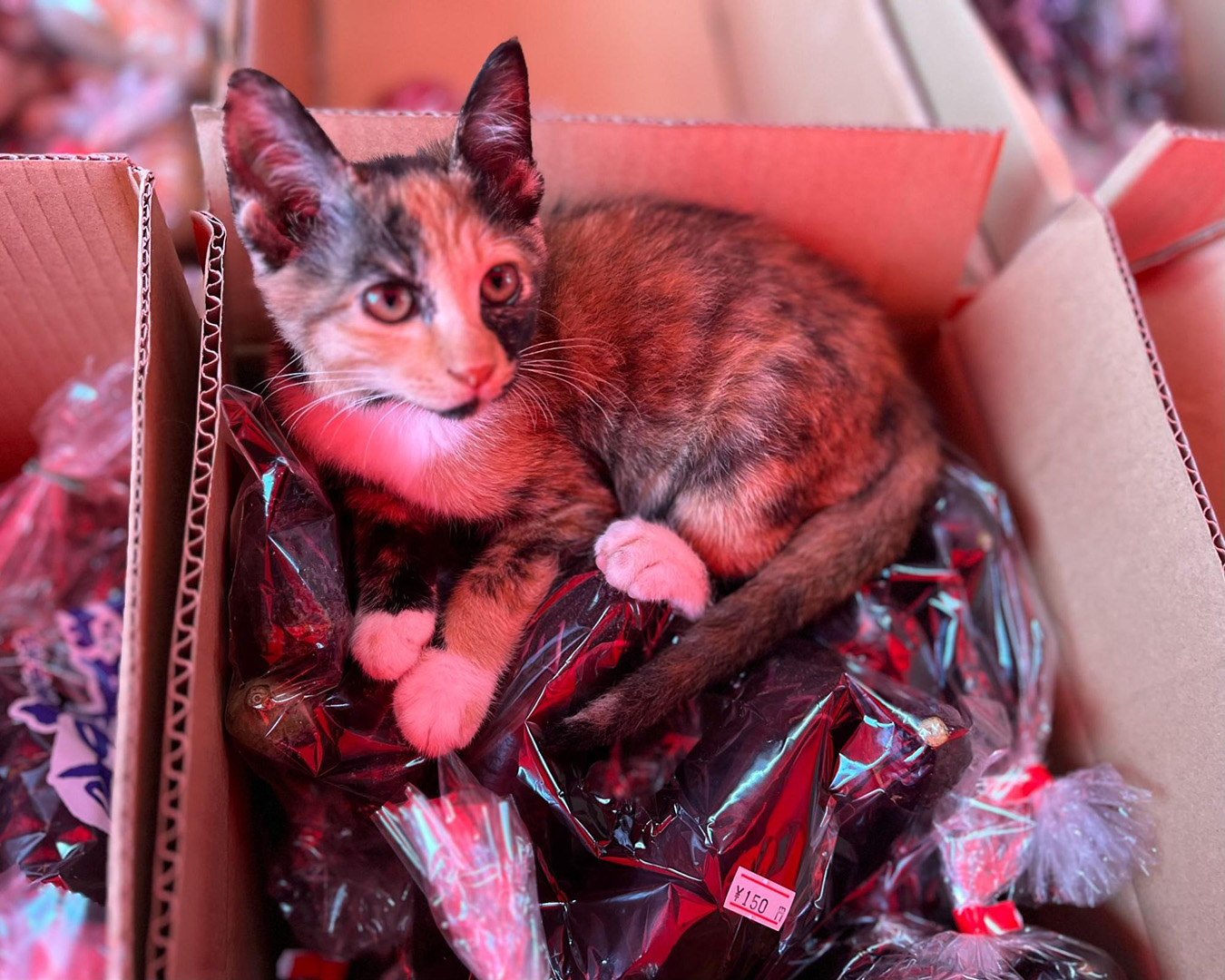
Vegetables sold at the local market. I thought I’d want to take the kitten with me, until it bit me.
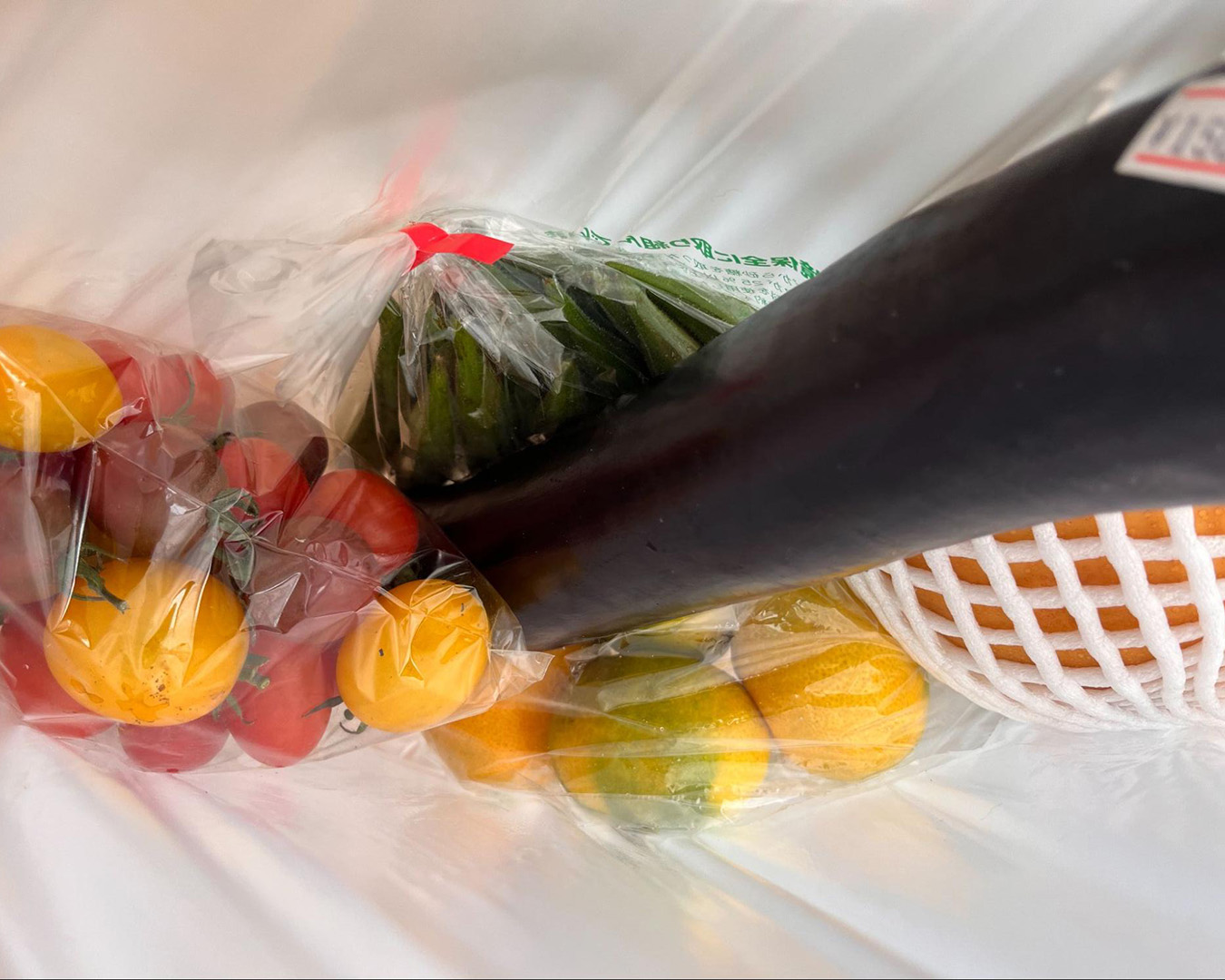
Note to self: Vegetables contain water and are heavy.
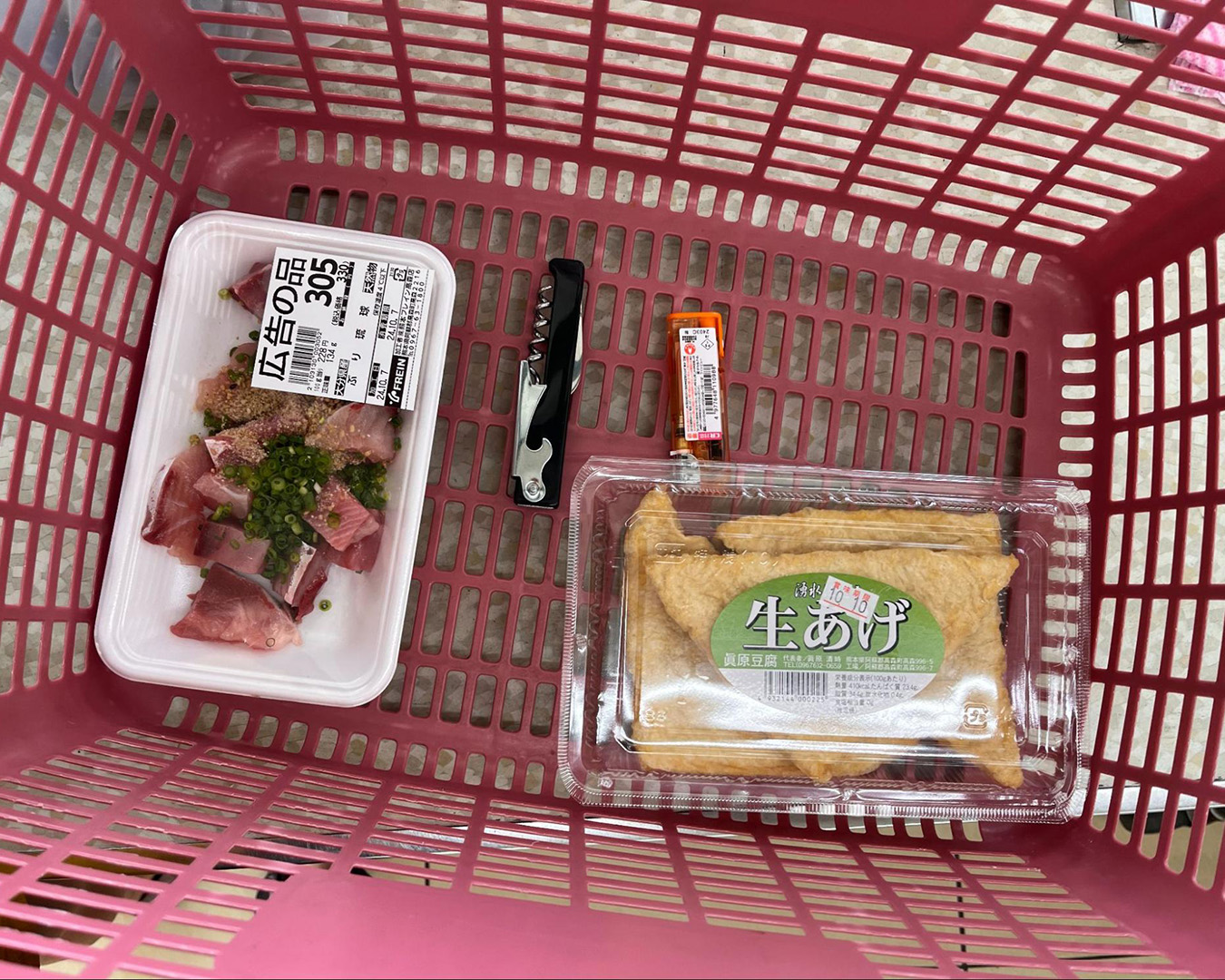
I buy a knife, lunch ingredients and abura-age (sliced fried tofu, for pickling). Finding the right balance between eating fresh food and keeping my pack light is tricky.
My first stop is my lunch spot: Takamori-don-no-sugi, two ancient cedar trees said to be more than 400 years old that are a well-known “power spot”, a place believed to be a strong source of mystical energy with beneficial healing effects for visitors.

Alone and starting to feel anxious.
I remember that I’m no good with power spots. I don’t have a sixth sense or any spiritual sensitivity. What I do have is an overactive imagination, and I can endlessly find ways to scare myself. There’s no one else around now. I can hear all sorts of sounds ー animals, other noises. I’m completely freaked out, feeling this immense invisible energy. Time for lunch.
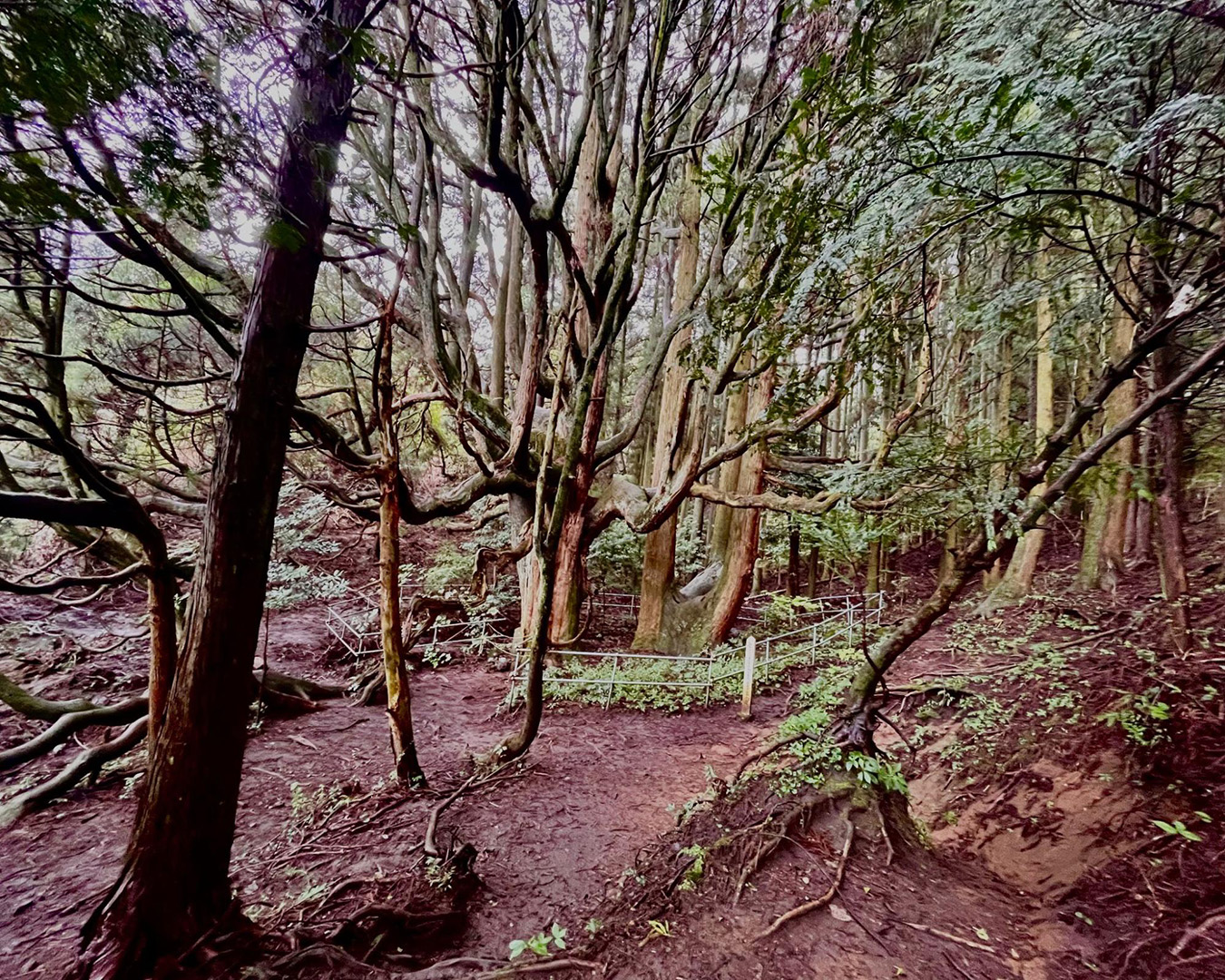
It seems to be a tourist spot but nobody is here. I wish someone were.
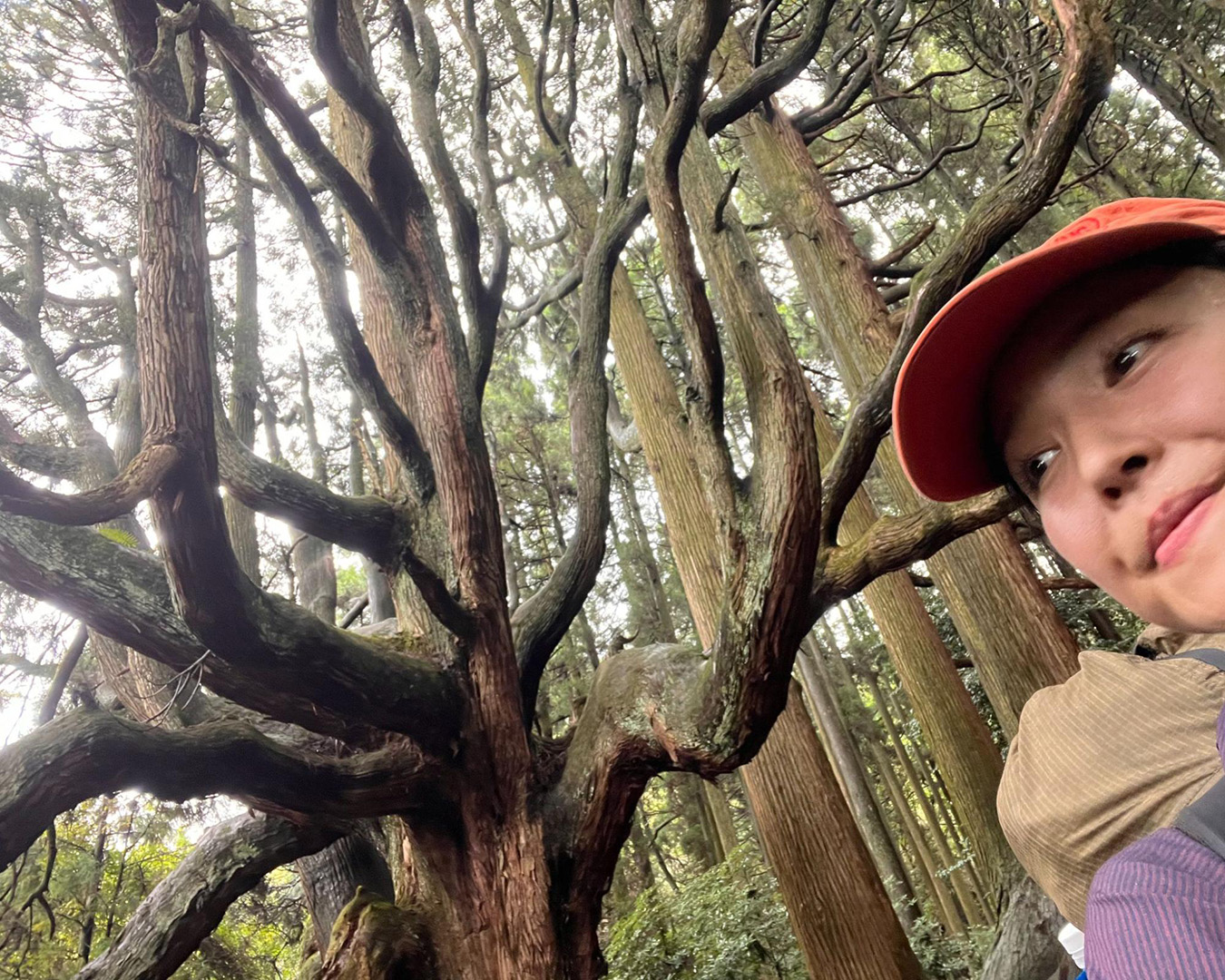
Taking a selfie (and hoping that nothing supernatural shows up in the photo).
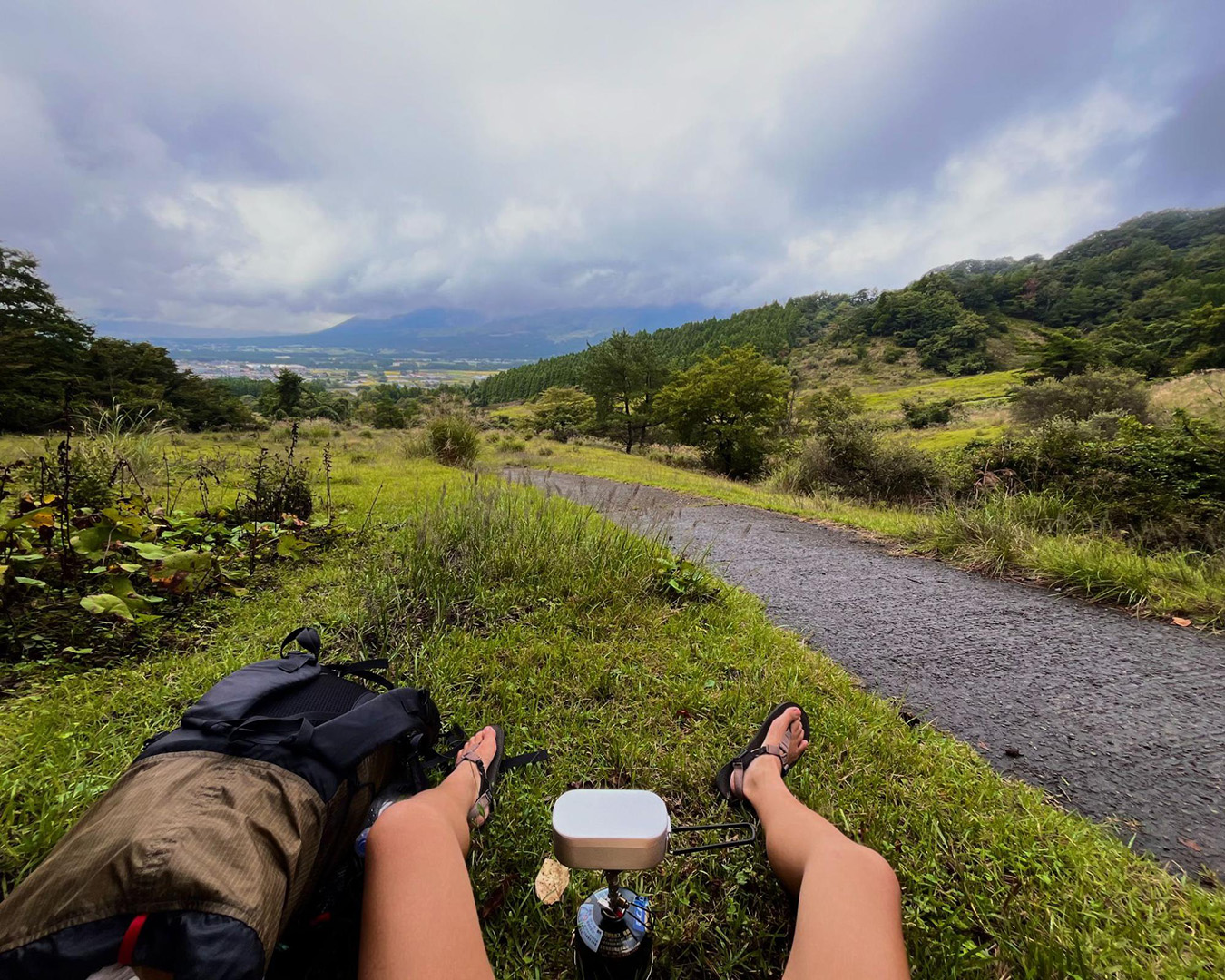
Preparing lunch at the giant cedar tree. I accidentally touch a furry caterpillar on my pack and immediately disinfect and apply a mugwort and loquat cream.
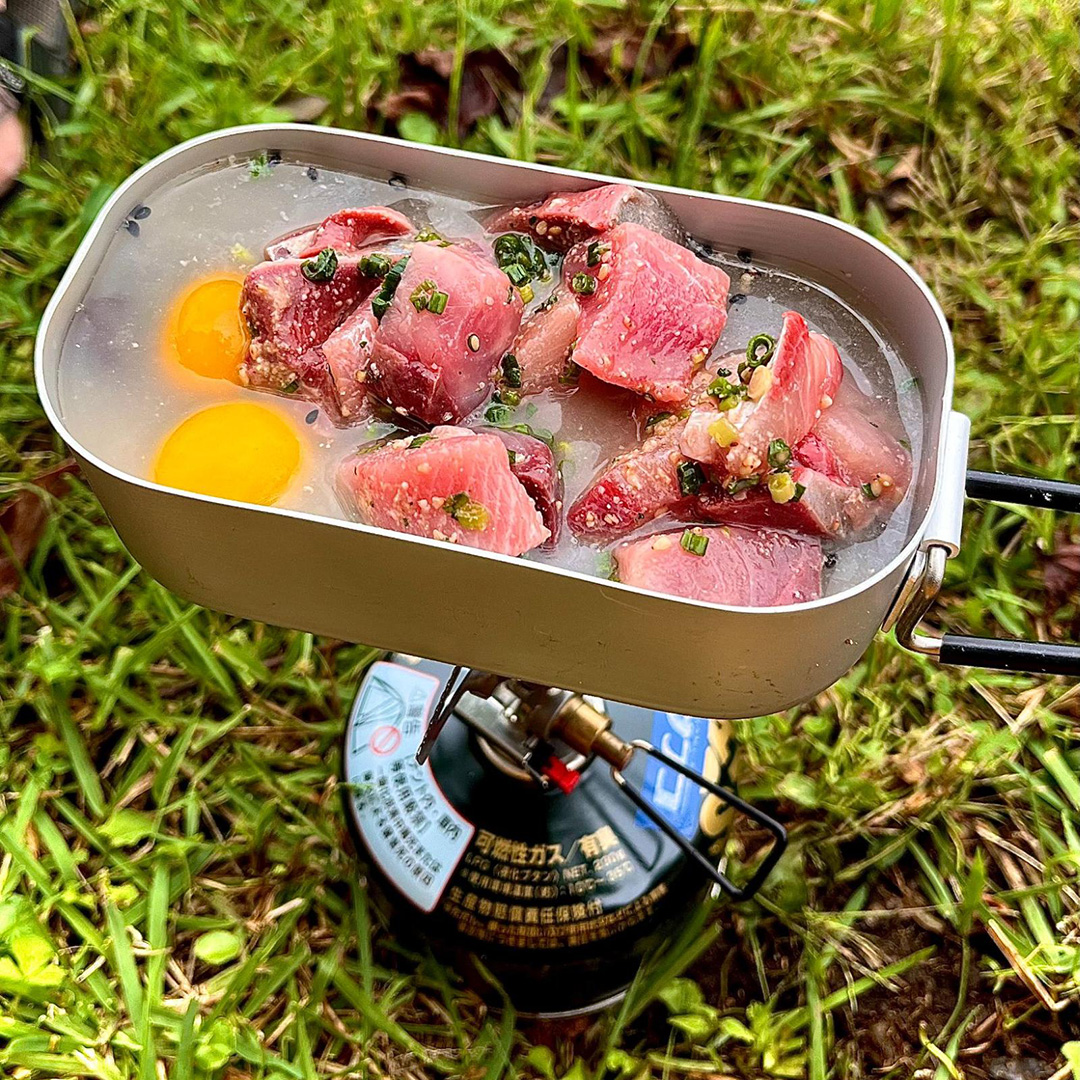
Mini tomatoes add color to my rice porridge with marinated yellowtail.
I make rice porridge from leftover lotus root rice balls, topped with ryukyu (marinated yellowtail, a regional dish from Oita nearby prefecture) and steamed for 30 seconds. I add fish sauce and sesame oil. It looks amazing ー but I’m so nervous that I can’t taste anything. No matter how much salt I add, or even if I drizzle sesame oil, my meal has no flavor. Today, it looks like rain. I keep looking back. Nothing. I’m scared. My heart is pounding. My appetite is fading fast but I’m not making much progress getting through my food. Eating alone is boring. I feel like I might throw up but somehow I manage to eat my meal, hurriedly pack up, and set off. In the rain, I head toward tonight’s campsite, Nabe-no-Hira Campground.
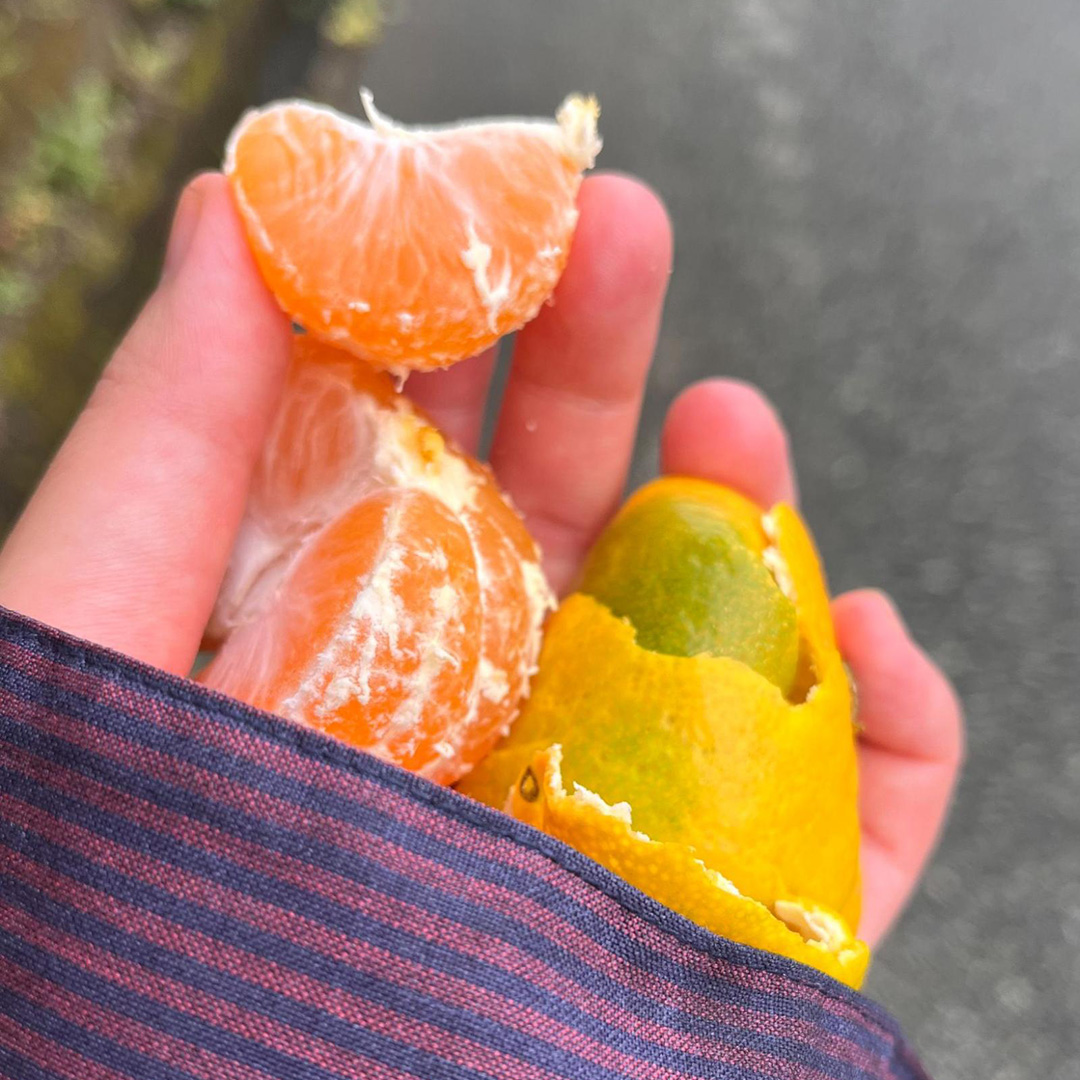
My stress-relief solution: the aroma of mandarin orange peels.
To relieve my stress, I rub a mandarin orange peel in my hands and breathe in the aroma. For a moment, it calms me.
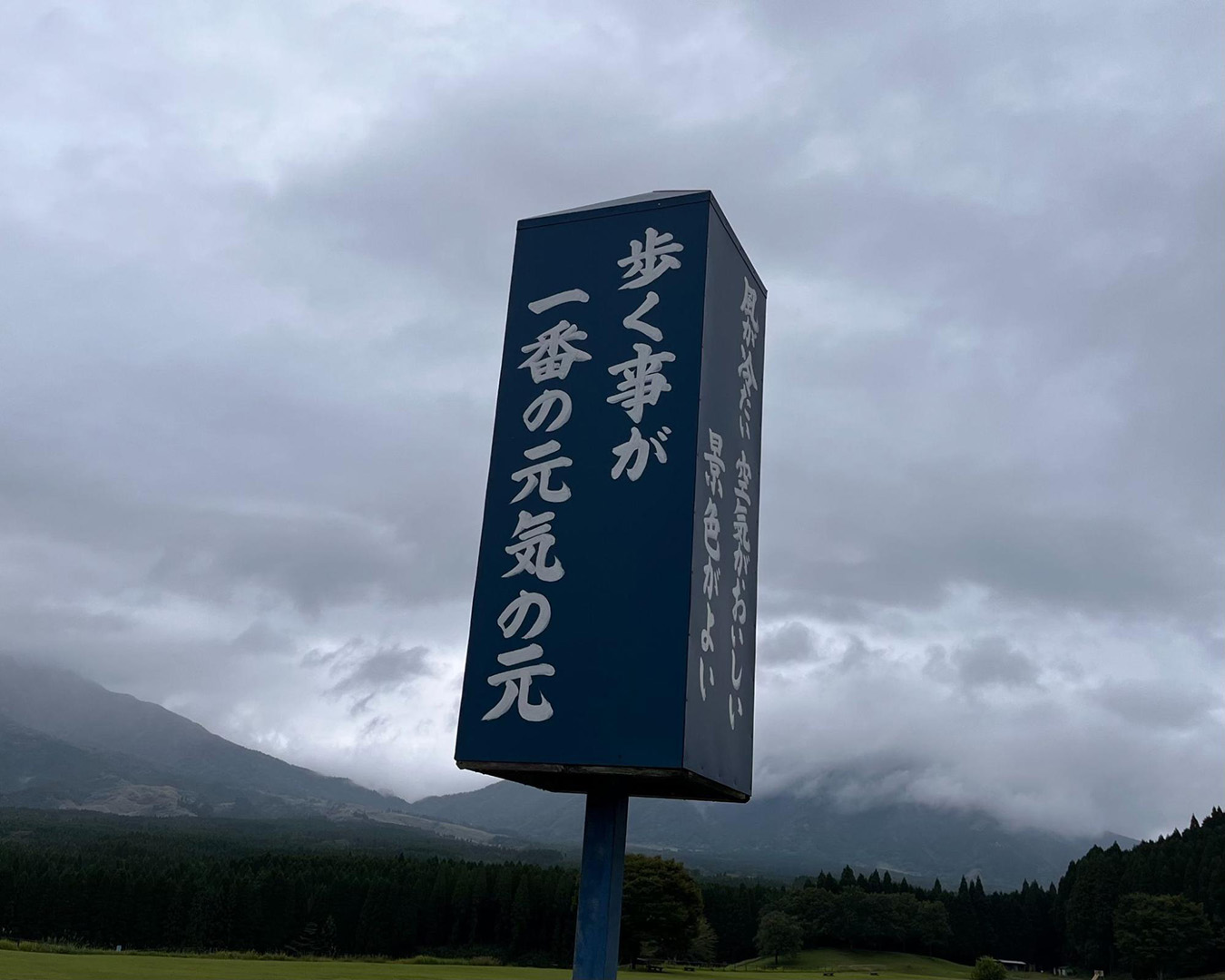
I pass a sign that reads, “Walking is the best source of energy”. I feel motivated to push on.
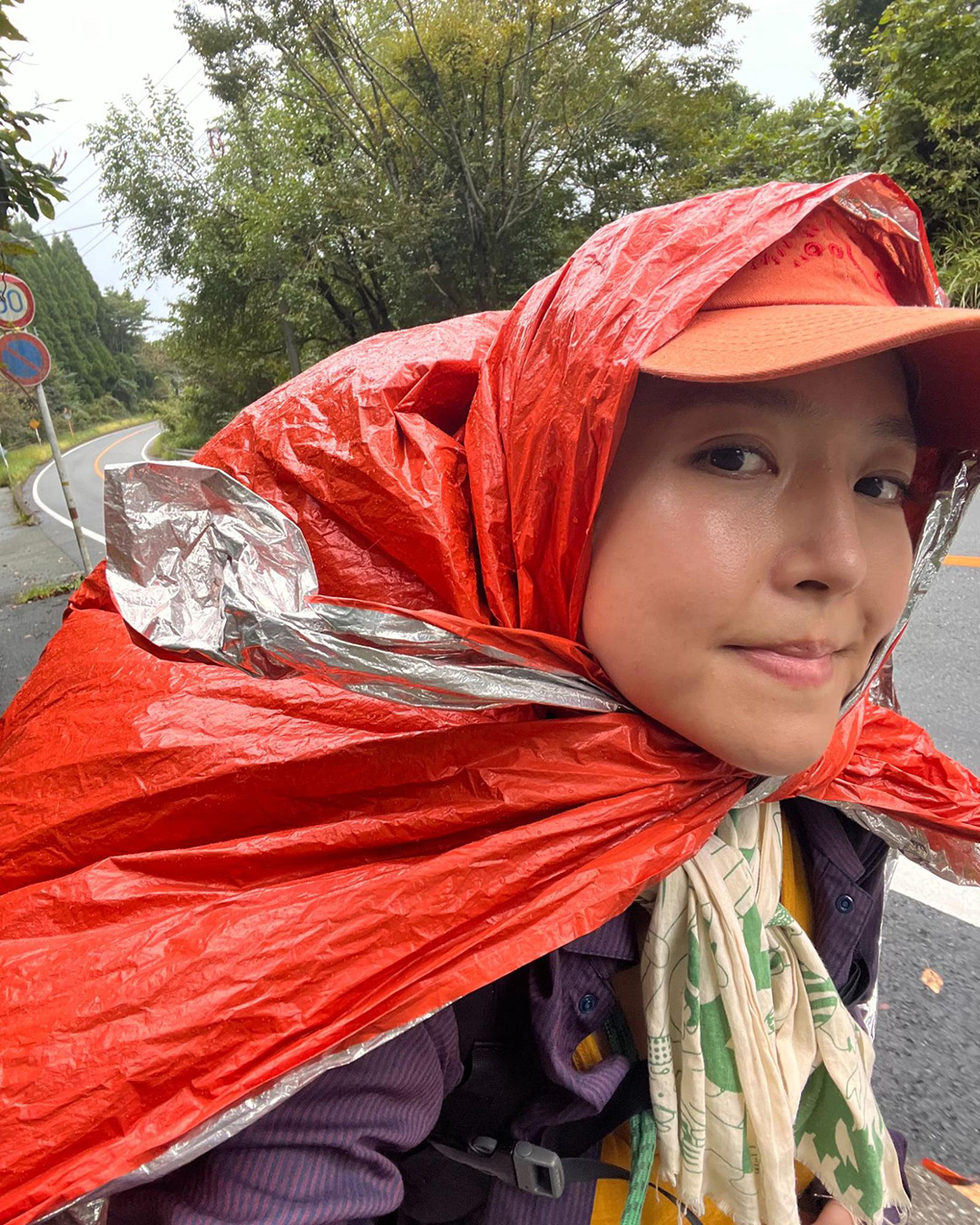
Walking in the rain is hard but my skin glows. I’ll consider it a win.
I feel heavy. My water is heavy. The vegetables are heavy. I keep telling myself it’s all for me, and I continue walking.
Alone with my coughing
After walking slowly for about four hours, I arrive at Nabe-no-Hira Campground. It’s 16:30. A pale purple mist envelopes the place. Only a flock of crows is here. There are no other guests; nobody looking after the campsite. I buy a ticket for my stay from a vending machine and set up my tent. My heart sinks under the weight of what might be the deepest loneliness I’ve ever felt. For some reason, I begin devouring raw vegetables.
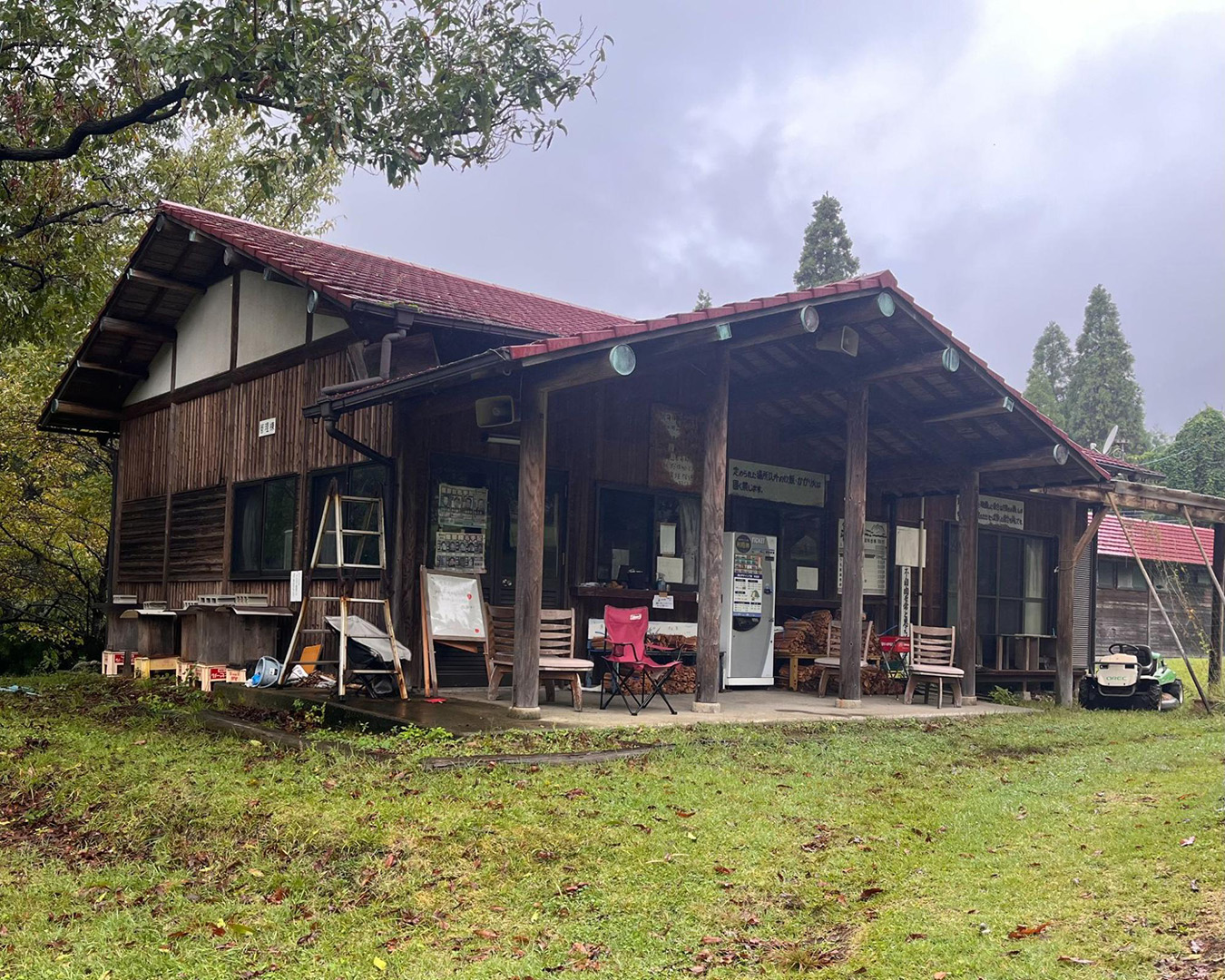
Nabe-no-Hira Campground
Shaking, I try calling my boyfriend. I wonder why I’m even doing this hike. He doesn’t pick up ー of course, he’s at work. My eyes sting. My heart pounds in my ears. I call Mom. In her usual voice, she says: “What’s wrong?” The moment I hear her voice, I tear up. As I sob, I explain the situation to her. Having a mom I can reach out to like this makes me the happiest person in the world. It makes me realize that I’m not alone.
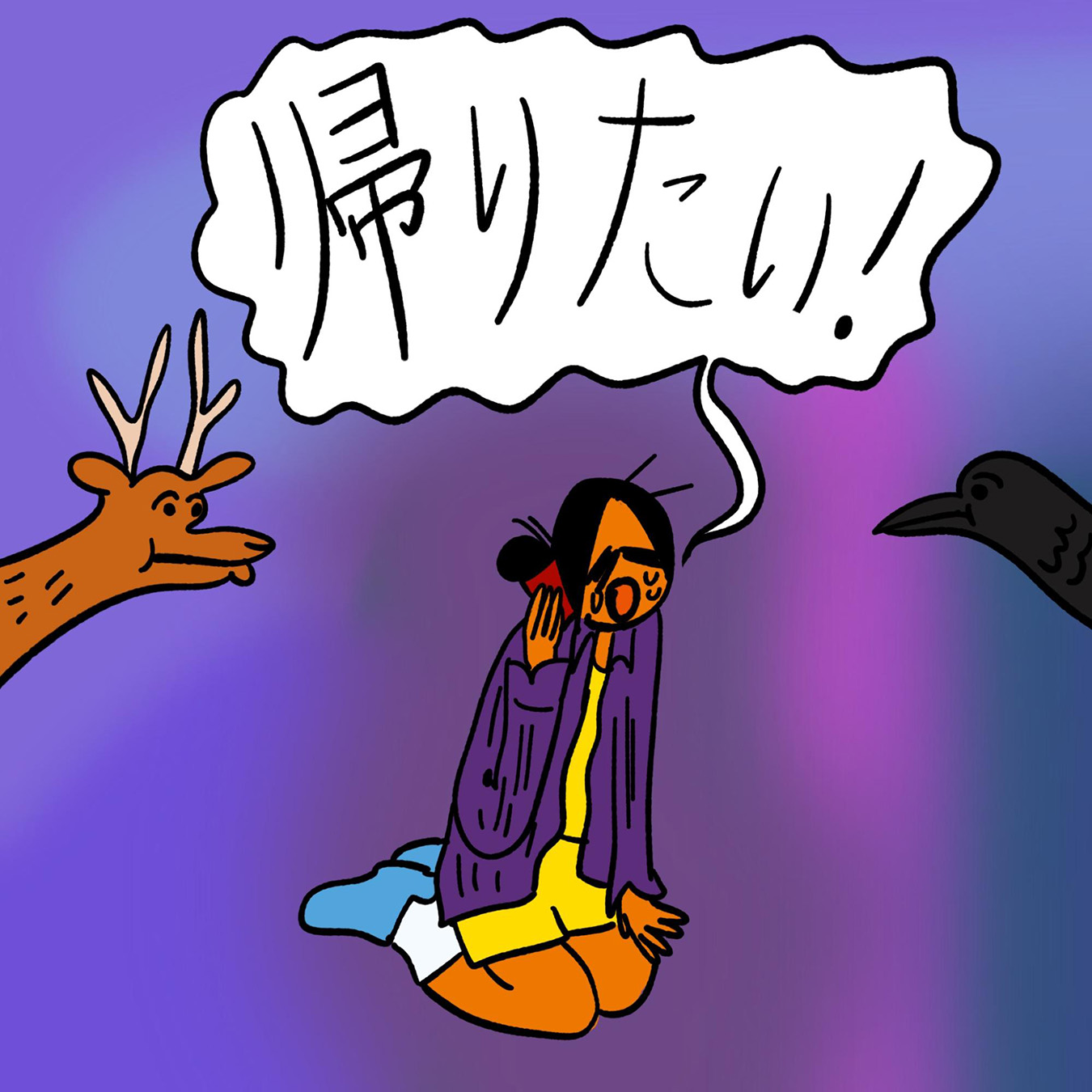
I want to go home!
Hearing Mom’s voice and words of encouragement calms me. She tells me to sleep indoors. I contact the campsite’s caretaker and arrange to sleep inside the management building. I’m surprised at how much peace of mind I get from being indoors. I’m still not hungry ー probably from all of the stress and tension. But I know that I won’t have energy unless I eat, so I make myself some dinner.
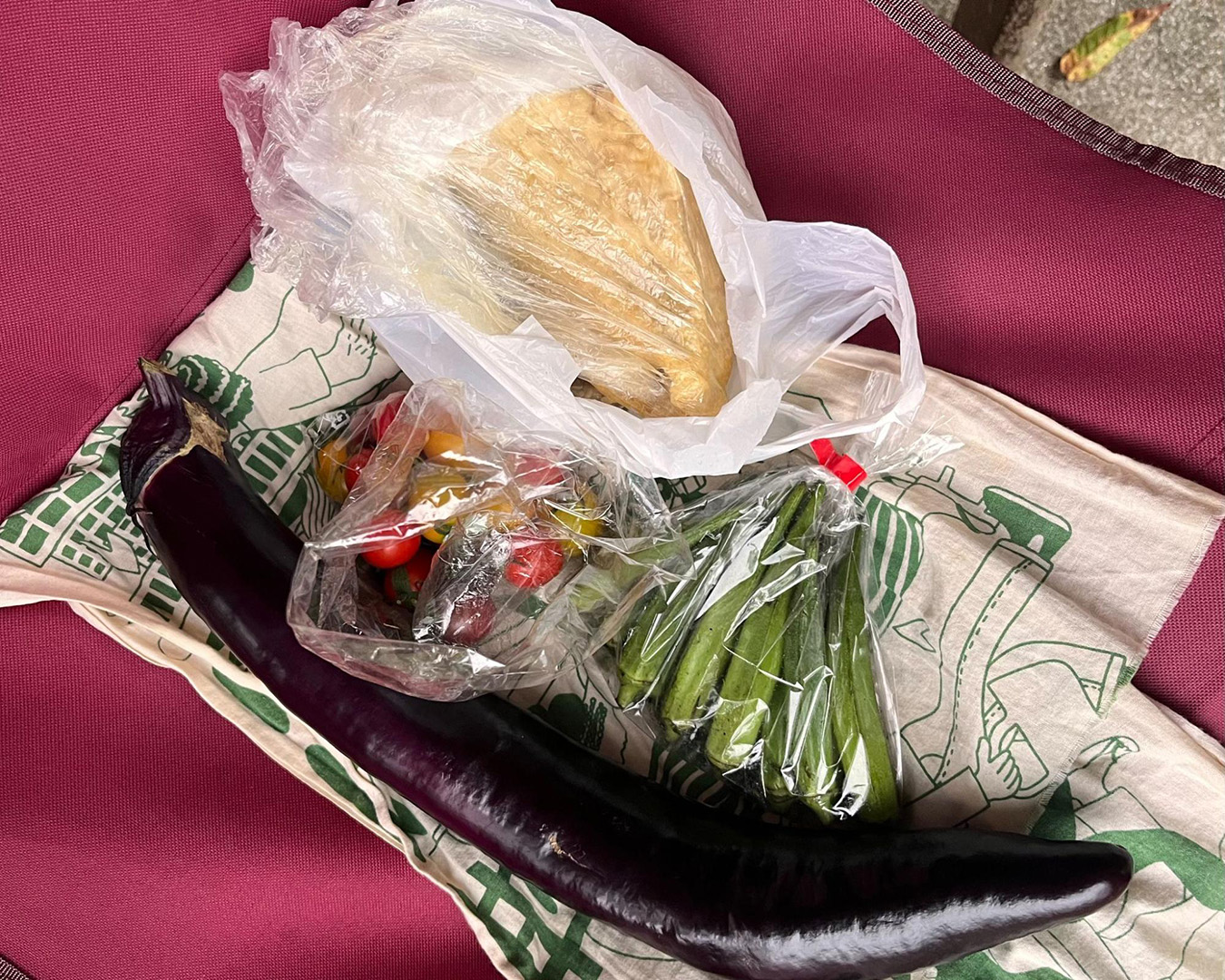
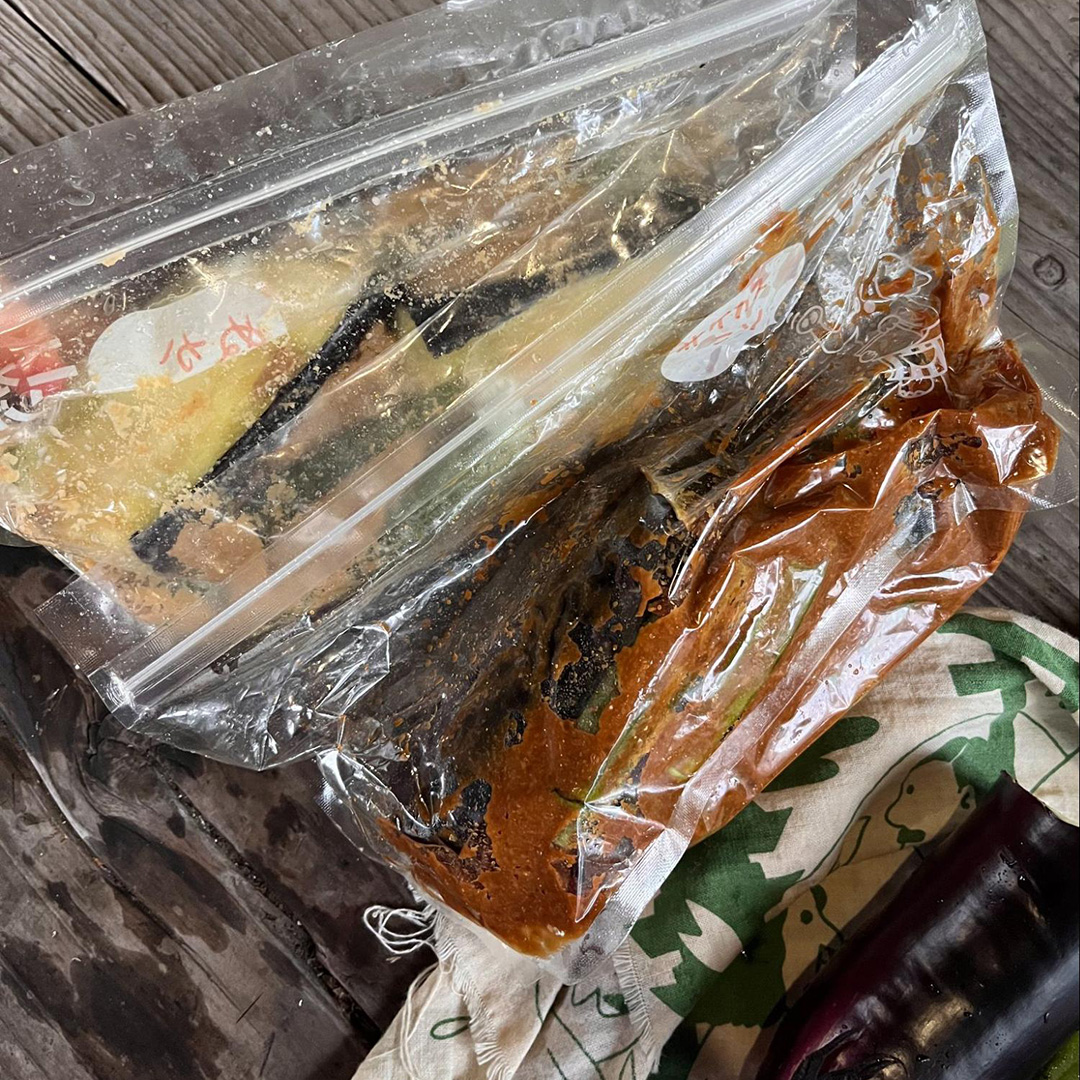
I pickle the vegetables and abura-age (sliced fried tofu), some as nukazuke (in the fermenting rice bran pickling bed) and some in the sake-lees miso.
Earlier, when I was still feeling cheerful, I soaked some rice in water. Now, I’m finally cooking it.
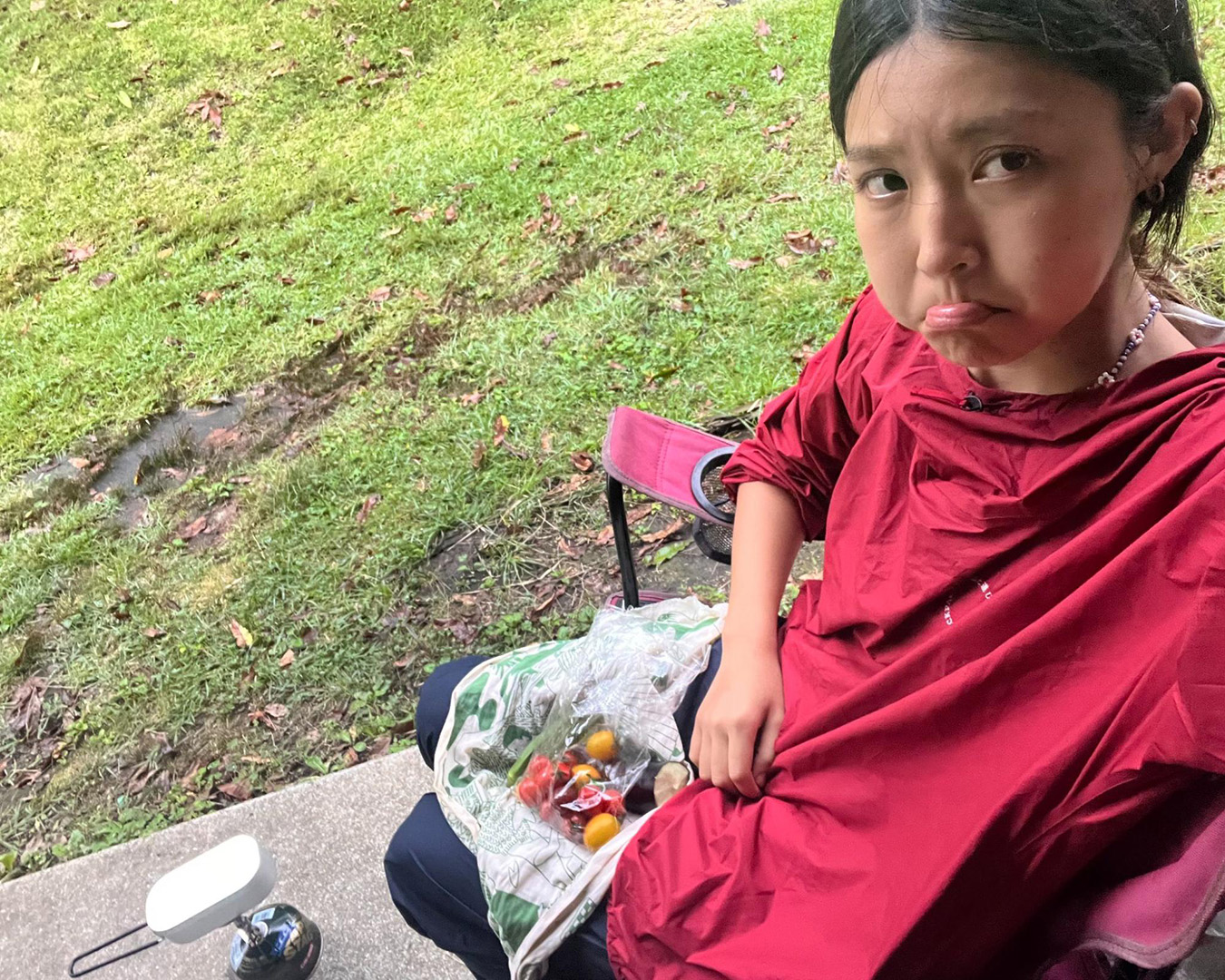
I snack on raw vegetables while I wait for the rice. I’m not hungry. I just need to be doing something so I don’t get scared.
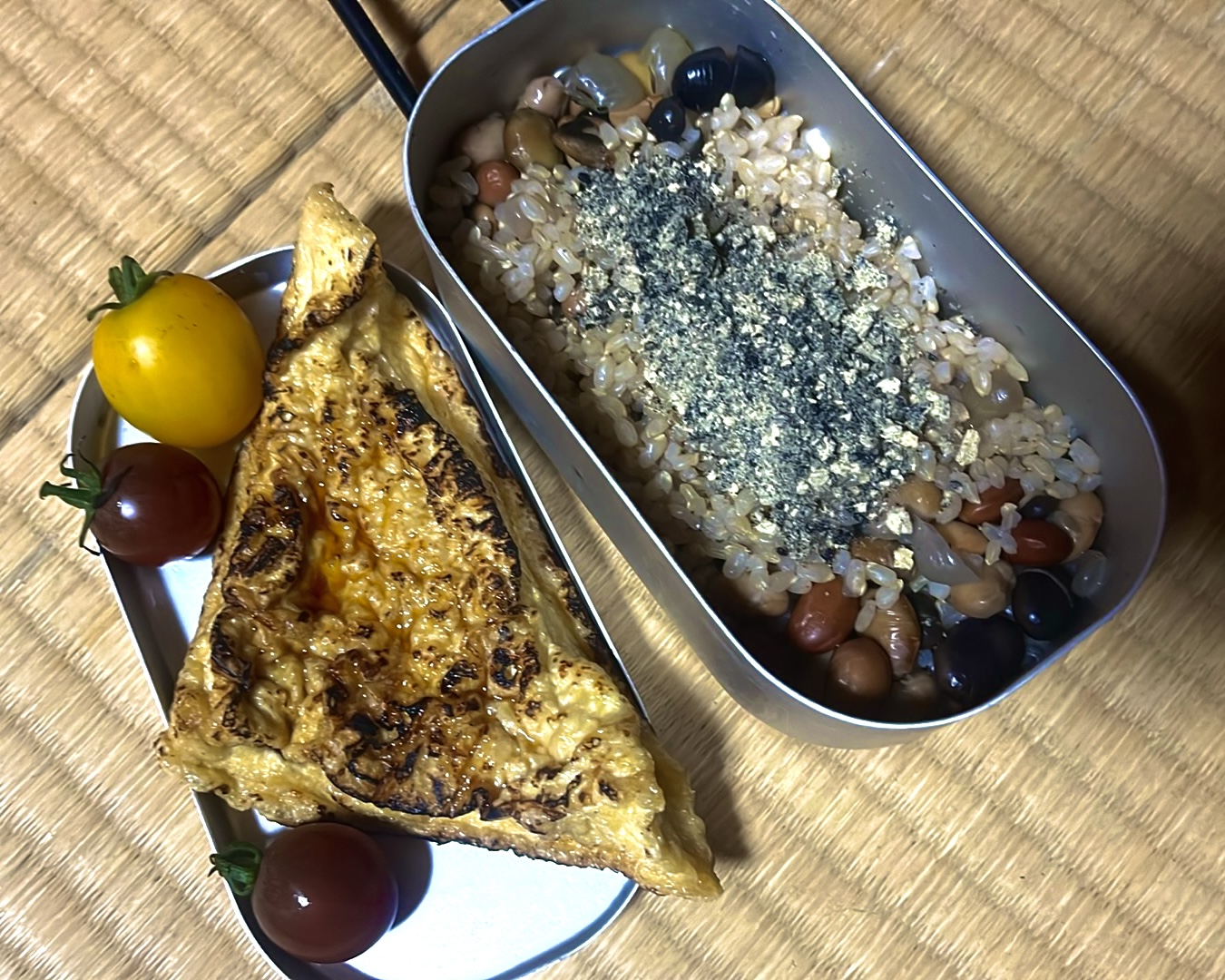
The brown rice and beans, sprinkled with black sesame and roasted soybean flour, turns out well. I have it with grilled abura-age (sliced fried tofu), drizzled with fish sauce, and tomatoes.
Dinner is delicious, but not really. Honestly, I can’t taste much of anything. My anxiety and loneliness from being alone is affecting my sense of taste. (Here’s that photo again from earlier.)
A pitiful sight
I realize the importance of eating with someone else. No matter how good the food is, eating alone isn’t fun. Anything becomes a feast when sharing a meal with someone I love. I want to see Mom. I want to see my boyfriend ー so badly that I fall asleep holding the charm he gave me.
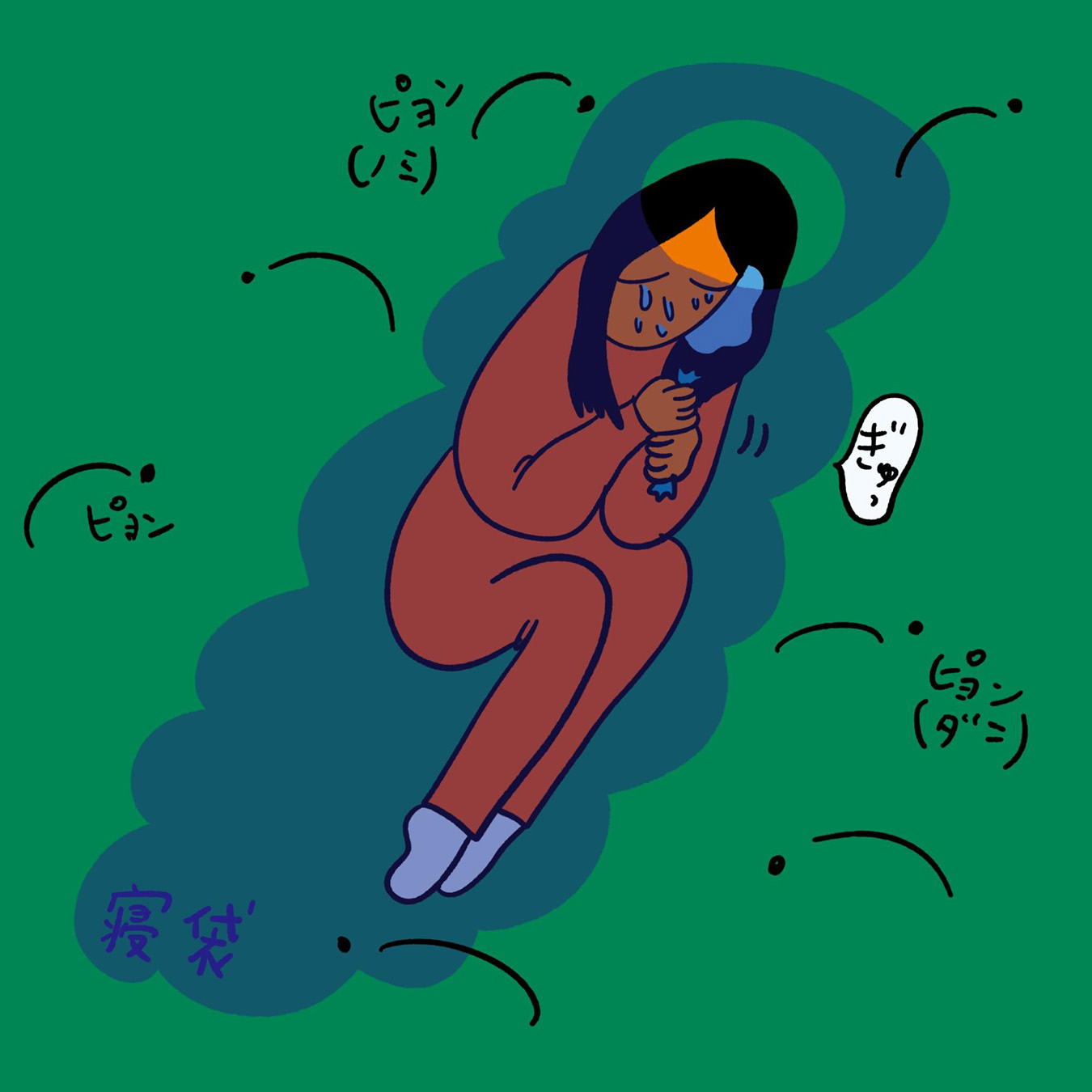
I clench the charm inside of my sleeping bag. As I sleep, fleas and mites feast on me.

The campsite management building where I spend the night.
Day 2
The next morning, I wake up itchy. I didn’t sleep well because of the itchiness. The management building where I spent the night had been empty for so long that fleas and mites appear to have taken over. Last night, they had a feast. (Four months later, I still have scars from the bites.) I now feel that I wasn’t alone even though I was all by myself. Before, I must have been emotionally exhausted.
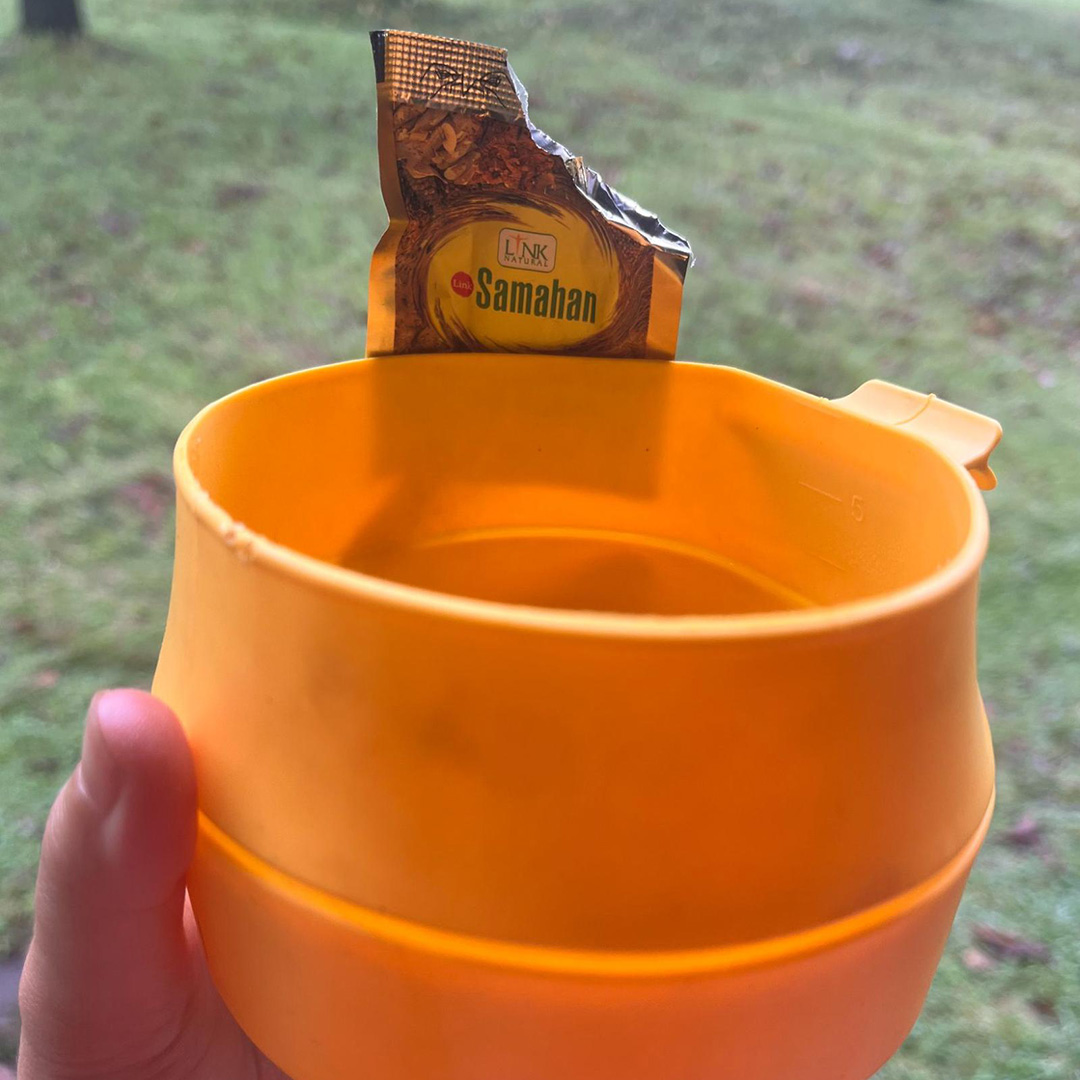
Spiced tea calms me.
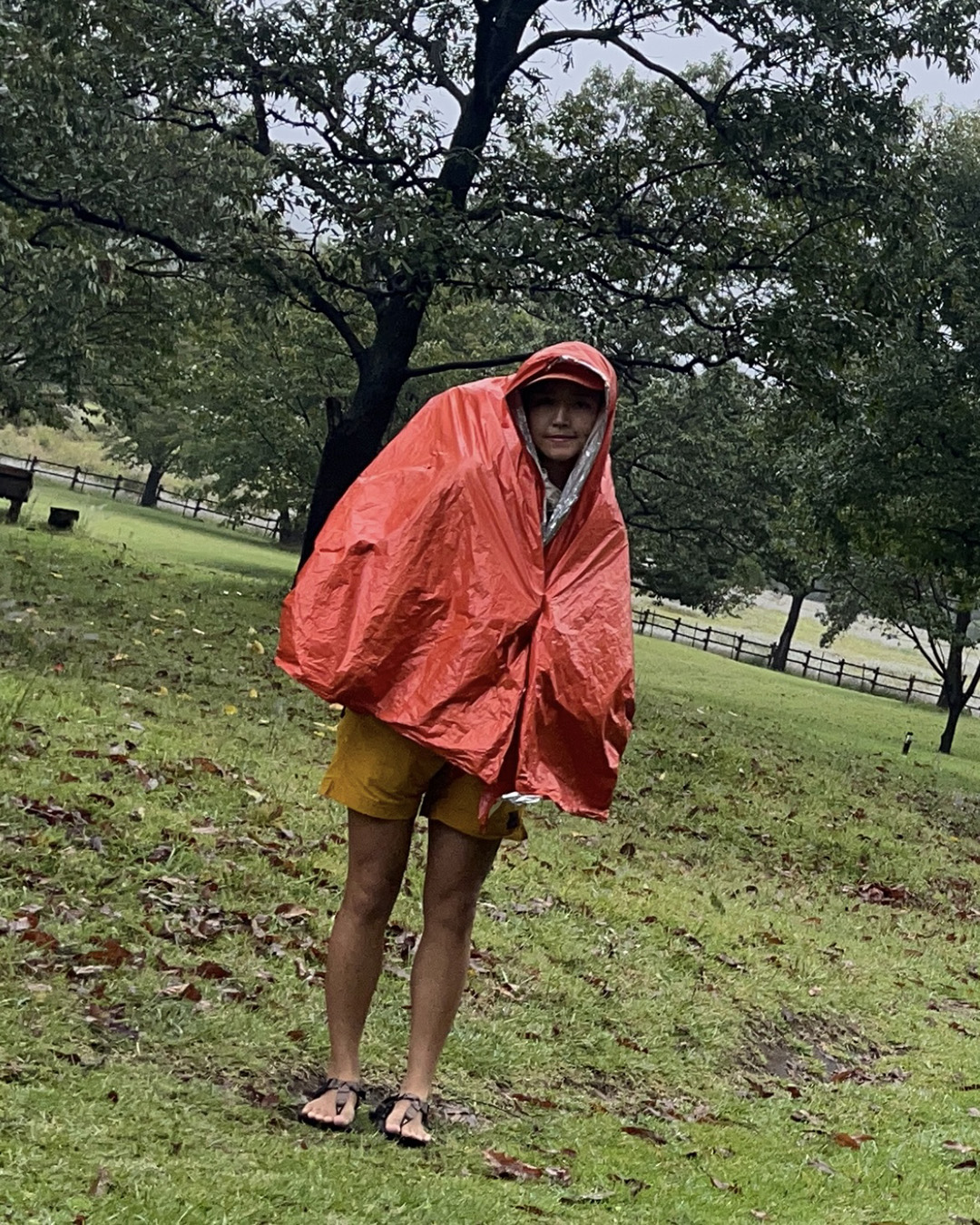
I set off in a light rain. It’s still dark out. Right before that, I take this photo at the campsite.
After I leave, the campsite’s caretaker calls to check in on me. “Come again,” he says. I don’t know if I’ll ever make it back, but I won’t forget his kindness.
I walk along the Kyushu Nature Trail, heading toward the Michi-no-Eki Aso, a roadside stop with a tourist information center and a shop selling local produce and box lunches. The path is overgrown. It’s been a while since anyone walked here. Terrified by the cattle I suddenly encounter and the fresh-looking boar tracks I notice, I start singing loudly as I walk.
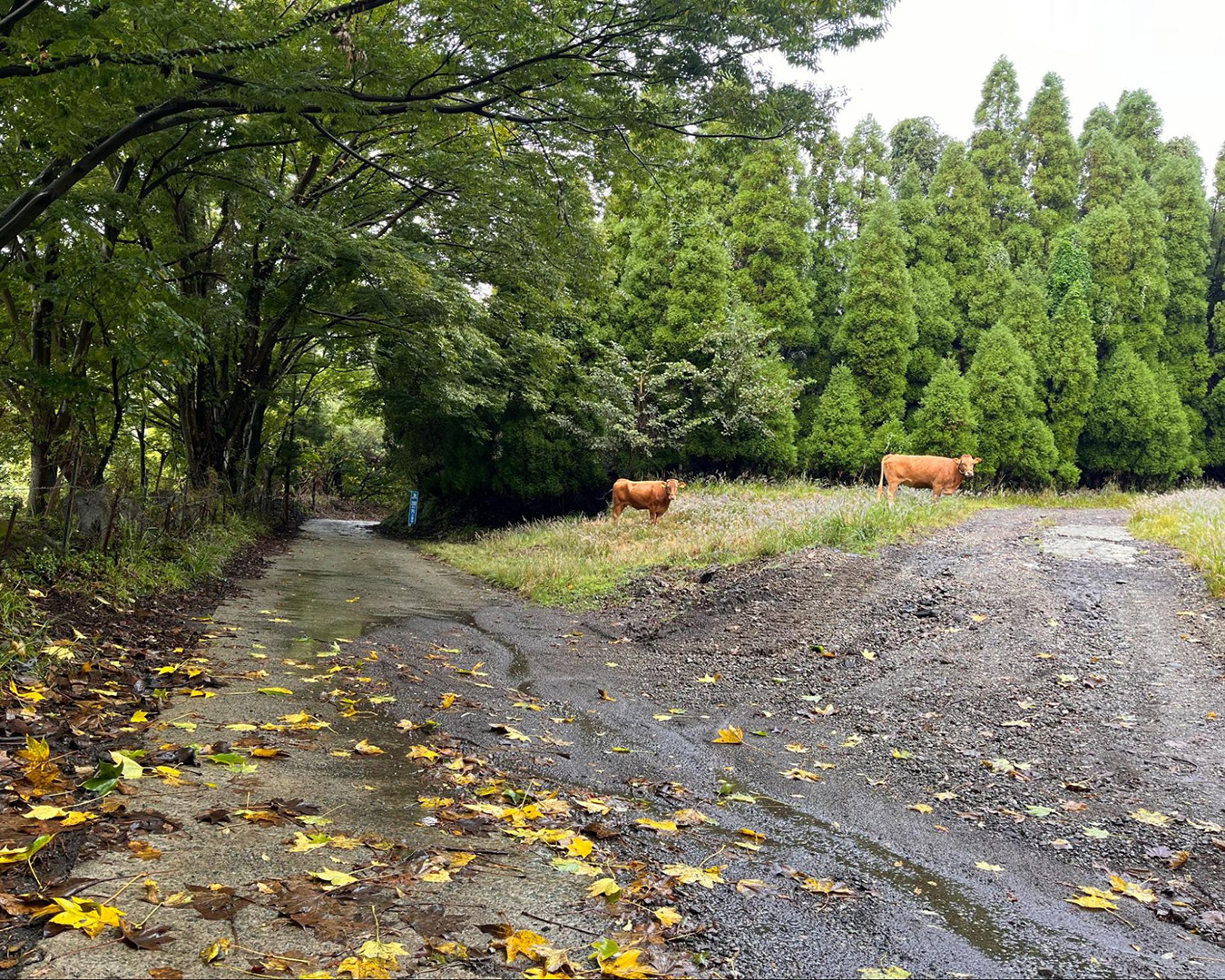
Cattle appear out of nowhere.
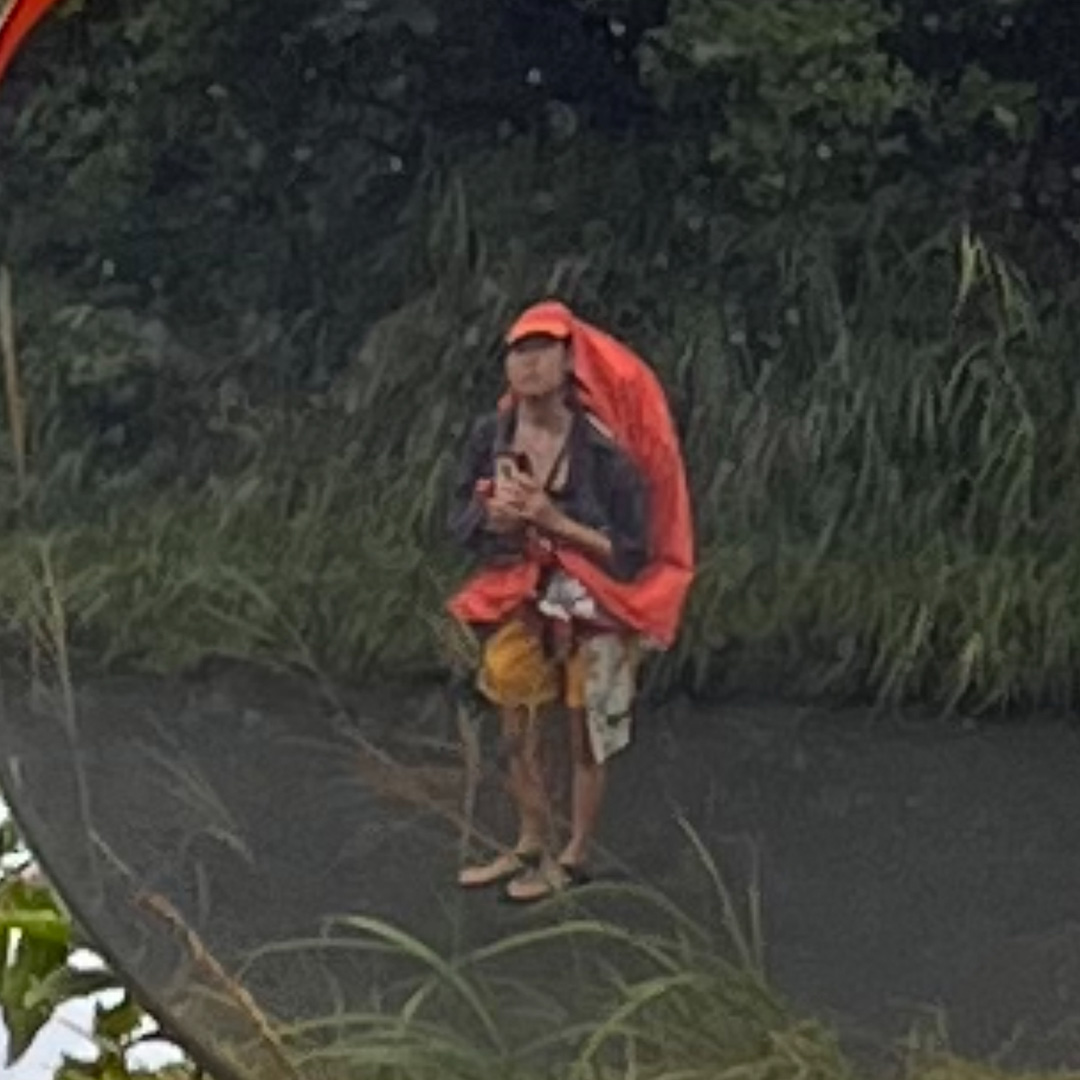
I wrap an emergency blanket around my waist. If it starts raining, I can pull it over me and my backpack ー though I might startle anyone who sees me.
While I’m singing, I feel a strange sensation in my lower back. With my slightly arched posture, I’ve been using my lower back to support my backpack. By the time I realize this, it’s too late. I try to engage my core as I walk but that doesn’t stop the stabbing pain that comes in waves. To make matters worse, the stress has led to problems with my privates. I need to reach the Michi-no-Eki Aso soon to get myself sorted out.
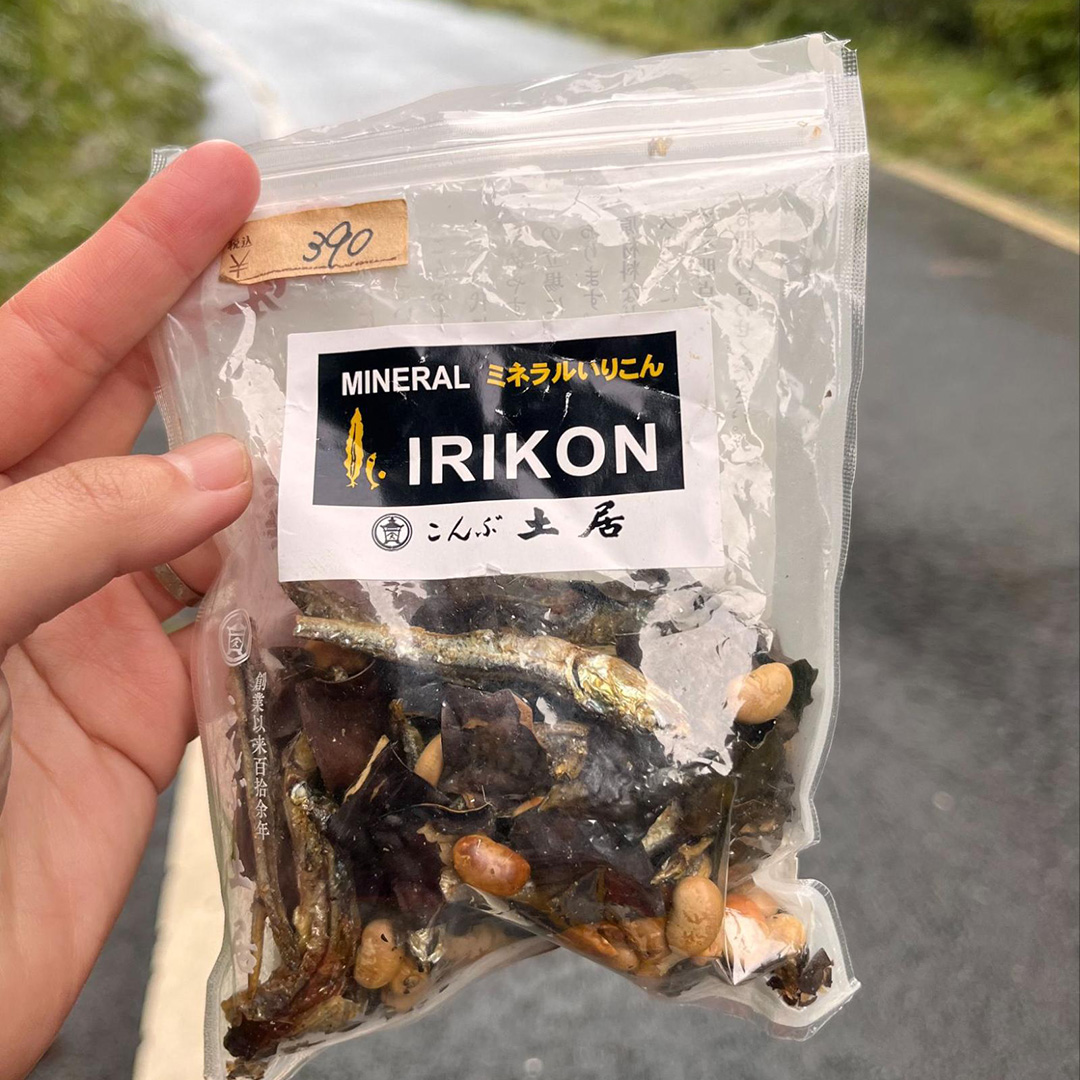
I nibble on the dried sardines mix to distract myself. It’s nutritious and delicious, and you can mix it in with rice.
After a slow, four-hour walk, I arrive at Michi-no-Eki Aso. For lunch, I eat umaman (a steamed bun with horse meat filling), a local specialty, with my homemade pickles. The umaman flavor is predictable. From this I learn that it’s no fun eating something quirky on your own. While having ice cream afterward, an elderly woman hands me a religious pamphlet. I guess I look like someone who needs saving.
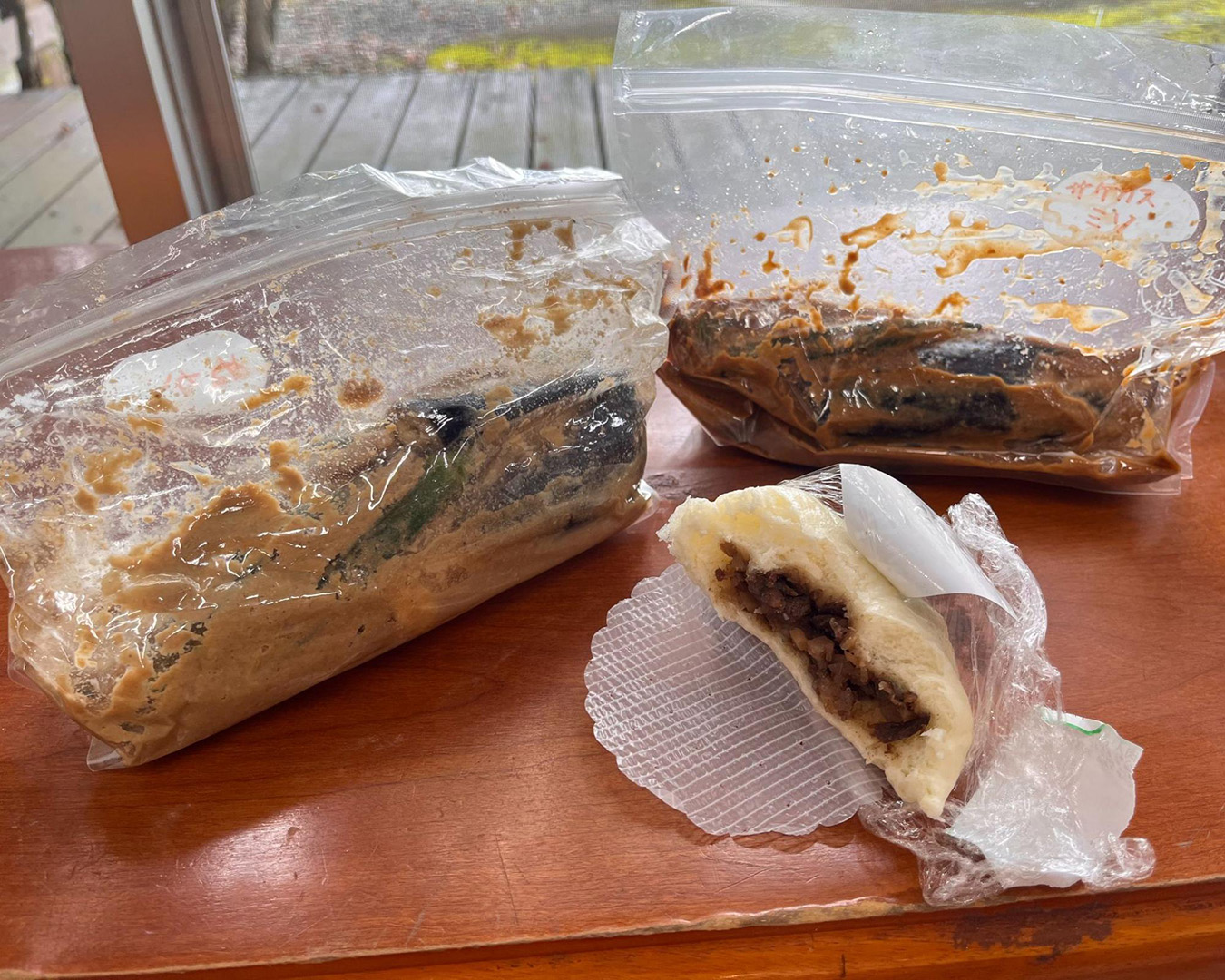
My lonely spread.
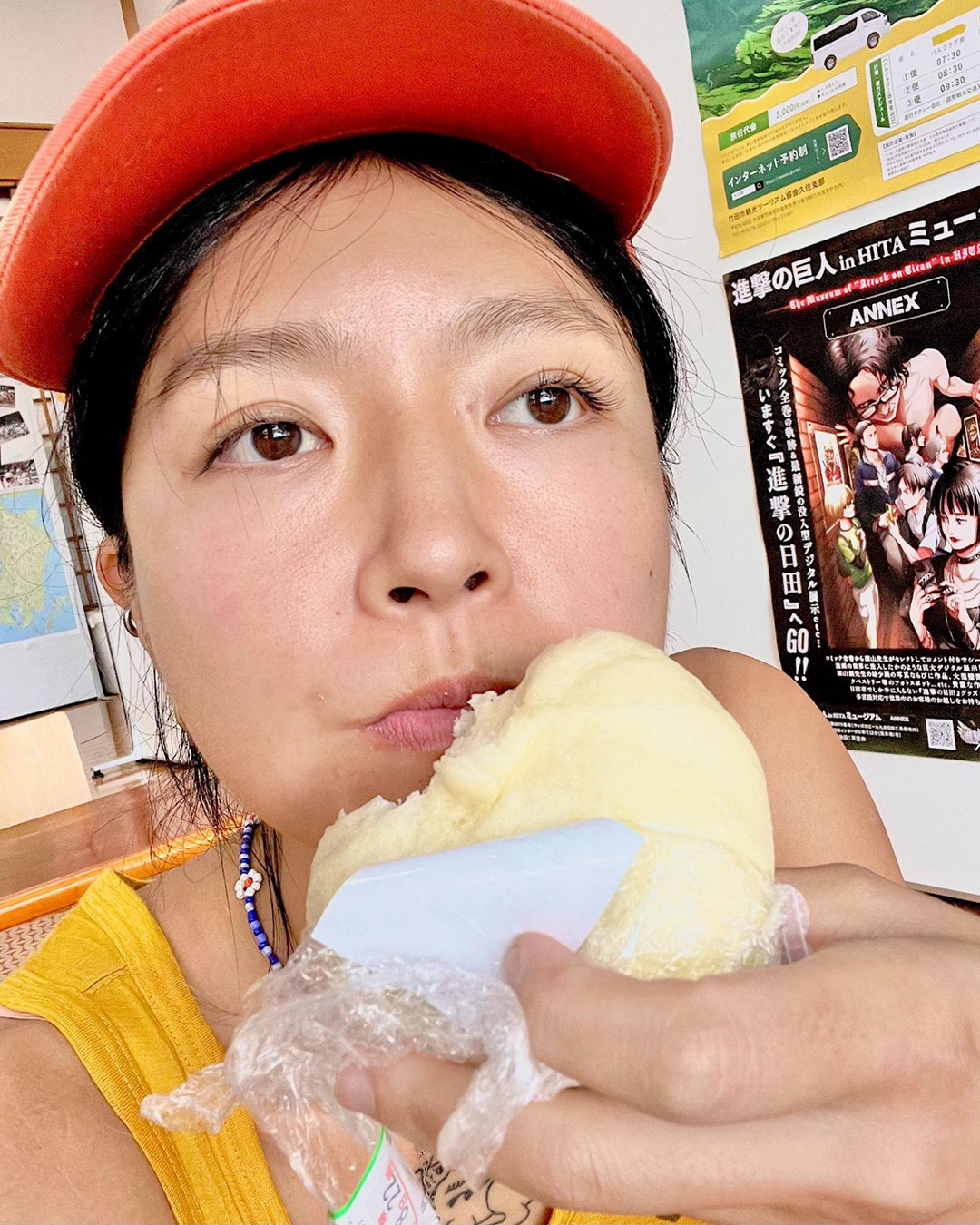
You wolf down your food when you eat alone.
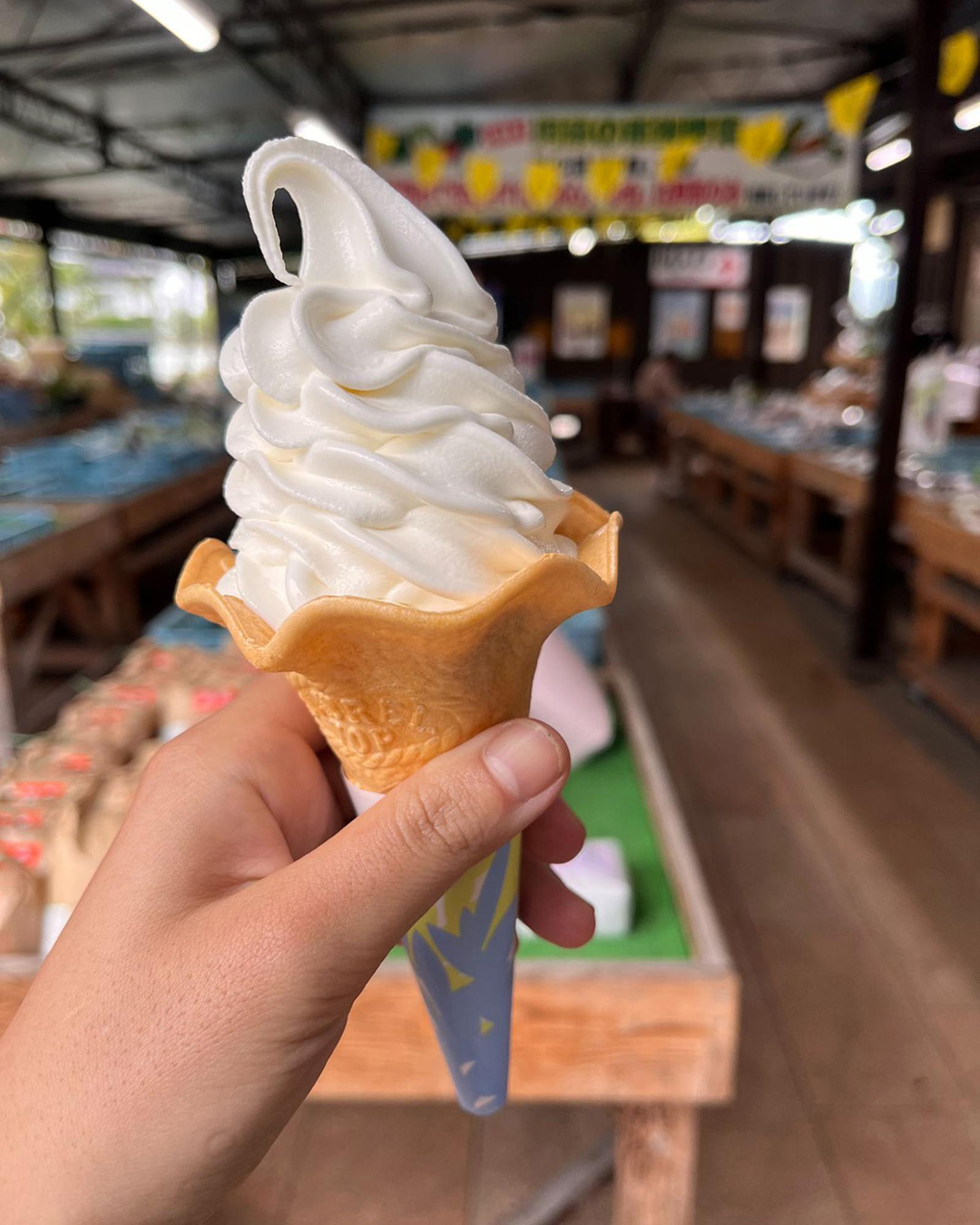
In Kyushu’s Aso region, dairy products are incredibly delicious. If only I could’ve shared this with someone.
I arrive at my campsite for the night around 17:00. It’s clean, managed by an elderly couple who breed Shiba Inu dogs. I’m the only guest, but the presence of other humans makes me feel at ease.
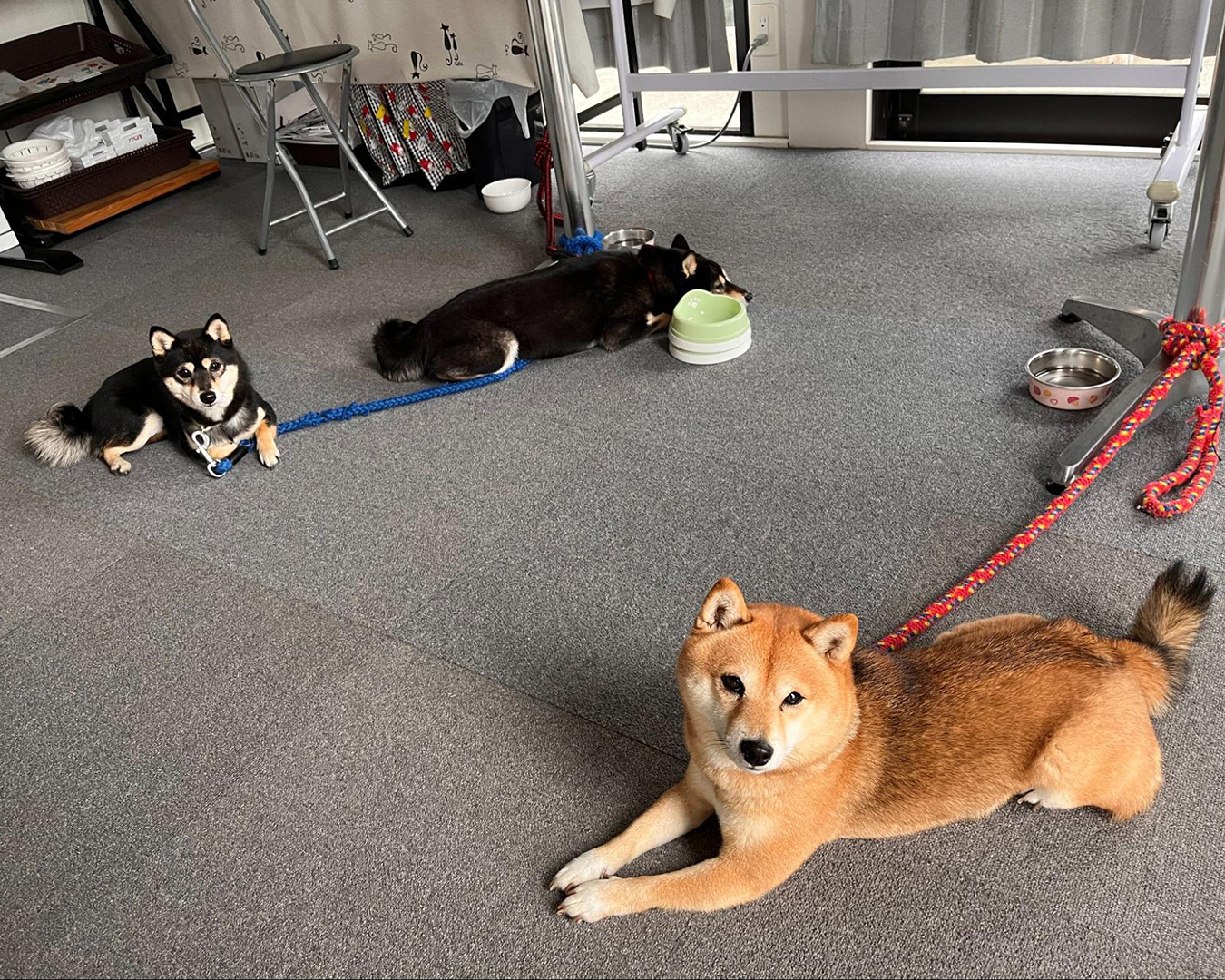
The campsite-managing couple’s adorable and friendly Mameshiba Inu dogs.
Tonight’s dinner is porridge made from leftover brown rice and beans from the previous day, spicy lotus root (a specialty of Kumamoto), grilled abura-age (fried tofu) that was marinating in sake-lees miso for a day and nukazuke vegetables (pickled in the fermenting rice bran). I’m finally able to taste my food again. My energy is returning. My lower back is still suffering little explosions of pain, but I’m trying to rest to prepare for tomorrow. The loneliness lingers, so I call my boyfriend and eventually fall asleep holding the charm he gave me.
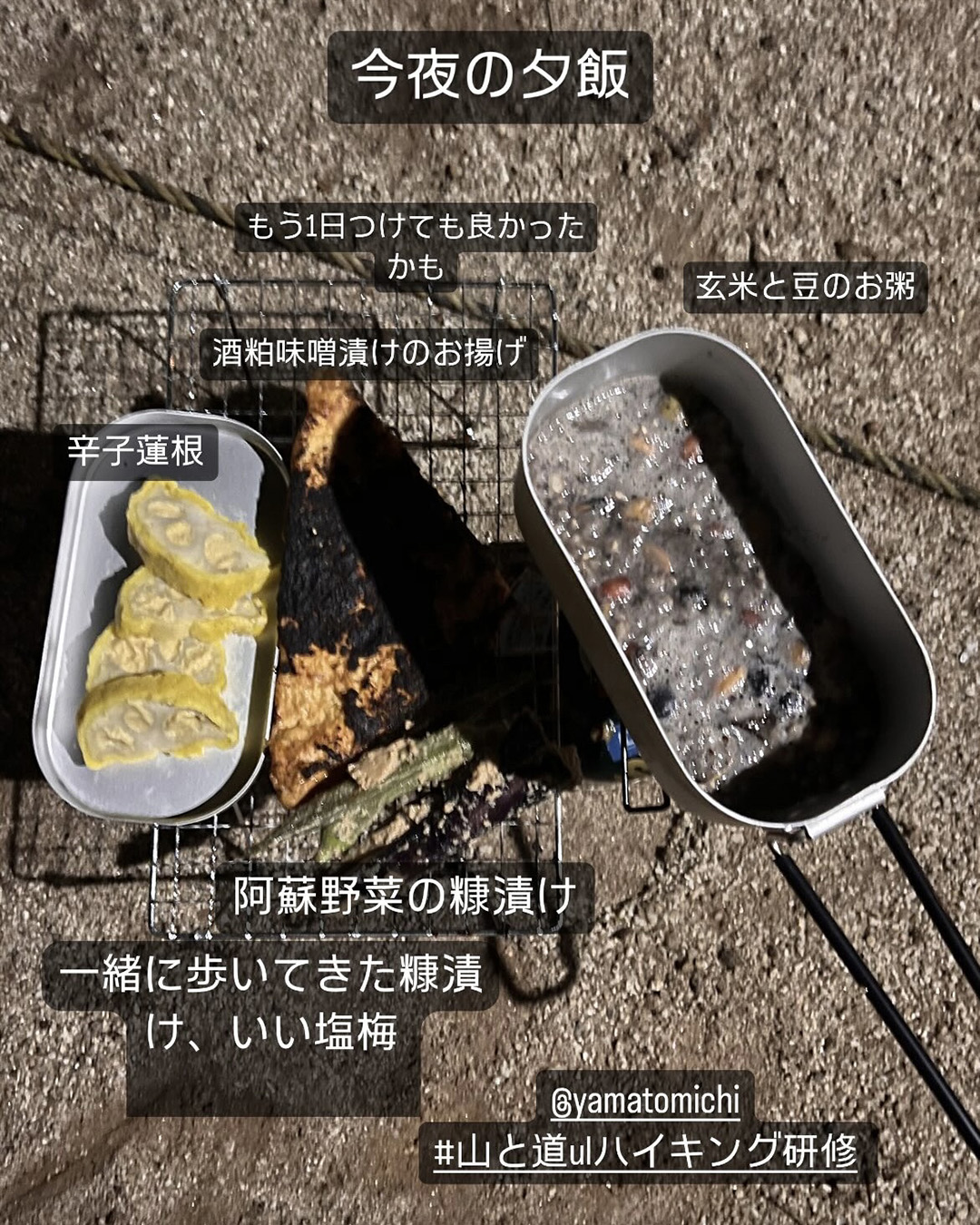
Tonight’s dinner. (L to R) Spicy lotus root, grilled abura-age fermented in sake-lees miso, nukazuke vegetables pickled in rice bran, brown rice porridge with beans.
Day 3
In the morning, the campsite owner’s wife gives me a lift to Aso Station. On the way, she tells me that her husband wants their dogs to have more puppies so he can sell them but she feels bad thinking about the toll it takes on the dogs. The couple’s conflicting views have weighed on her. I can’t do anything to help. I just hope that the dogs and the couple can find a way to live happily. The dogs seemed healthy and full of energy, so I take comfort in that. As we say our goodbyes, she hands me a still-warm onigiri ー a freshly cooked ball of rice that they harvested from their own field.
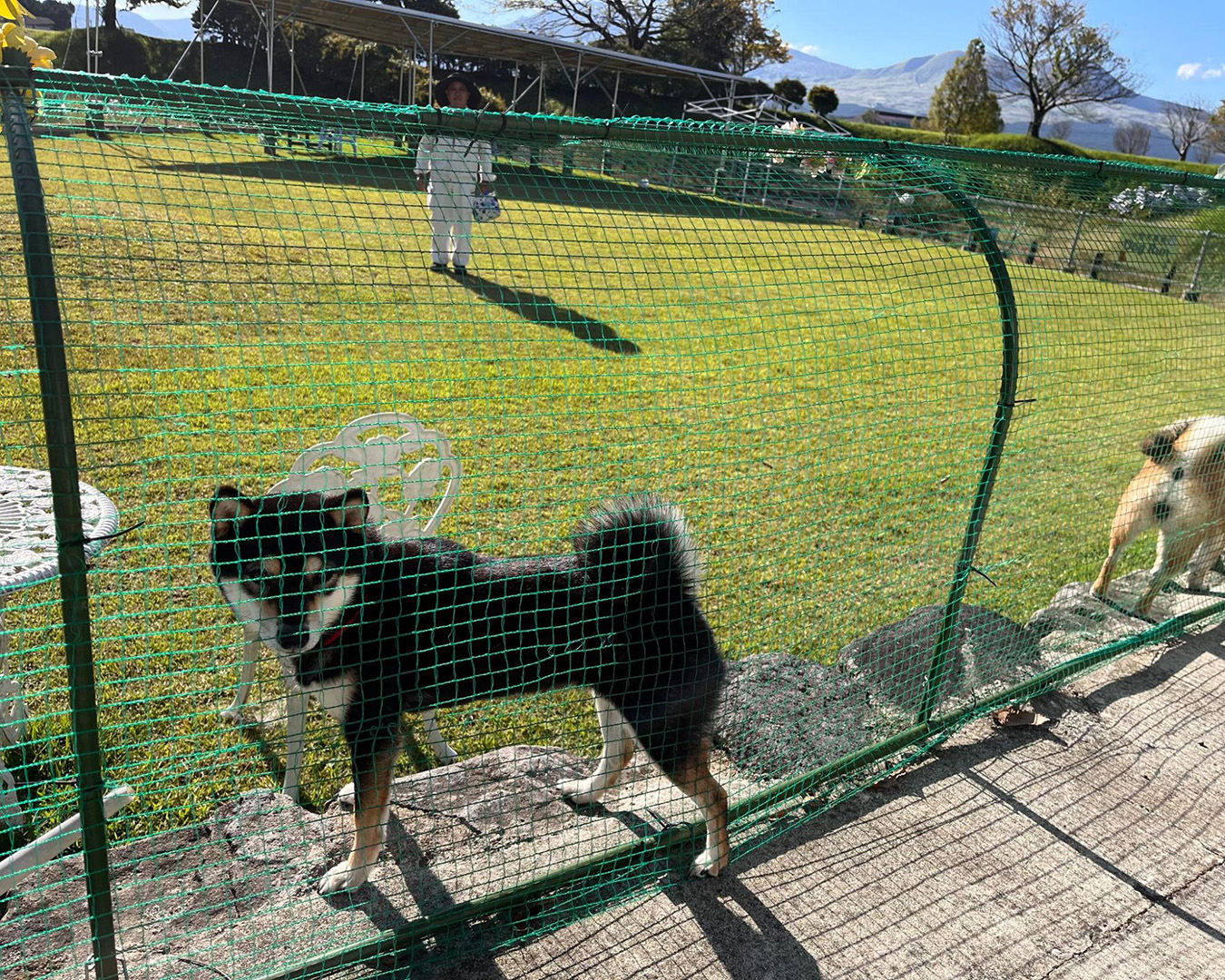
I leave the couple’s Mameshiba dogs frolicking in the dog run.
Today, I climb Mount Aso’s Nakadake Crater, the most active of the mountain’s crater peaks. I catch a bus to the Mt. Aso bus stop on the mountain slope. When I get there, the concentration of volcanic gases is high and the path to the summit is temporarily closed. I have lunch while I wait.
Lunch: pickled fried tofu, Kumamoto vegetables marinated in sake-lees miso and the rice ball I received as a parting gift. The pickles fermented nicely from my body heat. The rice ball is wonderfully fragrant. I watch some foreigners flying a drone. Then, I hear the announcement: The trail has been reopened!
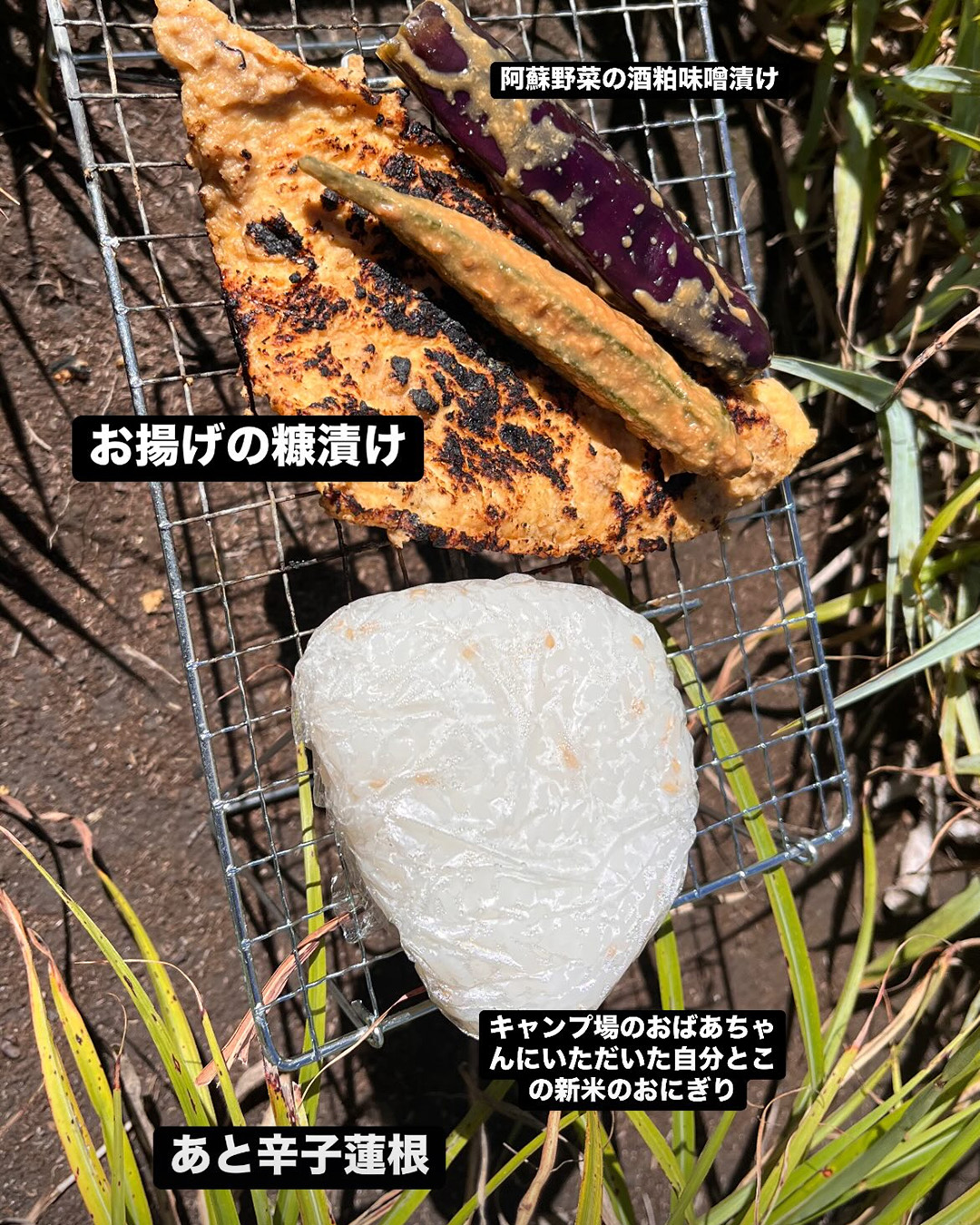
My lunch, thanks to the kindness of others.
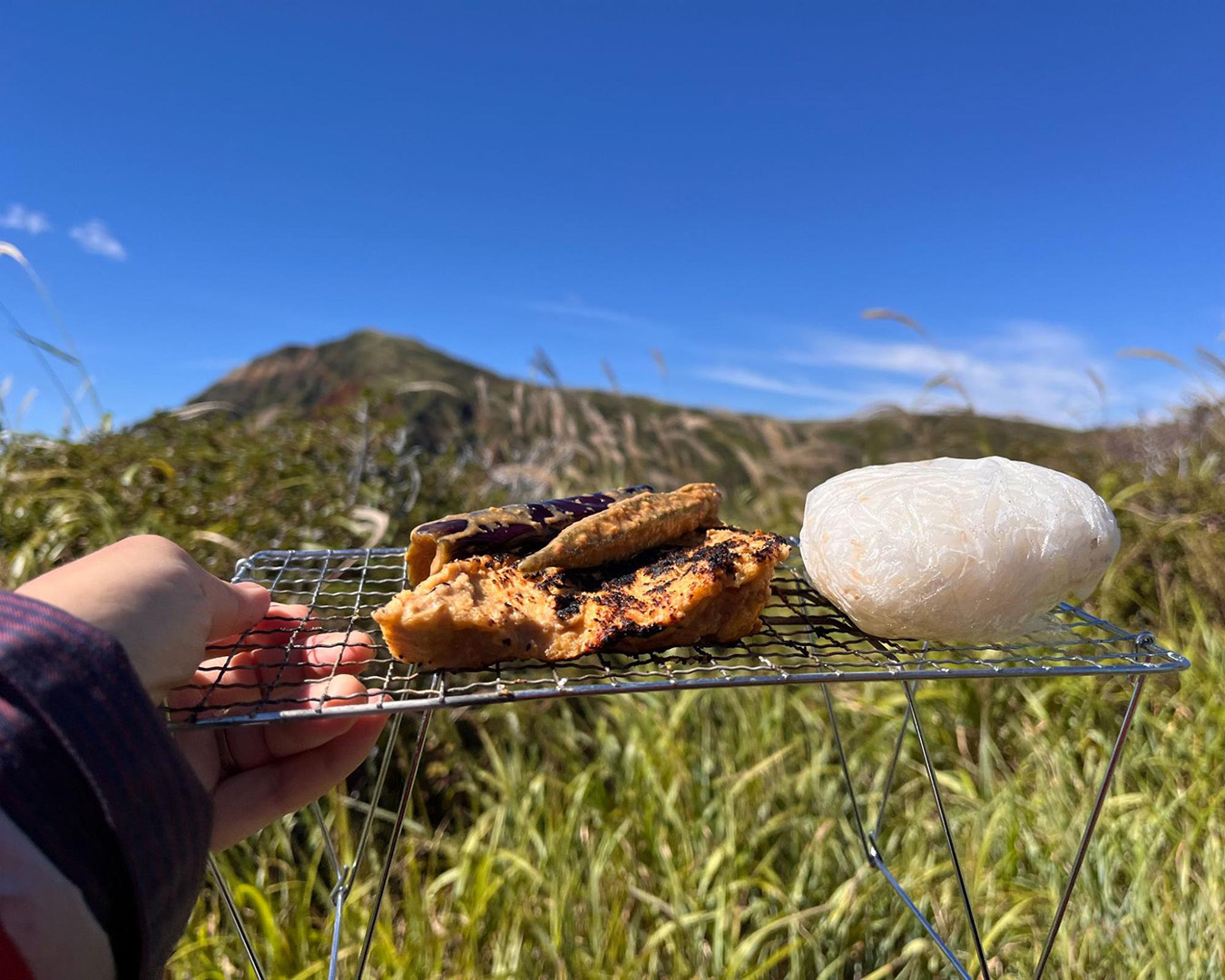
What a luxury ー this meal and this view!
As I climb, I’m overwhelmed by the grand, breathtaking scenery. But as I watch couples and groups around me taking photos, the loneliness returns. I have never climbed a mountain on my own. I have gone for runs in the hills near my home before, but a solo hike like this is different ー the difference being my unease and loneliness.
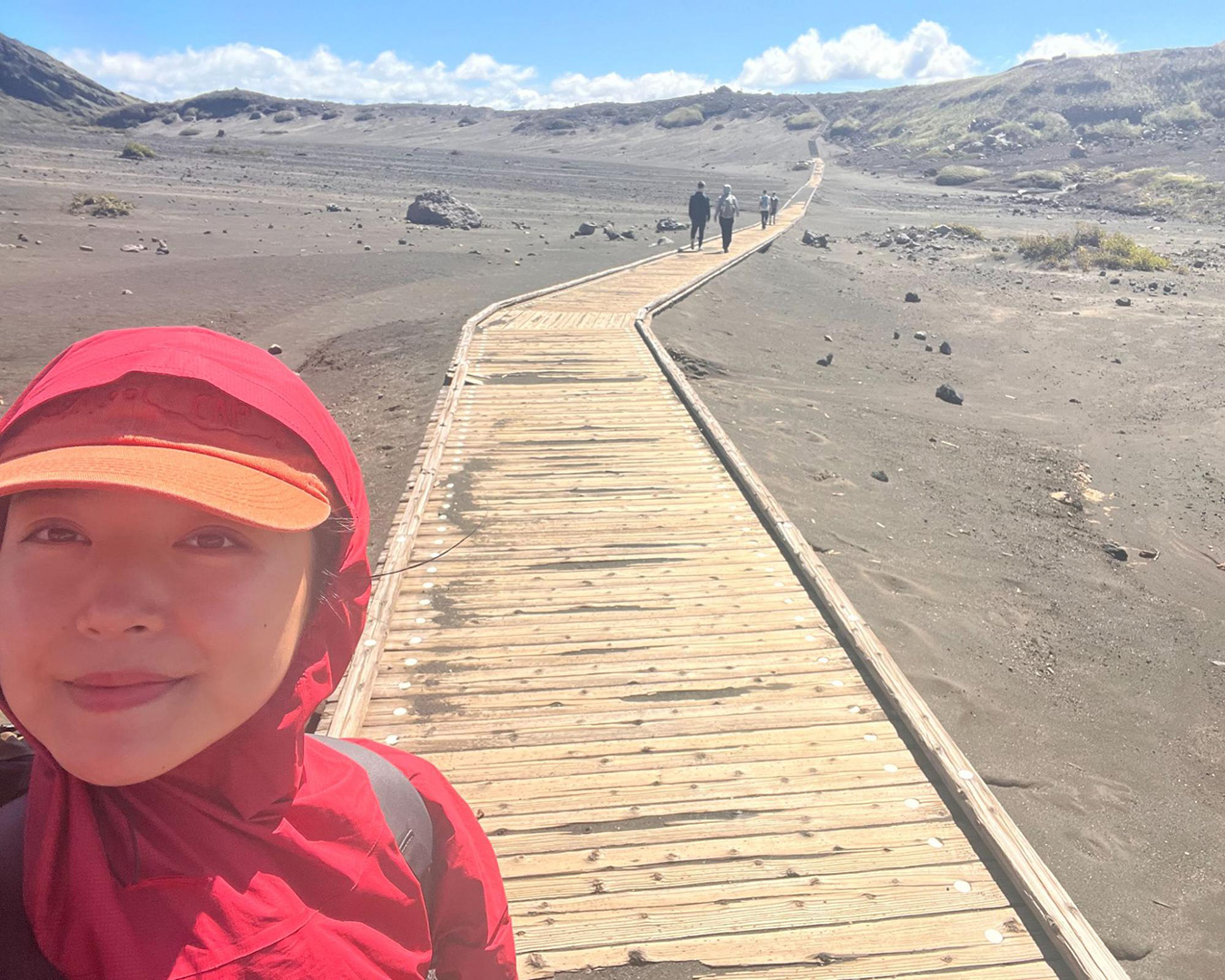
My realization that I really like boardwalk trails.
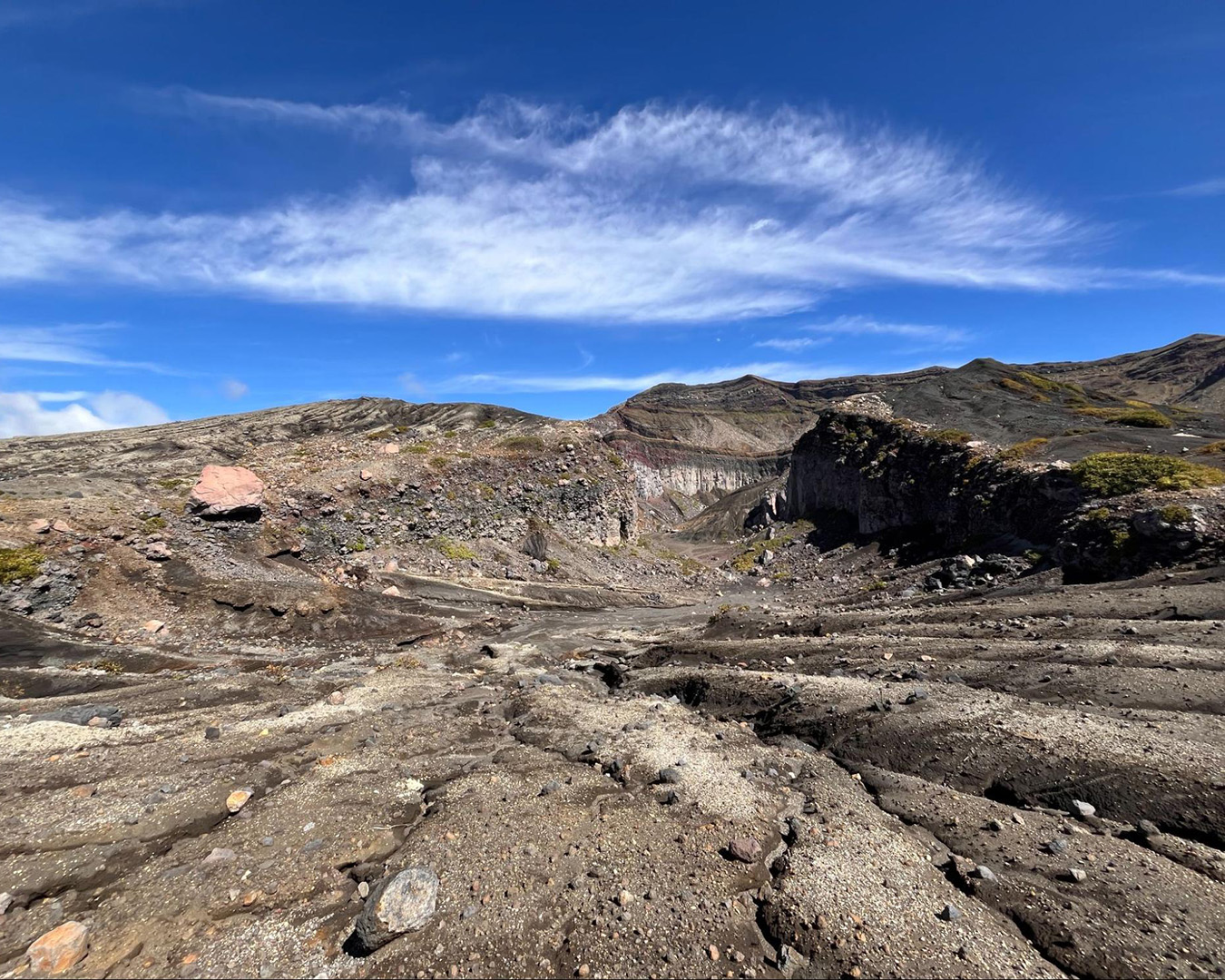
Being alone reminds me of how small I am in this landscape. I could die here and nobody would know.
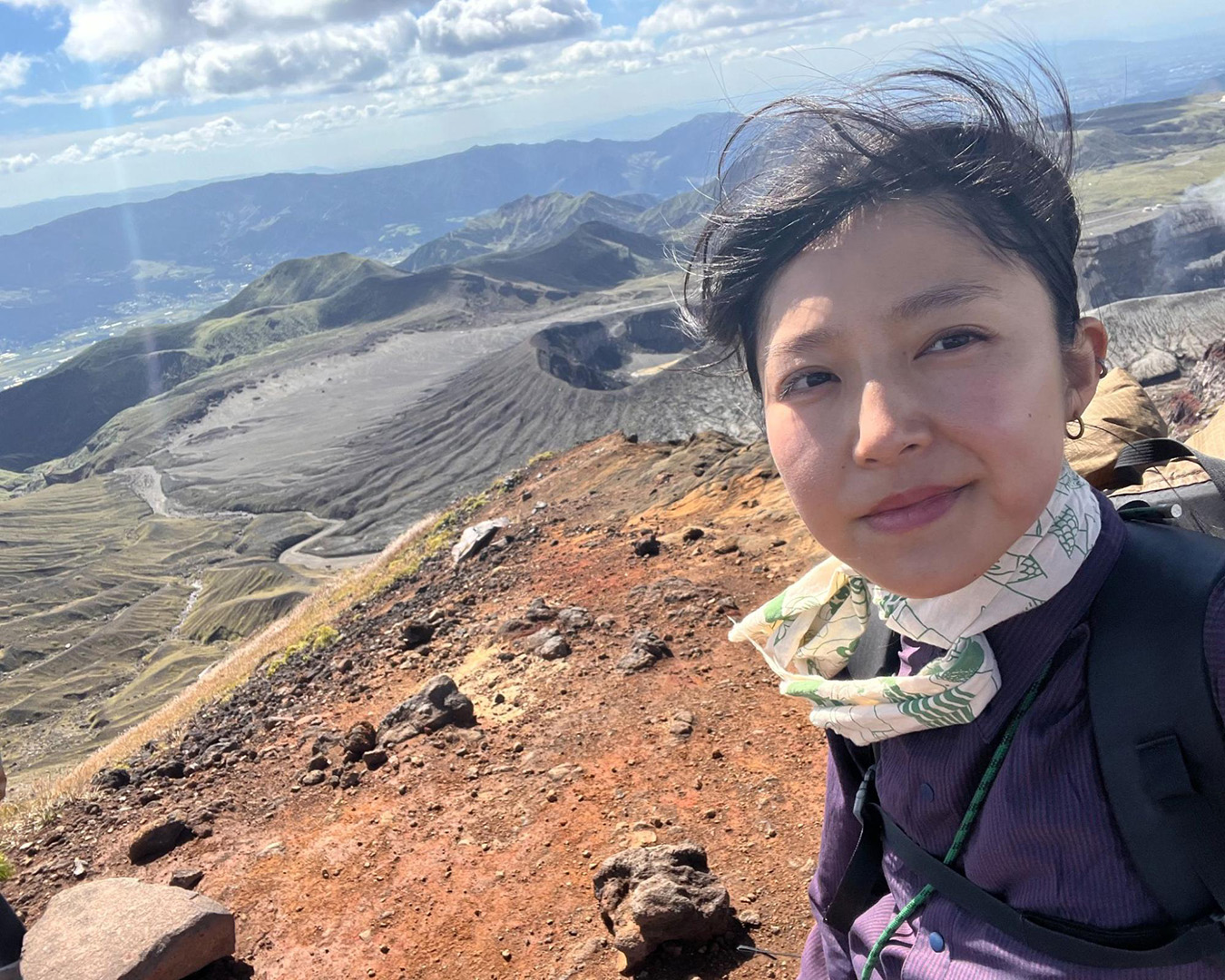
I reach the top of Nakadake Crater after two hours of walking. Tension has frozen my face.
I finish the climb like a monk in training and descend. The view is magnificent, but I wish I could’ve shared it with someone special.
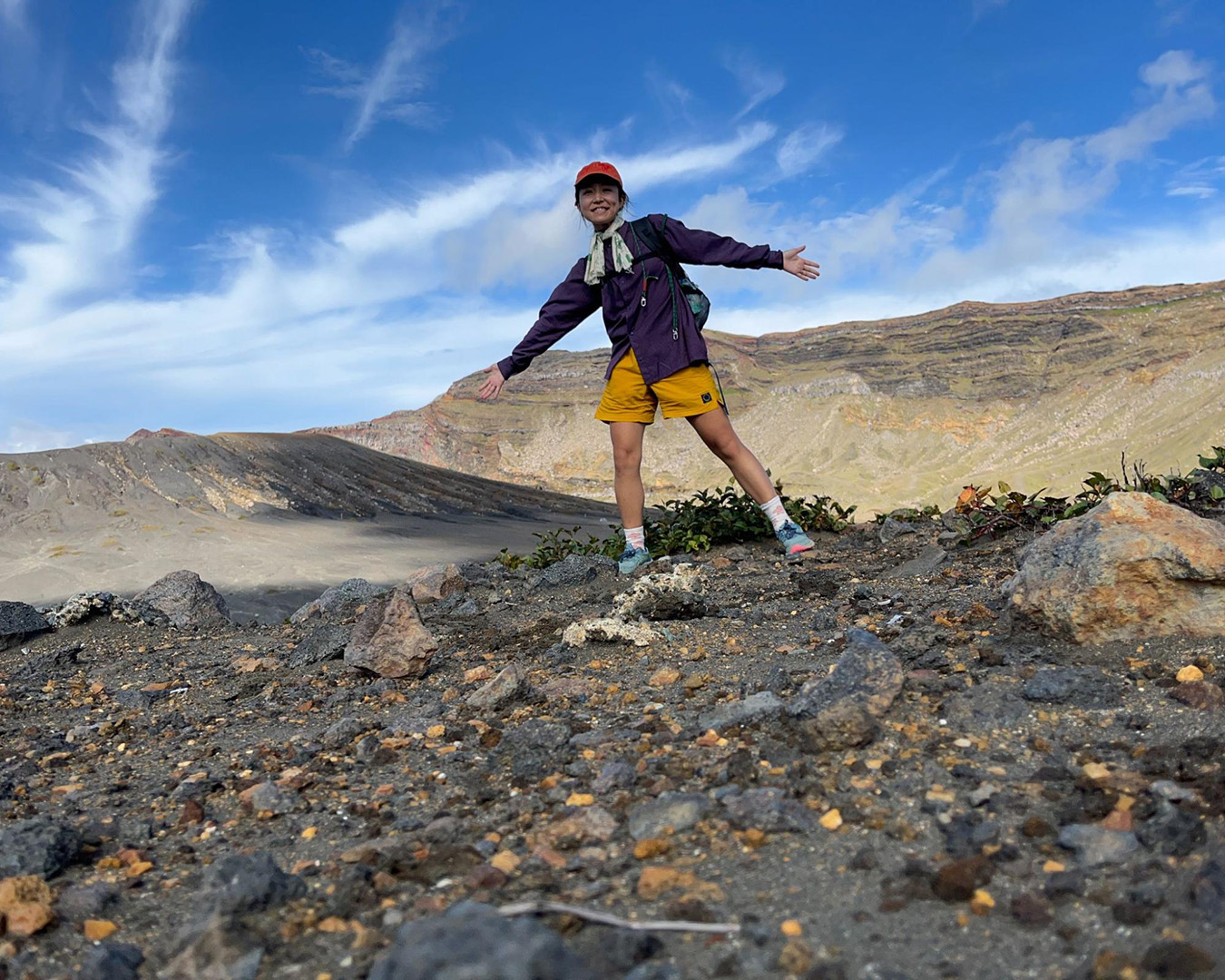
While heading down, I feel a little more at ease, and take an awkward photo as a memento.
Tonight, I’m staying at a friend’s house. I catch a bus to get there.
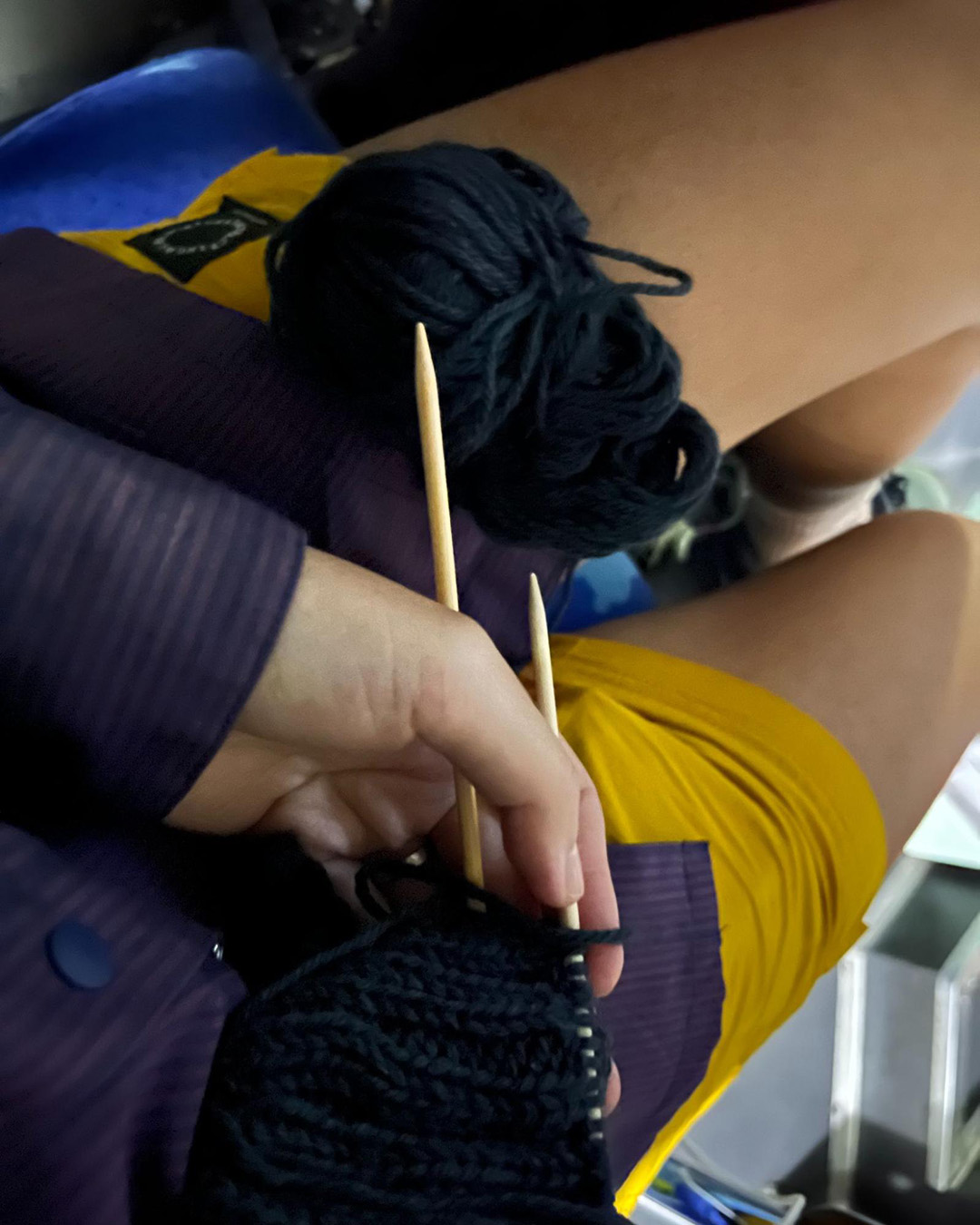
On the bus to my friend’s house, I stitch and knit.
The moment I see my friend, I feel a rush of adrenaline and serotonin ー and happiness!
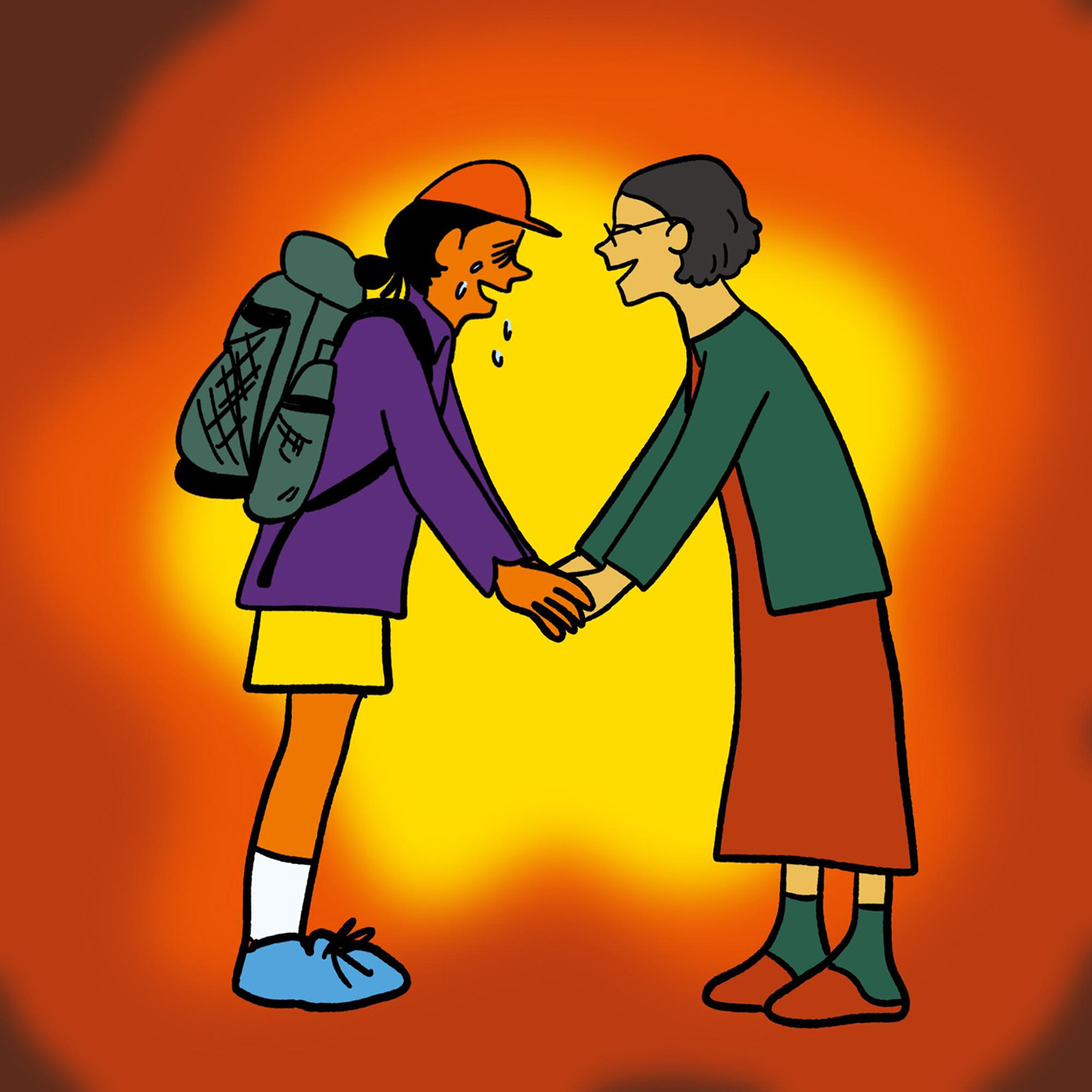
My first meal shared with someone in a long time is fun and so delicious. It makes me realize that the most ordinary things can bring true joy.
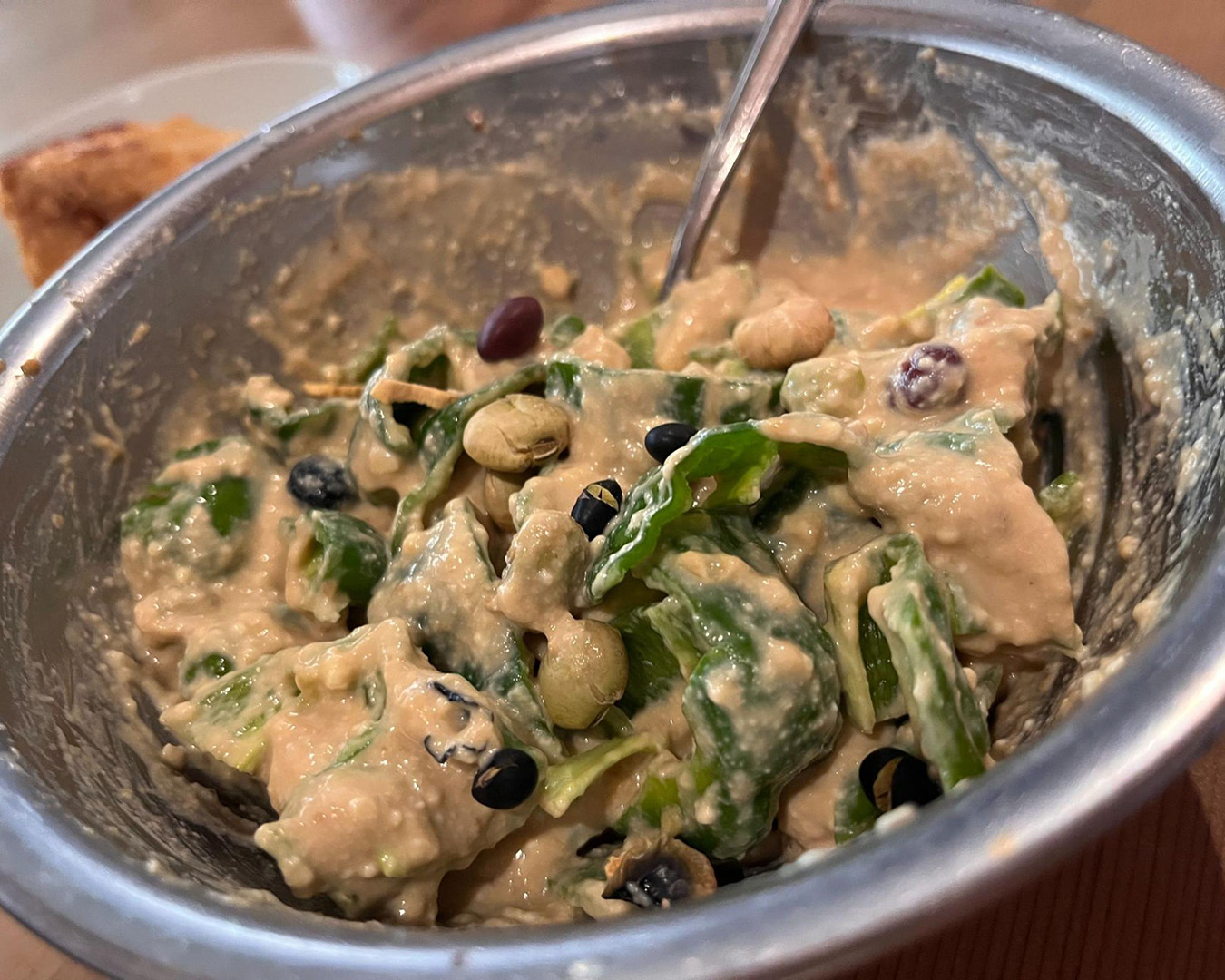
In the evening, I eat the nukazuke (rice-bran pickles) and sake-lees miso shiraae (vegetables in mashed tofu). For the shiraae, I use green peppers grown by a local grandmother and given to me by my friend and my sake-lees miso pickling base, plus some of my seasonings. (The time I spent and struggles I endured while walking were the best kind of spice.) Both dishes had a deep richness ー an endearing, soulful flavor. To my pickling beds that traveled with me: Thank you!
I use the remaining sake-lees miso and rice bran bed to marinate a small block of venison.
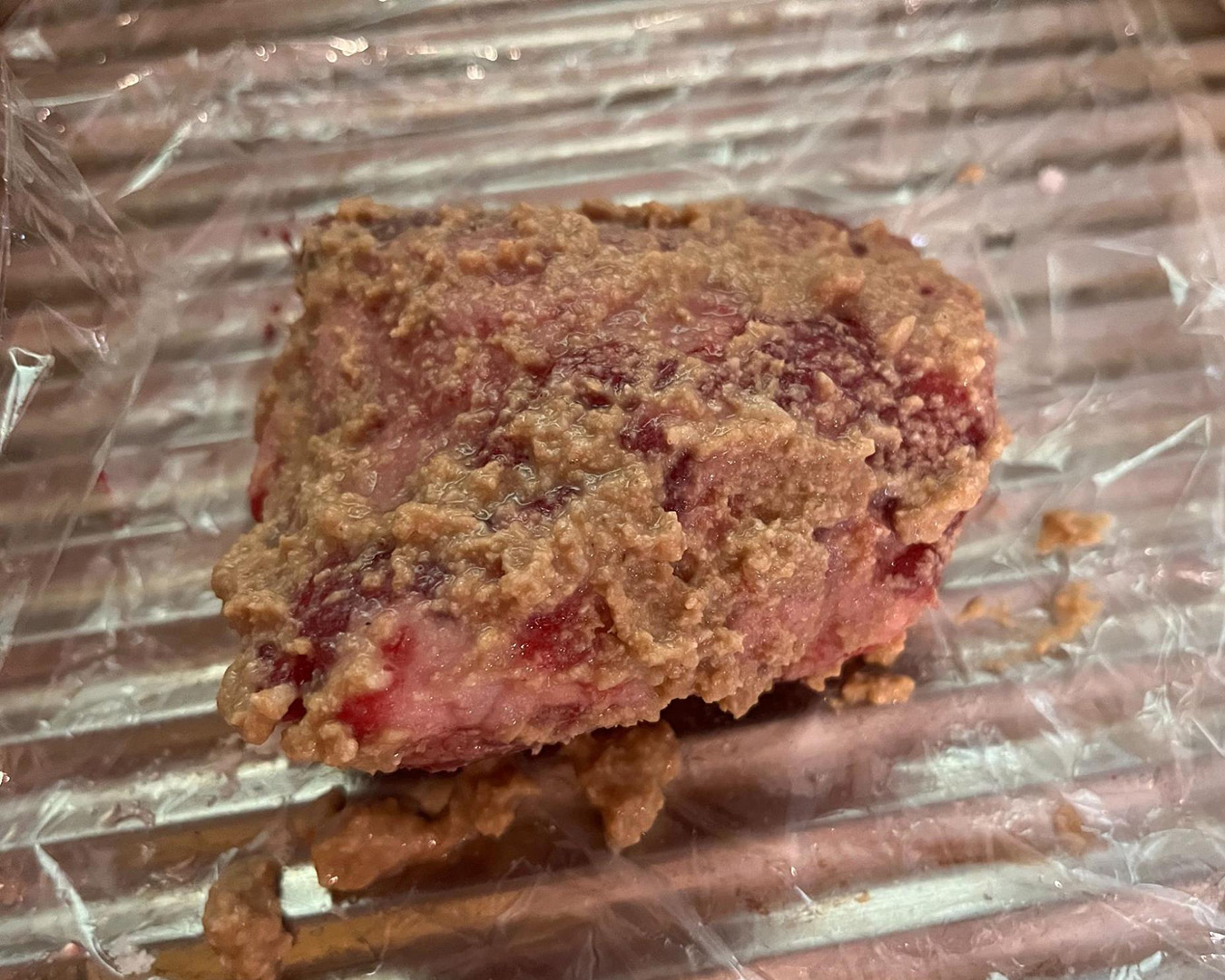
Venison, caught by a local hunter, that I marinate in sake-lees miso and fermented rice bran.
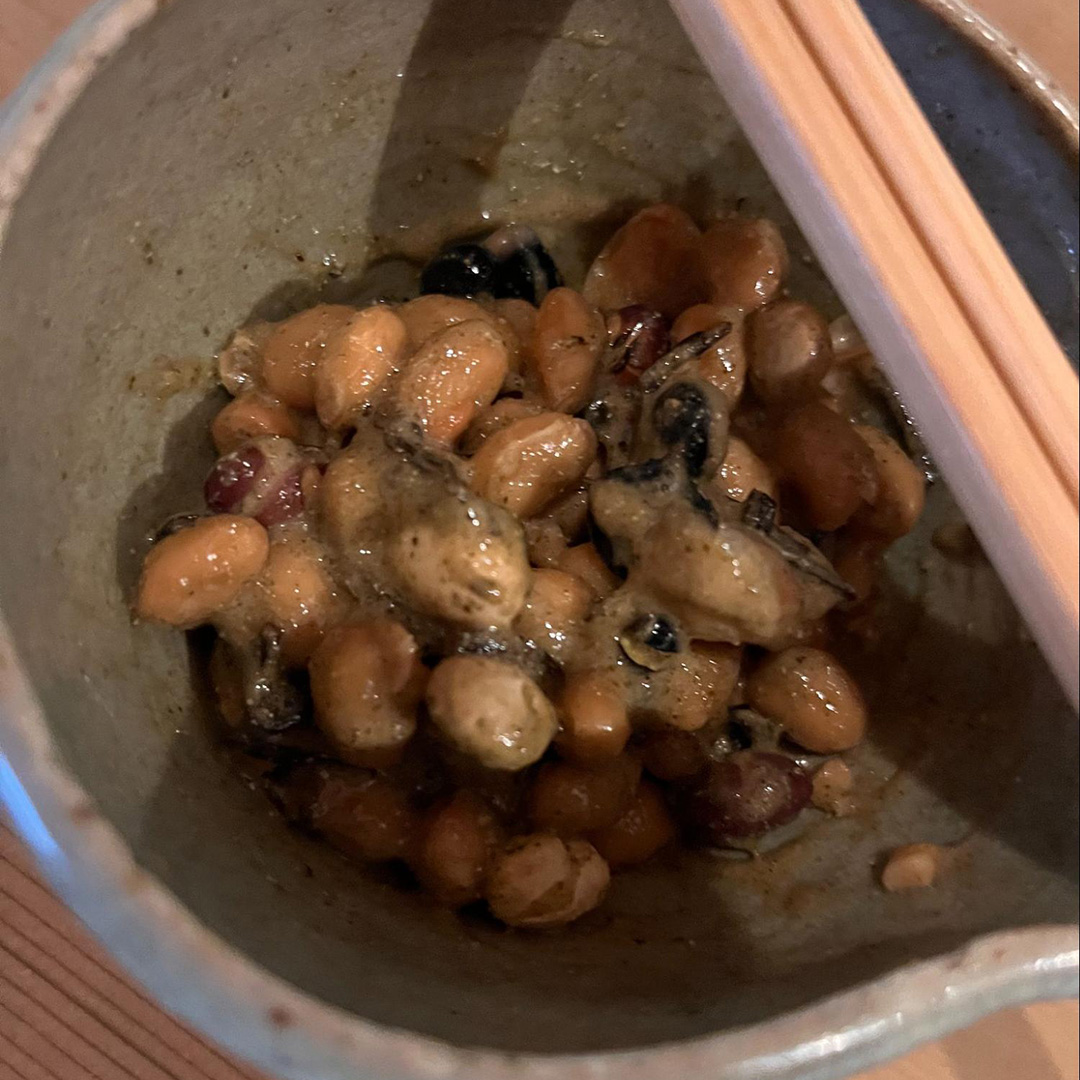
For breakfast, I mix all the seasonings I have left, plus some roasted soybeans, into natto (fermented soybeans) –– and it tastes amazing. I bet even freeze-dried natto would taste great this way.
Day 4: The final stretch
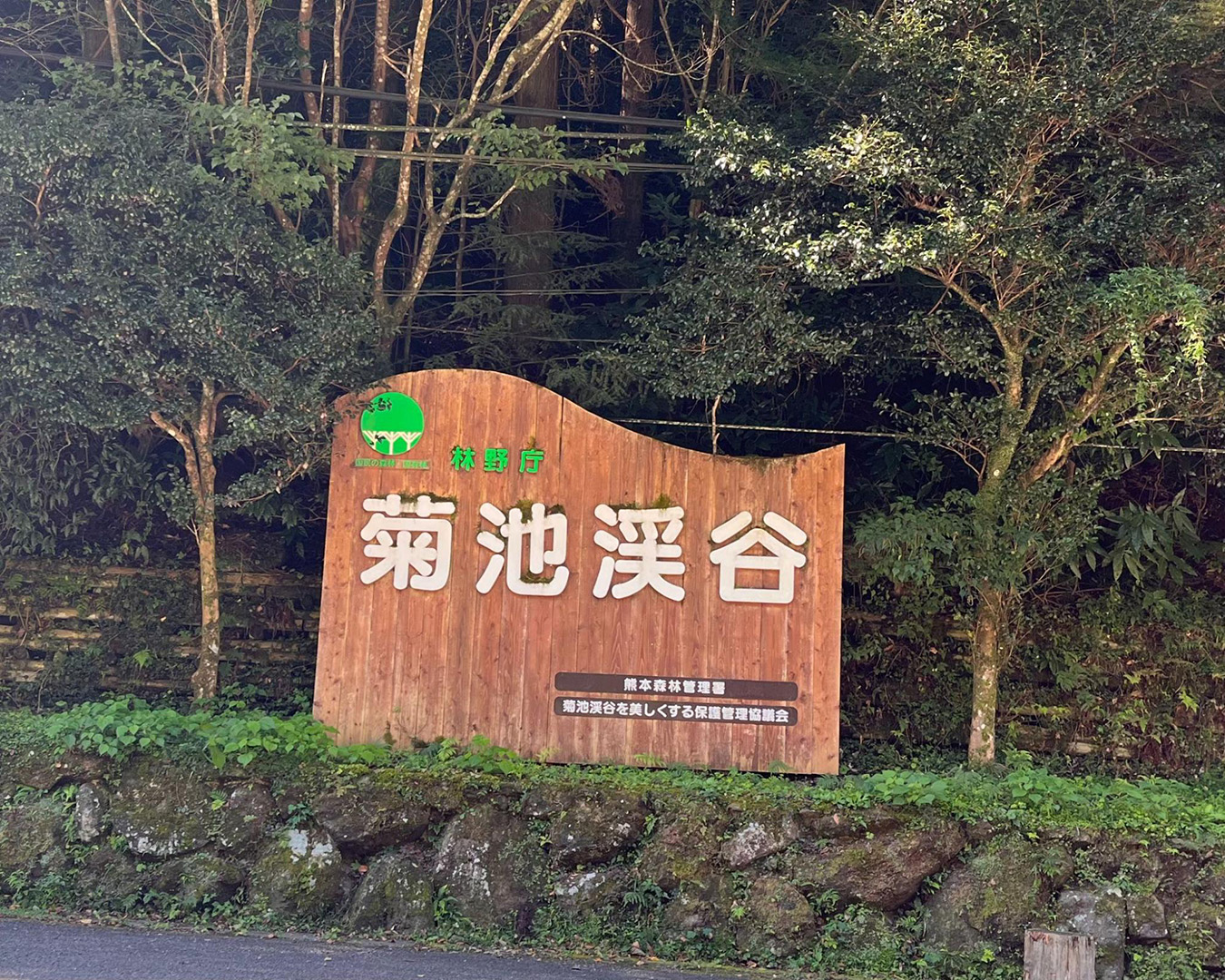
The entrance to Kikuchi Gorge.

Shafts of morning sunlight in the gorge.
I leave most of my belongings at my friend’s house and set off for my last day of walking. Freed from the weight, I am finally able to appreciate my natural surroundings. When walking alone, thoughts swirl in my head. Each one feels like a reflection of a different version of me, clashing, debating, and ultimately forming a decision and outlook in that particular moment.
I now realize that I wasn’t walking alone: All of these versions of myself accompanied me. The feelings of loneliness, fear –– each is one among the many within me. Everything flows and balances, like the harmony of yin and yang.
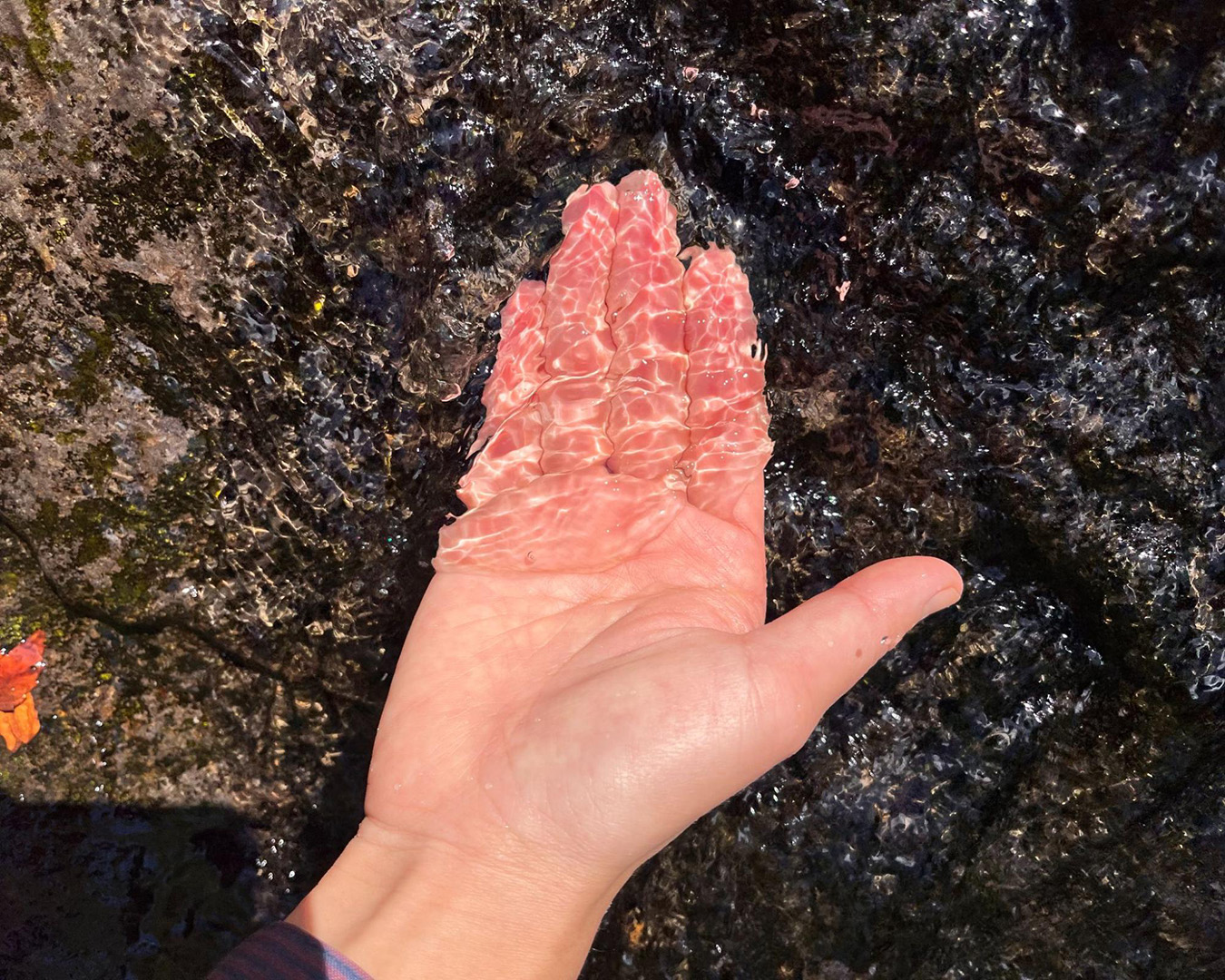
This epiphany makes my heart swell with gratitude. For this opportunity. For Kumamoto. For my friends, my family, my boyfriend, my pickling beds. For everything and everyone connected to me. I’m proud of myself –– a miraculous feeling, given how I’ve always struggled with self-esteem.
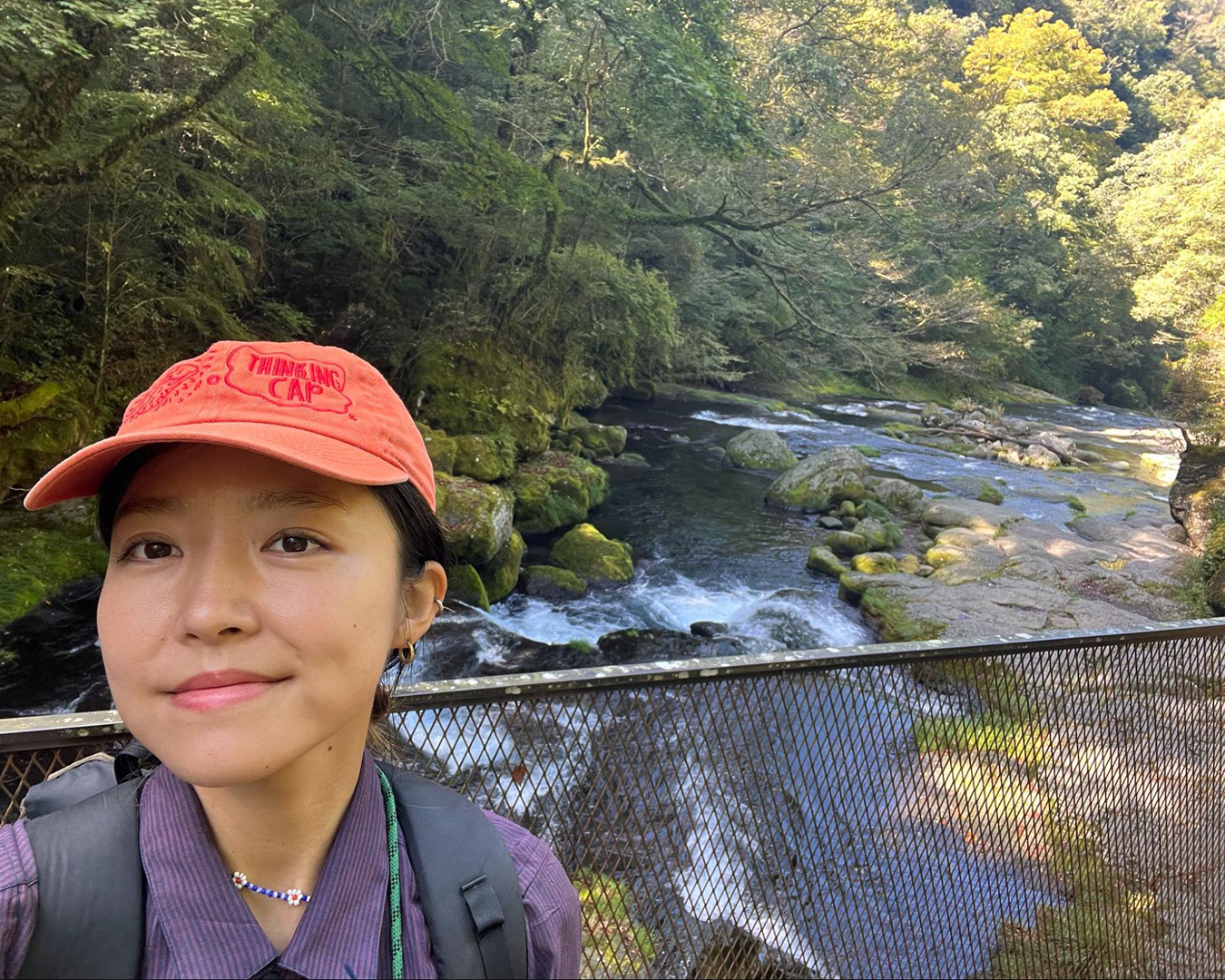
My smile is relaxed, my skin and hair glow from the forest’s negative air ions.
I still have small bursts of pain in my lower back but I walk for five hours and reach my goal. I did it! I really walked all that way!
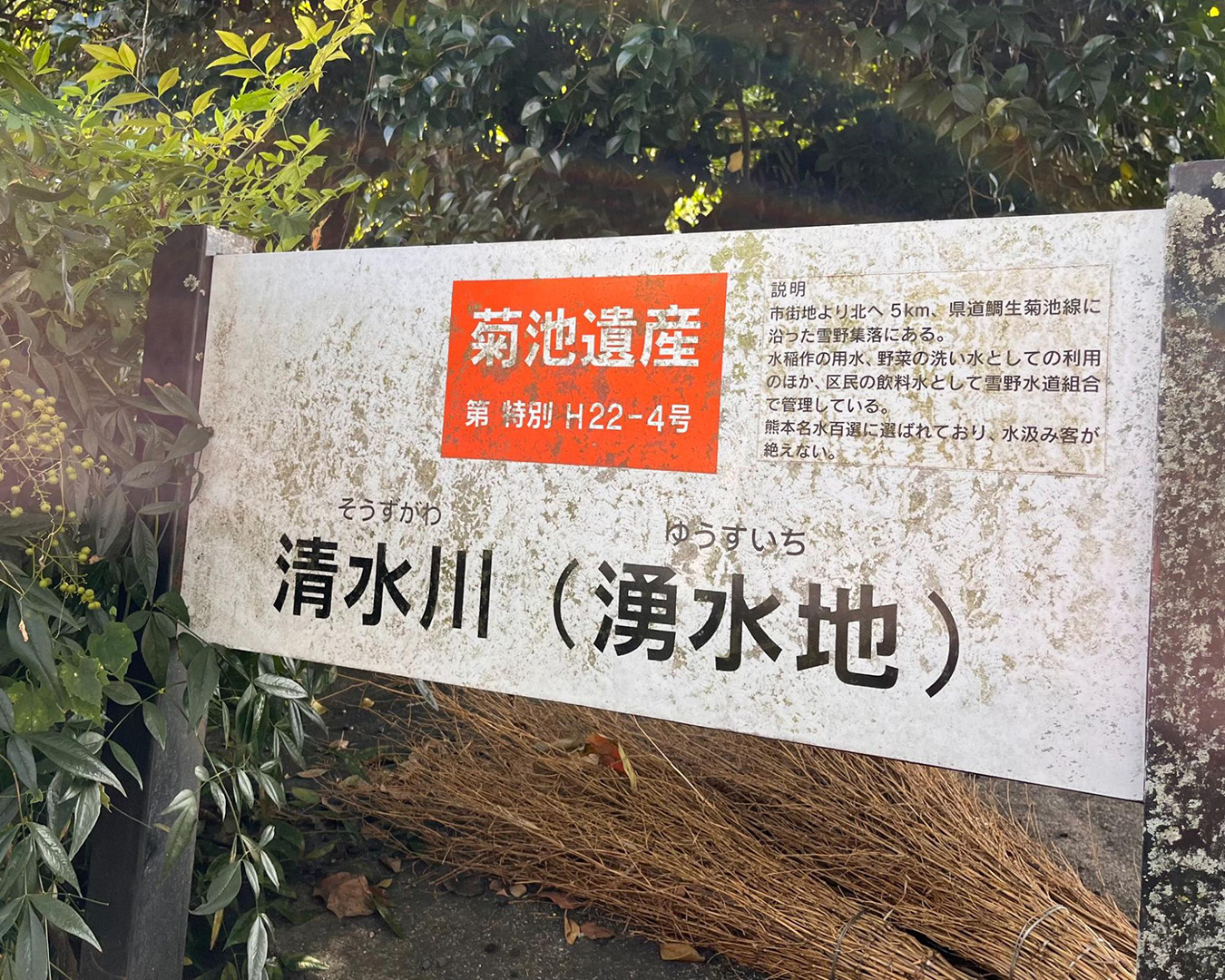
Feeling both relief and a sense of accomplishment, I drink water at the source of the Shimizu River.
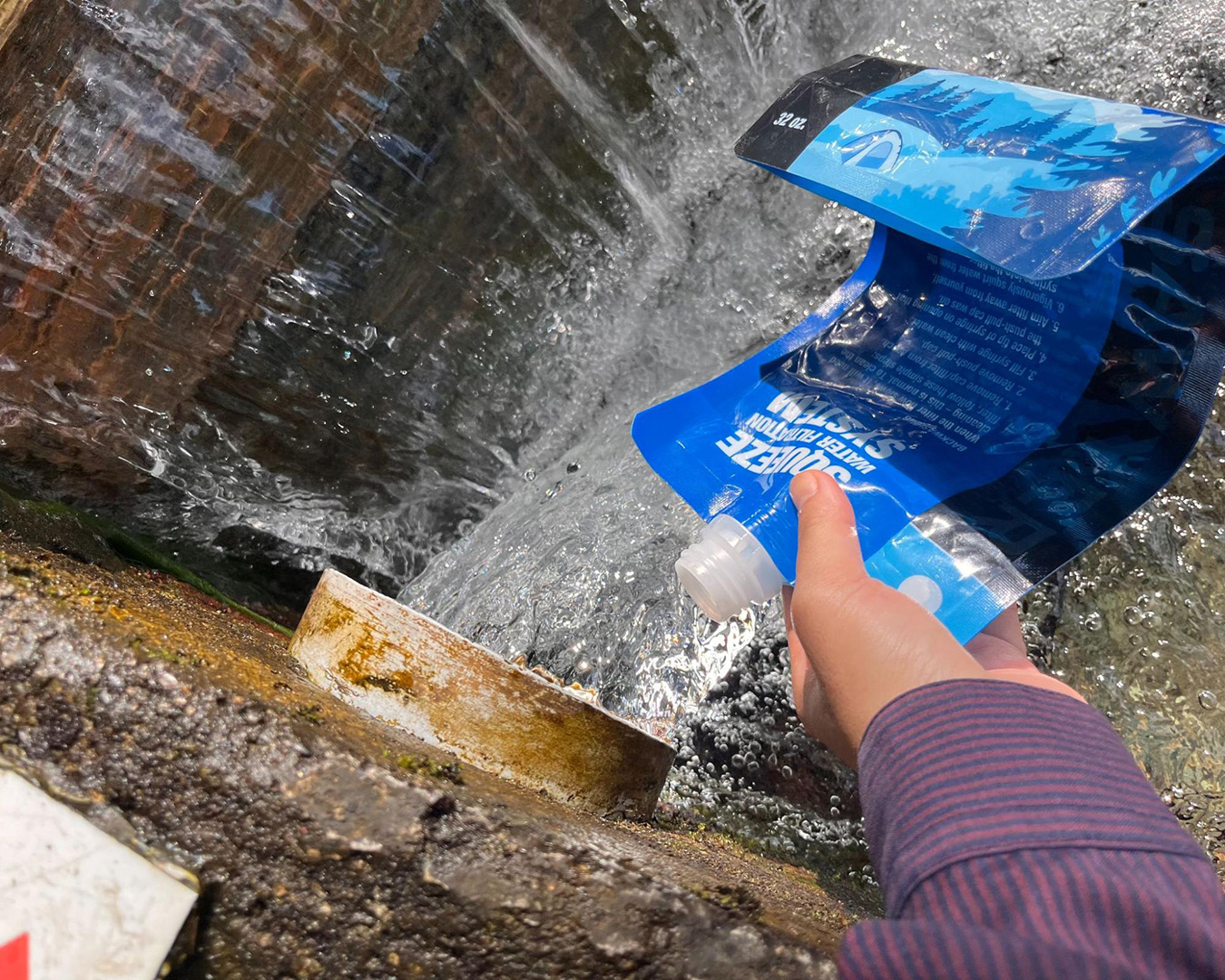
So clean that it’s drinkable without a purifier.
I’m grateful that I went on my ultralight hiking training in this place, surrounded by good food, kind people and pristine nature. It was a chance to discover a new version of myself. If I were asked whether I would go alone again, my answer would probably be no. But I’m also glad I went through it to reach that conclusion. It makes me realize that happiness lies in sharing time, meals and experiences with someone, not alone.
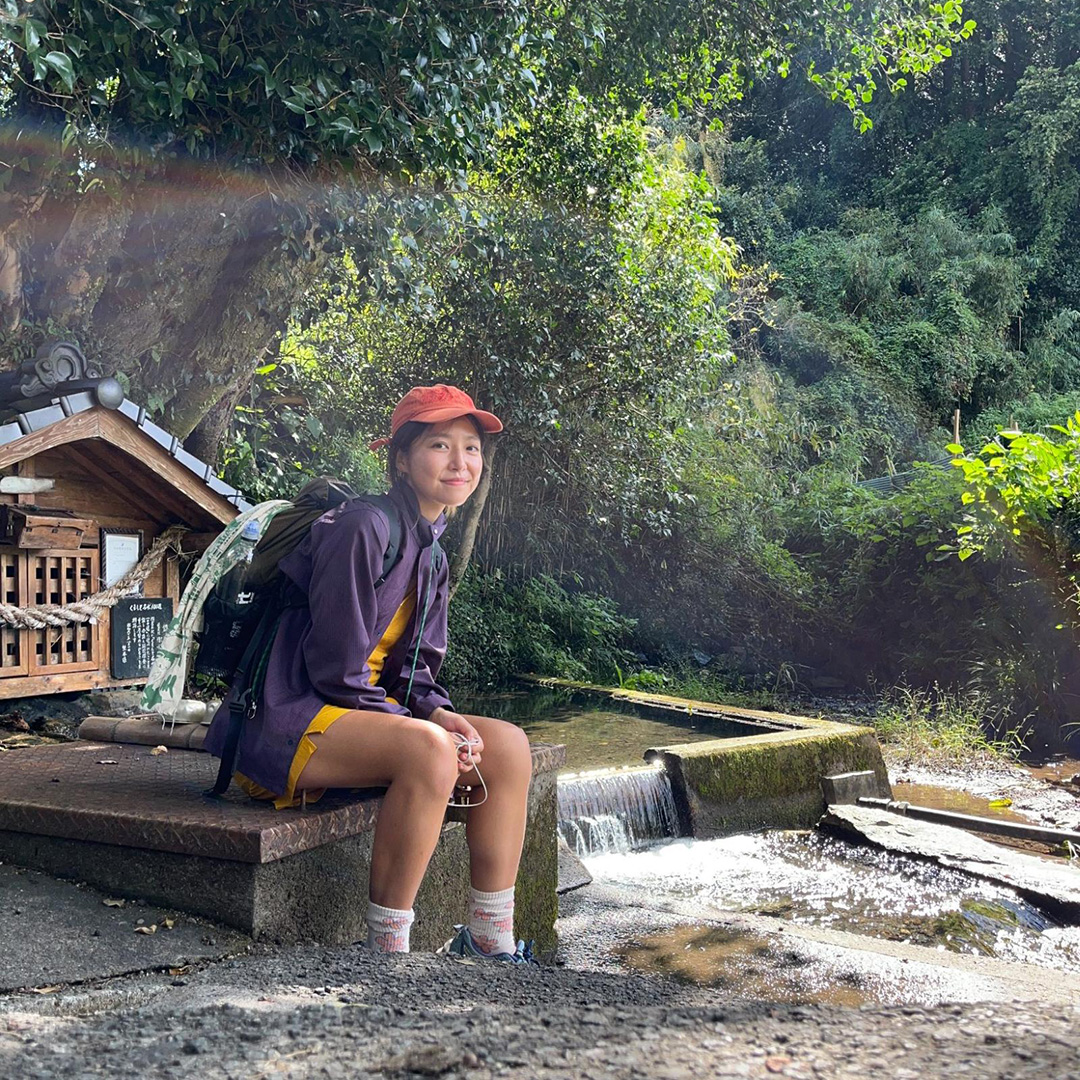
Happiness.
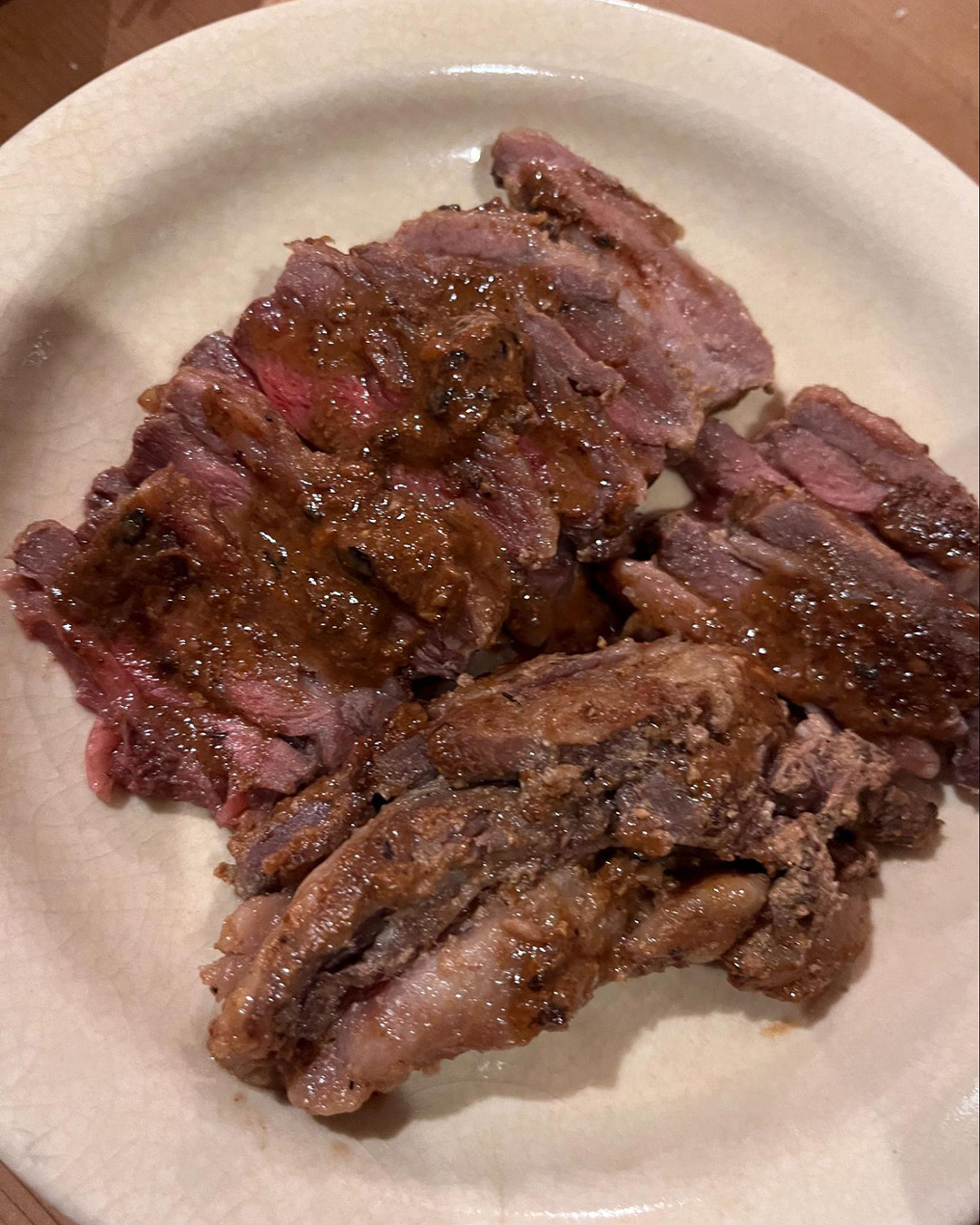
Dinner at the end of my walk: roasted venison. The rice bran that I’d brought along erased the meat’s gaminess and amplified its savory flavor. I’m reminded again that I wasn’t alone. These tiny living microbes were with me the entire way –– another reason to be grateful.
Recipe
Mixed Brown Rice
○ Ingredients
・Brown rice: 90 g
・Roasted soybeans: 10–20 g
・Water for soaking: as needed
・Water for cooking: 120 ml + 120 ml
◎ Seasonings
・Sesame oil, to taste
・Balsamic vinegar: 1 tsp
・Fish sauce: ½ tsp
・Black sesame & roasted soybean flour (kuro-goma kinako): 1 tbsp
・Salted kelp (shio kombu): a generous pinch
・Kelp powder: 1 tsp
・Freeze-dried natto
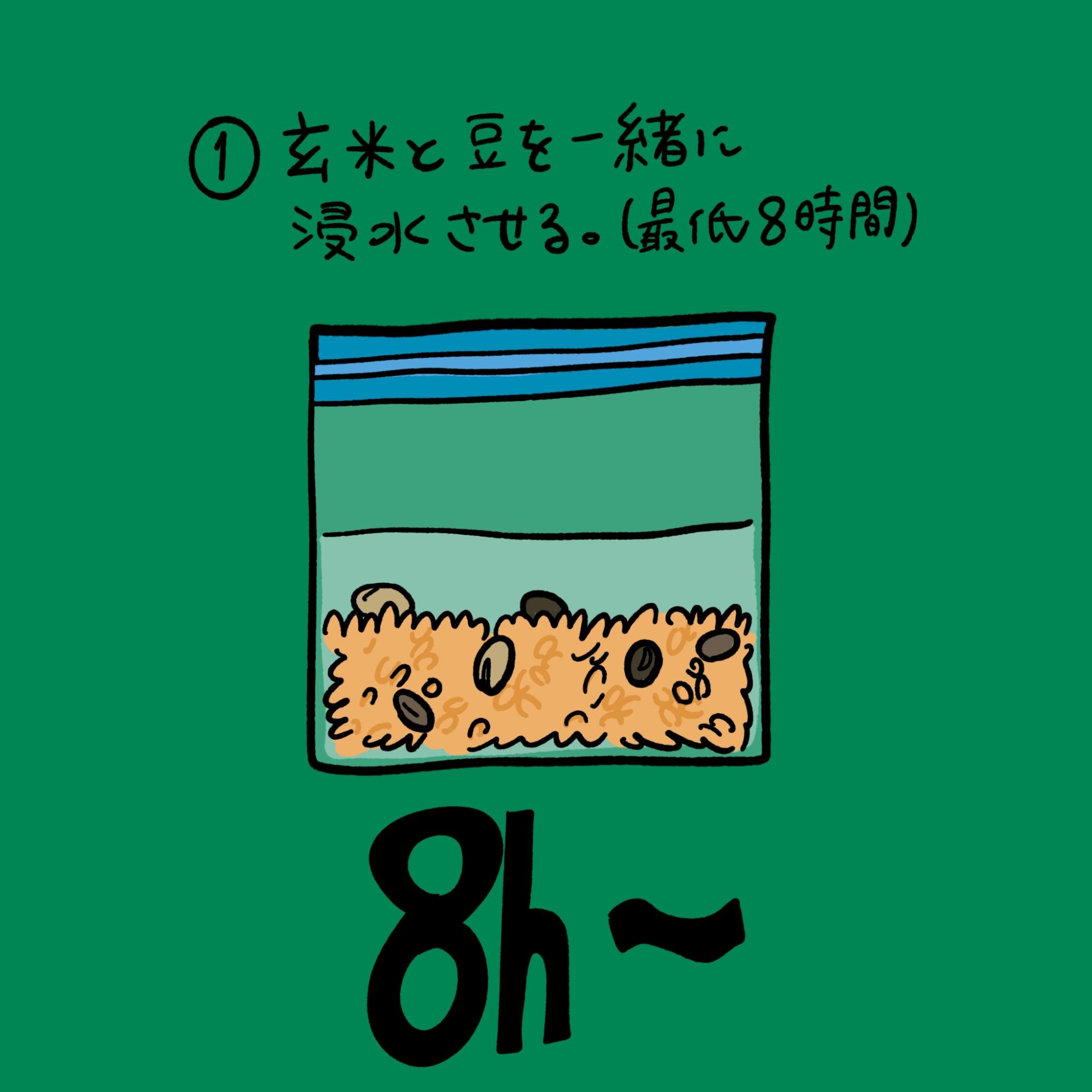
Soak brown rice and beans for at least 8 hrs.
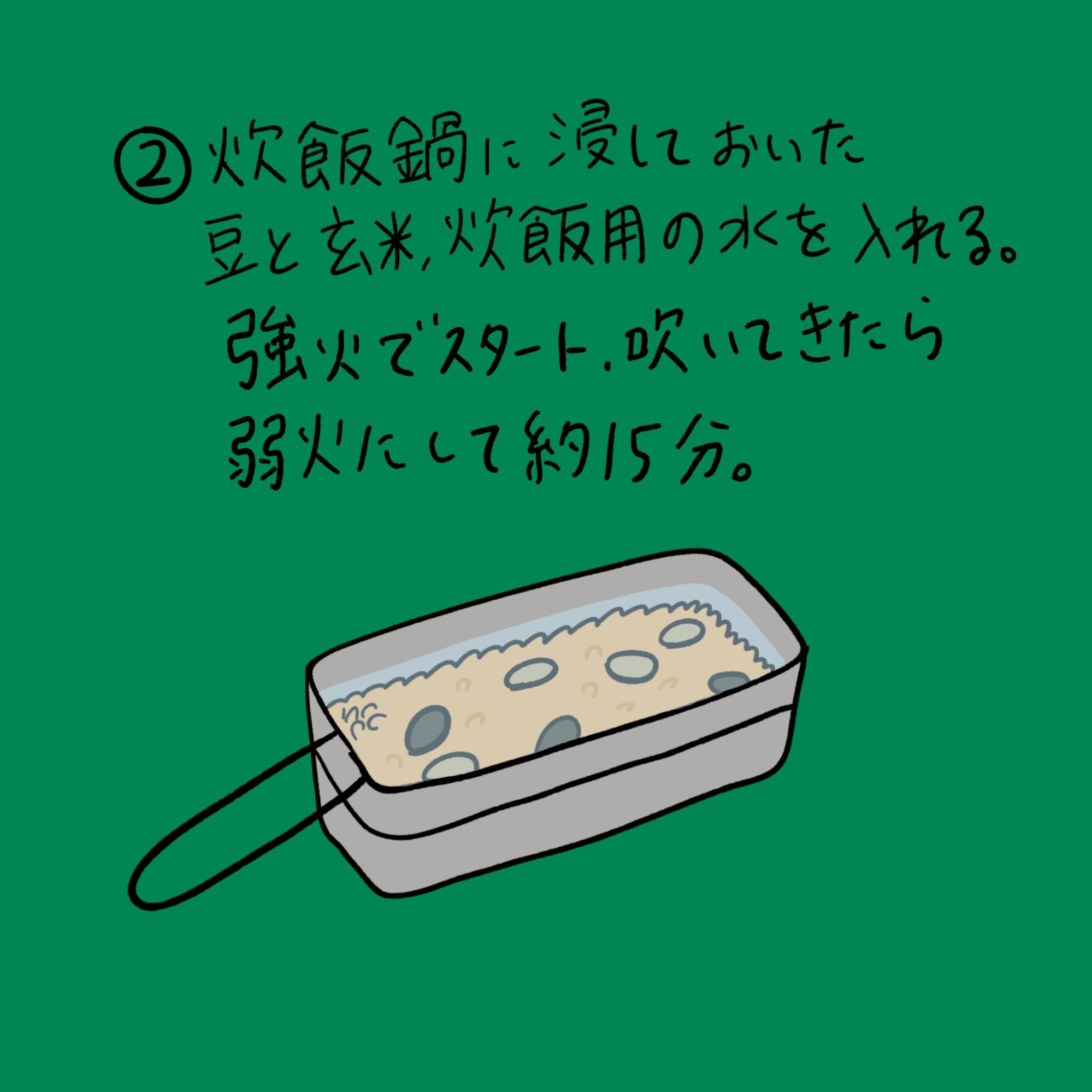
Add rice and beans along with water to a pot. Cook over high heat until it starts to boil, then lower
heat and simmer for 15 minutes.
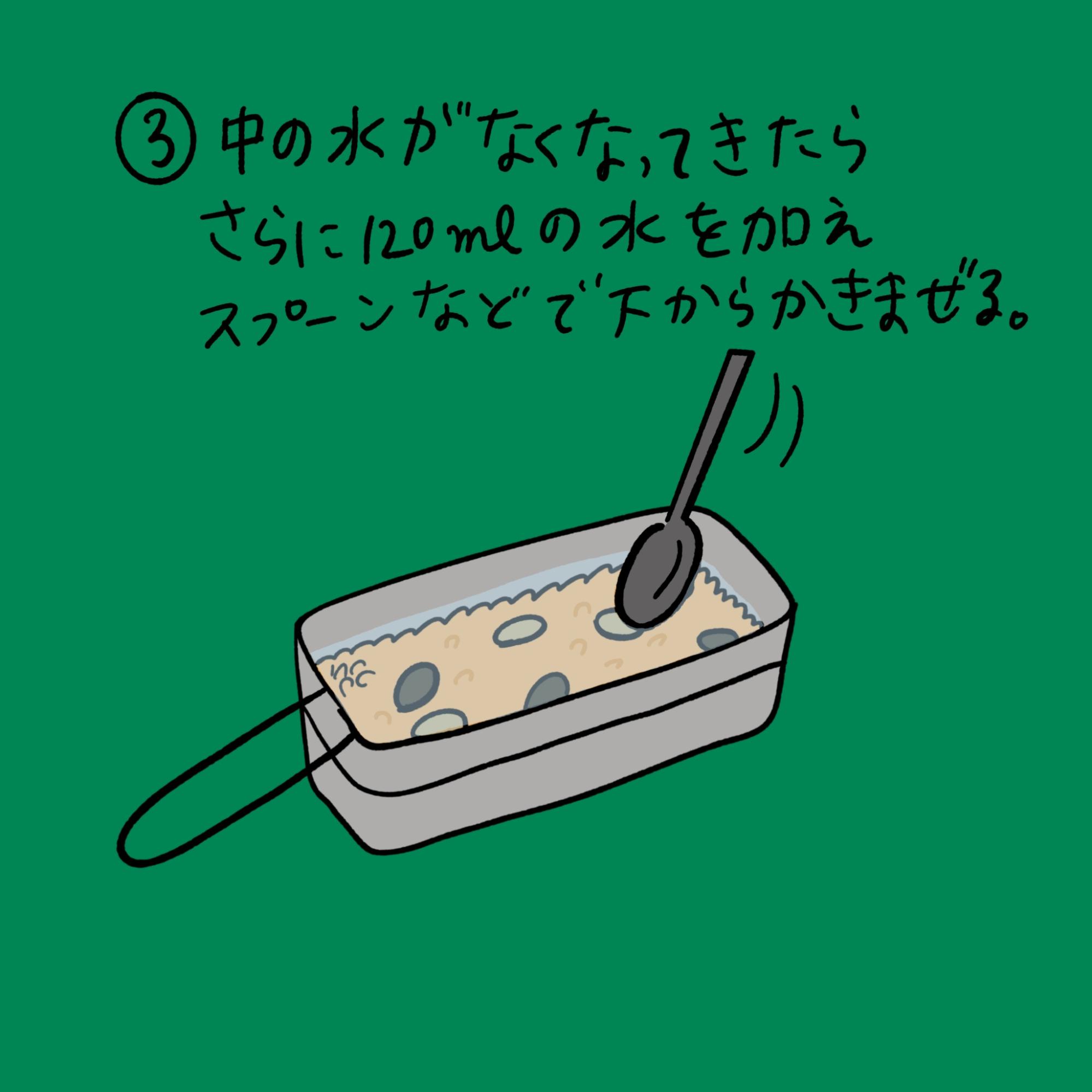
Once the water is mostly gone, add 120 ml more water. Stir thoroughly.
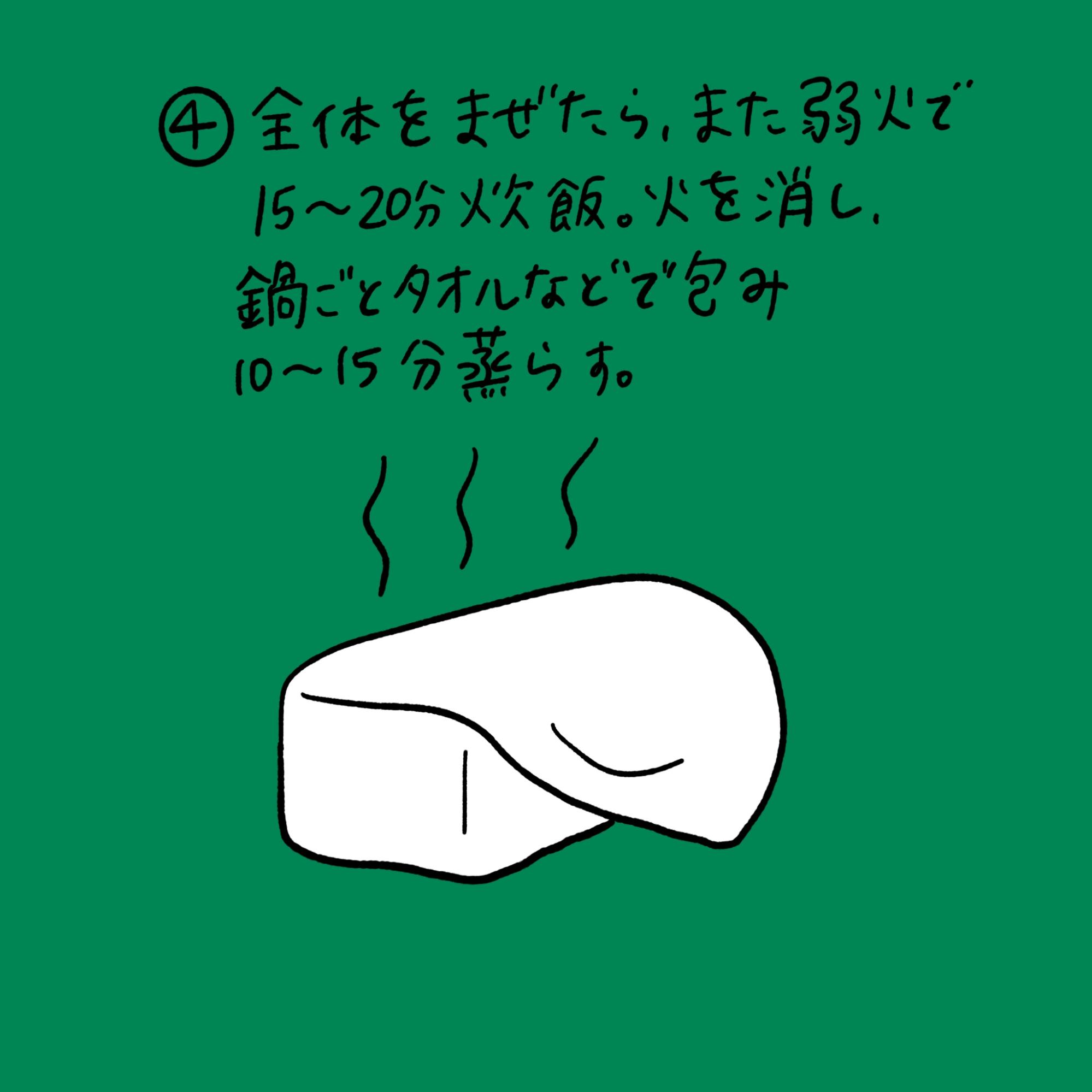
Keep simmering for another 15-20 minutes. Turn off heat. Wrap pot in a towel and set aside for 10-
15 minutes. Do not remove lid!
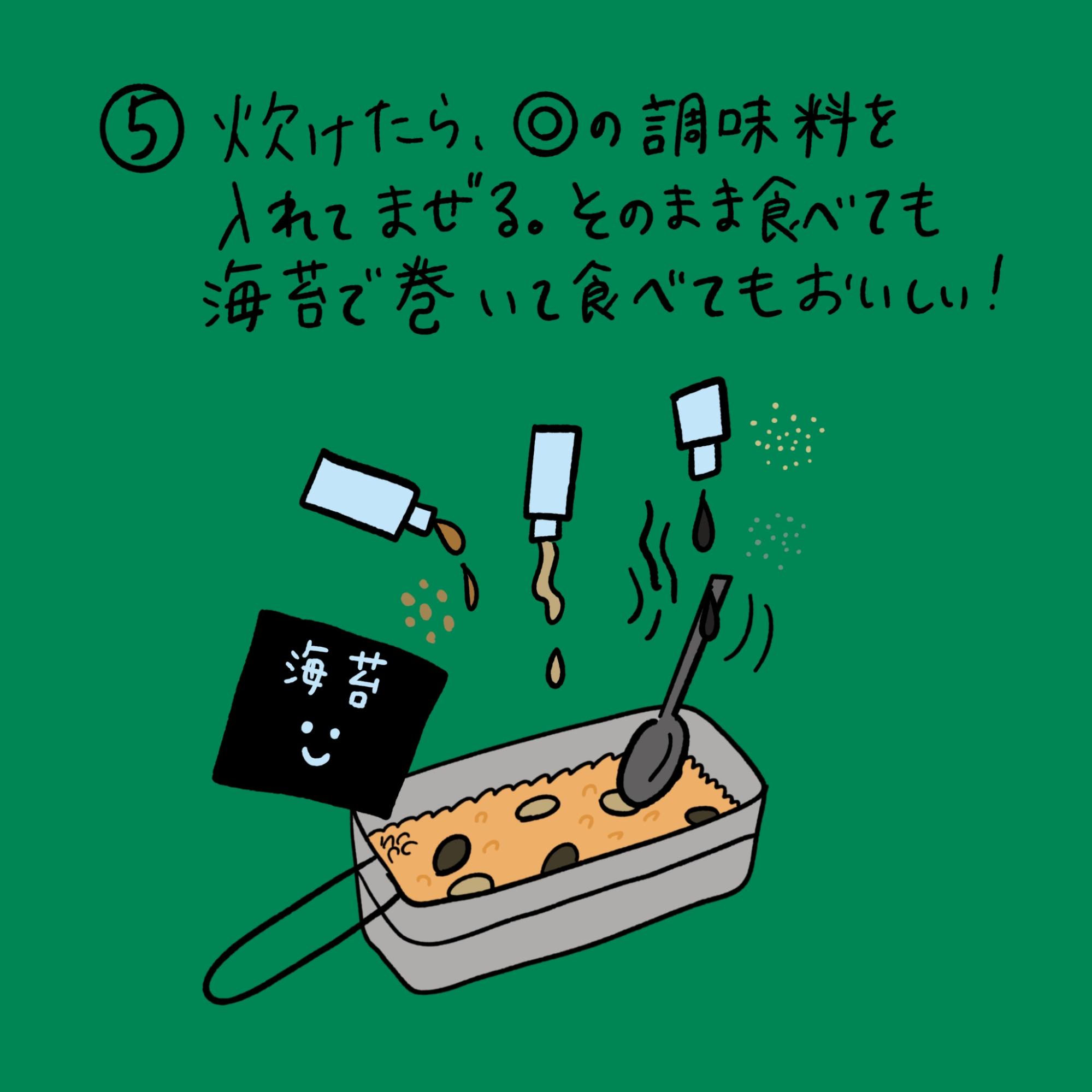
Add ◎ seasonings to cooked rice and beans. Mix and enjoy! (Optional: Eat with seaweed!)
Trail ingredients I recommend
・Nukadoko (rice bran pickling bed)
This additive-free, fermented rice bran bed is a safe and delicious way of pickling –– and it’s edible.
・Plain roasted mixed soybeans
These crunchy soybeans are good on their own, mixed in with rice, or as an accent in salads or shiraae (vegetables and mashed tofu).
・Mineral Iriko (dried baby sardines)
Use these umami-rich fish like the roasted soybeans. Take at least two packs so there’s plenty to experiment with.
Gear list
Base weight: 4.48kg
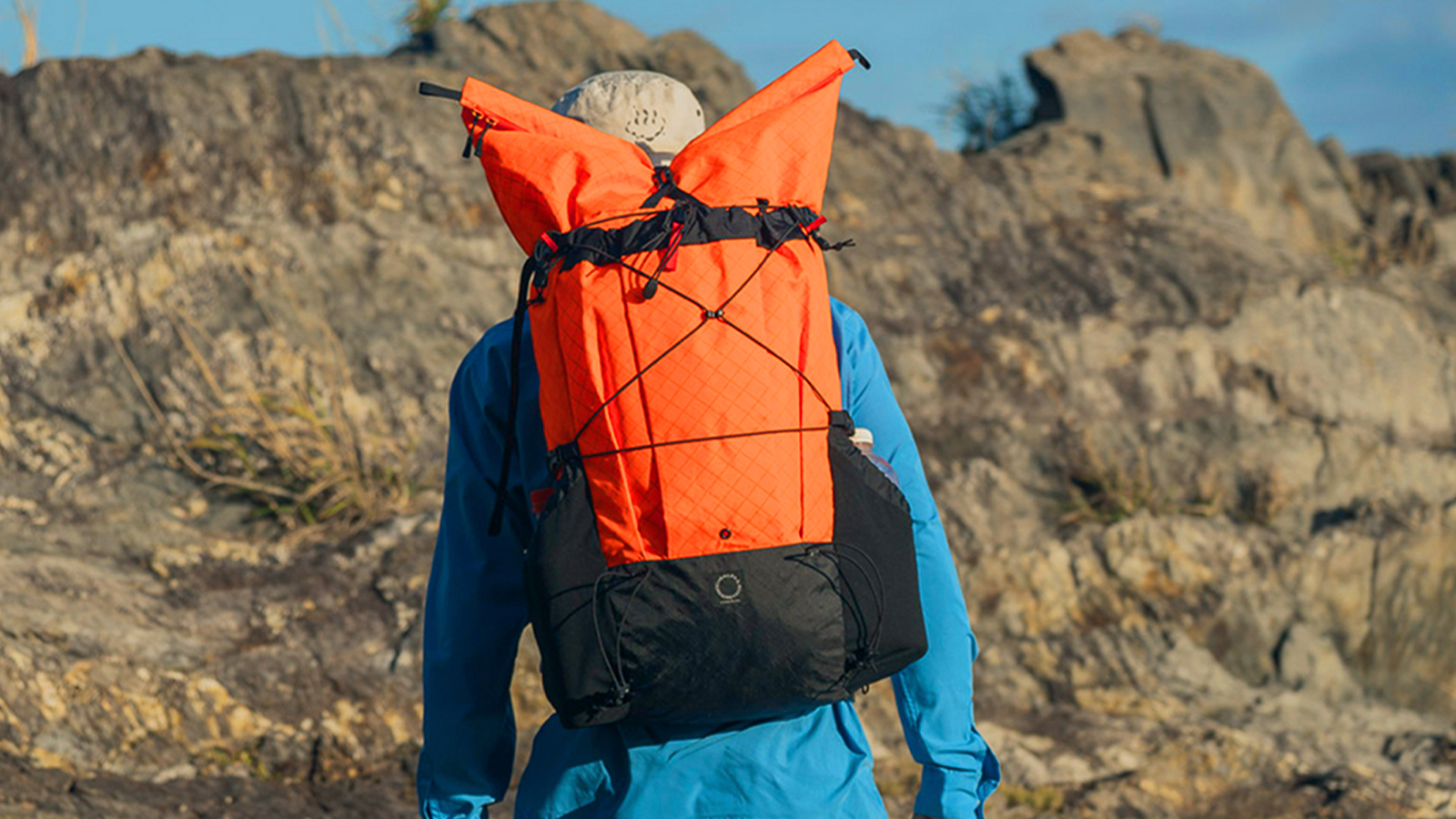
Total pack weight excluding water, food, and fuel