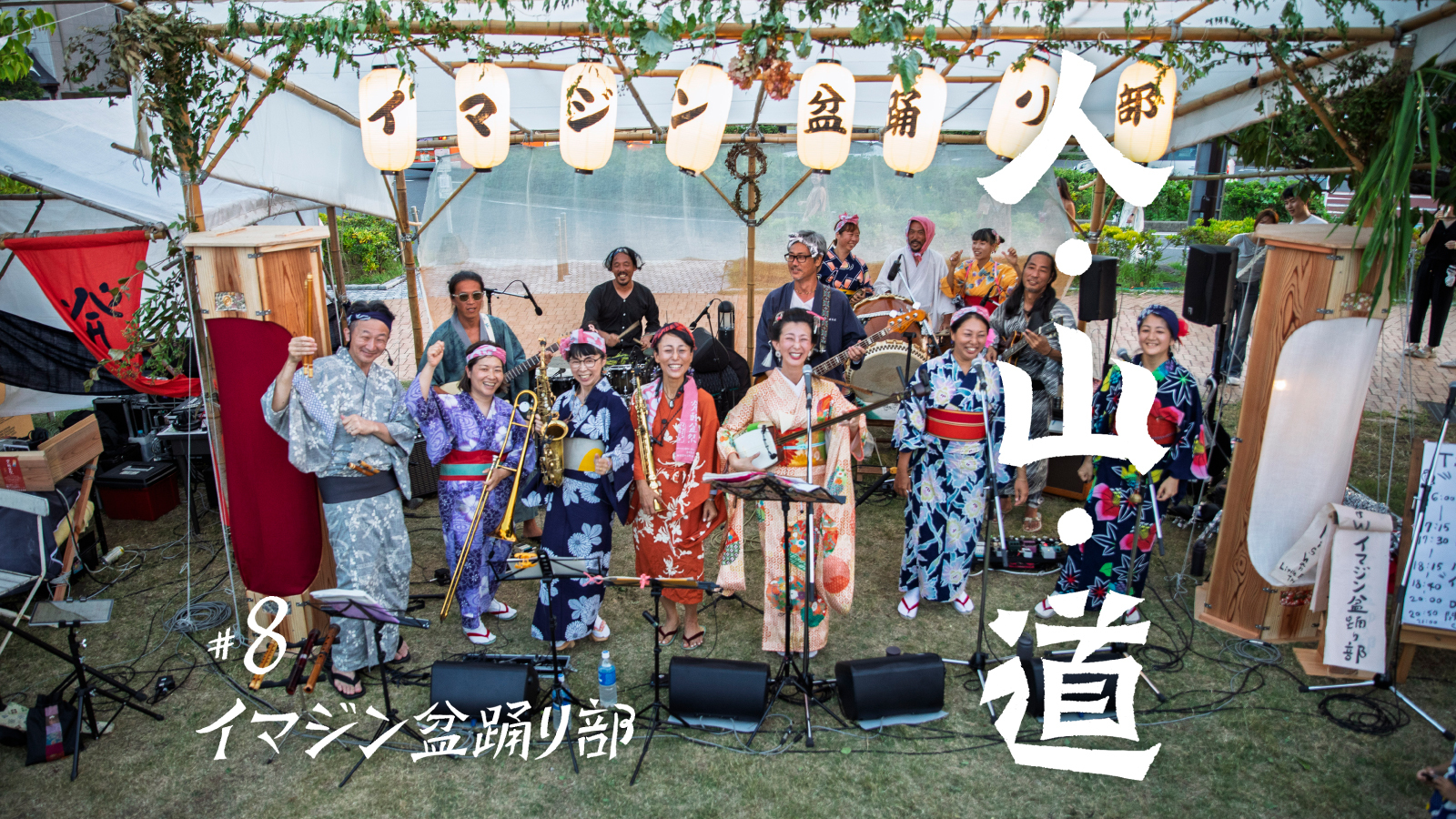










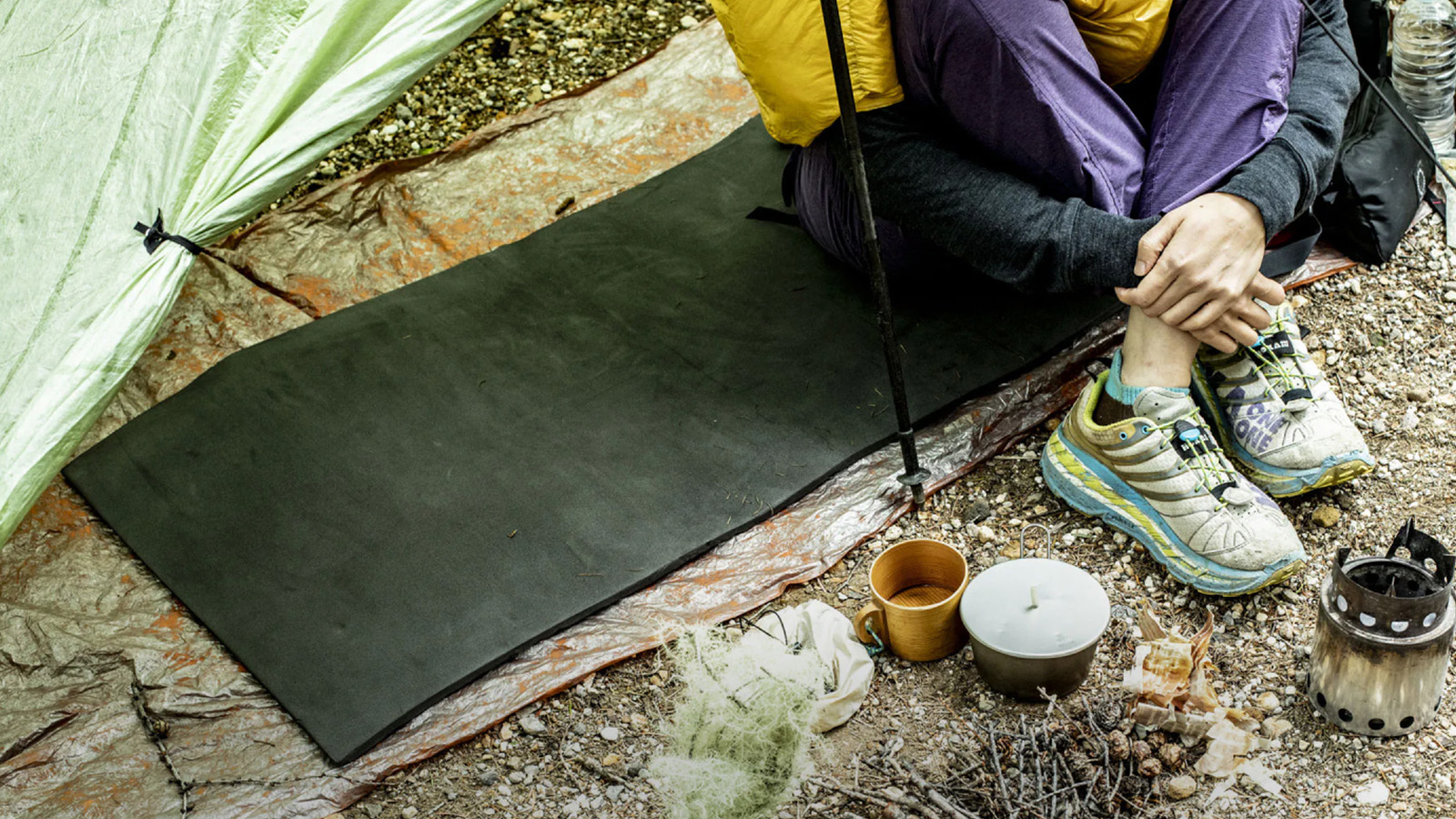




#8 Imagine Bon Odori Club
Photography: Masaaki Mita
#8 Imagine Bon Odori Club
Photography: Masaaki Mita
In People, Mountains, Paths: The UL Way, we interview artists, designers, hikers and entrepreneurs whose lives and work intersect with Yamatomichi. We ask them how they chose their current path and the things they carry with them –– a theme that is at the core of the ultralight hiking ethos.
Our eighth guest isn’t a person but a group: the Imagine Bon Odori Club, a dance troupe, known locally as Bonbu. They’re a fixture around Kamakura, the coastal city that is Yamatomichi’s base, and practitioners of an art form that encourages communal bonding. We sat down with the group’s leader Sakurako Oshima, second-in-command Fueriko Seno and vocalist Ai Yamaguchi.
The 40-member group features musicians and dancers whose lively performances turn every gathering into a celebration. They have been a vital part of every Yamamichisai ー Yamatomichi’s festival held roughly every 18 months ー since the inaugural gathering in 2019. We go behind the scenes with the group that turns our ultralight hiking event into a joyful extravaganza.
Bon odori's magical ring
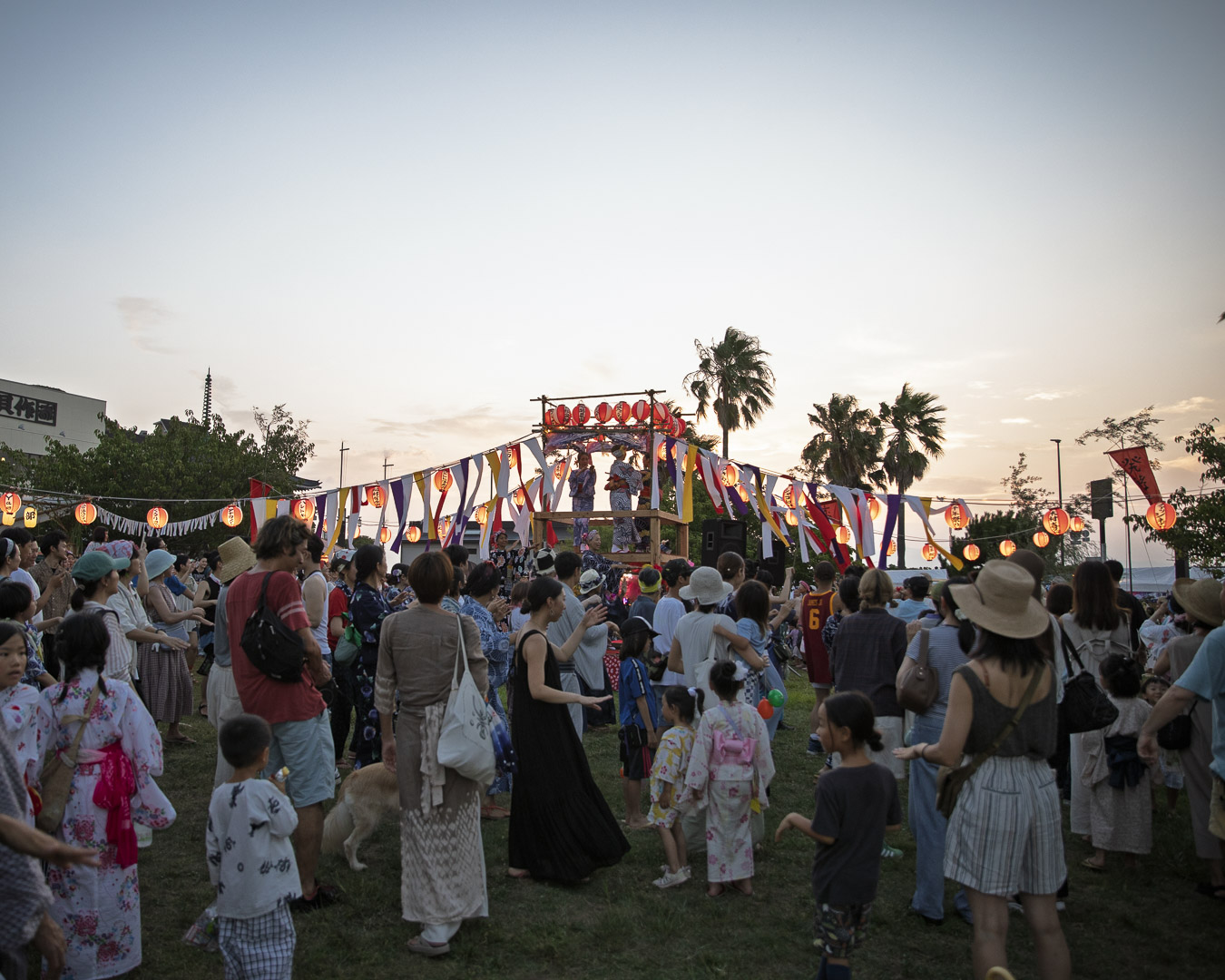
Picture this: It’s a midsummer evening, and a group of people, many dressed in cotton yukata robes, form a ring around a raised wooden platform in a public plaza. Paper lanterns hanging from ropes radiate out toward the perimeter. The ring of people dances in unison, everyone moving forward and backward and swinging their arms to a mid-tempo tune played by musicians on taiko drums, shamisen (a traditional three-stringed Japanese lute) and yokobue flutes.
Festivals showcasing this bon odori ー which traces its roots back centuries to a Buddhist ritual ー reach their peak in mid-August, when people travel to their hometowns to honor their ancestors for the Obon holiday. The dances are the highlight of local Obon events featuring street food, socializing and drinking.
For me, these bon odori have been synonymous with summer since I was a child. But the one I attended not too long ago in a plaza in Kamakura was different. How so? The Imagine Bon Odori Club was performing. As I danced, I experienced an unfamiliar meditative calmness. This was the moment when the dance came to signify something entirely new for me.
Bon odori's roots
The Imagine Bon Odori Club isn’t your everyday entertainment troupe. Think of them as a Kamakura-based collective of social activists. The group, also known as Bonbu, originally formed to protest against nuclear power, following the Fukushima Daiichi power plant meltdown triggered by the devastating earthquake and tsunami in Japan in March 2011. But they’re not really in the business of stirring up oppositional anger.
The group initially organized demonstrations in Kamakura and nearby coastal areas around Kanagawa prefecture. They called these protests Imagine a Nuclear-Free Future Kamakura Parades, but they weren’t protests in the traditional sense. Rather than taking a hardline anti-nuclear stand, picketing and shouting slogans, the group kept things festive and open to everyone.
“If we simply protested against nuclear power, we would only provoke a backlash,” says Fueriko Seno, one of Imagine Bon Odori Club’s founding members. She wanted bystanders to think that participants were having a blast. “It was a way of expressing that there are many of us in this town who share the same hopes, and that this is the future we want to imagine,” she says.
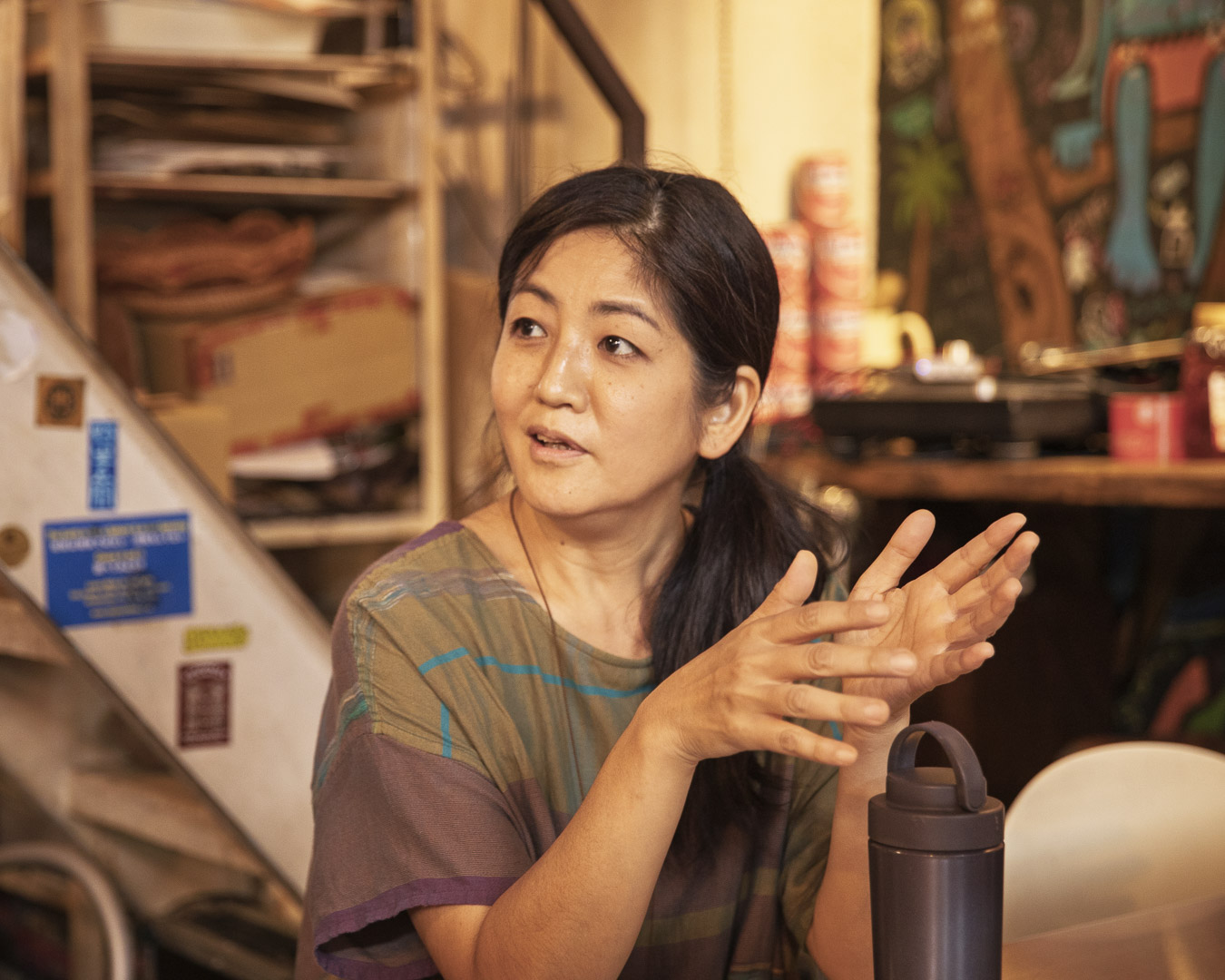
Imagine Bon Odori’s deputy head Fueriko Seno.
In the beginning, bon odori was just one form of expression for the parade participants. That changed in September 2012. The procession was headed to Yugyo‑ji Temple, in Fujisawa, a coastal city. Back then, there was no band. Parade participants danced to a recording of “Imagine Ondo,” played on melodicas and castanets (it’s a parody of the popular bon odori tune Tokyo Ondo) ー and the event turned out to be a hit.
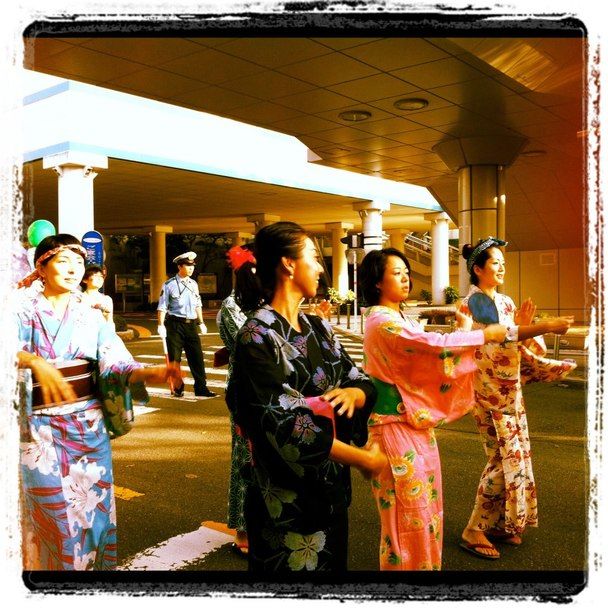
During the September 2012 parade, the procession headed to Yugyo-ji Temple in Fujisawa.
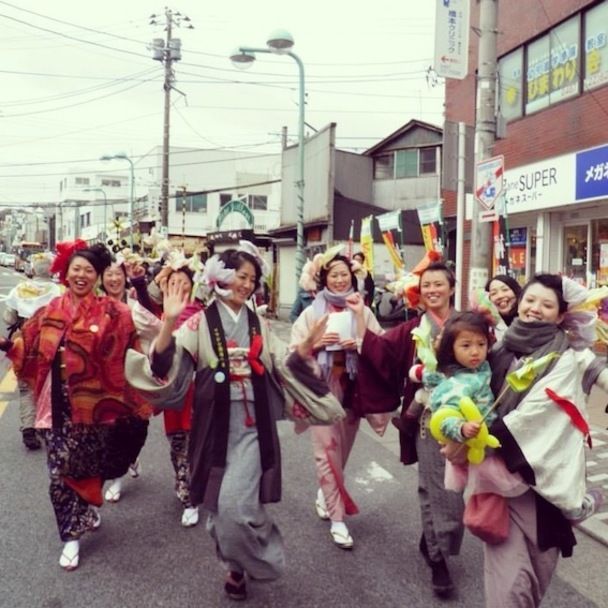
A winter parade in Kamakura in 2013.
Yugyo-ji temple is the home of odori-nenbutsu, the dancing Buddhist chants that are believed to have evolved into the bon odori dance. The monk Ippen is said to have staged these dancing chants in nearby Katase and helped to spread them across the archipelago some seven centuries ago. To Sakurako Oshima, who is Bonbu’s deputy leader, the parade in Fujisawa felt “as though we were being made to dance by Ippen himself all the way to Yugyo-ji.” She joined Bonbu after joining the procession as a first-time participant that day. “Dancing for about an hour and a half, I suddenly felt something deep inside me saying, ‘I want to dance more.’” She wasn’t the only one. Soon, there were enough people who felt a similar calling ー and the Imagine Bon Odori Club was born.
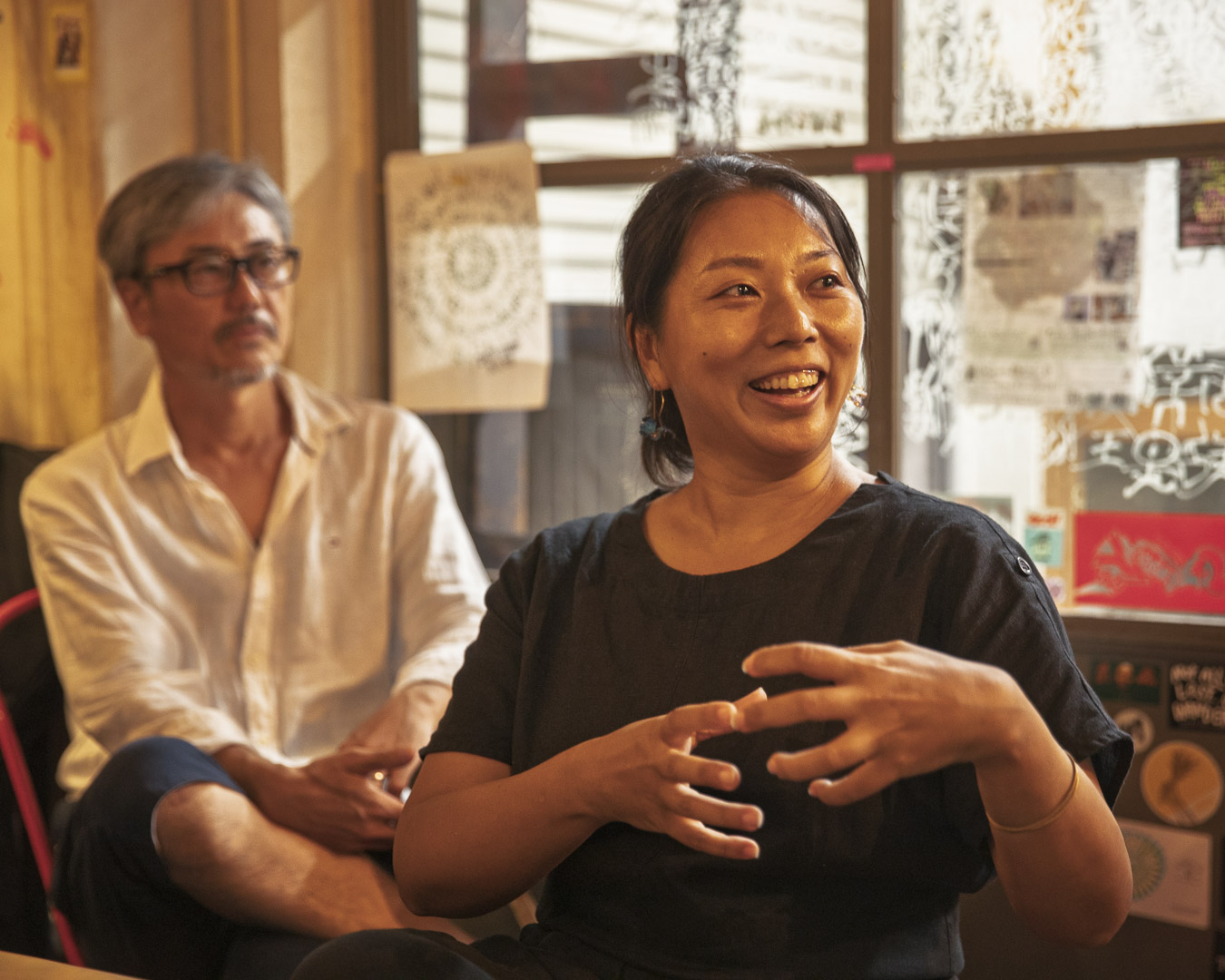
Imagine Bon Odori Club leader Sakurako Oshima (R) and bassist Norihiro Yoshida (L).
Bon odori devotees
There’s a phrase that’s often blurted out as a joke: “I threw myself into bon odori.” It also captures the hard-to-explain magnetic pull of the dance.
Since 2012, the Imagine Bon Odori Club has gone from an informal dance and study group to a full-fledged performance troupe with its own band, expanding its ranks.
“With a live band we can attract more people to dance,” Oshima says. “We also set a goal of putting out an album so that even where we aren’t present, our music can spread the energy of bon odori.”
Around that time, the group’s members met vocalist Ai Yamaguchi, who had been part of another folk ensemble. Having spent time performing in Cuba and Venezuela, Yamaguchi had recently rediscovered Japanese folk music. When she joined Imagine Bon Odori Club, she knew only the two most common songs, Tanko Bushi and Tokyo Ondo.
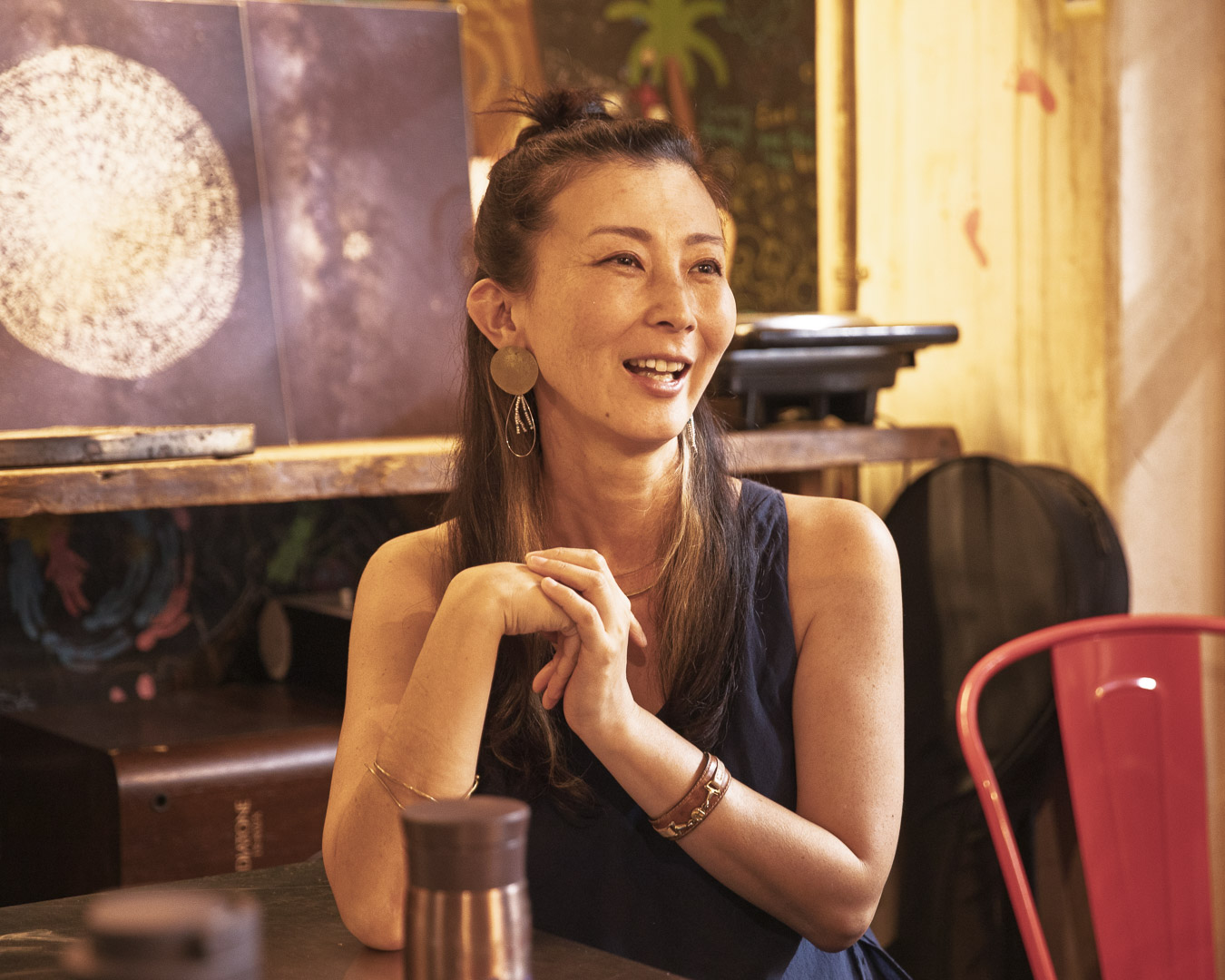
Imagine Bon Odori Club’s vocalist Ai Yamaguchi.
Once Yamaguchi signed on, work on the album picked up. Imagine Bon Odori Club composed one of its signature songs, Hakko Bon Uta (Fermentation Bon Song), for a festival hosted by Terada Honke, a sake brewery in Kozaki, Chiba prefecture. The club evolved, too: Besides organizing bon odori events, the group was also increasingly getting invitations to perform from around the country.
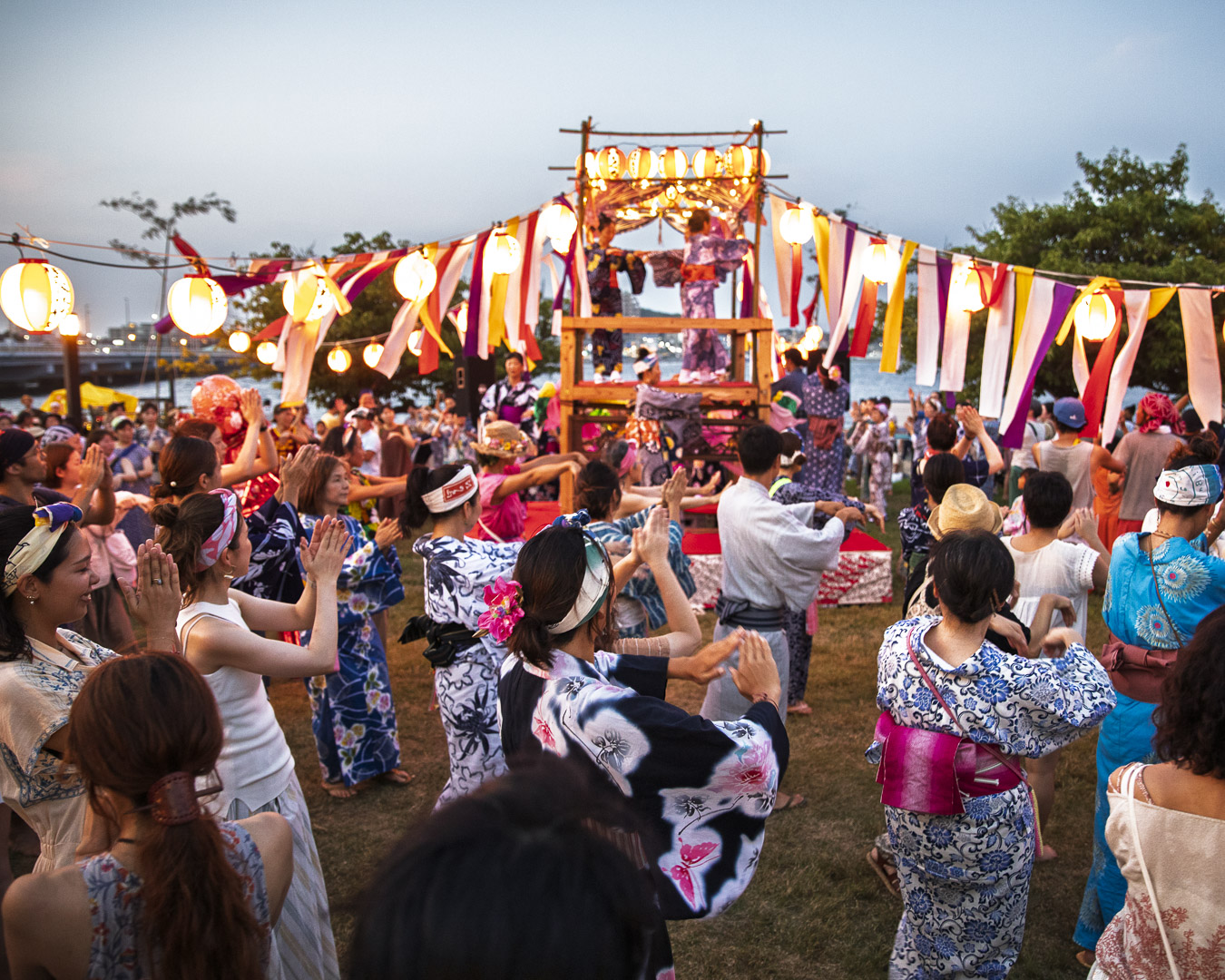
At Hakko Bon Festival 2025, dancers formed concentric circles, creating a sense of unity.
Altruism
An Imagine Bon Odori Club event isn’t a concert, says Yamaguchi. “In a concert, the audience watches the performers on stage. In bon odori, hardly anyone looks at the performers.” The ring of people dancing is the main attraction.
In the ring, dancers synchronize their movements with everyone else. Once they do this, they begin to see what truly matters ー in particular, the social bonds that enrich lives. This stripping away of excess layers to get to what’s essential mirrors the ultralight hiking philosophy.
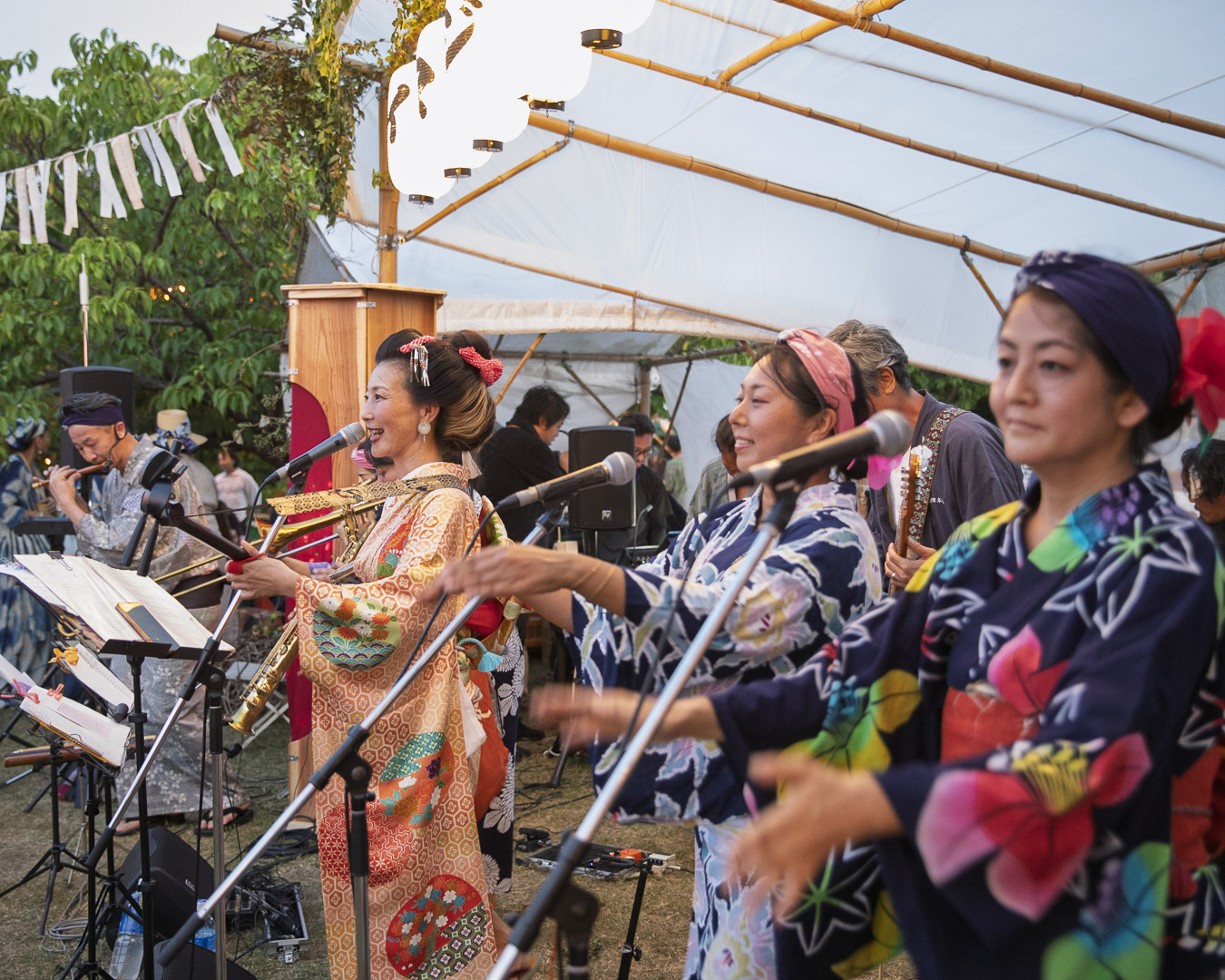
A scene from Hakkō Bon Festival 2025 at sake brewery Terada Honke.
Ring of harmony
There are magical moments in every Imagine Bon Odori Club event. When someone who’s been watching from outside joins the ring of dancers. When people who have never met before hold hands and move together in sync. When everyone in the ring is smiling.
The choreography is the secret sauce to making this happen, says Seno. If the choreography works, everyone dances together. “It doesn’t matter whether someone is good at dancing or not ー people naturally become synchronized,” she says.
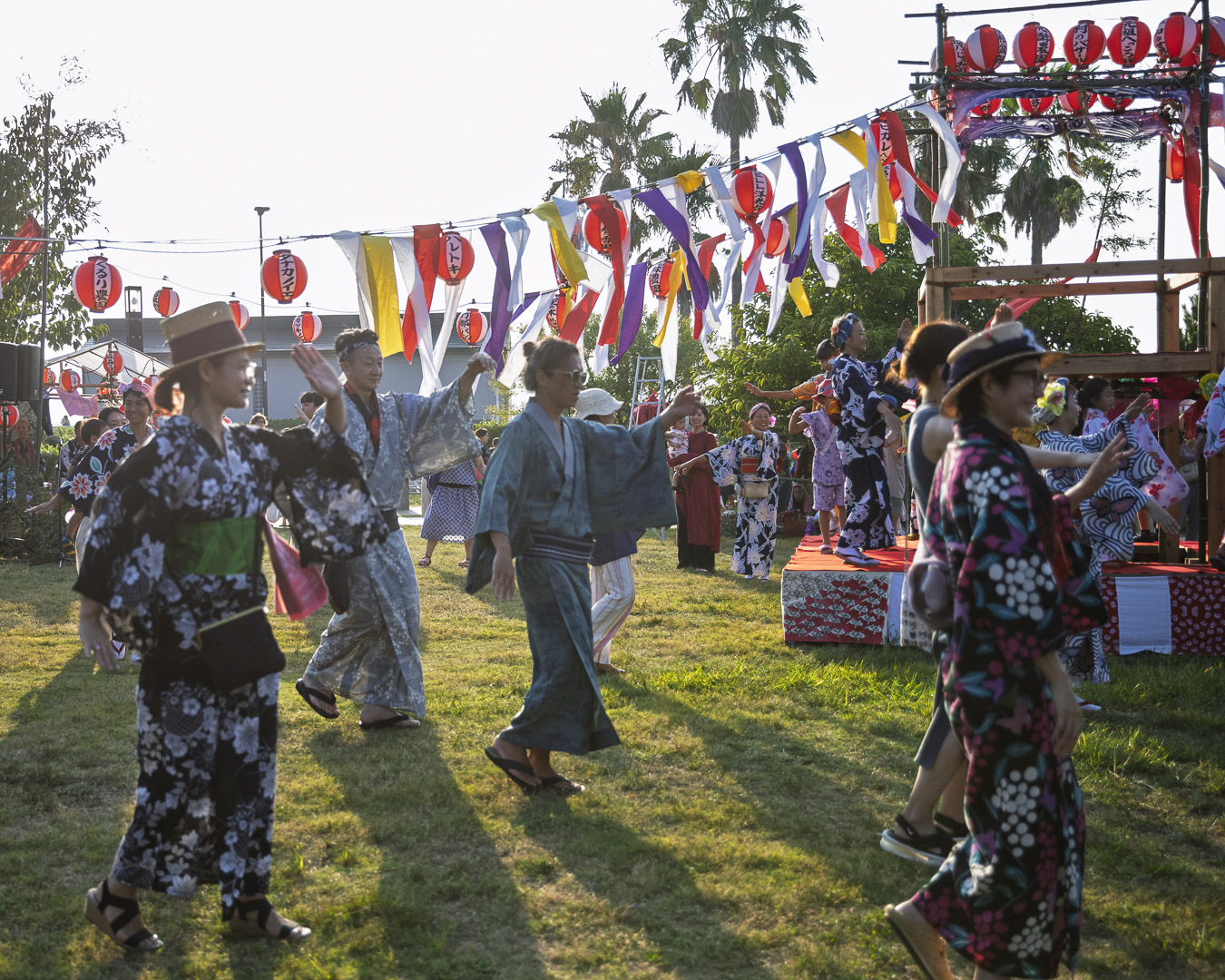
What’s tricky is that many Japanese folk songs don’t rely on a basic 4/4 beat. They’re rhythmically more complex. The steps and hand gestures can take time to master, too. “Sometimes the steps resemble star patterns,” Yamaguchi says. “Some dances have almost mystical meanings ー like awakening the spirits of the land. The choreography can mimic rowing a boat or manual labor, while the lyrics weave in local climate, work and love stories.”
Movements can differ from one region to the next ー and many of these regional dances are on the verge of disappearing. In Kamakura, the local bon odori is known as Hase Ondo. It can only be practiced within the Hase district: knowledge of the tradition is not passed to outsiders. If there aren’t enough people keeping the dance alive and passing it on to a new generation, the culture might not survive.
Which is why the Imagine Bon Odori Club has made preserving bon odori’s traditions one of its key goals.
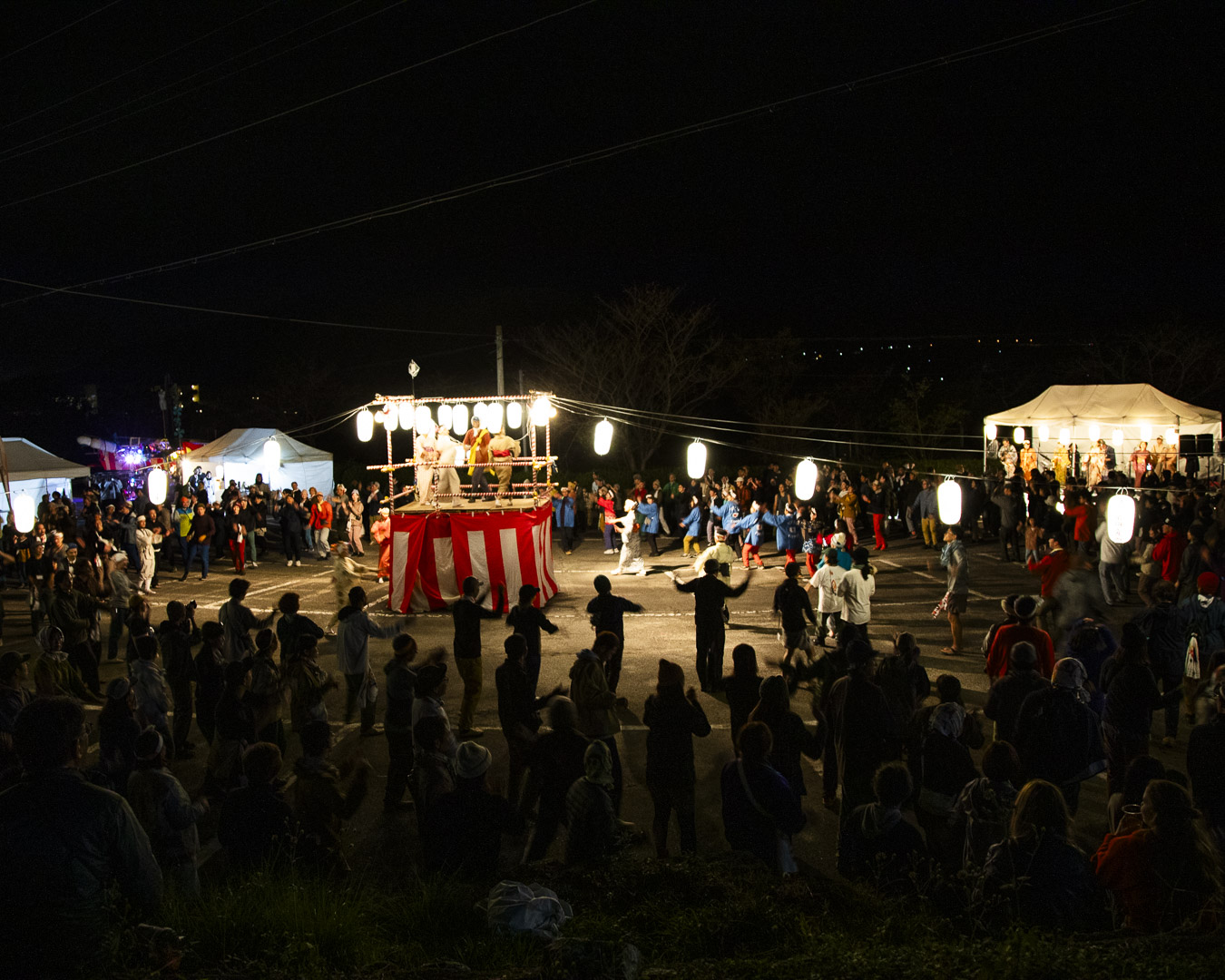
The Imagine troupe performs at Yamatomichi’s Yamamichisai 2024, near Lake Biwa.
Bon odori’s community-revitalizing power
Dancing together has a way of bridging generations and social barriers. It’s a conversation-starter, a lubricant for newcomers to integrate into a community. In some cases, it even has the power to reinvigorate a community.
After a magnitude-7.5 earthquake rattled the Noto Peninsula, in Ishikawa prefecture, in January 2024, the Imagine troupe’s members joined relief efforts in Suzu, a hard-hit city of around 10,000 residents. At an emergency center, where evacuees were sheltering after the quake, some elderly residents taught the visiting Imagine troupe the local salt-making dance and Sunatori-bushi song.
Sometime later, the Imagine members returned to perform the dance ー and locals joined in. That inspired locals to revive a festival featuring the dance that had been discontinued due to a lack of participants. “A festival isn’t something you can do by yourself,” Oshima says. “It can’t happen without connections between people in a community. Inevitably, that’s what a festival does.”
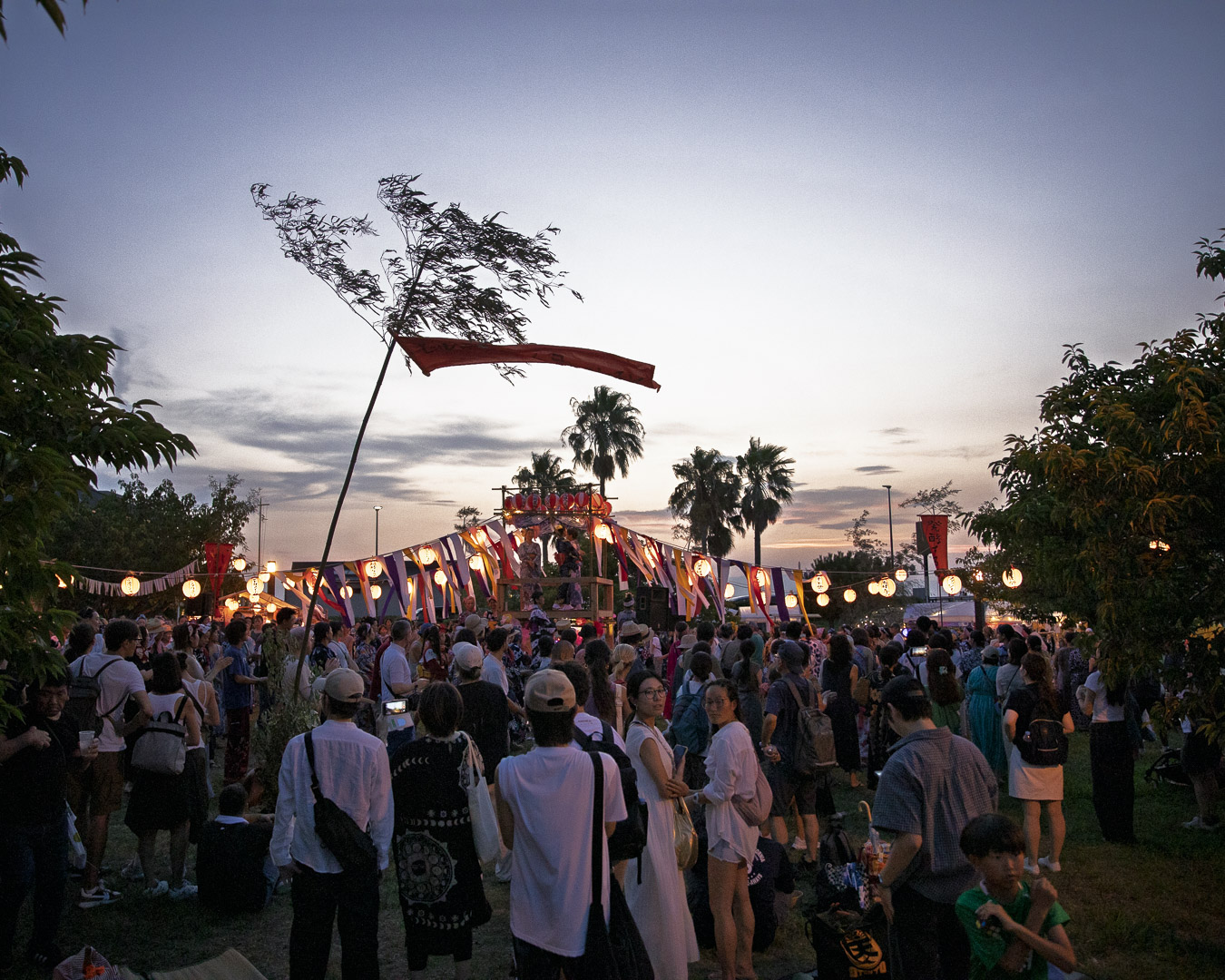
Young and old gather at Hakko Bon Festival 2025, at Terada Honke sake brewery.
Expanding the ring
The Imagine crew sees what they do as connecting a place and its people. They’re idealists who want to create a better world.
They’ve had discussions about collaborations on local dances at a peace park along the Korean Peninsula’s 38th parallel marking the border between North Korea and South Korea. (The two countries agreed to an armistice that halted their 1950-1953 conflict but have never formally signed a peace treaty and are technically still at war.)
“We want bon odori culture to continue into the next generation,” Oshima says. In Japan, people believe that, without the bon odori dance, the spirits of the deceased wouldn’t know how to get back to their hometowns ー and the living might lose their connection to a world that they can’t see but assume exists. “Bon odori welcomes the spirits of the dead. Even after passing to the afterlife, it would be wonderful to know there’s a (bon odori) ring we can return to,” adds Oshima.
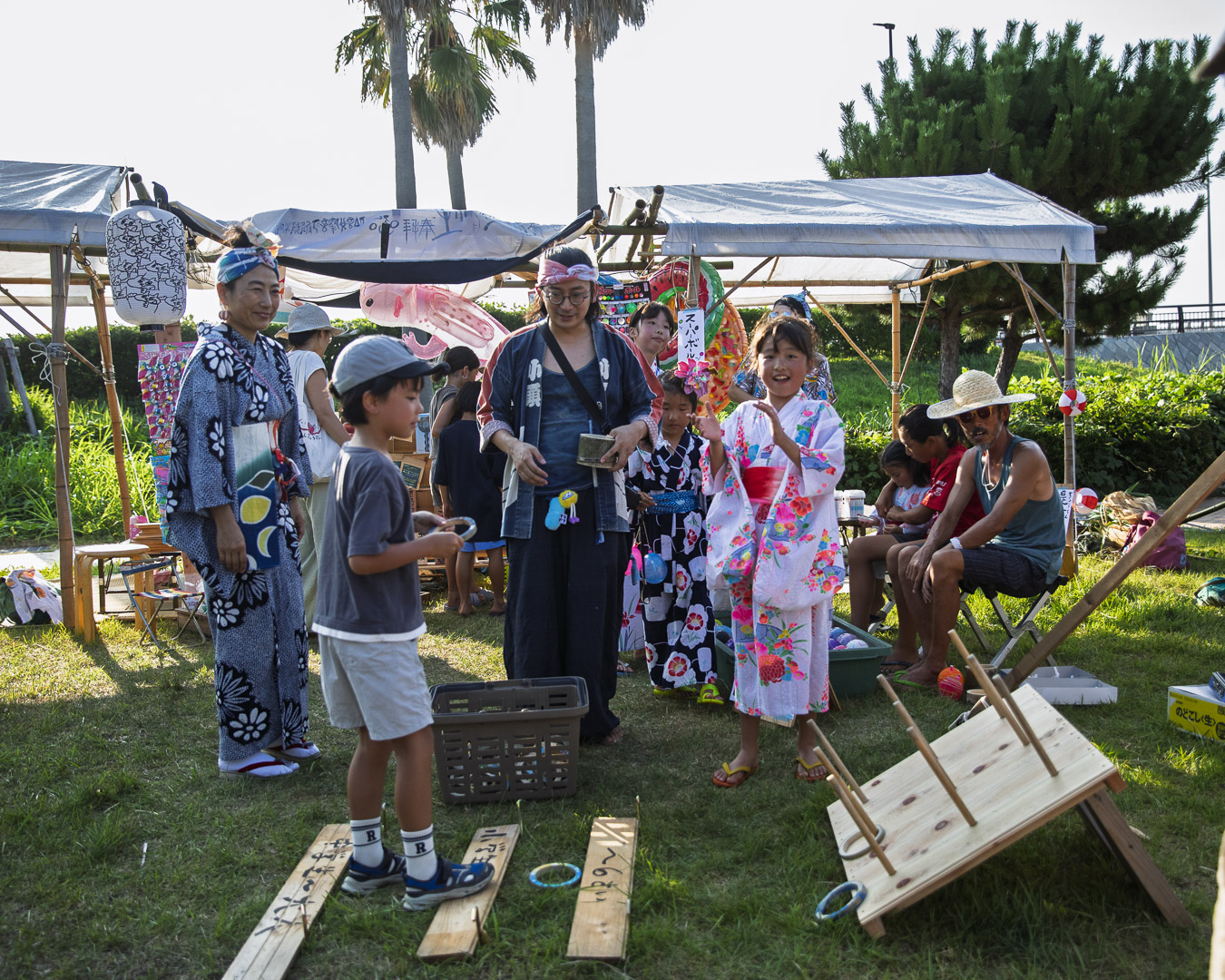
Children at the festival stalls of sake brewery Terada Honke’s Hakko Bon Festival 2025.
Passing the baton
The club recognizes that it can’t keep local bon odori traditions going on its own. Residents in each community have to be involved in “carrying the spark forward”, says Seno. Imagine Bon Odori Club’s performances are a catalyst for action: In many cases, local residents have resumed or begun organizing their own festivals. The dance ring exists as a kind of tapestry, weaving together life and death, past and future, land and people in the shared experience that bon odori represents.
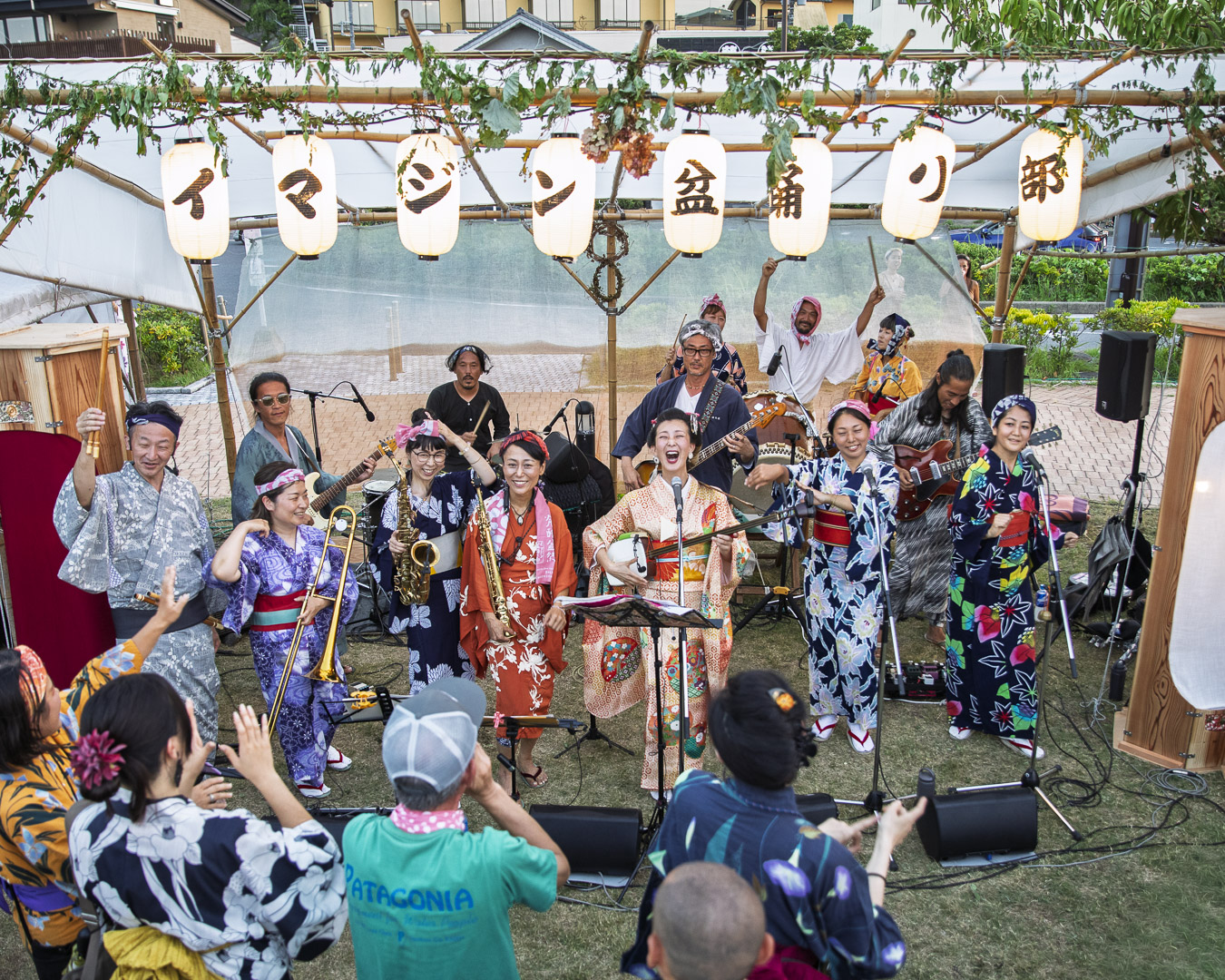
The bon odori collective formed in 2012. Its founding members came together while participating in a series of protest parades following the devastating 2011 earthquake and tsunami in Japan’s northeastern Tohoku region. But the group sees itself as a positive force for change and global peace, not a protest movement. Their song-and-dance performances are unique, often resulting in participants joining hands, smiling and forming a ring. Today, the group has around 40 members, ranging from pre-schoolers to retirees.

Series: People, Mountains, Paths: The UL Way