







#7 New year with family
#7 New year with family
Two weeks into his time in Taiwan, Takaya Sasa has already begun to learn what walking invites: people. In this chapter, his route runs straight into Lunar New Year (Spring Festival)—a season when families gather and many shops close. He expects the days to feel lonely. Instead, kindness keeps finding him, again and again.
A day with indigenous culture
It was the fifth day since I began my walking journey across Taiwan. I took the day off from walking, and Aku—whom I’d run into again the night before—offered to show me around a town in Pingtung County, Taiwan’s southernmost prefecture. At my request to see old buildings, we started the morning by visiting the home of a wealthy Taiwanese clan from long ago.
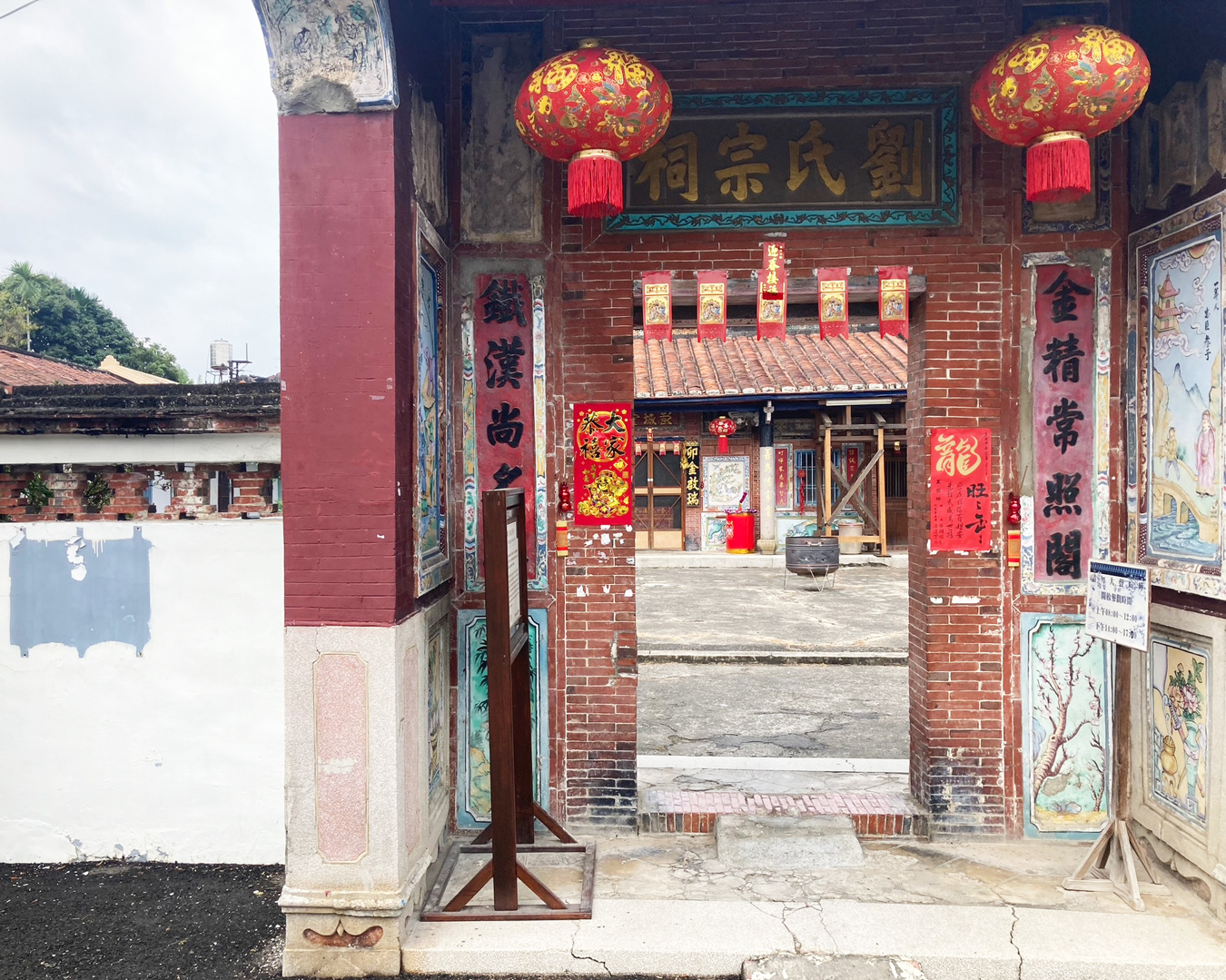
The Liu Clan Ancestral Shrine in Pingtung County.
After that, we visited the Taiwan Indigenous Peoples Cultural Park—a place I’d wanted to see ever since before coming to Taiwan. Built to preserve the cultures of the Indigenous peoples who lived here long before large-scale migration from mainland China. it’s the country’s largest open-air museum, where you can see many different kinds of Indigenous homes.
The houses were fascinating—walls made by stacking thin stones, structures shaped by the climate and by local materials—and I found myself imagining what life inside them had been like. When I picture it through the lens of my own daily life, it feels more real, which is why I’ve always loved visiting homes and ways of living, in Japan and abroad.
Afterward, we stopped by a café run by an Indigenous family—friends of Aku’s—nearby. There I tried homemade Aiyu jelly, made from a plant. They told me even the coffee and cacao they serve are grown by them, and they offered me some handmade chocolate. It was shockingly good.
In the taste, I could feel the steadiness of work that begins with cultivation, and the raw vitality of the ingredients themselves. Traditional ways of making things must carry a kind of strength that comes from being tied to the land. For someone who loves chocolate, it was an irresistible afternoon.
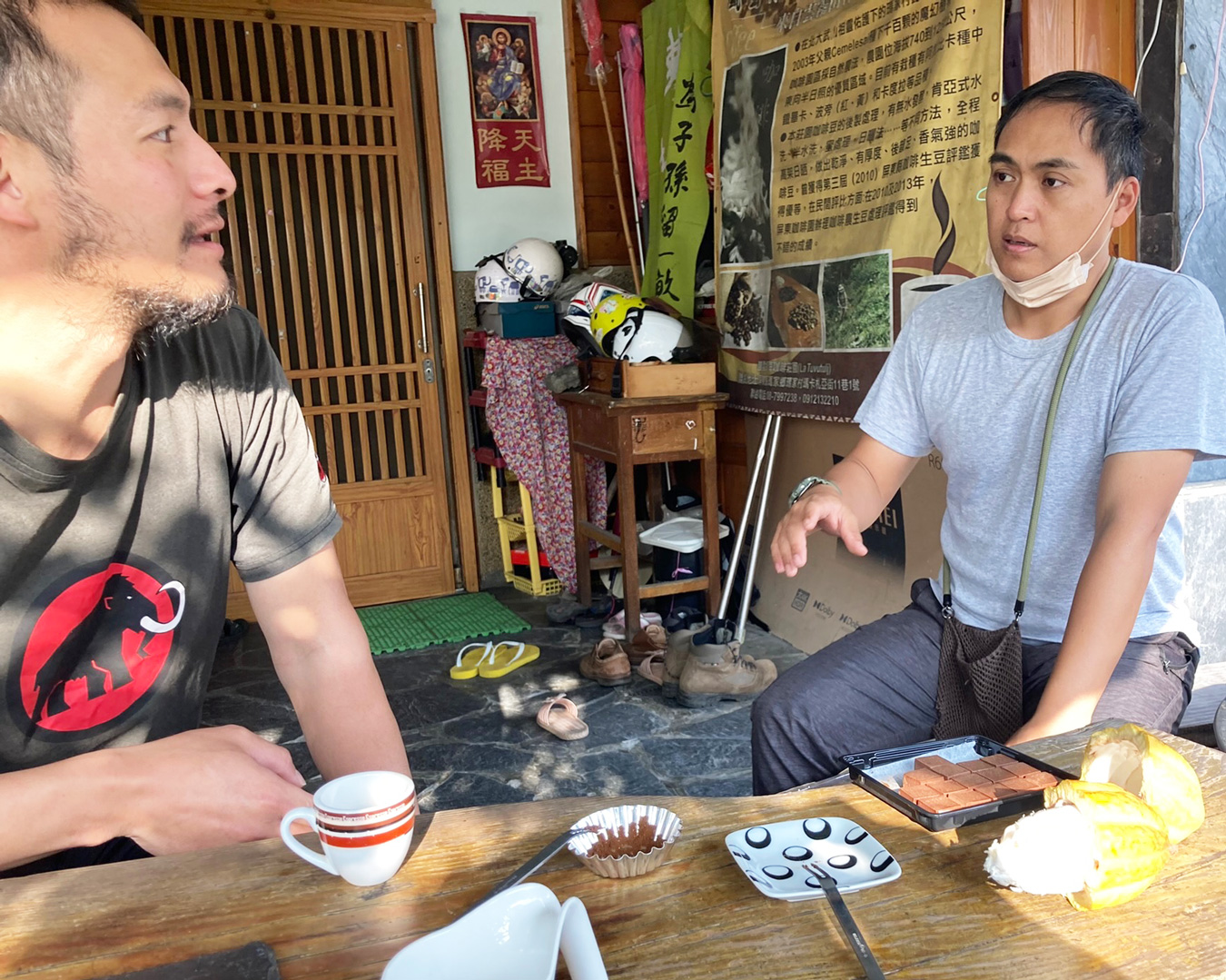
Aku (left) and my friend who runs the café (right).
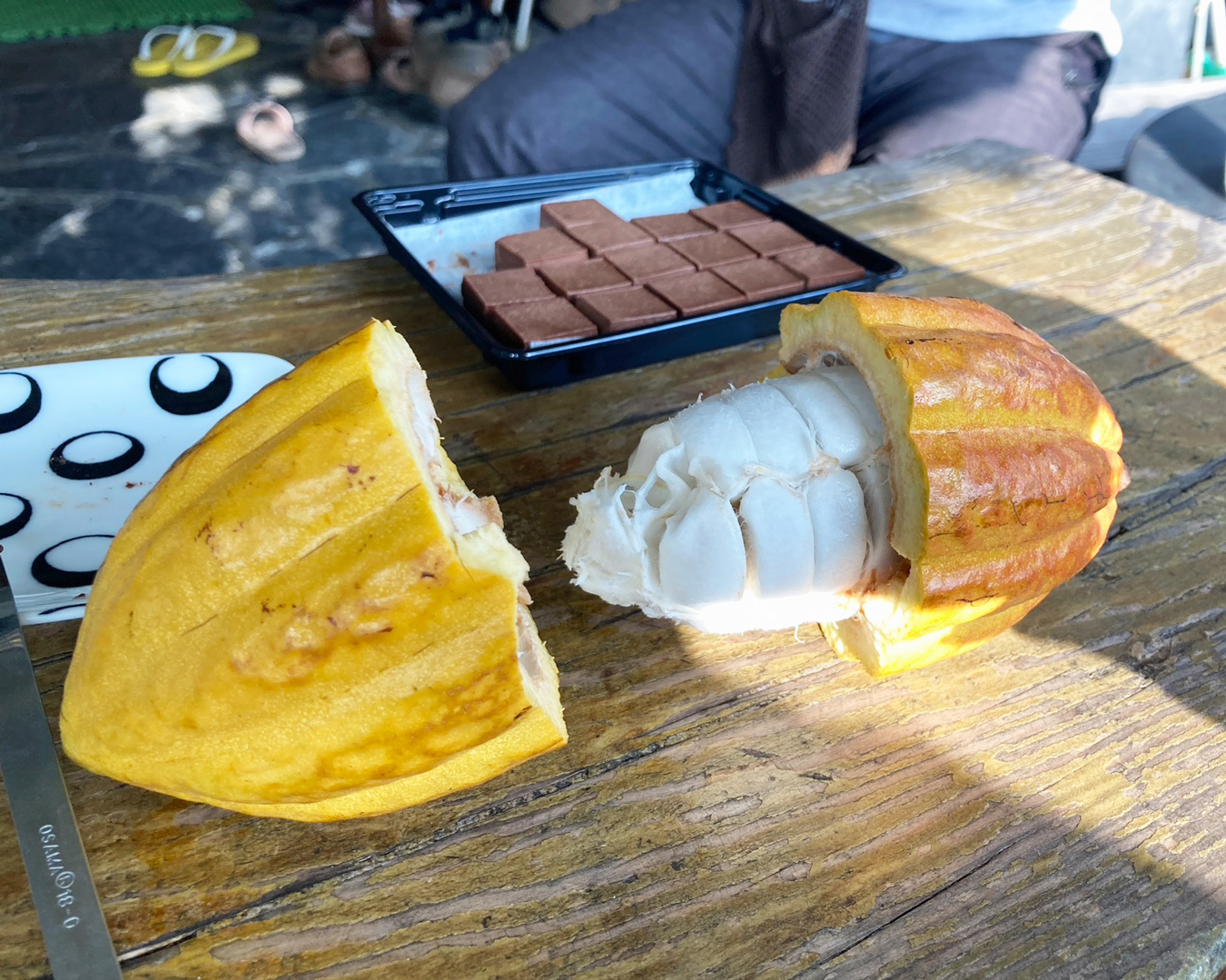
Raw cacao fruit.
That night we went to a night market in search of dinner, hopping from stall to stall as we ate our way through. When you’re walking alone through an unfamiliar place, you feel even more keenly how fun it is to have a friend to wander with. Even though it was the day before Lunar New Year’s Eve, Aku spent the day with me—and thanks to him, I learned a lot about Taiwan’s Indigenous culture and ate a whole lot of good food. It turned into a truly enjoyable day.
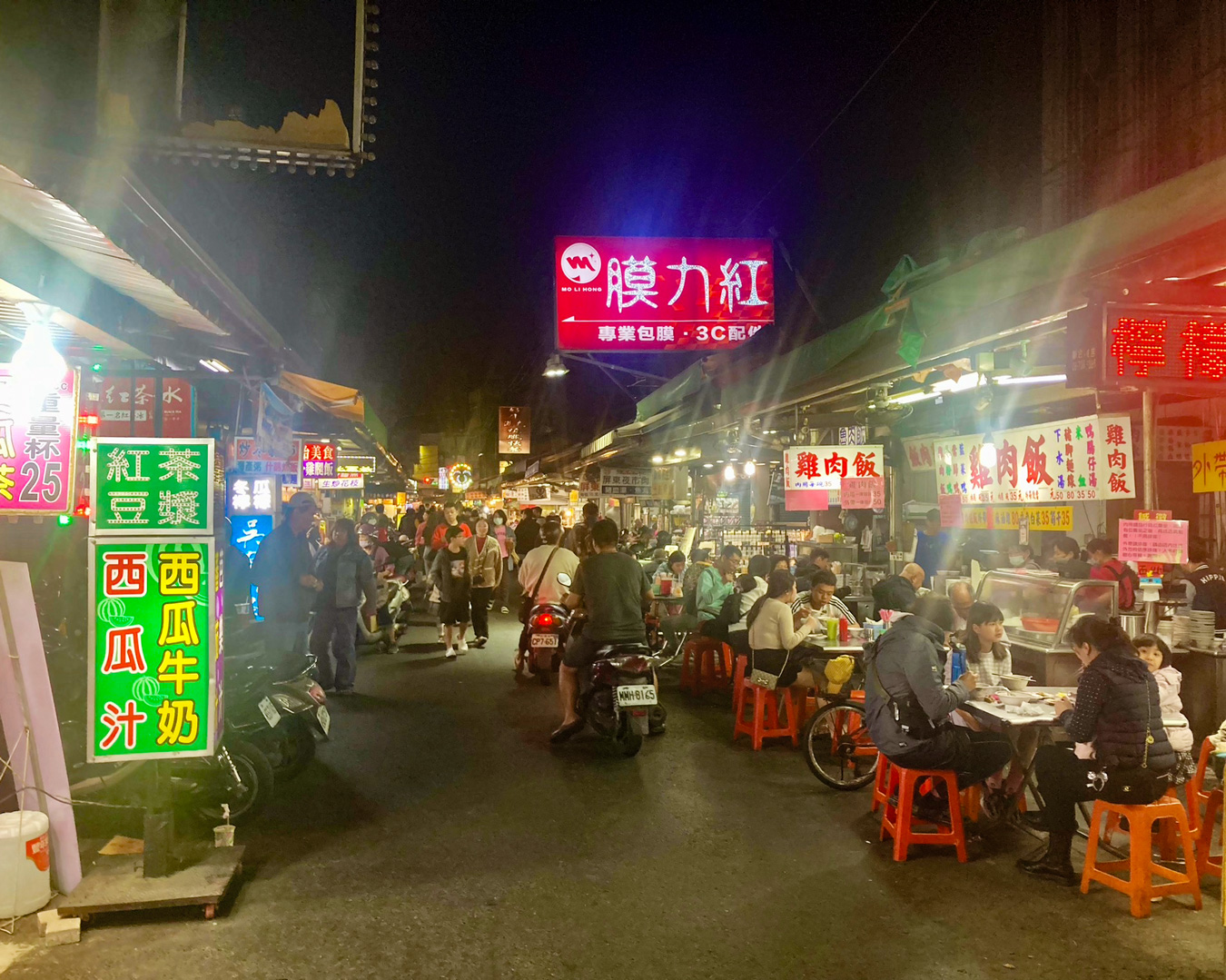
Pingtung Tourist Night Market, packed with people ahead of Lunar New Year.
I knew New Year’s Eve would be lonely—or so I thought
At last, it was here. Today in Taiwan, it was Lunar New Year’s Eve. For local people, it’s a deeply important day—a day to gather with family. But for me, a traveler, I couldn’t help worrying about how it would go. I’d heard that every shop would close…
That morning, I went to a temple with Aku, and then we said goodbye. He must have had family plans of his own, and yet he stayed with me and looked after me right up until the morning of New Year’s Eve. Thank you.
All right—time to go. I took a municipal bus to my starting point. After getting off and walking a little, I came upon a bustling market. As I wandered and browsed, I found a stall selling fàntuán—Taiwanese rice balls, one of my favorites. Happy at the thought of a packed meal, I ordered two.
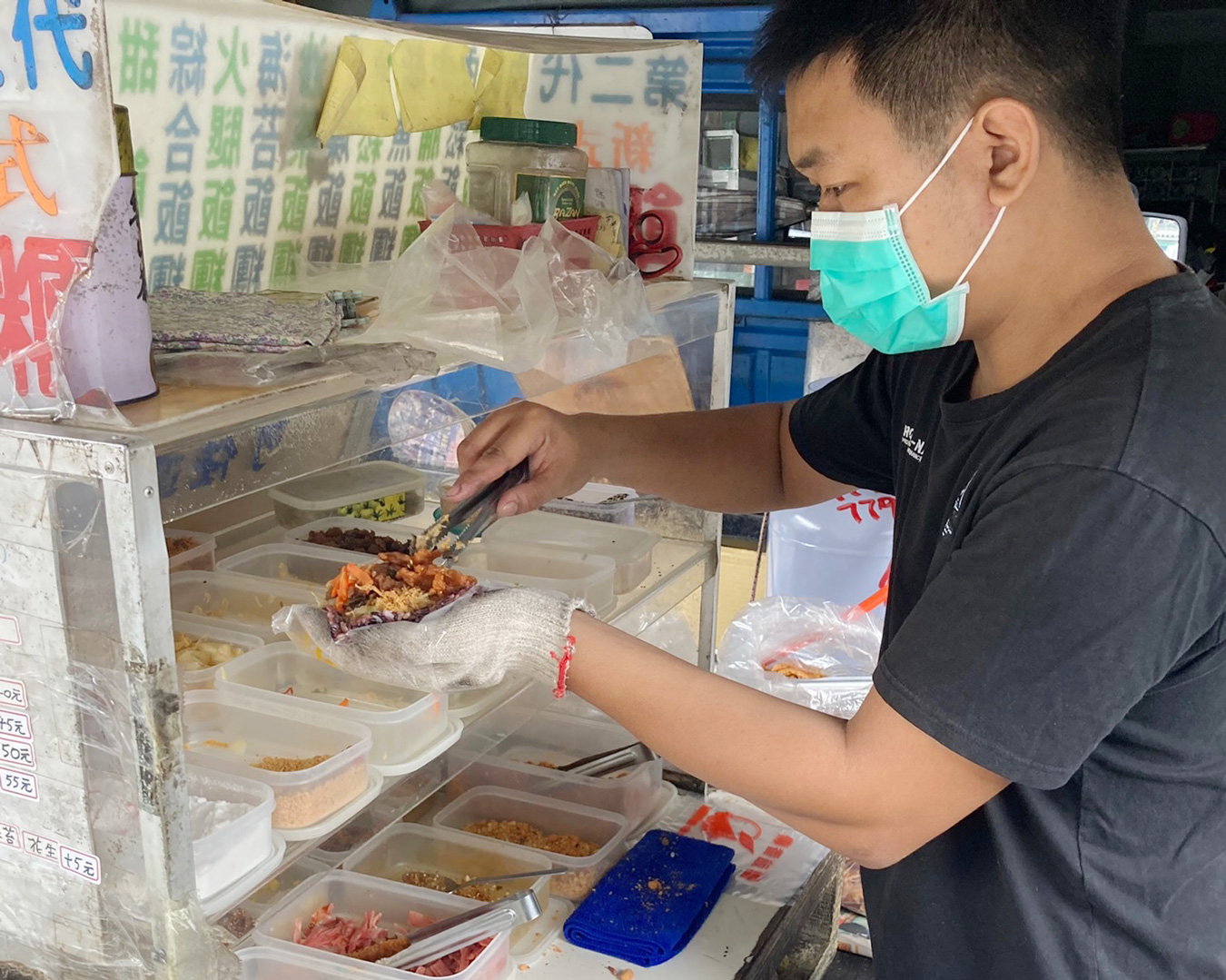
The market had that bright, bustling energy of last-minute New Year’s shopping. The rice-ball vendor sold out right after finishing my order and closed up early. Everyone was probably trying to get their errands done in the morning and head home to prepare for the holiday.
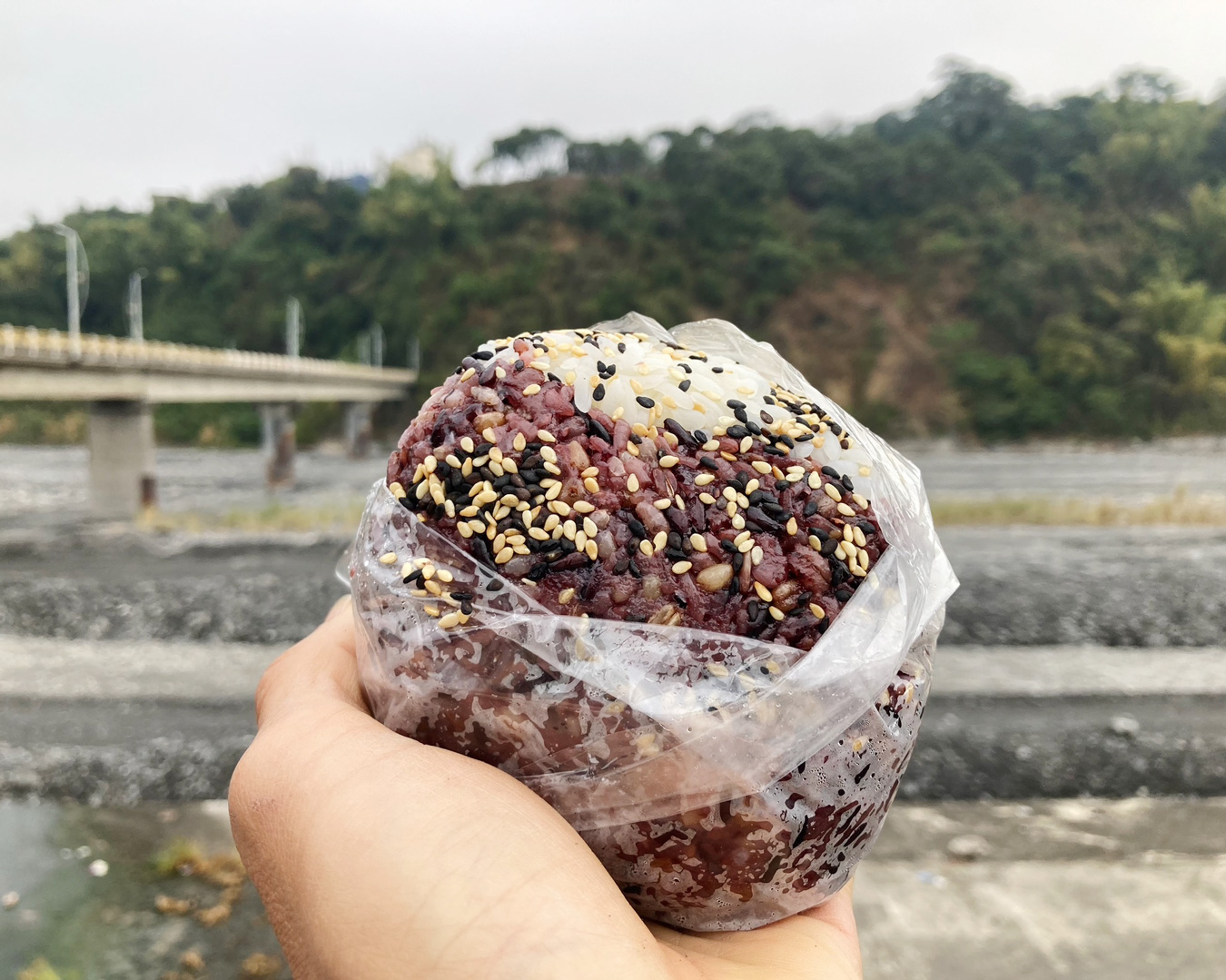
I sat on a riverbank at the edge of town and ate my rice balls. For me, a traveler, New Year’s Eve changed nothing—I was alone again today. I told myself I’d go spend a quiet, melancholy night at the campsite Aku had shown me. It even brought back memories of Christmas Eve in high school, when the guys on the soccer team—none of us with girlfriends—ended up spending it together.
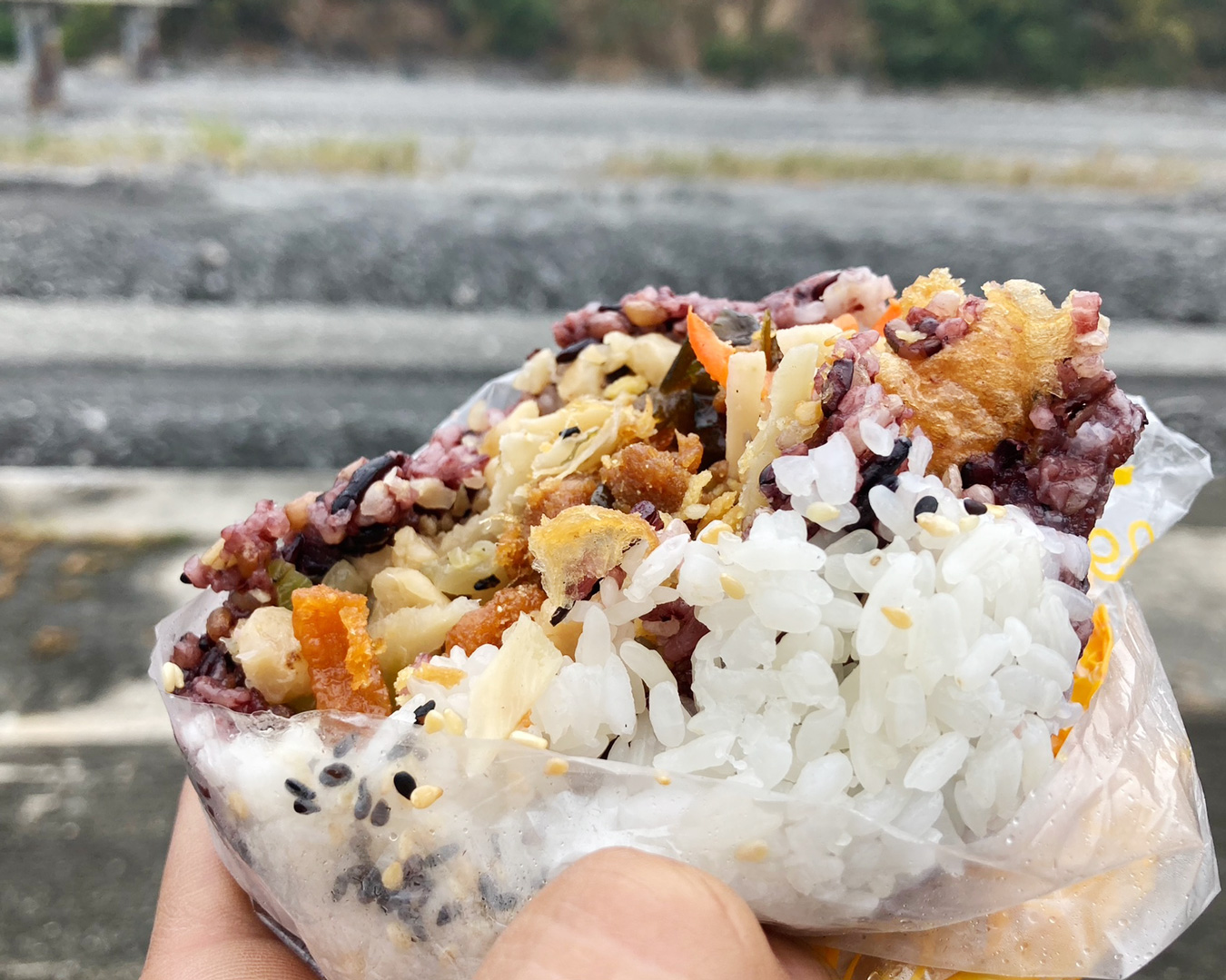
The fillings were things like sweet-and-savory shaved bonito and fried tofu, among other bits.
Looking at the map, it seemed that from here the route would lead deeper and deeper into the mountains. I’d been walking mostly on asphalt roads ever since the island’s southernmost cape, so the thought of finally heading into the highlands made me excited.
Part of me thought, Come on—if that’s what you wanted, why didn’t you choose a trail from the start? And yet I never do. It’s strange. When I really sit with it, the words that fit this journey aren’t “I walk because there are mountains,” but “I walk because I want to walk”—“I walk from the step in front of me.” Beyond each step there might be a town, a mountain, a valley, a vast open sea. I just keep going into whatever appears.
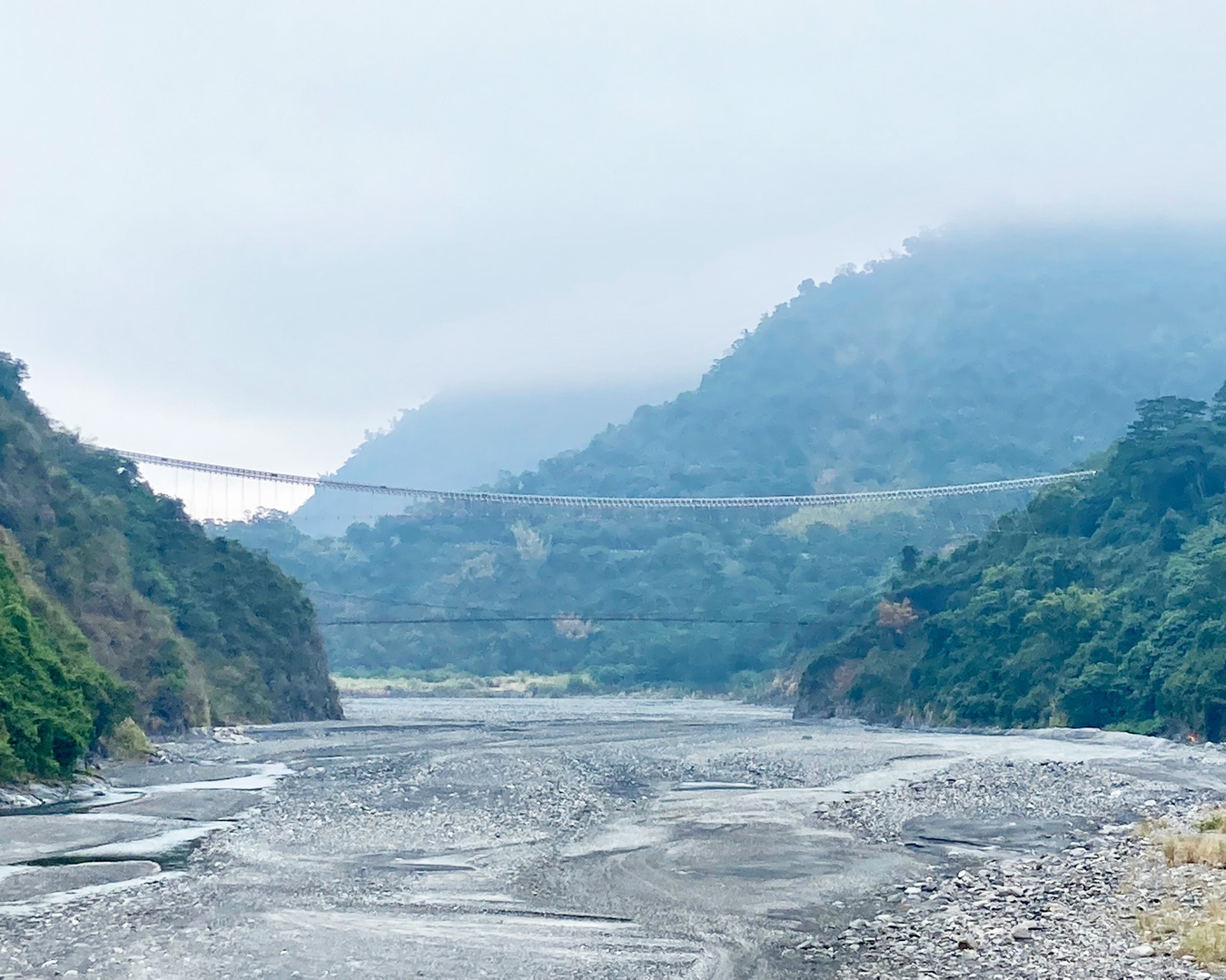
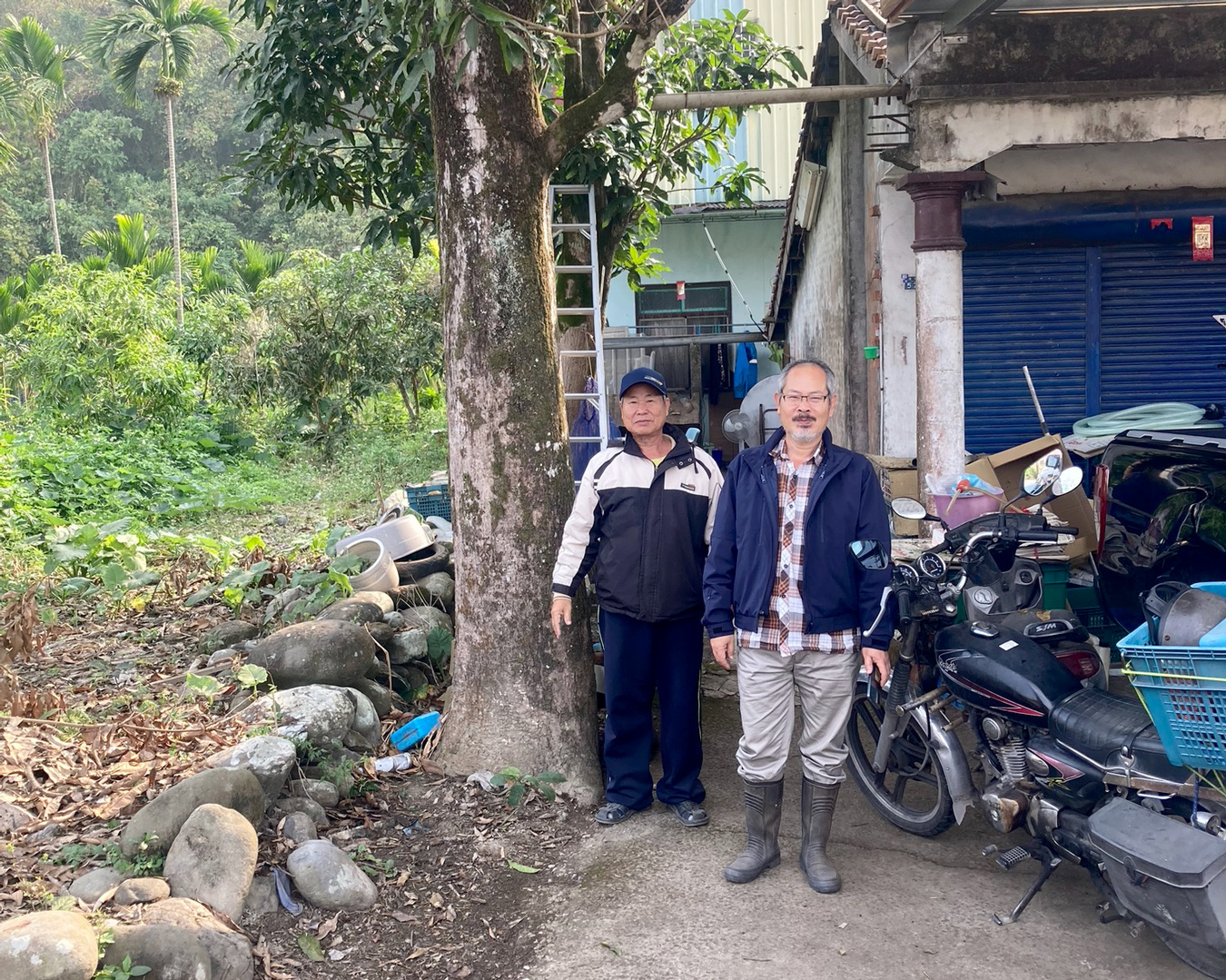
Before long the light began to fade. My destination for the night was a little over an hour away. I pictured a waterfall near the campsite, imagined pitching my tent there, and stirred myself up—All right. One last push. I was striding along when an old man called out to me from the roadside. Of course it was in Chinese, so I had no idea what he was saying, but from his gestures it seemed like he was asking something like, Are you traveling on foot!?
For the moment I answered in Japanese, “Um…I don’t understand Chinese. I’m Japanese.” The old man replied—astonishingly—in Japanese: “You’re Japanese!” And then, “Come, come. Just for a little while—have some tea,” he said, inviting me to sit under the eaves.
Two thoughts tugged at me at once: Is it really okay to drop in like this on New Year’s Eve? and If I stay, it’ll be dark before I reach the campsite. But meeting local people is one of the deepest pleasures of travel, so I decided to accept his kindness.
As the sun went down, we sipped tea together at his doorway. He showed me photos from a trip he’d once taken to Japan with his wife, and we passed the time like that. He seemed genuinely happy to be able to talk in Japanese.
While we were sitting there, more and more family members began to gather. And then—unbelievably—they said, “You should eat with us, too,” and invited me inside the house. The old man who had spoken to me first turned out to be one of six brothers, all men—and except for one who couldn’t make it because of work, the brothers were all there for New Year’s Eve, each arriving with their wives, children, and grandchildren.
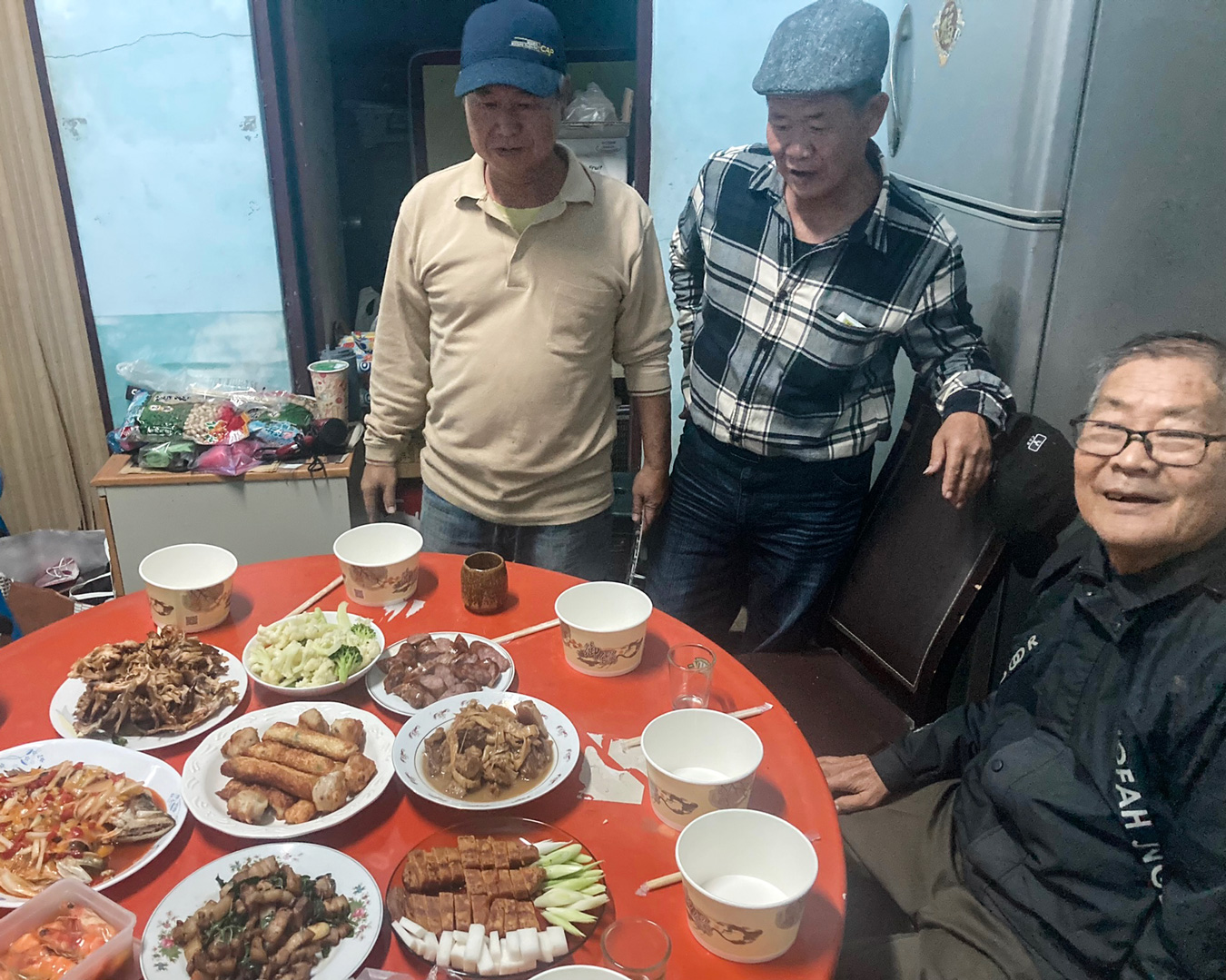
Even though I’d resigned myself to a lonely New Year’s Eve, here I was folded into a big family’s table, being treated to a feast—and spending the whole night talking in Japanese. Wanting to offer at least some small thanks, I played my morin khuur, and they were delighted. Moments like this make me feel, again and again, I’m glad I brought the instrument all this way. And also: weaving sound into an encounter feeds my own music, gives it richness, lets it resonate.
As the night grew late, someone asked, “Are you really going to walk to the waterfall now?” and I found myself mumbling, “Uh…well…” Seeing that, they said, “Then stay here tonight,” and they took me in. Even lodging—another kindness I had no right to expect.
So the New Year’s Eve I met was the exact opposite of what I’d imagined: a night surrounded by a warm family. Lying down under their blankets, my chest filled with gratitude, I quietly closed my eyes.
Happy new year! a bright departure
It was New Year’s morning. Most of the family had gone home during the night, so the morning was quiet, with only a few of us. I ate breakfast slowly, and then—reluctantly—I set off.
Before I left, they loaded me up with more food and snacks than I could possibly carry for the road. Someone even rode a scooter out to the fields and came back with papayas and guavas, freshly picked.
I was grateful beyond words, but it was, literally, too much kindness to accept. It wouldn’t fit in my backpack, and it was obviously too heavy to shoulder and keep walking. Their thought was, Take plenty of food so you can keep walking, but the tenderness was packed in so tightly that it flipped into the opposite: It’s too heavy to walk.
After a bit of hesitation, I decided to accept the fresh fruit with gratitude. I hoisted an enormous papaya onto my back and set out into the clear, celebratory morning of the new year.
And yet—walking with that weight was already too much. Before I’d gone very far, I ended up sitting down by the road, cutting into the papaya with my knife and devouring it. And then—what a surprise. It was the most delicious papaya I’d ever eaten in my life. I could feel the rich juice spilling out and soaking slowly into my body. They must have chosen the ripest, best-looking one from the field and handed it to me. That kindness seemed to seep into my heart along with the juice.
Also, to be fair, the load was heavy for another reason, too. Everyone kept telling me, “On New Year’s, everything closes,” and two days earlier—when I’d met Aku—I’d gone to a supermarket and stocked up on several days’ worth of food.
But on New Year’s Day itself, the towns I walked through were lively, lined with food stalls, overflowing with things to eat—more than usual, if anything. Even the convenience stores were open as normal. Honestly, I wanted to eat something hot from a stall, but with my pack already bursting with food, I held back. I’d been worried about having trouble resupplying over the holiday, and the reality turned out to be the exact opposite. Not knowing the local rhythm—this is what that feels like.
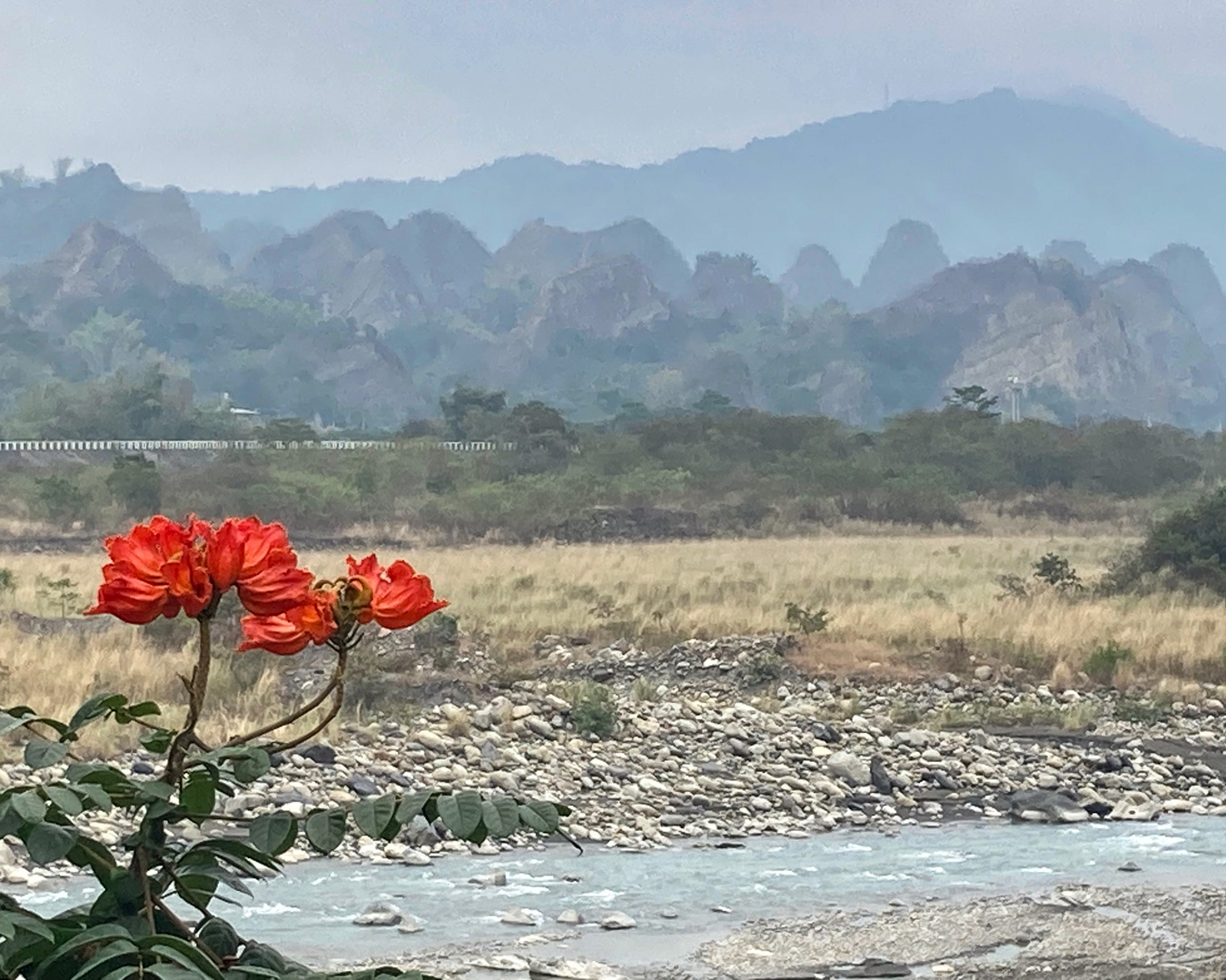
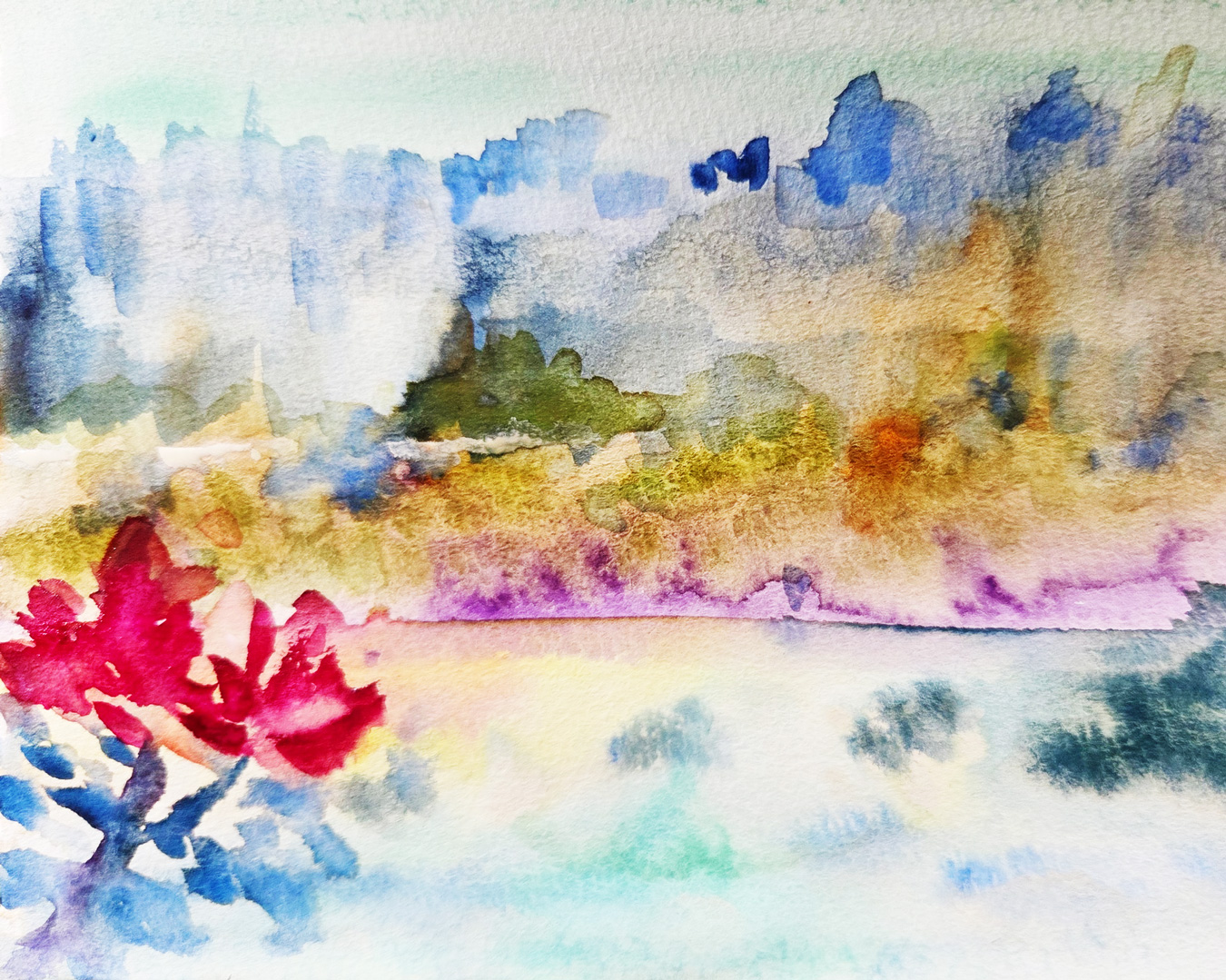
Just like yesterday, I walked on with mountain scenery that looked like an ink-wash painting, and along the way I stopped to draw.
New Year’s decorations hung everywhere—at temples and in the doorways of homes—and the people passing by looked bright and festive. Walking through it all, even I felt refreshed.
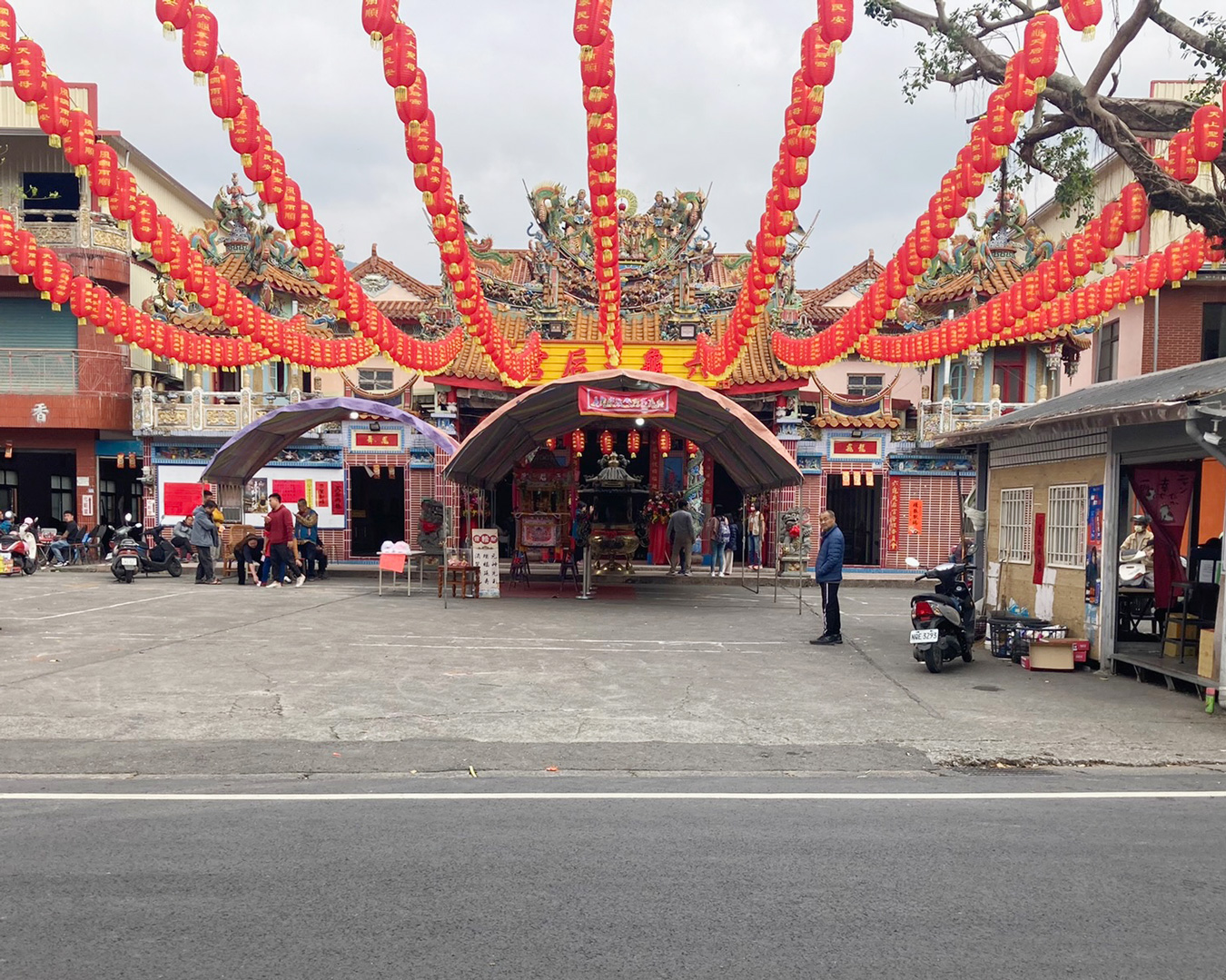
Ever since I was little, I’ve loved this New Year feeling—quiet, and yet somehow bright.
In the afternoon I was walking a mountain road, but the map showed that the route would soon turn back into a long stretch of roadside walking. So, a little early, I decided to look for a place to camp beside a creek I happened to pass.
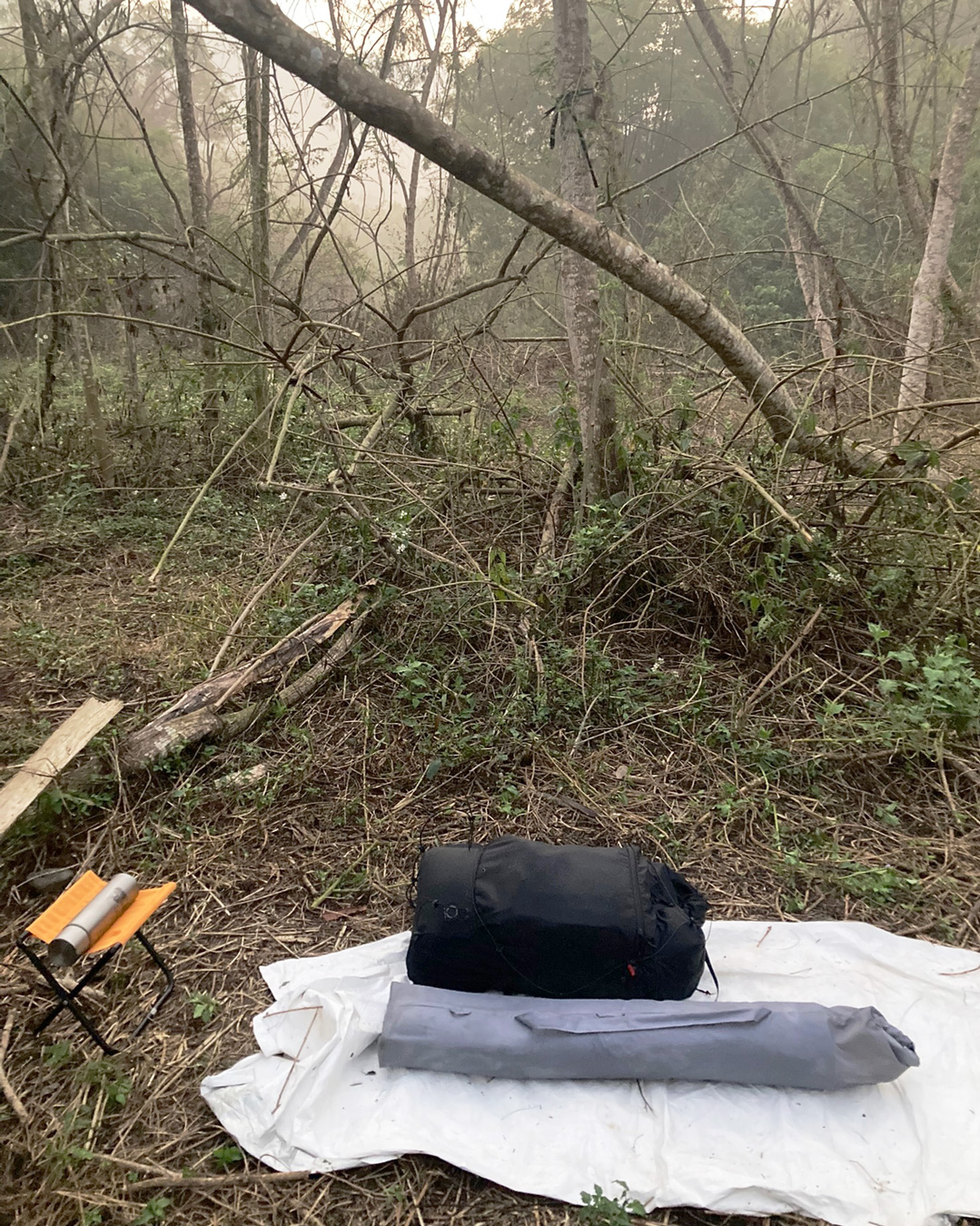
By 6 p.m., before nightfall, my tent was up.
If I can secure a place to sleep around this time, I can properly do my nightly meditation, too. Most nights I’m so tired that even if I sit for an hour, I end up dozing off more often than not. After meditating, I ate a simple meal inside the tent and went to bed at eight.
Since meditation comes up often in this journal, I’ll explain a little here. I’ve been practicing Vipassana meditation for about twenty years now. Vipassana has centers and communities around the world where you can learn and practice, and my first time was in 2006 at a center in California. There are centers in Japan—in Kyoto and Chiba—and after this walking trip I also visited a center in Taiwan. I love meeting local people who share the same intention, and staying at a center while traveling has become one of my recurring purposes on the road.
Whether I’m at home or traveling, I try to keep to two sessions a day—about an hour each, once right after waking and once at night. In meditation, the practice is to not react to sensations, and when I walk, I try to keep that same awareness—watching sensations from the inside. Somehow it seems to lessen my physical fatigue. Mind and body feel more aligned, and I move in better condition. Maybe it’s because unconscious reactions grow fewer, and because keeping attention in the body helps it function more clearly. In Vipassana practice there are still discoveries waiting for me—another journey, and an interesting one.
Reunion with Lin’s family
After finishing my morning meditation inside the tent, I opened my phone and found a message from Celine, Lin’s wife, who had taken such good care of me in Taitung.
“Where are you walking right now?” she wrote.
“If you’re nearby, would you like to come spend New Year’s at my parents’ house?”
When I’d last seen Lin and Celine, I’d mentioned I was worried about how I’d spend the holiday, and she’d remembered. I read the message with real happiness.
Wondering where her family lived, I checked Google Maps first—and couldn’t believe it: only about fifteen minutes away by car. Had she been watching my progress from somewhere up in the sky?
I wrote back, “Amazingly, I’m very close. I’d love to come!”
We arranged for them to pick me up on their way from Tainan, where Lin’s family home is.
Until our lunchtime meeting, I would keep walking. In Taiwan, it seems the custom is to spend New Year’s Eve and New Year’s Day at the husband’s family home, then spend the next few days at the wife’s family home.
Still, it struck me that I could be exchanging messages like this while traveling overseas. The shape of travel has changed so much. Twenty-some years ago, when I was backpacking in my twenties, there were no smartphones, no map apps. Even without any of that, I could travel just fine back then. Thinking about it now, I’m surprised all over again.
And at the same time, I catch myself wondering: no matter how convenient technology is, is it really a good thing? I came all the way abroad to travel on foot, yet there I am—inside my tent, staring at my phone. Even if it’s just to look up lodging or transportation, it still feels… off.
But just the thought of seeing Lin’s family again at noon was enough to get me moving—through those slow morning hours when my engine usually doesn’t want to start.
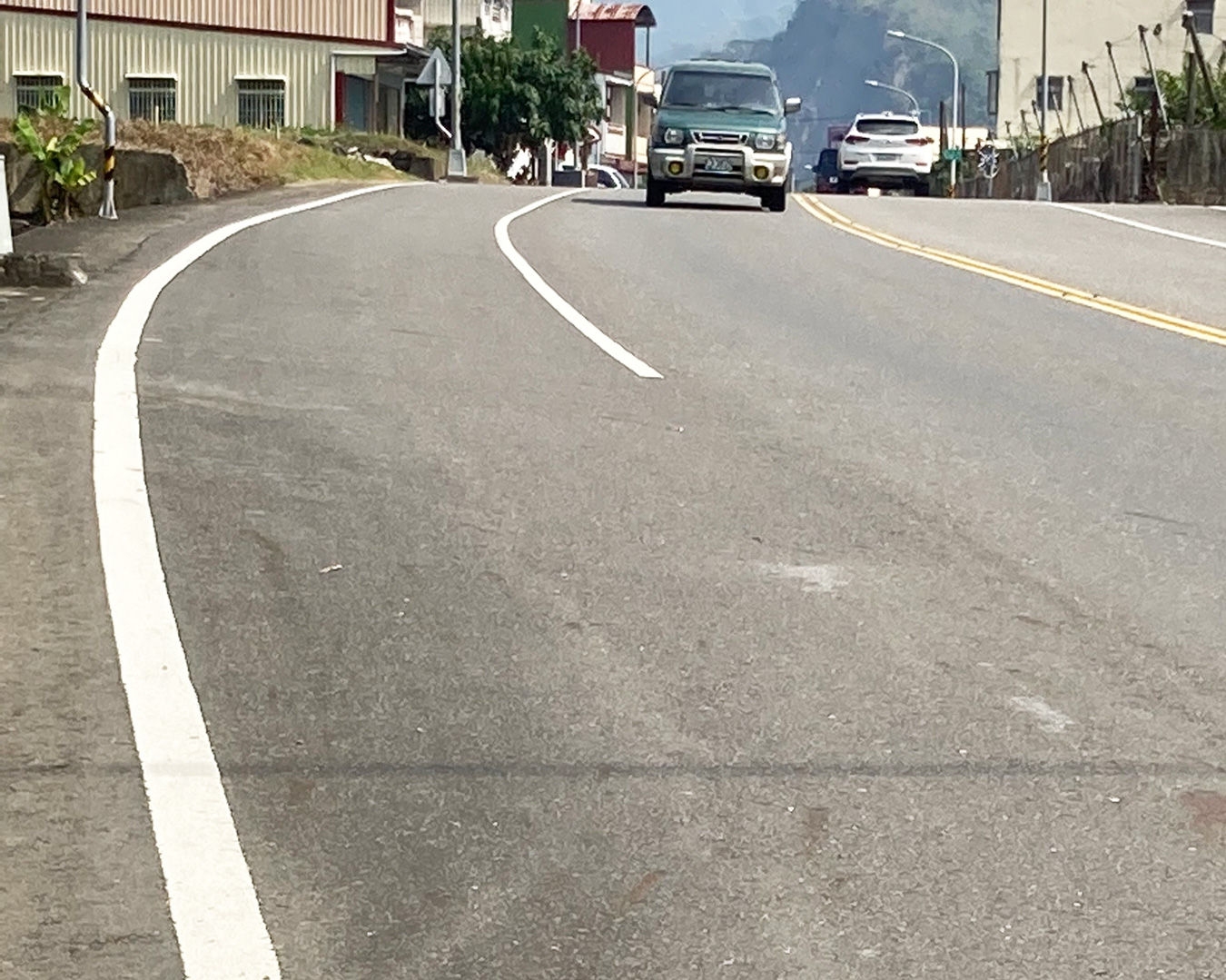
As I sat by the roadside at our meeting spot, a car pulled up with a quick squeal and the window slid down. A smiling face appeared. “Yoo-hoo, hitchhiker!” “Long time no see—you look well!” they called, and the whole Lin family climbed out to greet me. We hugged, happy to be together again.
Then, in no time at all, we drove south along the very road I’d spent hours walking north. When we arrived at Celine’s parents’ home, the house was already bursting with life. Celine, it turned out, is one of six sisters—all women—and everyone was there: their husbands, their children, the whole crowd.
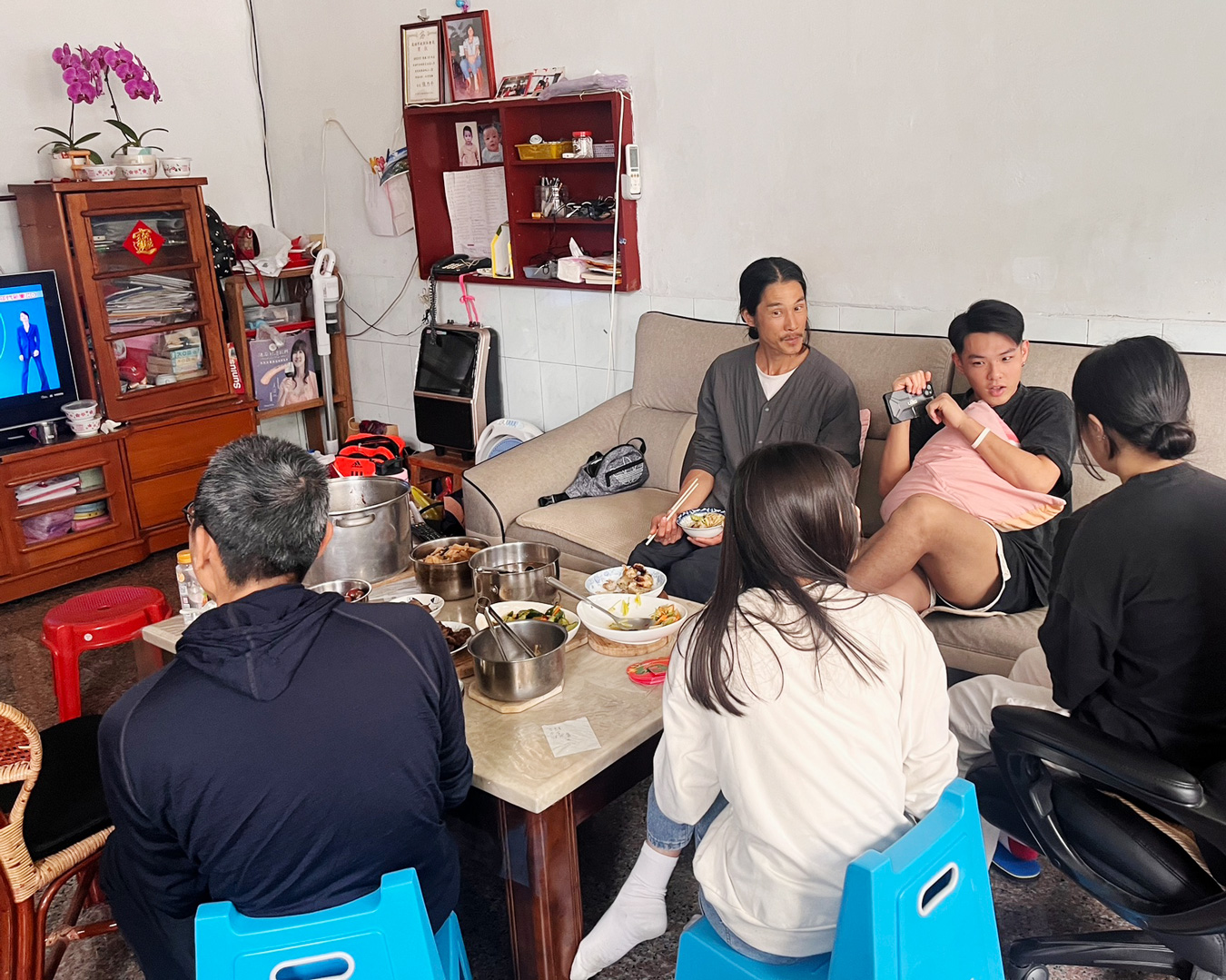
Celine’s high-school-aged nephew invited me out. “Since you’re here, want to go see the New Year bustle in town?” The two of us walked over toward the busy district. We spoke in English again, and even though he was a little shy, he talked well—brightly, like he was enjoying it. Watching him made me happy, too.
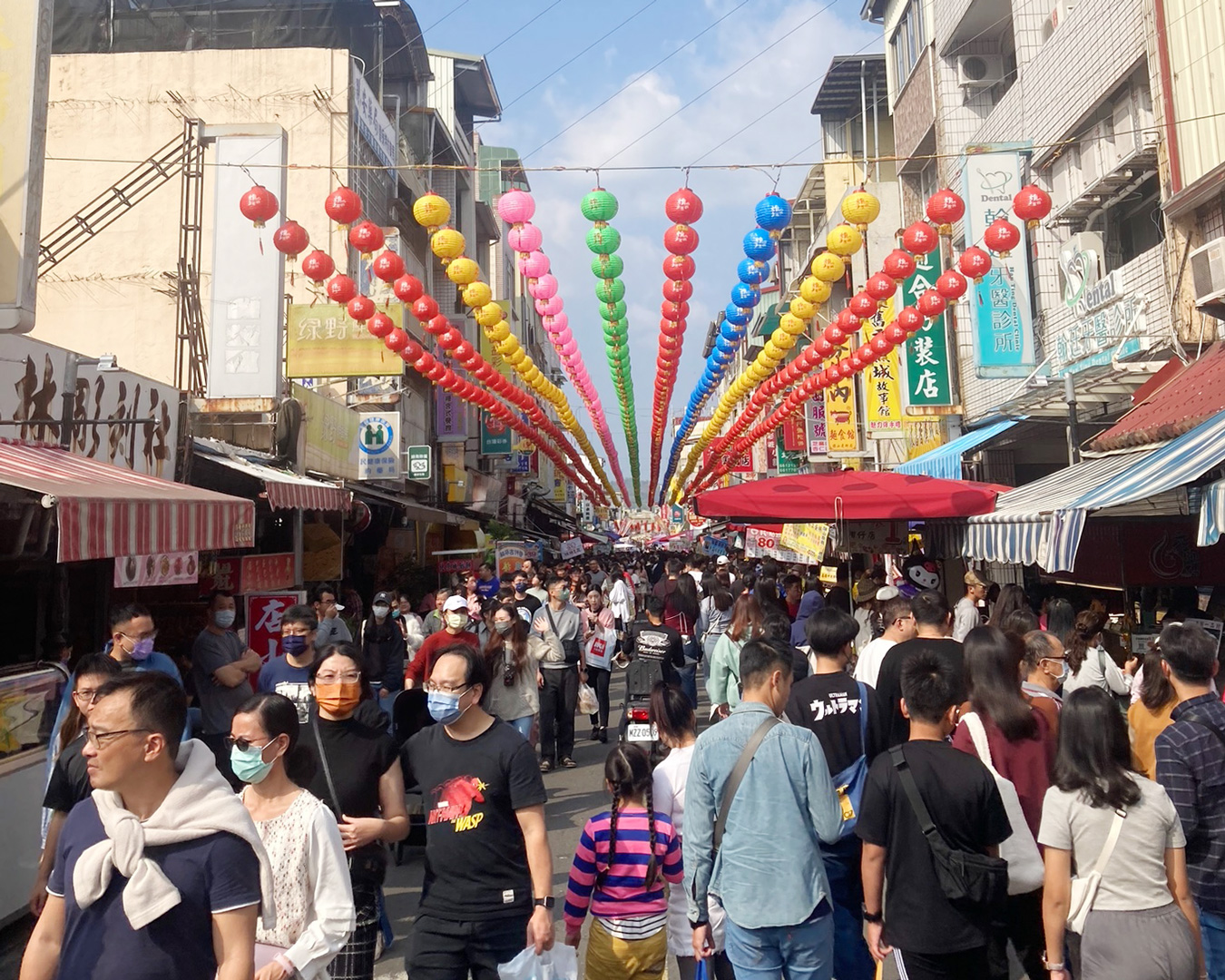
The downtown streets were packed—New Year’s decorations everywhere, people everywhere.
After that, we went to a nearby middle school, where their annual family event—a basketball tournament—was being held in the schoolyard. They let me join in, too. Gender, age, skill level—none of it mattered. Parents and kids, siblings, relatives—everyone played, the whole family, just enjoying basketball together.
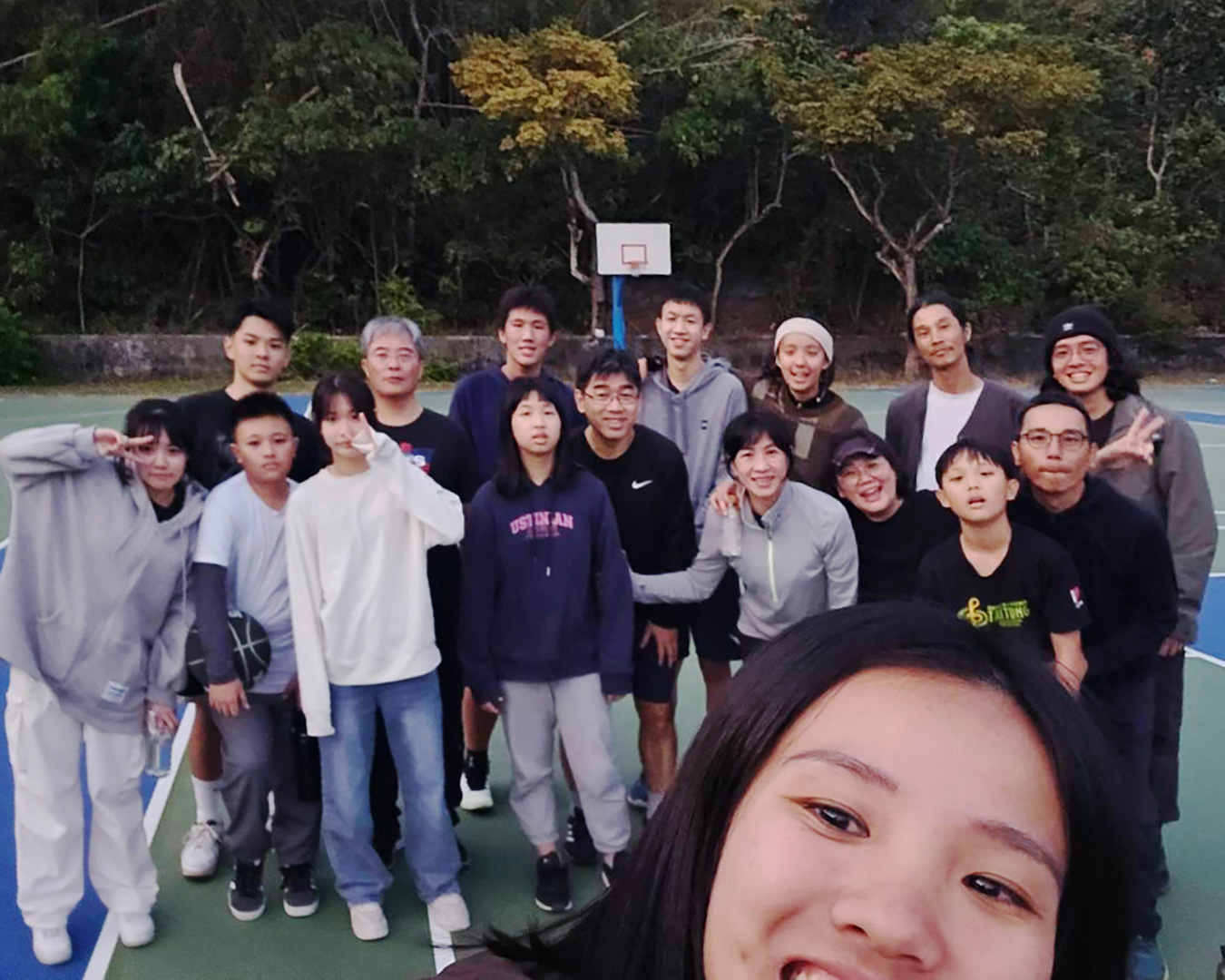
Celine’s sisters and their families.
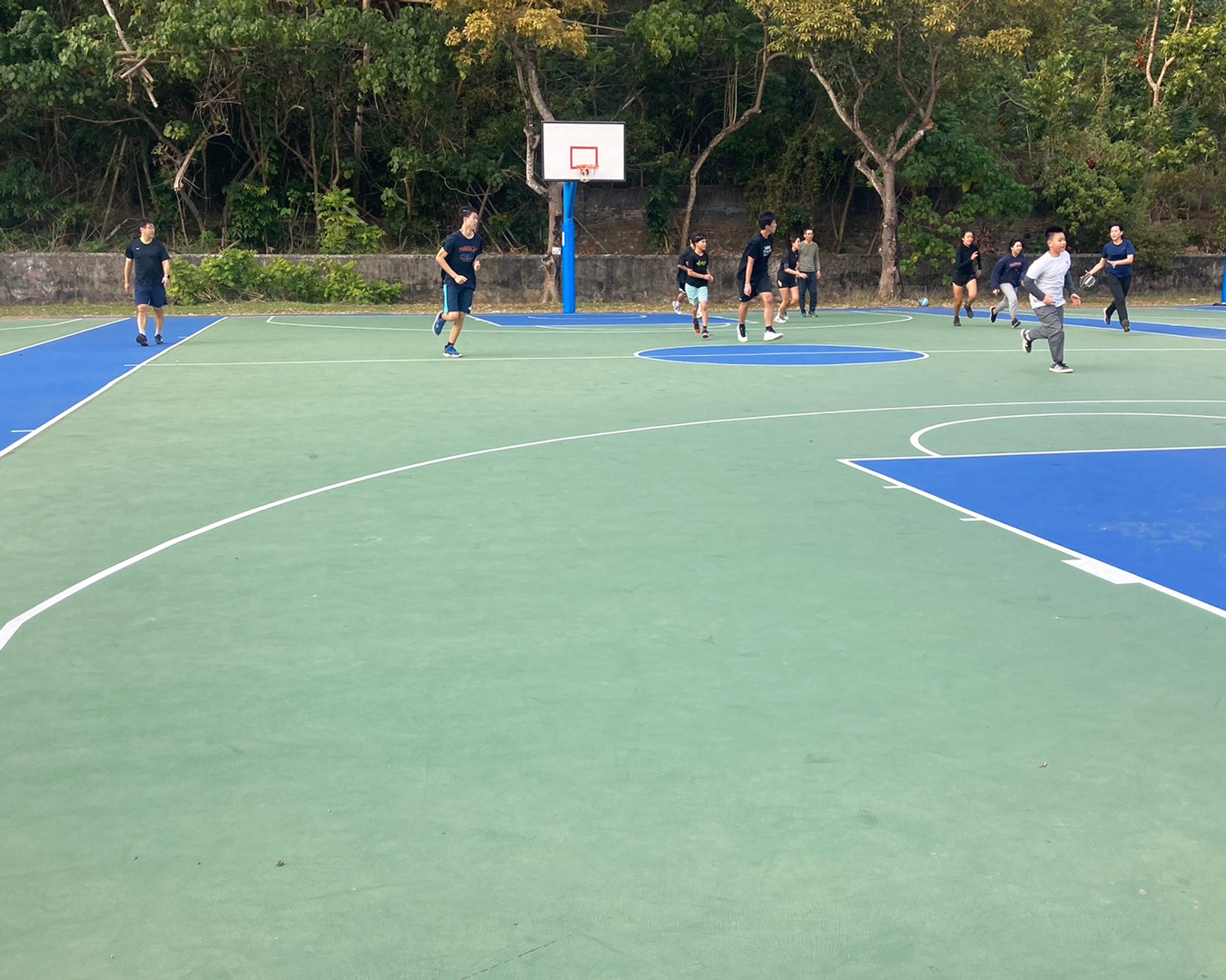
A high-school son—good at basketball—passed to his mother. She shot. It went in. “We did it!” they shouted, high-fiving, putting their arms around each other as they celebrated. Watching that little family scene, I felt a warmth I can’t quite put into words.
We went back to the house for dinner. After eating a table full of dishes, I played for them—morin khuur and kalimba. Everyone was delighted by the sound, hearing it for the first time, and that made me happy, too. After that we played cards until midnight. Somehow it all felt nostalgic, bringing back scenes of my own family when I was small.
Back in Japan, my family is a small one: my parents, and one older brother. We didn’t have much extended-family contact, so spending time like this with a big family was new to me. Being welcomed into Celine’s family—just as I’d been welcomed the night before into that household of five brothers—let me feel, in my bones, the warmth of family. I realized how important the New Year is in Taiwan: a rare, precious time when everyone can gather.
Ever since coming to Taiwan, I’d kept wondering, Why are people here so astonishingly kind? Now it finally made sense to me. The soil that kindness grows from must be this closeness—family bonds strong enough to shape the heart. The consideration that’s nurtured inside the family spills outward, into the neighborhood, into society, into Taiwan as a whole. That’s my conclusion, anyway.
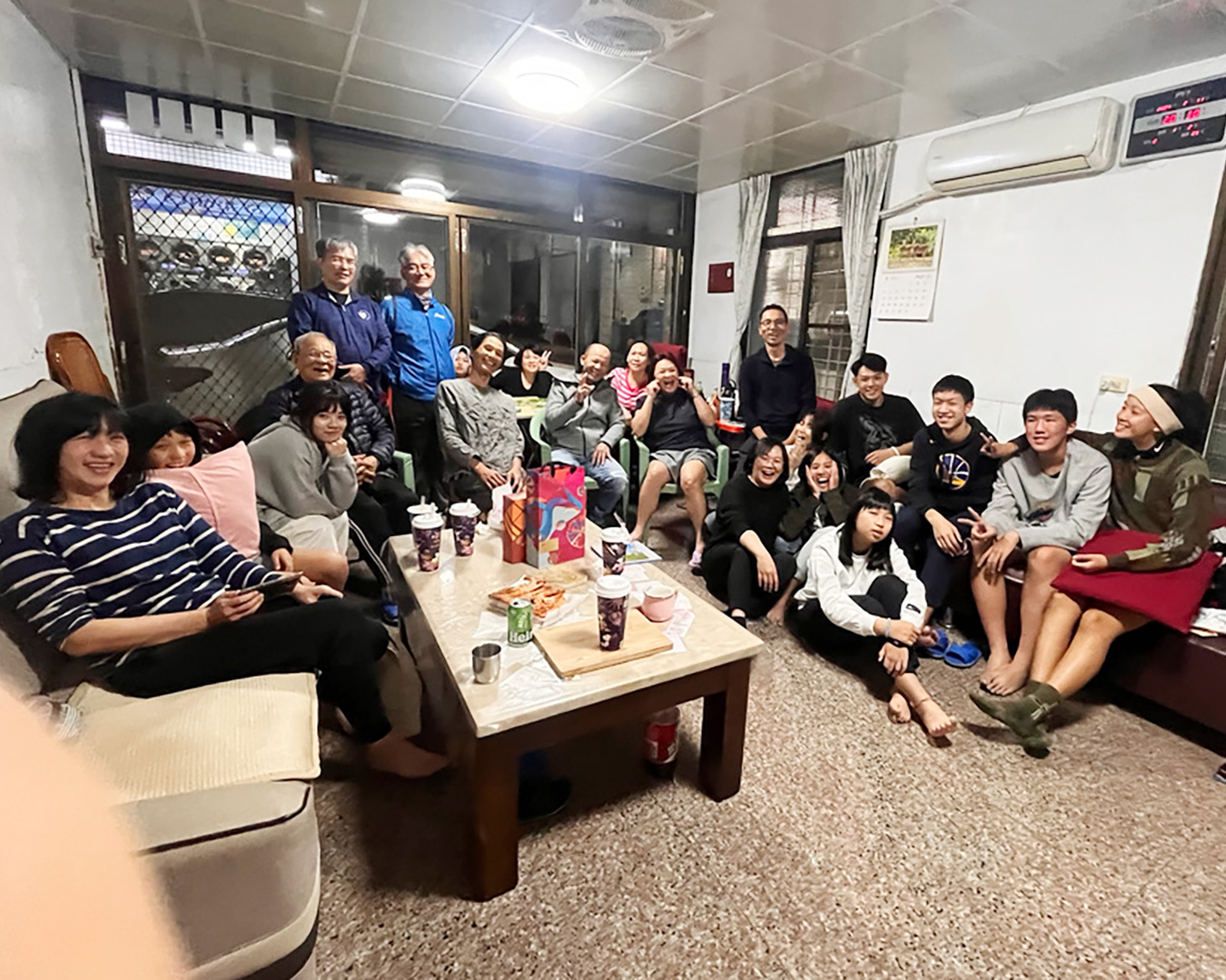
A family group photo at Celine’s parents’ home.
Since Lin’s family was staying one more night at Celine’s parents’ place, I took advantage of their kindness and stayed one more night as well. The next day was even more relaxed, a full day of that very parents’ house kind of New Year’s atmosphere.
In the morning, Lin’s relatives drove us to a large forest nearby for a walk. I walk every day, from morning until night, but most of that is on asphalt along roads—so being among the trees, walking on soil, felt incredibly good.
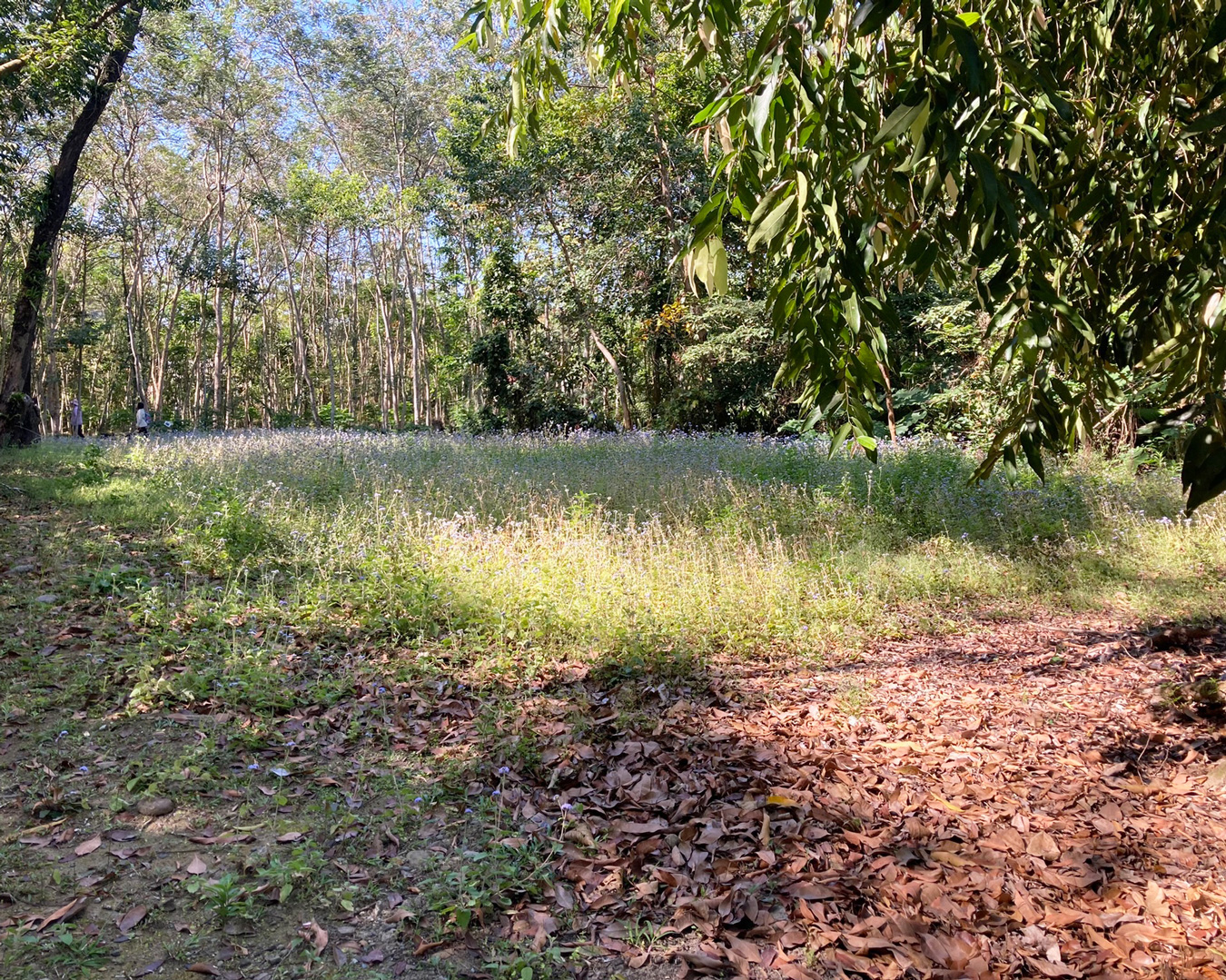
Asphalt and forest soil—how different they feel to walk on.
One scene stayed with me: a nature-loving university student—one of Celine’s relatives—walking through the forest. You could tell she wanted to roam freely, but she set that aside and stayed close, gently looking after her mother, who had only recently had surgery. Over these last few days, I’d been given so many glimpses of how strong family bonds are in Taiwan, and the feeling—family is a good thing—kept echoing in my chest.
That afternoon, we played basketball again, all of us together. Many of the relatives had already gone home, so there were fewer players, and it felt a little lonely. We came back ravenous, and Celine’s mother was waiting with dinner already made. I ate without holding back, like a middle- or high-school kid returning from club practice. Ah—there’s nothing like a family home.
In a taro town
The New Year’s break was over. Lin’s family said they were heading back to Taitung, and I was returning to my walking journey, too.
That morning Lin came to pick me up by car, to drive me back to a small town called Jiaxian in Kaohsiung City—the place I’d walked through two days earlier. He’d even prepared breakfast: a Taiwanese-style sandwich packed with sprouts and raw vegetables. As I ate, I could tell he’d chosen it with my tastes in mind, and that thought made it taste even better.
Jiaxian, it seems, is a taro-producing town. The main street was crowded with signs for taro treats—“taro ice cream” and all kinds of other foods and sweets—and busy with tourists who had clearly come for exactly that.
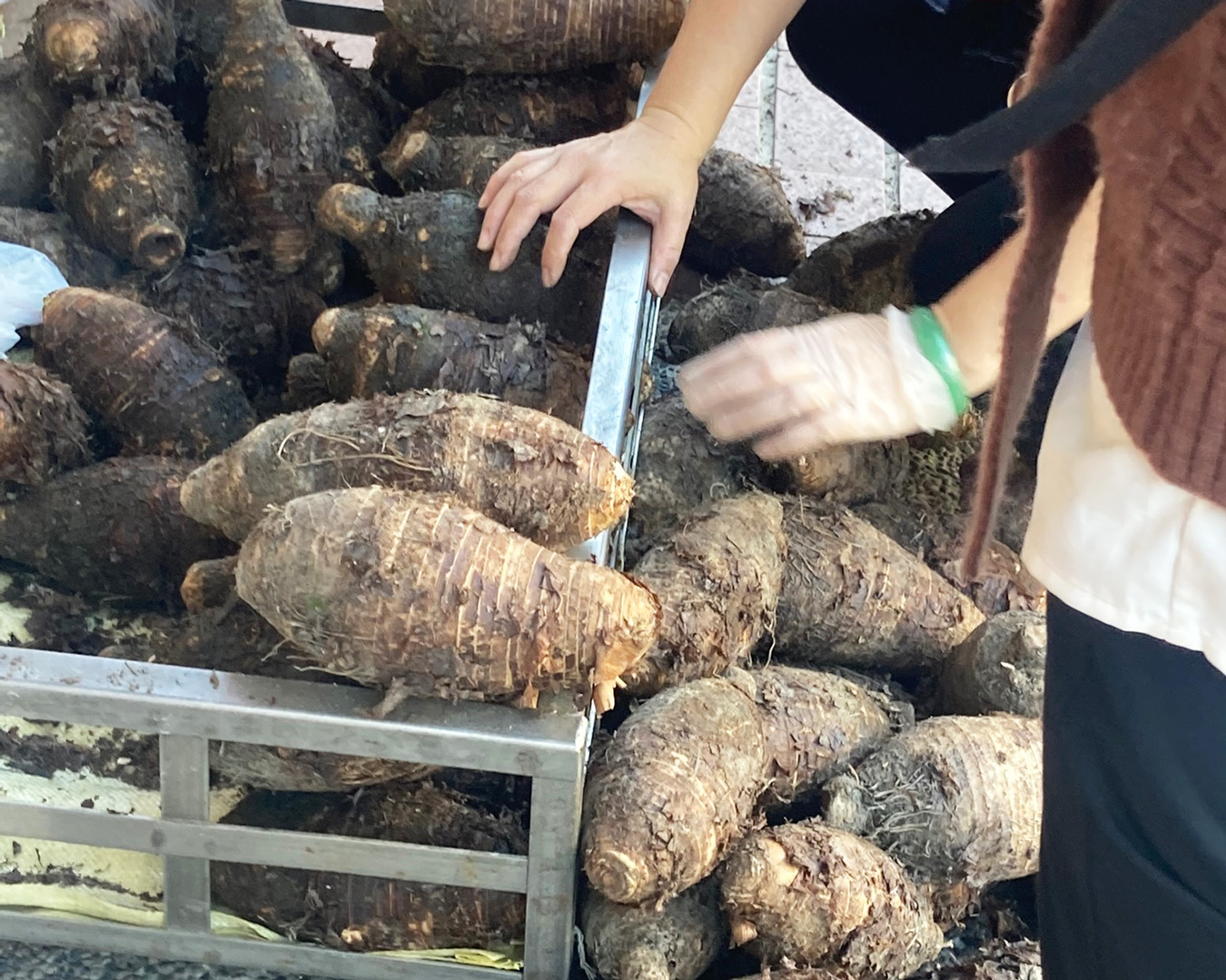
Even the taro itself was impressively large—no wonder this is one of Taiwan’s famous taro regions.
Since we were there, Lin and I decided to share a taro ice cream before saying goodbye, sitting across from each other at a small table. Looking at the scene from the outside—two middle-aged men eating ice cream—I couldn’t help but feel amused. It was almost as if we were holding the ice cream less for the taste than to create this exact moment. I think it’s these small, slightly funny scenes that stay with you as precious memories.
And I felt, too, that traveling simply—just walking with what I can carry—lets me meet moments like that, one after another.
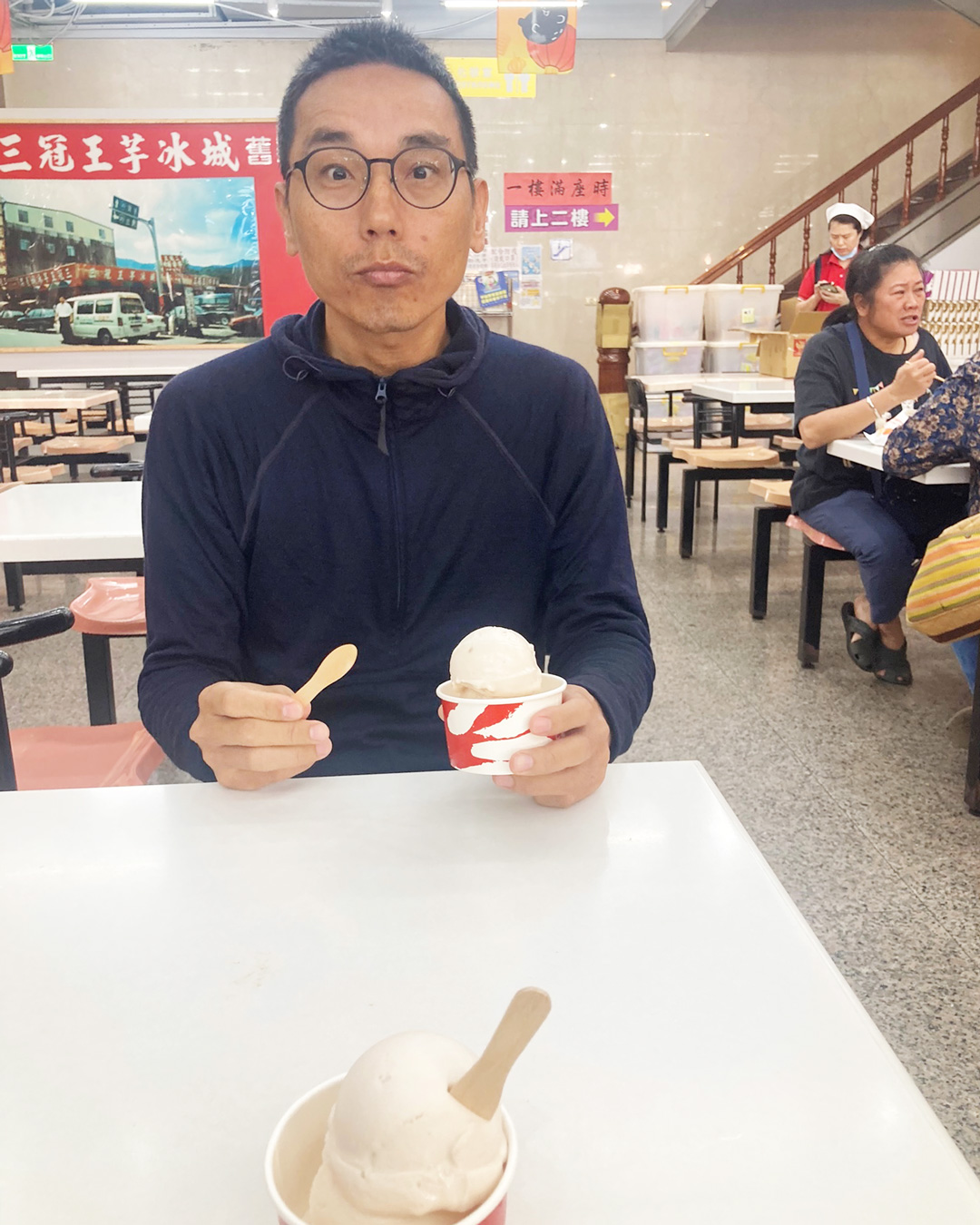
Lin, putting on a playful face while eating taro ice cream.
At last it was time to say goodbye to Lin, too—reluctantly. There probably wouldn’t be another chance to see him during this stay in Taiwan, so we parted with the hope that someday, somewhere, we’d meet again. I truly wanted to spend time together again.
In goodbyes like this, I always think the one who’s left behind feels lonelier. Being the one who simply heads off toward the next adventure is, in a way, easier. I’ve always been the traveler who leaves—but in recent years, I’ve started to feel the loneliness of the one who stays.
I watched Lin’s car disappear down the road, and then I set off on foot. I felt the sadness of parting, but I was glad, too, that I was still in the middle of my journey. It meant I could keep moving forward, without lingering in the afterscent of a place.
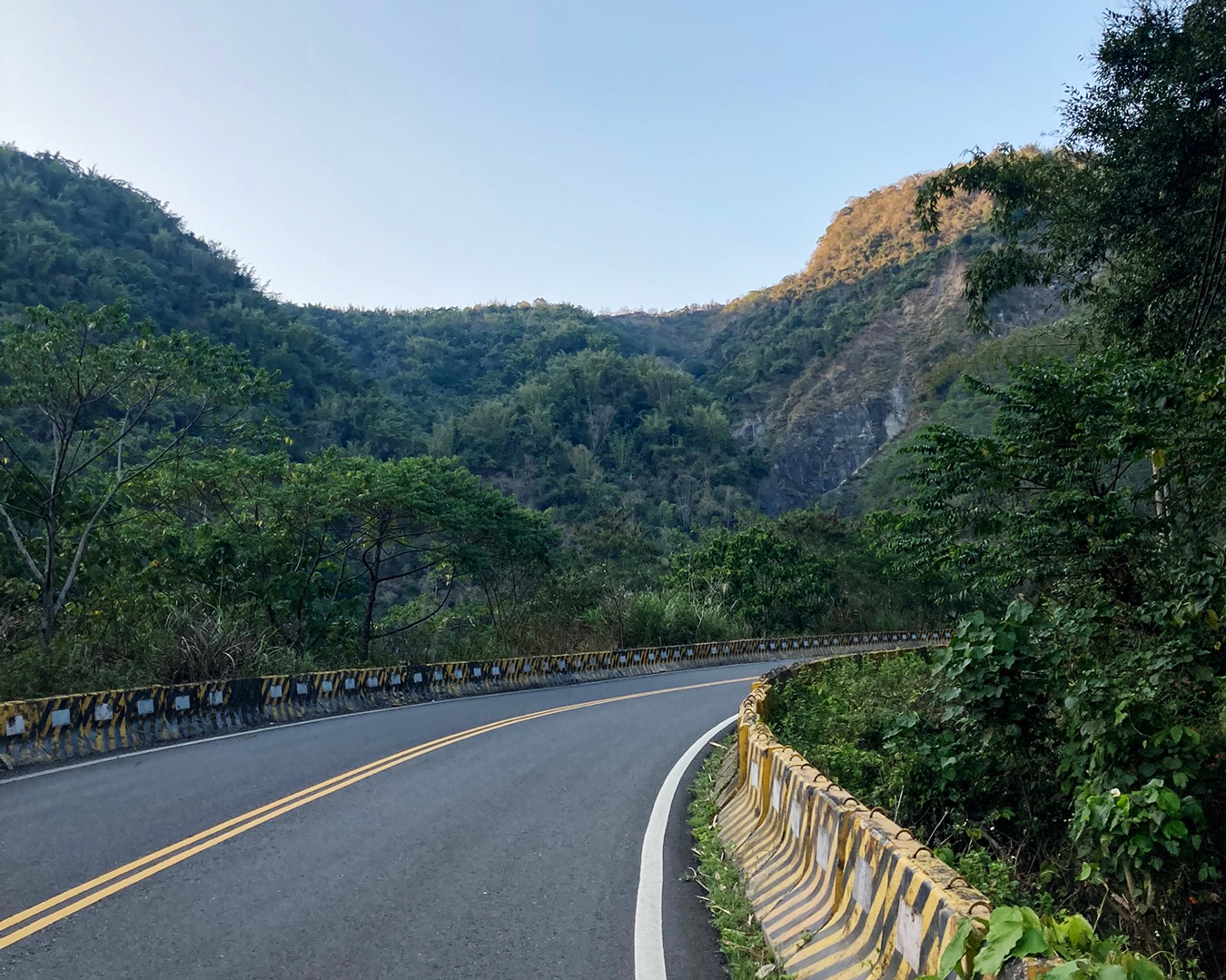
Once I left the “taro town,” the road led on into deep valleys between the mountains. Maybe it was the two days of rest, but I found I could walk better than usual.
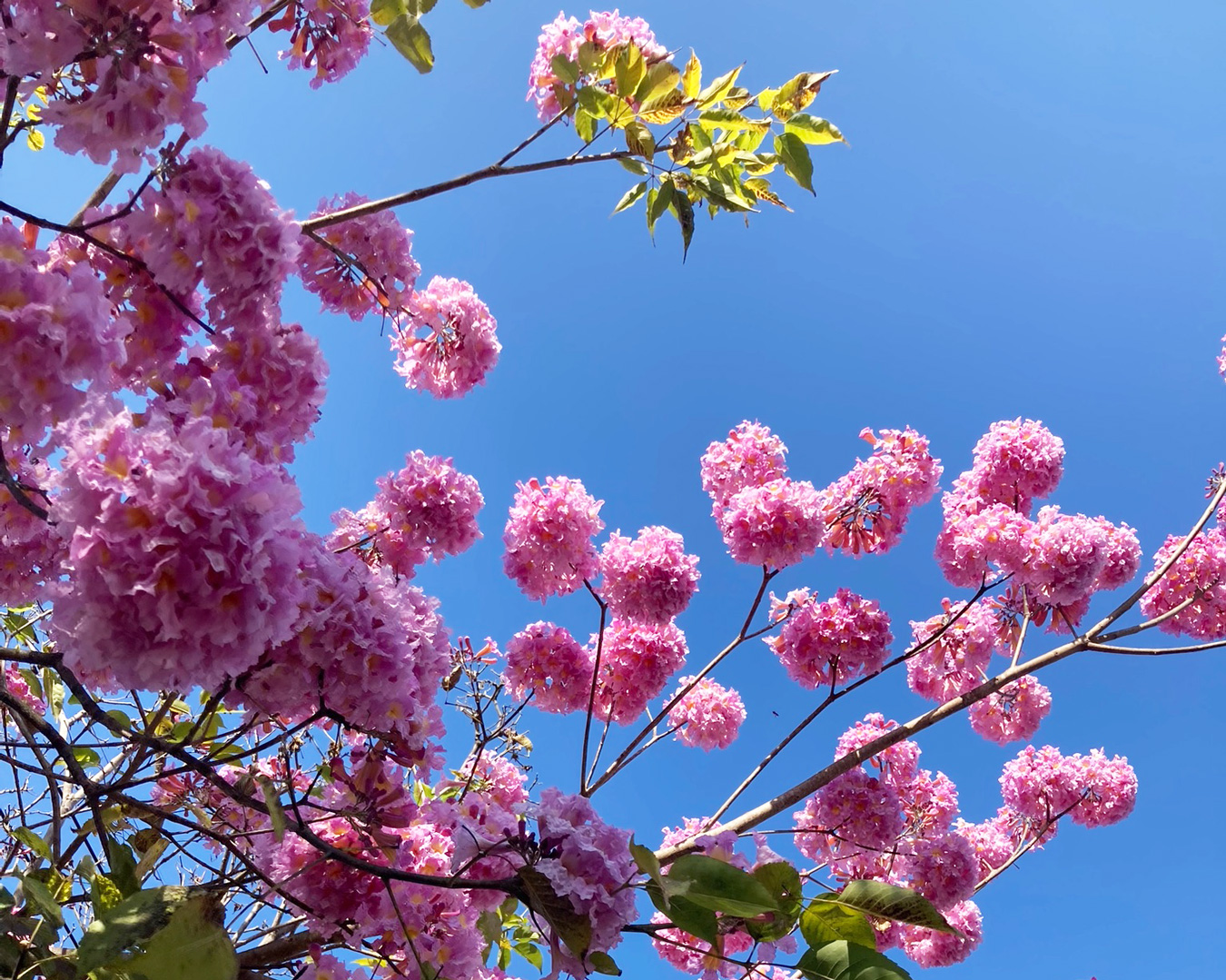
Along the way, what might have been Taiwan cherry blossoms were blooming brilliantly against a clear blue sky. A hint of spring was beginning to settle into the mountains.
As dusk began to fall, I started to worry about where I would sleep tonight. On a journey, this is always the time of day that makes me the most uneasy. That night I decided to camp on a riverbed.
Pushing through the brush and climbing down, I found the riverbed was nothing but big, rolling stones. I struggled to find a good place to pitch a shelter. It became completely dark, and in the end I settled for a spot that was flat enough, dropped my pack, and set up my tarp.
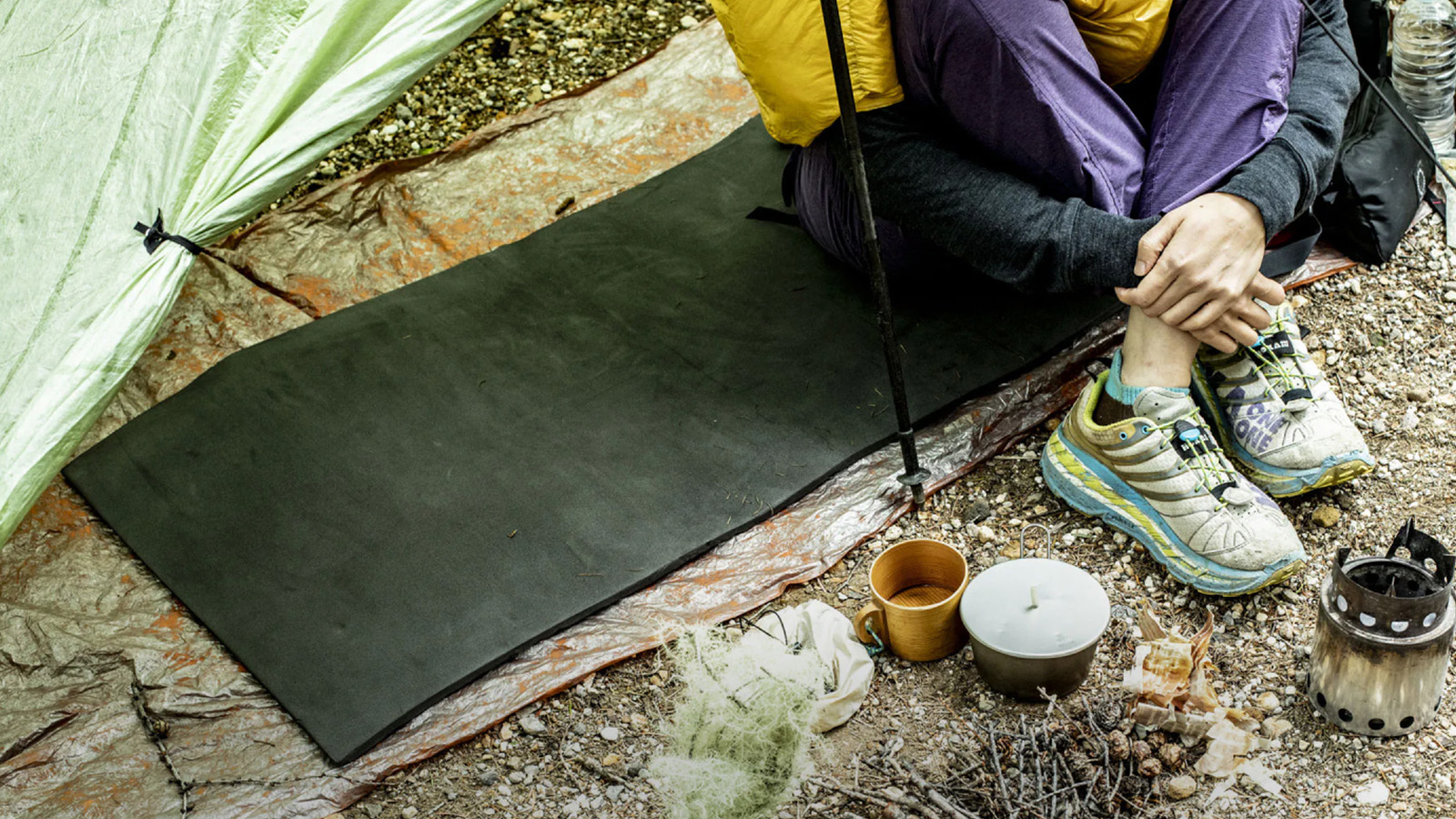
It was just a floorless tarp, so I lay my sleeping pad directly on the ground. There’s something I always find interesting about this kind of shelter. Even if you can’t find the perfect sleeping spot—like tonight—once you put up a tarp, draw a boundary of space, and sit down beneath it, it’s as if wherever you live becomes home. You adapt.
It feels like a two-way affinity: the strength of adapting to a place, and a sense of being accepted by it in return. Maybe it’s because, without a floor, you spend the hours feeling the ground more directly. In a way, you become friends with the earth. Spend even one night like that, and the sense of unity between your body and the land becomes real.
Tonight again, feeling the warmth of the ground through my back, I close my eyes.
And tomorrow, I’ll enter the Alishan Range rising right in front of me.
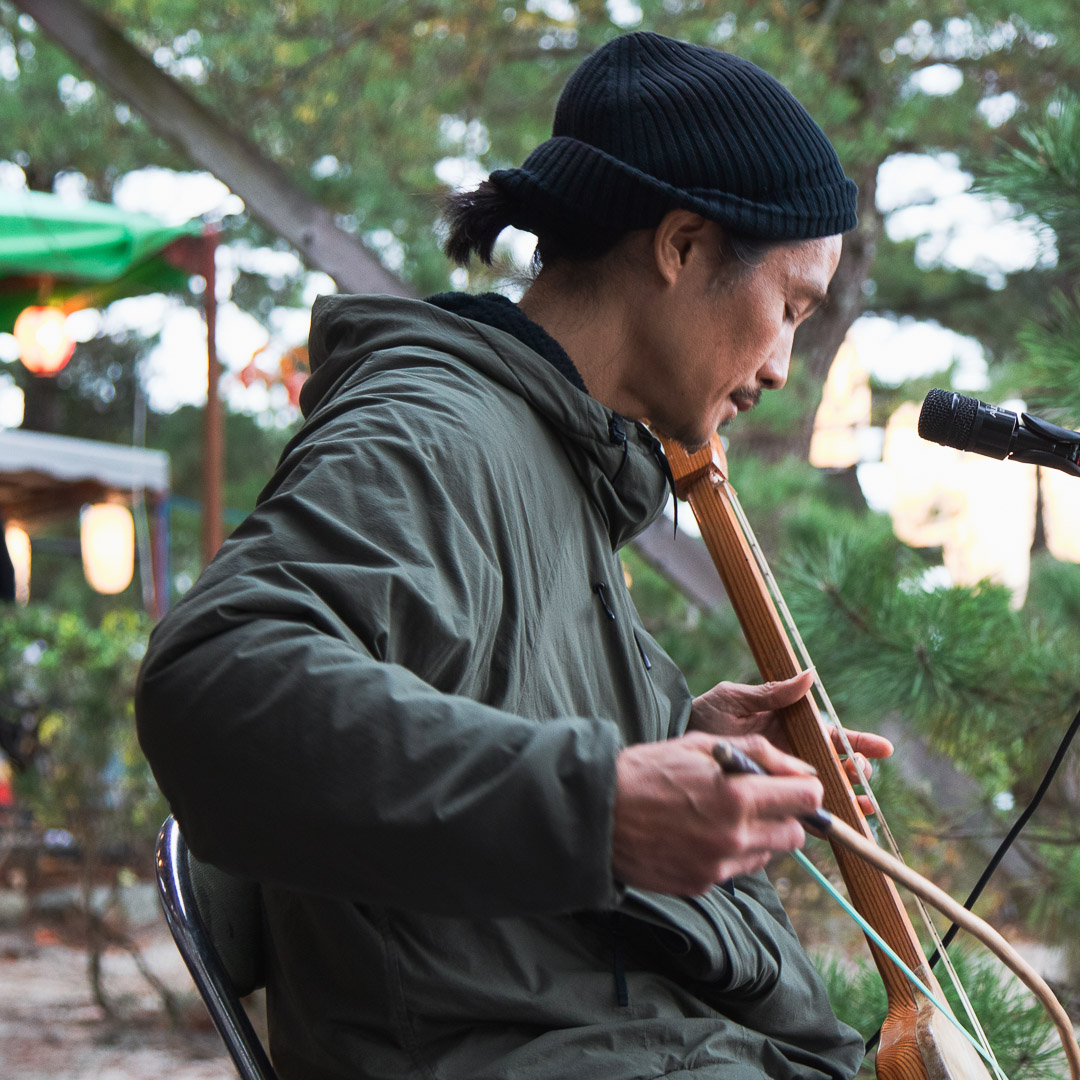
Born in Tokyo in 1979, Takaya Sasa has traveled through more than 60 countries, learning from life on the road—whether through cooking, music, shoemaking, or other crafts.
In 2013, he relocated to the banks of the Shimanto River in Kochi Prefecture, Japan, where he began building a lifestyle rooted in the land.
In 2016, he published The Salad Book (ささたくや サラダの本), a collection of raw food recipes and travel essays. He began creating pastel artwork in the summer of 2020, and in 2023, he self-published two books: TABI no Ohanashi-kai, a collection of travel stories, and Kurashi no Kage, a visual diary of daily life along the Shimanto.