







The Making of a Yamatomichi Factory, Part 1: Setting Up in Toyooka and Learning the Ropes
Additional photos: Hikaru Otake
The Making of a Yamatomichi Factory, Part 1: Setting Up in Toyooka and Learning the Ropes
Additional photos: Hikaru Otake
MADE IN JAPAN. It's a badge has been synonymous with high-quality products for decades. But Japanese manufacturing is in decline, and factories that rely on sewing are no exception. With an aging workforce and too few young people to keep these facilities going, the industry’s future seems increasingly uncertain. Meanwhile, factories in China and other parts of Asia are gaining in sophistication and even technically surpassing comparable facilities in Japan.
Can we afford to let Japanese manufacturing die?
For Yamatomichi, factories in Japan are essential. We need facilities where we can have our products made by skilled hands. One of our goals is to build our own factory at our headquarters, in Kamakura city, where we’re currently based. By combining production, research and development, sales and communication, we hope to make manufacturing an integral part of what we do at Yamatomichi. We also want to demonstrate that this lifestyle ー sewing, making things ー is possible and to inspire younger generations to join the cause.
Our first step toward that goal was to work with Takaaki ー a partner of ours for many years and a bag manufacturer based in Toyooka city, Hyogo prefecture ー to open a training facility in Toyooka. Yamatomichi dispatched two staff members to undergo training and help set up a new factory there.
Yamatomichi Journal’s editor-in-chief Masaaki Mita spoke with production manager Takahiro Nakagawa and repairs department leader Ichiro Kitajima about how the project started and what lies ahead on two different occasions. The first half of their conversation took place in autumn 2024 (Part 1), and the second a year later in autumn 2025 (Part 2). We also include an interview (also two parts) with Takaaki’s president, Takahiro Shukunami.
Autumn 2024
ーLet’s start off by having you introduce yourselves.
Takahiro I’m Takahiro Nakagawa, and I handle production at Yamatomichi –– everything from sourcing fabrics and materials to arranging orders with factories and managing delivery schedules.
Ichiro I’m Ichiro Kitajima, in Yamatomichi’s repair department. I fix items that customers send to us. I’m also part of the product team, sewing samples and producing prototypes.

Takahiro Nakagawa, Yamatomichi’s production manager, spends nine months of the year in shorts and a sleeveless shirt.

Ichiro Kitajima heads Yamatomichi’s department that repairs products sent in by customers.
ーYamatomichi already had a small workshop for sewing the ONE Custom Edition. What led to the decision for a full-scale factory?
Takahiro We’re trying to build a backpack factory, but there are very few people doing that in Japan, and the skilled artisans who are left are getting older. Fewer domestic factories are able to take on the work. We thought it would be better if we could do it ourselves.
Ichiro We visited Takaaki’s factory in Toyooka and were shocked by the level of production efficiency. We also toured factories in Vietnam this year, where manufacturing is about manpower. It made us realize that in Japan, where labor costs are high, you simply can’t make things anymore without extreme efficiency, and Takaaki was doing exactly that.
ーWhat impressed you most about Takaaki?
Ichiro Their use of computerized sewing machines was unlike anything we’d ever seen. These machines have existed for decades, but Takaaki has its own customized versions. Usually, you can only complete two processes at once, but they manage three or four in a single step –– incredible ingenuity. They’ve created systems that allow anyone to sew using the machines, not just skilled artisans. Part-timers and people with varying skill levels can all contribute.
Takahiro It’s revolutionary. Productivity is higher, and even people without advanced skills can sew proficiently. Takaaki’s president Takahiro Shukunami has his own philosophy: everything from needing a three-tier shelf beside each machine to how materials are arranged in strict horizontal and vertical alignment. He’s developed these ideas step by step and created an efficient factory based on his own experience. That shocked us. Everyone is motivated and seems to be having fun, and there are lots of young people.
Ichiro The engineers I’ve respected most are always learning. Takaaki felt like the embodiment of that spirit. The whole company is constantly searching for better methods—and enjoying it. It made me realize there are still factories like this in Japan. It gave us hope.

Takaaki is located in Toyooka, Japan’s “Bag City”.

Takahiro Shukunami, president of Takaaki and a pioneer in innovative bag manufacturing processes.

One of Japan’s leading bag brands has its products made in this meticulous and well laid-out factory.

Production efficiency has been significantly boosted by computerized sewing machines and specially developed in-house guiding jigs.
ーBefore building a new Yamatomichi factory, you came to learn from Takaaki.
Takahiro We asked Yamatomichi’s founder Akira Natsume to come to speak with Takaaki in Toyooka and he did in January 2024. At first we hoped to build a factory near Kamakura and have them come teach us. But Takaaki’s president told us that if we wanted to learn, we should go to Toyooka. That’s how the idea of setting up a training factory in Toyooka began. Later, he told us he assumed that we’d back out the next day. When we told him we’d go immediately, he wondered: Who are these guys?
Ichiro Normally a factory wouldn’t teach its secrets to outsiders. Takaaki’s willingness to share theirs shows their generosity and the trust Yamatomichi has built with them over the years.

Yamatomichi's ideal factory
ーWhat kind of factory do you aim to build?
Ichiro We want a factory flexible enough to handle everything from product development to mass production. Personally, I want the staff to feel joy and excitement about the manufacturing process. Working with your hands is incredibly satisfying, and I hope we can convey that message.
Takahiro We want to adopt the approach that impressed us at Takaaki: ultra-efficient, logical, constantly improving. The message from Takaaki’s president was: Meticulously copy. We’ll absorb everything we can, and then add Yamatomichi’s methods—maybe even an ultralight philosophy. We don’t yet know exactly where that will lead, but we want our factory to reflect what we’ve learned and how we live.
ーWhile searching for properties in Toyooka, you came upon an old ironworks building in a shopping district?
Ichiro I’d noticed it before. The feel of the place drew me in. When we began seriously looking for a location, I suddenly remembered it. It’s extremely old, and not the kind of place you’d normally choose for a factory, but when we stepped inside we were drawn to its energy.
Takahiro It’s rusty everywhere and looks like a place nobody would rent. But inside it’s spacious, with high ceilings. We thought it would be fun to start something new here. Renovating a place like this is more Yamatomichi’s style than having a new, modern facility.

The old, former ironworks building that would become our Toyooka Factory.

Covered in rust and dust.
ーYour plan is to bring in others who can help build it up together?
Takahiro We can’t assume we’ll find people through regular recruiting channels. We might meet them while we’re working in Toyooka. Ideally we’d add two members by autumn 2024 and two more by the end of 2024. We’re developing a curriculum so we can even hire people with no experience. Keeping the Toyooka factory going is an option we’re considering. Even if the sewing is done in Kamakura, Toyooka could handle cutting or inspection as a satellite facility. A lot depends on who joins and how the team evolves.
ーIn the future, do you want those people to move to Kamakura?
Takahiro That’s one possibility. If the people who join want to stay and focus on cutting, we can turn it into that kind of factory. If they all want to move to Kamakura, we’ll do that. We’ll have recruitment guidelines, but I don’t think things will come together exactly as written. We’d like to let things take their course and find the best approach from there.

Takahiro getting tips from Takaaki’s planning staff during training in Toyooka.
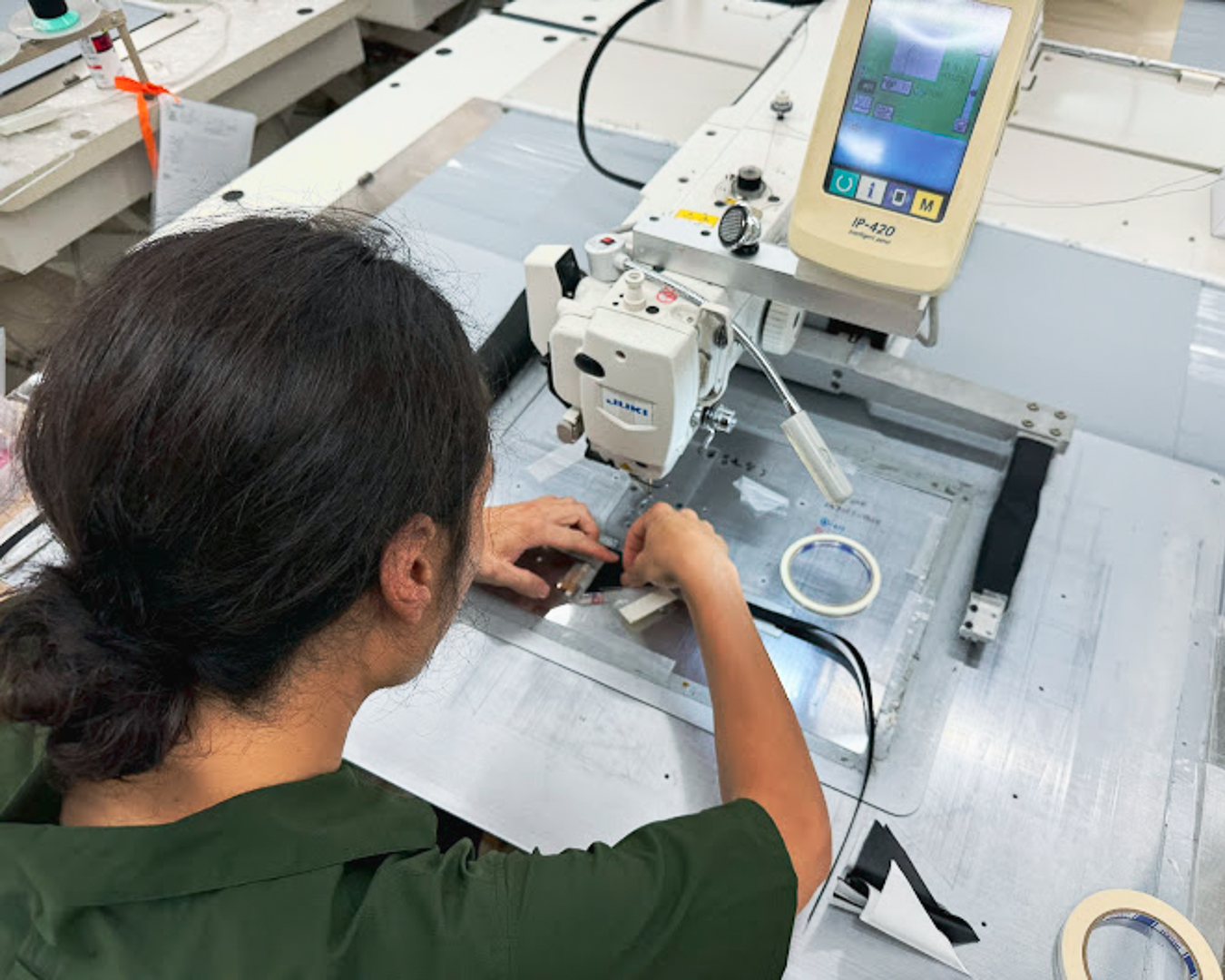
Ichiro working on a prototype-to-production item.
ーAlso, there’s the issue of a lack of skilled hands at factories. How do you overcome that? I imagine you felt that you had to make the workplace attractive, a place where everyone could feel energized and engaged, or nobody would apply.
Ichiro We want our staff at our factory to find sewing enjoyable. Even those who’ve never sewn before can learn the joy of making things—and create their own tools. That’s rewarding. Ultimately, people matter most. This factory won’t be built first and staffed later—it will change as we build it together.
Takahiro When the people making something are enjoying themselves and growing, the finished product becomes better. We want our products to convey that to customers.
ーI hope people who read this will feel motivated to apply!
Interview with Takaaki president, Takahiro Shukunami

Takaaki president, Takahiro Shukunami, deeply influenced this project. Yamatomichi’s Masaaki Mita, Takahiro Nakagawa and Ichiro Kitajima spoke with the president to learn more about his manufacturing philosophy.
“How many people are there in Japan’s bag industry who relentlessly pursue efficiency to the limit?” says Shukunami.
ーPlease explain Takaaki’s relationship with Yamatomichi.
Shukunami It started about five or six years ago, when a credit union we do business with in Toyooka introduced us. I think the order was for only 50 pieces. Honestly, making such a small lot was a hassle. But the credit union staffer was very enthusiastic, so we took it on.
After we made them, I saw a Yamatomichi backpack at a sushi restaurant in Tottori. I was eating when I spotted the Yamatomichi label on a backpack a young guy walked in carrying. I said: “Whoa! Yamatomichi!” He said, “You know them? I really love their stuff.” So I told him that we made the backpacks. It was a one-minute conversation, but he kept saying how amazing their stuff was. That left an impression on me. I thought, wow, there are people who passionately talk about this stuff.
ーHow does that differ from your work with other companies?
Shukunami It’s completely different, not at all like working with a company!

Masaaki, Takahiro and Ichiro chat with Takaaki’s president.
ーWe were amazed at the ways you’ve improved efficiency in the factory at every stage.
Shukunami With sewing, unless you boost productivity, costs won’t go down. The margins are small. To raise employees’ salaries, you have to improve efficiency. But more important than selling is making things that people are moved by. That’s what we’ve been doing. You’ve got to approach anything with a sense of purpose, or it’s no fun. Bag-making isn’t interesting at all if you can only do this one step on this one line. At our company we teach people to do everything, so if they just stick with it, they’ll make an entire bag.
ーUsually a production line is divided into specialized tasks.
Shukunami Spending all morning threading cords through tape, sewing just one part—there’s no way that’s interesting. I think about what I’d hate being made to do, or what would make it enjoyable. If you want to make good things, you’ve got to develop people first. People come first. You’ve got to build good relationships. Anyone selling products ought to run a factory ー if you’re not the type to do that, then you shouldn’t be selling in the first place.

Takaaki’s president, Shukunami, chats with staff as you walks around the factory floor.

Checking new materials and production methods.
Takahiro We might not have gotten Natsume’s approval if we’d said we wanted to start a factory without President Shukunami. Seeing how he works made it clear to us that we should learn from him. With every item the factory makes, he reviews the entire process and asks whether there’s a better way to make it. And he repeats it. To raise productivity and increase employees’ pay.
Shukunami That’s why it’s better for us to be involved from the very first sample made. If Yamatomichi makes the sample, it doesn’t reflect a mass production mindset: making 3,000 pieces versus 30 is completely different.
ーOriginally you were just being asked for advice on building a factory in Kamakura. But it turned into setting up a training facility in Toyooka with Takahiro Nakagawa and Ichiro Kitajima.
Takahiro He’d told us: “If you’re serious about learning, send someone here.”
Shukunami You can’t do it any other way. I said there’s no way I could just go all the way to Kamakura. I figured they’d call the next day and say, “We quit.” But they said, “We’ll do it. We asked Natsume and it was decided right away.” I thought, You’ve got to be kidding!
ーSo the two of you will train in Toyooka and look for ways to improve efficiency even further.
Takahiro Takaaki has produced the ONE and MINI2 models for us so far. We’ll learn those methods first, and at the same time study how to improve them.
Shukunami I want Yamatomichi to go global. And I want them to do it with ‘Made in Japan’ products.

President Shukunami’s business card reads: “I do this with motivation, fighting spirit and sheer grit.”
ーIf that vision is realized, Yamatomichi’s products will become even more compelling.
Shukunami It all comes down to whether you continue or not. If you keep at it, you’ll absolutely succeed. So if you’ve decided to run a factory, you’ve just got to do it. And if you’re going to do it, give it everything—be serious. If you can’t do that, don’t start in the first place. That’s how I see it.