











#2 Mindfulness, Walking Meditation and Western Medicine
#2 Mindfulness, Walking Meditation and Western Medicine
Yamatomichi Journal editor-in-chief Masaaki Mita continues his research into “walking meditation”, a practice derived from mindfulness. In the second part of this three-part series, he experiments with Thich Nhat Hanh’s walking meditation and dissects Jon Kabat-Zinn’s Mindfulness-Based Stress Reduction (MBSR).
Walking meditation
In his 2009 book Happiness: Essential Mindfulness Practices, Thich Nhat Hanh devotes a chapter to walking meditation.
“Walking meditation is walking just to enjoy walking. Walking without arriving, that is the technique. There is a Sanskrit word, apranihita. It means wishlessness or aimlessness. The idea is that we do not put anything ahead of ourselves and run after it. When we practice walking meditation, we walk in this spirit. We just enjoy the walking, with no particular aim or destination. Our walking is not a means to an end. We walk for the sake of walking.”
The method is straightforward, says Nhat Hanh.
“As you walk, pay attention to each step you make. Walk slowly. Don’t rush. Each step brings you into the best moment of your life. In walking meditation, you practice being aware of the number of steps you make with each breath. Notice each breath and how many steps you take as you breathe in and breathe out. In walking meditation we match our steps to our breath, and not the other way around. When you breathe in, take two or three steps, depending on the capacity of your lungs. If your lungs want two steps while breathing in, then give exactly two steps. If you feel better with three steps, then give yourself three steps. When you breathe out, also listen to your lungs. Know how many steps your lungs want you to make while breathing out.”
Generally, your pace should be slow. Don’t try to control your breathing. Instead, let your lungs dictate how much air to fill with and how long to take. And don’t forget to practice smiling, he writes. “Your half-smile will bring calm and delight to your steps and your breath, and help sustain your attention.”
Zen running isn’t so different. With each step, you’re counting. But thoughts intrude. My side hurts. I want to walk. I need to get a lot done tomorrow.
The key is to interrupt the thoughts and get back to the count. If there is a difference between Zen running and walking meditation, it’s that Nhat Hanh’s focus always comes back to breathing. Once the intense heat of summer finally subsided, I headed to the leafy area that’s along my usual walking route. I wanted to give walking meditation a try.
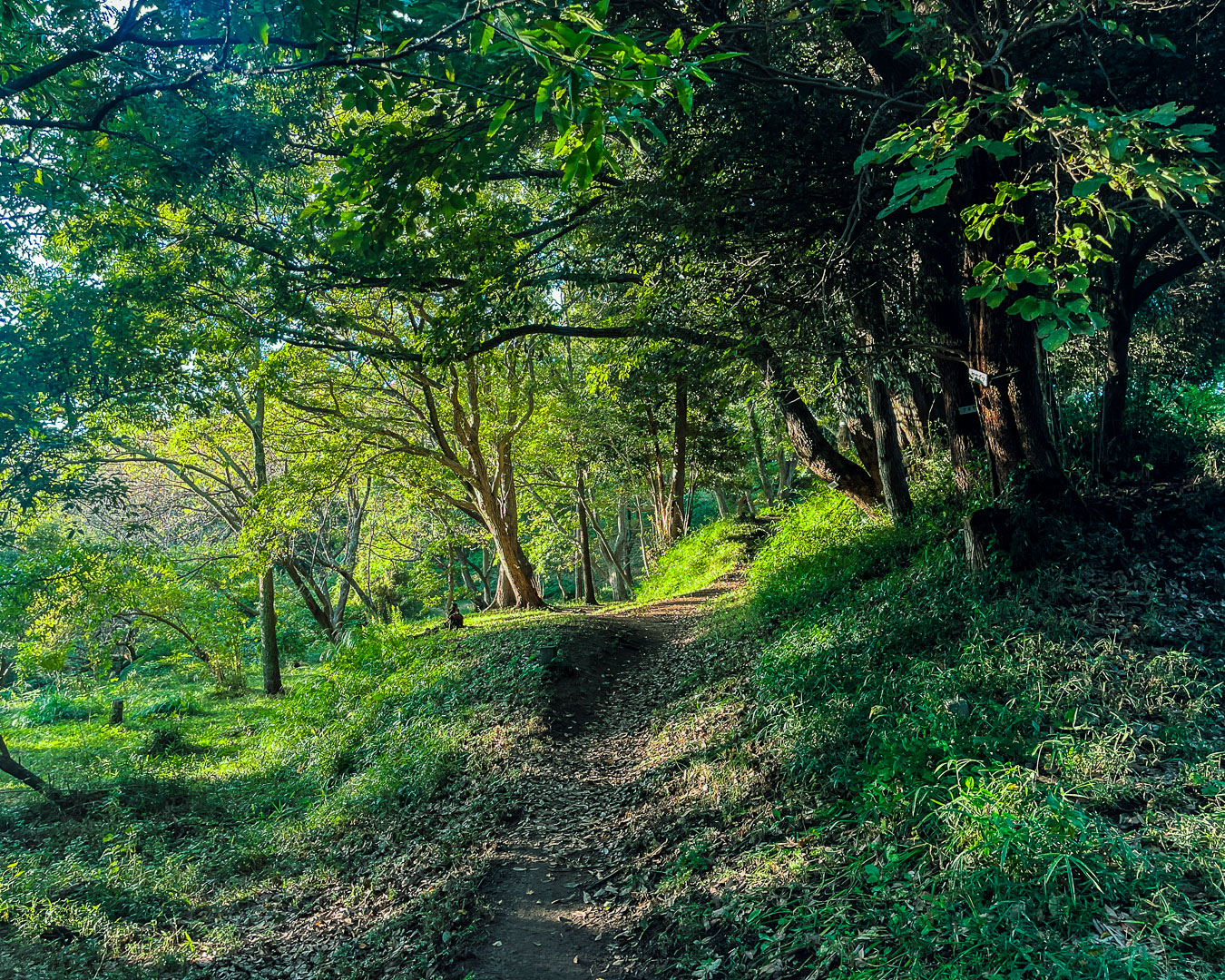
A favorite walking route, Yamazaki-Daiho, in Kamakura.
First attempt at walking meditation
I start off walking. My pace is a bit fast, so I slow down, focusing my attention on my breathing. I count how many steps I take with each breath. Nhat Hanh suggests two or three steps per breath but four works for me.
I keep my eyes fixed about three meters ahead of me, concentrate on my breathing and synchronize my steps. Work and dinner plans creep into my thoughts, but each time I go back to counting steps: 1, 2, 3, 4. Like the 4/4 beat of a metronome.
I notice the cries of birds and insects. Has my hearing become more sensitive? It’s similar to the heightened awareness of flowing water that I experience while sitting in a cold bath after a sauna. The wind feels pleasant against my skin.
I slowly walk back and forth along a path for about 30 minutes. By the end, my mind and body feel perfectly in step. My head feels slightly hazy yet somewhat uplifted. I’ve known a similar feeling on ordinary hikes, except this time it was intentional.
Practicing the routine
Besides meditating in spare moments throughout the day, I practiced walking meditation nearly every day.
While walking, Nhat Hanh suggests repeating phrases, chant-like, instead of simply counting.
“We can practice walking meditation by counting steps or by using words. If the rhythm of our breathing is 3-3, for example, we can say, silently, “Lotus flower blooms. Lotus flower blooms,” or “The green planet. The green planet,” as we walk. If our breathing rhythm is 2-3, we might say, “Lotus flower. Lotus flower blooms.” If we are taking five in-breaths and five out-breaths, we may say: “Walking on the green planet. Walking on the green planet.” Or “Walking on the green planet, I’m walking on the green planet,” for 5-6. We don’t just say the words. We really see flowers blooming under our feet. We really become one with our green planet.”
Since I take four steps per breath, repeating “breathe in, breathe out” seems suitable. It reminds me of the chants that some Buddhists practice. For instance: the “Namu Amida Butsu” chant, or Nembutsu, of the Jodo Shu (Pure Land Sect) or the Nichiren Buddhists’ “Namu Myoho Renge Kyo” chant.
Lately, I’ve been trying to accept things as they are and let go. This doesn’t come naturally to me. I tend to be overly choosy and attached to too many things in my life. So while walking, I decided to chant, “Breathe in, breathe out. Accept, let go.” These phrases held a deeper meaning for me, but they were also stating the obvious: As I inhaled, I was “accepting” oxygen and as I exhaled I was “letting go” of carbon dioxide.
Now that I’ve practiced walking meditation a few times, I try it along the forested path near my house. Initially, my breathing and walking are out of sync. Repeating my chant doesn’t help. I find it hard to focus.
Nhat Hanh suggests matching your steps to your breathing, not the other way around. So, I try that: I focus on my breathing first, then match the rhythm of my walking to it. Then I start counting. It’s simple and yet it really helps with concentration. Next, I start repeating: “Breathe in, breathe out.” Gradually my breathing deepens, so I add the other half of my chant: “Accept, let go.”
This throws me off. Random thoughts keep intruding, and I go back to counting, which seems to help.
Later, I understood that there would be good and bad days. Sometimes I could focus, sometimes I couldn’t. Eventually I arrived at the idea that the high I’d experienced early on wasn’t what I was after; inner stillness was. The realization reminded me of Nhat Hanh’s phrase: “Peace is every step.”
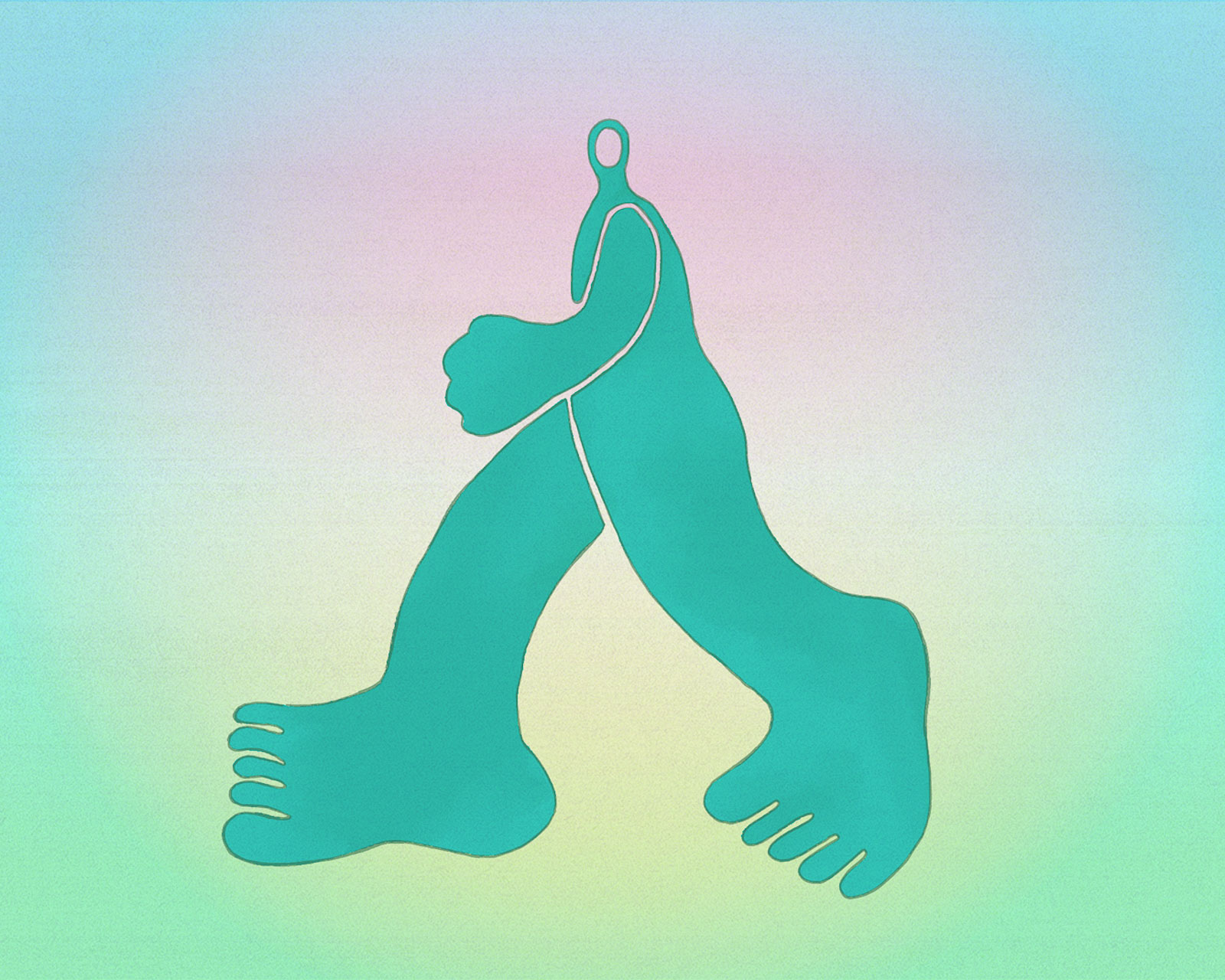
Illustration: KOH BODY
Meditation anytime, anywhere
Nhat Hanh said that walking meditation could be practiced anytime. It can be short ー from the car to the office or the kitchen to the living room. I experimented with it while walking through crowds in busy shopping districts and transferring train lines at major railway stations, and I found that I didn’t get distracted by my surroundings or the people around me. I even felt less stressed.
I assumed that walking meditation would be more effective if I were in a park or on a forested trail. But I came to realize that walking meditation worked just about anywhere, even on the streets near my home or workplace. I tried it while traveling and on business trips and while walking to railway stations. It was refreshing, similar to the feeling of going for a run while on a trip somewhere.
I’d started walking meditation because I thought it might be useful for hiking. But it’s so much more, and I can use it anytime, anywhere, without any equipment and at no cost.
Nhat Hanh wrote:
“Every day, you walk somewhere, so adding walking meditation to your life doesn’t take a lot of additional time or require you to go anywhere different. Choose a place ー a staircase, your driveway, or the distance from one tree to another ー to do walking meditation every day. Every path can be a walking meditation path.”
Who is Jon Kabat-Zinn?
After experimenting with Nhat Hanh’s walking meditation, I decided to go deeper into the writings of Jon Kabat-Zinn, best known for his book, Full Catastrophe Living. Originally published in 1990, the book is one of the earliest texts on mindfulness available in Japanese and a good starting point for understanding how the Western medical establishment grew to embrace the concept.
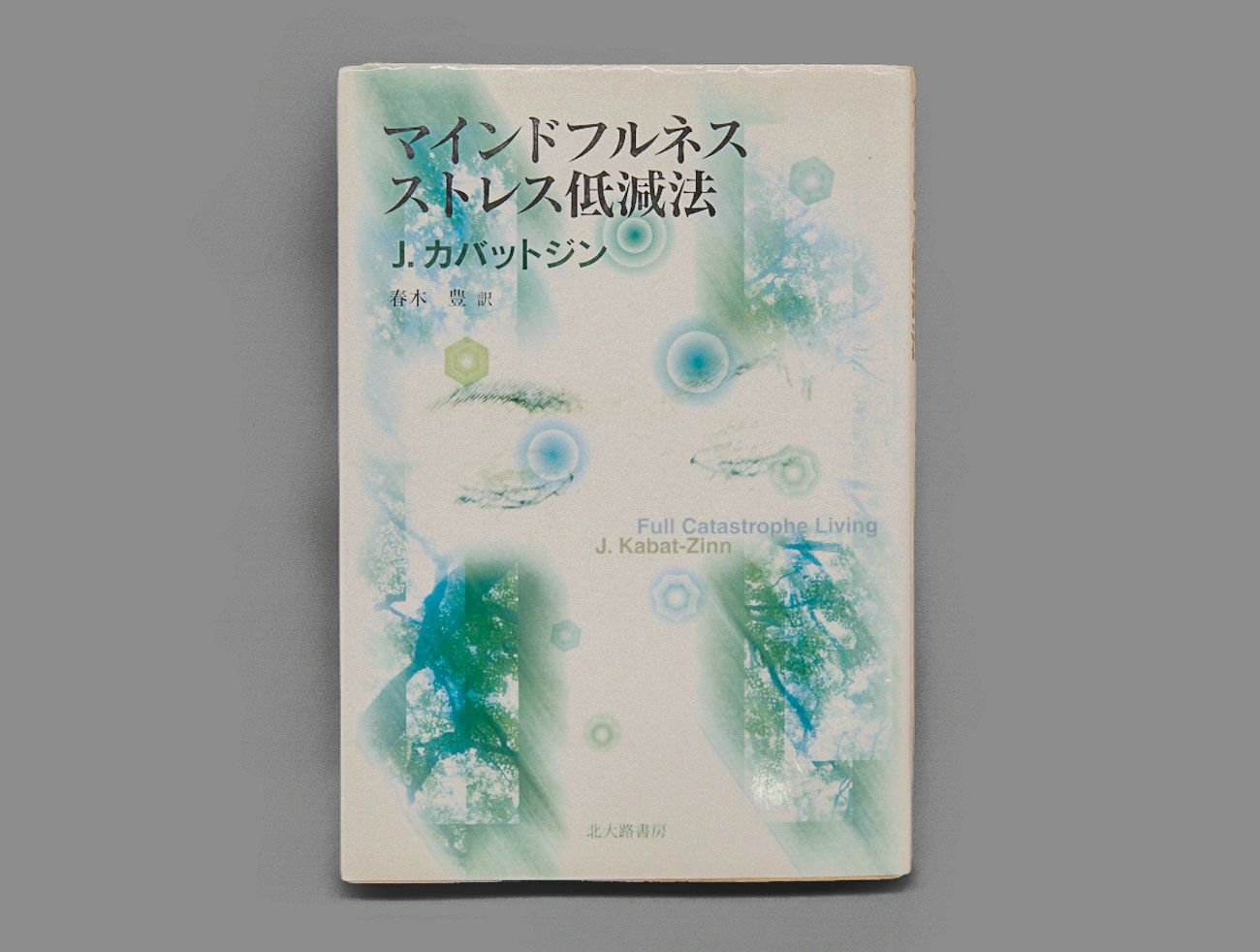
The Japanese translation of Jon Kabat-Zinn’s book Full Catastrophe Living.
You’ll recall from the first part of this Walking Meditation series that Kabat-Zinn is the academic who repackaged Buddhist contemplation practices as therapy for a secular audience nearly a half century ago.
Born in 1944, he was a graduate student from the Massachusetts Institute of Technology (MIT) and an anti-Vietnam-war protester, and he practiced Zen and yoga. Inspired by his experience with Vipassana meditation, he founded the Center for Mindfulness at the University of Massachusetts Medical School in 1979. Having studied Western science at MIT and Buddhist doctrine and practice from Buddhist teachers, he integrated the two and developed MBSR (Mindfulness-Based Stress Reduction) as a program for patients suffering from chronic pain and stress-related illnesses. By connecting the teachings, he made mindfulness applicable and palatable in Western medicine.

Illustration: KOH BODY
Nhat Hanh spoke to people about mindfulness as a monk. Jon Kabat-Zinn prescribed mindfulness to patients to lower stress levels in his role as a medical scientist. Same idea, different backgrounds and approaches. The two were not adversaries and certainly not strangers: Kabat-Zinn repeatedly cited Nhat Hanh’s influence and Nhat Hanh praised and wrote the preface for Kabat-Zinn’s books.
Embracing "full catastrophe living"
In the introduction to his book Full Catastrophe Living, Kabat-Zinn explains that the gloomy sounding title isn’t meant as a doomsday reference. In fact, it’s the opposite.
“Catastrophe here does not mean disaster. Rather, it means the poignant enormity of our life experience. It includes crisis and disaster, the unthinkable and the unacceptable, but it also includes all the little things that go wrong and that add up. The phrase reminds us that life is always in flux, that everything we think is permanent is actually only temporary and constantly changing. This includes our ideas, our opinions, our relationships, our jobs, our possessions, our creations, our bodies, everything.
In this book, we will be learning and practicing the art of embracing the full catastrophe. We will be doing this so that rather than destroying us or robbing us of our power and our hope, the storms of life will strengthen us as they teach us about living, growing, and healing in a world of flux, change, and sometimes great pain.”
The full catastrophe “captures something positive about the human spirit’s ability to come to grips with what is most difficult in life and to find within it room to grow in strength and wisdom. For me, facing the full catastrophe means finding and coming to terms with what is deepest and best and ultimately, what is most human within ourselves. There is not one person on the planet who does not have his or her own version of the full catastrophe.”
Focusing on the present moment is a big part of Kabat-Zinn’s proposed solution to coping. Mindfulness meditation is the method by which we can boost our powers of concentration and direct our awareness to individual moments. How do we focus awareness on the here and now? Breathing. By heightening our awareness of our breathing, we expand our toolkit for managing our lives, Kabat-Zinn writes.
Seven principles of mindful meditation
In Kabat-Zinn’s MBSR training, attitude is a big factor in the long-term benefits. Here are seven fundamental principles in his training regimen. (Disclaimer: These are my own summaries of Kabat-Zinn’s lengthy explanations.)
①Don’t judge yourself
We label and categorize everything in our minds. When these judgments dominate, finding peace becomes difficult. You have to first notice that you are judging. Try to observe objectively.
②Be patient
It can take time to get results. Don’t be disappointed if you see immediate improvements.
③Maintain a beginner’s mindset
Practice the regimen every time as if it were your first time. Try to avoid having expectations based on the results or experiences of previous sessions.
④Trust yourself
Meditation is something you do to get closer to yourself. Teachers and books can serve as signposts but only you can live each moment of your life. Through training, learn to take responsibility for being yourself. Listen to the voice inside you. Trust who you are.
⑤Don’t strive too hard
When meditating, the best way to reach your goal is not to rush results or put in too much effort. Focus on accepting each moment as it comes. Patience and diligence will pay off. Ultimately, the strength will come from within you.
⑥Accept
Acceptance involves seeing things exactly as they are and taking yourself as you are. Doing so allows you to make better judgments. Don’t let assumptions, desires, anxieties or prejudices cloud your judgment.
⑦Don’t cling
Let go of the impulse to cling to things or push things away. If you realize that you are judging your experience, acknowledge the judgment but don’t cling to it or pursue it any further. Don’t get attached to thoughts about the past or the future ー simply observe how things unfold.
I was surprised by how often the words “accept” and “let go” appeared throughout the book. Maybe I already had a head-start on mindfulness, without even realizing it.
In the third part of this series, I’ll take a closer look at Kabat-Zinn’s version of walking meditation.
Yamatomichi Journal Editor-in-Chief / Photographer
While working as a photographer for Japanese culture and music magazines, Masaaki developed a passion for travel, became captivated by the grandeur of nature and began climbing mountains. Before long, he was contributing to outdoor magazines and has since made ultralight hiking a lifelong pursuit. During an assignment, he met Yamatomichi founder Akira Natsume, and the two grew close over hiking trips, interviews and drinks. In his role as editor-in-chief of Yamatomichi Journals, Masaaki hopes to promote hiking culture in Japan.

Series: Walking meditation