






DAIZABURO SAKAMOTO “Retreating” #1
Composition/Writing: Takuro Watanabe
Editing/Photography: Masaaki Mita
DAIZABURO SAKAMOTO “Retreating” #1
Composition/Writing: Takuro Watanabe
Editing/Photography: Masaaki Mita
In the HIKING AS LIBERAL ARTS series, hosted by Hideki Toyoshima, Yamatomichi HLC (Hike Life Community) director, we consider hiking as a field of study that liberates individuals from preconceived notions and norms, empowering them to act based on their own values. This series delves into aspects of hiking ー seeing, hearing, eating, breathing, medicine ー for clues to exploring the value of and potential that extends beyond hiking.
Our sixth guest of the series is Daizaburo Sakamoto, an artist and yamabushi, the term for mountain ascetics who seek spiritual enlightenment by trekking Japan’s mountains and interacting with deities thought to inhabit the natural world.
Based in the Dewa Sanzan mountains of Yamagata prefecture, in northern Japan, Daizaburo practices mountain asceticism while also participating in various art festivals and writing about the origins of art and performance, folk beliefs, practical life skills and festivals. What did he discover in the mountains as he searched for the origins of art? And what can we learn from his retreats into the wilderness?
INTERVIEW NOTES: Hideki Toyoshima
One of the major aims of ultralight hiking is to immerse yourself in nature by minimizing your gear ー something that requires experience and knowledge. Simplicity matters. It can be applied not only to hiking, but also to our daily lives.
In this series, curator Roger McDonald spoke to us about “seeing”, work-style researcher Yoshinori Nishimura about “listening”, cook Hiroko Mihara about “eating”, yoga practitioner DONI about “breathing”, and traditional Tibetan medicine specialist Yasushi Ogawa about “medicine”. This time, with Daizaburo Sakamoto, we discuss the idea of “retreating”.
In the mountains around Japan, it’s not unusual to come across groups of hikers dressed in white robes and small caps and carrying conch-shell horns. These are yamabushi, the mountain ascetics who worship the peaks as deities and regard their treks there as physical and spiritual training. We look to Daizaburo to guide us along this unfamiliar path.
(Note: This interview was conducted in December 2025 at Hokkein Onsen Sanso in the Kuju Mountains during the Happy Hikers Hokkein Gathering 2025, where Daizaburo Sakamoto was a speaker.)
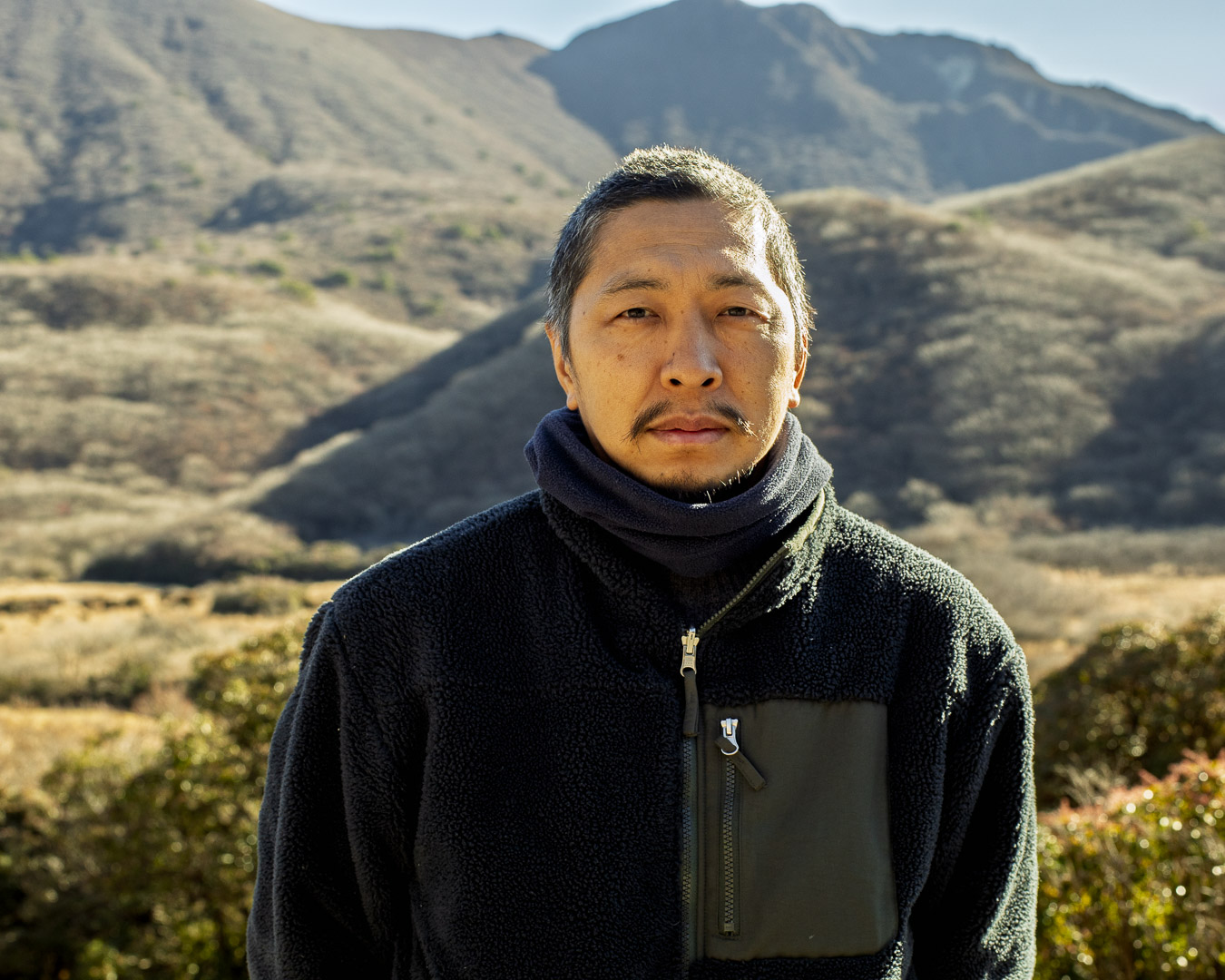
Daizaburo SakamotoFor more than two decades, Daizaburo Sakamoto has been a yamabushi, a practitioner of Shugendo ー a form of mountain asceticism mixing Shintoism, Buddhism and Taoism ー and is now based in Yamagata prefecture. Using caves, mountains, rivers and forests as places for creation and contemplation, he has developed his art as a reflection of his lifestyle, questioning and exploring the relationship between mythology, folklore, faith and contemporary society and the intersection of art, rituals, economy and community. In recent years, he has shown his work in Japan, South Korea, Thailand and parts of Europe. At his shop, Jusanji, he shares traditional knowledge from mountain regions, and he is the author of several books, including Yamabushi to Boku (Yamabushi and I) and Yamabushi Note.
Yamabushi and the origins of art
ーWhy did you want to become a yamabushi?
I have loved drawing since I was a child. I had asthma and was often sick, so when I missed school, I would draw at home. Back then, I wondered why we draw pictures. That question became: Where does art come from? From my late teens, I worked at a contemporary art gallery in Tokyo, where artists like Takashi Murakami and manga artist Kyoko Okazaki visited, so I had opportunities to encounter thought-provoking work. And it got me thinking: What is the origin of this art?
ーI first met you around that time, before you became a yamabushi.
After we met, I worked on illustration and design. When I was around 30, I heard about a yamabushi training program in Yamagata that anyone could join, so I signed up. I didn’t really understand it, but it seemed fascinating. Once I started looking into yamabushi, I realized that they had deep connections to Japanese art and performance and I thought maybe these people were connected to the ‘origins of art’ that I’d been wanting to know about. That’s how I started traveling to Yamagata regularly.
I’ve been a yamabushi for about 20 years. Since 2012, I’ve lived in Yamagata because I wanted to learn not only about yamabushi, but also about the knowledge and techniques of people who live in the mountains.
ーWhat do you sell at your shop, Jusanji, which sits at the foot of Mt. Gassan?
I make T-shirts and sell packaged food products. We package foraged greens (sansai, in Japanese) gathered in the mountains and sell them at roadside stations. We gather kuromoji (spicebush, a shrub made into tea and used as a flavoring) from the mountains and make oil from it, and we also sell the fragrant water that is a byproduct of the process. Depending on the season, we also make things like craft cola, wild grape juice and butterbur miso. I also roast coffee.
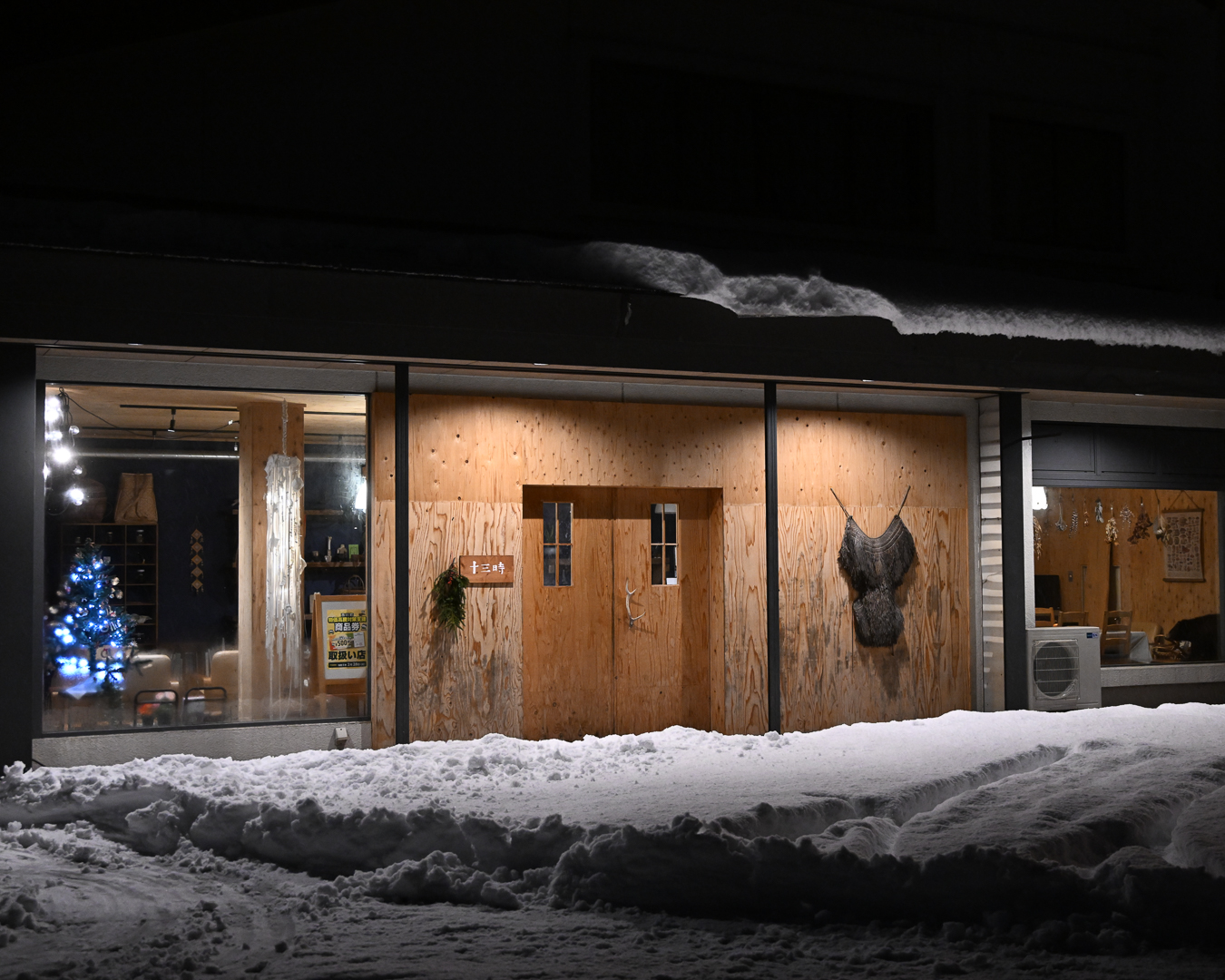
Jusanji
218-1 Mutsuai Hei, Nishikawa-machi, Nishimurayama-gun, Yamagata Prefecture. (Photo credit: Daizaburo Sakamoto)
ーYour shop’s online sales help bring in tax revenues for the local government (part of a Japanese hometown tax donation program, known as furusato nozei). Your business seems ordinary, but your way of life reminds me of the ancient yamabushi who made medicines, guided people in the mountains or ran temple lodgings and whose lives were deeply connected to the mountains.
Yamabushi may seem like religious figures, but there’s something very ordinary about them. Nowadays, most yamabushi have other jobs ー many work desk jobs. Unless they come from a family that runs a temple or shrine, most yamabushi are not full-time religious practitioners.
Yamabushi, explained
ーTell me more about yamabushi.
Yamabushi are often described as part monk, part layperson, belonging to the sacred world of monks and priests but also to society. Besides Dewa Sanzan in Yamagata, where I’m based, yamabushi are still active in the mountains around Japan ー Mt. Omine on the Kii Peninsula, Mt. Ishizuchi on the southwestern island of Shikoku, Mt. Hikosan on the southwestern island of Kyushu.
ーWhat cerifications do yamabushi need?
It depends on the mountain. At Dewa Sanzan, the most important training is the “Autumn Peak Entry Training” held on Mt. Haguro. By participating in that, you are allowed to join the ranks of the yamabushi and are given a yamabushi name. It signifies abandoning your ordinary worldly name and being reborn.
ーWhat’s your yamabushi name?
It’s used only in the mountains and isn’t something you casually talk about. Yamabushi rules dictate that you not speak publicly about the training.
ーOnce you become a yamabushi, do you have to continue training every year? If you stop, can you be expelled?
You won’t be expelled. In the past, it was considered something you should continue every year, but now it’s voluntary.
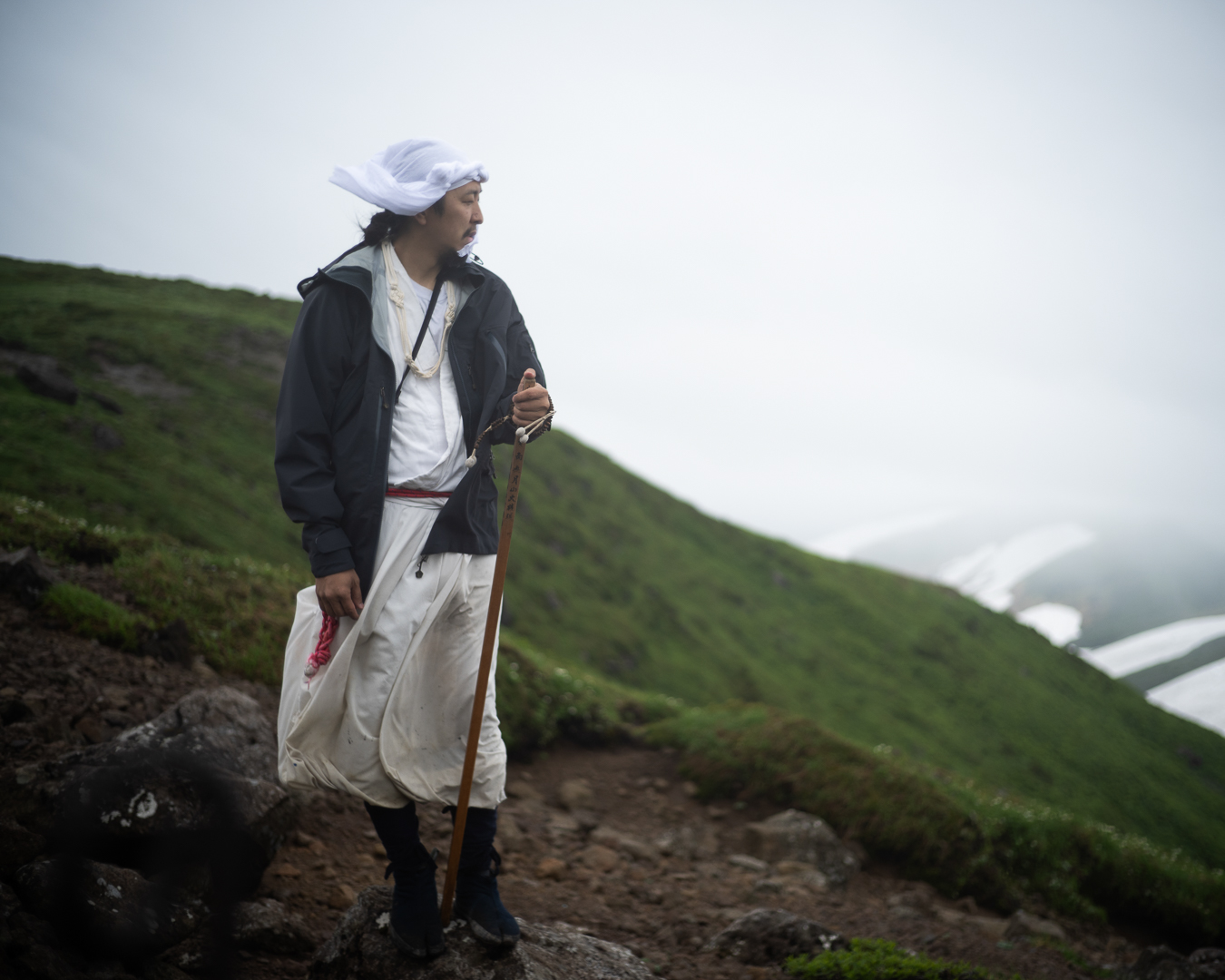
Daizaburo Sakamoto, dressed as a yamabushi. (Photo credit: Daizaburo Sakamoto)
ーWhat religion do yamabushi follow?
Shugendo, which blends Buddhism and Shinto. We worship both deities and Buddhas. We also pray to spiritual beings that major religions don’t really deal with ー spirits believed to inhabit rocks, rivers and trees. It’s animism. Shugendo fuses Japan’s indigenous religions with Shinto, Buddhism, Onmyodo, Taoism and other traditions.
By the end of the Heian Period (794 to 1185), yamabushi culture and Shugendo had become established. Yamabushi trained to become Buddhas and save ordinary people. They also strived to gain genriki ー a kind of spiritual power or supernatural ability. Yamabushi culture was once part of everyday life but it isn’t anymore.
Yamabushi had extensive knowledge of nature and medicinal herbs. They would be called to prepare plant-based medicines when people got sick and to use their spiritual power to drive away harm. Before the advent of modern medicine, yamabushi were like doctors.
ーThere seems to be some overlap between yamabushi and tengu (a long-nosed supernatural being that has wings and magical powers and lives in the mountains). Is there a connection?
Tengu were supernatural creatures from Chinese folklore that were brought to Japan. Here, they became associated with the fearsome beings said to live in the mountains ー yamabushi. Over time, tengu and yamabushi became fused.
ーIs there a connection between yamabushi and ninja?
I’m not that knowledgeable about ninja. But like yamabushi, ninja seem to have differed depending on the region. I’ve heard that the ninja of Iga (Mie prefecture) and Koga (Shiga prefecture) may originally have been local warrior families. In northeastern Japan, there were ninja called the Kurohabaki-shu who served the Date clan*; some say they may have overlapped with yamabushi in the region. (*The Date clan took their name from the Date district, in present-day Fukushima prefecture, which was awarded to them in 1189. They later expanded their rule to include present-day Miyagi prefecture and parts of southern Iwate and northern Fukushima prefectures, a domain that was the third-largest in medieval Japan.) There’s little documentation, so we don’t know for sure. But it does seem that warlords in the past used yamabushi as spies, a role similar to ninja.
ーI’ve read that matagi, ancient hunter-gatherers in Japan’s northeastern Tohoku region, also did work that was similar to ninja.
There is some overlap with the matagi. In the old days, matagi were apparently called yamadachi. They became yamabushi, if they were more religious, and yamadachi, if they were more focused on living in the mountains and hunting.
ーAt some point, were Shugendo and yamabushi suppressed or banned?
Yes, during the Meiji Era (1868 to 1912), when Japan was under pressure from Western powers. The Japanese government positioned the Shinto religion and emperor at the center of its efforts to unify the country.
At that point, Shugendo and yamabushi were seen as obstacles. Shugendo, with its fusing of different religions and cultures, was banned. The “Shugendo Abolition Order” was issued, and people who could no longer continue as yamabushi became shrine priests, pharmacists, doctors, transport workers, innkeepers and other modern professions.
ーKyushu was one of the centers of Shugendo. On Mt. Hikosan, on the border between Fukuoka and Oita prefectures, I once saw abandoned stone carvings near the summit that looked as if they had belonged to mountain ascetics next to a ruined torii gate.
I don’t know exactly what those were, but as I mentioned earlier, after the Japanese government’s policies of separating Shinto and Buddhism, destroying Buddhist institutions and abolishing Shugendo, many things were abandoned throughout Japan. One example: The torii gate at Mt. Haguro had the characters for “gongen” (which refers to a Buddhist manifestation of a deity) erased from it because it was considered inappropriate for Buddhist wording to appear on a torii gate.
ーSo it wasn’t just cultural, but also shaped by political pressure.
Self-seclusion, explored
ーHow do your yamabushi activities tie into your art work?
When I wanted to know the origins of art, I became interested in cave paintings, which are among the oldest forms of art created by humans. There were rituals performed with the paintings in caves. You can find cave paintings in France and Spain in Europe and Indonesia in Asia. In Japan too, there are cave paintings from around 1,500 to 2,000 years ago at the Fugoppe Site in Hokkaido.
ーFascinating. Does “retreating” figure into yamabushi training?
Yamabushi have long practiced secluding themselves in caves as part of their training. It’s equated to being in a mother’s womb. Yamabushi train in the mountains (the maternal body), and when they return to society, it’s thought that they are “reborn”.
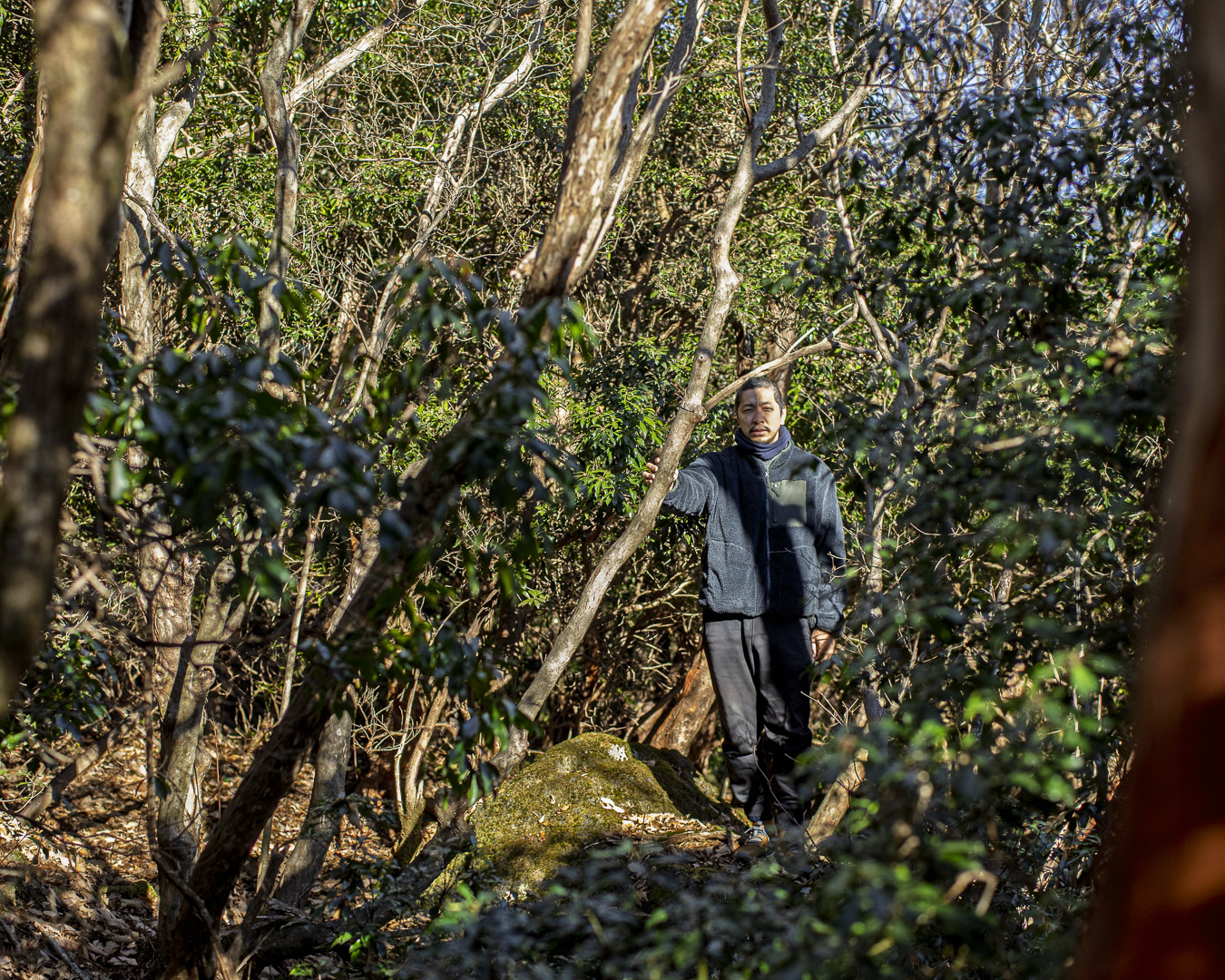
I think the oldest surviving art is connected to this act of retreating into caves. As I observed coming-of-age rituals from around the world alongside yamabushi culture, I came to feel that this self-isolation was an important element. I wanted to explore that more deeply myself. So I started staying in holes that I dug in the forests of Mt. Gassan, experimenting with the impact of doing so on my body. Even now, I practice this form of self-seclusion on the summer and winter solstices.
ーIn your experience, what happens to your body during these retreats?
The first thing that changes is your vision. If you light a candle in the darkness, your eyes try to adjust to the dark, and even though the flame is small, it begins to feel as though you are surrounded by fire.
When I retreated into a hole on Mt. Gassan, it was pitch-dark but the space itself started flickering with light. I shouldn’t have been able to see anything. I could hear the wind blowing above me and the leaves rustling in the trees. At that moment, it felt as though my senses had stretched outward. Even though I was hearing these sounds, I felt as if I were touching things with my hands.
I later read about the changes shamans experience while in a trance, and learned that shamans feel as if their bodies are stretching in this state. I thought I had experienced something similar, though I probably wasn’t in a trance.
ーIn 2022, at documenta fifteen in Kassel, Germany, your performance involved staying in a hole in the ground.
I wanted to explore the act of retreating, so I dug a hole in a local resident’s garden, covered it with hay and stayed there for three days. When I came out, I performed a yamabushi ritual dance.
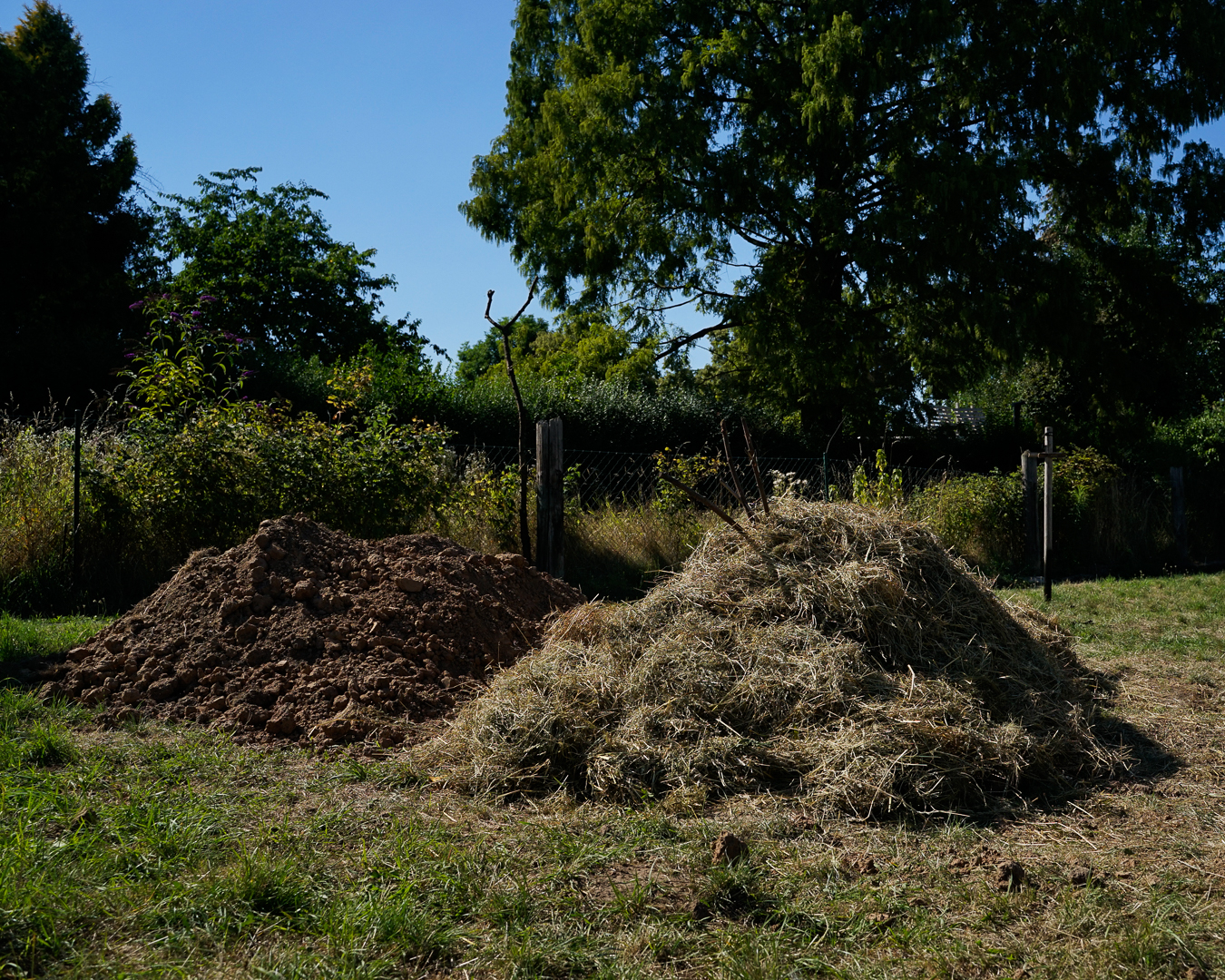
The hole in the ground where Daizaburo stayed for a performance at documenta fifteen in Kassel, Germany.
ーIs retreating something that’s common around the world?
Retreating into mountains, temples or rooms is not unique to Japan. You find similar practices in other parts of the world.
In Japan, a figure named Hata no Kawakatsu is said to have served Prince Shotoku (574-622) and to have been one of the founders of Noh theater. According to legend, after finishing his duties, he go into an utsubo-bune ー a hollow flying-saucer-shaped boat ー and drifted down a river, eventually washing ashore near Hyogo prefecture, in western Japan, where he became a deity.
There is a Noh dance called Okina no Mai, which is said to have been passed from Prince Shotoku to Hata no Kawakatsu. Even today, before performing this dance, the performer retreats into a room backstage called the Kagami no Ma.
There is also the Daijosai, the once-in-a-lifetime imperial rite held after an emperor ascends the throne. During the ritual, the emperor is wrapped in cloth called matoko ofusuma. The folklorist Shinobu Orikuchi described this wrapping as a way for the spirit of the emperors, passed down continuously over generations, to attach itself to the new emperor.