





DAIZABURO SAKAMOTO “Retreating” #2
Composition/Text: Takuro Watanabe
Editing/Photos: Masaaki Mita
DAIZABURO SAKAMOTO “Retreating” #2
Composition/Text: Takuro Watanabe
Editing/Photos: Masaaki Mita
In the HIKING AS LIBERAL ARTS series, hosted by Hideki Toyoshima, Yamatomichi HLC (Hike Life Community) director, we consider hiking as a field of study that liberates individuals from preconceived notions and norms, empowering them to act based on their own values. This series delves into aspects of hiking ー seeing, hearing, eating, breathing, medicine ー for clues to exploring the value of and potential that extends beyond hiking.
Our sixth guest of the series is Daizaburo Sakamoto, an artist and yamabushi, the term for mountain ascetics who seek spiritual enlightenment by trekking Japan’s mountains and interacting with deities thought to inhabit the natural world. In the second part of our conversation, Daizaburo explains yamabushi cooking, rites of passage and his preference for thin-soled footwear in the mountains.
Mountains of meaning
ーWhat do nature and heading into the mountains mean for yamabushi?
Yamabushi culture originally may have been connected to rites of passage into adulthood. At a certain age, a person enters a sacred place, say, a mountain or cave, and undergoes rituals there, and then returns. In Japan, it was once thought that small children belonged to the world of gods and Buddhas and that rituals in sacred places transformed them into adults. Through that experience, they become a full-fledged member of society. The yamabushi have passed down the rituals connected to that process for generations.
I’m interested in immersing myself in that world. Rites of passage are a universal process. They’re often carried out within a community, whose myths and customs are carefully guarded secrets. The fact that the yamabushi training in the mountains remains secretive makes me feel that these ancient pockets of culture are alive and functioning.
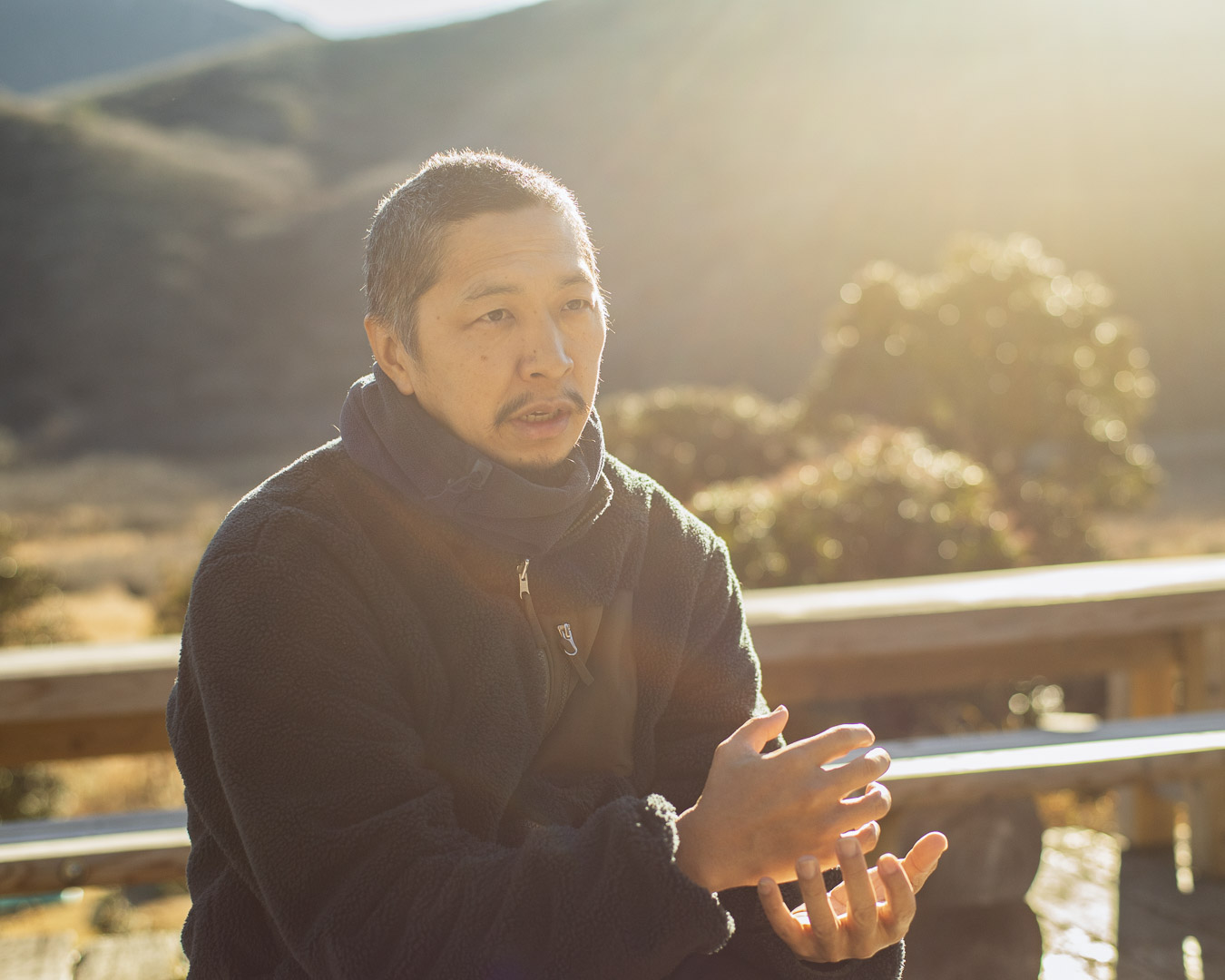
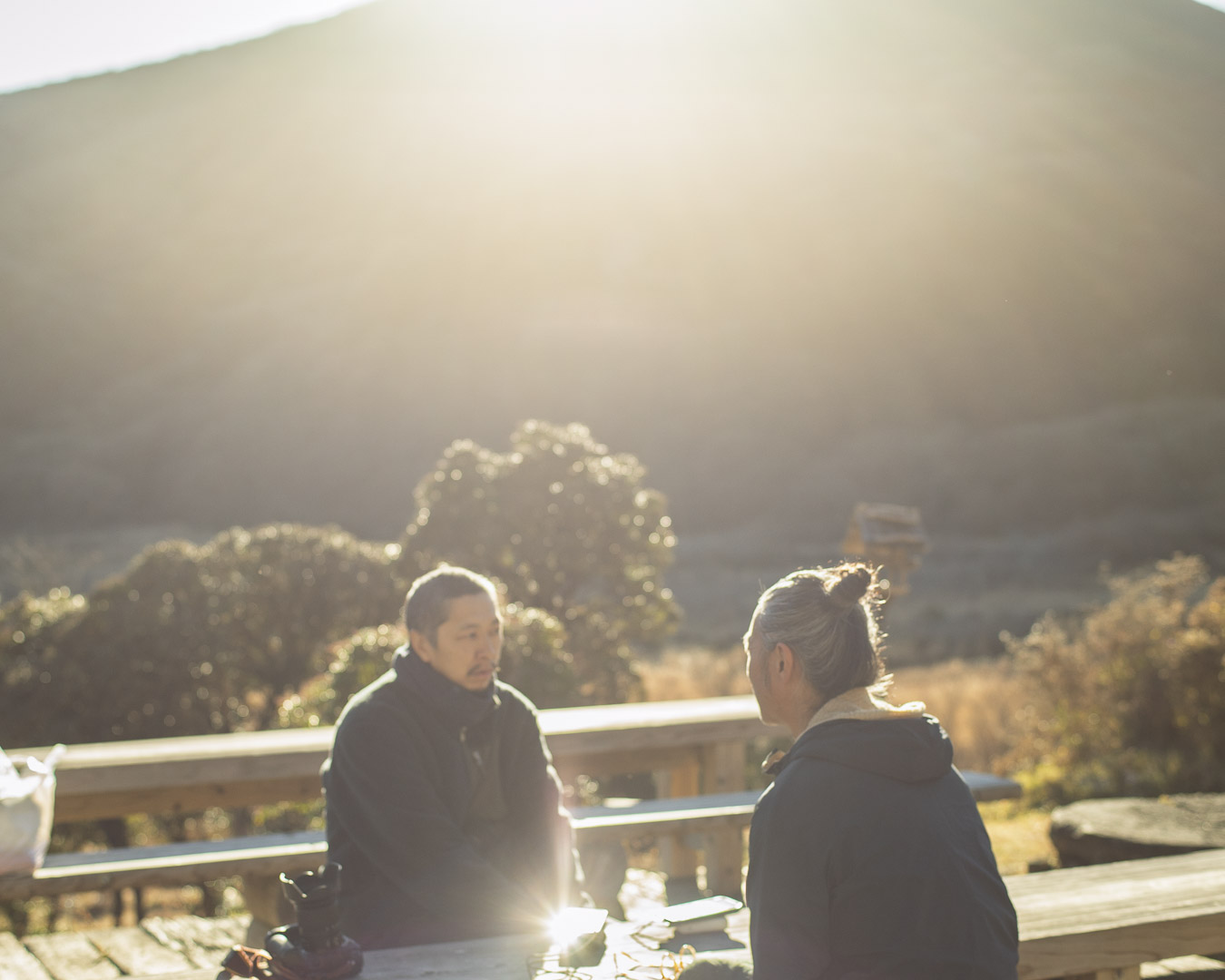
This interview took place at Happy Hikers Hokkein Gathering 2025, held in December 2025 at Hokkein Onsen Sanso in the Kuju mountain range of Kyushu, where Sakamoto also spoke. Yamatomichi Journal has previously published reports on the Hokkein Gathering.
ーI imagine rites of passage must differ depending on the place and community.
Rituals in which a person becomes an adult through contact with the realm of the dead were practiced in many parts of the world, not just Japan. You find similar rituals everywhere ancient cultures existed.
ーIn Japan, the annual coming-of-age ceremony (held for 20-year-olds on the second Monday in January) might be considered today’s rite of passage, but it feels like a formality. Which makes me think that people have fewer opportunities to experience the transition to adulthood. By the way, when you travel in the mountains as a yamabushi, do you do so as a form of training?
The mountains are our sacred training grounds. They’re also a part of the sustenance of our daily lives. My wife’s family runs an inn on Mt. Gassan. Taking care of people in places like that was part of what yamabushi did. Gathering edible wild plants for them was another part of it.
ーSo the mountains aren’t only a sacred place for yamabushi.
Near the summit, you can sense more strongly that you’re in a sacred place. But lower down the slopes, in the forests or areas where people live, there’s an overlap of objects of worship and places that sustain residents’ lives.
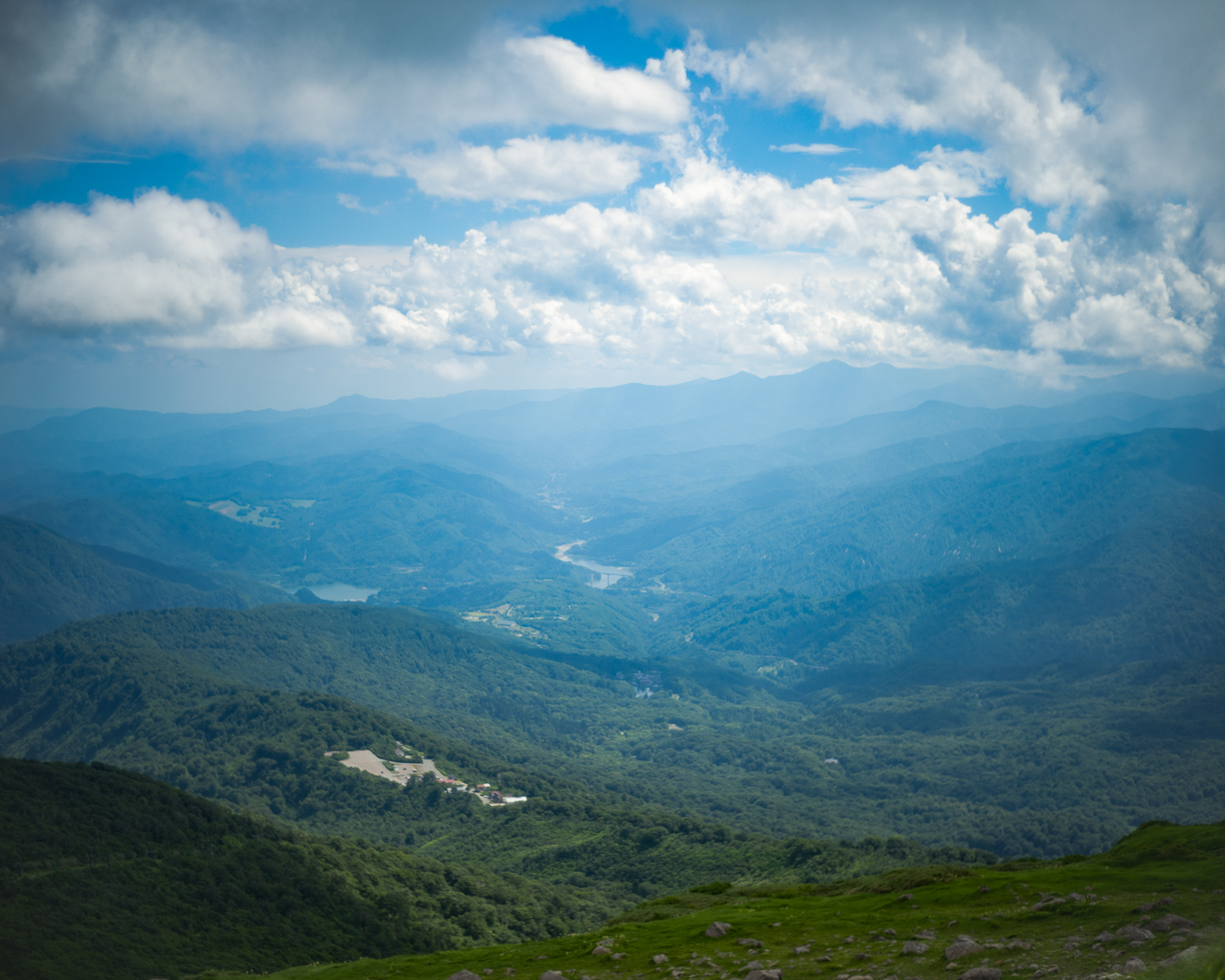
The Dewa Sanzan mountains. (Photo credit: Daizaburo Sakamoto)
ーAre there places in the mountains that are, for you, boundaries between the everyday and sacred worlds?
There were once many places in the mountains around Japan where women were forbidden to go. Even now, they exist: sections of the Okugake Trail on Mt. Omine, for instance. In these places, you find stone carvings of the deity Uba-sama (an old woman who failed to heed the prohibition and was turned into a stone statue) as boundary markers.
There’s the myth of Datsueba, an old demon-like woman who stands by the River of the Dead, strips clothes from the dead, and weighs their sins. Datsueba, who straddles this world and the afterlife, and Uba-sama probably got fused together over time.
Around Mt. Gassan, passing a statue of Uba-sama may mean that you’re entering an area where women were once forbidden. These statues are also similar to guardian deities placed along paths.
ーJapan has so many sacred mountains that people are often hiking through places without realizing it.
Have you noticed that mountain trails in Europe tend to be gradual and easy to walk? By contrast, Japan’s mountain trails go straight up steep slopes. That’s because many mountain trails here were originally made by yamabushi.
Yamabushi survival know-how
ーAre there any mountain survival techniques unique to yamabushi?
Even if I get lost in the mountains, I don’t panic. I tell myself that if I go straight and make it over there, I’ll be okay. I can judge whether I can push through the brush. Wisdom might not be the right way of describing this. When it comes to mountains that I know, I have a rough idea of the terrain and a sense of what lies in each place.
ーThat’s impressive. Most of us only hike on trails, so we rarely experience bushwhacking. What about food?
Around Dewa Sanzan, there’s a story I heard about how rice was cooked in leaves with a campfire. It’s called saito-meshi (柴燈飯, based on the word for burning sacred firewood in front of deities and Buddhas). I thought maybe the rice was wrapped in large leaves, like those of a magnolia tree, and steamed, so I experimented many times but it never worked very well.
The tastiest rice from my experiments came from putting rice and water into a bamboo tube that I buried beneath the campfire. The scent of the bamboo transferred to the rice, and it turned out wonderfully. But there is no bamboo in the Dewa Sanzan mountains, so that couldn’t have been the original method.
In the end, no one I’ve encountered knows what went into saito-meshi. But now I think it may have been a type of dehydrated rice (hoshii, or 干し飯 in Japanese) wrapped in leaves and steamed. Dried rice was carried by foot soldiers and ninjas during Japan’s medieval period, so it seems fitting for yamabushi to also have eaten it.
ーI have eaten a lot of dehydrated rice, too. There’s a roadside stop at the foot of the Kuju mountain range where they sell dried brown-rice meals. Whenever I’m there, I buy some. You can rehydrate the rice with cold water. You don’t need boiled water.
While repeating my experiments, I made another discovery. You can boil water in a makeshift pot made from tree bark. You hollow out the center of a 30-centimeter square piece of bark, fill it with water, suspend it over a fire using a wooden tripod and plant vines. Later, I learned that some archaeologists believe people may have cooked in bark vessels before pottery existed. Techniques like that have been passed down, even if only in the form of stories, and I enjoy trying to recreate them.
ーYou also know a lot about edible wild plants, mushrooms, nuts and other foraged food.
I was personally interested in those things to begin with. I naturally became knowledgeable about wild edible plants and medicinal herbs that help with a stomachache. In late winter, I collect maple sap and make syrup. In spring, I pick the wild plants that sprout. During the rainy season, I gather bark. At the end of summer, I find akebi vines and in autumn, there are all kinds of mushrooms around. Plus, there are medicinal herbs with various properties that you find when plants grow thickly.
ーWhen yamabushi wear their traditional clothing, they carry only what they need. It’s similar to ultralight hiking gear. What do you take with you into the mountains?
It depends on the situation. During training around Dewa Sanzan, people known as oi-okuri provide food, so I don’t carry my own food the way I would if I were traveling alone in the mountains elsewhere. When I’m alone in the mountains, I have modern gear.
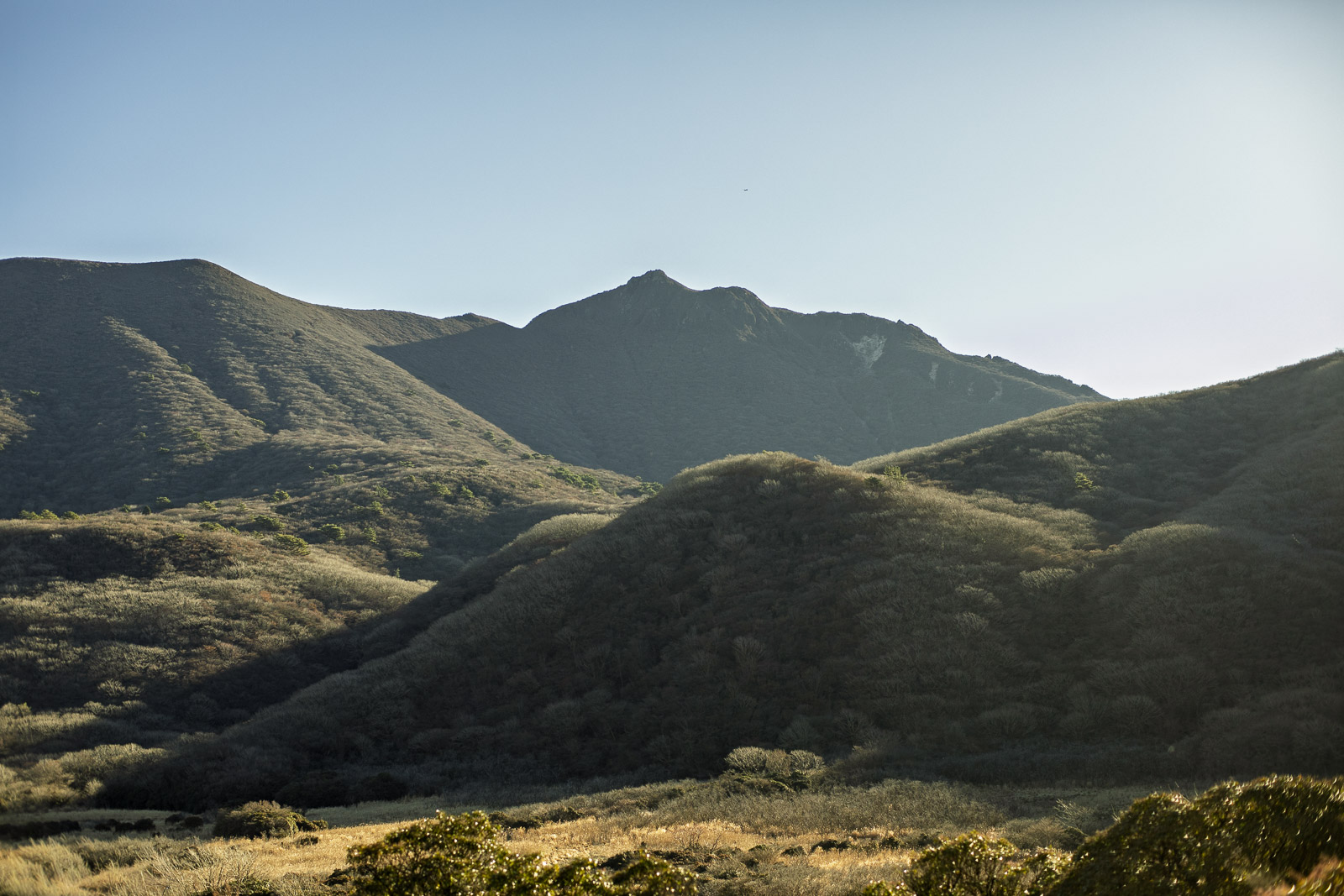
The view from Hokkein toward Mt. Taisen in the Kuju mountain range, on Japan’s southwestern main island of Kyushu.
Returning after retreating
ーWhen you’re training in the mountains, what do you wear on your feet?
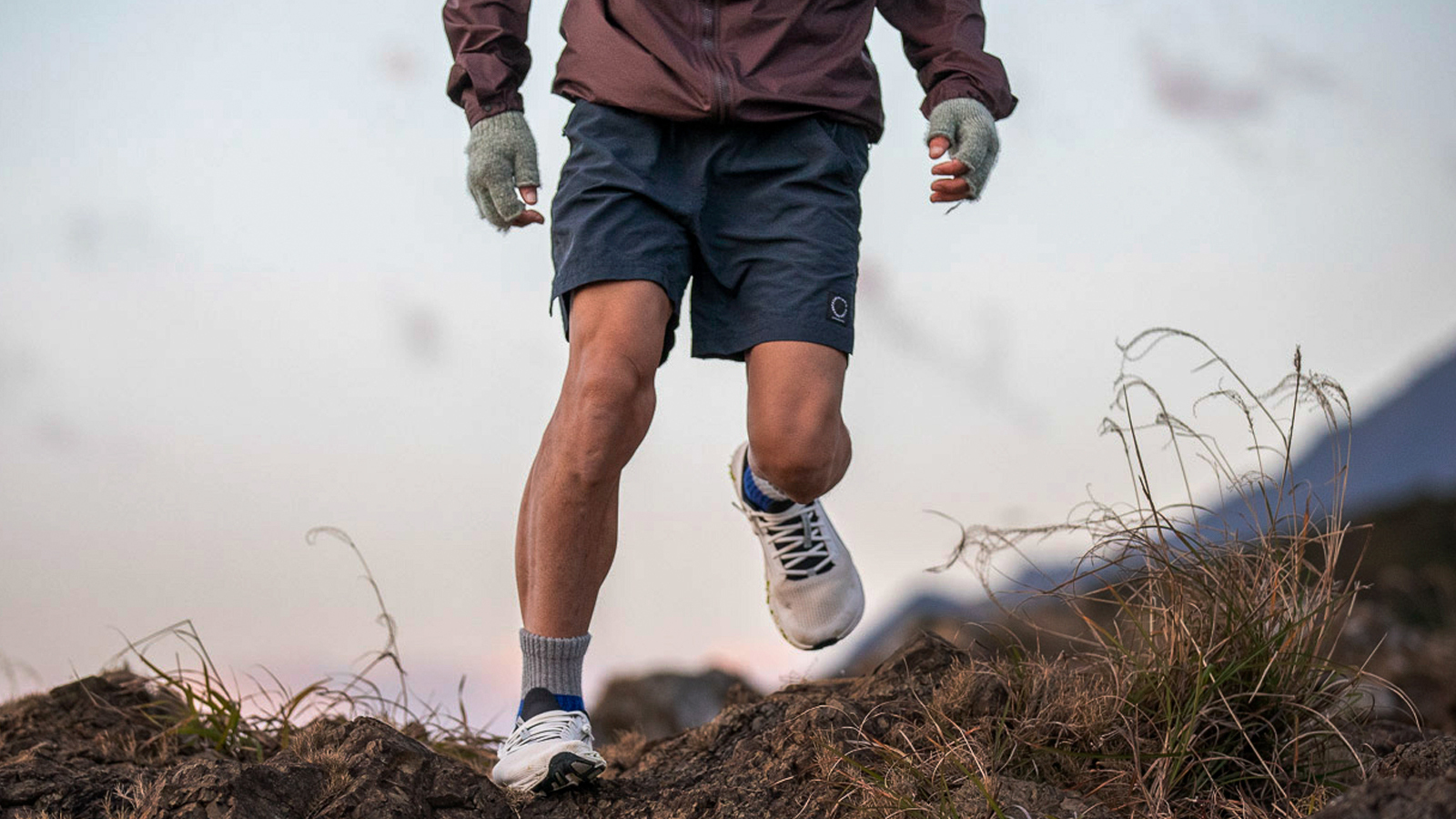
Tabi boots or straw sandals. I try to wear something with a sole that’s as thin as possible, so I can feel even small stones underfoot. If you’re not used to that kind of footwear, you might step on stones and hurt your feet.
I’m curious whether wearing tabi boots or hiking boots makes a difference in the fatigue in your feet. I never wear hiking boots, so I wouldn’t know.
ーThin-soled “barefoot” and zero-drop footwear or sandals have become more popular among hikers. But if you’re carrying a heavy pack or walking long distances, those can put a physical burden on your feet. Then again, in Nepal, I saw porters wearing sandals and carrying heavy loads up mountains of around 5,000 meters.
Sometimes I wear sandals in the mountains. There are times when it actually feels better than wearing shoes. Even when I’m not in the mountains and I’m wearing shoes with thick soles, I feel like the muscles and nerves in the soles of my feet are idle.
ーBeing nearly barefoot allows you to use your toes.
When I walk for a long time, sometimes my body moves while my mind feels like it’s empty ー a kind of meditative state. To make it easier to reach that state when you’re in the mountains, you have to pay attention to how your body connects with the ground. I think hikers probably experience this, too.
ーIn Vipassana meditation, there’s something called “labeling”.
Vipassana meditation practitioners meditate only while seated but also while walking. “Labeling” is about objectively observing the body’s sensations from one moment to the next. When I was staying in a hole for the art performance at documenta fifteen in Germany, I realized that the zazen way of sitting is well-suited to the structure of the human body.
Normally I would dig a hole deep enough for a person to stand in. But I had many people helping me and could not really ask them to keep digging, so the hole ended up being only deep enough for a person to lie down in. I could only either sit there or lie down, and my body felt terrible.
At that time, I had a very strange experience. I think posture had a lot to do with it. Posture is extremely important. When people talk about zazen, posture is key, and I finally understood why.
ーProper posture is key, whether you’re walking or idle.
When you sit zazen, you’re cross-legged with your hands folded in front of you for a long time. There is a reason for the position: It’s so you don’t damage your body.
That is why you can endure until your mind and body begin to change. Being able to stand upright also seems important. I also feel that the fact that human beings stand upright is very important. As we go about our lives, our senses become dulled.
ーI’m more aware of how I step when I’m hiking than when I’m walking around a city. I notice the smell of the forest or the rain much more strongly. There’s an awakening of the senses.
Yes, I feel that especially when I’m in the mountains foraging for plants around dangerous cliffs. Bears live nearby, and if you lose your footing, you could get seriously injured and even die. My father-in-law, who was also my foraging teacher in the mountains, once fell from a cliff and suffered a severe spine injury. Fortunately, he recovered and eventually went back to foraging. In the wilderness, you have to rely on your senses which tend to be dormant in everyday life. Before I head into the mountains, I do warm-up exercises, consciously putting weight on different parts of the soles of my feet to stimulate the nerves there. It makes me feel as though my body is re-balanced and more aligned.
I want to continue exploring the origins of art and performance, but I think it’s as important to me to return to my everyday life after a retreat and a nature walk. There may be something essential in the workings of the mind that comes out of moving between these worlds.
Reflections on Daizaburo Sakamoto’s stories
HIDEKI TOYOSHIMA
I have known Daizaburo Sakamoto for years. In the past, I have invited him to show his artwork at exhibitions that I have organized, and I have even helped produce some of his performance art.
Each time, I felt that my idea of hiking and Sakamoto’s practice of walking mountain paths was somehow fundamentally different. And yet there are some common elements, probably because when we’re surrounded by nature our senses are awakened in a way that’s different from how we go about our daily lives.
It was probably not a coincidence that Daizaburo mentioned cave paintings, a topic that Roger McDonald brought up earlier in this series. An altered state of consciousness is the common thread connecting the two. Daizaburo compared being secluded in caves to being the inside of a womb. That led me to wonder whether the tents we use in the mountains might also have the same effect.
When you crawl into a tent and zip it shut, even though there’s only a single layer of fabric between you and the outside, you occupy a separate space. You retreat into it. Maybe comparing a tent to a womb is an exaggeration, but it’s an interesting idea to consider the next time you crawl into your tent for the night.
Our conversation also touched on the meditative side of walking. Be sure to read Yamatomichi Journal editor-in-chief Masaaki Mita’s in-depth series on walking meditation. You’ll explore plenty of unfamiliar territory.
I have no plans on becoming a yamabushi anytime soon. But I will be thinking about Daizaburo and the yamabushi mindset from now on every time I’m in the mountains.