






#8 More Kindness Than I Could Carry
#8 More Kindness Than I Could Carry
Three weeks into his walk across Taiwan, Takaya Sasa is deep in the mountains of Alishan. His pack is lighter than ever, but the journey keeps giving him things to carry: tea, vegetables, snacks, conversations, songs, and more kindness than he knows what to do with.
In this chapter, Sasa moves through tea fields and mountain villages, receives generosity at nearly every turn, and discovers how easily a day’s plan can be changed by the people met along the way. Then, by chance, he arrives in a remote village on the final night of a sacred Tsou festival — an encounter with the songs and dances he had long dreamed of witnessing.
A dog bite in the tea fields
On the morning of the eleventh day of my walk across Taiwan, I woke on the muddy sand of a riverbank.
Under normal circumstances, I probably would have looked at myself and thought, How on earth can you sleep in a place like this? But I was already deep in travel mode, and my sense of what was normal had shifted. My tolerance for the outside world had widened. Walking from morning to night under the sun, sleeping wherever I could — little by little, the boundary between myself and the world around me had begun to blur.
The sun was already climbing.
Time to go.
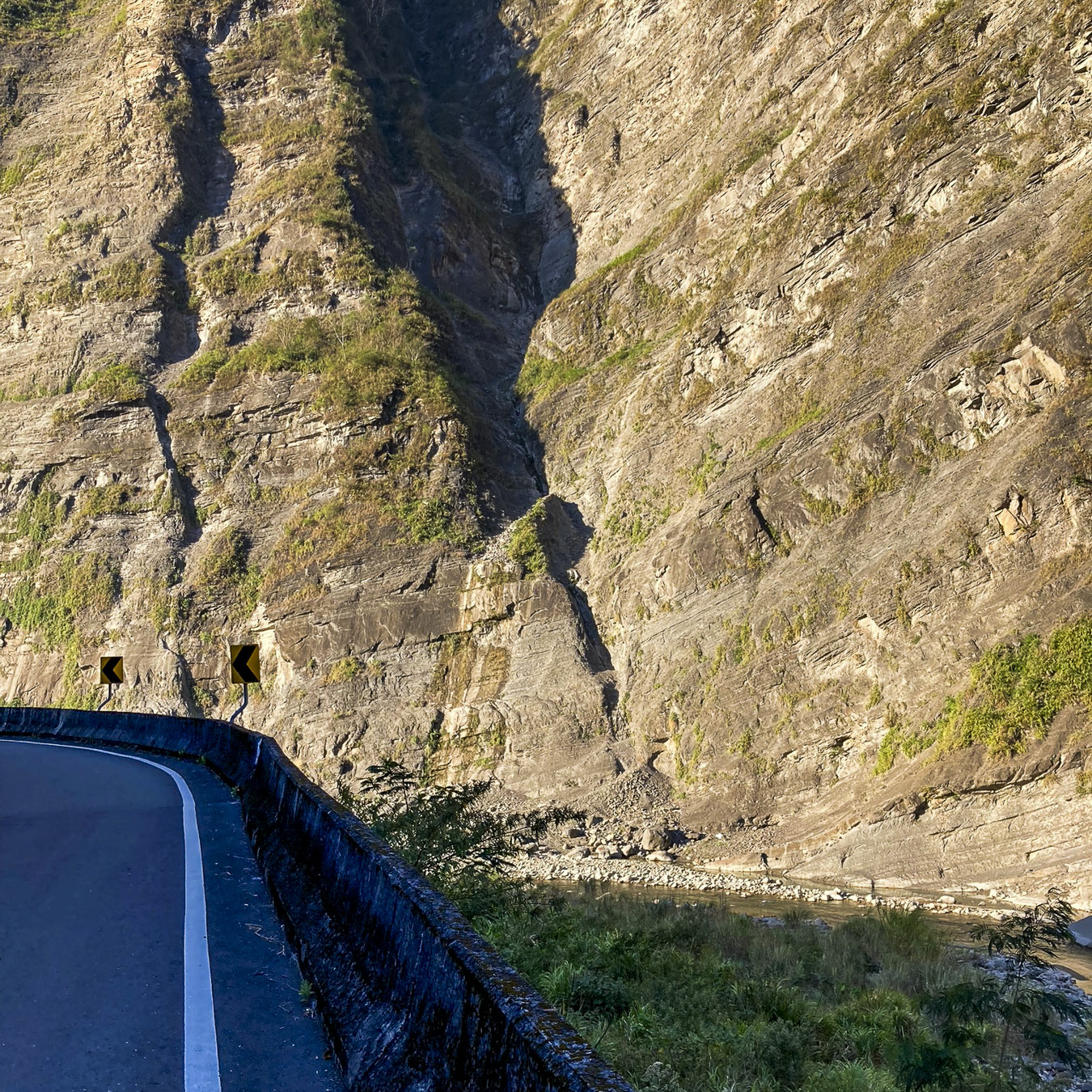
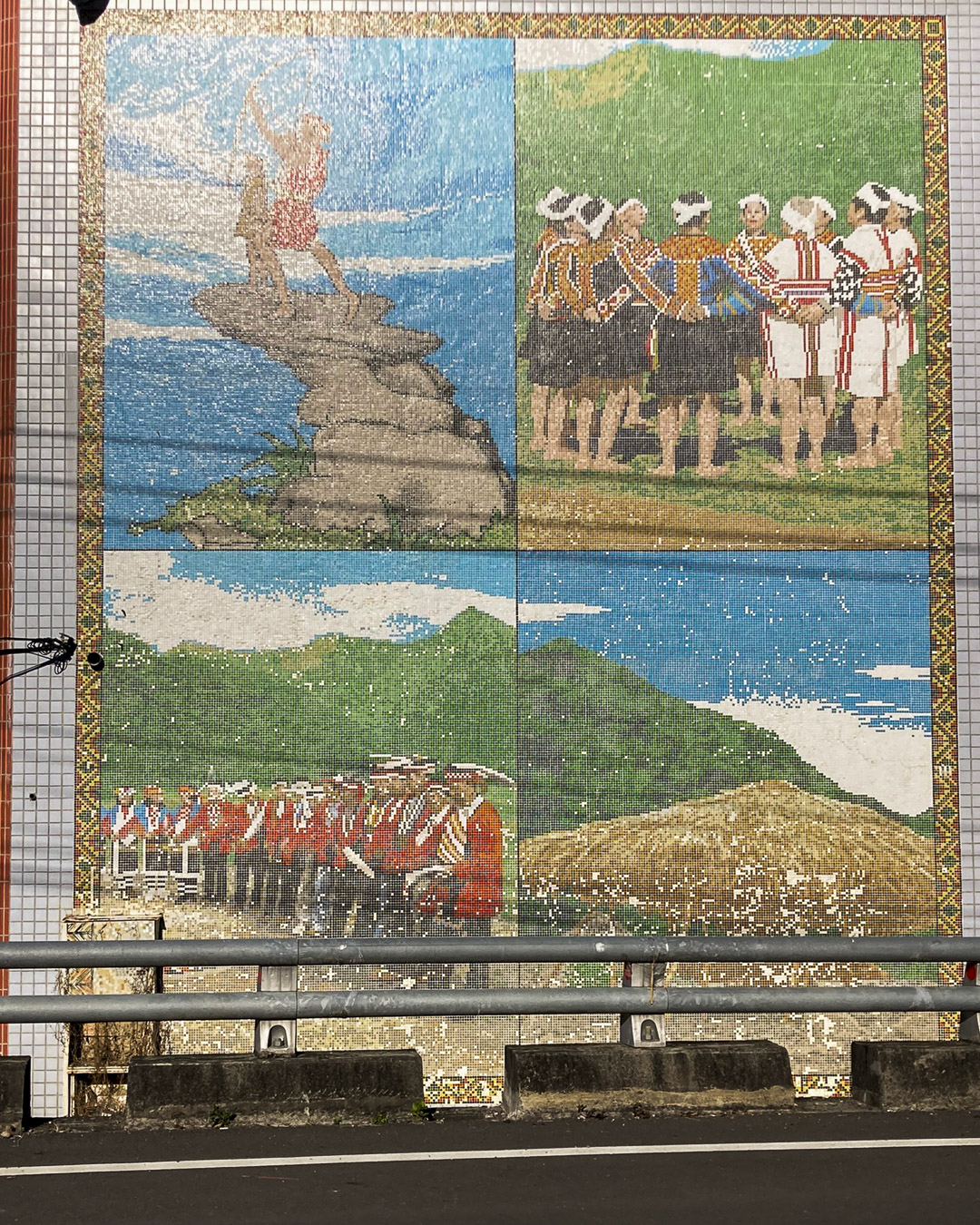
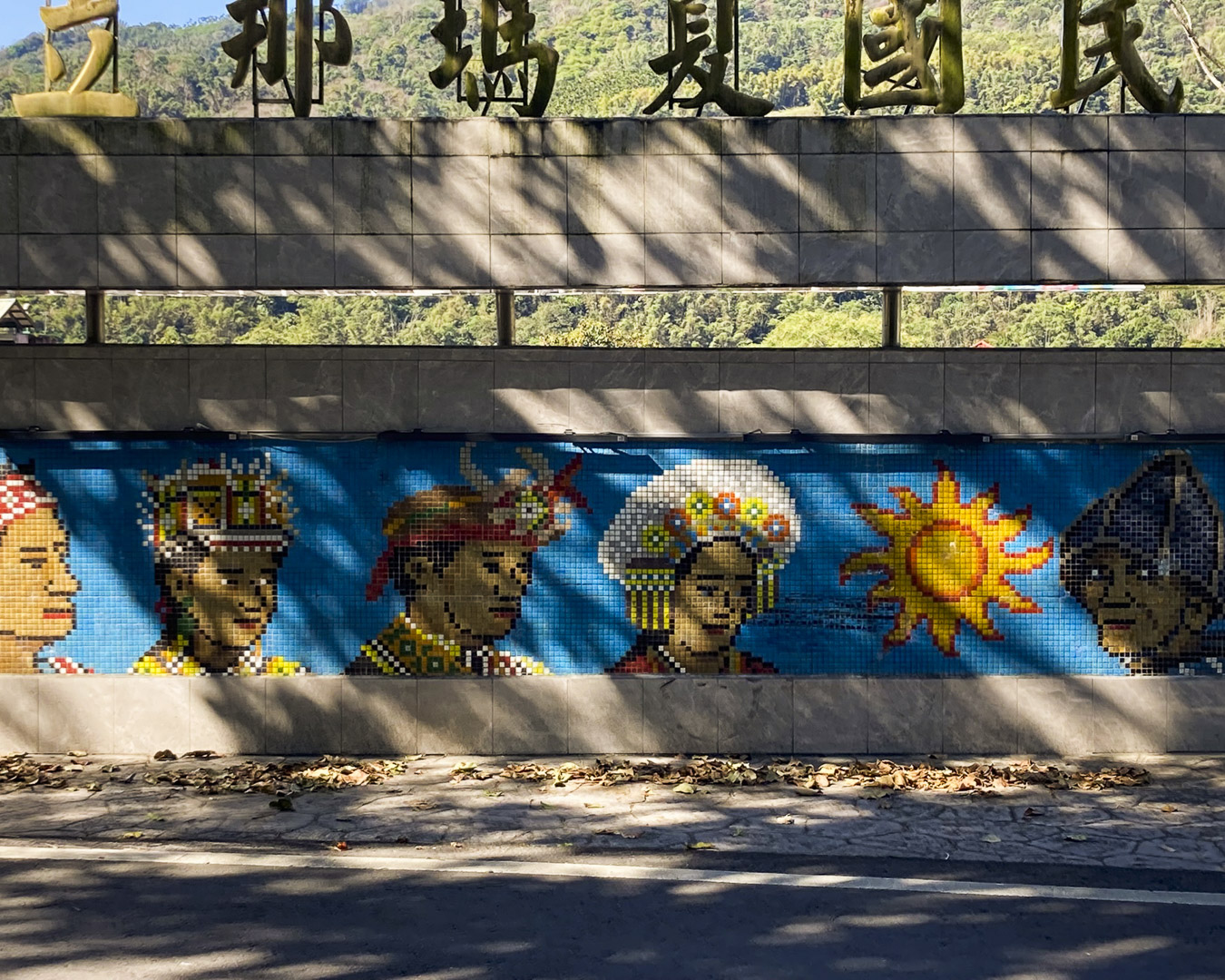
Looking at the map, I realized I was entering the Alishan mountain area, famous even in Japan for its tea. In the villages along the way, I often saw murals of Taiwan’s Indigenous peoples painted on walls. This, it seemed, was also Indigenous land.
Around noon, I passed through a village and stopped at a small restaurant by the road. The woman who ran the place brought me a menu. I pointed to the characters 便當 and asked what they meant.
“It’s a boxed set meal,” she told me. “You get rice and several different side dishes.”
A set meal? Perfect. How had I not known about this earlier?
What arrived on the tray was exactly what I had been hoping for: rice, vegetables, and several small dishes. After days of piecing meals together on the road, the pleasure of eating a proper, varied meal alone was almost overwhelming.
I ate with real joy, thinking, I wish I’d discovered this sooner.
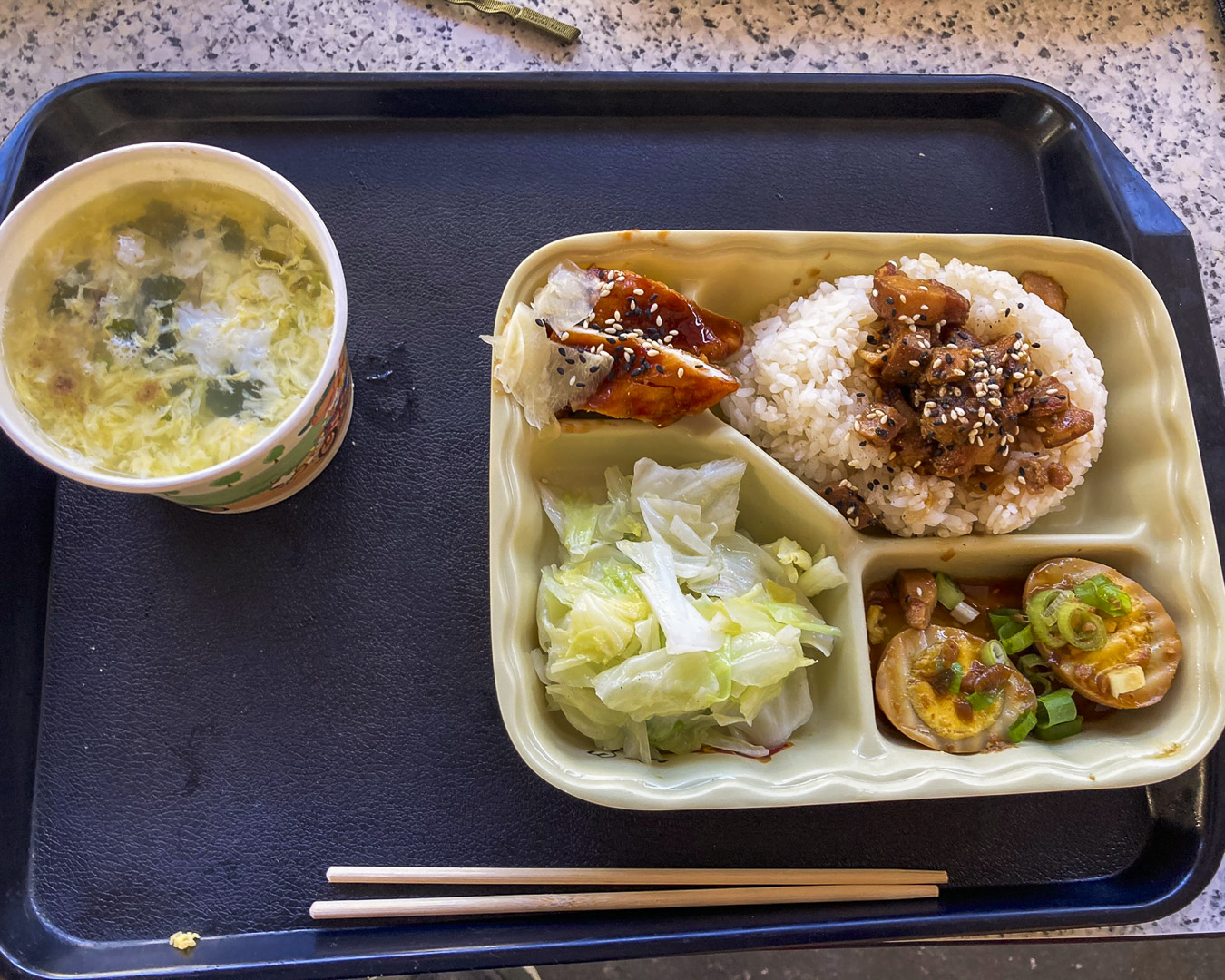
Once my stomach was full, my energy came back. The woman who ran the restaurant seemed quietly pleased to see me eating so heartily, as if the food filling me had filled something in her too.
It was a small thing, but after walking alone all morning, I felt it. Not as conversation exactly, and not as hospitality in any grand sense. More like the simple warmth of being fed, and of someone being glad that you had eaten well.
That is one of the strange things about traveling on foot.
A person’s expression. A word. The smallest sign that someone has noticed you.
In ordinary life, it might pass without much notice. But on the road, it can stay with you.
It reminded me of walking the Shikoku pilgrimage years earlier.
One evening, I was trudging down a long hill by the sea, exhausted from the day, head lowered. A high school girl passed by on her bicycle on her way home and said, “Keep up the good work!”
I looked up, startled, and answered with a smile, “Thank you.”
That was all. Just a few words. But something tight inside me loosened. Watching her ride away into the evening light, I felt myself come back to life.
That small memory stayed with me as I moved on through the afternoon. The road carried me into tea country, where rows of tea bushes spread across the slopes in every direction. Coffee trees appeared here and there too, their branches heavy with fruit, and I found myself wondering whether tea and coffee liked similar conditions. If tea grew around my home in Japan, could coffee grow there too?
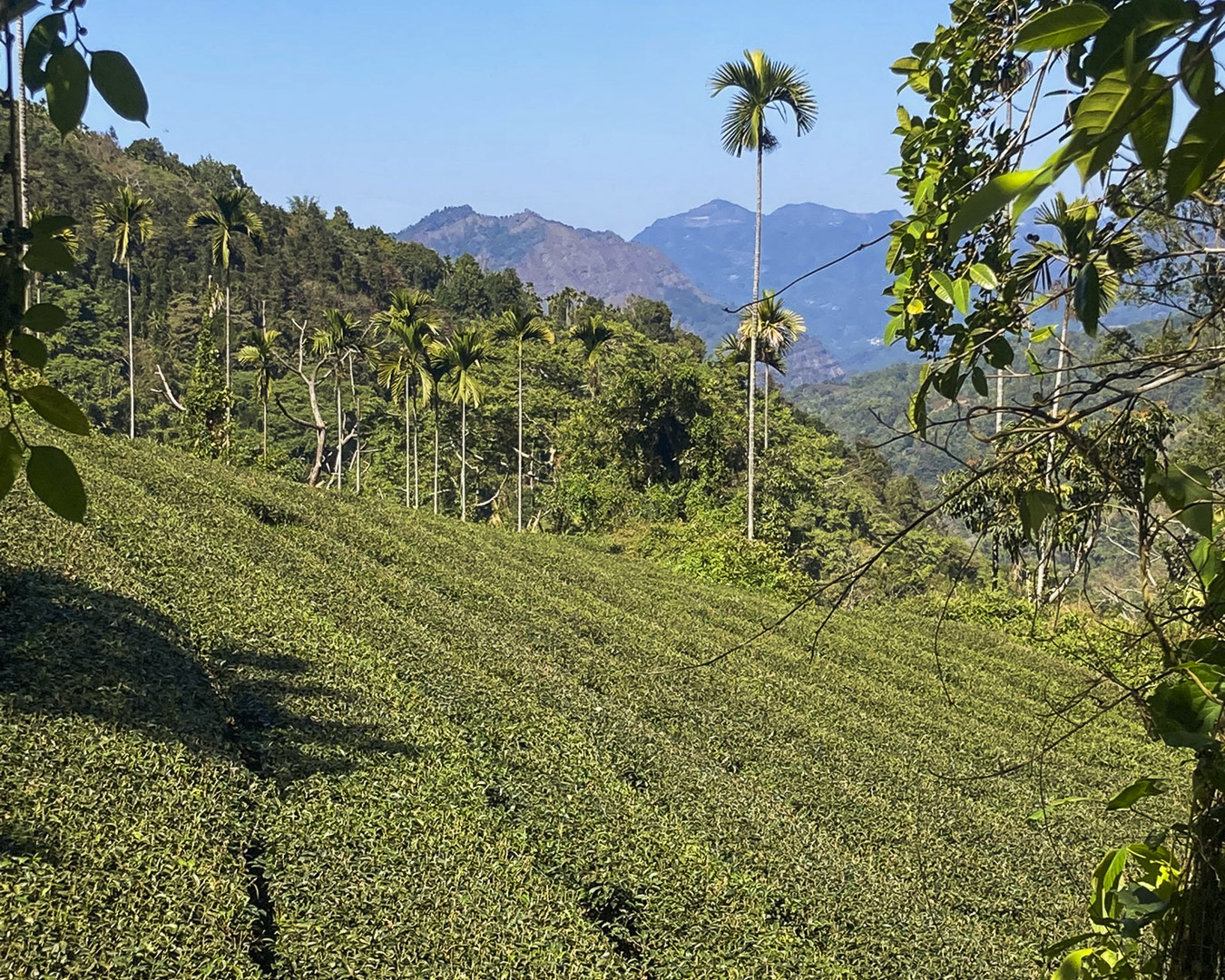
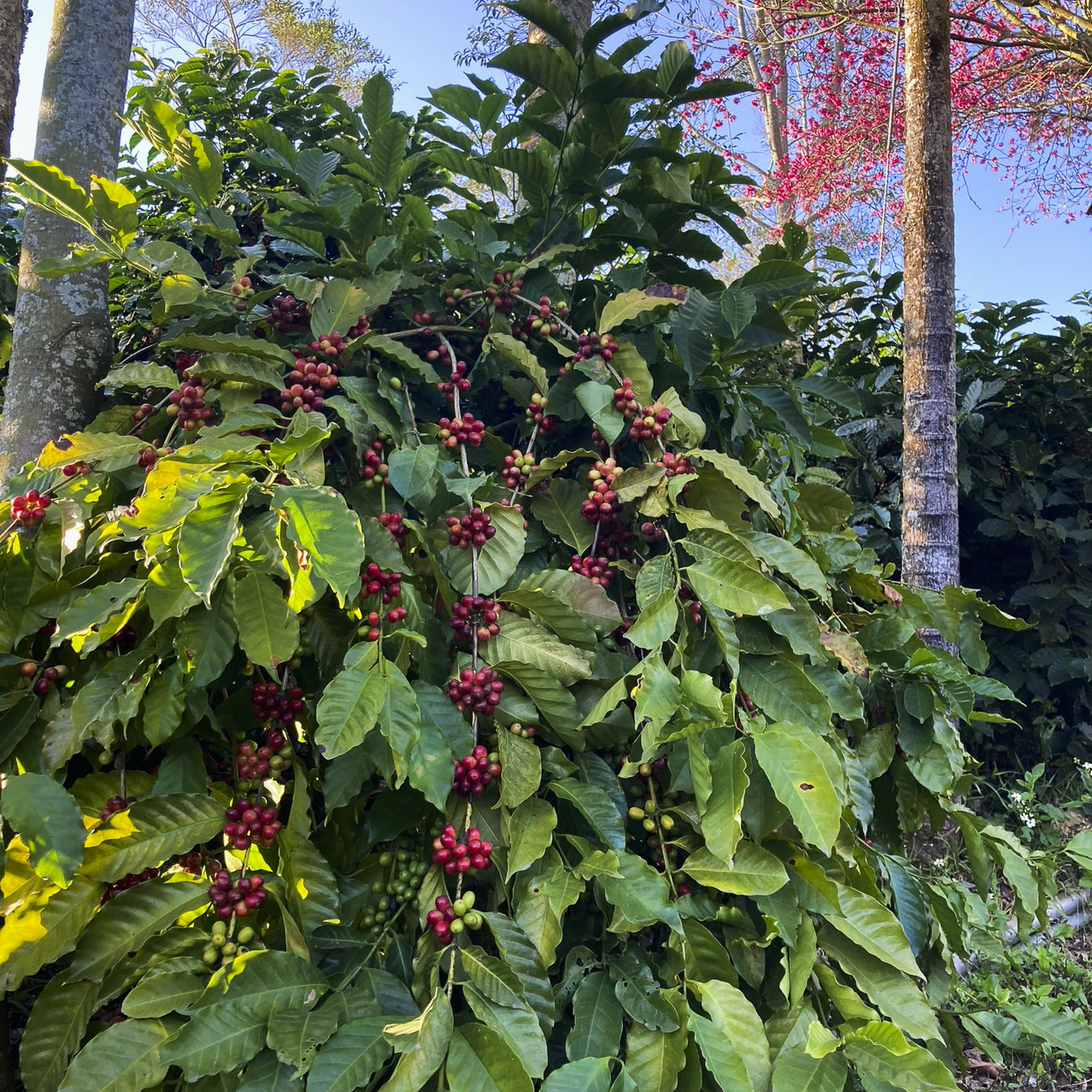
It was the kind of thought that comes easily when you are walking well — the body moving, the mind wandering, the landscape opening one question after another.
Then I saw a café run by a tea farm and decided to stop.
A good place, I thought, for a short rest.
Instead, I got bitten by a dog.
It was entirely my fault. Several dogs had gathered around my feet, but I was distracted, talking with the person who had come out to greet me. Without thinking, I planted my trekking pole right in front of one of the dogs.
The metal tip clicked against the ground.
Startled, the dog lunged and sank its teeth into my ankle.
The family who owned the place was mortified. They apologized again and again. But I love dogs, and seeing the dog being scolded made me feel bad too. I felt bad for the family, who kept apologizing. I felt bad for the dog. I felt bad for having been careless in the first place.
So I just kept gesturing, “It’s okay, it’s okay.”
They disinfected the wound carefully and told me the dog had been vaccinated for rabies. Surely it would be fine.
In the end, as an apology, they gave me a generous amount of tea from their farm. It turned out to be delicious — and it could be brewed cold, which made it a real gift for the rest of my walk.
The family still looked terribly sorry as I said goodbye and started walking again.
My ankle hurt, but I could walk.
And if I could walk, there was no problem.
That evening, I realized the wound was in just the wrong place. When I sat cross-legged to meditate, it pressed against my other foot or the ground and hurt. For a while, I wouldn’t be able to meditate sitting that way.
That, more than anything, was the problem.
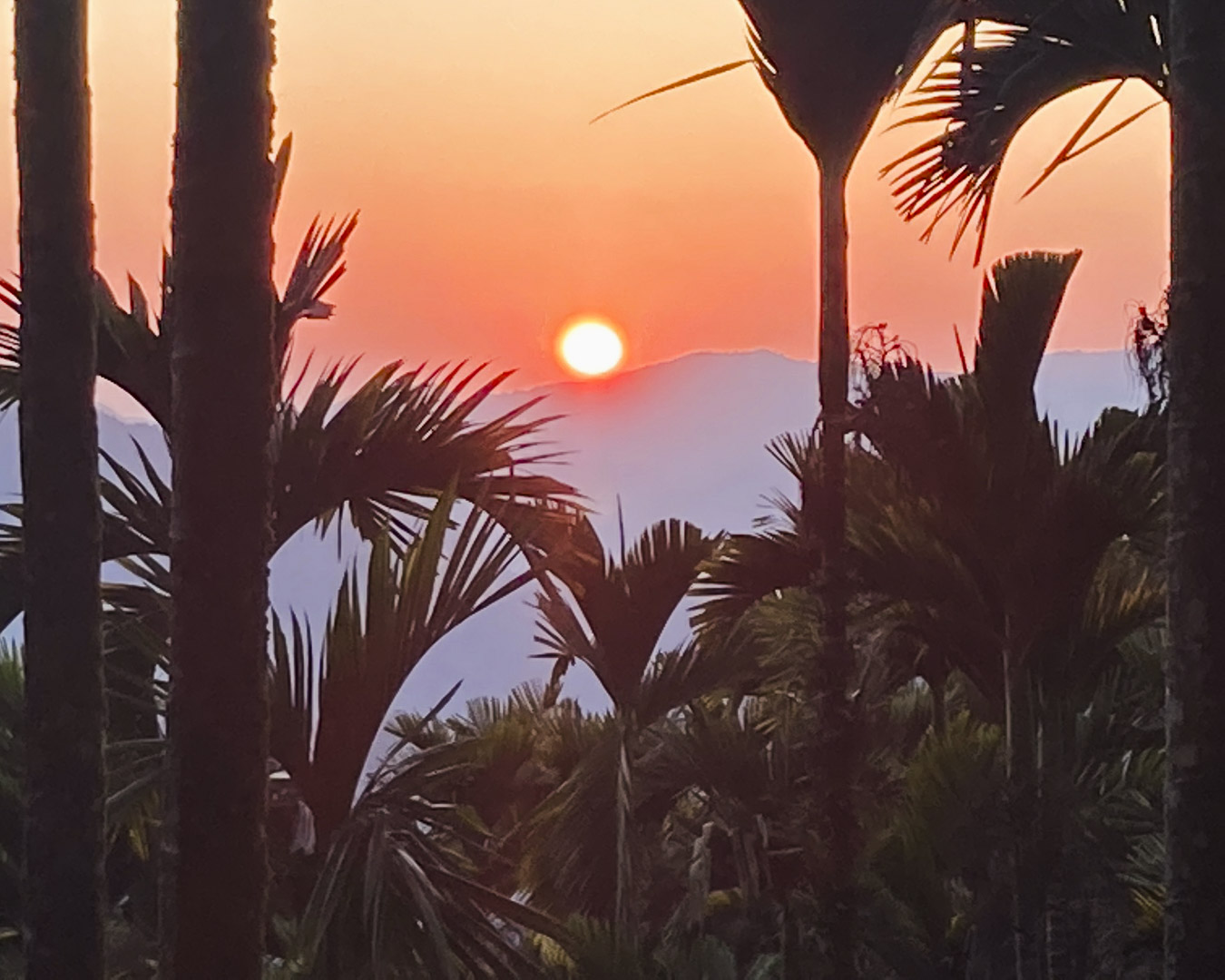
By evening, I was walking through a grove of palms. Far from any houses, it seemed like a safe place to camp. I found a patch of ground that was flat, soft, and just right.
Finding a good place to sleep brings an enormous sense of relief. Just that alone is enough to make you feel grateful, though you may not know exactly who you are thanking.
Especially after the poor campsite I had slept in the night before.
It had been another long day.
More kindness than I could carry
I woke feeling good in the forest.
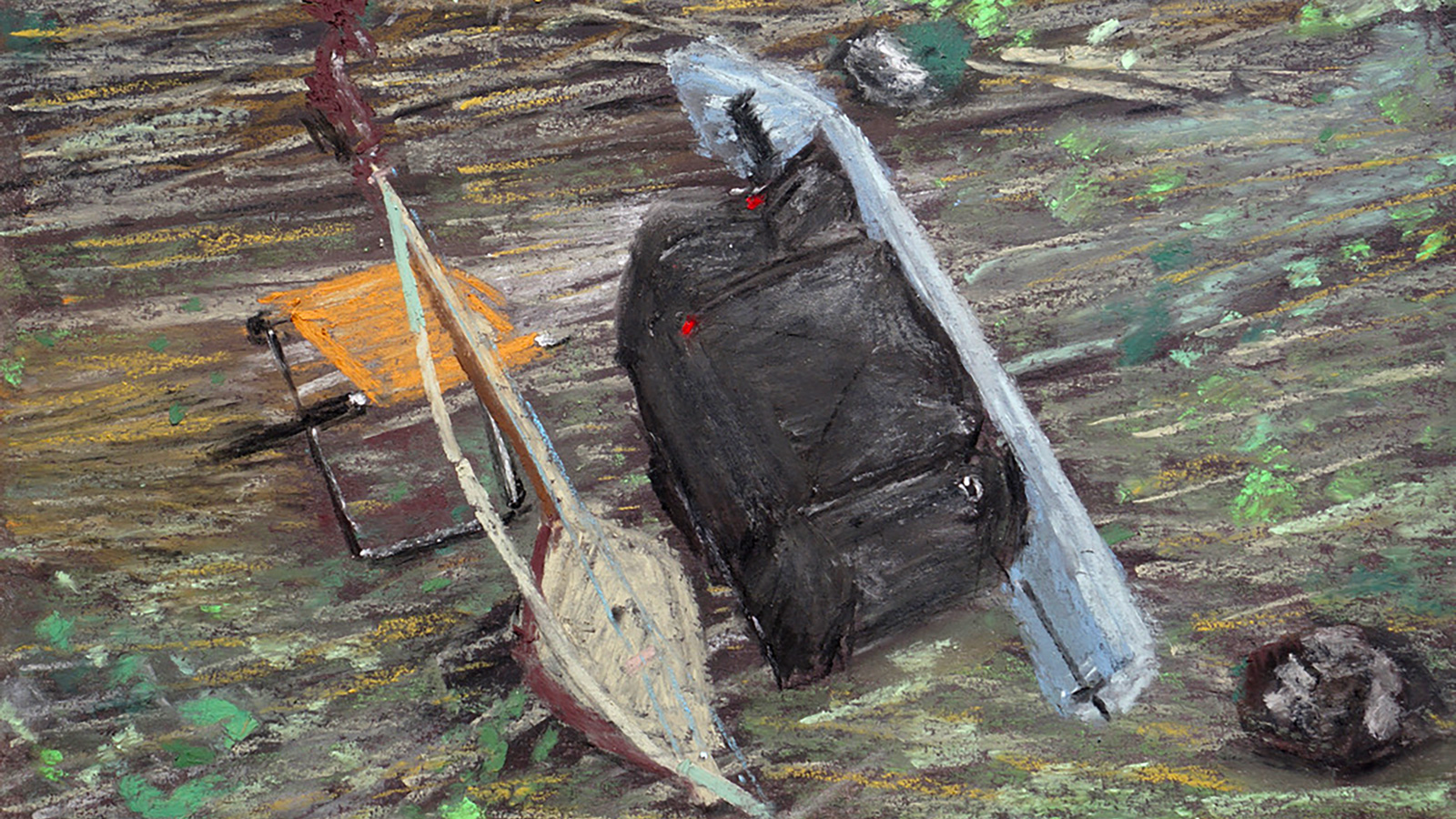
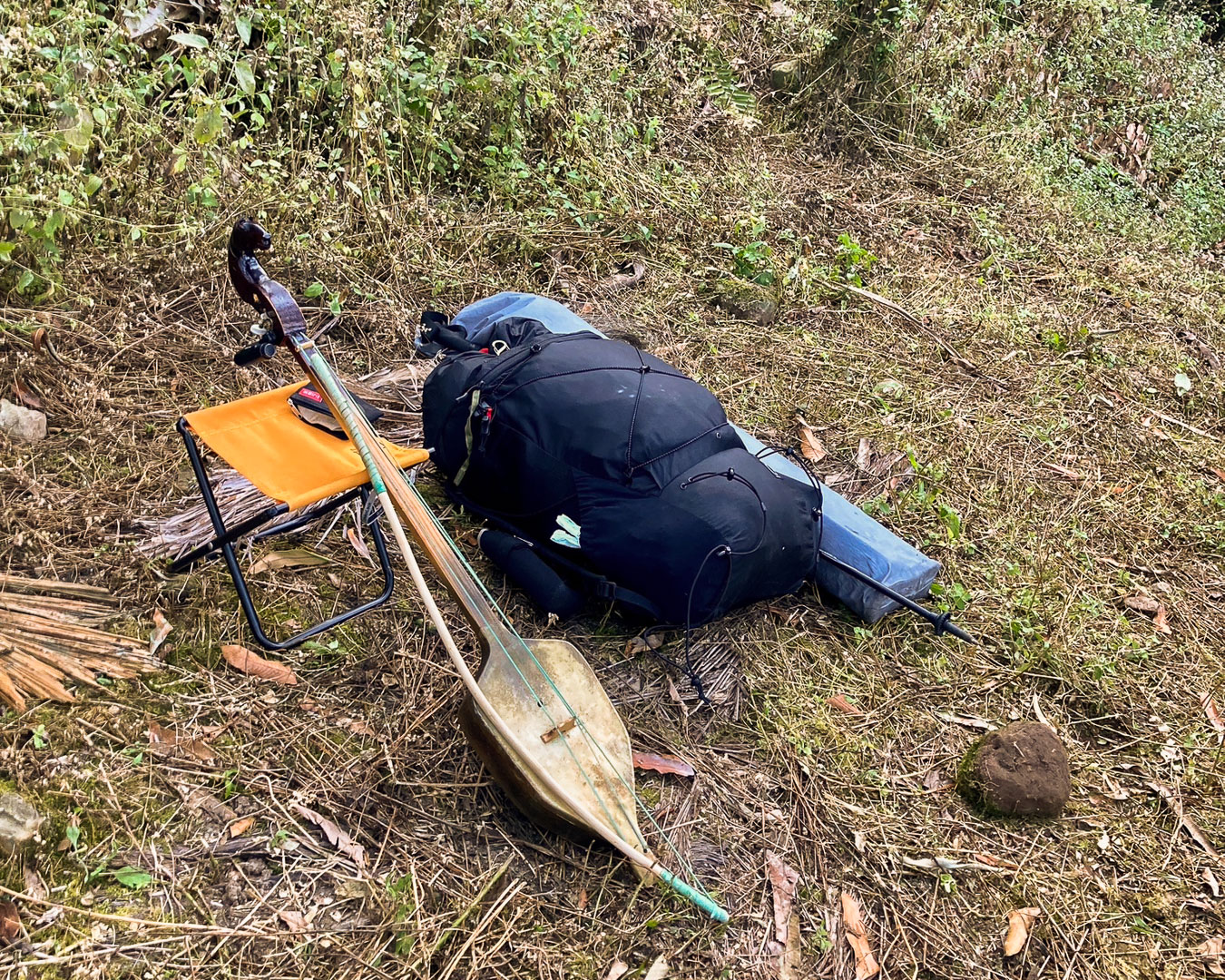
After taking down the tent and packing everything away, I realized I was in the kind of place where I could sing out loud without worrying about anyone seeing me. So I unfolded the little chair I had picked up along the way, sat down, played the morin khuur, and sang at full volume.
I had bought the chair thinking it might be useful if I found a chance to busk, but so far it had hardly seen any use. And honestly, it was heavy. I had started to wonder whether I should let it go.
Still, being able to sing loudly first thing in the morning felt wonderful.
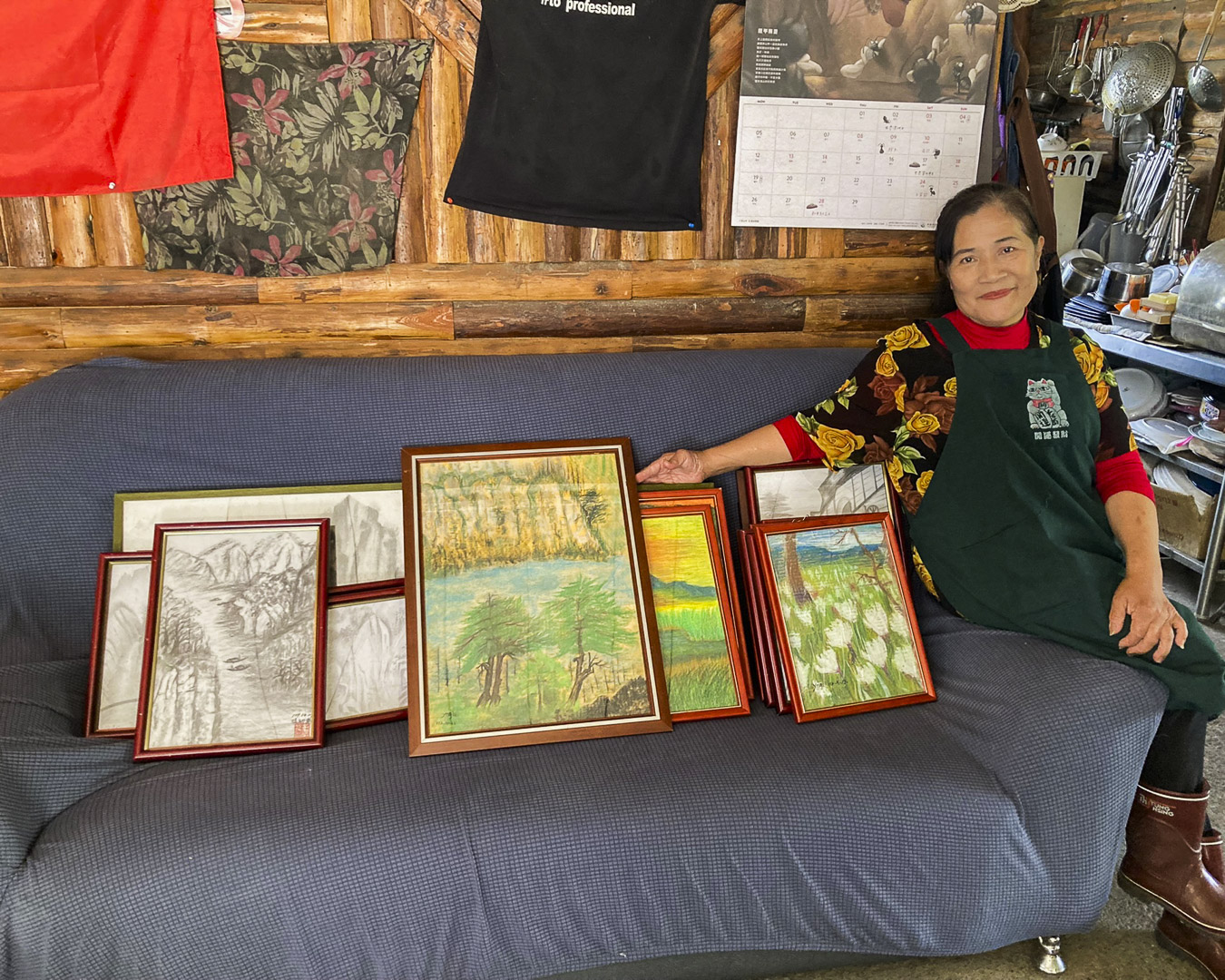
Later, I came down from the mountain into a village and stopped at a small shop to buy bananas and other food. The place also seemed to run as an inn, and I ended up talking with a young Taiwanese man who was staying there and the woman who ran the place.
She told me she liked to paint and showed me some of her work. They were simple, gentle pictures, and I found myself drawn to the feeling in them — the brushwork and sensibility, so different from my own.
I have only started drawing in the last few years, but one unexpected gift of making art has been learning to enjoy looking at art too.
This was how my walk through Taiwan kept going: I would meet someone, stop, talk, receive something, play a song, and before I knew it, I had barely moved forward at all.
But I liked traveling this way.
It was fine if I did not make it as far as I had hoped that day. I liked this kind of travel — loose enough to stop, and slow enough for the people I met to change the shape of the day.
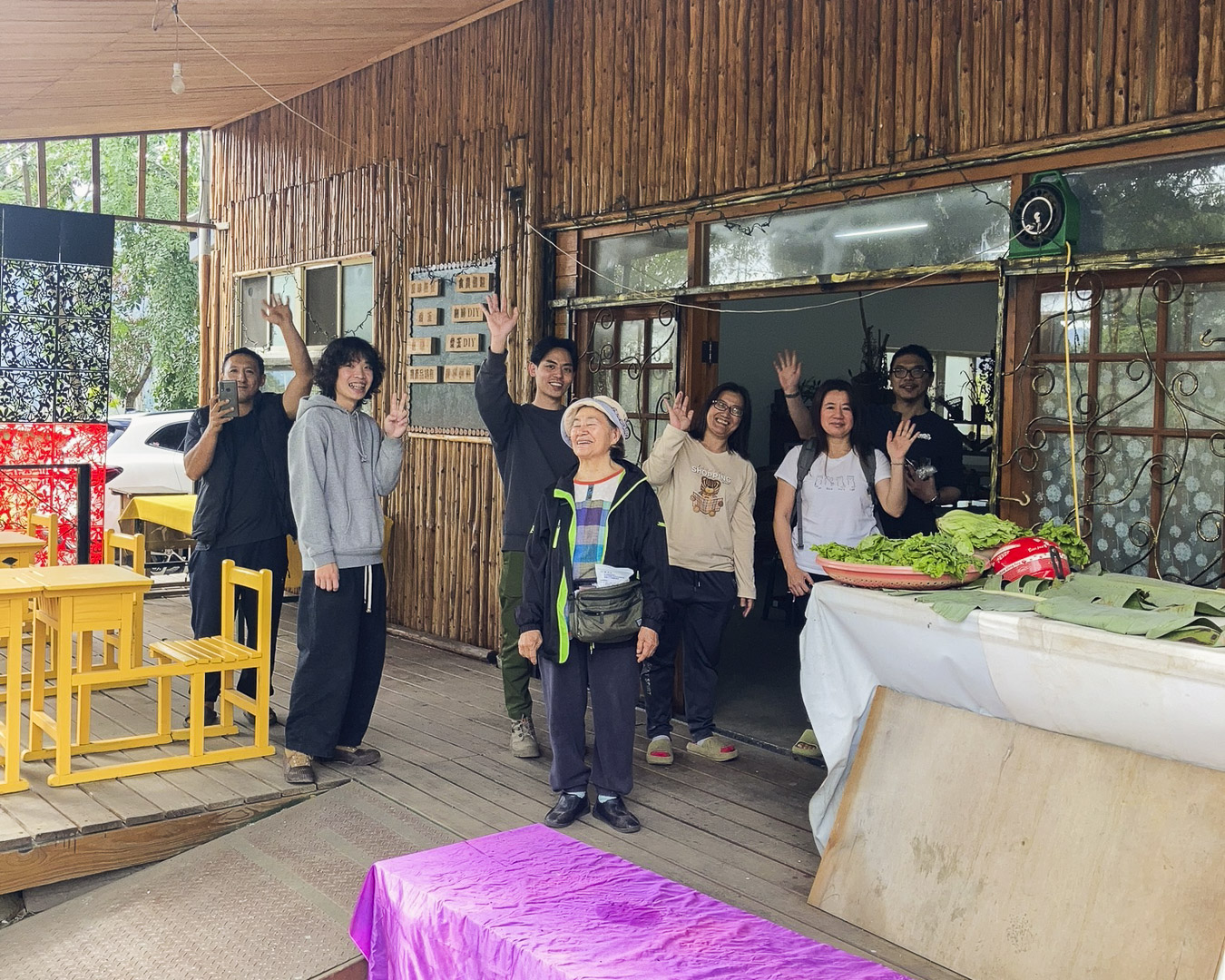
Later, what began as an attempt to buy organic vegetables turned into lunch with a group of local people: mountain greens, river fish, vegetables they had grown themselves, and more kindness than I knew how to receive. When I finally left, they sent me off with far more food than I had bought.
By the time I set out again, full and grateful, the road was already leading deeper into the mountains. I had let the day be changed by others, but now I needed to walk.
That night I slept in a small shelter beyond the edge of a forested park.
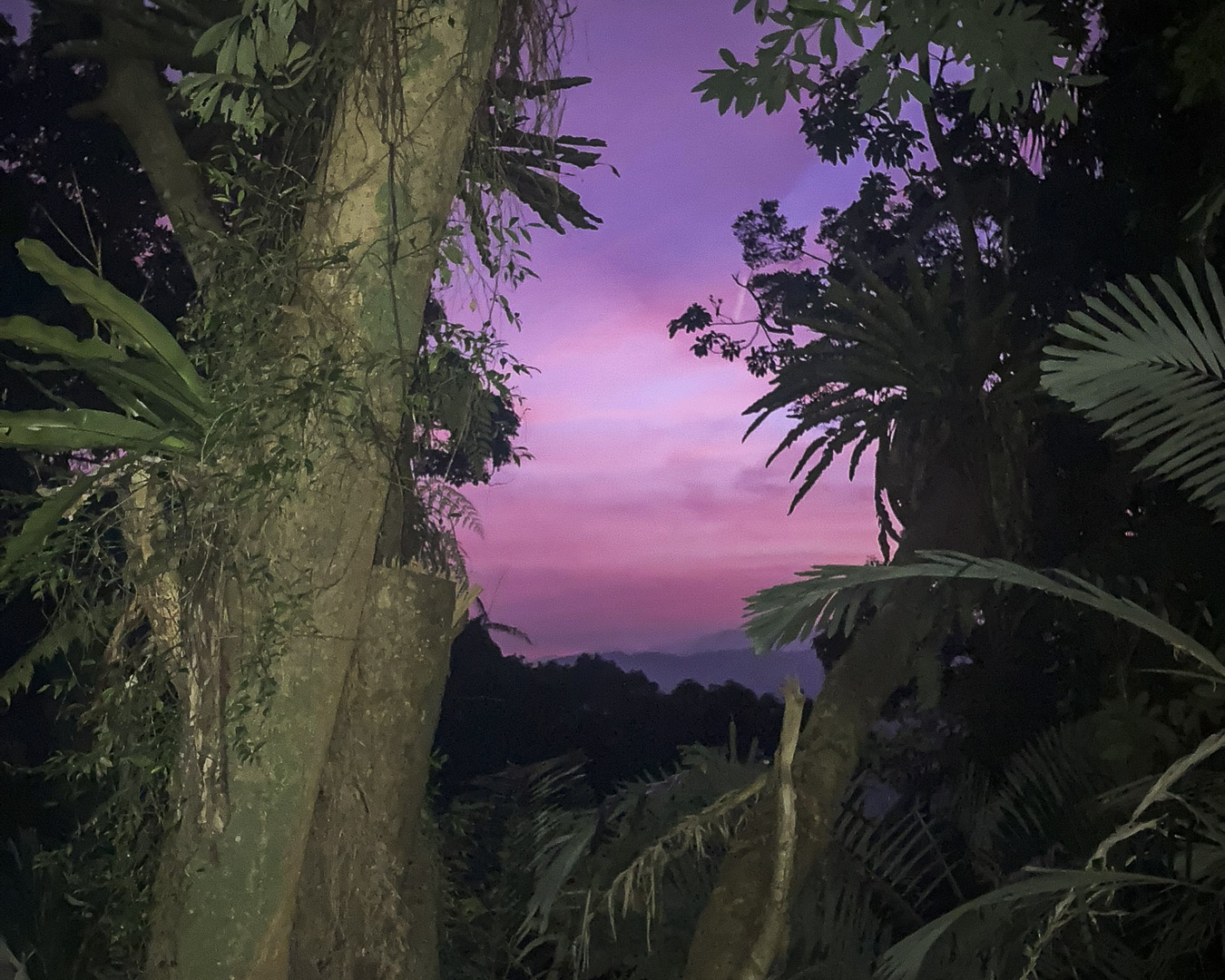
By morning, the whole world had changed again.
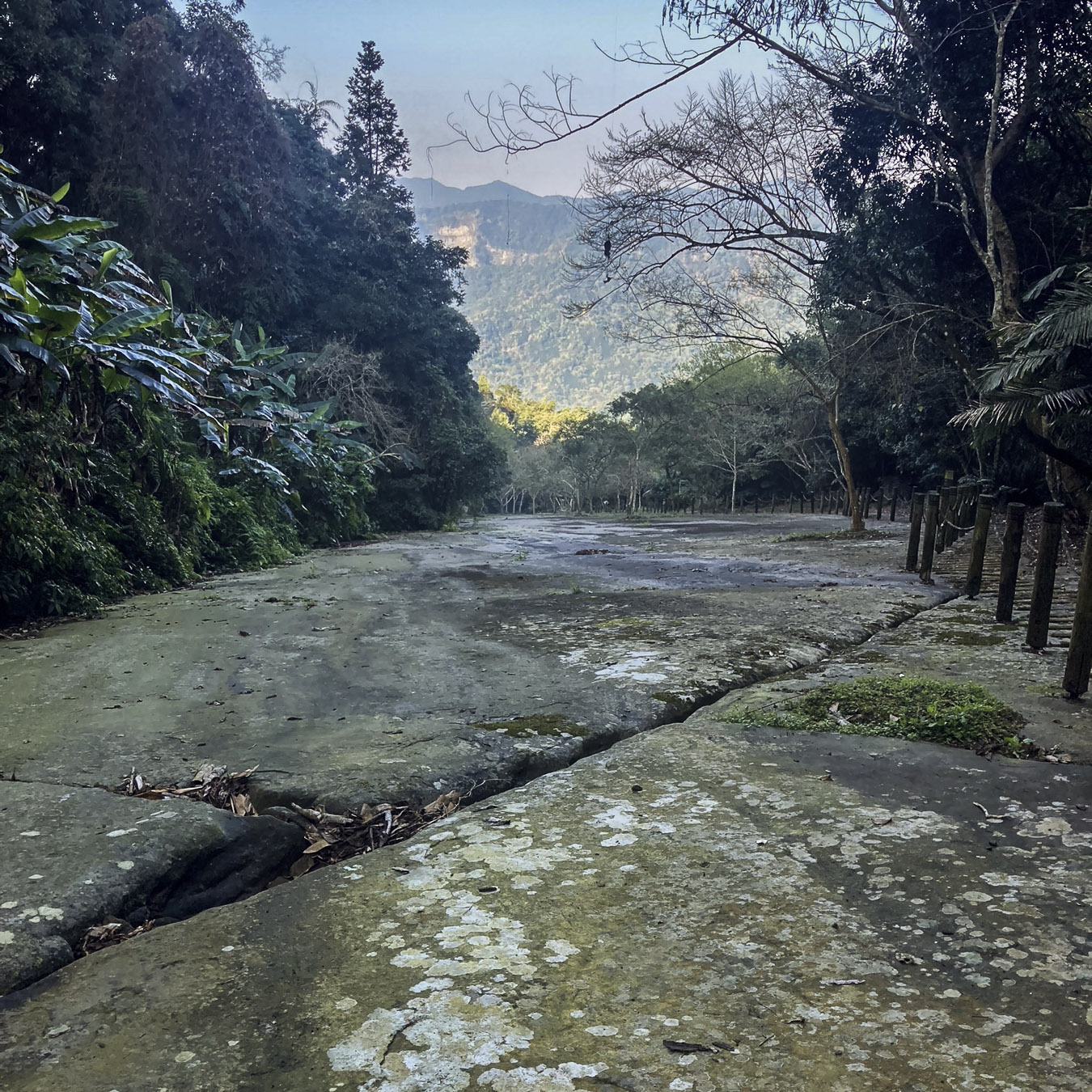
I walked through bamboo groves, soft light filtering through the leaves. Before long, the ground beneath my feet became broad sheets of exposed rock. It felt completely different from walking on soil. The hardness of the stone came up through my soles, waking parts of my body that ordinary roads never reach. Perhaps our bodies need many kinds of ground beneath them.
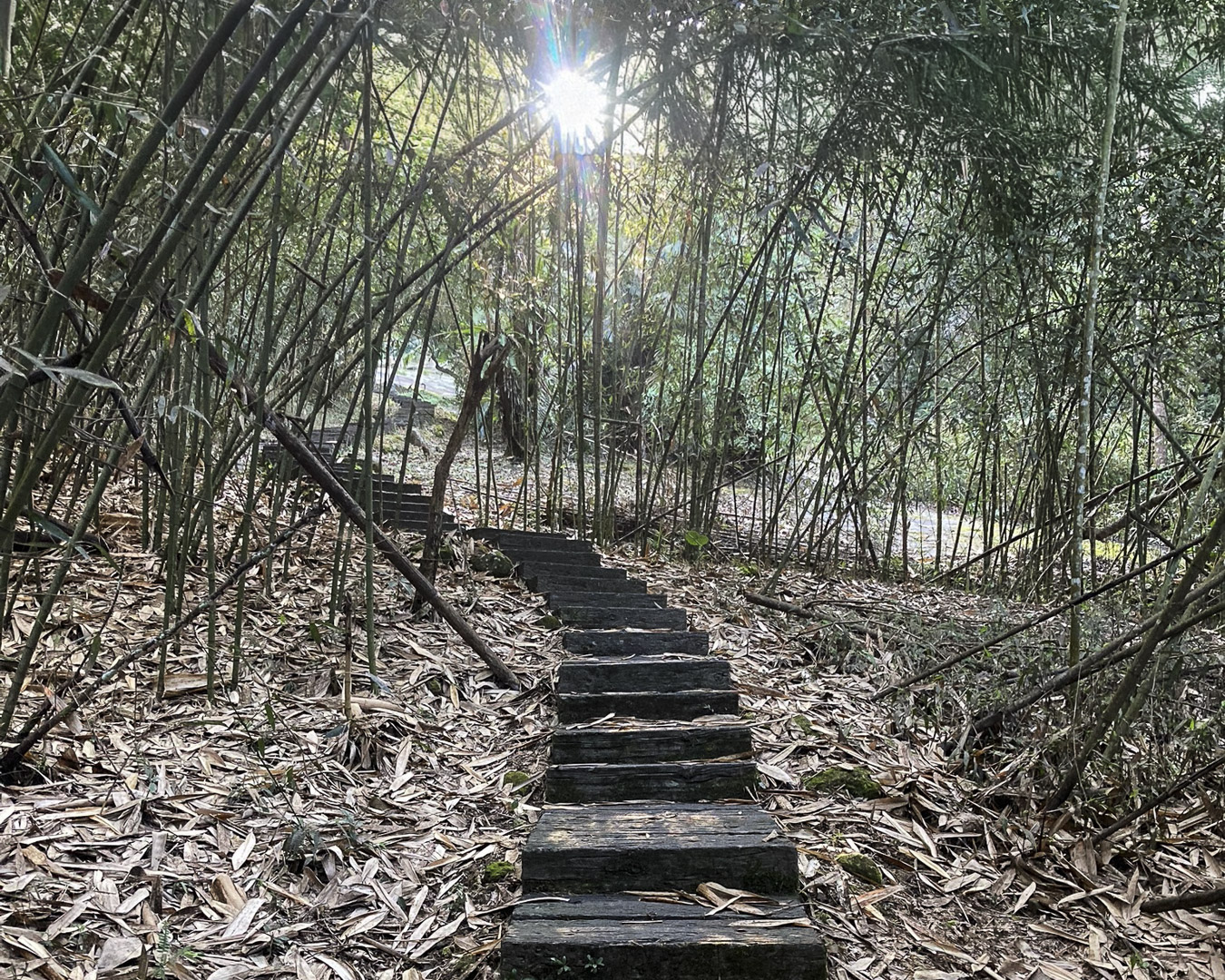
Walking over stone this large is not something I often experience in daily life. It felt completely different from walking on soil. The hardness came up through the soles of my feet, waking parts of my body that ordinary roads never reach.
Perhaps our bodies need many kinds of ground beneath them.
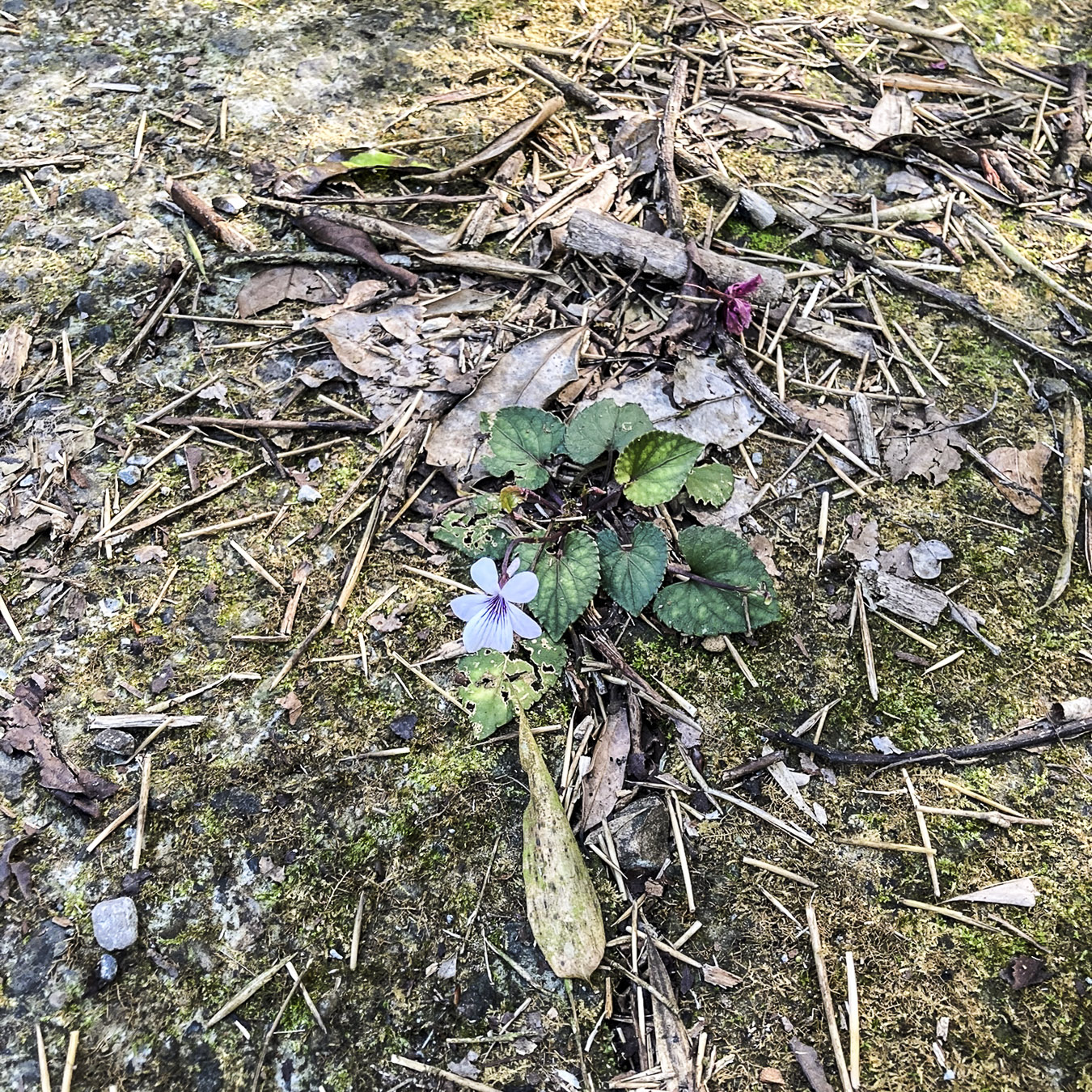
A little way off the trail, I found a wide face of rock and wandered over to explore it. In one of the cracks, a tiny flower was blooming.
Farther on, I met a group of hikers coming the other way. They were members of a hiking club from different parts of Taiwan, and when they found out I was Japanese, they began telling me about the Japanese Alps, the Kumano Kodo, and the places in Japan they hoped to walk. They gave me candy, we took a photo together, and before we parted, one woman gave me her contact information.
“If you come to Taichung, please get in touch,” she said.
After finishing my walk, I did. She welcomed me just as warmly as she had promised, and we spent several enjoyable days together in Taichung. Even now, after returning to Japan, we still keep in touch.
Encounters like that become part of your life’s real wealth.
In Taiwan, I received more kindness than I knew how to hold…
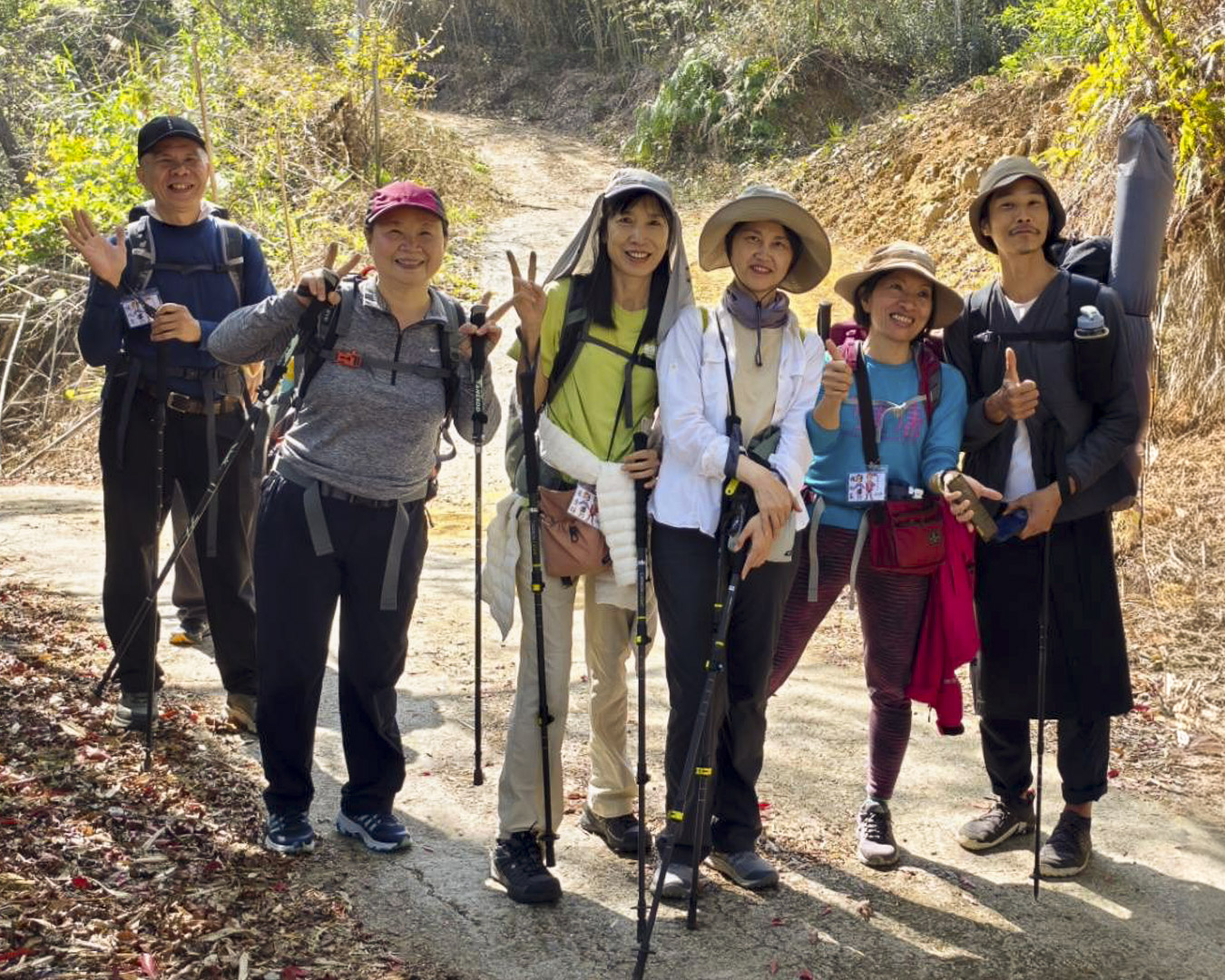
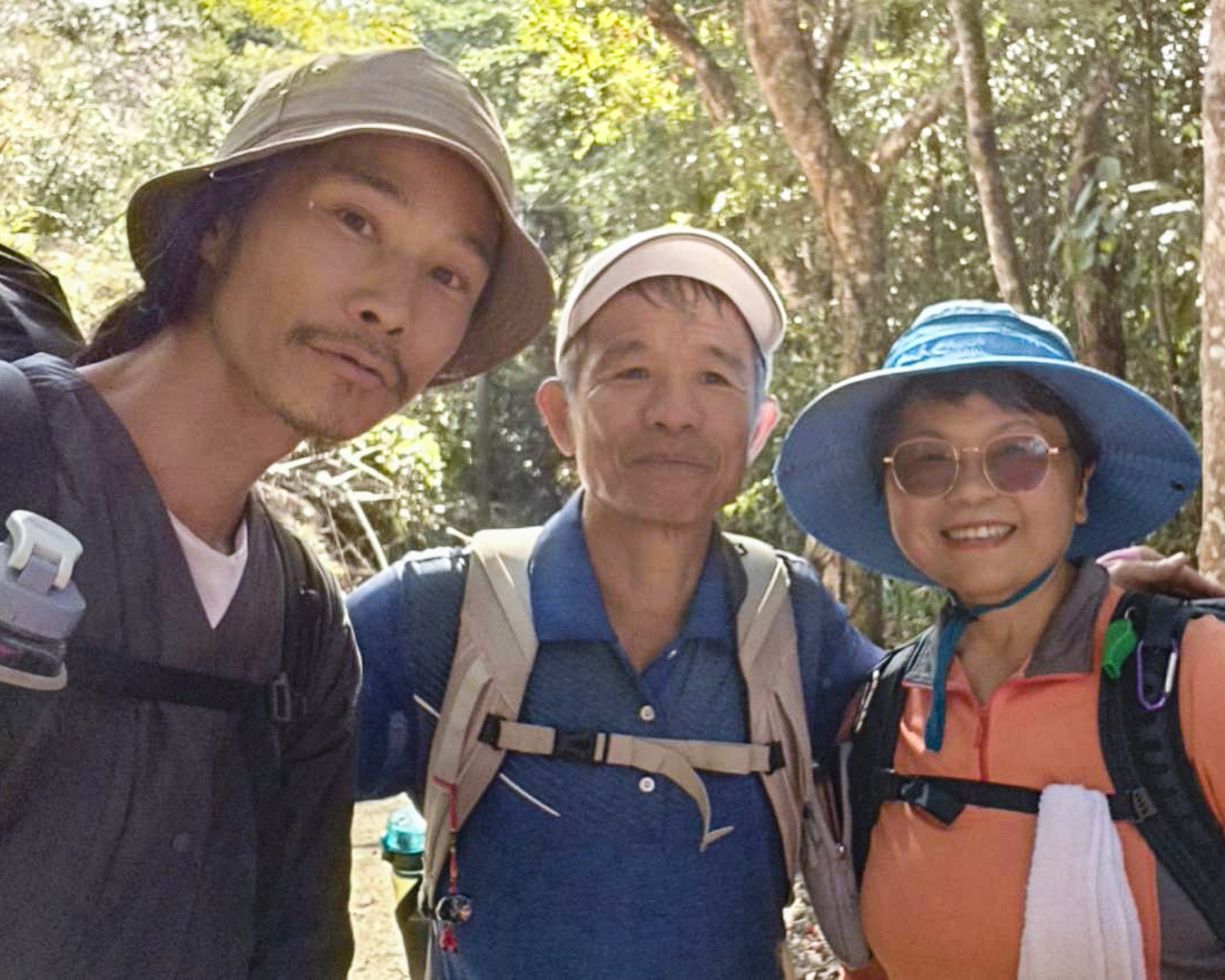
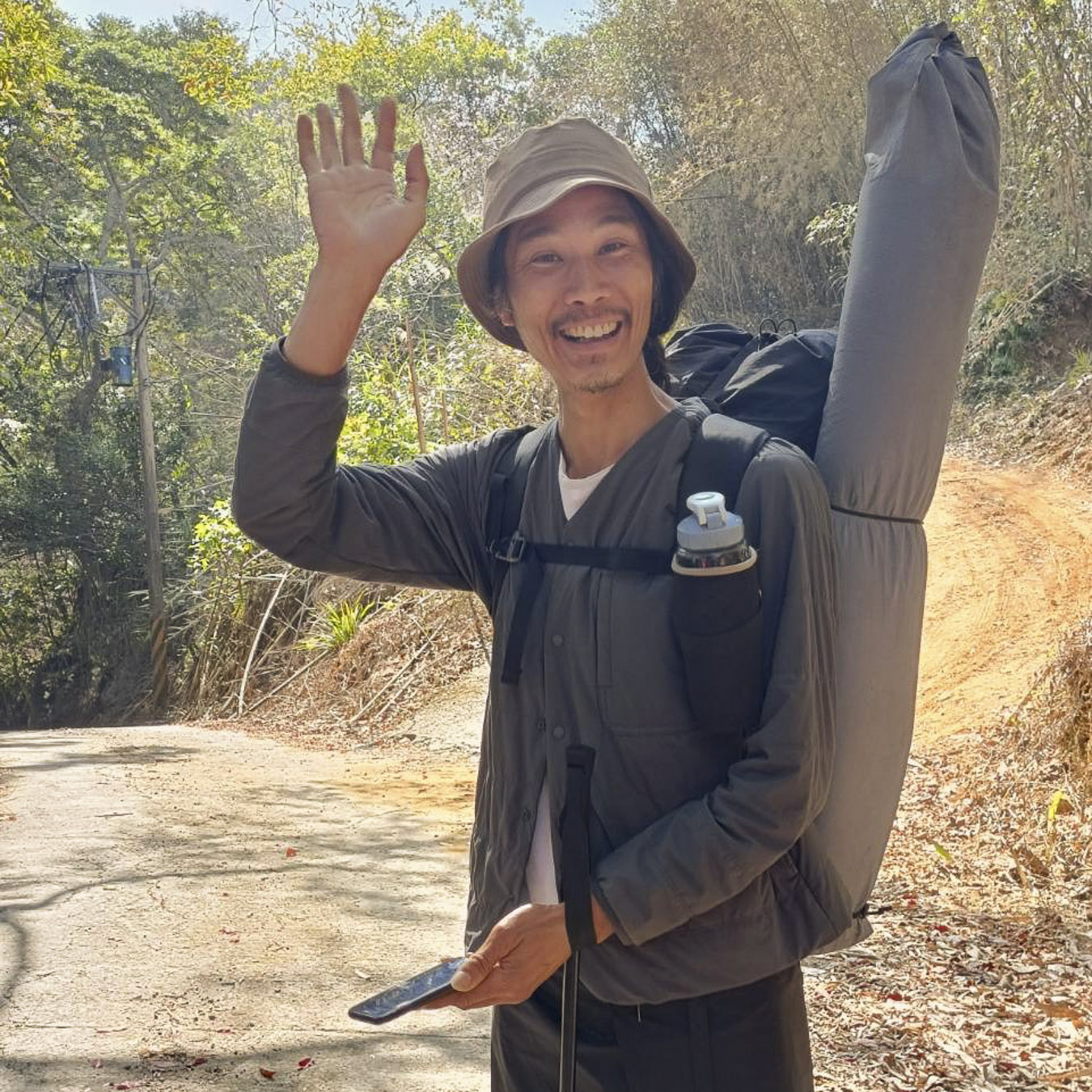
Thanks to them, I ended up with a rare photo of myself walking. I do not usually think to take pictures of myself.
A festival in the mountains
The trail crossed over the ridge, returned to the road, and gradually descended into a place where I could once again feel the presence of people’s lives. Along the roadside, flowers were blooming in full spring abundance.
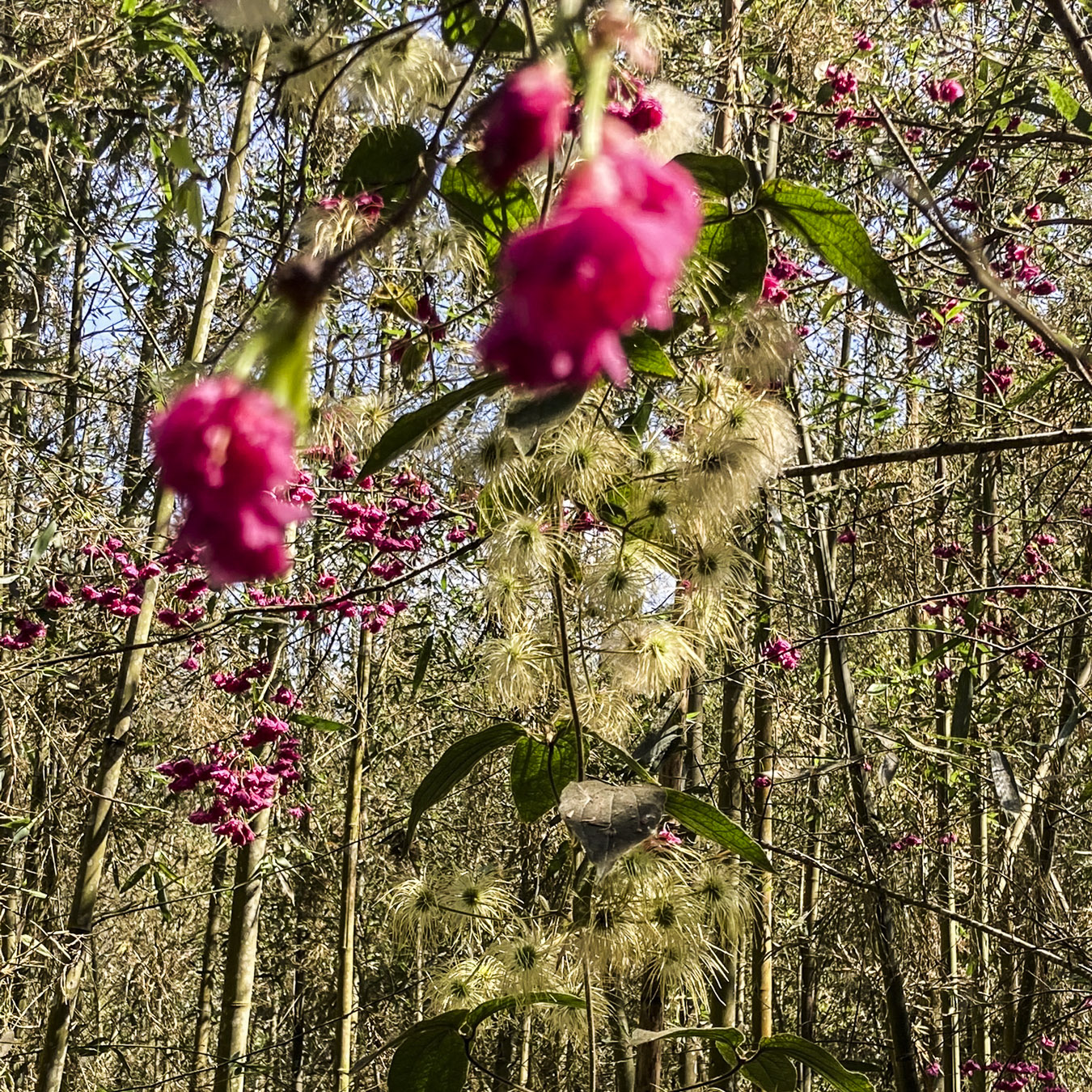
The flowers were not ones I would see in Japan, and they gave me a sense of Taiwan dressed in spring.
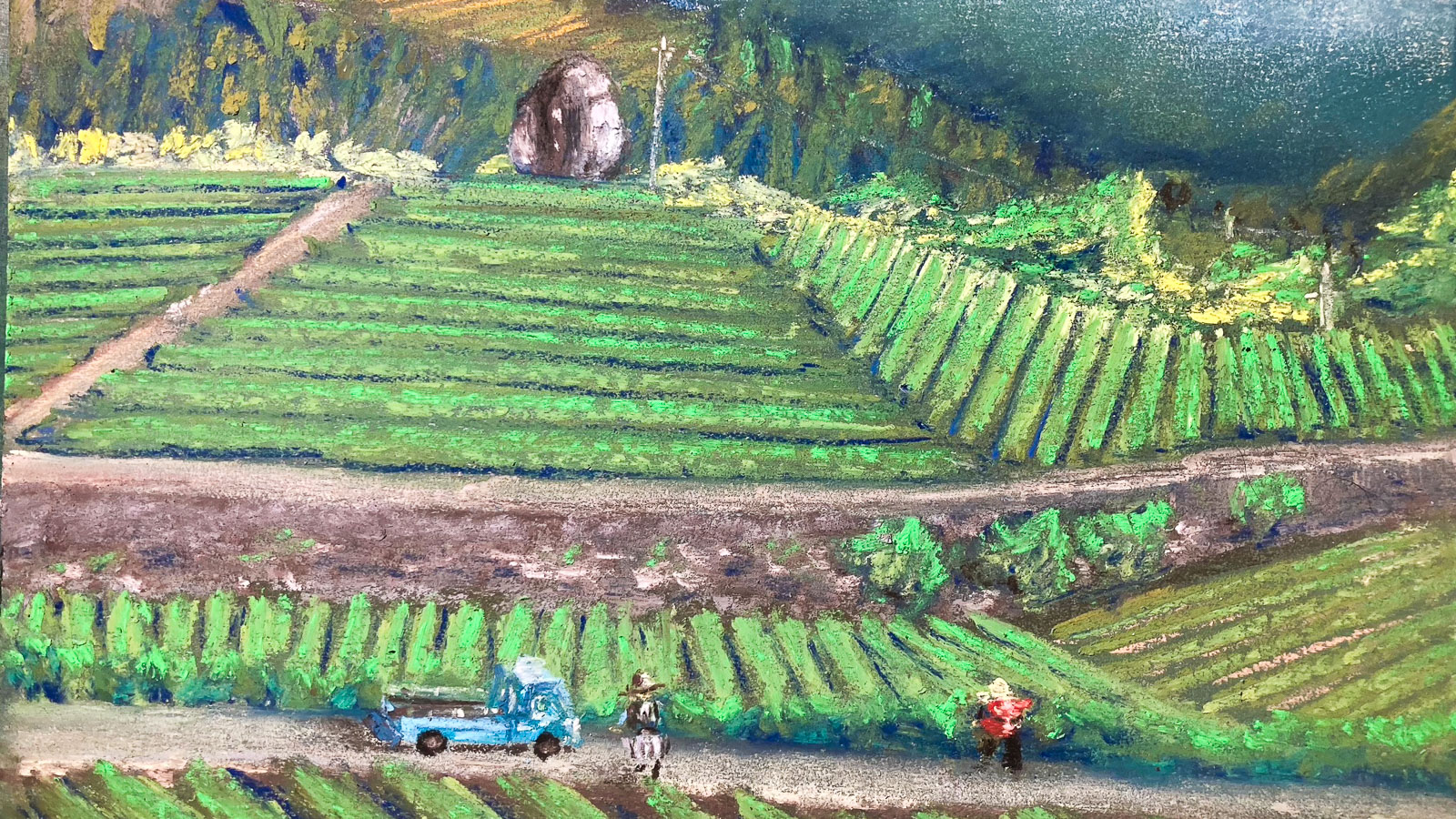
In the morning valley, tea fields shone in the soft light. People were out working in the fields, scattered across the slopes and hills. The sight was beautiful.
When I travel and come upon a landscape shaped by local life, I find myself thinking beyond what I can see. I imagine the people who came before, the hands that made this place what it is. In that sense, travel sometimes feels like moving through the past as well.
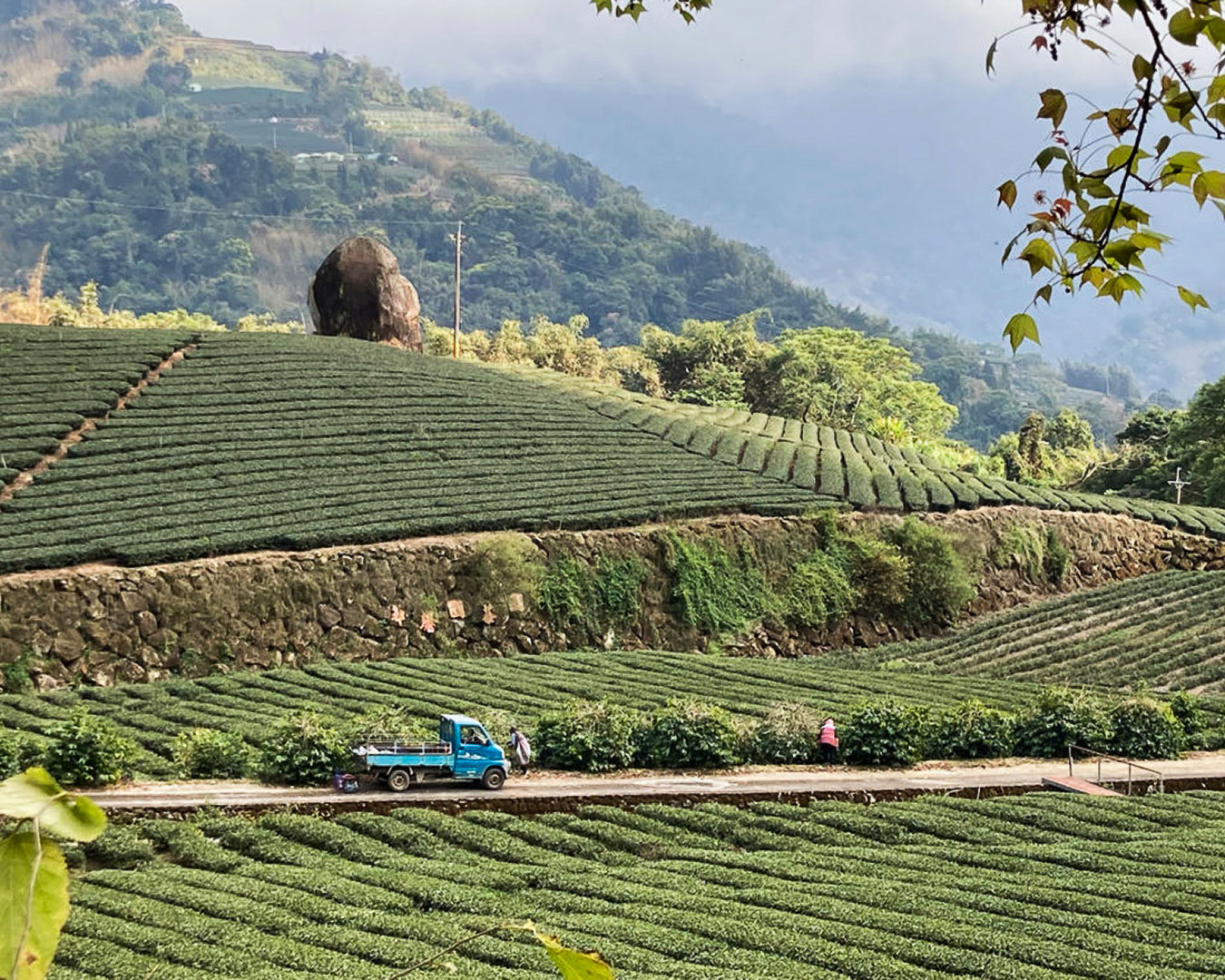
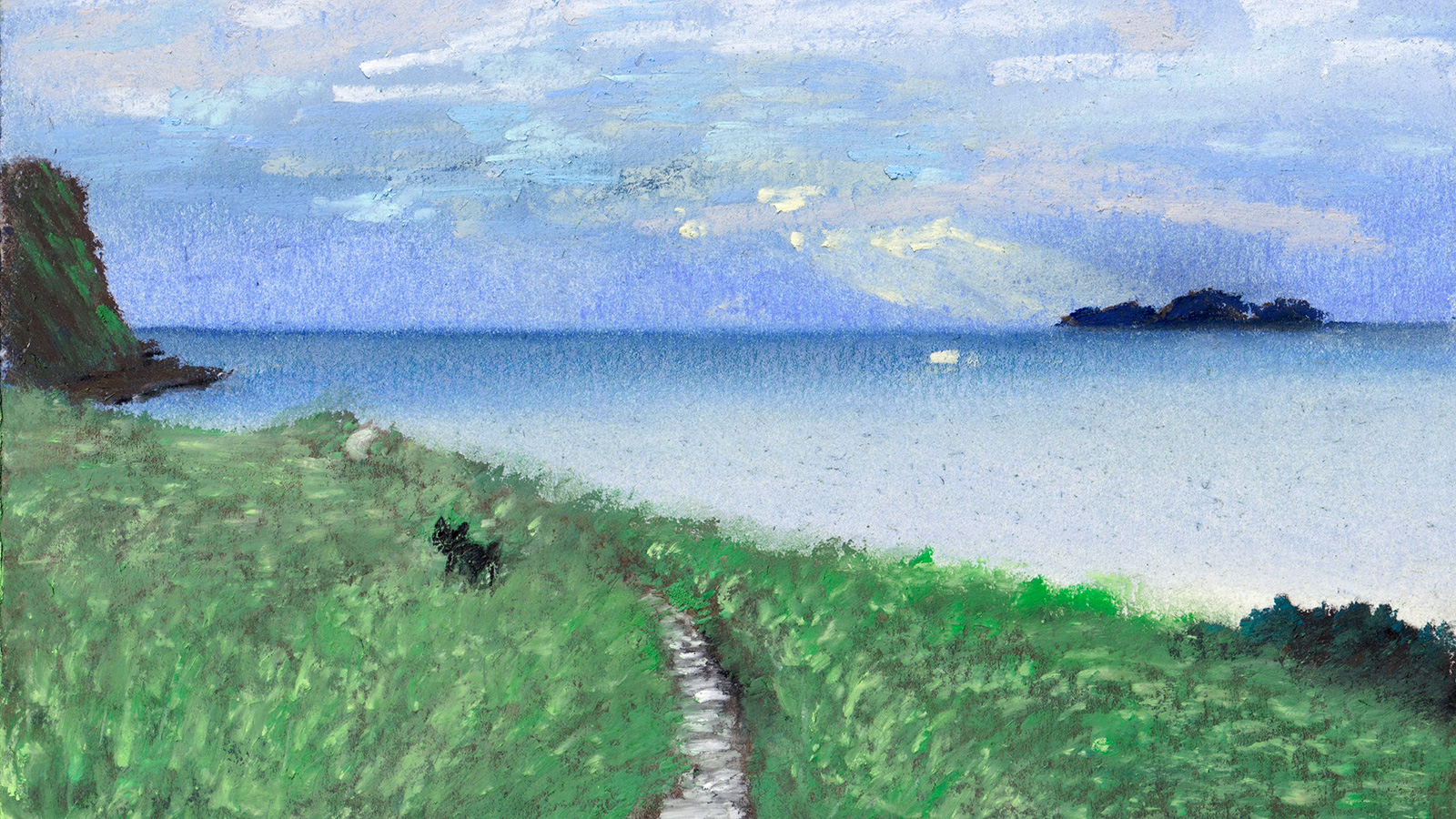
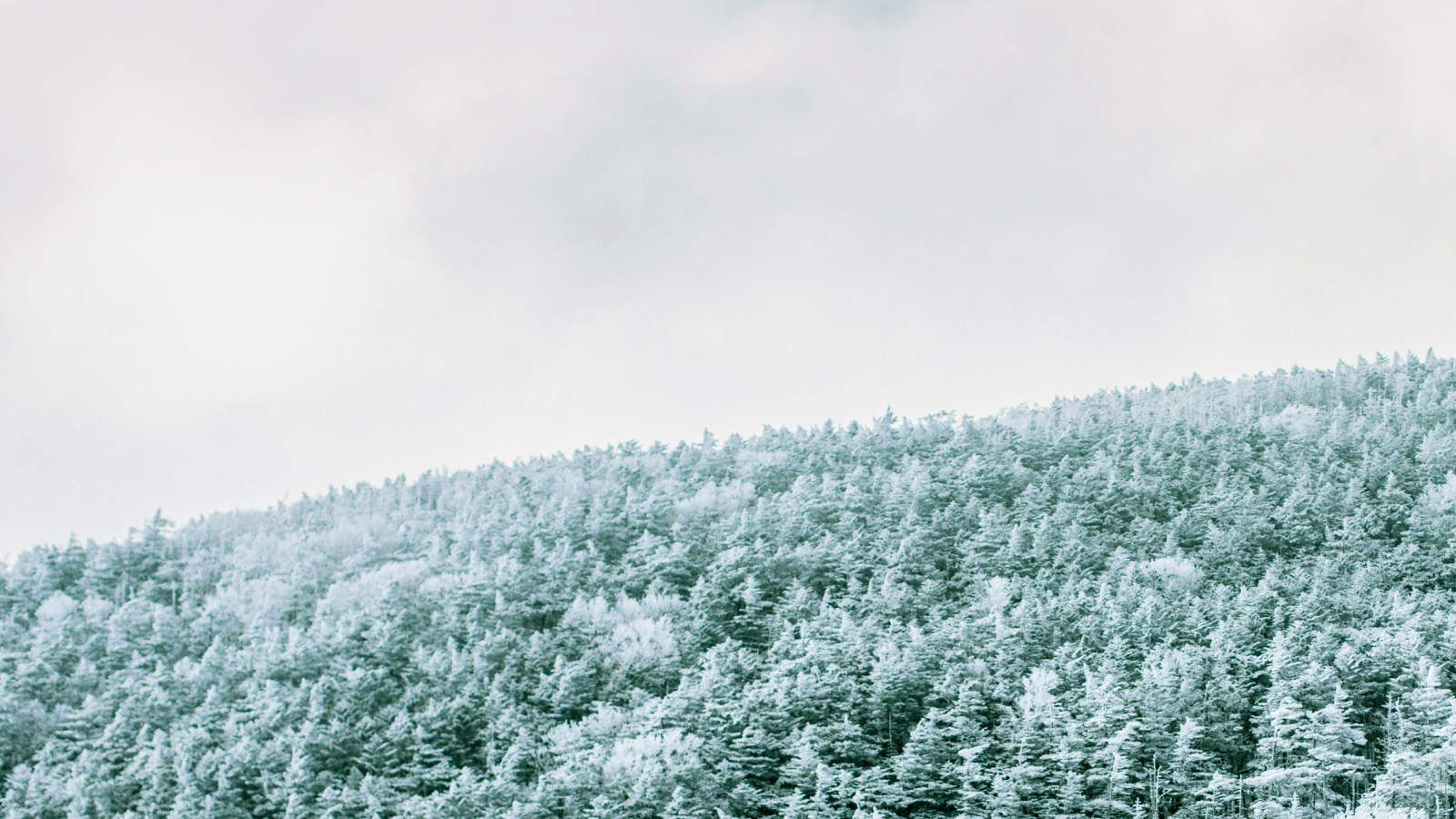
I love untouched forests and wild landscapes, but I am also deeply drawn to scenery shaped by human lives and work. After returning to Japan, I painted the cover illustration for this piece while looking at a photo from that morning, trying to capture the feeling that had moved me there.
Looking at the map, I could see that the day’s route would be long. Since this was a freewheeling journey of wild camping, it did not really matter where the day ended. But if I pushed myself, I might be able to reach a village by nightfall — one with a place to eat.
That was all the motivation I needed.
A good meal after a hard day of walking is one of the greatest feasts there is.
Gradually, the light began to fade. Normally, I would already have been looking for a place to sleep. But today I had given myself a destination, so as darkness came on, I shifted into a faster gear and kept walking.
Somehow, completely exhausted and in full darkness, I made it to the village I had been aiming for.
Walking through the dimly lit streets, I realized it seemed to be something of a tourist spot. There were other foreign travelers around, not just me, and also Taiwanese visitors. What could be happening in a mountain village like this?
I slipped into a restaurant just before closing and finally got the dinner I had been dreaming about. After eating, I sat there with relief, already thinking that I needed to find a place to sleep, when someone from the restaurant spoke to me.
“Did you come to see the festival?”
“No,” I said. “I’m traveling on foot. I just happened to pass through this village tonight. Is there a festival?”
“You’re very lucky,” she told me. “Tonight is the final night of the village’s big festival.”
Come to think of it, I had heard singing on my way to the restaurant. I had followed the voices and found a square where four or five people in traditional clothing were holding hands and dancing. There had been so few of them that I assumed it was a rehearsal, not a festival.
“Is it the one in the square?” I asked.
“Yes,” she said.
I still had to find somewhere to sleep, and I hesitated over whether to go back. But if I was curious enough to keep thinking about it, I might as well take another look.
This, too, was possible because my pack was light. If I had been carrying a heavy load after walking all day to the point of exhaustion, I never would have thought of turning around.
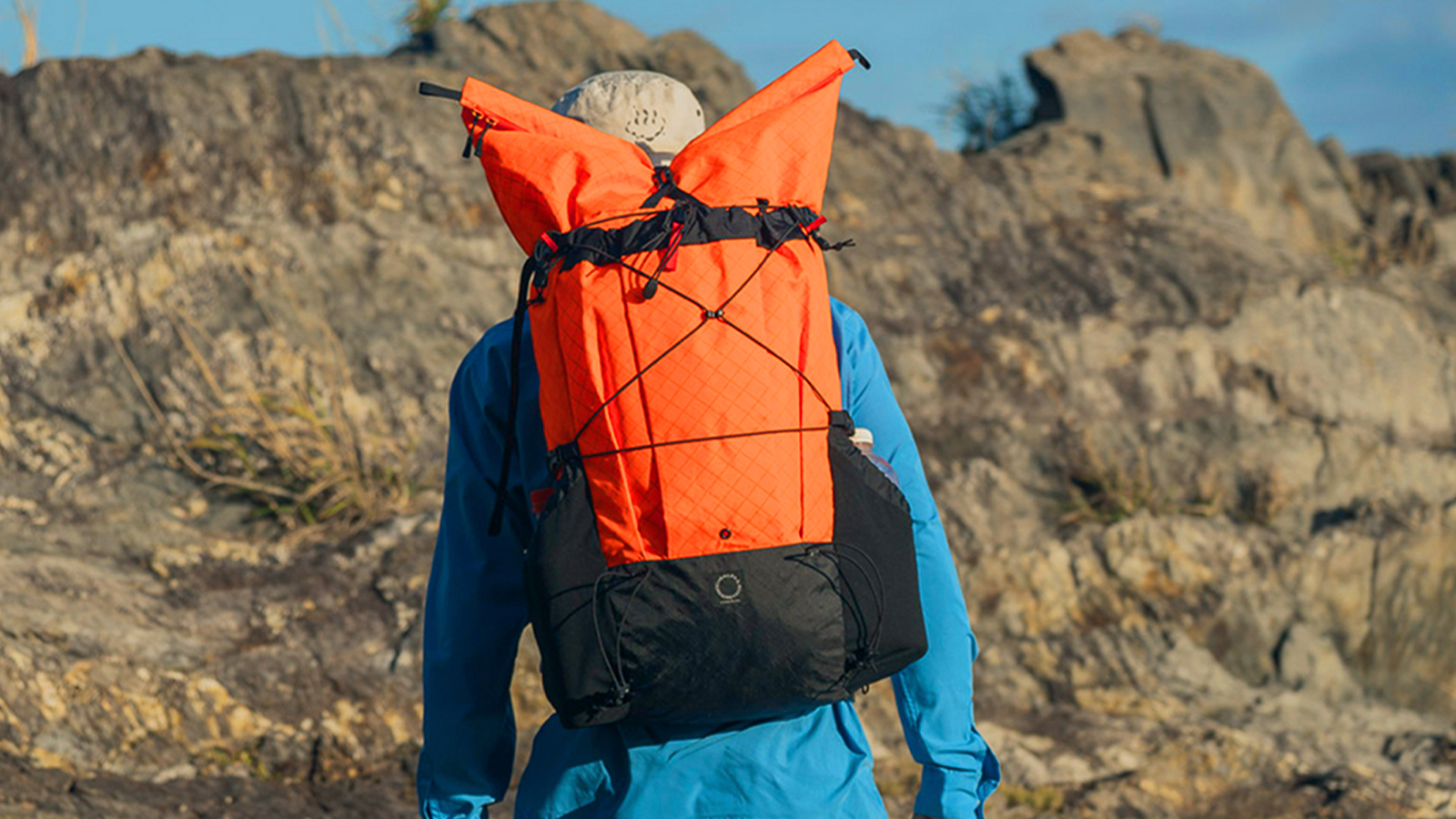
I was glad I had gone ultralight.
From somewhere ahead, voices rose into the night.
Something vast seemed to be vibrating in the air.
And when I reached the square, the scene had completely changed.
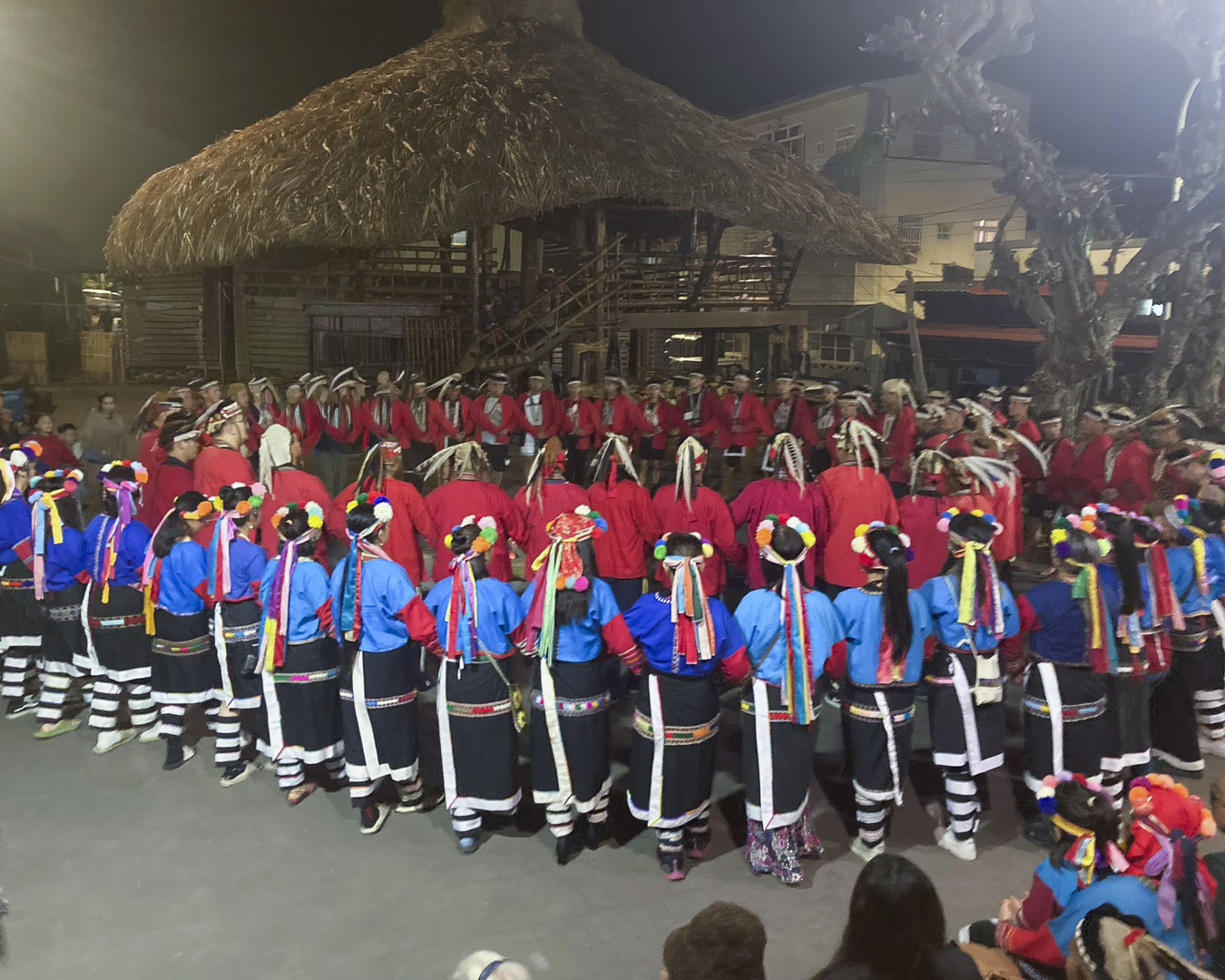
Dozens of people were holding hands in circles, singing and dancing in widening rings.
It was the sight I had dreamed of seeing ever since I first became interested in the music of Taiwan’s Indigenous peoples. When I saw it with my own eyes and heard those voices, goosebumps rose all over my body.
One of my favorite CDs is Mudanin Kata by David Darling and the Wulu Bunun — a collaboration between the American cellist David Darling and the eight-part harmonic singing of Taiwan’s Bunun people. Ever since I first encountered the overwhelming sound world of Taiwan’s Indigenous voices through that recording, I had dreamed of hearing those songs live one day.
That dream had already come true on this trip, in a way. Twice, I had visited places like tourist centers and experienced song and dance as performance. Even then, the live voices had moved me deeply.
But what was unfolding before me now was something completely different.
This was a ceremony rooted in people and land. The energy gathering there was unlike anything I had seen before.
The whole village seemed to be present: elders, children, parents, even tiny babies. The place was filled with warmth. A grandmother, clearly respected by everyone as an elder, wore traditional clothing so beautiful I could hardly stop looking at it. I imagined she had chosen her finest garments for this night. Even the baby held in its mother’s arms was dressed in traditional clothes.
Somewhere in the corner of my mind, I knew I should go and look for a place to sleep. But in the end, I stayed until late into the night.
I wanted to keep feeling the force of that place.
At last, the singing and dancing stopped, and the circles came apart. Only then did I tell myself, If I stay any longer, morning will come. I won’t sleep at all, and tomorrow I won’t be able to walk.
So I finally left the square.
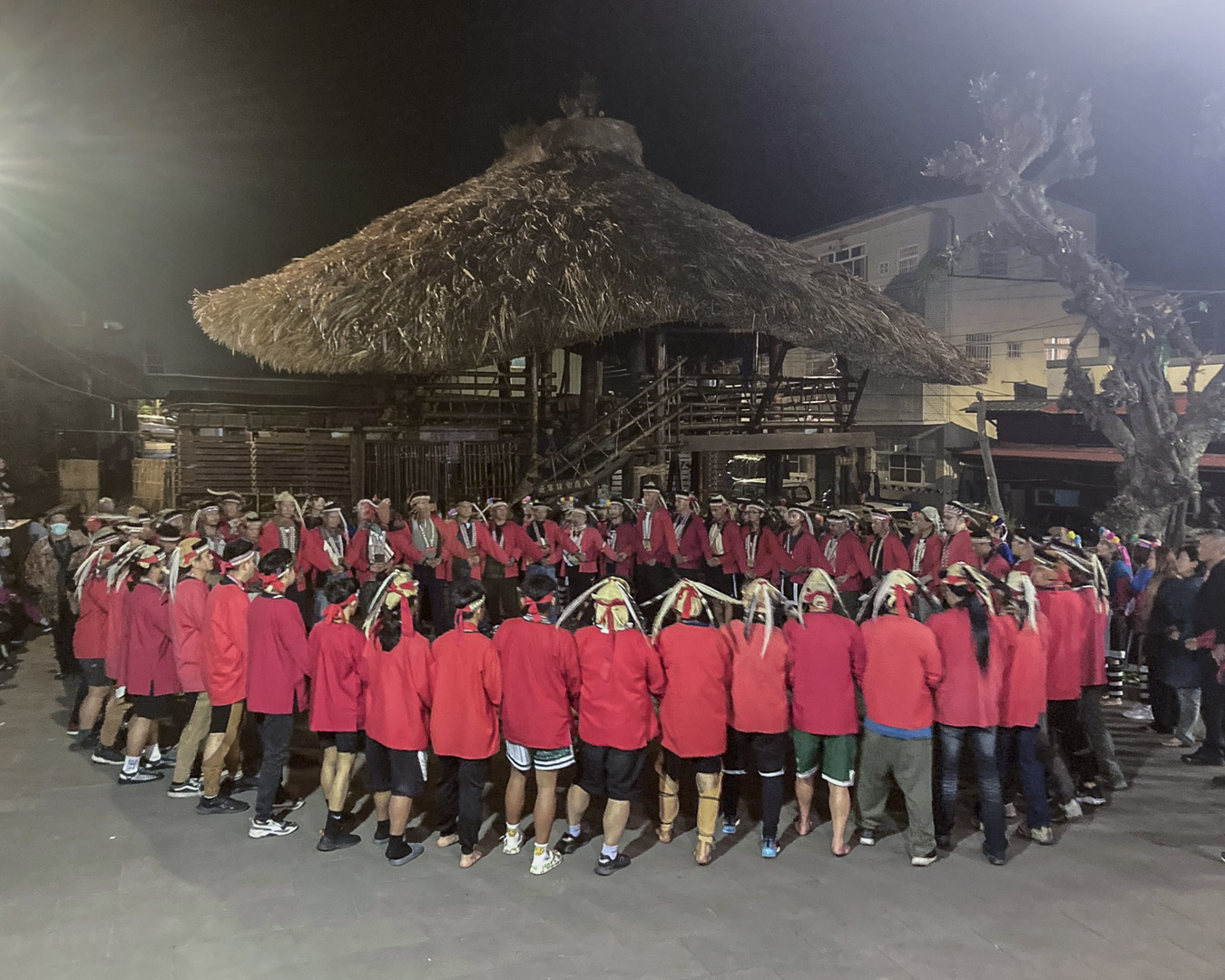
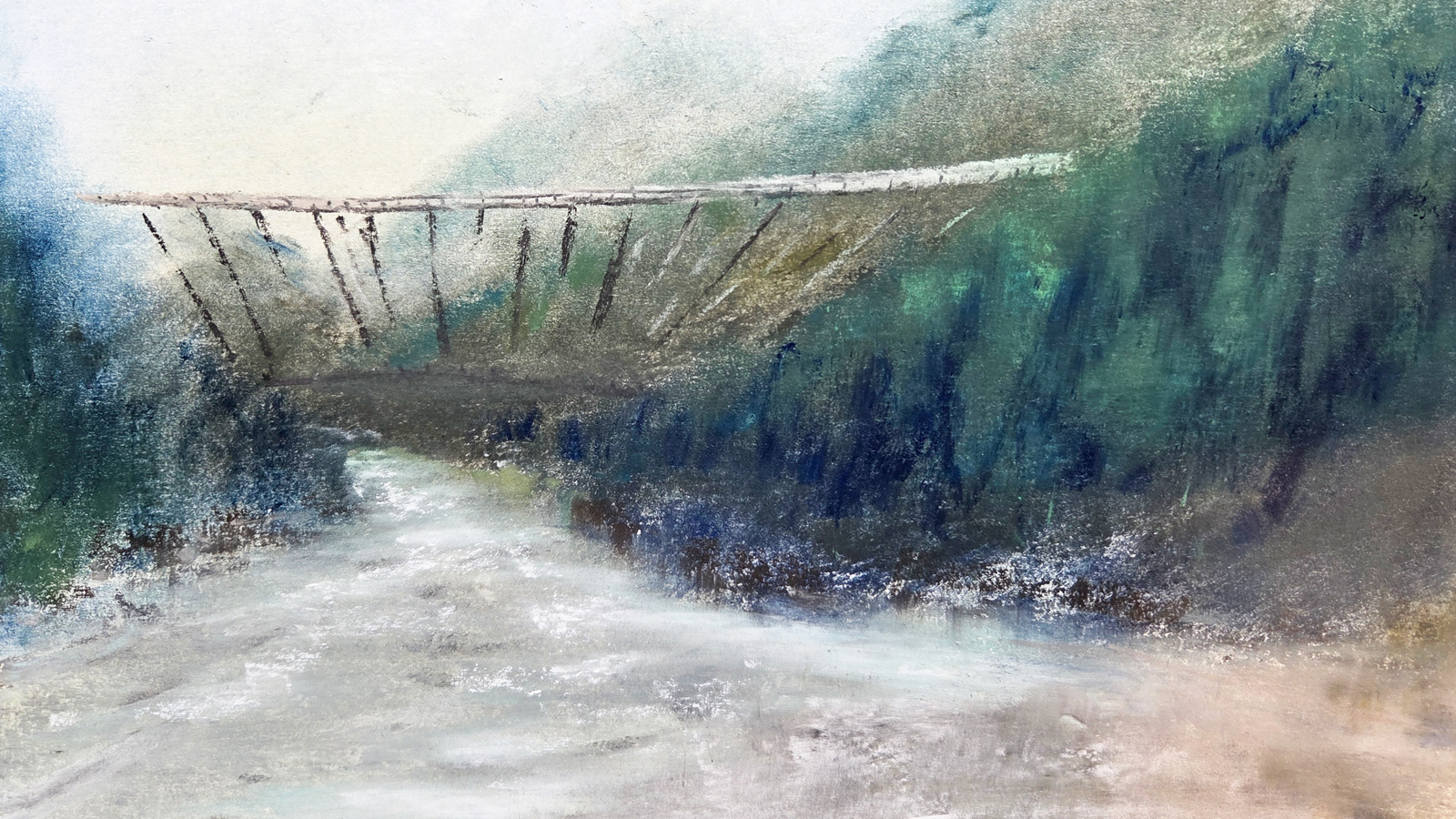
With my headlamp on, I walked into the darkness, crossed a suspension bridge from the village to the far side of the valley, and found a small shelter halfway up the mountain. I spread my sleeping bag over one of the benches and lay down.
The eastern sky would probably begin turning from black to blue before long. I closed my eyes, knowing I had to sleep, even just a little.
But the scene I had stumbled upon after walking all that way — like an unexpected treasure waiting at the end of the road — kept appearing behind my eyelids.
I could not fall asleep for a long time.
Later, I looked up the festival and learned that it was Mayasvi, a sacred festival of the Tsou people of Alishan in Chiayi County. It has been designated an important national folk custom — roughly equivalent to an Important Intangible Folk Cultural Property in Japan.
Only afterward did I fully realize how fortunate I had been to encounter such a festival by chance.
Earlier, when I saw foreign and Taiwanese visitors walking through the streets, I had wondered why so many people had come to a mountain village this remote.
Now I understood.
They had all come for the festival.
Lives gathered around breakfast
I packed the sleeping bag I had spread out on the shelter bench and set off quickly.
Sleeping under a roof without setting up the tent makes the morning much easier. There is no tent to take down, of course, and none of the gear is wet with dew. Even though the shelter was in a quiet place away from the village, it was still a public space, and I felt sorry for having slept there without permission. So I left before anyone came, making sure to leave no trace.
In the first light of morning, I climbed through the trees along the mountain path. Eventually I came out onto a road, and after walking a little farther, reached a small settlement.
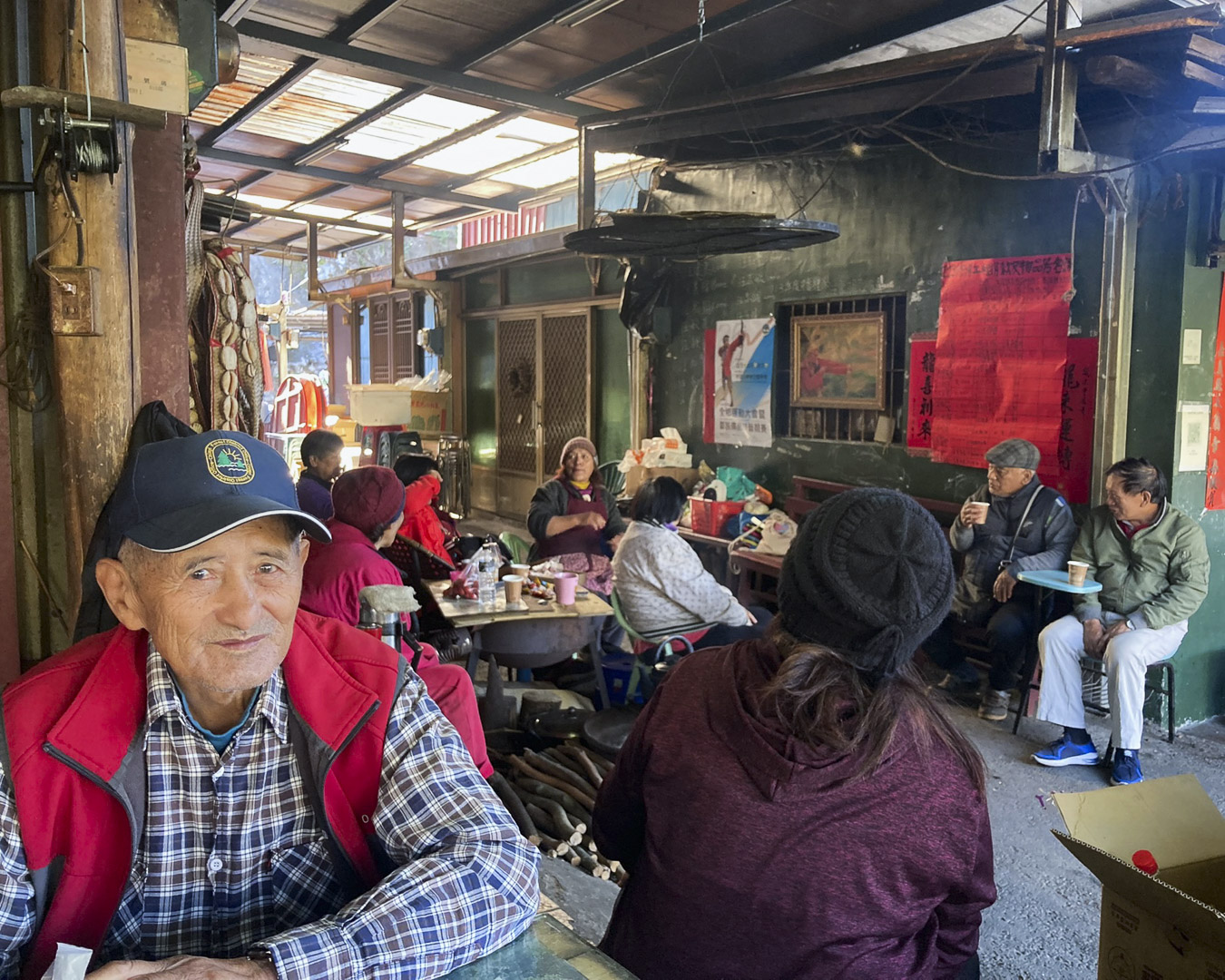
Beside the road was a local eatery, so I peeked inside to see if I could get breakfast. Inside, elderly people from the village were gathered around a stove made from a metal drum. The place had a wonderful atmosphere.
Whenever I come across a place like that — somewhere I can glimpse the everyday life of local people — my heart lifts.
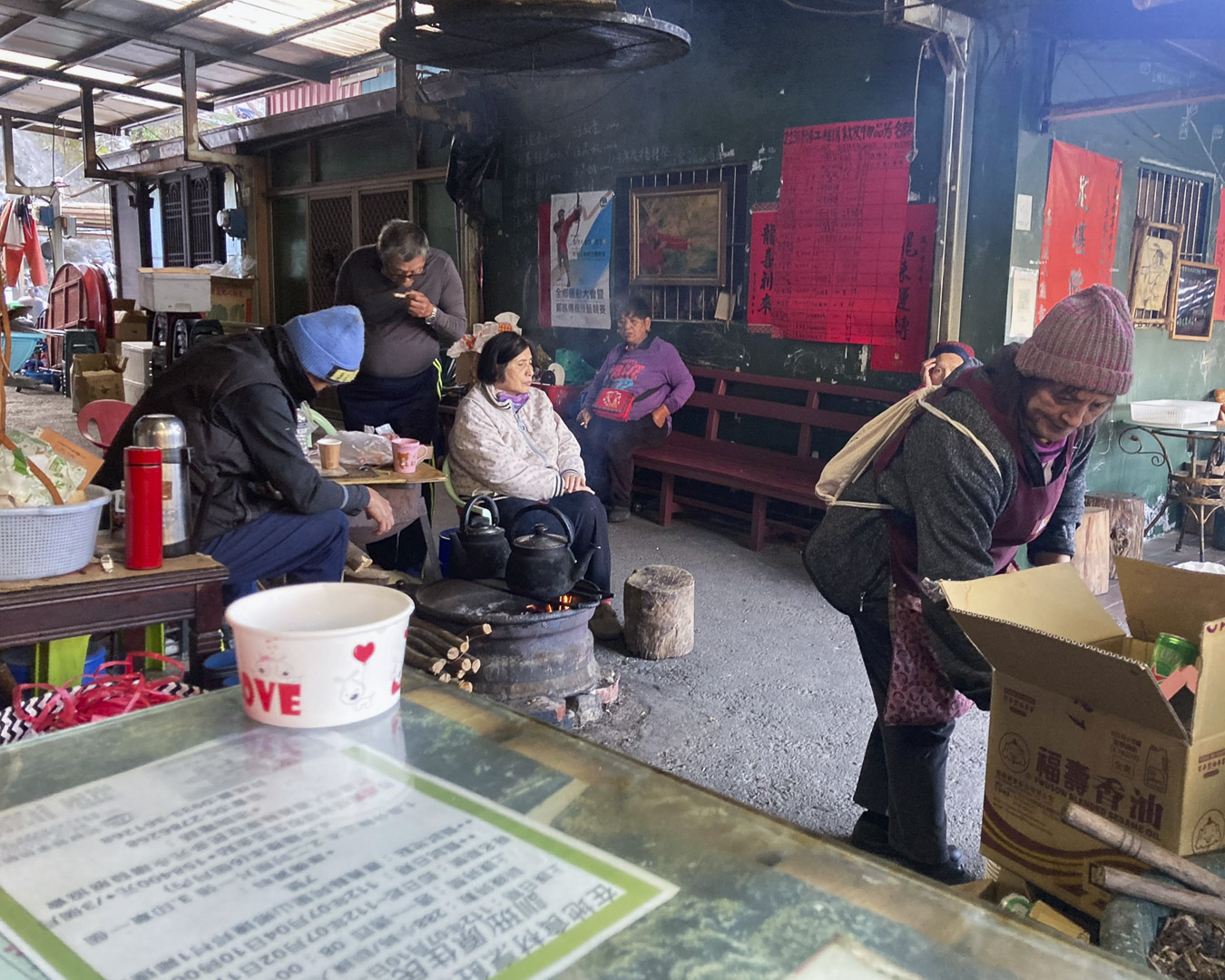
In ordinary life, I do not usually eat breakfast. But when I travel, food culture in other countries pulls me in, and I find myself eating happily from the morning. The problem is that, of breakfast, lunch, and dinner, the simple breakfast menus are often the ones I like best.
As I was enjoying my meal, local people began greeting me one after another in Japanese.
“Ohayō.”
The farther I went into rural Taiwan, the more strongly I felt the traces left by the period of Japanese rule.
Among the people gathered there was a man in his eighties who spoke Japanese. He told me many stories from his past. I was struck by the look in his eyes as he remembered those days.
While I was talking with him, a beautifully dressed woman in her seventies came in and joined our circle. In wonderfully fluent Japanese, she told me her story: she had married and moved to Japan, then lived for years in Tokyo and New York.
A girl born in this small mountain village in Taiwan had crossed the sea to Japan, fallen in love, married, had children, gone all the way to New York, and then, in her later years, returned to her home village.
Listening to her, I was captivated by the mysterious shape of a single life.
In the end, I must have spent several hours in that eatery. Sitting among the local people, I had a deeply enjoyable morning.
The Cleansing Power of Ancient Forest
Then it was time to walk again.
For the past few days, I had been looking at a distant mountain range. Across the middle of it ran a road, cutting sideways along the slope like a dragon in flight.
When I checked the map, I realized that today’s route would climb all the way up to that enormous road I had been staring at in disbelief, then follow it east toward Alishan National Forest Recreation Area.
So I began climbing a very, very steep road toward that line in the mountains.
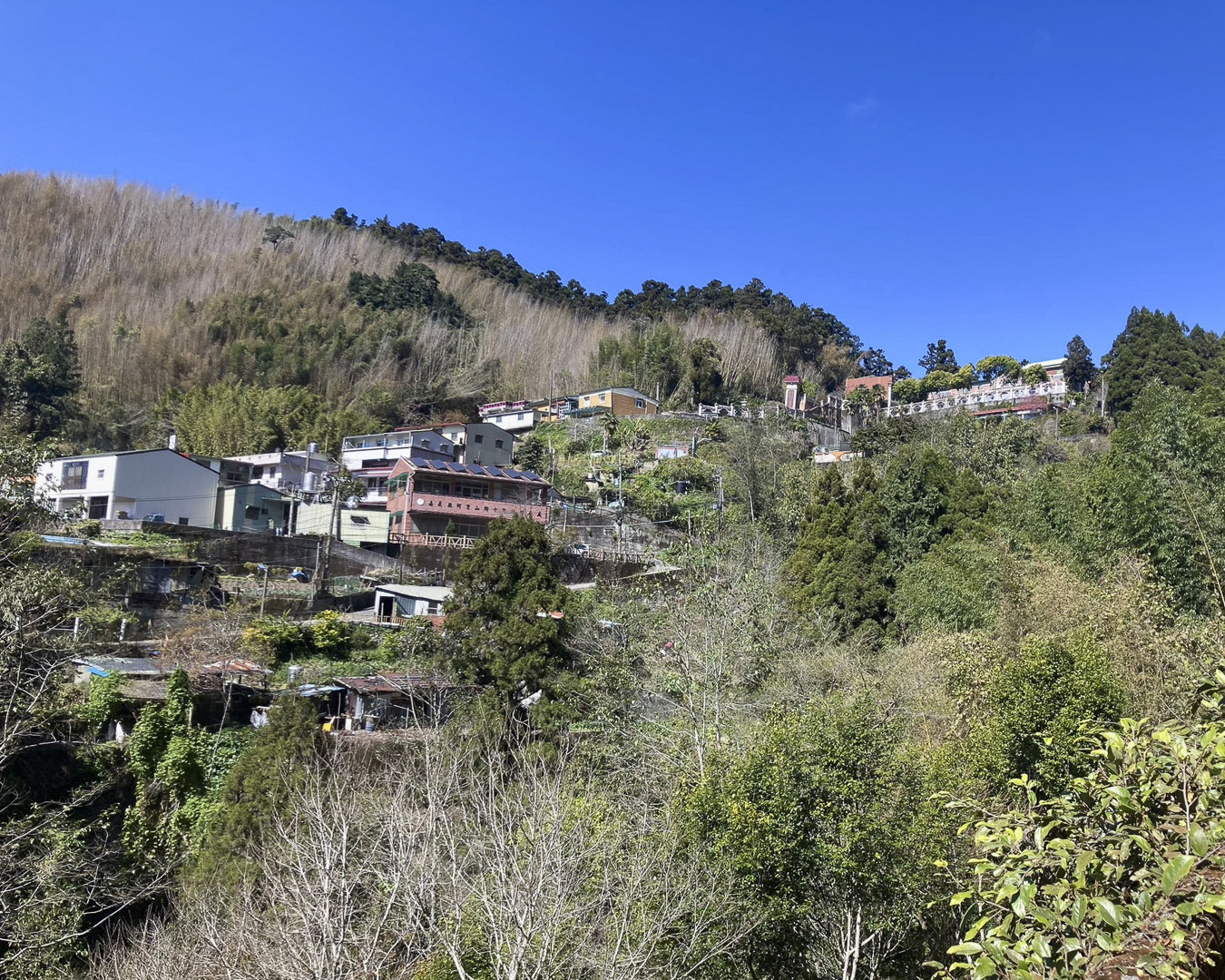
After a long, relentless ascent, I finally reached a large road. It seemed I had arrived on the very road I had been looking up at for days.
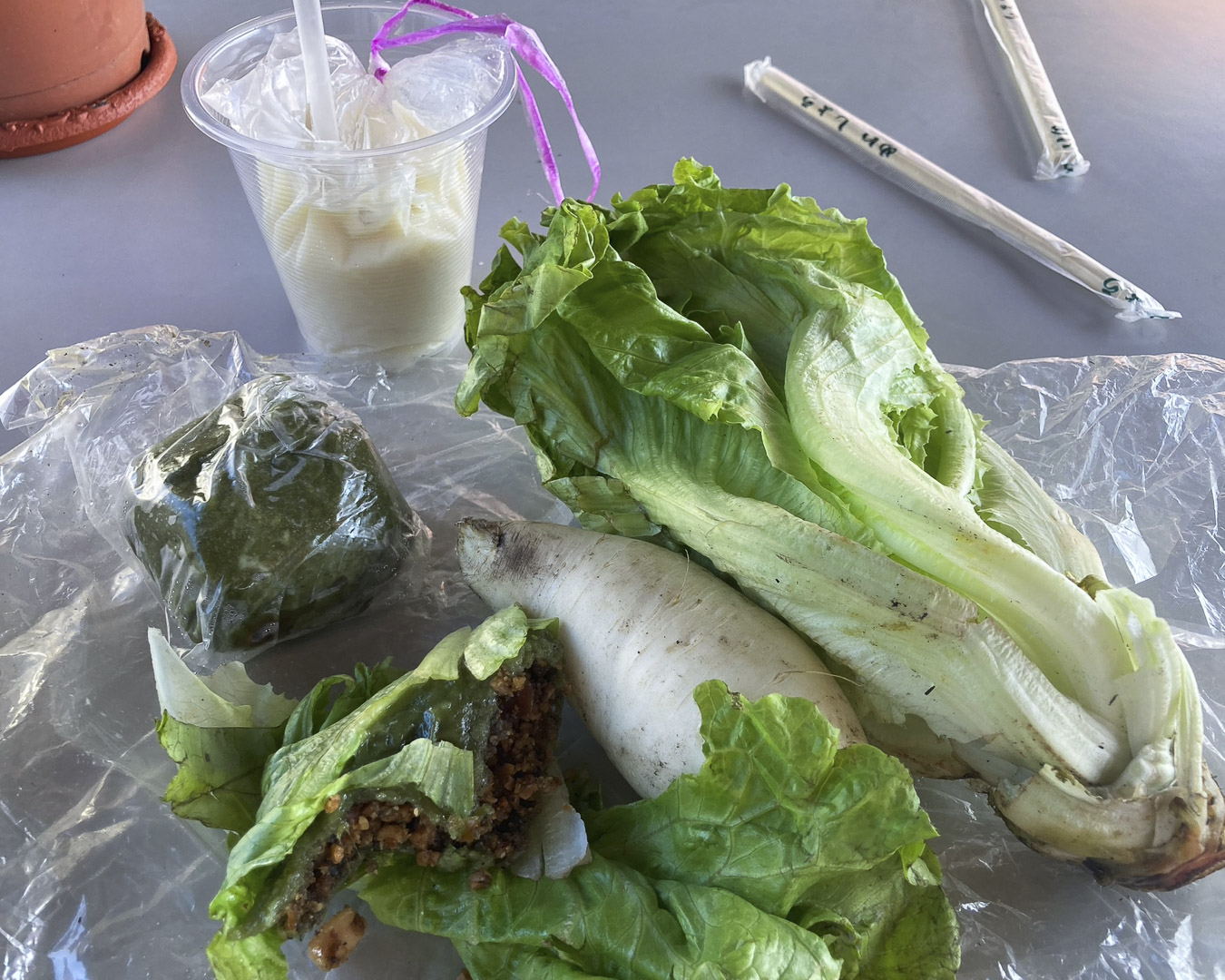
There happened to be a bus stop and a small shop there, so I bought one of the shop’s famous handmade buns and had a quick meal.
I wrapped the bun in some lettuce I had been carrying in my backpack, and it was delicious. Fresh vegetables are such a joy on the road.
Then it was time to keep moving.
Normally, I would simply walk as far as I felt like walking and find somewhere to sleep once it got dark. But today I needed to make a proper plan.
I would be passing through the national park, where entry hours were limited. Camping outside designated areas was also prohibited, so I needed to get through the regulated area before nightfall.
If I kept walking this road all the way to the park, there was no way I would make it in time.
So I told myself, Flexibility is important too, and jumped on a bus heading for the national park.
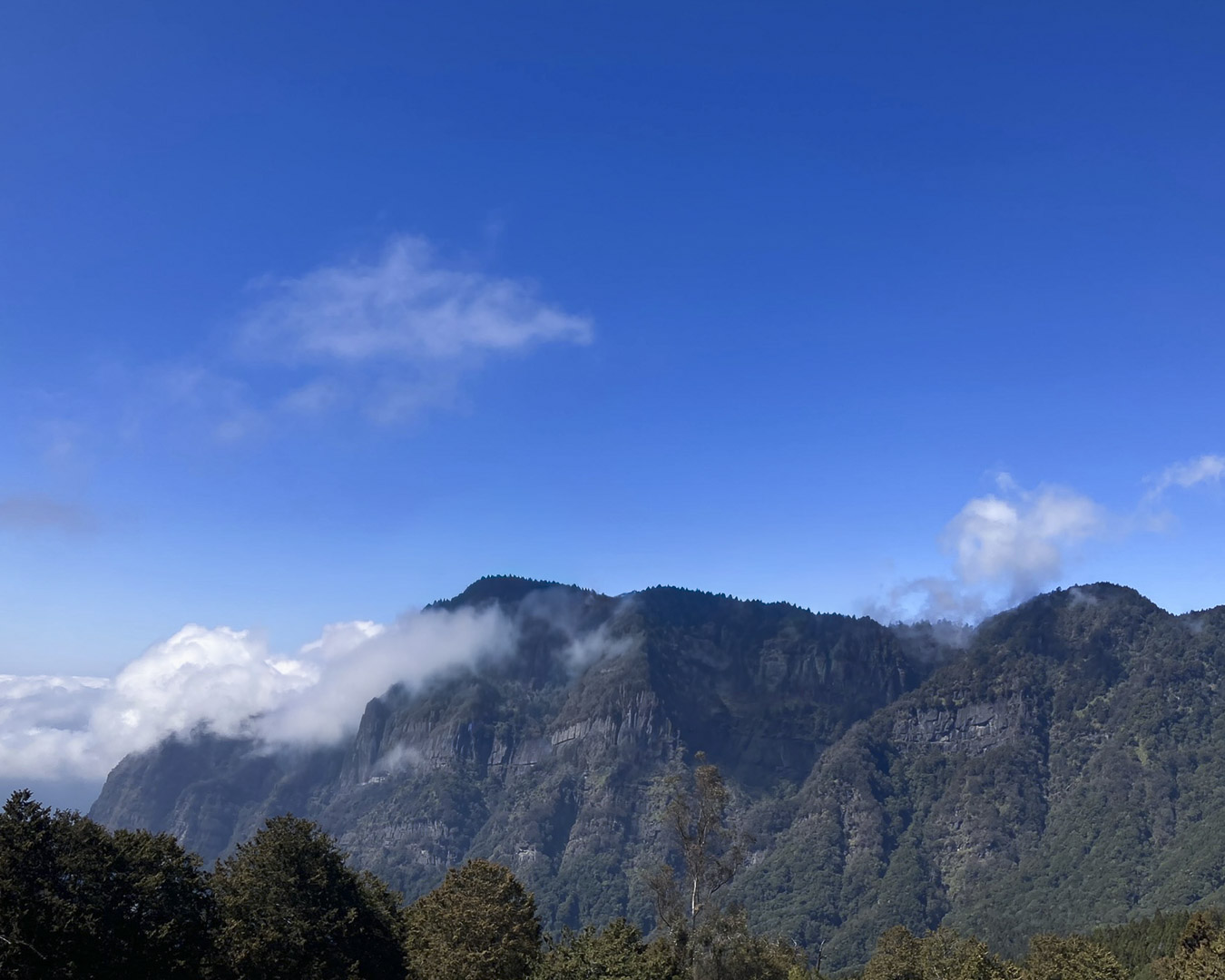
When I arrived at the entrance gate, I was asked to show my bus ticket as proof of how I had come there. In the end, taking the bus turned out to be the right choice. If I had said, “I walked here,” I wonder what would have happened.
Thanks to that decision, I also had enough time to wander slowly through the park, which made me happy.
A good call.
Once inside, I ran into the woman from California and her friend whom I had met the night before at the festival square. None of us had expected to see each other again here, and we were all delighted.
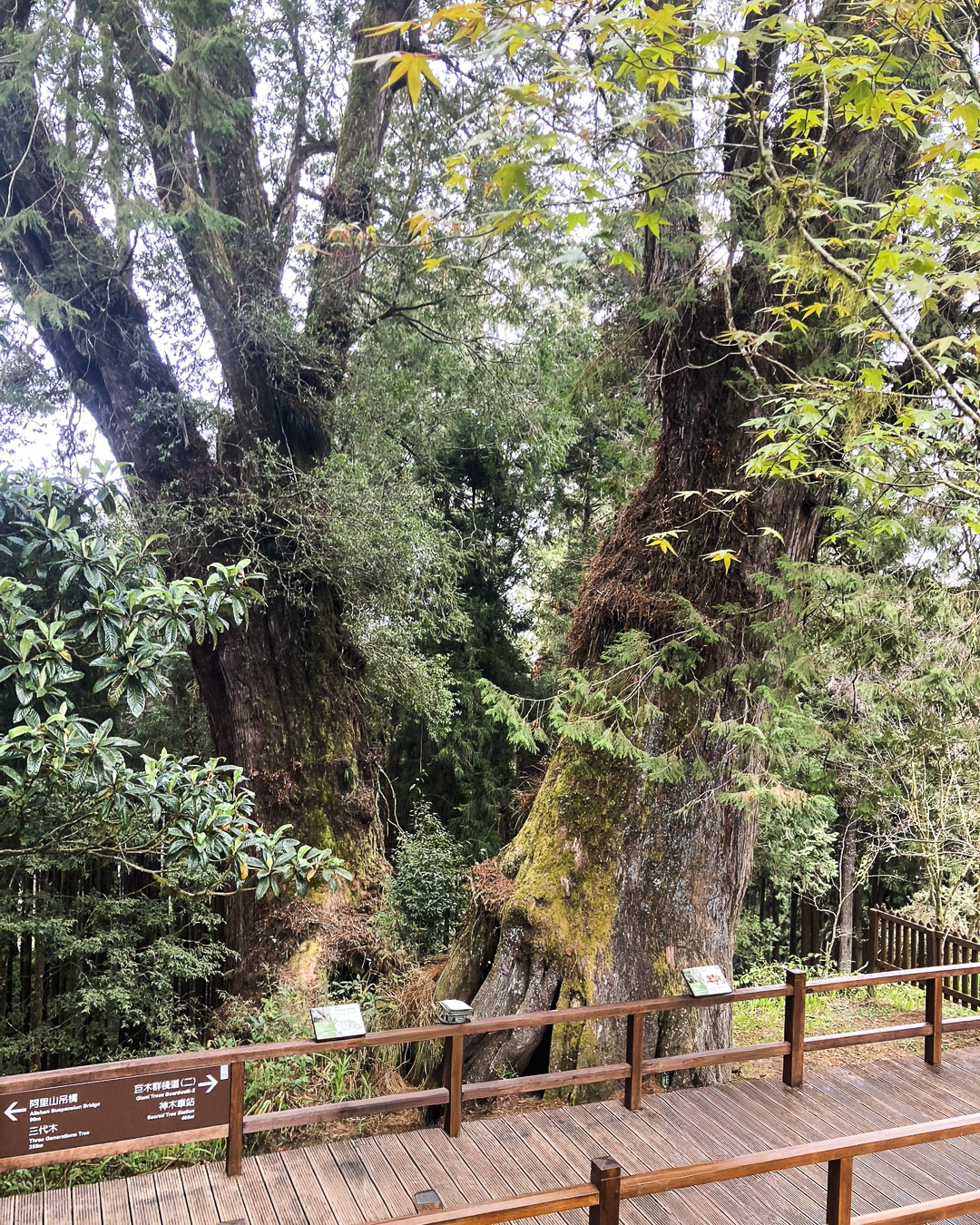
The three of us walked through the park together, among enormous ancient trees.
As we moved through the primeval forest, I felt suddenly refreshed, as if I had stepped into a bath and washed myself with soap. The stickiness of sweat, even the smell that had been bothering me, seemed to disappear. My skin felt dry and clean.
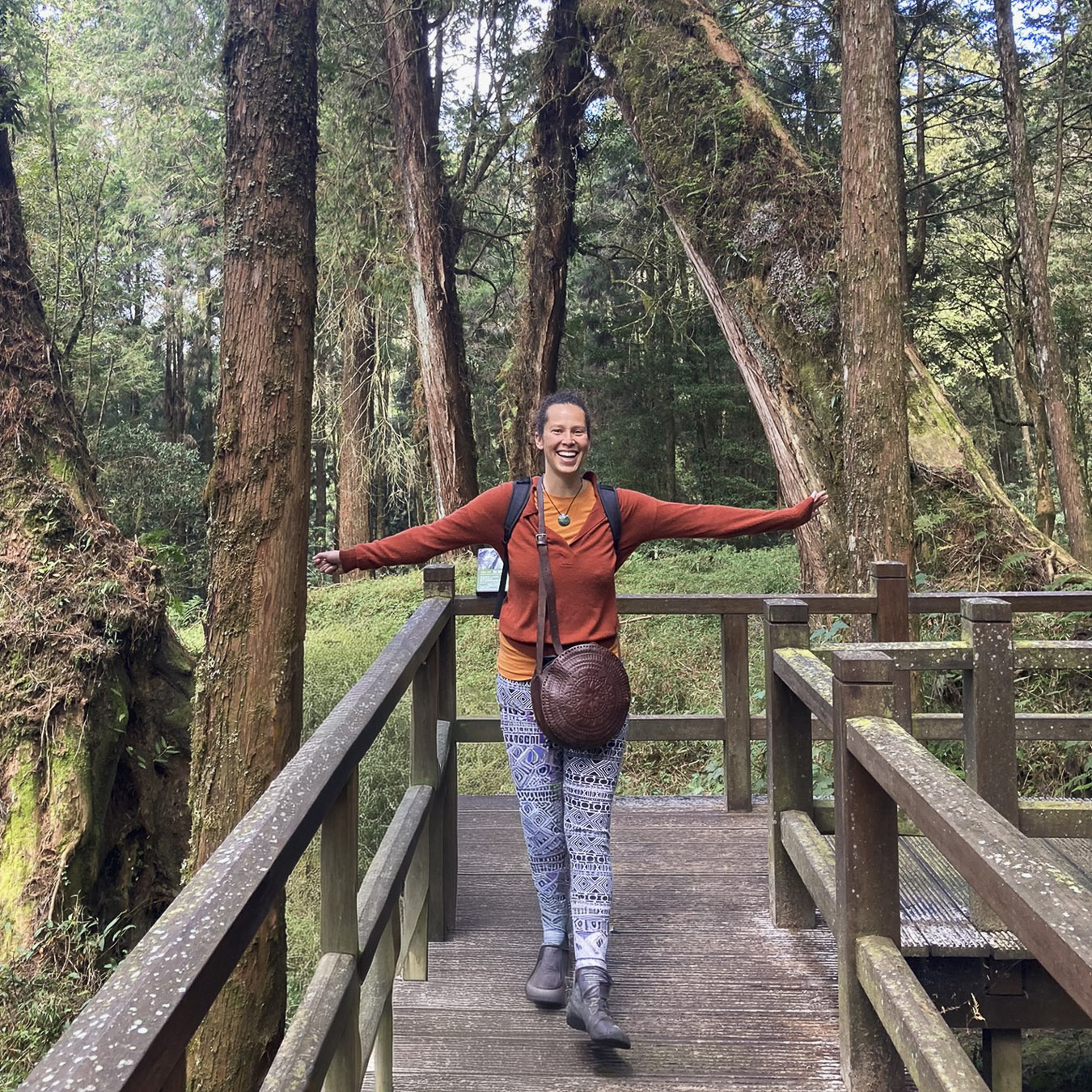
I remembered walking through a primeval forest in Siberia where small flowers bloomed thickly in the undergrowth. The air there had seemed full of flower pollen, like the finest nourishment for the body, and I had been astonished by how much energy it gave me.
I wanted to keep enjoying the park, but it was time to move on. I said goodbye to the two women.
“You really are traveling with only that much luggage,” one of them said, looking again at the way I stood there with my pack. “Where are you sleeping tonight? Did you find a proper place last night? You just walk wherever you want, sleep wherever you can — it looks so free and fun. Take care, and have a good journey.”
I tightened the shoulder straps of my backpack.
Time to hurry.
I needed to get out of the national park today.
For a while, I passed other people trekking in the park. But once I left the main trail and followed the more detailed mountain map on my phone, I stopped seeing anyone at all.
From there, the path seemed to be an old route, barely used anymore.
Following the map, I eventually came out of the official park area. That alone was a relief.
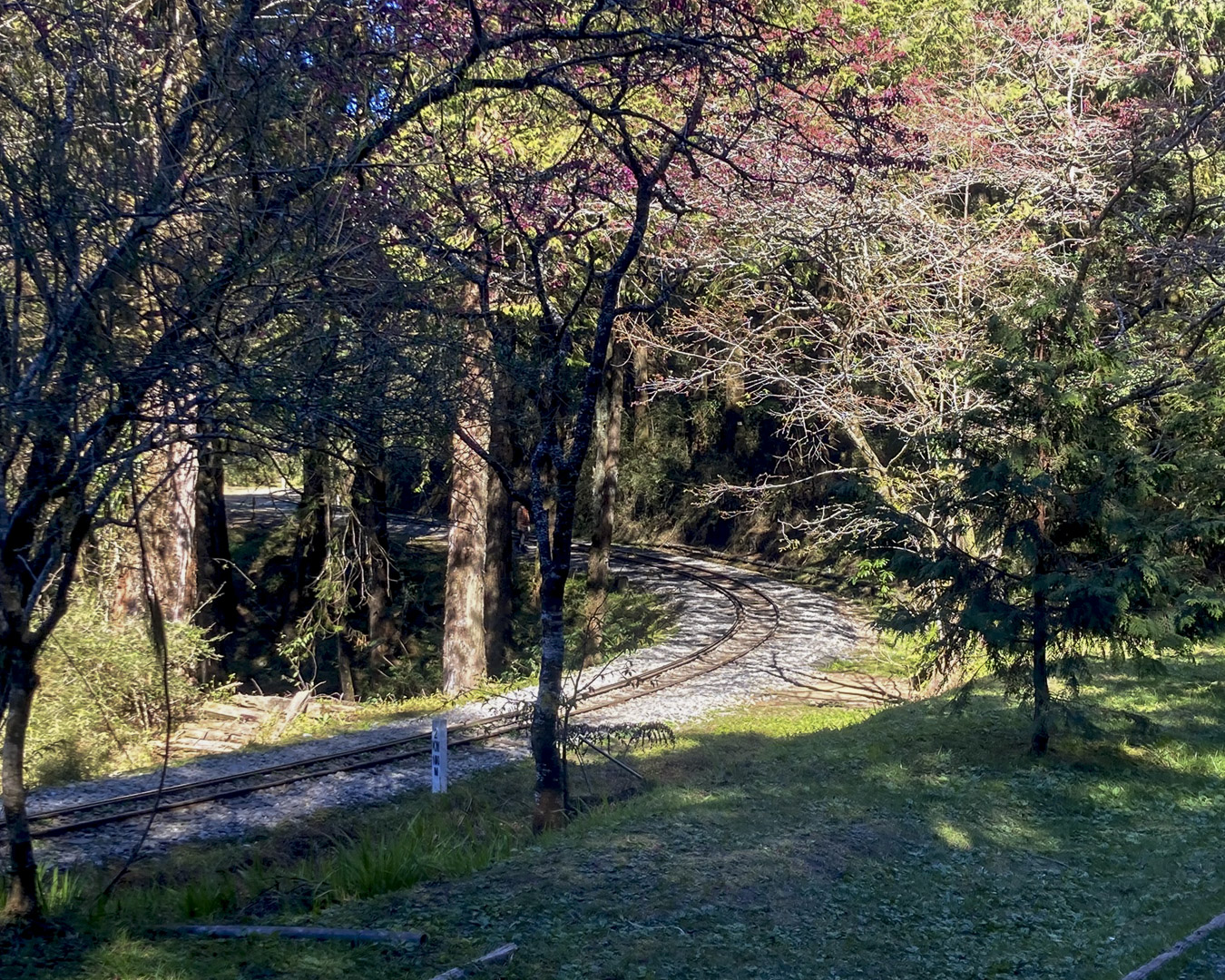
After crossing the ridge, the trail grew even more overgrown, as if proving that few people had passed this way in a long time. I pushed through brush and descended steadily into the valley. It seemed I was now going down the opposite side of Alishan.
As I kept descending toward the valley floor, I began to wonder whether I would find any flat ground where I could pitch my tent. If I had brought a hammock, I thought, even terrain like this could become a place to sleep. That might have been fun too.
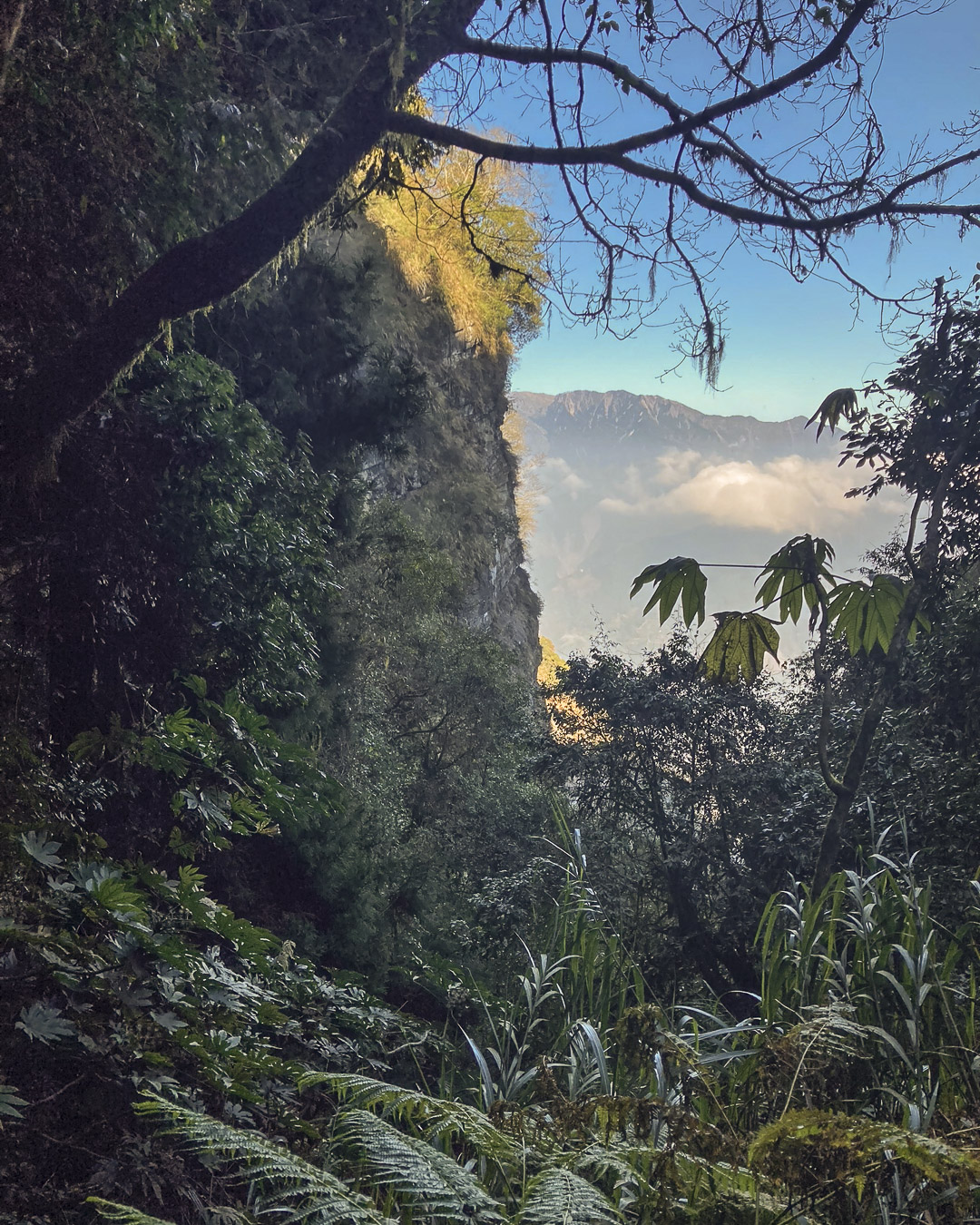
Little by little, the primeval forest gave way to planted forest and logging areas. The traces of human work told me I was getting closer to inhabited land.
By evening, I reached an area of tea fields.
Good. I had made it through the part of the day I had been worried about.
I searched for a while for a place to pitch my tent, but could not find anywhere ideal. In the end, I tucked myself away in the corner of a tea field and set up there.
It had been a day of walking through truly magnificent scenery.
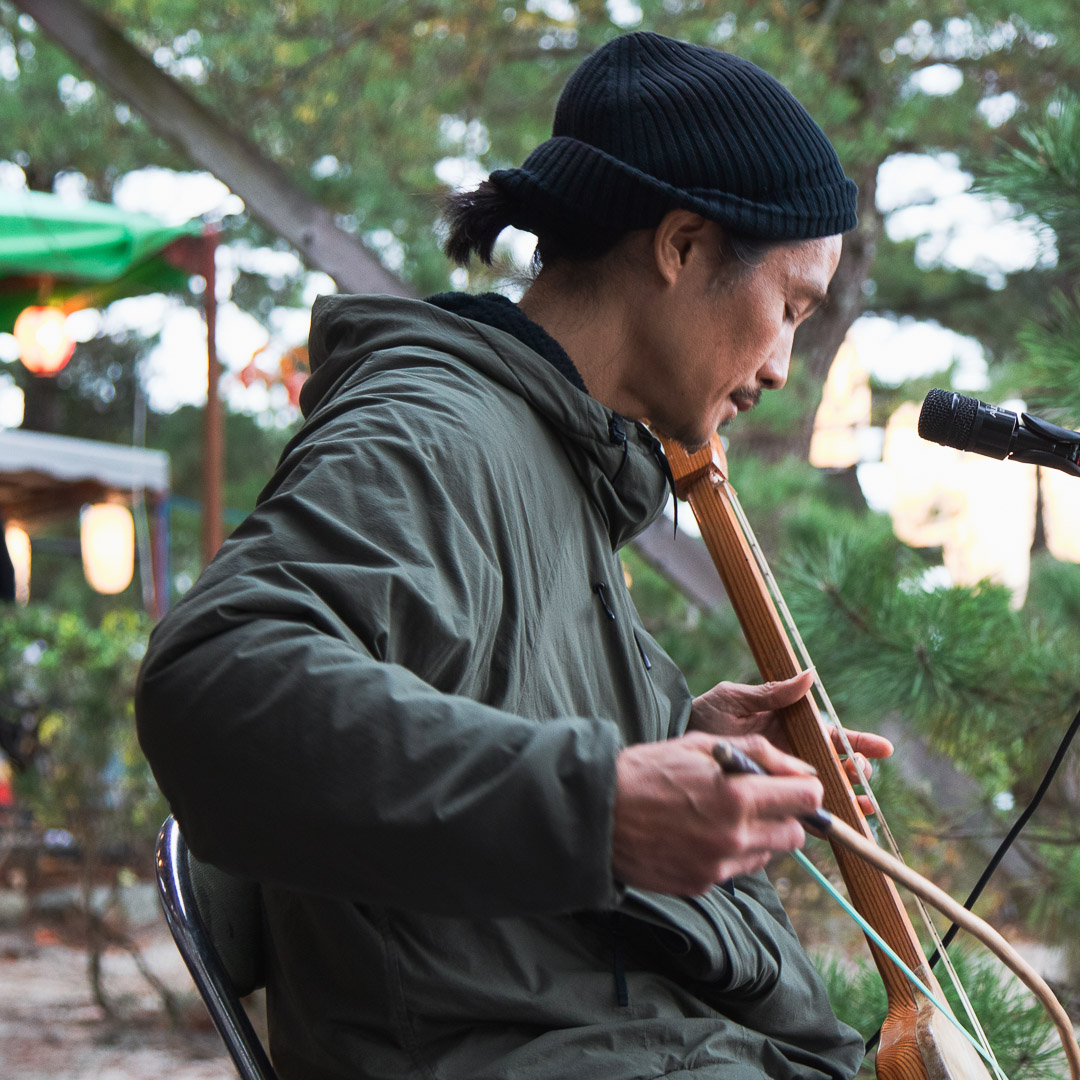
Born in Tokyo in 1979, Takaya Sasa has traveled through more than 60 countries, learning from life on the road—whether through cooking, music, shoemaking, or other crafts.
In 2013, he relocated to the banks of the Shimanto River in Kochi Prefecture, Japan, where he began building a lifestyle rooted in the land.
In 2016, he published The Salad Book (ささたくや サラダの本), a collection of raw food recipes and travel essays. He began creating pastel artwork in the summer of 2020, and in 2023, he self-published two books: TABI no Ohanashi-kai, a collection of travel stories, and Kurashi no Kage, a visual diary of daily life along the Shimanto.

Series: Ultralight Backpacking Across Taiwan: