





HLC Tohoku: Volcanic Landscapes and the Origins of Bonsai
HLC Tohoku: Volcanic Landscapes and the Origins of Bonsai
Yamatomichi HLC operates from eight locations in Japan and Taiwan. With the aim of building communities connected through ultralight hiking, each location runs programs throughout the year. In this HLC report, we highlight one such program that explores the origins of the culture in a specific place. This time, the theme was the volcanic terrain of Fukushima prefecture’s Bandai-Azuma-Adatara Volcano Trail and the Azuma goyomatsu, or Japanese red pine (Pinus densiflora), which grows wild in the area. These pines, exposed to severe winds and heavy snow, are shaped by their harsh alpine environment and have long been used for bonsai. That’s made Fukushima one of Japan’s leading producers of Japanese red pine bonsai. The origins of misho bonsai ー the practice of growing the trees from seed that was established in this region — are also rooted in the volcanic landscape and climate. Keisuke Ichinose, the producer of the Bandai-Azuma-Adatara Volcano Trail and operator of the Adatara-Azuma Nature Center in Dake Onsen at the foot of the mountains, was our guide for two leisurely days on the trail.
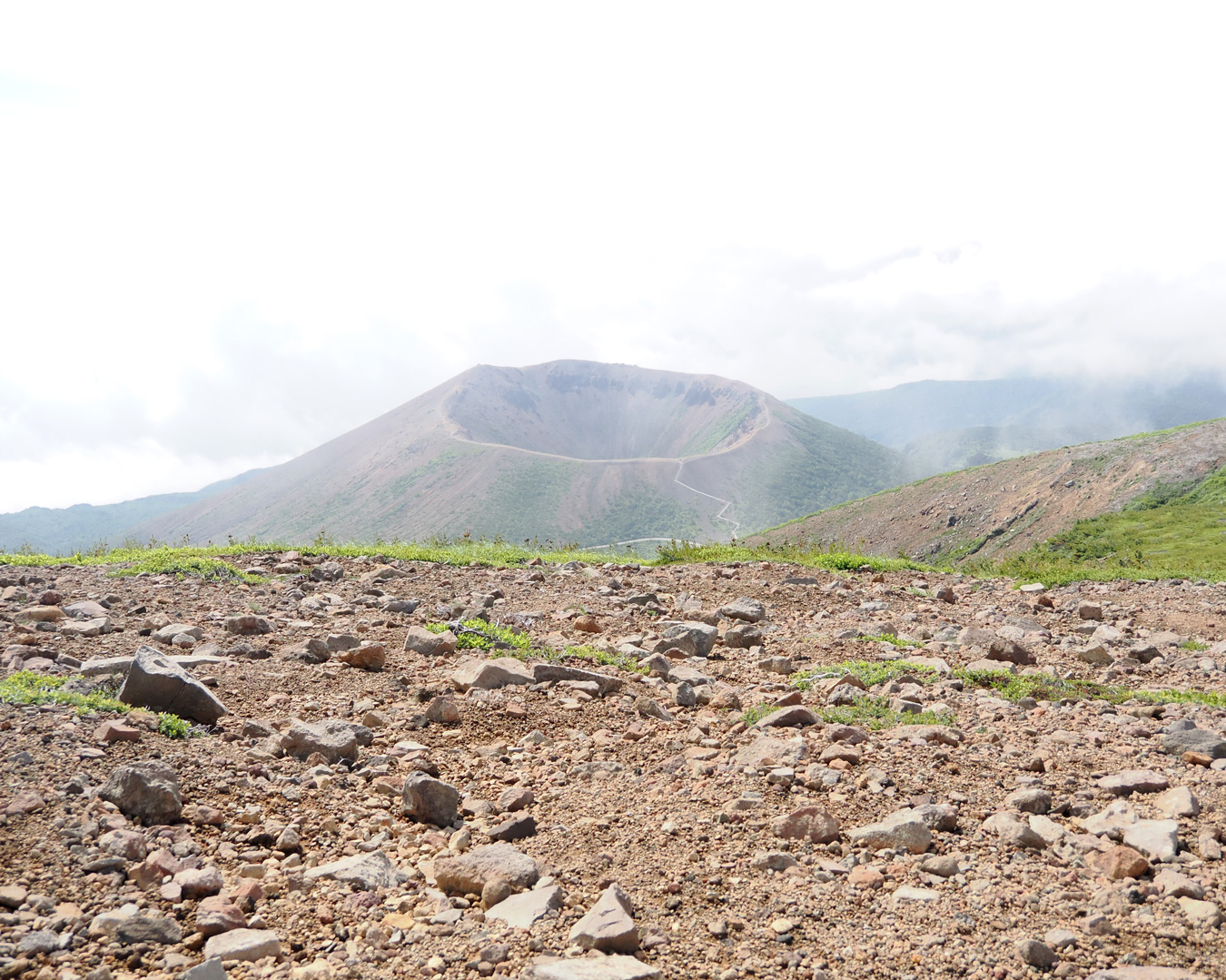
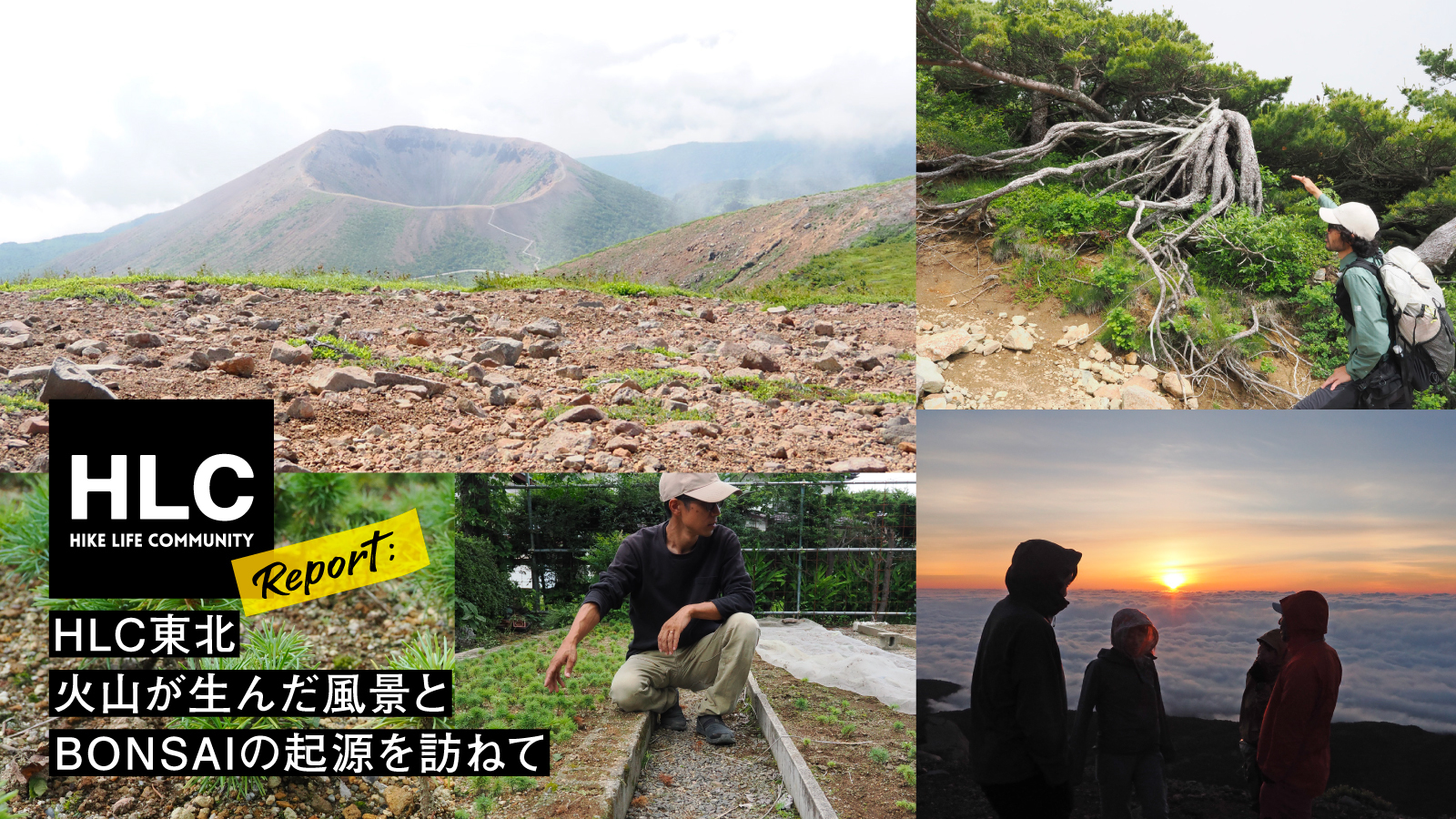
The enormous crater of Mt. Azuma-Kofuji, an iconic feature of the volcanic landscape.
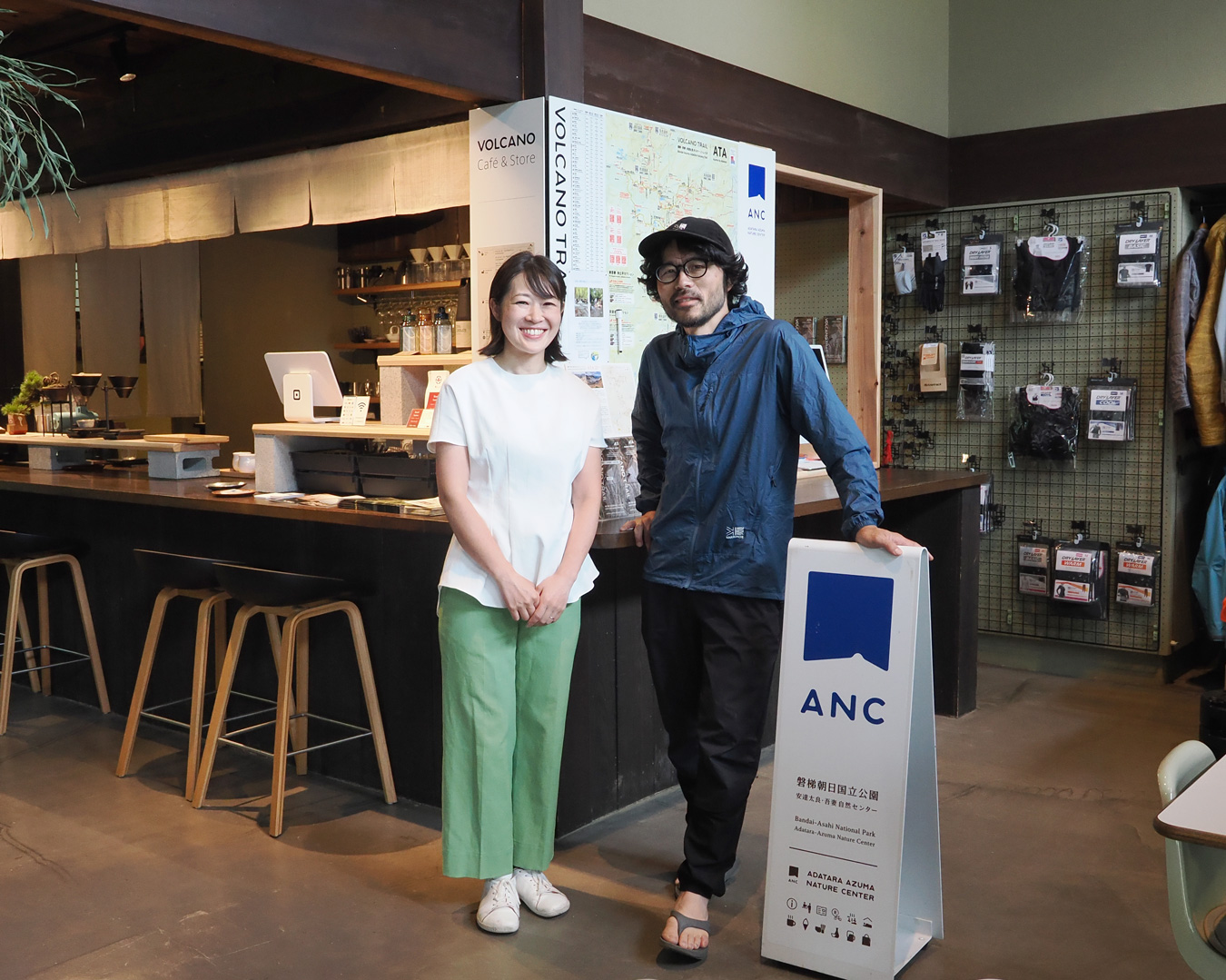
Keisuke Ichinose (right), who helped plan the program and served as our guide, and his wife Akiko Nihei (left), the seventh-generation owner of Oyado Hanakanzashi, an inn in a nearly century-old building that houses the Adatara-Azuma Nature Center. The inn served as our base for the visit.
Azuma goyomatsu pines in the mist
Itinerary
【Day 1】Tsubakuro Valley parking lot → Shimofuri New Trail → Mt. Rakuda → Mt. Issaikyo → Kamanuma Pond → Jododaira Campground (approximately 6 hours of walking)
【Day 2】Jododaira Campground → Mt. Azuma-Kofuji (optional) → Jododaira Campground → Mt. Issaikyo → in front of Keio Azumasan-so → Tsubakuro Valley parking lot (approximately 8 hours of walking)
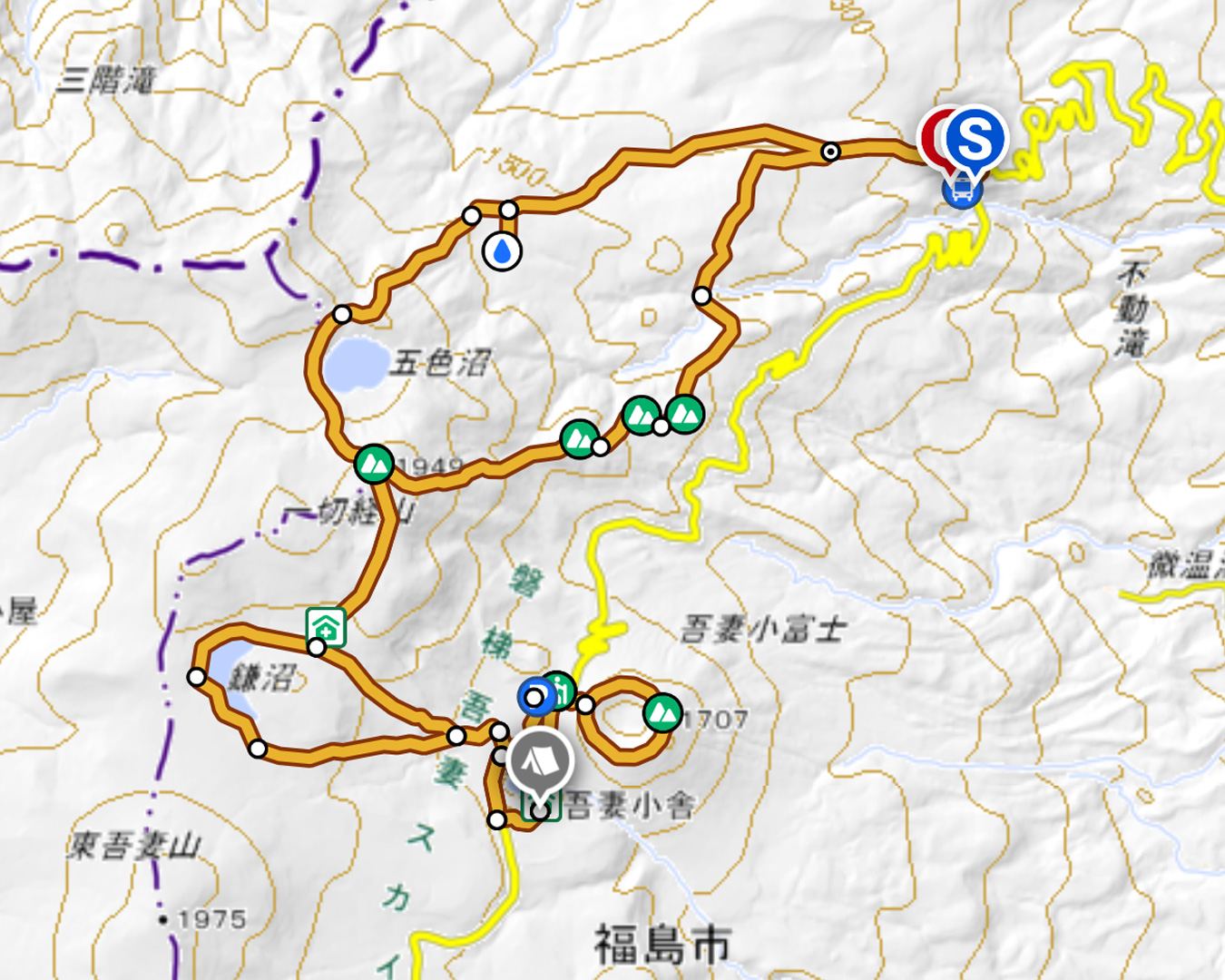
Our route over two leisurely days spent on the trail.
On an early July morning, 11 hikers from around the northeastern Tohoku region gathered at Tsubakuro Valley parking lot, at the northern edge of Fukushima prefecture, along the Bandai-Azuma Skyline, a scenic road that winds through the Azuma mountain range.
Our plan was to hike a circular route, starting on the Shimofuri New Trail. On the first day, we would pass Mt. Issaikyo, Goshikinuma Pond (also known as the Witch’s Eye) and Kamanuma Pond, before reaching Jododaira Campground. On our second day, we would rise before dawn to catch the sunrise from Mt. Azuma-Kofuji, then return to our starting point by way of Mt. Issaikyo.
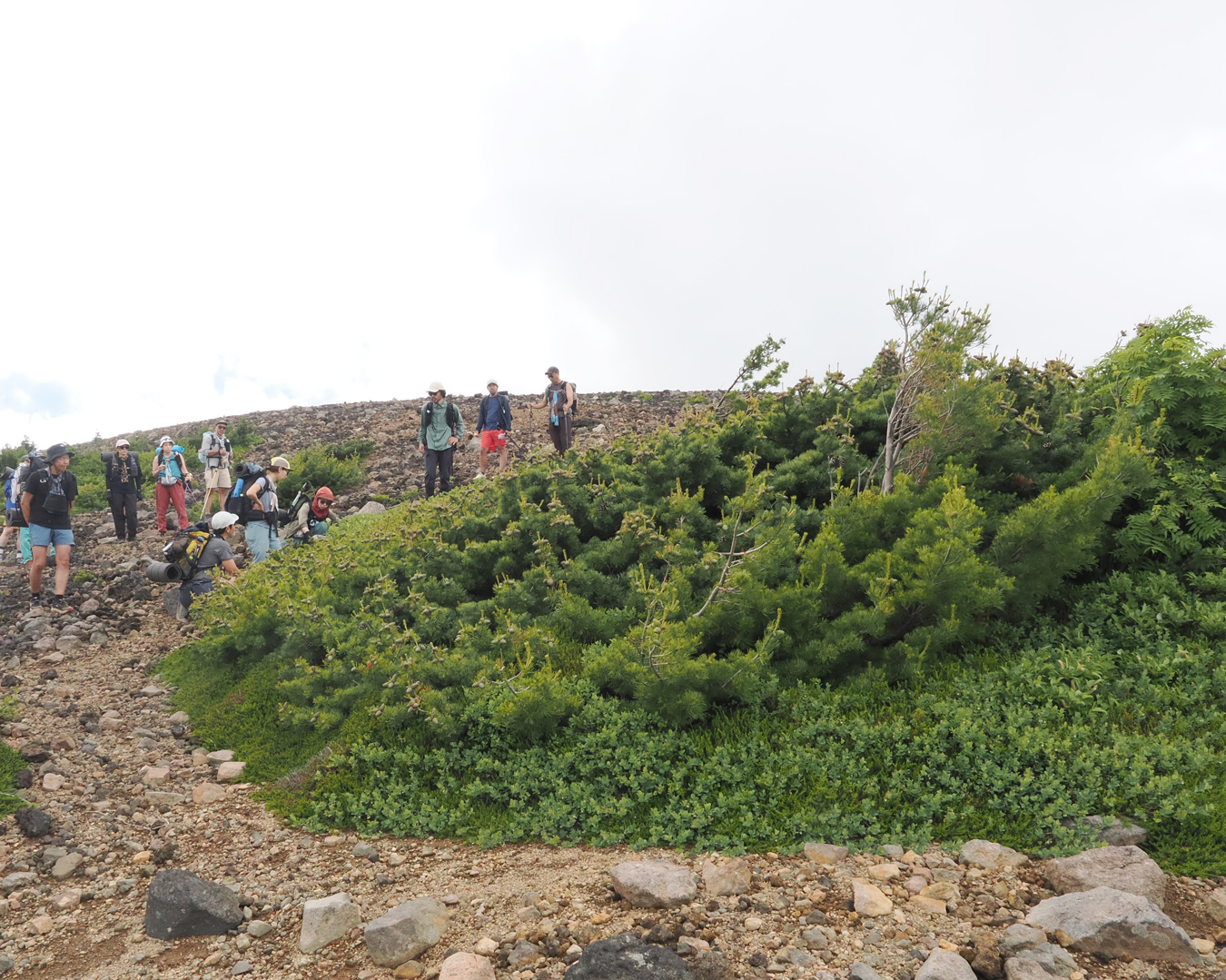
We met our guide, Keisuke Ichinose, three and a half hours after we’d begun, at the summit of Mt. Rakuda. Fog engulfed the mountain. Around us were the rugged rocks, red soil and low-lying vegetation that are typical of this volcanic terrain. The plants, which seemed to cling to the ground, had clearly endured the harsh alpine winds and snow up here for eons.
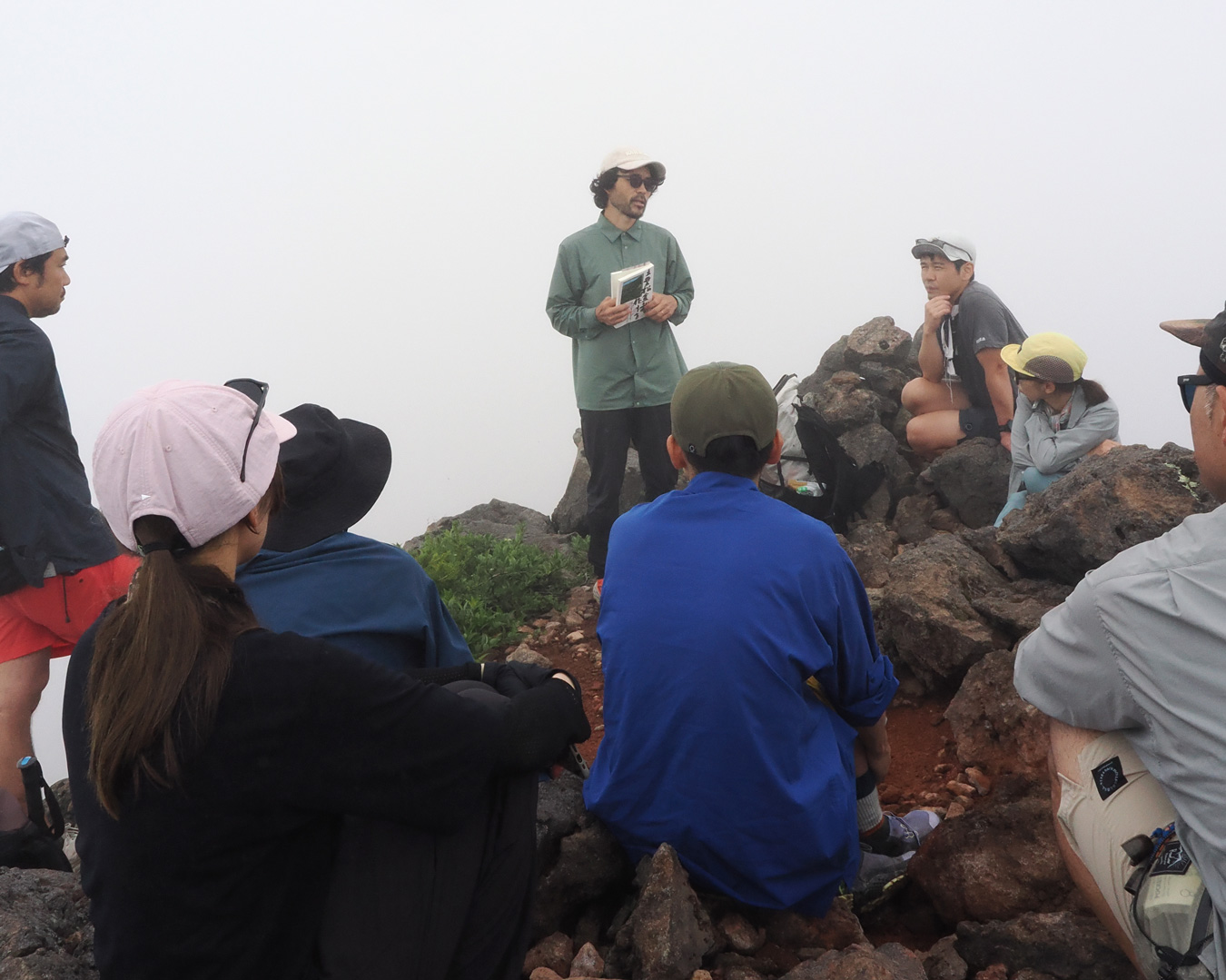
We gathered around Keisuke. The story of bonsai lay hidden in this landscape, he said.
“It was this region of Azuma that played a major role in introducing bonsai to the rest of the world. Thanks to a guidebook produced by Bonsaiya Abe that made its way overseas, bonsai is now recognized globally,” he said.
Bonsai came to Japan from China. It was Kurakichi Abe who came up with the techniques for cultivating Japanese red pine bonsai from seeds and spread his methods to the rest of the world. His book, How to Make Goyomatsu Bonsai, written a half century ago, was translated into Italian, Spanish, French and English, and became a de facto textbook for bonsai enthusiasts and practitioners in other countries.
The trees that grow wild in this area are known as Azuma Goyomatsu pines*. They’re among three prized varieties (the others are Nasu and Shikoku). Under normal conditions, the trees grow straight and tall, but in this volcanic region, where they are constantly exposed to fierce winds and snow, they take on twisted forms and hug the ground. Kurakichi Abe, the founder of family-run Bonsaiya Abe in Fukushima city, was captivated by the dynamic beauty of these trees shaped by natural forces.
More than 100 years ago, yamadori (taking from the mountain) ー the practice of digging up trees growing wild in the mountains ー was mainstream. It was illegal in national forests but people still secretly did it and they sold the trees. If they heard that inspectors were approaching, they dumped or hid the trees they’d taken.
When Kurakichi was 20, he decided that em>yamadori was unsustainable and abandoned it in favor of misho ー growing trees from seeds.
A bonsai grown from seed takes 100 years before it’s ready. By then, the grower’s grandchildren, not the grower, will be the one to sell it. The Abe family has passed down this tradition but also walked the Shimofuri New Trail ー the same one that we’d taken ー countless times.
*Many pines have needles arranged in pairs. The Japanese red pine species has five needles in each cluster ー hence, its Japanese name, goyomatsu, which means five-needle pine.
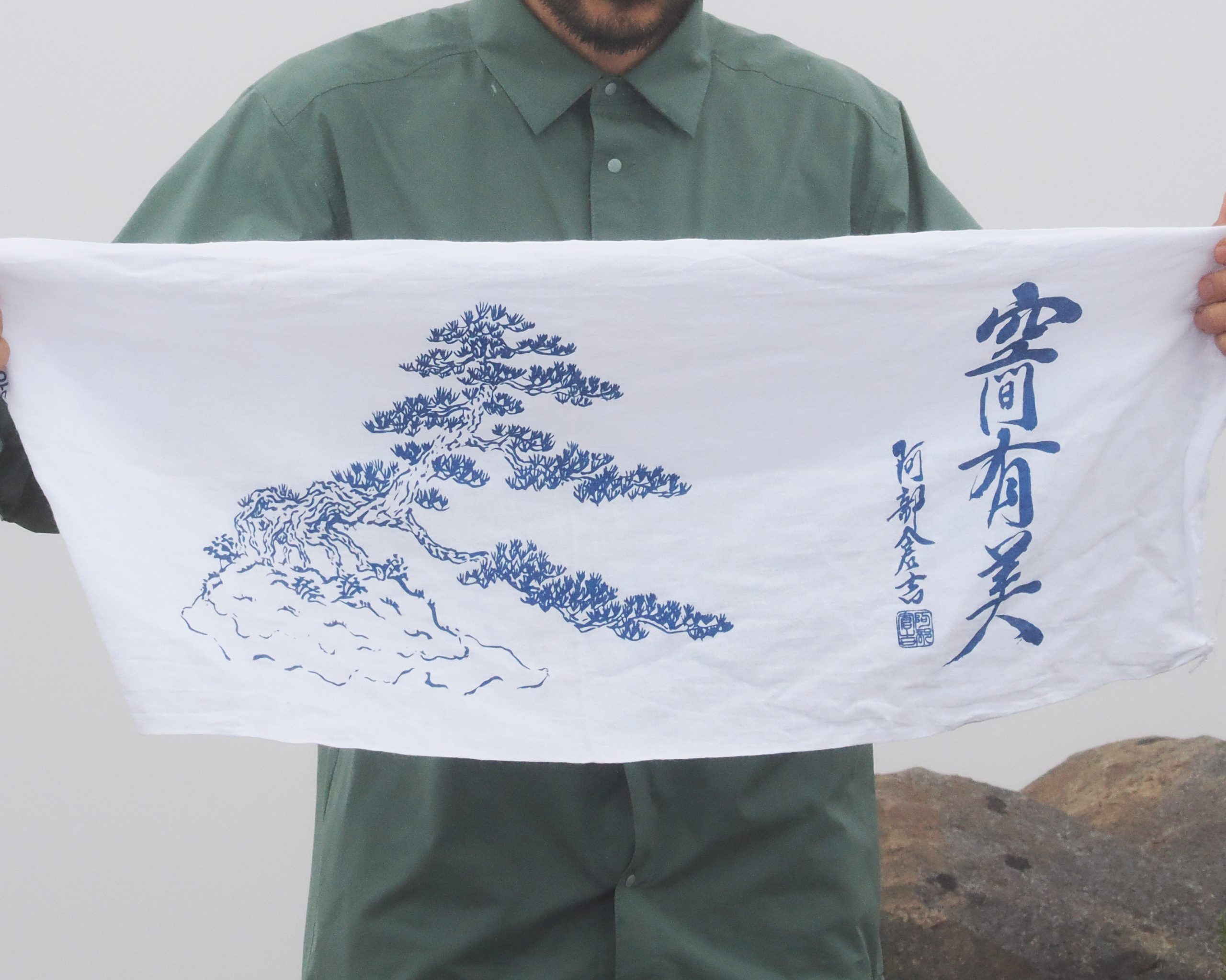
The Abe family calls its style kukan yubi (空間有美), or beauty in space. In shaping a tree, they consider the spaces between branches, the place where the bonsai is displayed and the natural landscape of the mountains. For every bonsai, they ask themselves: Would this fit in with the Azuma mountains?
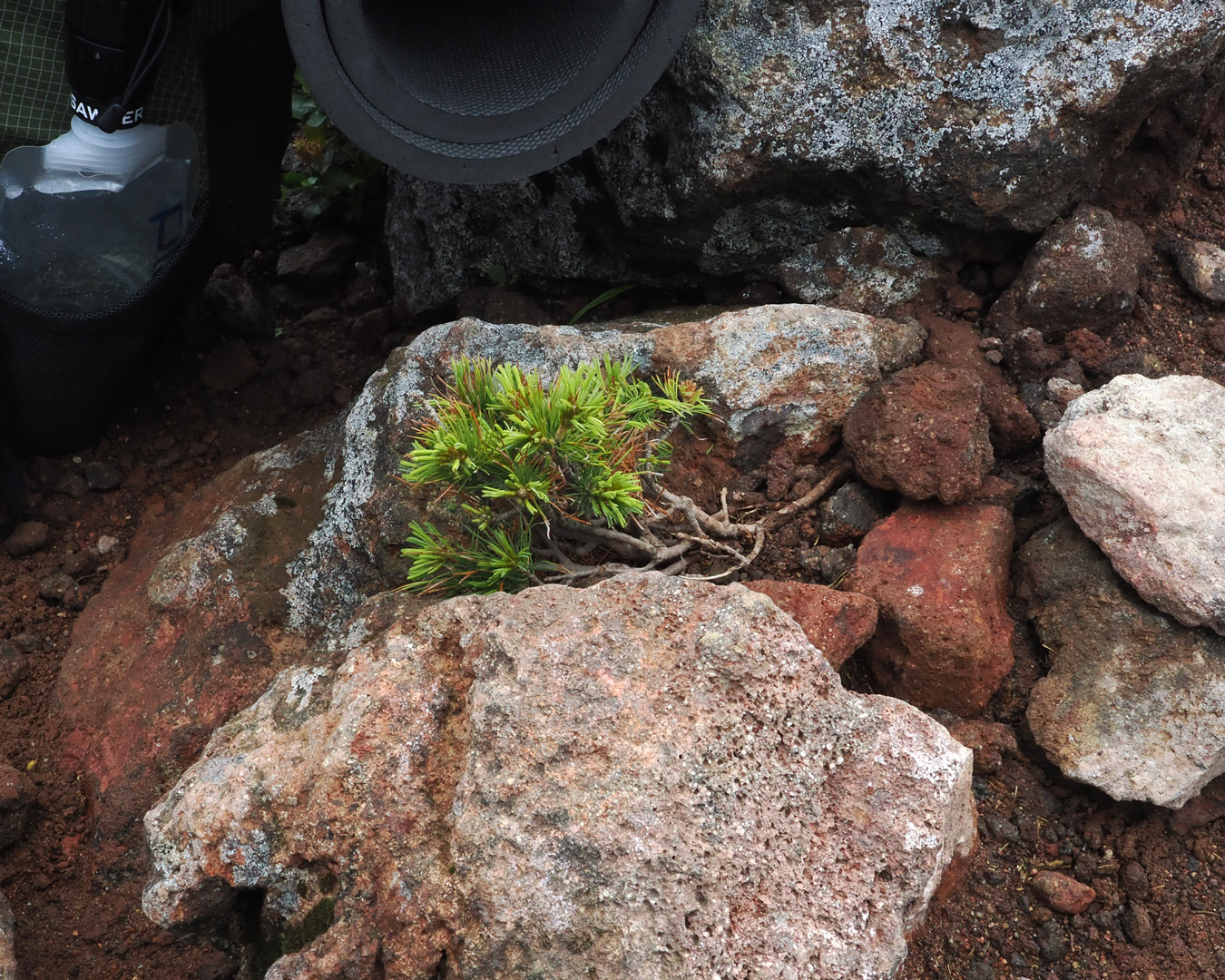
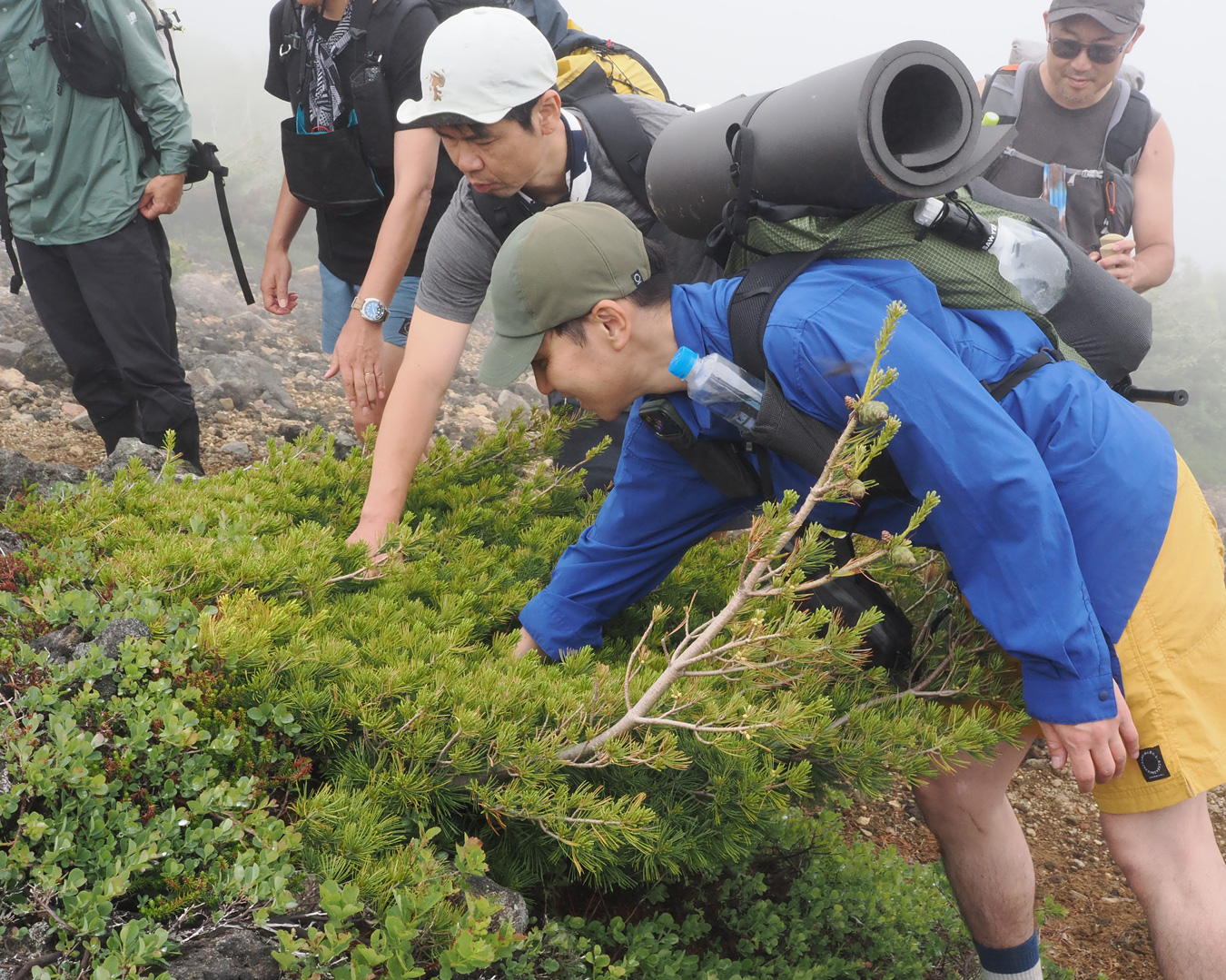
This Japanese red pine growing with its roots anchored between rocks is estimated to be 10 years old. Many pines have needles arranged in pairs. This species has five needles in each cluster ー hence, its name, goyomatsu, which means five-needle pine.
“See that pine cone?” Keisuke said. “It holds the seeds of the Japanese red pine. But the trees growing here aren’t all from seeds that happened to fall to the ground. In autumn, Northern nutcrackers collect the seeds and bury them in the soil or the gaps between rocks for later. They end up eating about 80 percent of the seeds. The remaining 20 percent germinate and grow into trees.” Every Japanese red pine that makes you wonder how a tree found its way to this place was probably left by a Northern nutcracker (Nucifraga caryocatactes).
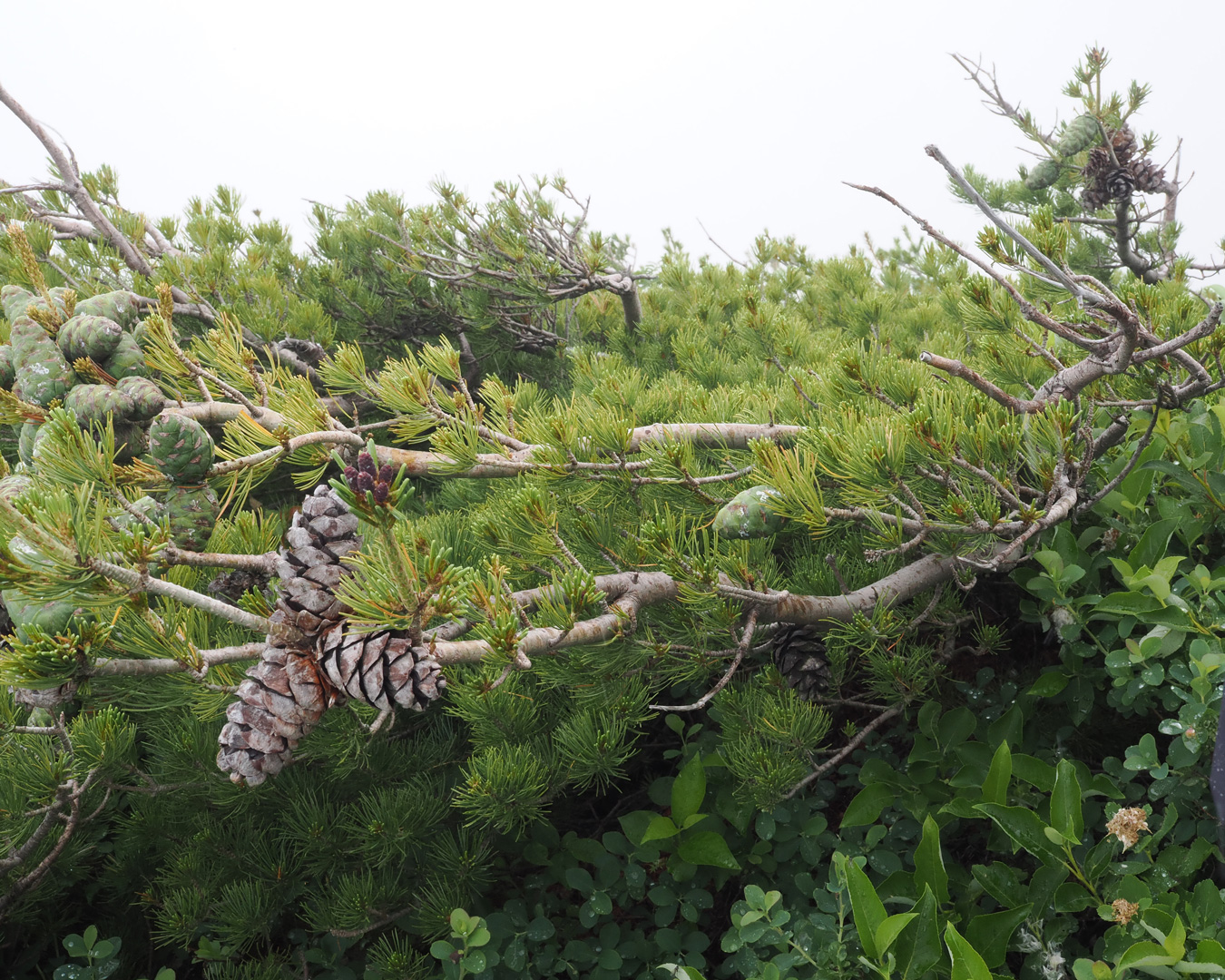
A tree form known as fukinagashi (windswept), in which the branches extend in only one direction ー the result of only the branches on the sheltered side having survived.
Further along, we encountered an astonishing sight: a Japanese red pine whose tangled roots were exposed, rather than buried in the soil. It was, we would learn, a sign of incredible resilience in the face of harsh conditions.
“When you know about things like this, it’s fascinating to discover shapes in nature that occur over hundreds of years,” Keisuke said.
Trees normally spread their roots underground, push their trunks above the ground and extend their branches and leaves outward. But here was a Japanese red pine in a very different pose: its roots arcing over its trunk and branches, a shape known as neagari (raised roots).
“Everything you’re seeing here is the tree’s roots. The trunk is hidden and extends downward. The clay-rich soil is hard, so the roots can’t penetrate too deeply. There used to be more soil supporting the base of this tree, but rain, snow and wind eroded the soil, exposing the roots. So the tree was less able to support its own weight. The top part got so heavy that eventually it toppled over, thrusting its roots into the air. It didn’t die, though; it survived in that position. This is called neagari, and Azuma is the only place in Japan where you can see it ー and possibly the only place in the world.”
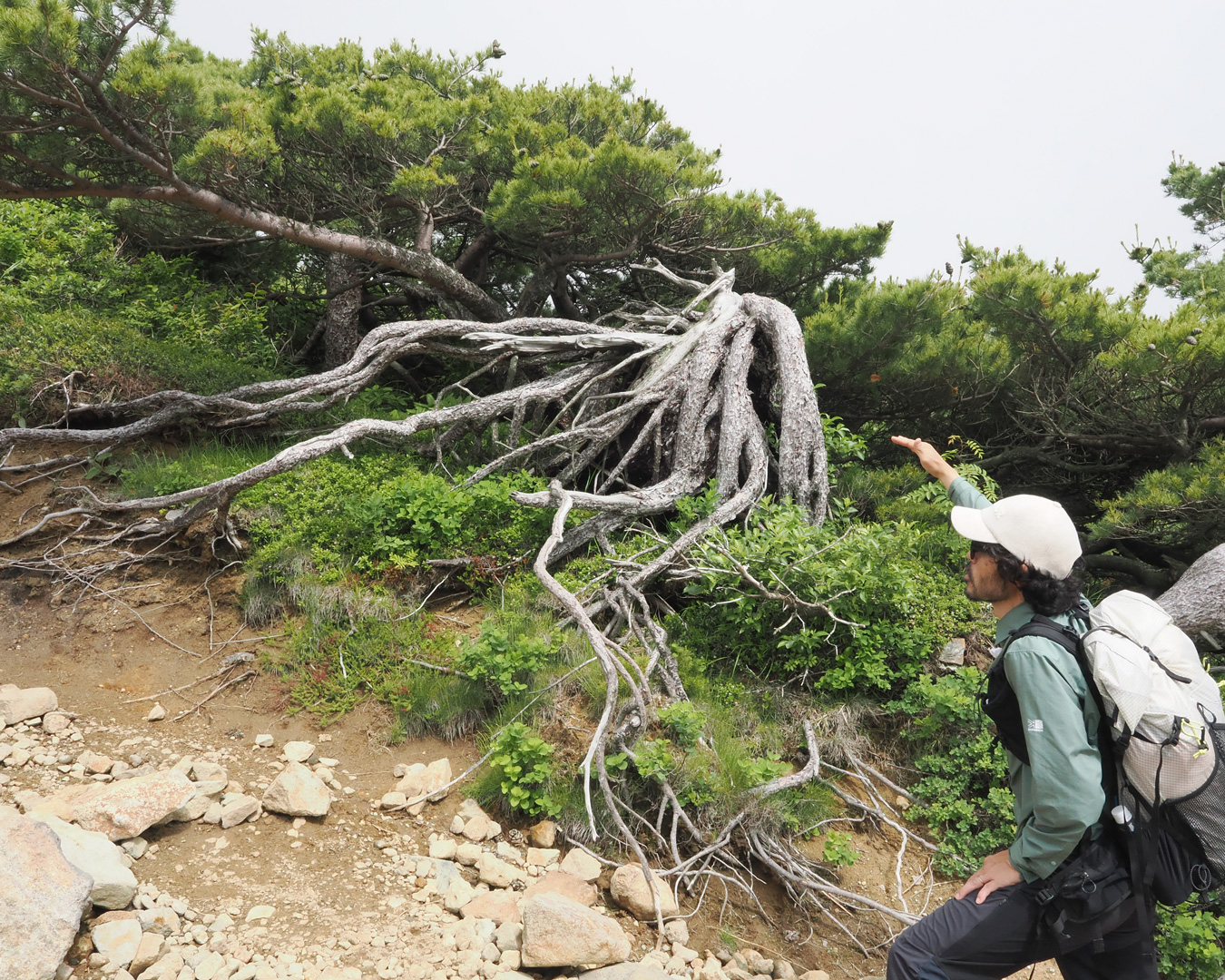
A Japanese red pine with its roots arcing over its trunk and branches, a shape known as neagari (raised roots).
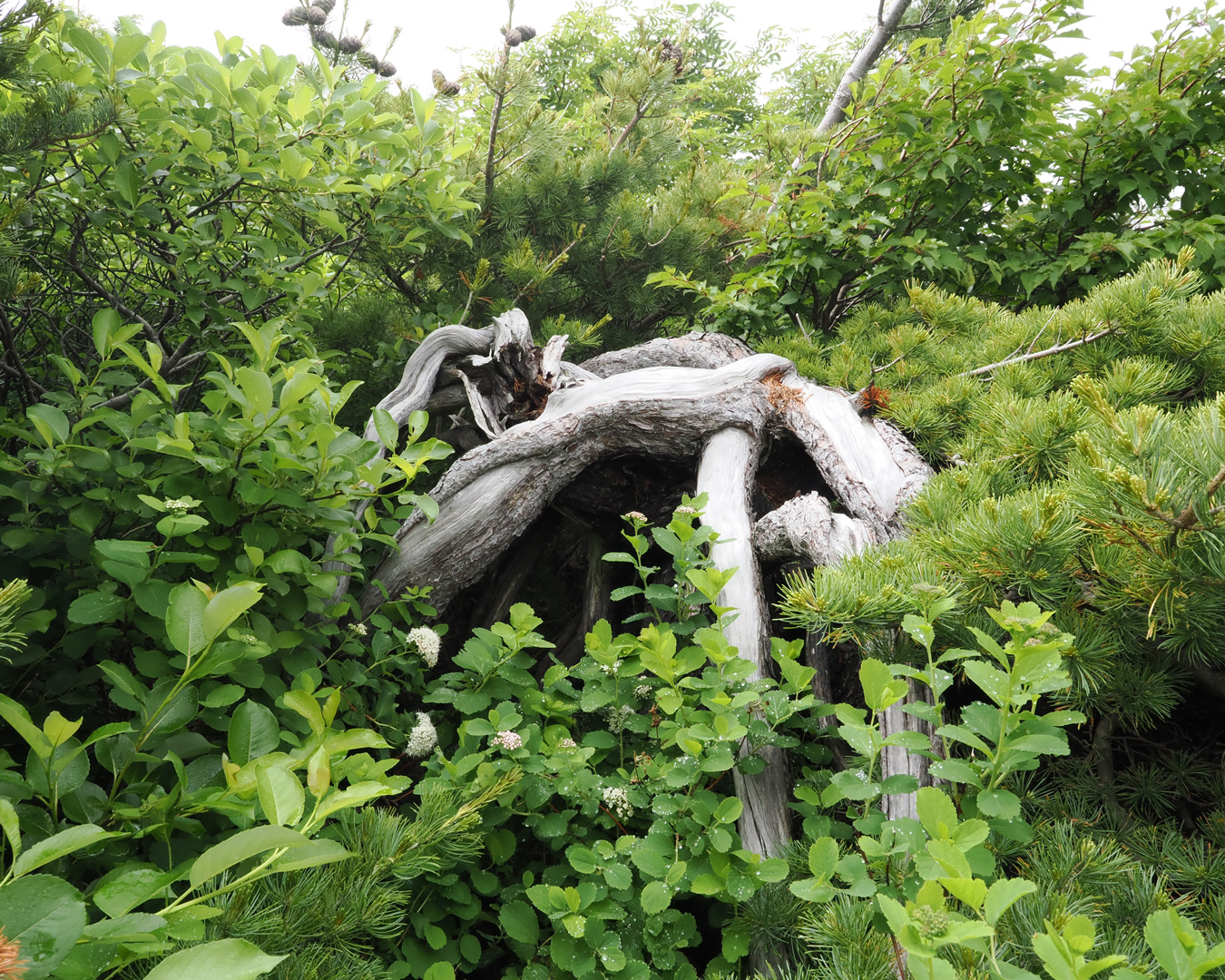
This tree’s name, Garyu no Matsu (Crouching Dragon Pine), comes from its giant mass of exposed roots.
A Japanese red pine that’s hundreds of years old. Each tree has distinctively shaped needles and each needle is shaped identically at both ends and can be identified as belonging to a specific tree.
This sturdy pine has weathered more than a century of wind and snow.
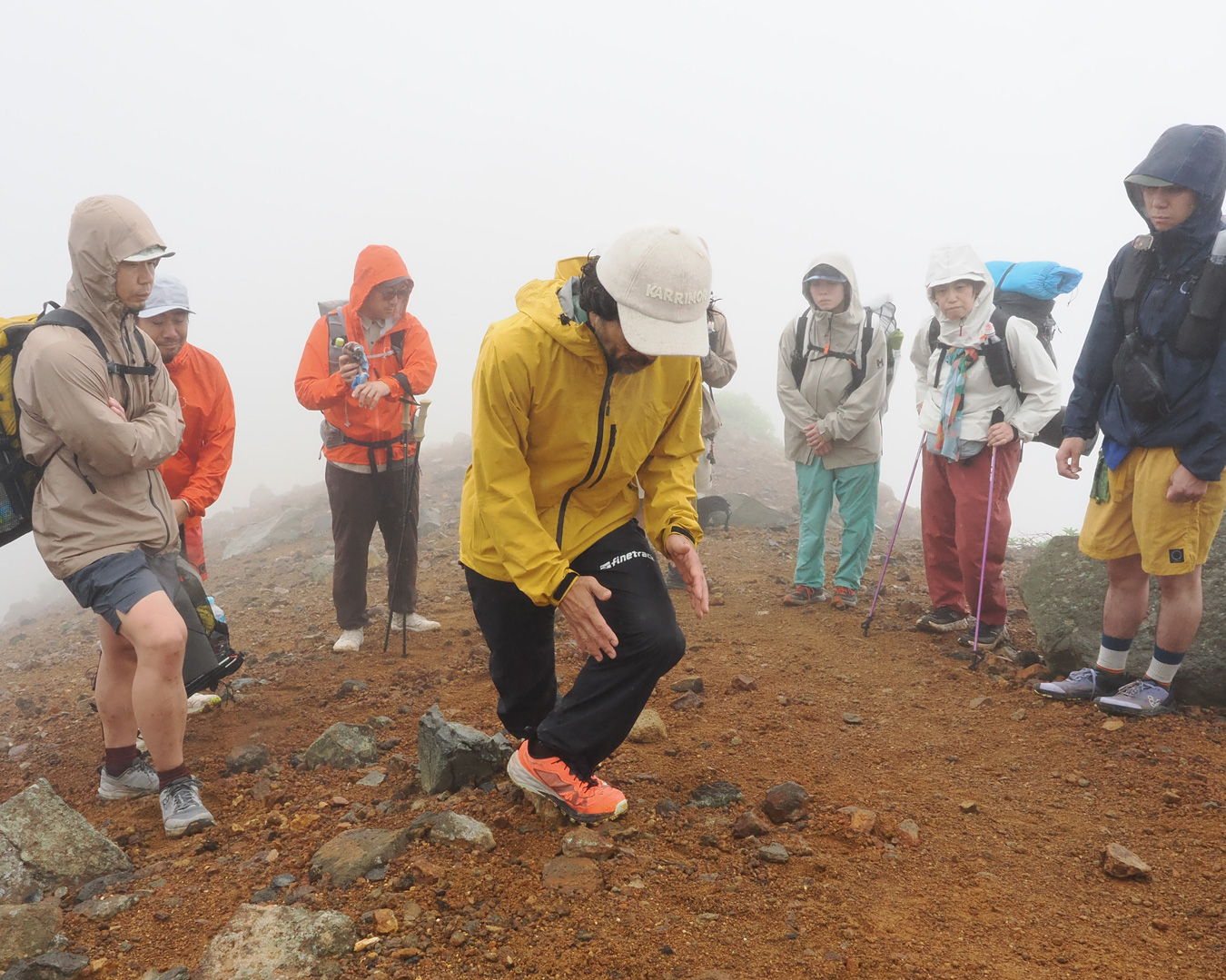
Keisuke Ichinose is a professional photographer who treks alongside athletes participating in the Trans Japan Alps Race and NHK’s Great Race, a documentary series on extreme races. He shared the walking technique he has developed to reduce body strain while shortening traveling time ー leaving more time to enjoy the scenery.
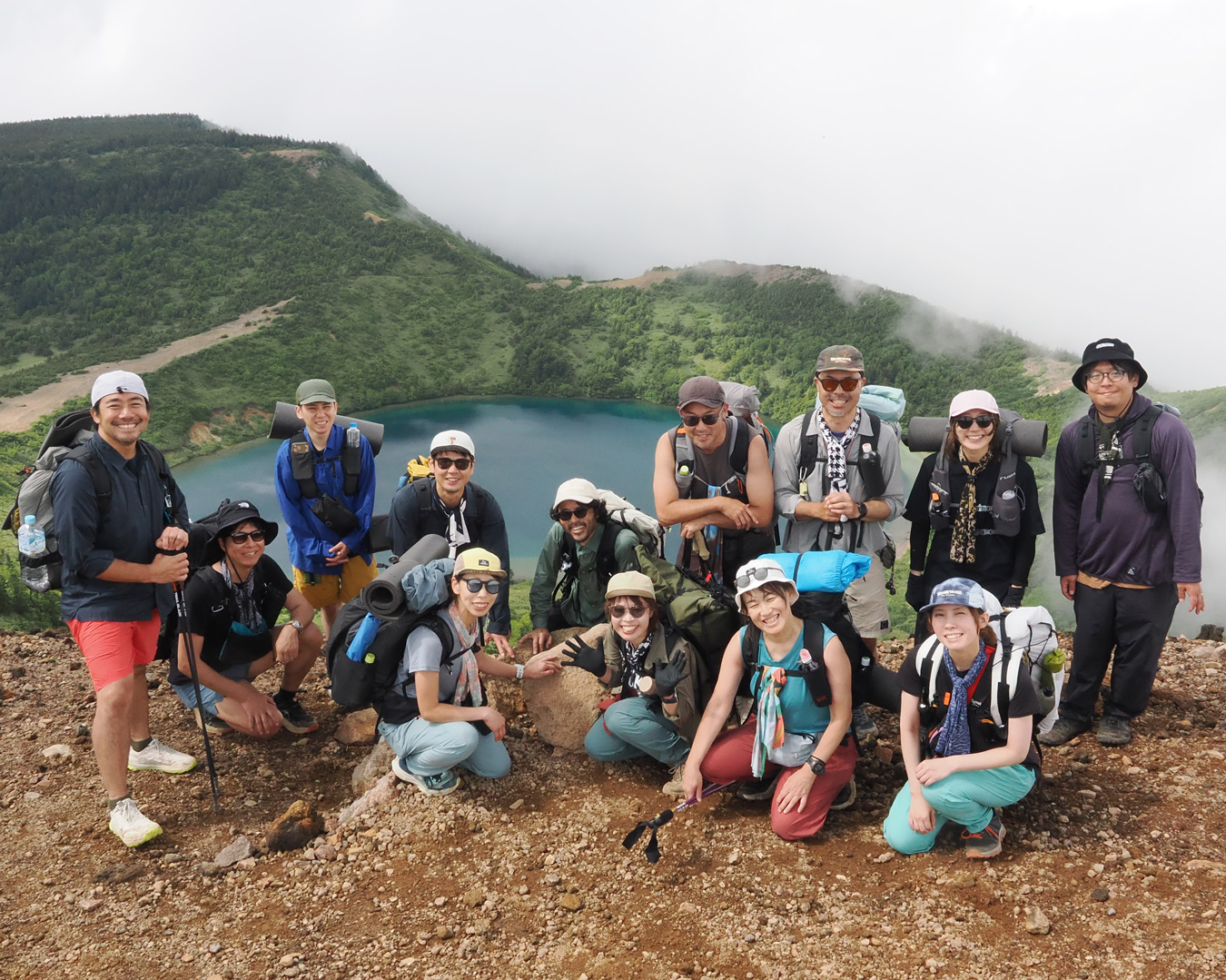
Goshikinuma Pond (Witch’s Eye), as seen from Mt. Issaikyo. The water contains hydrogen sulphide, volcanic gases and metallic compounds, and its colour changes depending on the angle of sunlight.
Campground conversations
We arrived at Jododaira Campground late in the afternoon. After pitching our tents, we formed a circle beneath a large tarp as Keisuke talked about the volcano trail and the art of bonsai. “Growing bonsai from seeds means planting while knowing that you will never see the finished tree in your own lifetime. That understanding is part of the art,” he said.
In How to Make Goyomatsu Bonsai, Kurakichi Abe writes: “It takes two or three generations for a pine to develop the appearance of an old tree.” Because a tree is a living thing that’s constantly changing, bonsai is an art form that has no concept of completion.
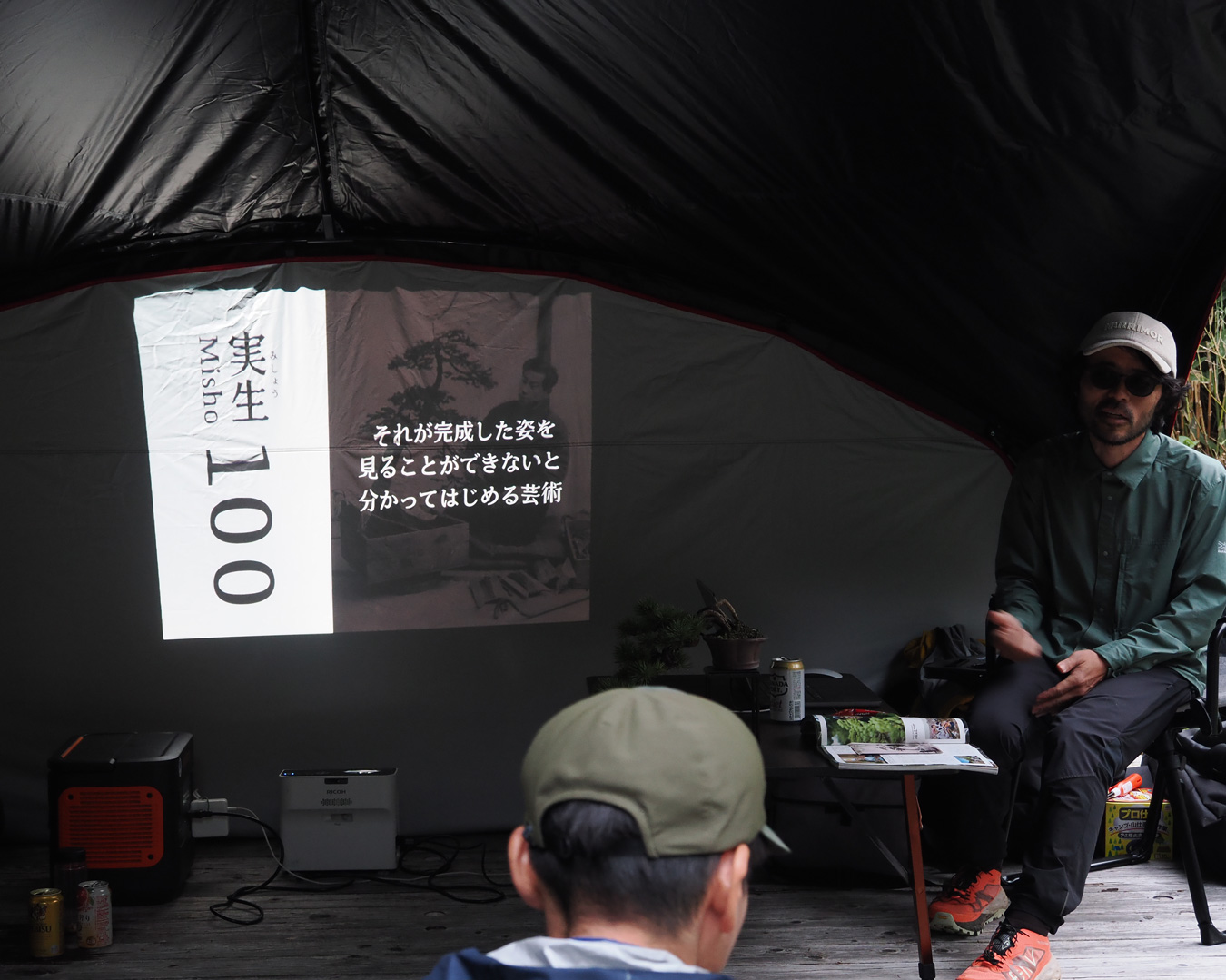
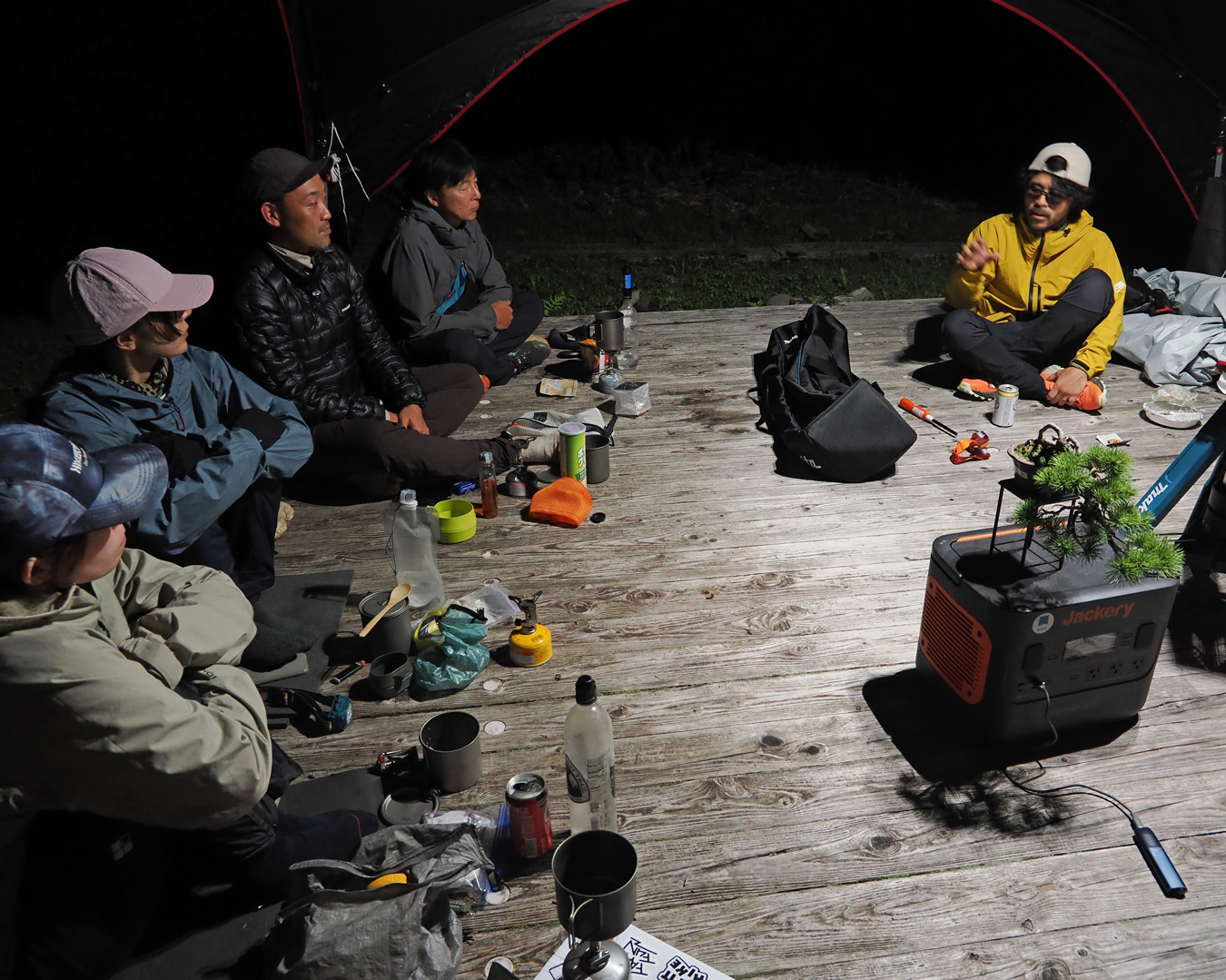
As part of his work at the Adatara-Azuma Nature Center, Keisuke also maintains hiking trails on Mt. Adatara that have been worn down by foot traffic, trekking poles and weather.
That evening was our last with Keisuke. After his presentation, we took turns sharing our thoughts.
One person said: “When I heard about planting seeds with a vision spanning 100 years, I was so moved I almost cried.”
Toshiki, who heads Sakari Trail Tracks in Ofunato, Iwate prefecture, addressed Keisuke directly: “Recently, back home in Ofunato, I started an organization to maintain old roads and local footpaths. We’re going to work hard, just like you, to create trails that make people want to visit.”
The applause that erupted was a sign that we’d been inspired to contribute in our ways to the mountains and trails of our local regions.
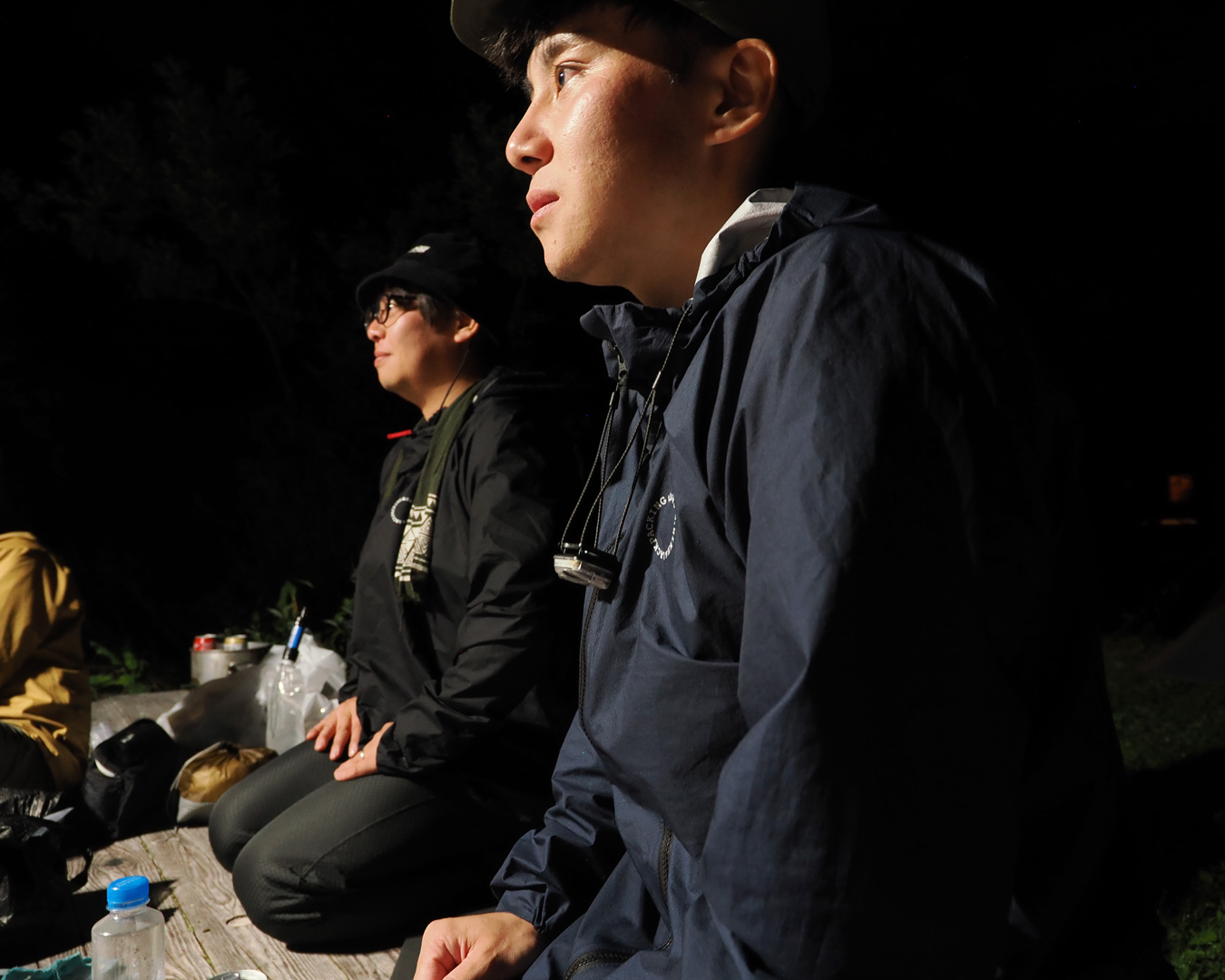
Participant Toshiki (foreground) from Iwate heads Sakari Trail Tracks. Murakami (behind) is the group’s deputy head.
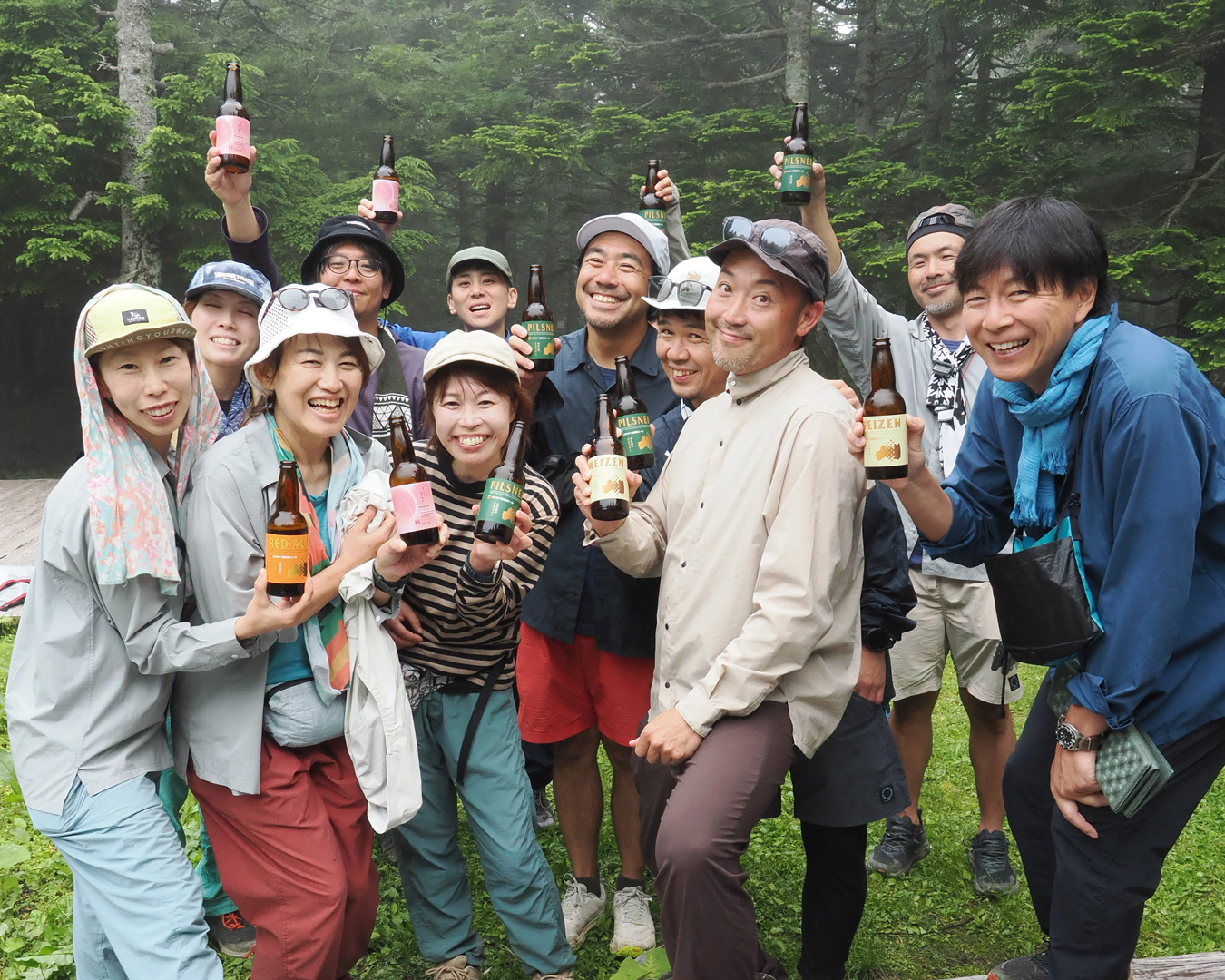
Michinoku Fukushima Road Beer, a craft beer made with spring water from the Azuma mountains. The water filters through fine volcanic ash particles and is low in impurities.
New perspectives
We awoke at 3:00 am the following morning to watch the sunrise. Some of us headed toward the crater of Mt. Azuma-Kofuji. As we climbed, the sky turned a deep blue-to-orange gradient. Below us, clouds stretched from the Pacific coast to the Fukushima Basin. The previous day’s thick fog had given way to this spectacle.
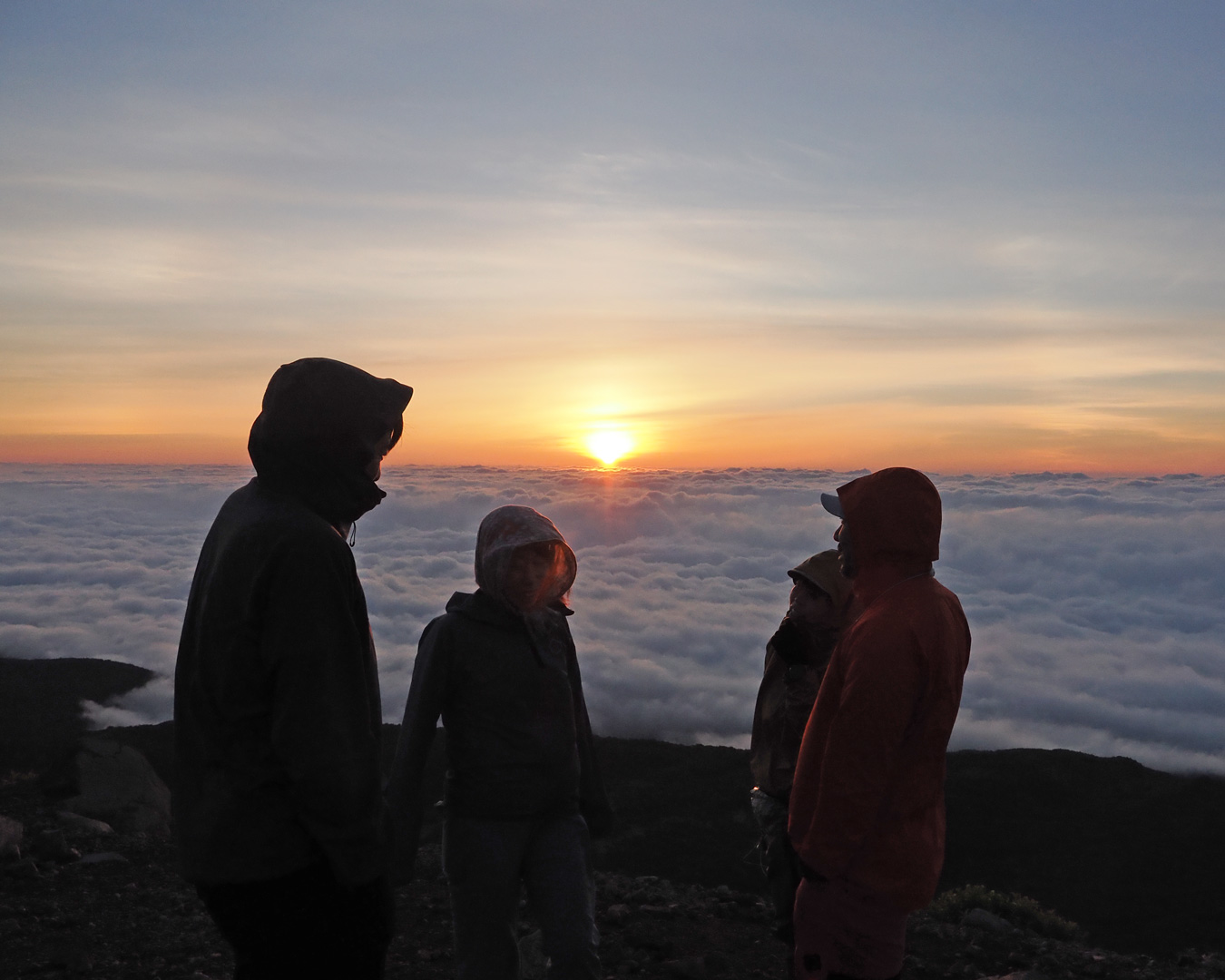
Clouds covering the Fukushima Basin below us.
After breakfast, we set off for the second day’s hike. We passed Mt. Issaikyo and descended along a different route from the one we had taken before. At a spot overlooking Goshikinuma Pond, we stopped to admire a pine tree that was twisted in a neagari pose. One participant said, “I’ve walked right past these so many times before” ー a thought that many of us shared.
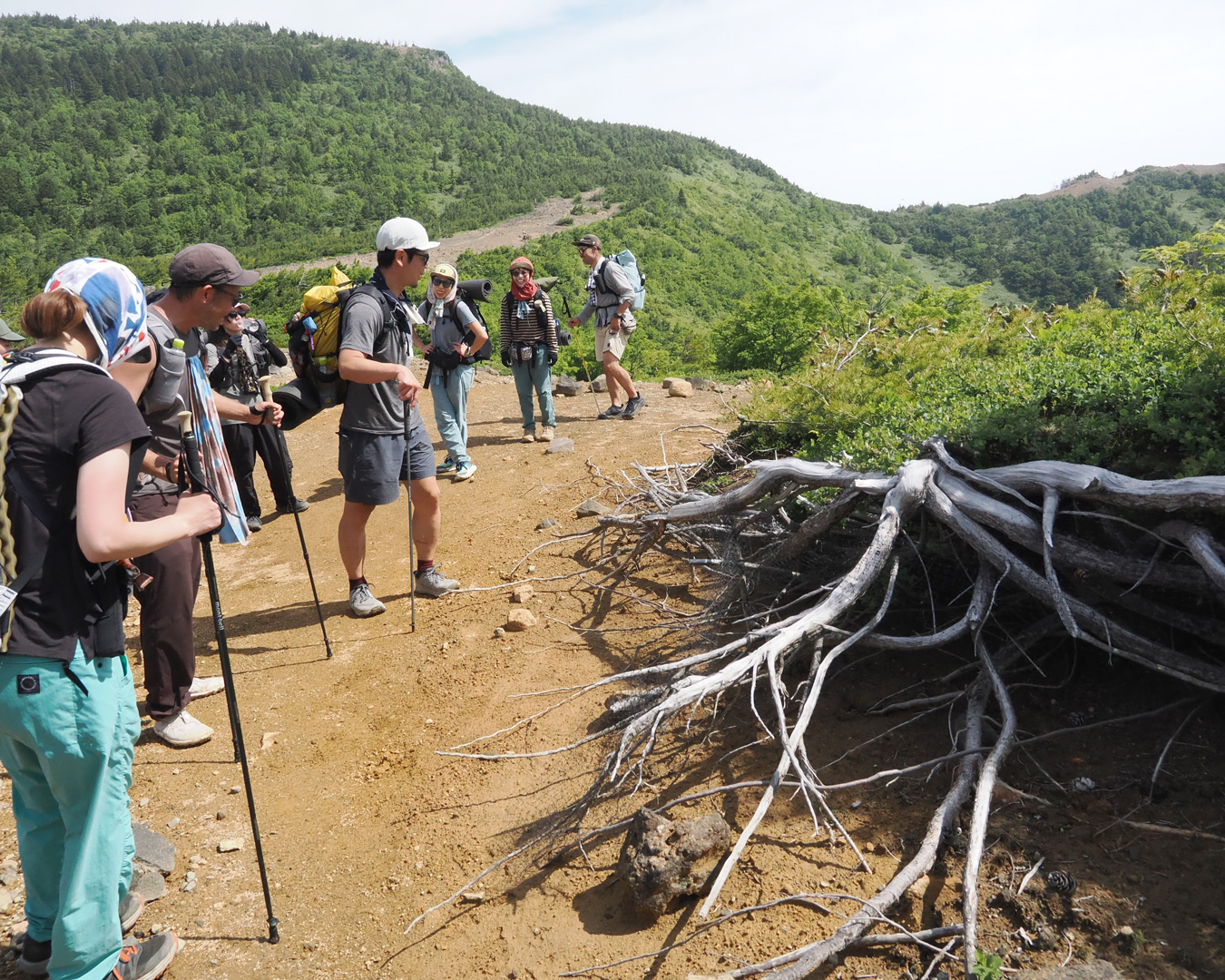
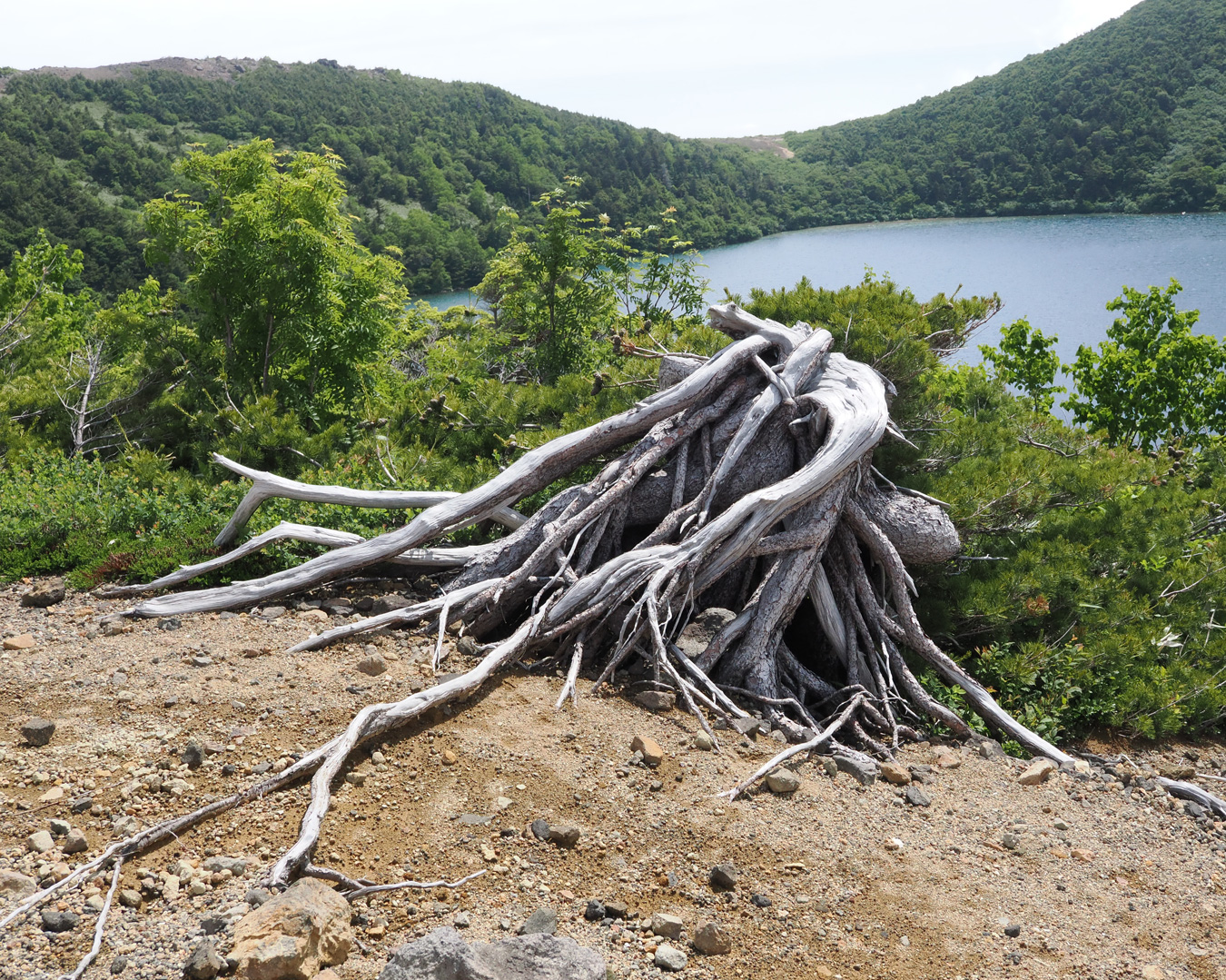
A pine tree on the western side of Goshikinuma Pond. Its slender roots extend several meters.
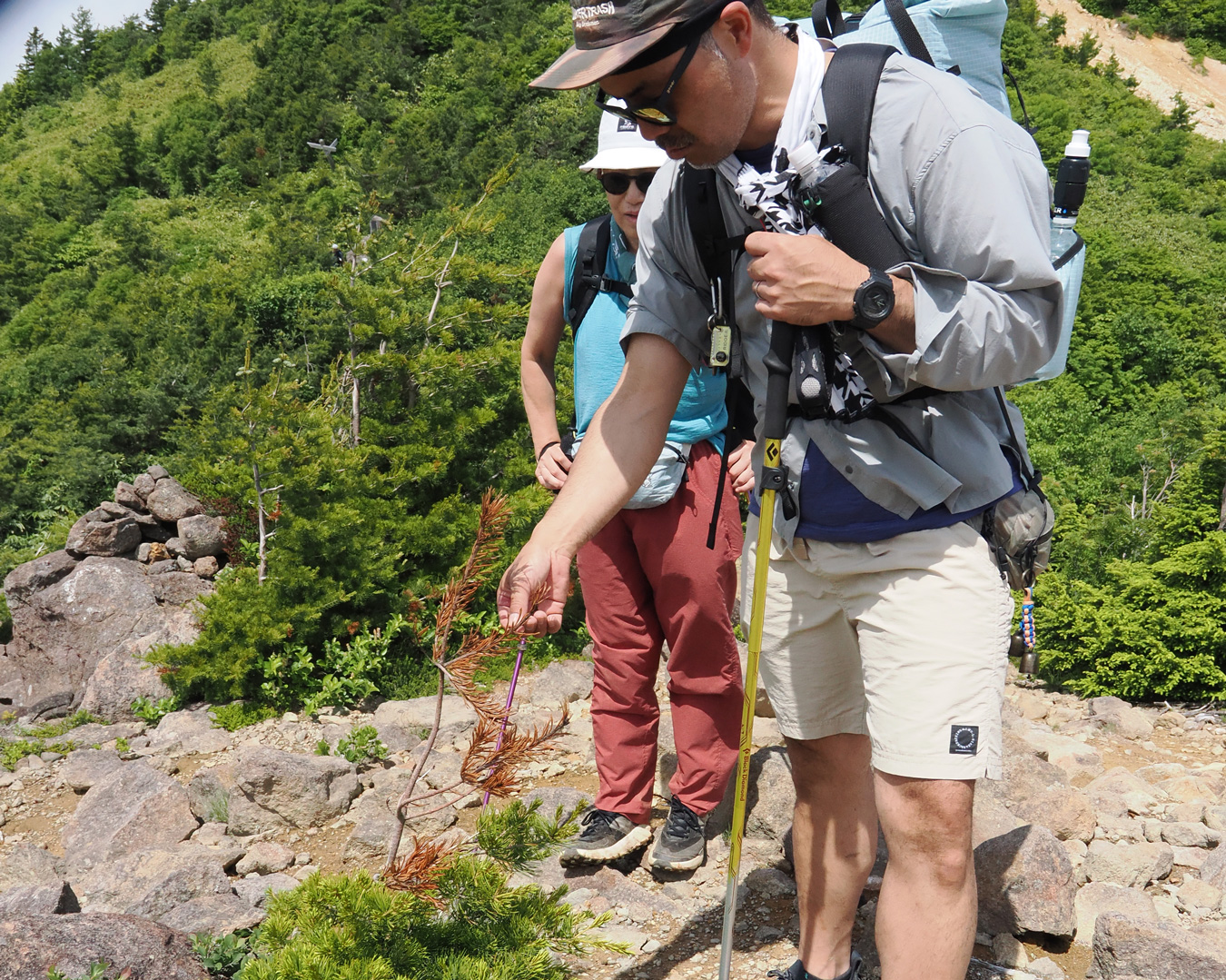
Participant Kiyoshi spots a pine whose top has died due to the harsh conditions.
Bonsaiya Abe's commitment
The next day, Keisuke and I headed to Bonsaiya Abe. I wanted to see for myself how the Japanese red pines we had seen in the mountains are shaped and passed down from one generation to the next, and the family had kindly agreed to letting us visit.
The moment we stepped into their home and workshop, we spotted row upon row of bonsai trees. I thought: vitality, strength, beauty. The third-generation owner, Daiki Abe, greeted us and took us to see the seedlings in the fields.
“We look at the needles to determine each tree’s characteristics, and then cultivate each one according to its individual needs. We call this hasho (needle characteristics). Even trees from the same mountain can be completely different depending on where they grow. There are very few bonsai growers anywhere in Japan who pay this much attention to detail,” Daiki said. These days, it’s rare in this business to go into the mountains to observe the trees in their natural habitat, he said.
We placed one-year-old and two-year-old seedlings side by side. Only a few centimeters separated the height of one from the other ー a reminder of how slowly time works for these trees. “Goyomatsu (Japanese red pines) grow incredibly slowly. If you stop watering them for even a single day, 80 or 100 years of accumulated work can be lost in an instant,” Daiki explained.
His parents, Kenichi and Keiko, have never been on trips in Japan and have only traveled overseas for events that they were invited to. Looking after century-old bonsai trees requires lifelong dedication.
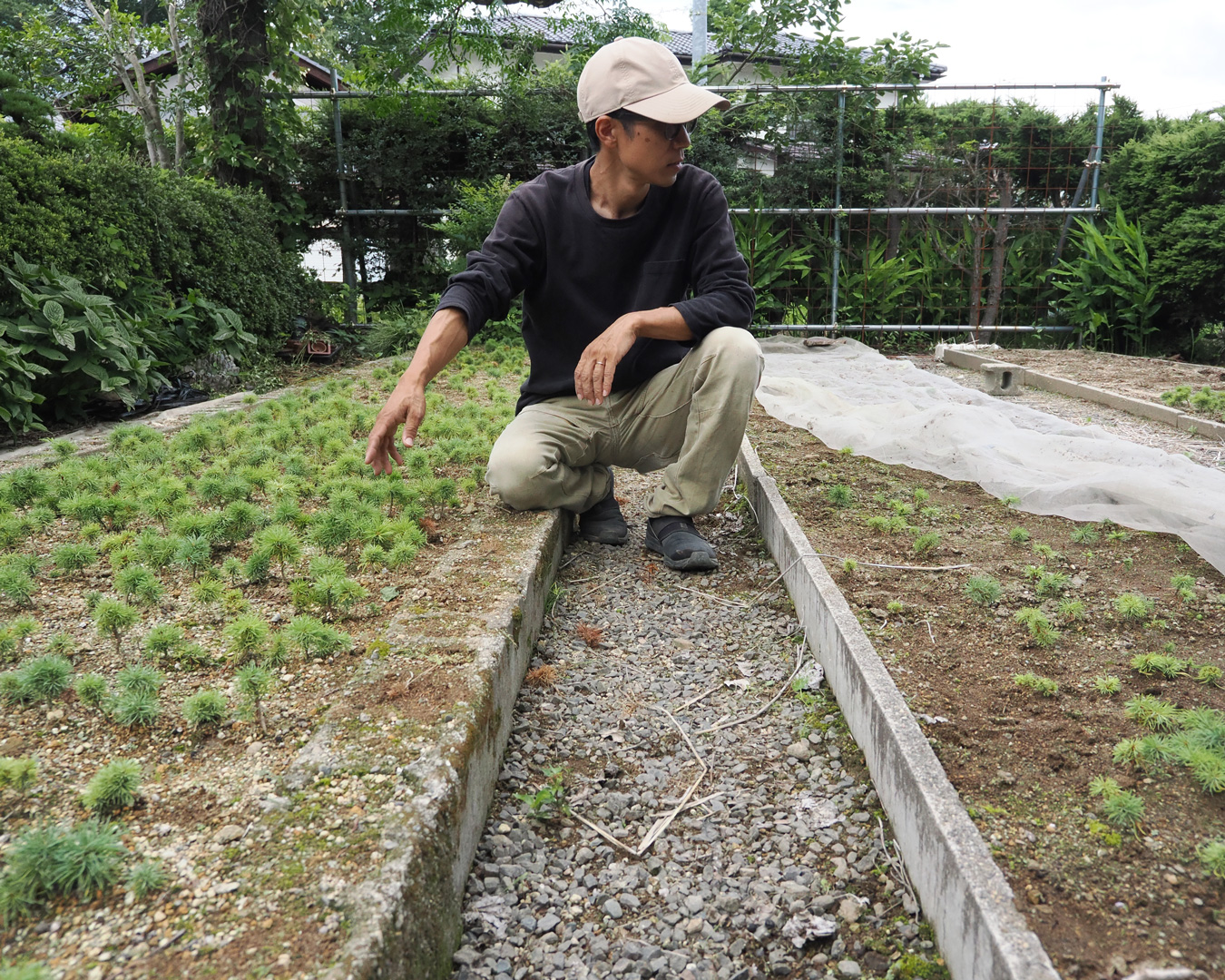
Seedlings that third-generation grower, Daiki Abe, is cultivating from seeds in Bonsaiya Abe’s fields.
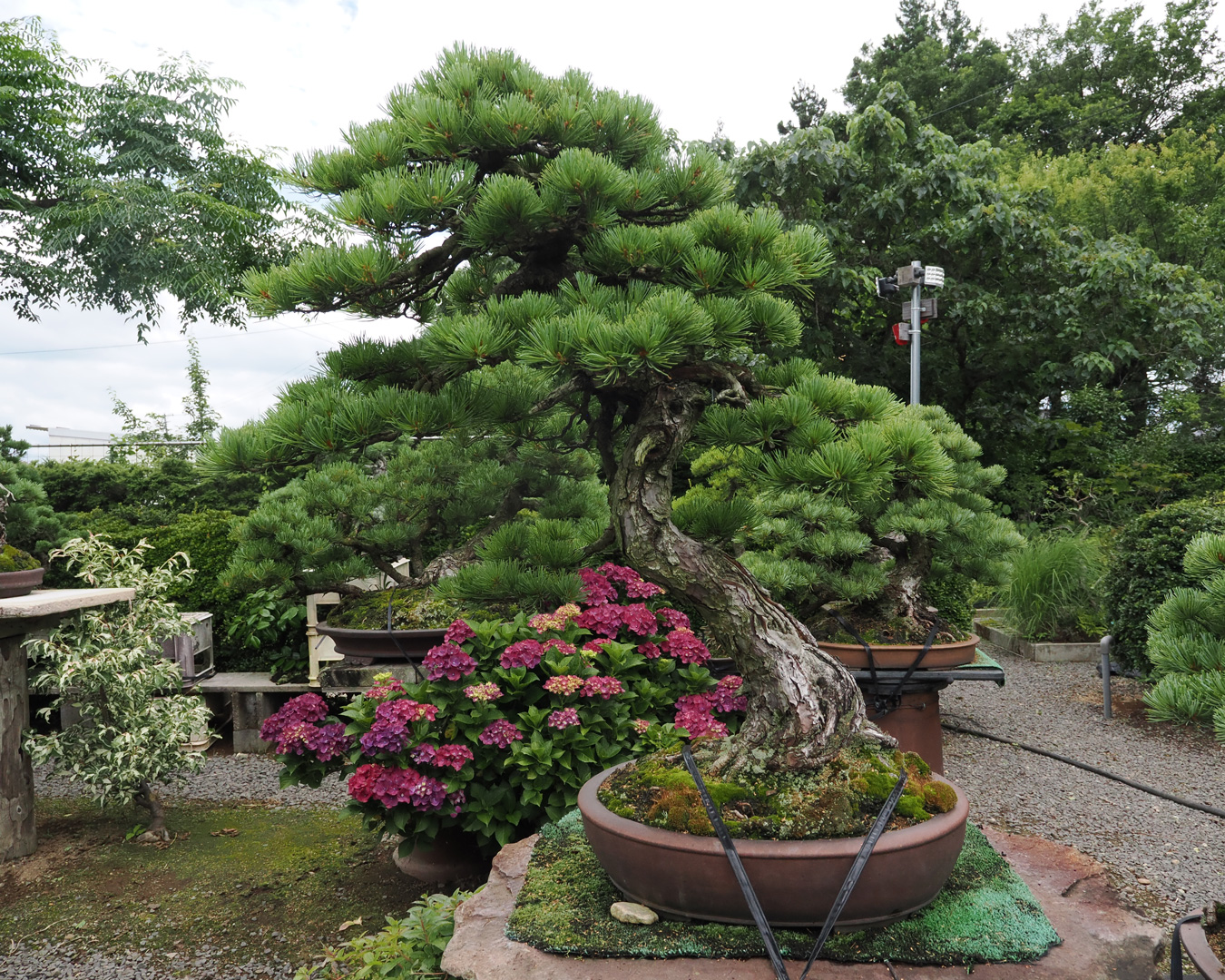
A Japanese red pine planted by founder Kurakichi Abe, Daiki’s grandfather. The tree will be 100 years old in 2028. I was so taken aback at seeing this that I felt myself leaning backwards.
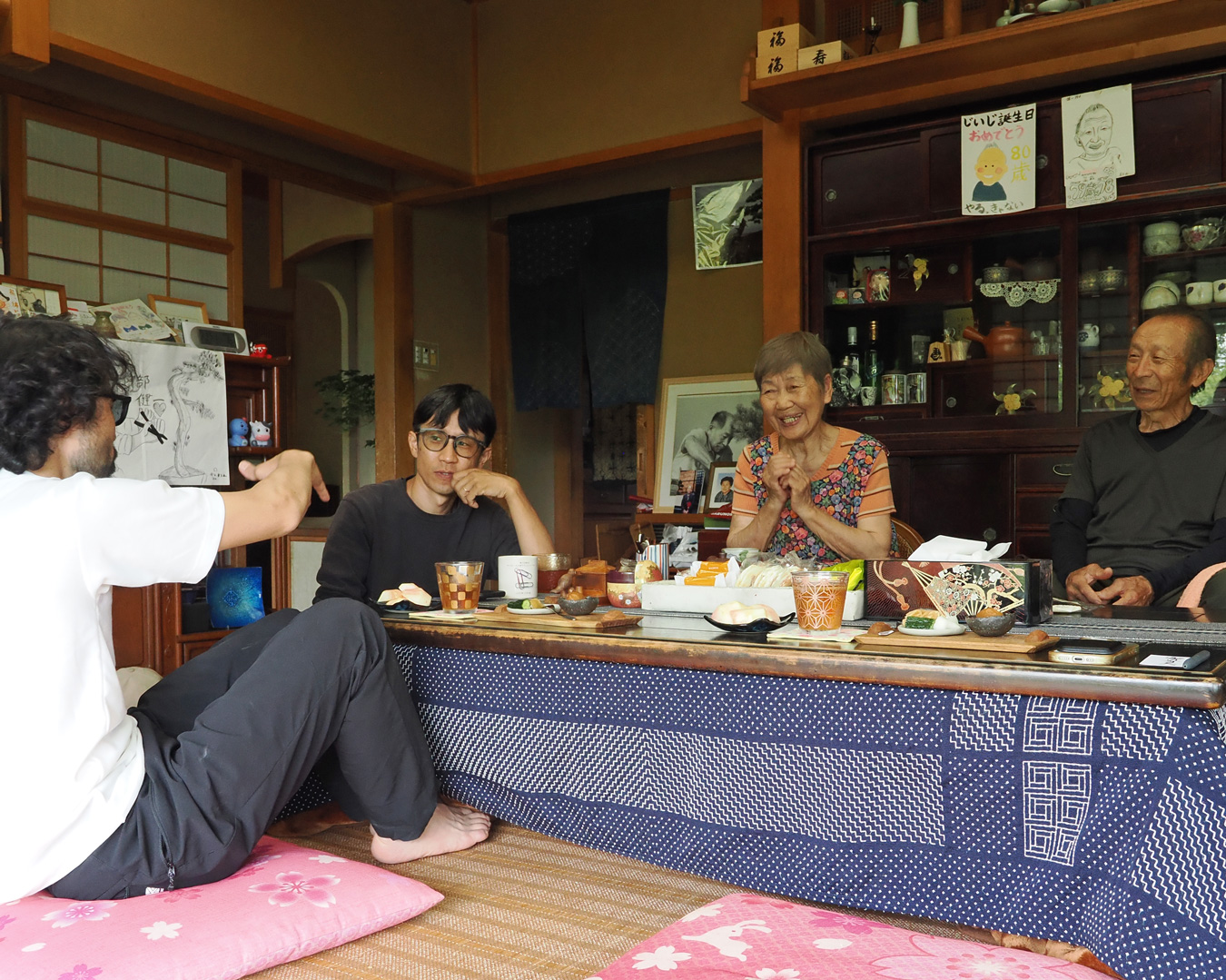
Second-generation growers Kenichi (right) and Keiko.
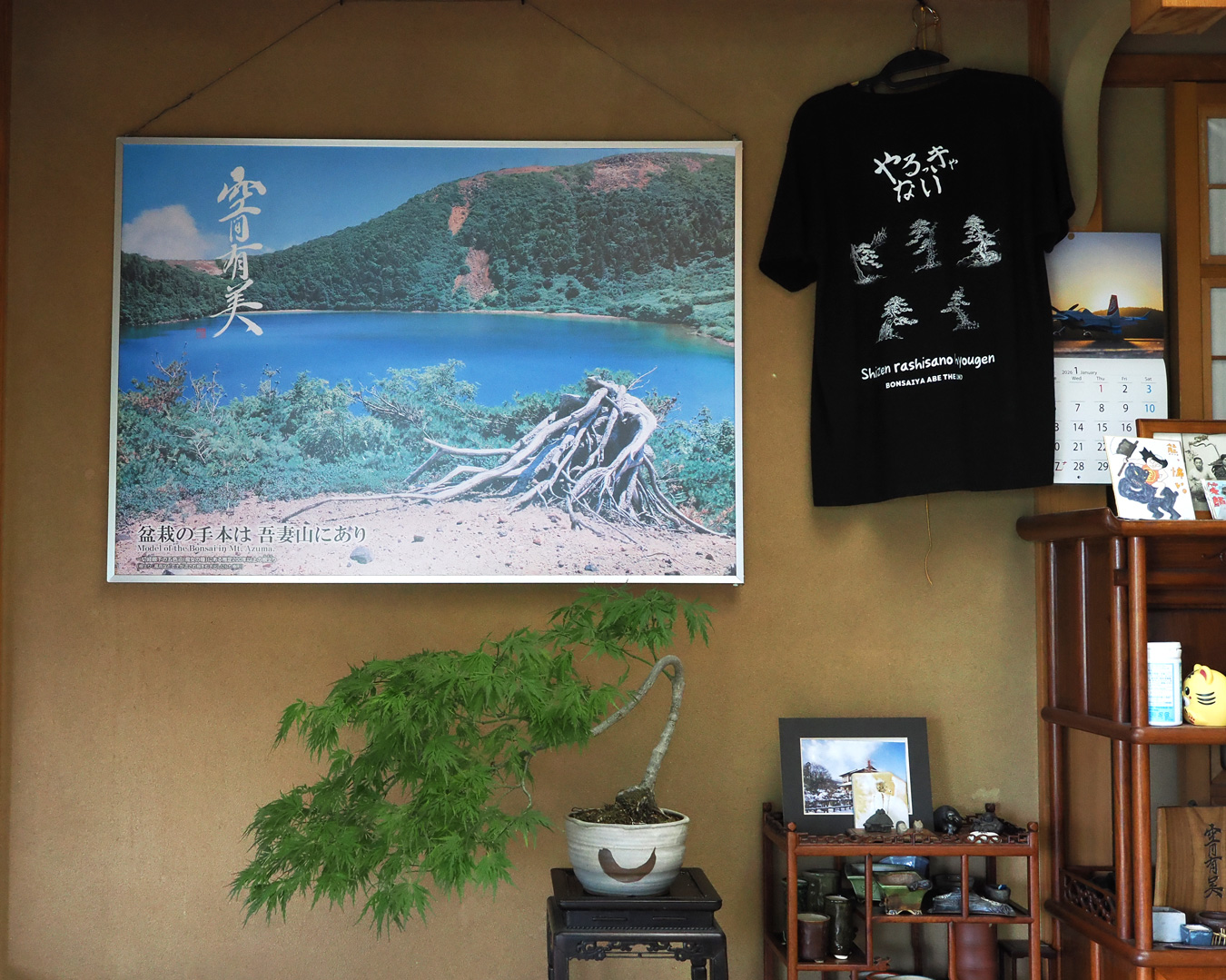
Daiki’s words stayed with me when he explained how his family treks into the mountains to see how their bonsai compare to natural forces.
“People often say that nature in the mountains is the model for bonsai, but that’s not quite right. We bonsai artists go into the mountains to see for ourselves whether the work we’ve been doing is true to the natural landscape. And when we’re there, the mountains show us whether the bonsai we are creating really do capture the landscape of the mountains; whether they embody the concept of kukan yubi (beauty in space).”
With every potted bonsai, the Abe family sets out to express the essence of nature’s vitality ー survival in the face of severe natural forces.
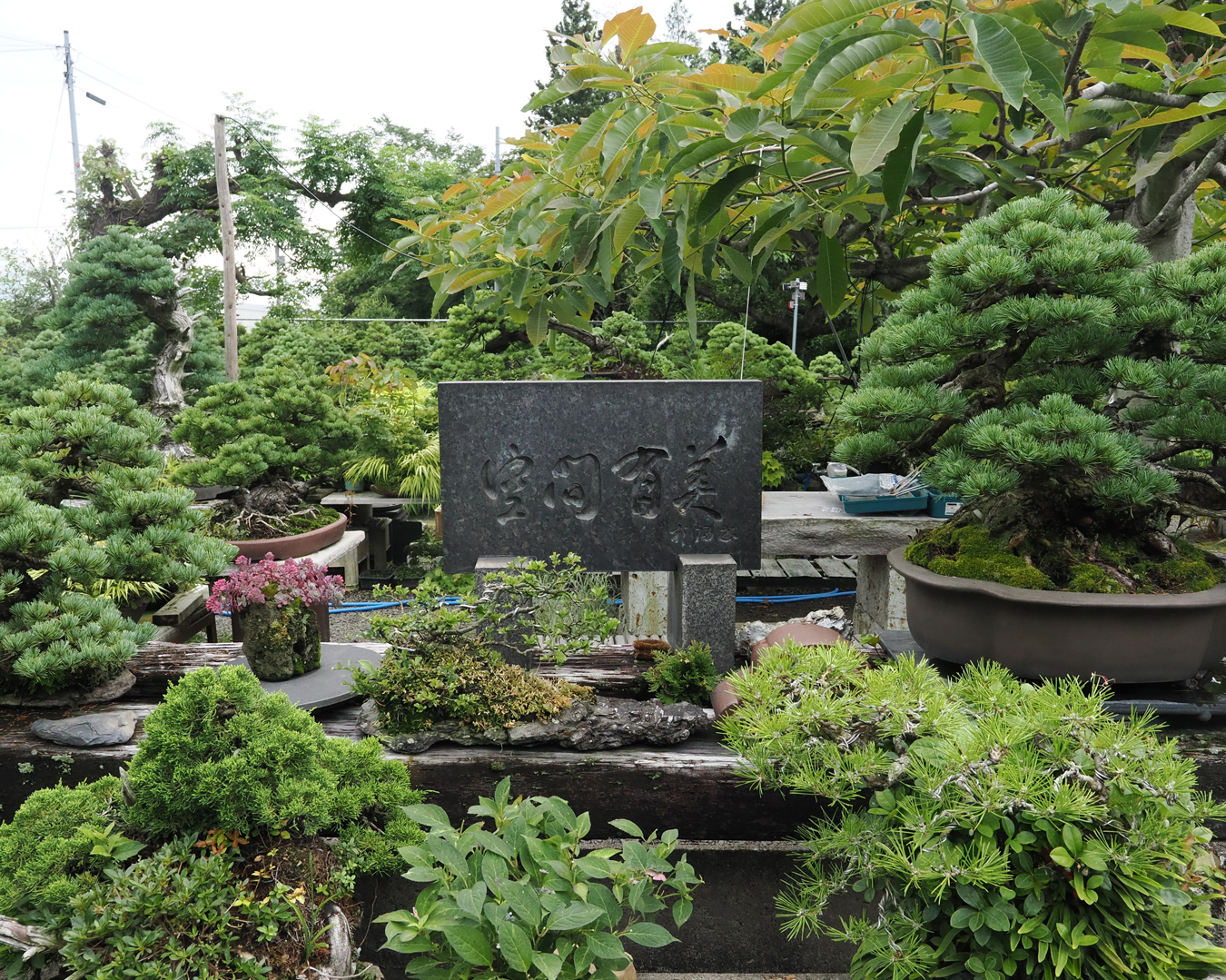
Kukan yubi (beauty in space), at the Abe family’s home in Fukushima.
Despite the tradition and technique that’s clearly expressed through his work, Daiki also sees the need to get the message out in other ways.
“I’ve seen major bonsai competitions and museum exhibitions where the name of the master who trained my grandfather wasn’t mentioned, or where famous trees created by the master were presented under someone else’s name. Even when someone from the family speaks up, it can easily be dismissed. I realized that if we don’t share our own story, if we stay silent, there’s a chance that our history will be erased,” he said.
Which is why Daiki posts almost daily on YouTube and Instagram. “Sharing our culture in our own words and telling our own history is the only way to protect it,” he said.
Keisuke could relate. “It’s the same with Dake Onsen. There are people who have put down roots in this land and carried its history forward. I feel that we are where we are today because of the work done by the generation before us, and the generation before that. These are people who can’t simply say, I’m quitting this job tomorrow. They have no escape route. If they don’t show the world what genuine value looks like by putting everything they have into communicating their work, they’ll be drowned out by imitations.”
There is something powerful in the determination these locals demonstrate as they protect their cultural inheritances. This is one reason HLC exists: to explore and help preserve the culture of a place.
I grew up near Mt. Ishizuchi, the highest mountain on the southwestern island of Shikoku, straddling Saijo and Kumakogen, in Ehime prefecture. The region is one of the three biggest producers of Japanese red pines. I should have known this. I’d walked past a local roadside sign reading “Goyomatsu pines: made in Shikoku” countless times. My grandfather had raised many bonsai at our family home, and I have looked at the pines in the Ishizuchi mountain range. And yet until I stood in front of an Azuma goyomatsu (Japanese red pine) bonsai and heard the Abe family’s story, I had so little knowledge about these trees.
This is the benefit of a slow walk in the mountains. You get to see how hundreds of years of human and natural forces can be reflected in a single pine tree. For me, it revealed a different side to a mountain that I thought I knew and it gave me a deeper understanding of what I’d been looking at but hadn’t actually seen.
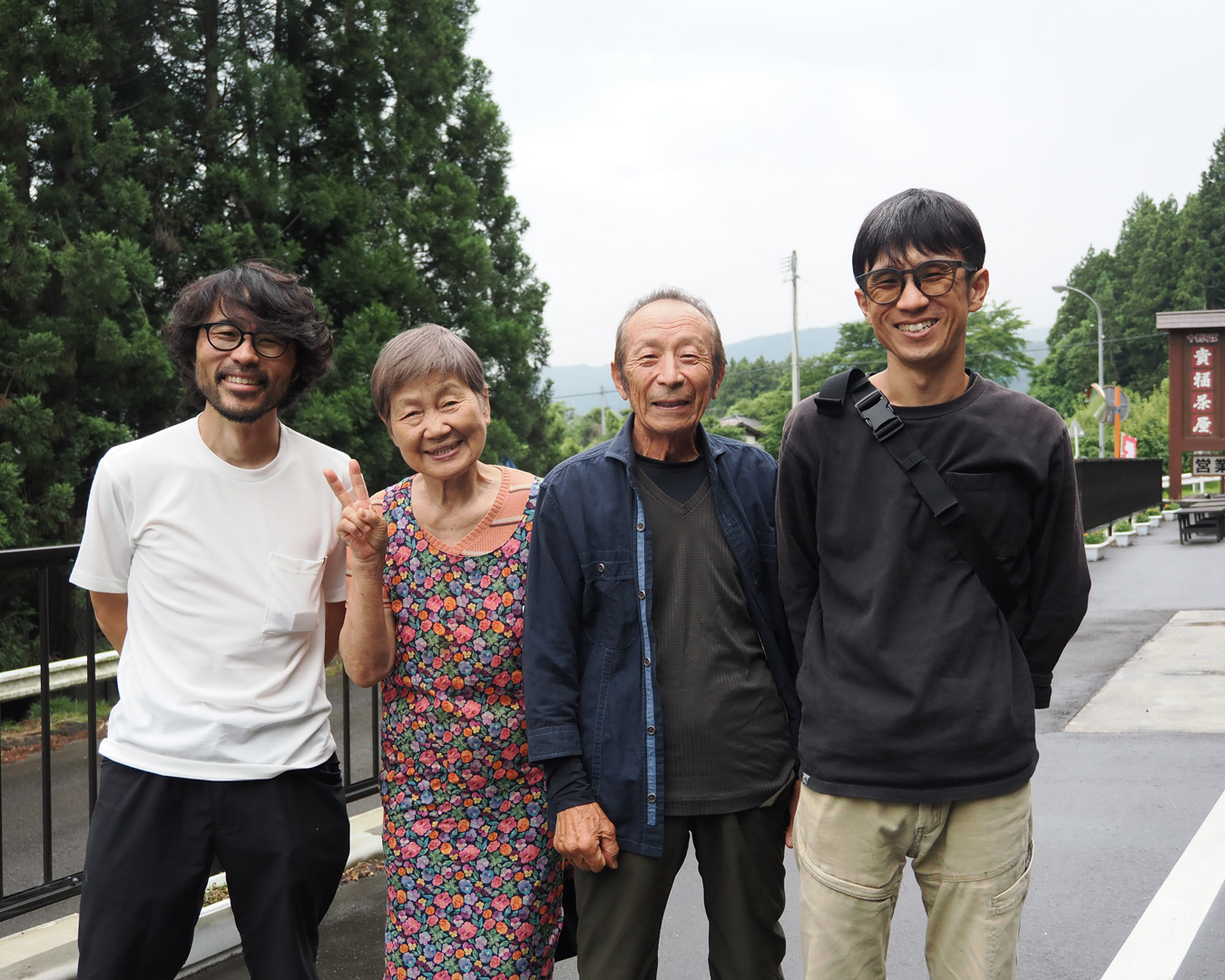
Keisuke and the Abe family, of Bonsaiya Abe.
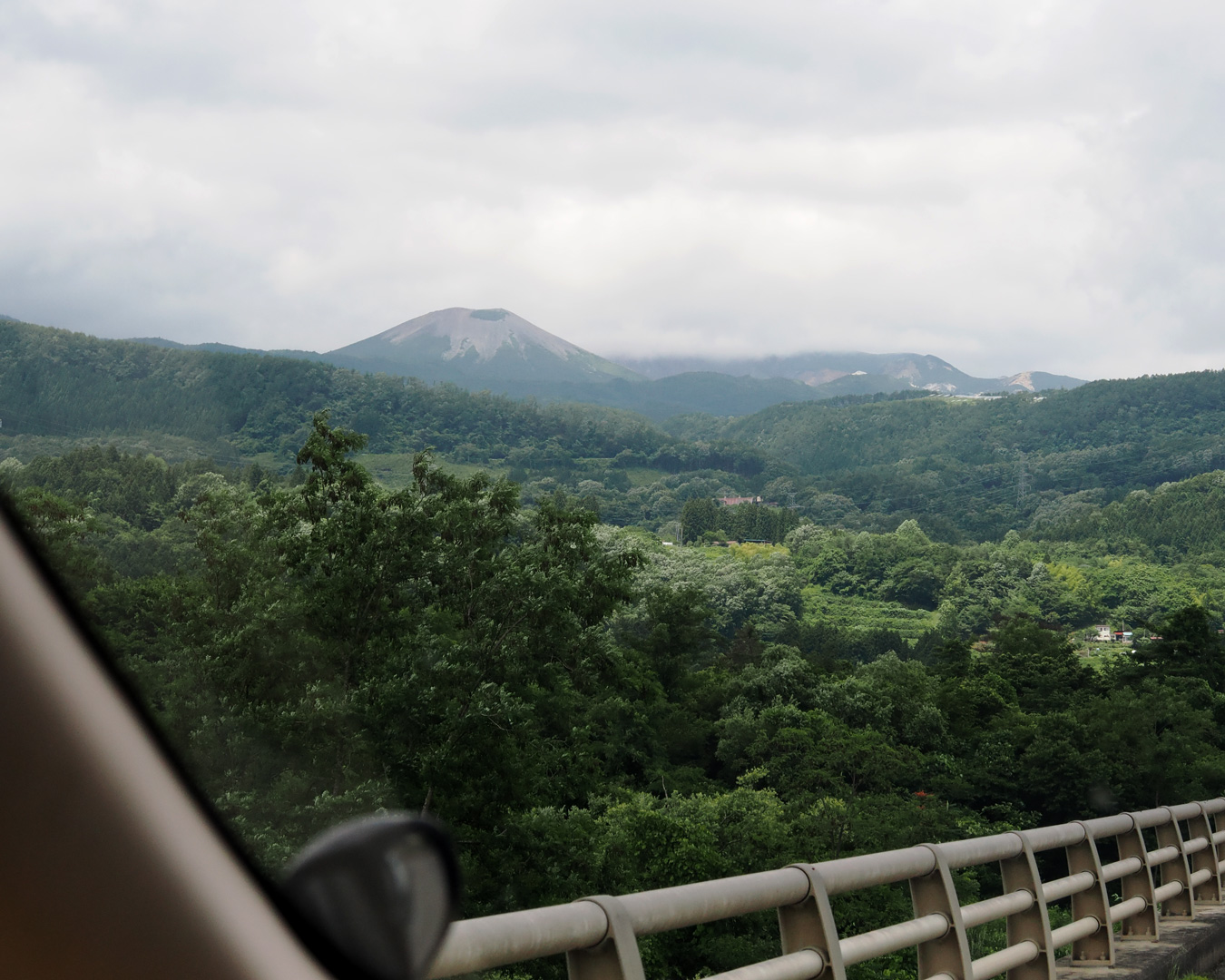
Our walk and the stories we heard on Mt. Azuma-Kofuji and the surrounding mountains made me feel a deep attachment to the place.

Yamatomichi HLC Team ー Communications / Editor / Designer
Ai is a vibrant creative from Saijo, Ehime prefecture, on the southwestern island of Shikoku. In high school, she was on the cheerleading team. Eager for new experiences, she left Ehime to attend university in Kansai, Japan’s western region. She later worked as a design director in Tokyo and Osaka. In 2014, she returned to her hometown, where she worked in public relations for seven years and rediscovered her love for the region. Climbing Mt. Ishizuchi sparked her passion for hiking. Her interest in people and communities motivated her to sign on as the local coordinator for the Yamatomichi HLC Festival in 2023 on Mt. Ishizuka. That year, she founded YON, a magazine focusing on the outdoor lifestyle on Shikoku.