




How the Kami Shirt was Made
Photos: Hikaru Otake
How the Kami Shirt was Made
Photos: Hikaru Otake
With the launch of Yamatomichi’s Kami Shirt, we go behind the scenes with the people who developed and mass-produced it. The shirt's KJF-PPX (Kajifu Paper Cross) fabric blends Japanese washi paper and nylon. Washi is light and dry to the touch, and it absorbs and releases moisture well. Nylon adds softness, strength and easy movement. The result is a hiking shirt that won’t cling when you sweat, doesn’t feel heavy and dries quickly. It’s a workhorse in the heat and humidity and yet feels barely there.
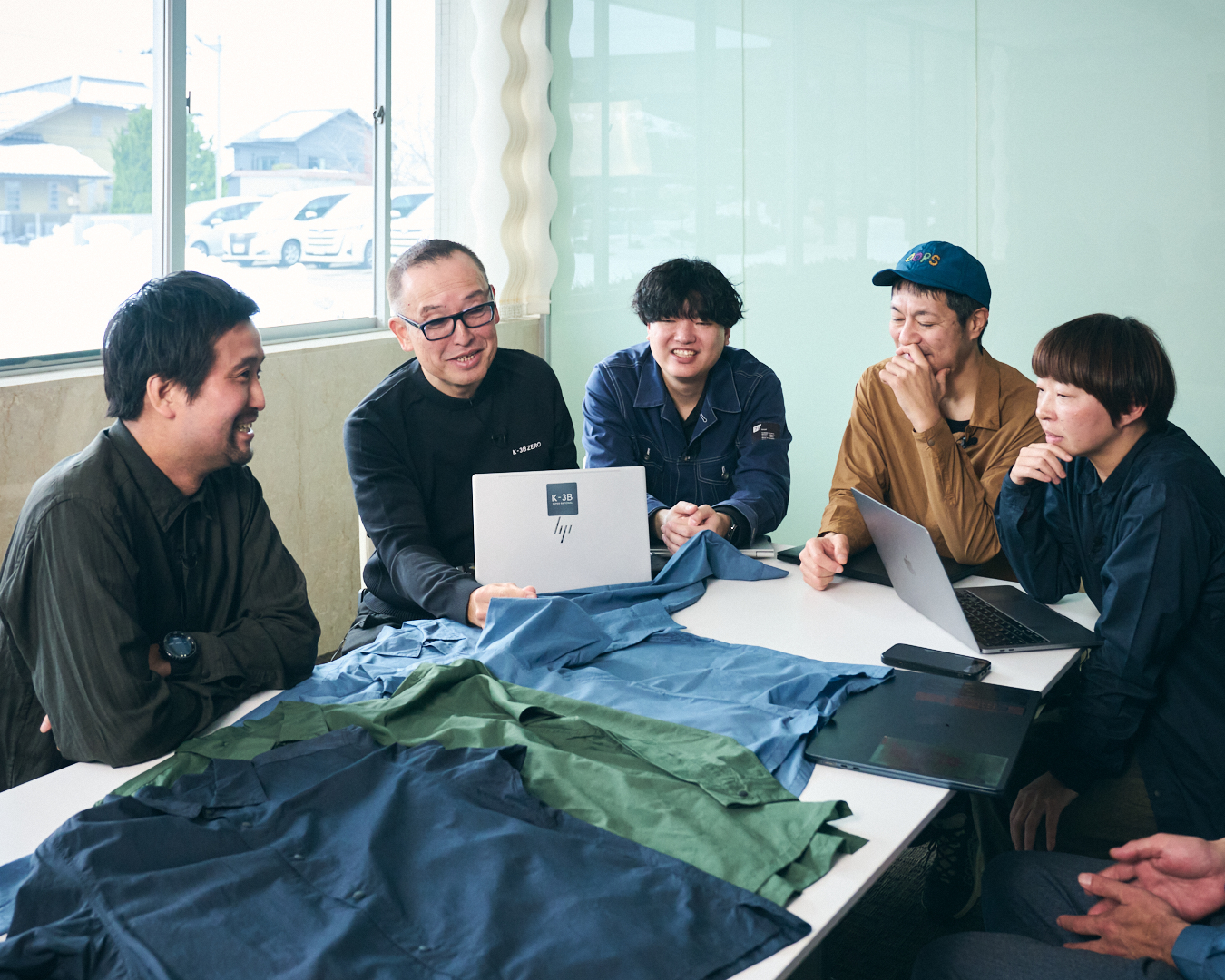
What challenges did the team have to overcome? What were the complexities of weaving a fabric from natural and synthetic materials? Recently, we gathered staffers from Kaji Rene, the company in Ishikawa prefecture that developed the fabric, Takisada Nagoya, the textile wholesale specialist that connected Kaji Rene and Yamatomichi, and Yamatomichi’s product R&D team and asked them to walk us through the initial development and manufacturing process of the Kami Shirt.
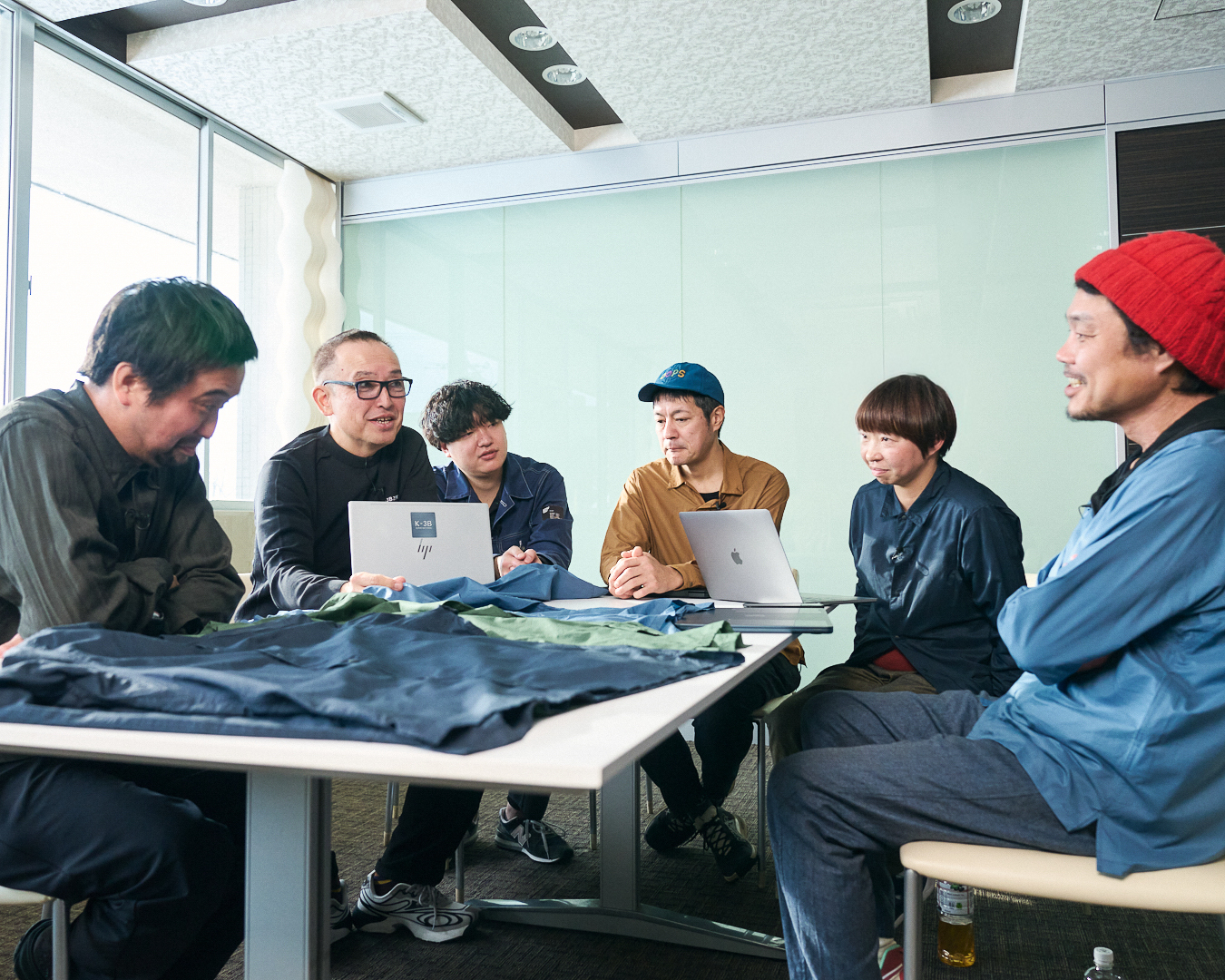
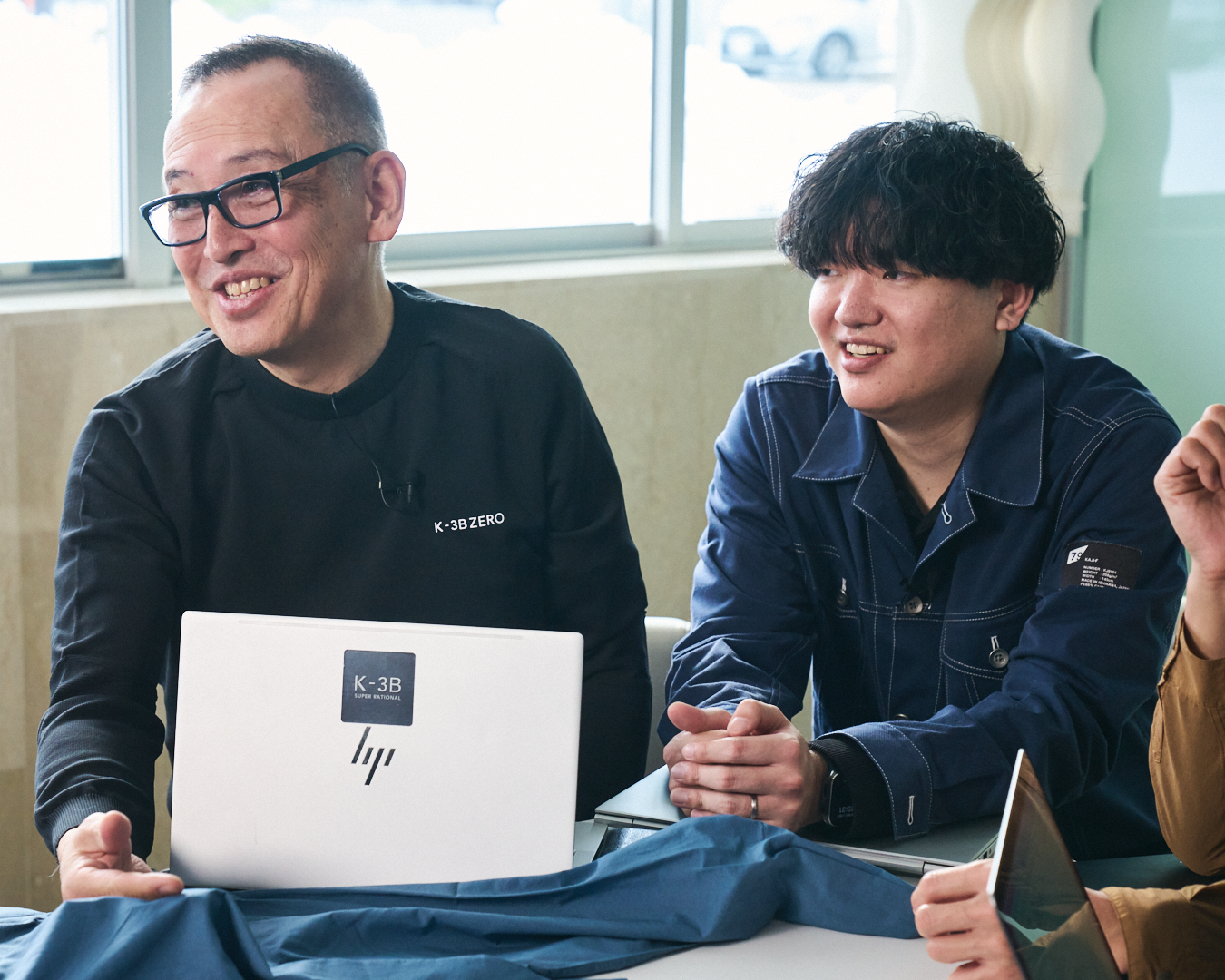
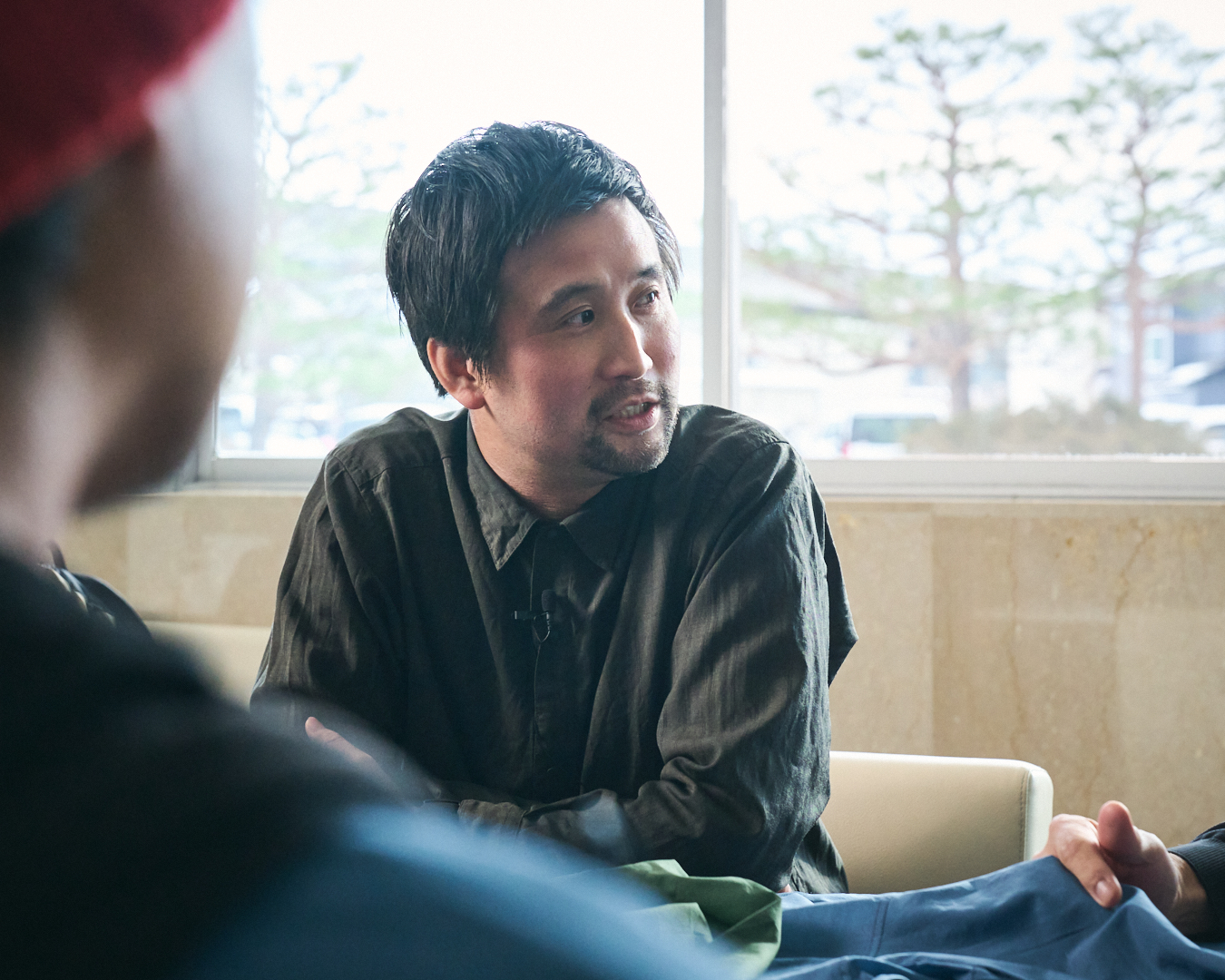
Left to Right: Takisada Nagoya’s Sho Saruwatari; Kaji Rene’s Hideki Arai and Taishi Okino; and Yamatomichi’s Takahiro Watanabe, Rin Matsumoto and Masaaki Mita (moderator).
Weaving KJF-PPX from washi and nylon
Yamatomichi was hunting for a new fabric. Ideally, it would combine natural and synthetic materials and draw on the best qualities of both. If its properties were unique enough, it might even lead to a breakthrough product.
At a trade show hosted by Takisada Nagoya, a textile trading specialist based in Aichi prefecture, Yamatomichi’s head of R&D Takahiro Watanabe came across a fabric with that kind of potential: It was fashioned from washi and nylon and surprisingly light and thin.
Takisada Nagoya’s trade shows feature a curated selection of new fabrics from Japanese and overseas suppliers. For textile manufacturers and clothing brands, the shows are often the starting point for innovative new products. Kaji Group’s Kaji Rene Co., based in Ishikawa prefecture, had caught the Yamatomichi team’s attention with a new woven washi-nylon material, called KJF-PPX (Kajifu Paper Cross). The initial feedback about it from fashion brands had been lukewarm. “They told us, ‘It’s thin and flimsy,'” said Takisada Nagoya’s Sho Saruwatari.
But those were qualities that made the fabric well-suited for ultralight hiking apparel. “I thought, ‘Maybe we could use this to make something new,’” Yamatomichi’s Watanabe recalled.
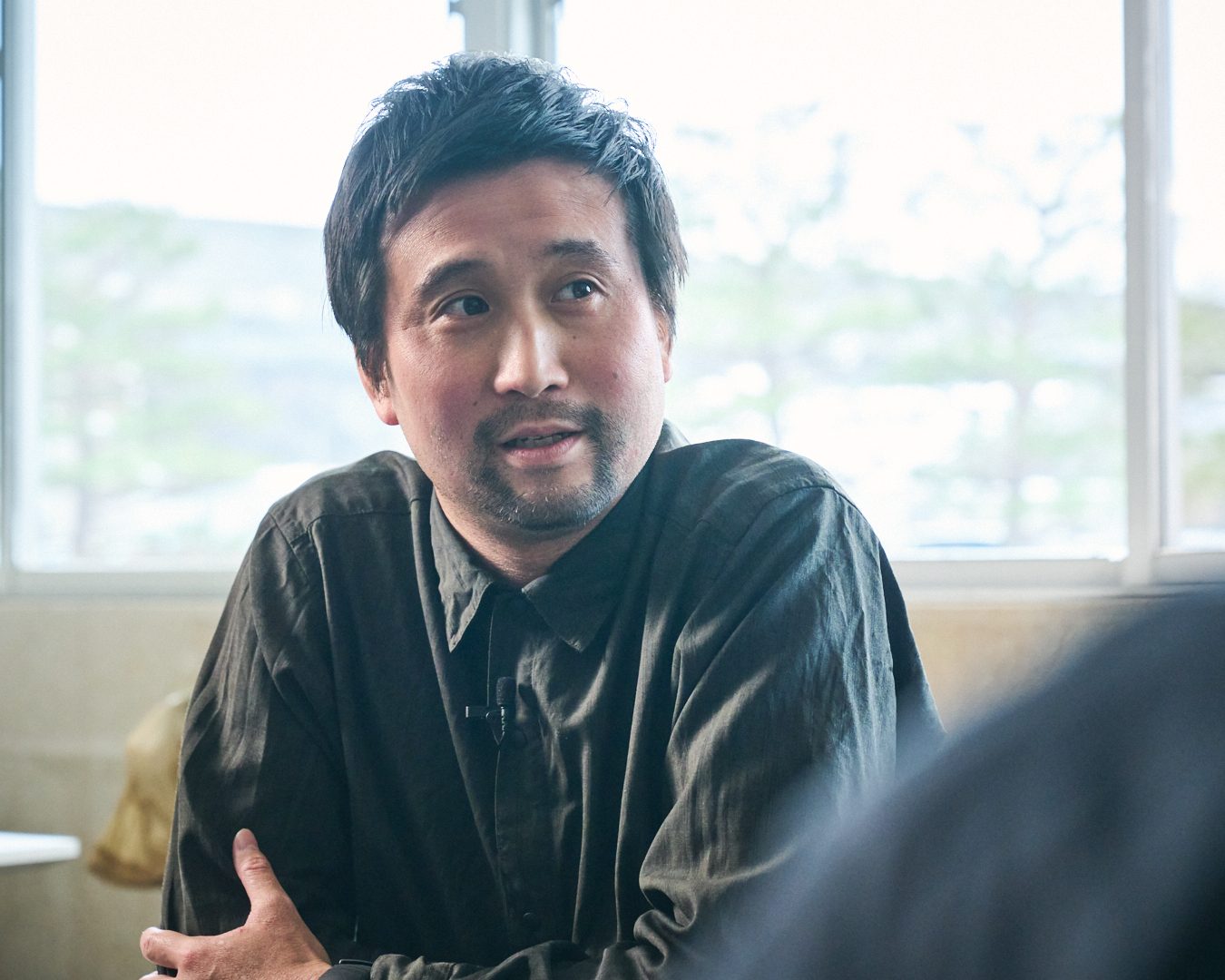
Sho Saruwatari, head of market development, Takisada Nagoya Co., Ltd.
It’s not unheard of for textile manufacturers to use washi, but it’s typically woven with polyester. Kaji Group discovered a way to produce washi fibers fine enough to combine with nylon.
Washi is made from the long fibers of broadleaf trees (usually kozo, or paper mulberry, and mitsumata, or Edgeworthia). Unlike ordinary paper, which is made by pressing and compacting the short fibers of wood pulp, washi fibers are interwoven and not completely compacted. The gaps between fibers explain why washi is more flexible than ordinary paper and how it allows air to pass through easily, said Hideki Arai, the general manager of textile sales at Kaji Rene.
The conventional view of washi is that of a hard and heavy material. Kaji Rene tapped the Kaji Group’s expertise in yarn processing and ultra-fine nylon to make a soft washi fabric that would challenge that idea.
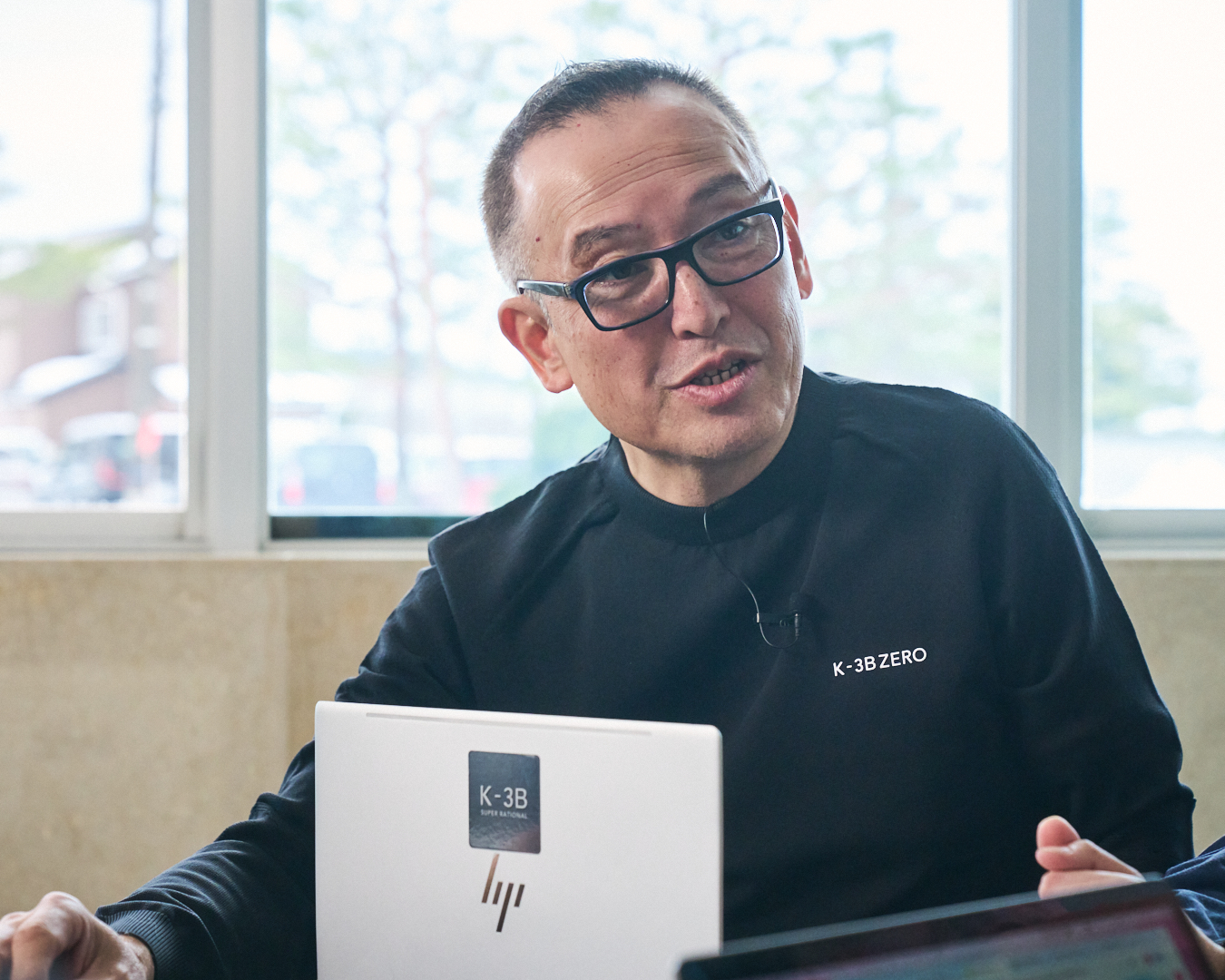
Hideki Arai, textile sales manager, Kaji Rene Co., Ltd.
Kaji Rene’s expertise is in creating fabrics from long fibers ー “filament fibers”, in industry lingo ー such as nylon. Natural materials, like cotton and wool, tend to have shorter fibers (“staple fibers”). Kaji Rene got the idea of a washi-nylon blend because washi’s fibers are long and boast properties that are similar and complementary to nylon.
But that’s easier said than done. To make washi yarn, you have to first make washi paper. A machine, known as a slitter, then cuts the washi into ultra-narrow strips for yarn. Kaji Group ー which has knitting machines and weaving machines and the attachments for weaving materials that rivals can’t ー developed and manufactured a new slitter machine just for this purpose. The new machine can cut the washi into strips as narrow as 0.9 millimeters, which is significantly narrower than the 2-millimeter strips that the company’s machines had previously cut. The strips are then turned into yarn by bundling and twisting the plant fibers, a process known as nenshi.
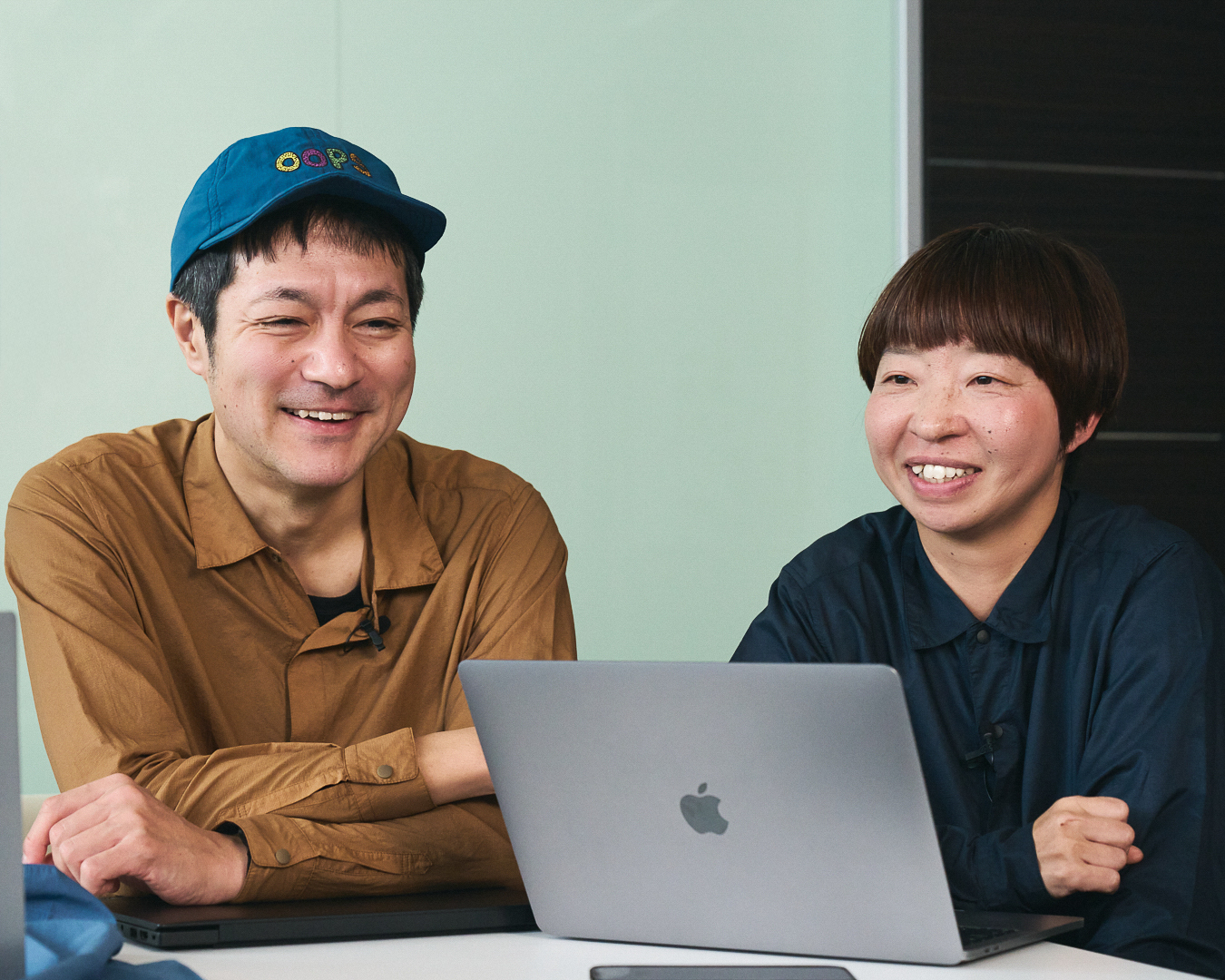
Yamatomichi’s Takahiro Watanabe, research and development (L), and Rin Matsumoto, new materials development (R).
Mass producing washi yarn is slow-going. The strands can snap. The slitting blades need regular maintenance, which is time-consuming and costly. “When you consider all that, productivity isn’t great,” said Arai. “It’s a difficult material to work with.” Unless there are sizable orders, it’s hard to justify the costs, he added.
Ideally, the factory staff would push a button and the machines would run on their own, stopping only occasionally if something goes wrong. But during the prototyping phase for the new washi yarn, the washi sheet kept breaking into little pieces. “If the washi sheet snaps, you have to reconnect everything. There was a lot of trial and error around those kinds of issues, and the people on the production floor played a major role in thinking through how to solve them,” said Taishi Okino, Kaji Rene’s textile development department section chief.
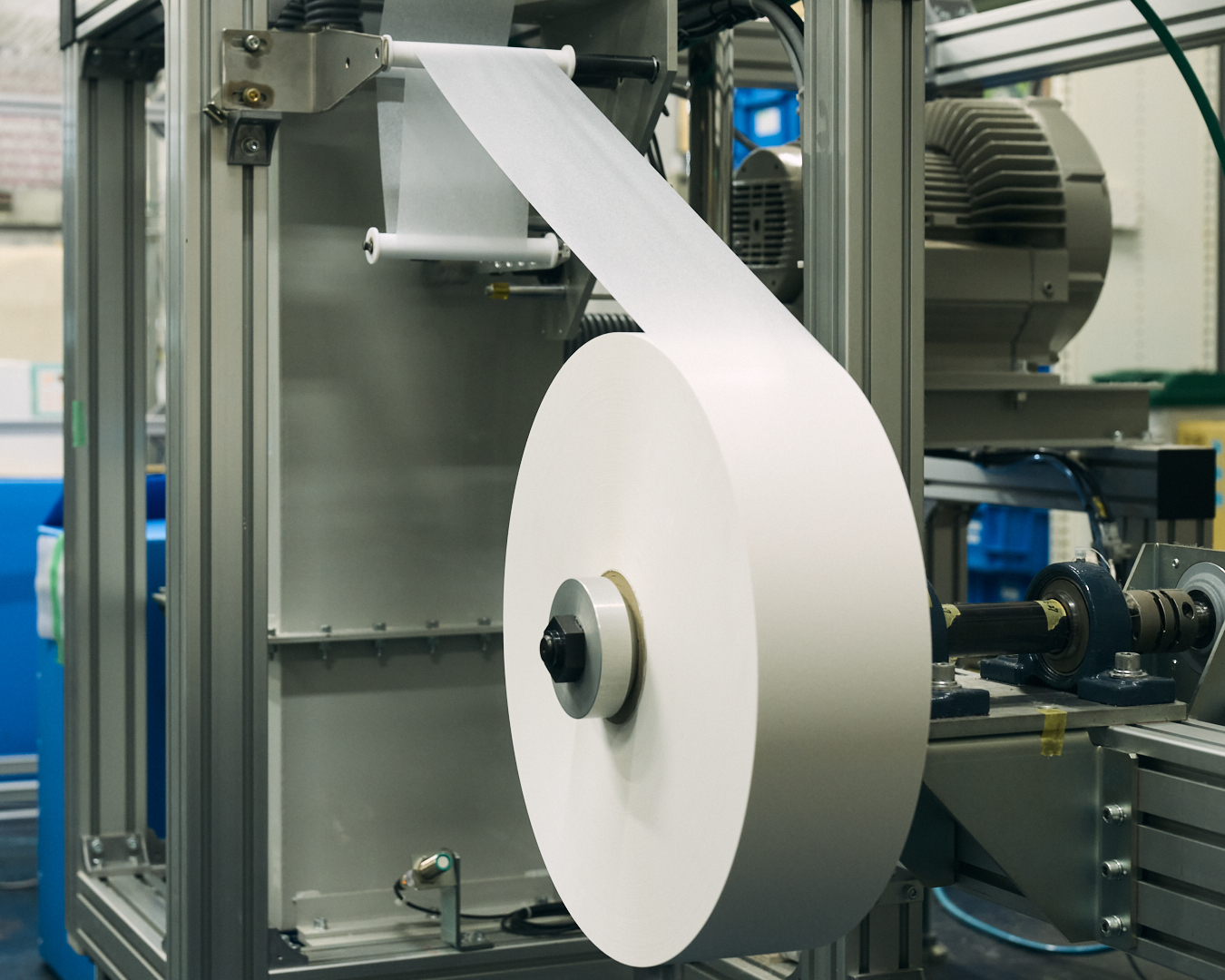
Rolls of industrial washi, the raw material for washi-nylon. The washi is cut into 0.9 mm-wide strips using a slitter machine and then combined with nylon.
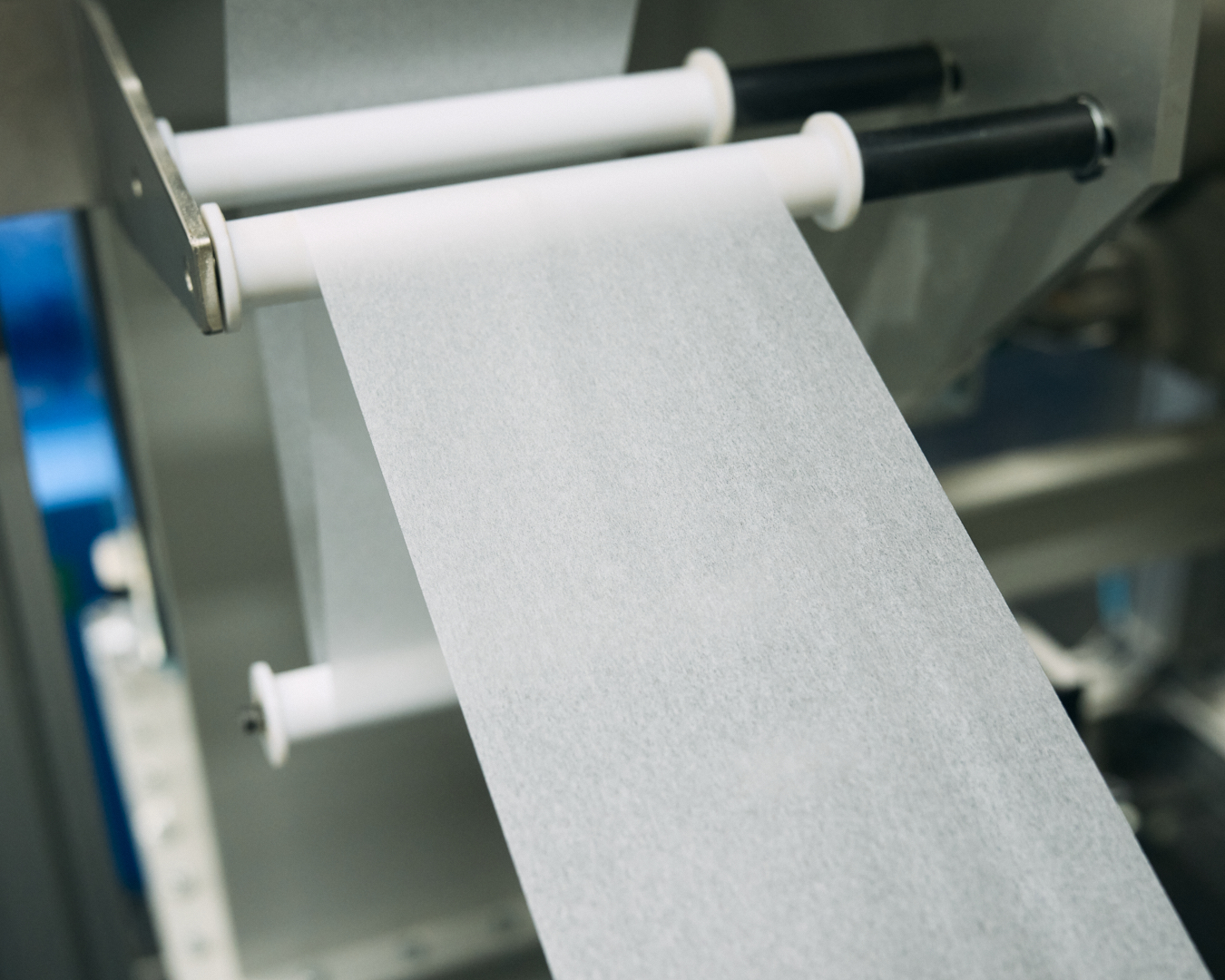
Washi is made from fibers that are interwoven and not completely compacted, leaving gaps between the fibers that give the material its distinctive traits.
Kaji Rene’s reliance on the Kaji Group’s ability to develop new machines was vital. “That’s one of our strengths. The Kaji Group began in 1934 as Kaji Seisakusho, a company that manufactured textile machinery,” said Kaji Rene’s Arai. “We modify machinery to make things that other companies can’t.”
Kaji Rene is a leader in the complex processes involved in producing fine-count yarns in-house, said Takisada Nagoya’s Saruwatari. “This washi fabric brings together all those strengths.”
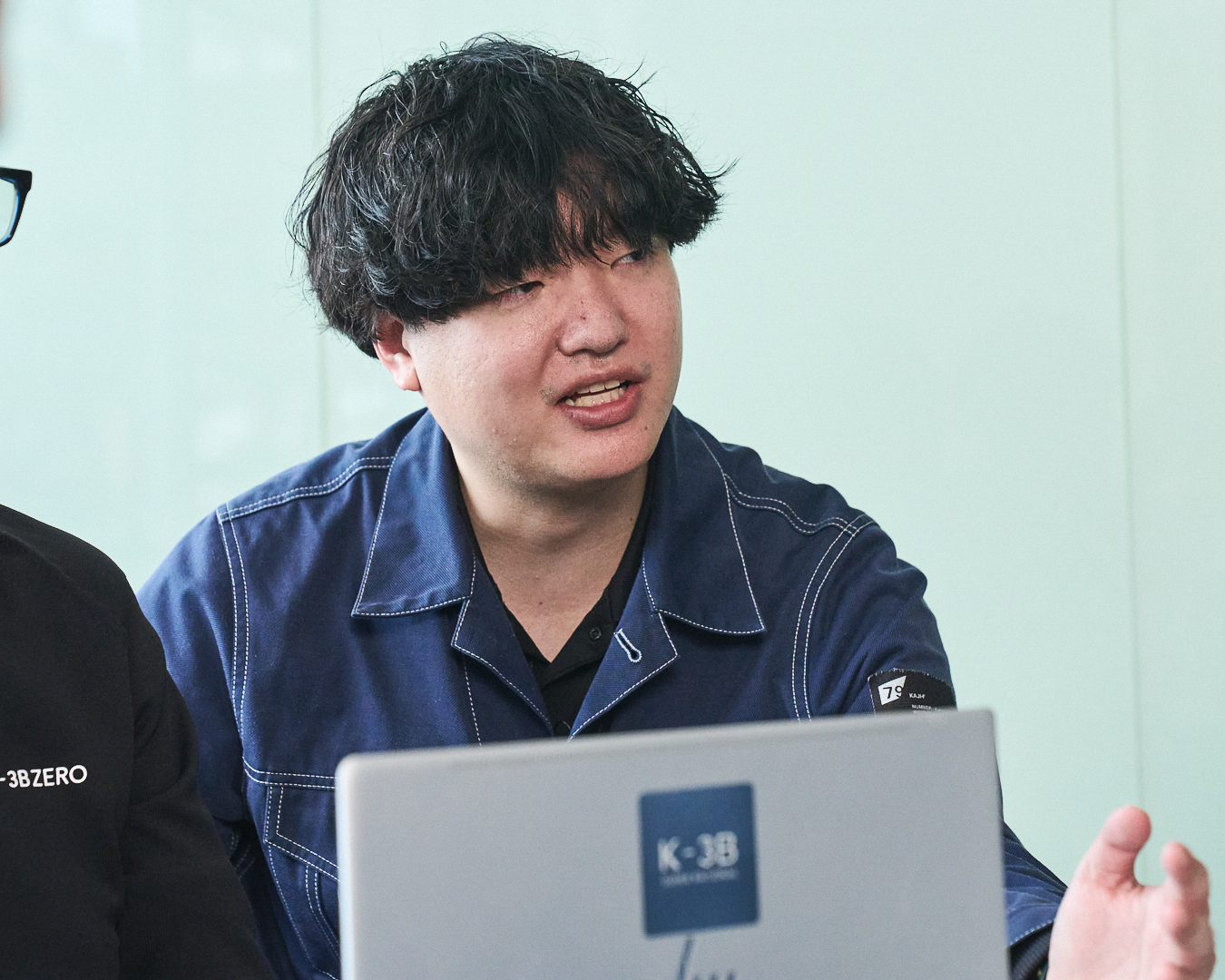
Taishi Okino, textile development department section chief, Kaji Rene Co., Ltd.
Making yarn that is both light and fine requires technical expertise. Many of the fine-count synthetic yarns that fashion brands rely on are made in Hokuriku, a region in central and western Japan that includes Ishikawa, Fukui, Niigata and Toyama prefectures.
Nylon is notoriously hard to weave into fabric because it’s extremely sensitive to humidity and static electricity. Factories need to maintain the same temperature and humidity throughout the year to ensure consistent quality. “In winter, when the air turns dry, static electricity can cause the yarn to snap. Small differences in temperature and humidity affect quality ー streaks in the fabric when the yarn is woven, or uneven dyeing, for example,” Kaji Rene’s Okino said. “Our goal is to establish a system that allows us to produce it year-round, so that we can accept orders at any time. I think we’re probably about the only company that can do this.”
Choosing the lightweight fabric
When Yamatomichi’s Watanabe first came across the washi-nylon, there were two versions: a thicker, more substantial fabric and a lighter, thinner one. “Naturally, we wanted to try the lighter one,” he said.
But Takisada Nagoya’s Saruwatari wasn’t sure whether the lighter version would hold up under harsh trail conditions because the yarn broke easily during early production runs. At the factory, Kaji Rene had to have someone standing by the machine while the sample fabric was being made. “Honestly, I was thinking, ‘Don’t choose the lightweight version!’ ‘Go with the thicker one!'” he said.
The company had never mass-produced the lighter washi-nylon before. But once Yamatomichi expressed an interest, Kaji Rene committed to developing new equipment that could produce the lighter fabric in large volumes. “They wanted to bring this fine-count version to the market. So from that point on, we were all-in,” said Saruwatari.
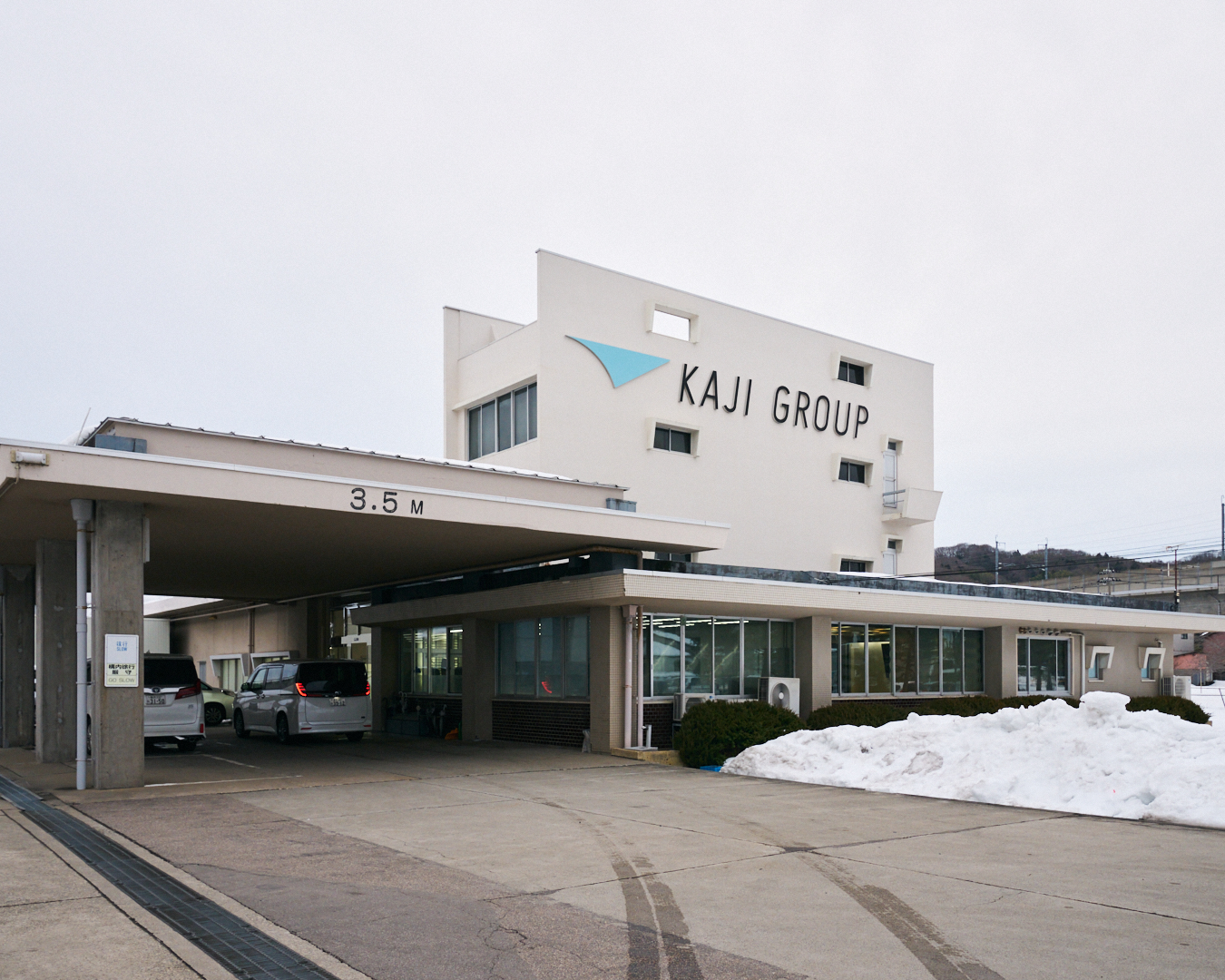
Kaji Rene consists of five businesses: machinery, processed yarn, textiles, product brands and carbon-wire R&D. From yarn production and weaving to finished products—and even the industrial machinery used to make them—the group is capable of developing textiles in-house and is a leader in the textile industry in the Hokuriku region, western Japan. The group’s specialty is in synthetic fibers, and in working to broaden the uses for the innovative synthetic fabrics that it creates. Its Kaji Factory Park, its factories sit alongside a park, restaurant and shop.
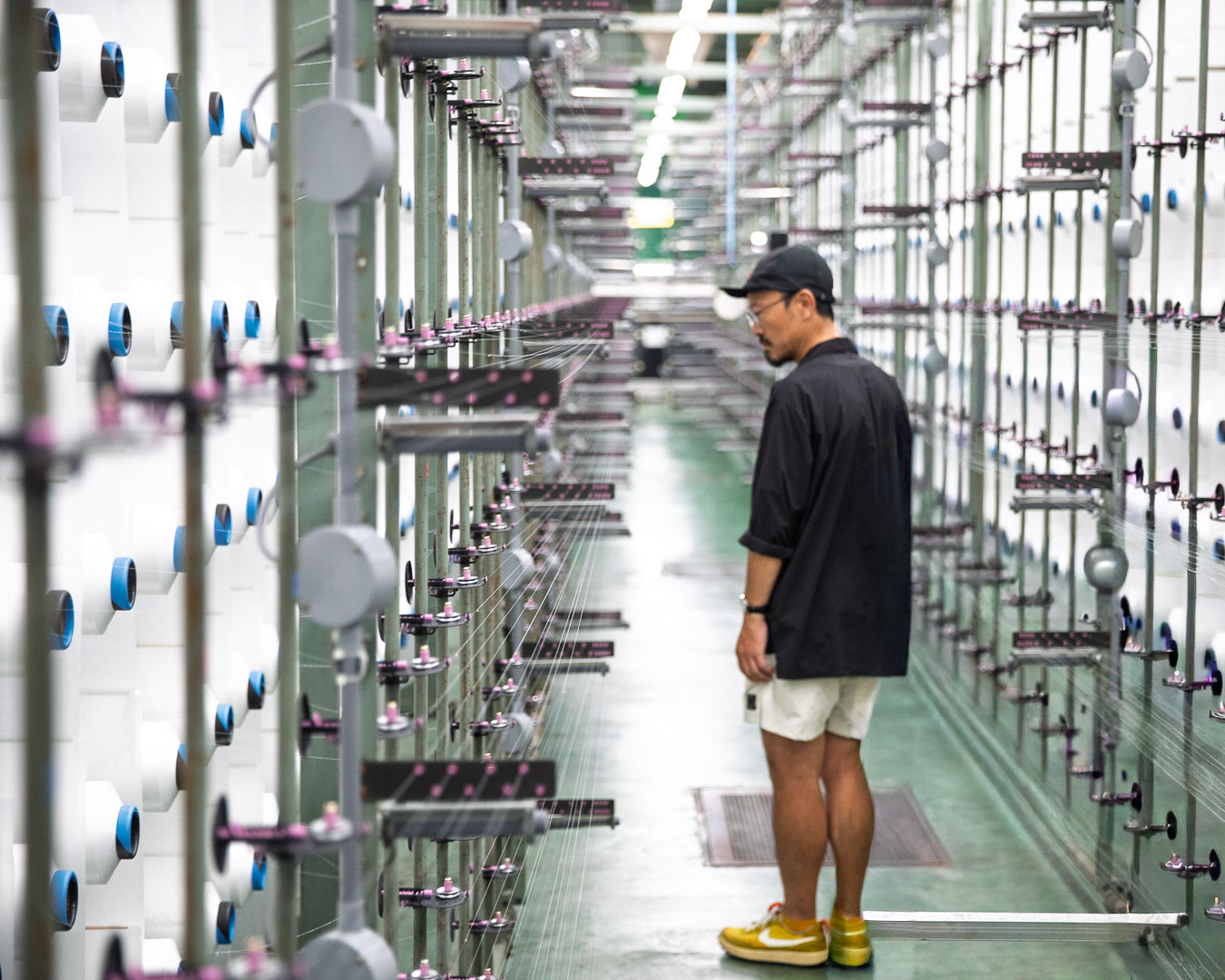
The nylon “aging” process. When making nylon, the slightest differences in humidity can significantly affect the finished product, which is why the factory is kept at a constant temperature and humidity. To age nylon, each strand of raw yarn is stretched so it can acclimatize to the temperature and humidity of the room. Tens of thousands of filaments of nylon yarn can undergo the process at once.
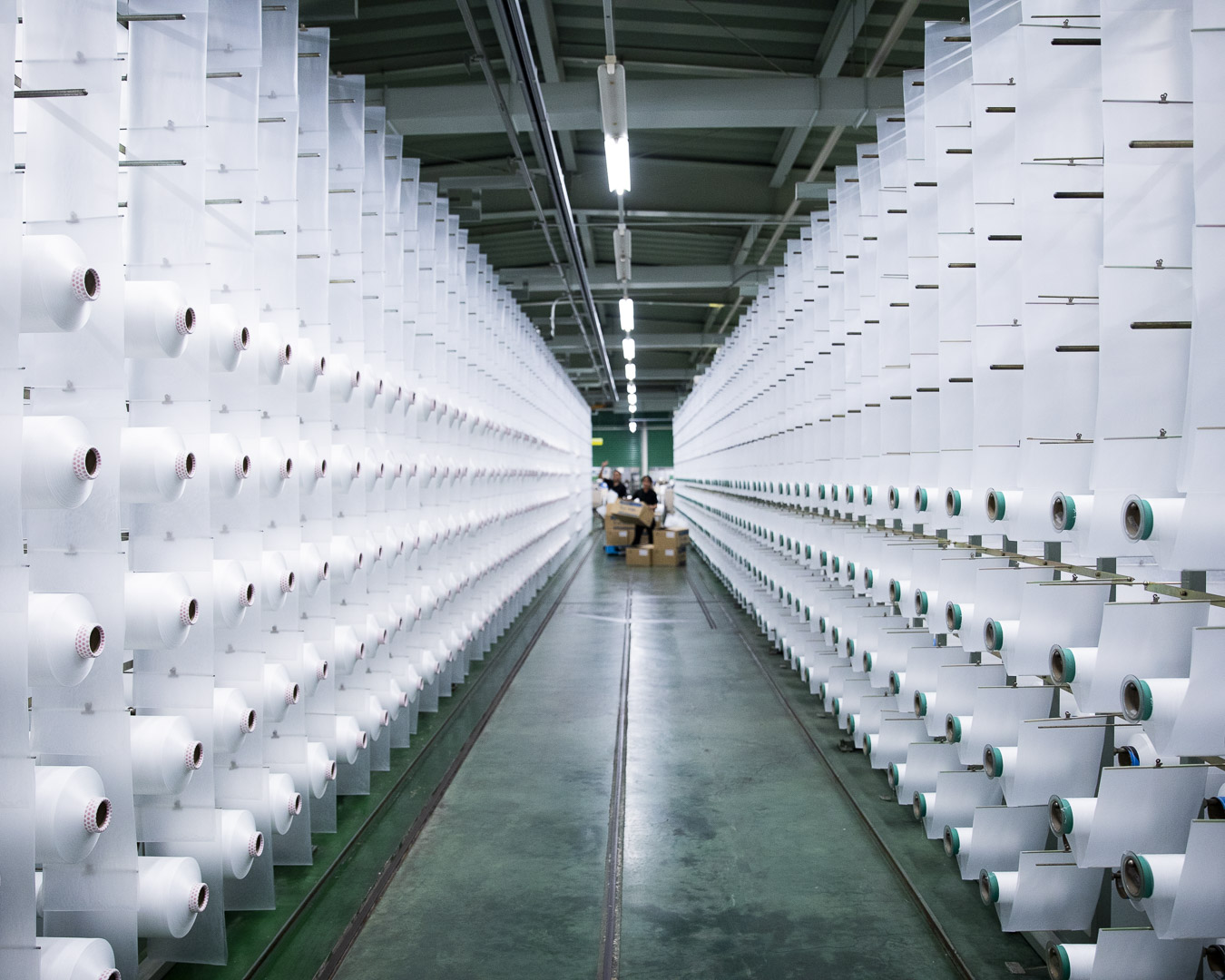
“Warping” comes before weaving. Several thousand to tens of thousands of nylon yarn filaments are arranged to match the width of the fabric and wound onto a beam (a large drum) as warp yarn. The tension of each yarn must be the same, with each strand arranged uniformly, and length and number of strands has to be calculated beforehand.
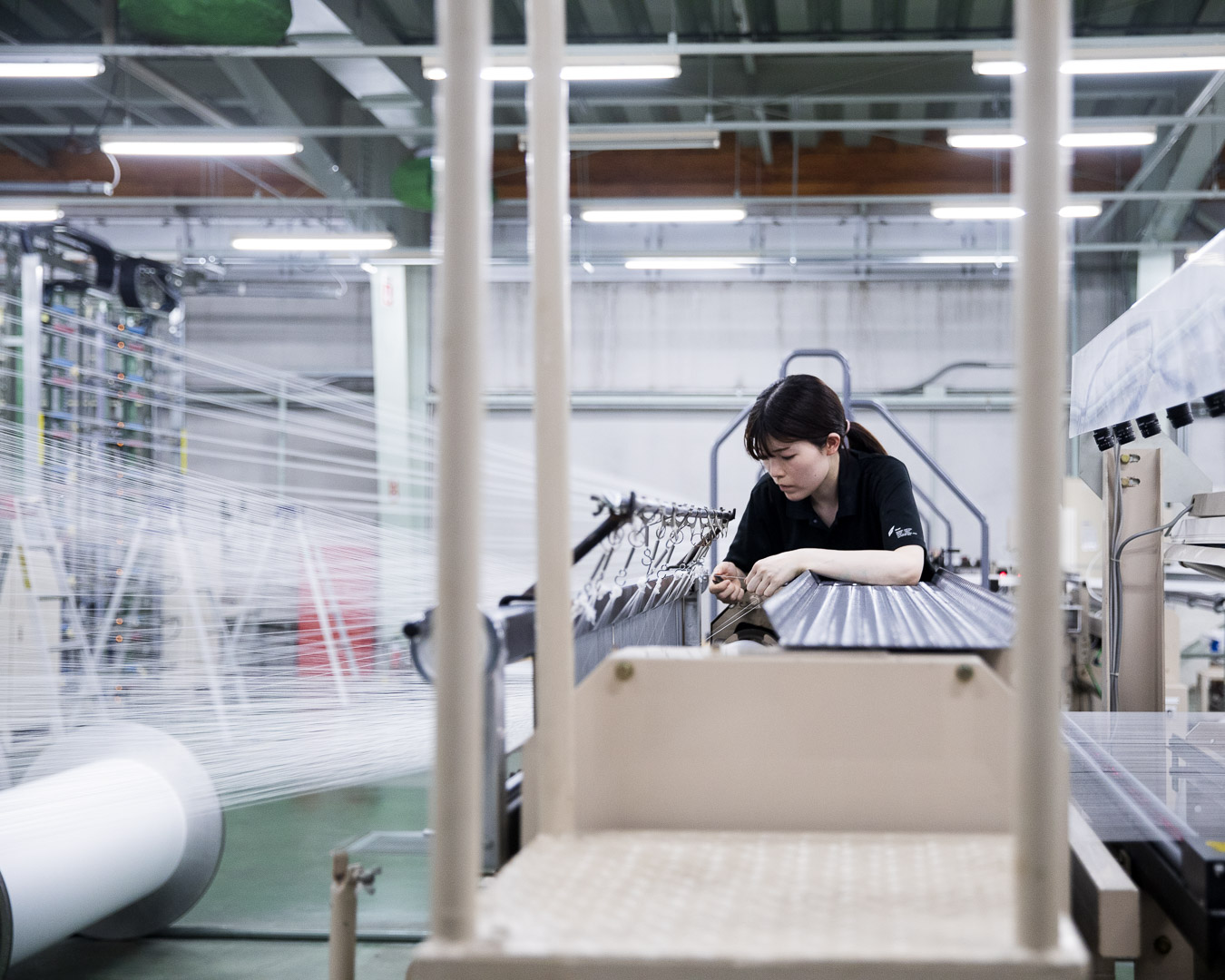
After warping, comes “reaching”. The process involves threading the warp yarns one by one through the holes in the heddles of the loom. Next, the threads pass through the heddles and then through another comb-like component called the reed. These must be done by hand, one thread at a time.
Since Kaji Rene hadn’t expected the washi-nylon to be used for outdoor wear, the fabric had to be put through extensive durability testing. Getting the right balance between tear-resistance and seam strength was important for Yamatomichi. “If you strengthen one, the other becomes weaker. It’s a tradeoff. It requires an extremely delicate adjustment,” said Rin Matsumoto, Yamatomichi’s materials development specialist. “It’s going to be used outdoors, so the durability requirements are inevitably higher. We understand that there are limits because it’s a natural material made from washi.”
Even so, there could be no compromises.
“The greige-colored fabric was fine before dyeing, but then after dyeing it became somehow weaker, and we had to ask ourselves why,” Matsumoto said. “But I think that’s what developing something new is all about.”
For Kaji Rene, it was a chance to consider how to manufacture something that had never been done before while upholding the highest standards and meeting Yamatomichi’s expectations. “Without that level of rigor, you can’t make something good,” said Kaji Rene’s Arai.
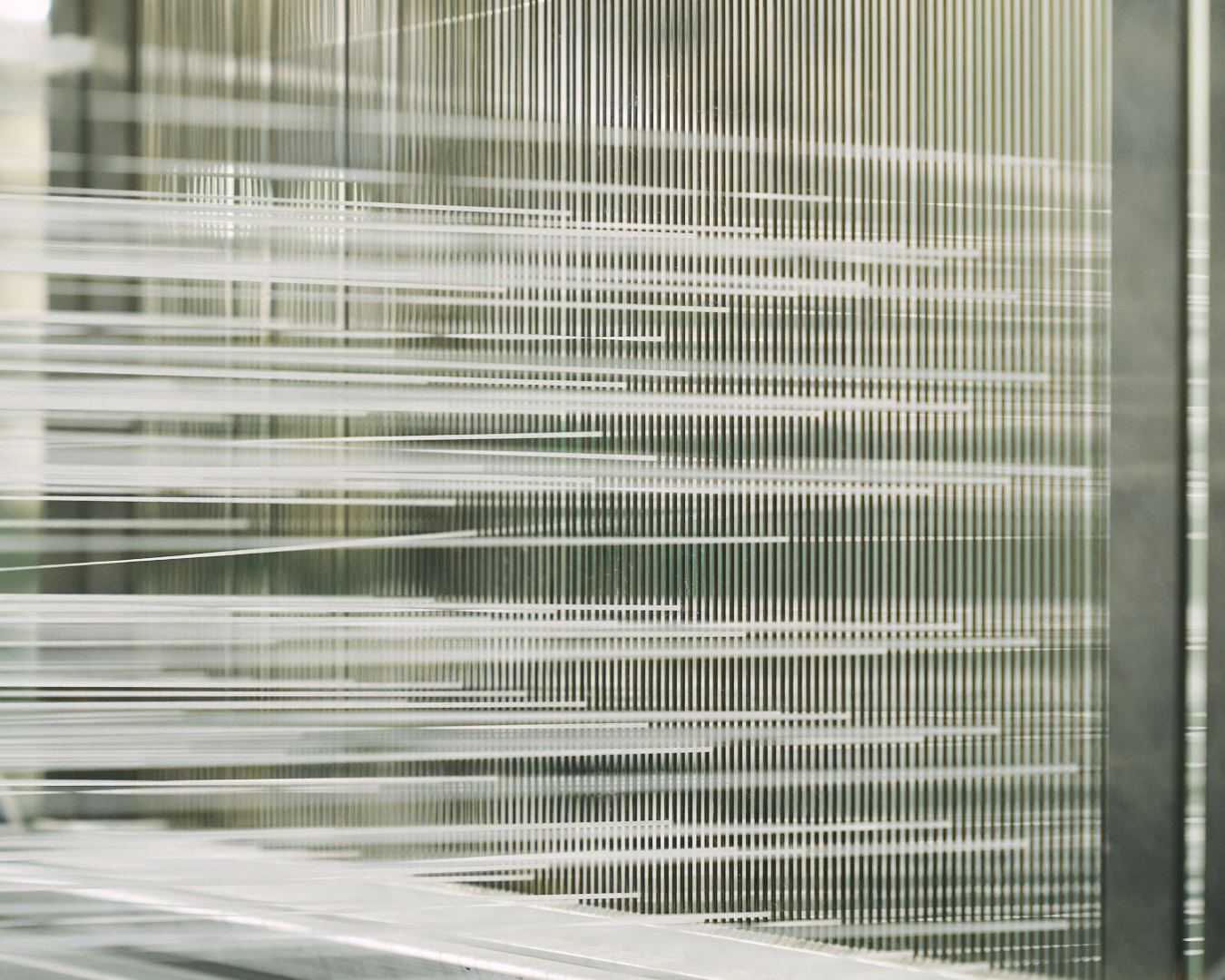
Factory floor experience matters
The job of figuring out how to make the KJF-PPX stronger and easier to weave fell to Okino’s team. Though Okino hadn’t been involved in making the washi yarn, he had a key role in planning the washi-nylon weaving and worked on the production floor.
“I was allowed to develop the concepts at the time, thinking about things like how to make the fabric stronger and how to make it easier to weave,” Okino said. “I was at the factory handling the fabric and thinking about the type of fabric that we were making.”
Weaving an unfamiliar yarn to its optimal density was a challenge. Ultimately, Kaji Rene created a three-layer yarn made with 0.9 millimeter washi strips that were woven with 15d nylon*. The difference in thickness between the fine 15d nylon and the washi-nylon yarn gives the fabric its subtle texture and barely-there feel and prevents it from clinging to the skin.
Even after Kaji Rene had decided on the woven structure, other issues cropped up. The fabric’s colorfastness ー how much its color faded after washings, exposure to sunlight, perspiration and daily wear ー initially didn’t meet the team’s quality standards. “We worked with the processing factory to consider dyes and methods that would allow us to clear that hurdle,” said Okino. “There were issues at every stage, but we were able to overcome all of them.”
*The weight and thickness of individual threads used in a fabric is measured in Denier. A fabric with a higher Denier is thicker, stronger and more durable than fabric with a lower Denier. Lower Denier nylon is common in ultralight hiking products that are designed to be lightweight.
Another logistical wrinkle: Kaji Rene had to split up the production process among several different specialty factories. “The weaving is done at a factory very close to here (Ishikawa prefecture). We have a lot of water-jet looms, but water-jet weaving isn’t compatible with washi. That leaves air-jet looms as an option. We thought the Hokuriku region was the right place for that,” said Okino. But dyeing factories in the Hokuriku region didn’t have the right equipment to handle hybrid synthetic-natural fiber fabrics. Kaji Rene ultimately decided to send the fabric to a dyeing factory with experience in natural fibers in Bishu, an area in western Aichi prefecture and a global production center for wool.
“We really made this washi-nylon fabric by transcending the boundaries between Japan’s production regions,” said Kaji Rene’s Arai. “It’s truly Made in Japan.”
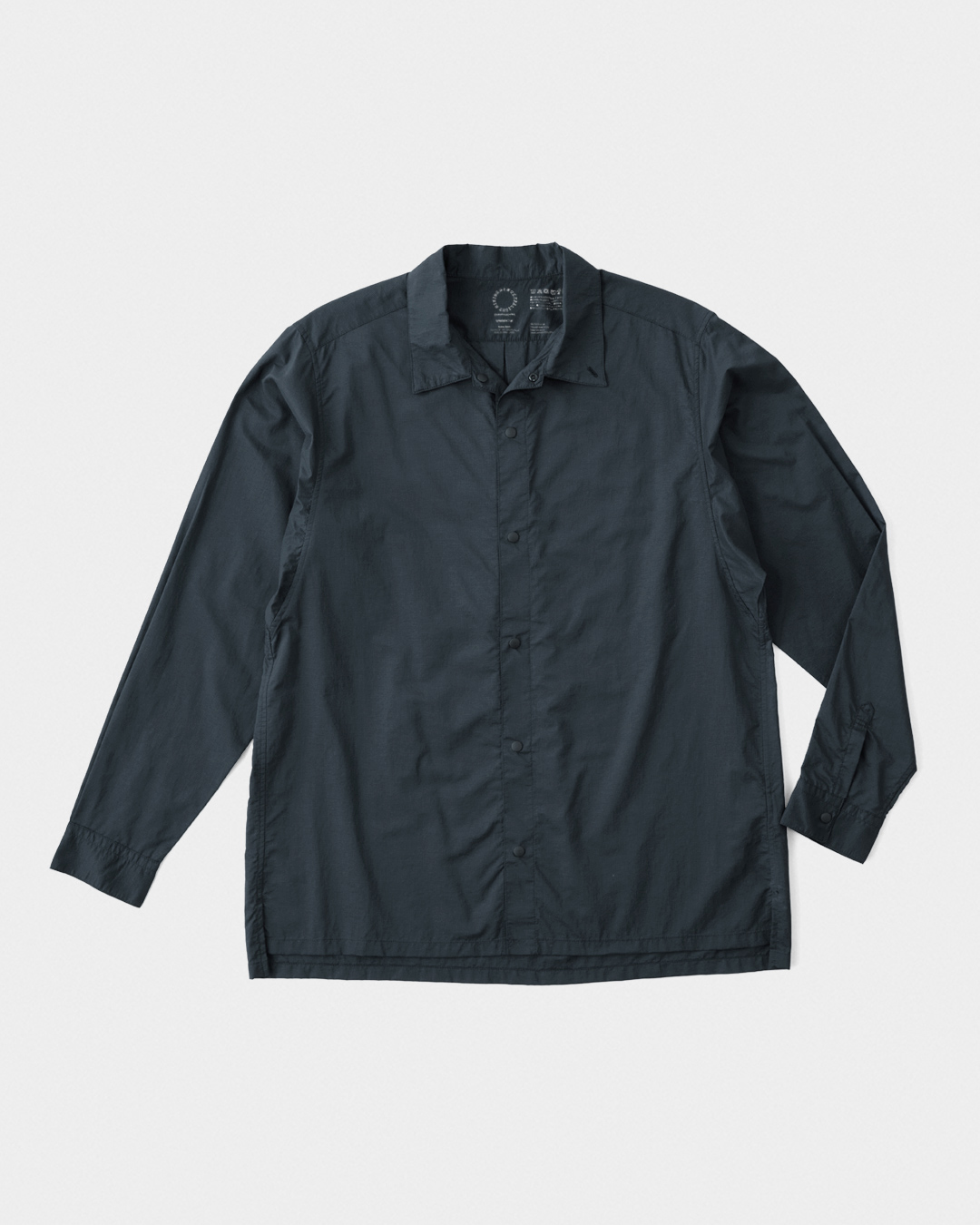
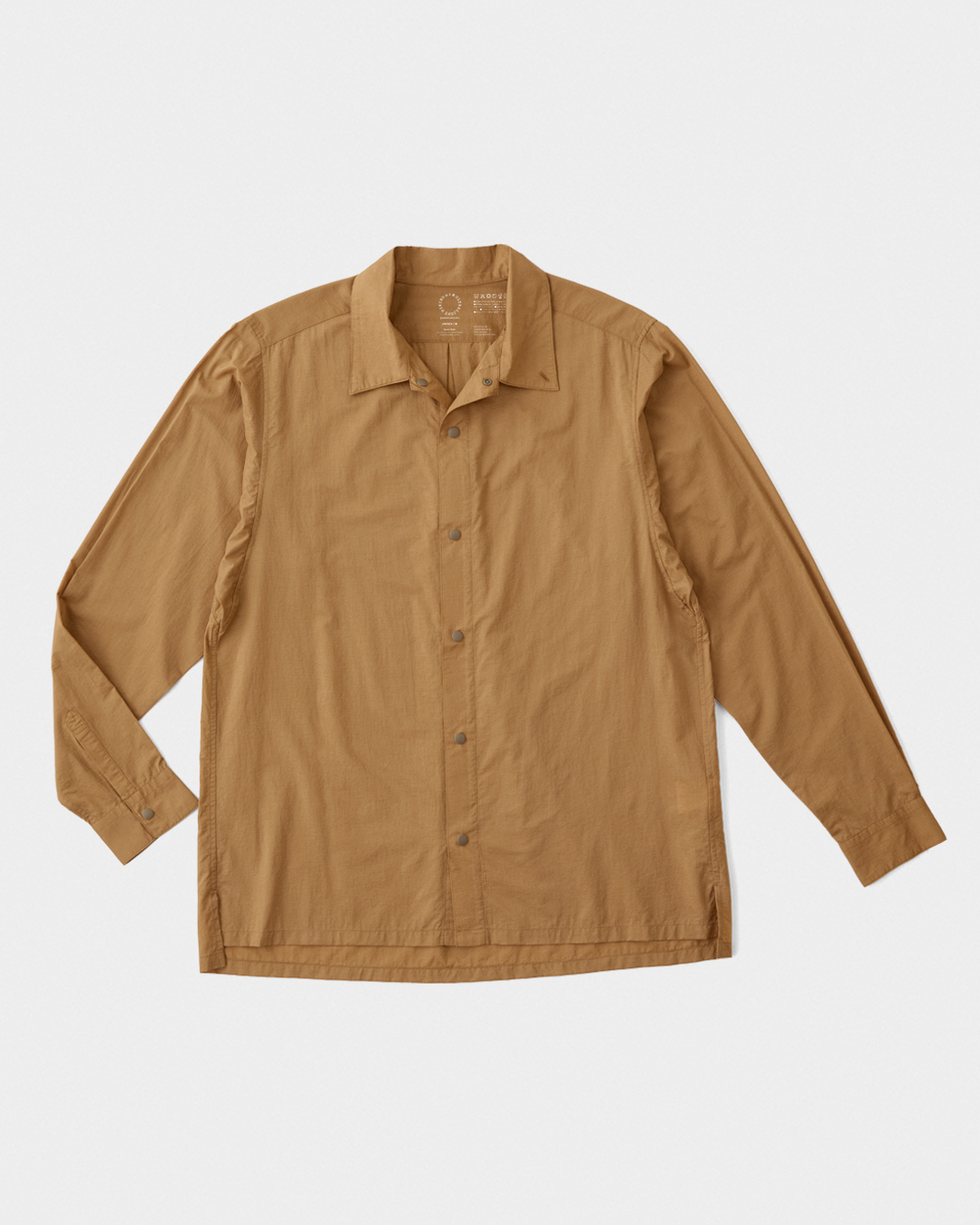
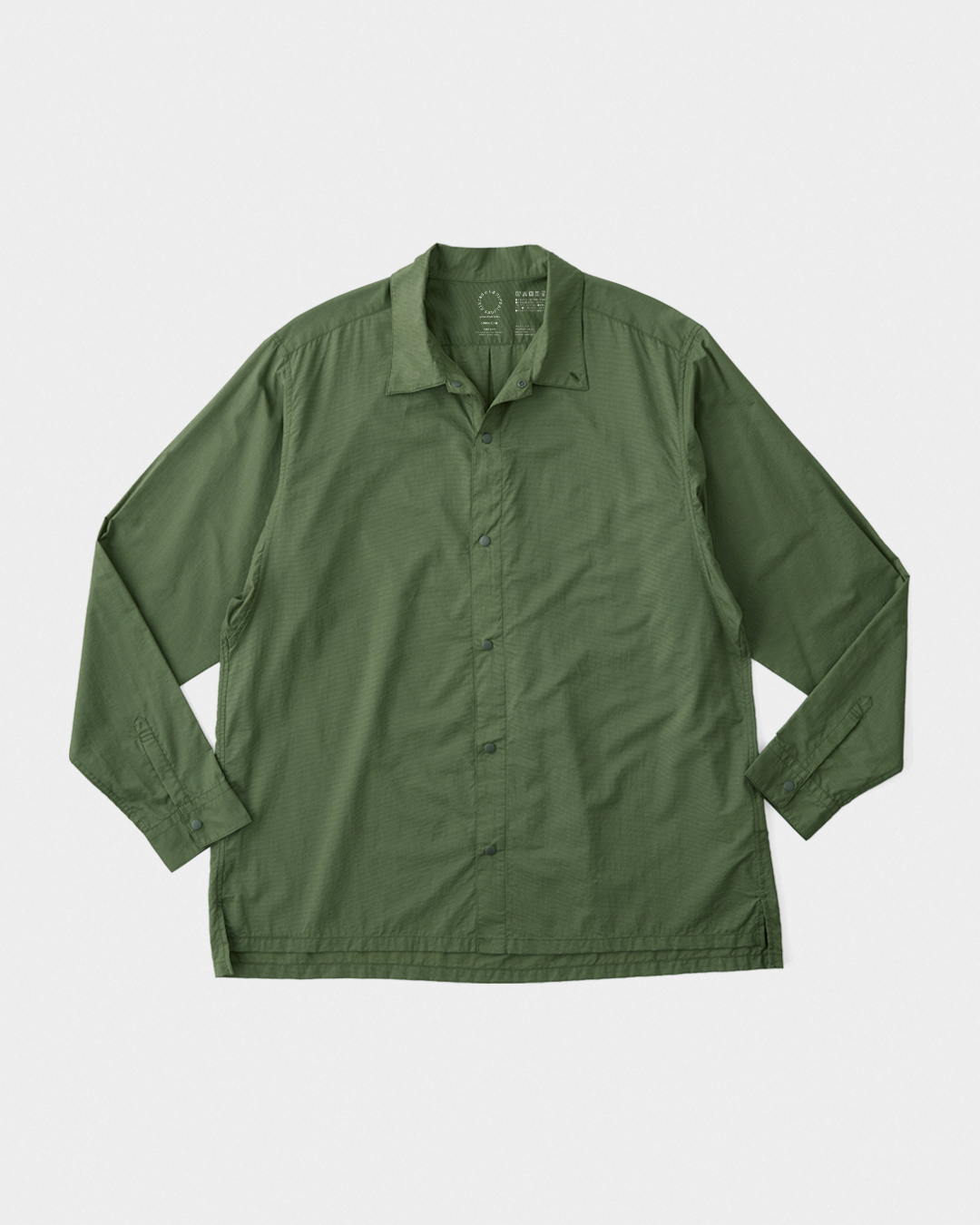
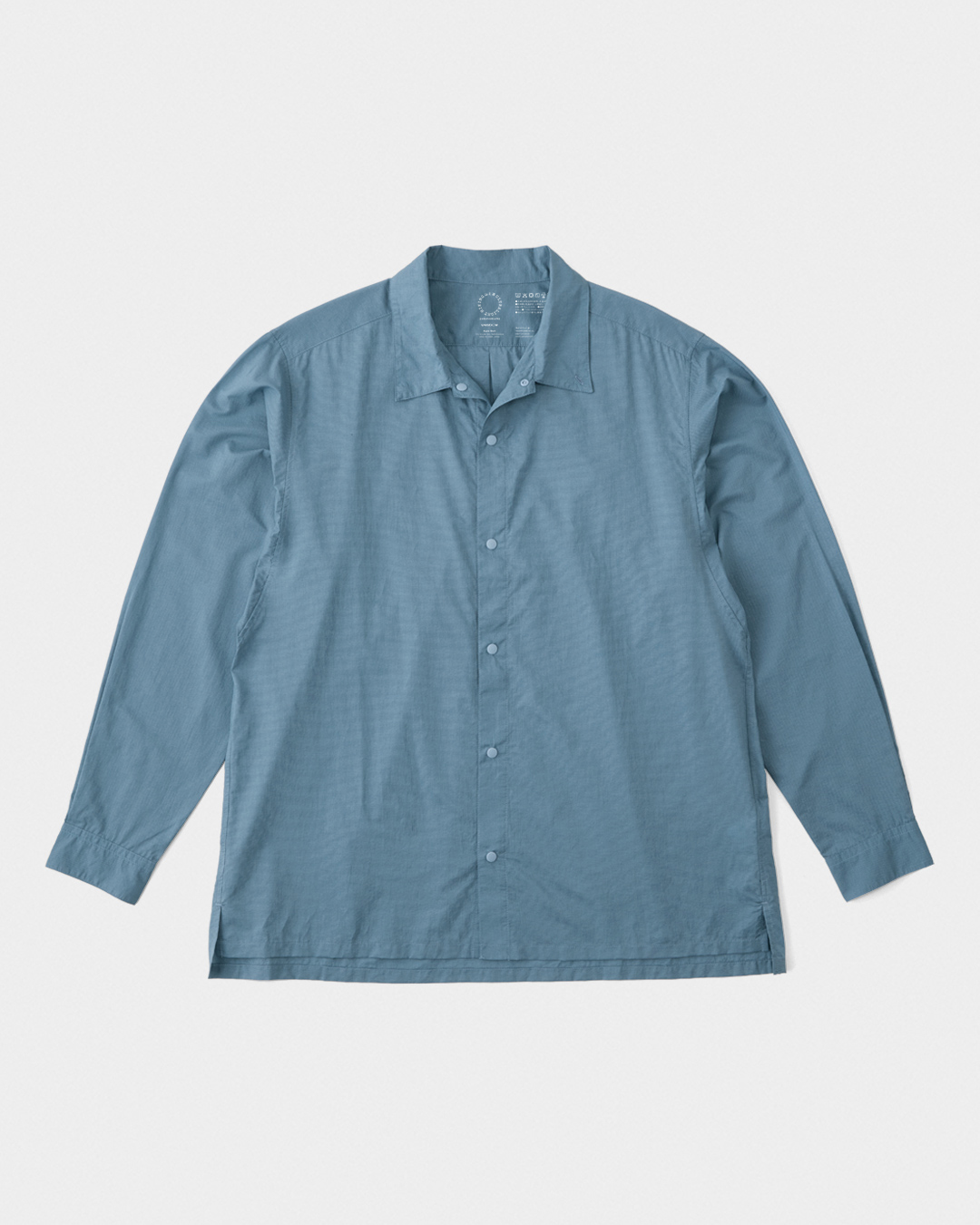
The finished product. In 2026, the Kami Shirt is available in four colors: Navy, Brown Sugar, Pine Green and Blue Gray.
The Kami Shirt's defining traits
From early on, Yamatomichi’s Watanabe and founder Akira Natsume had decided to make a washi-nylon button-down hiking shirt. The samples they tested were promising. “It has deodorizing and moisture-regulating properties, and also blocks wind, so it can be used like a wind shell. It works in a variety of situations, and is even more pleasant to wear than natural materials,” said Watanabe.
Watanabe thought the washi-nylon shirt could be worn during high-exertion hiking. But he needed to assess its performance under real-life conditions. “I wore it in a mountain race, and with a wind shell. Once you start sweating, the inside of the shell usually gets stuffy and you want to take it off. But the Kami Shirt absorbs your sweat, so you can keep wearing the shell. The shirt also blocks just enough of the wind on its own, so I feel it belongs to a category that didn’t exist before,” said Watanabe. “A lot of other natural-synthetic hybrid fabrics are heavy or slow to dry. So the Kami Shirt’s lightweight and quick-drying properties make a big difference.”
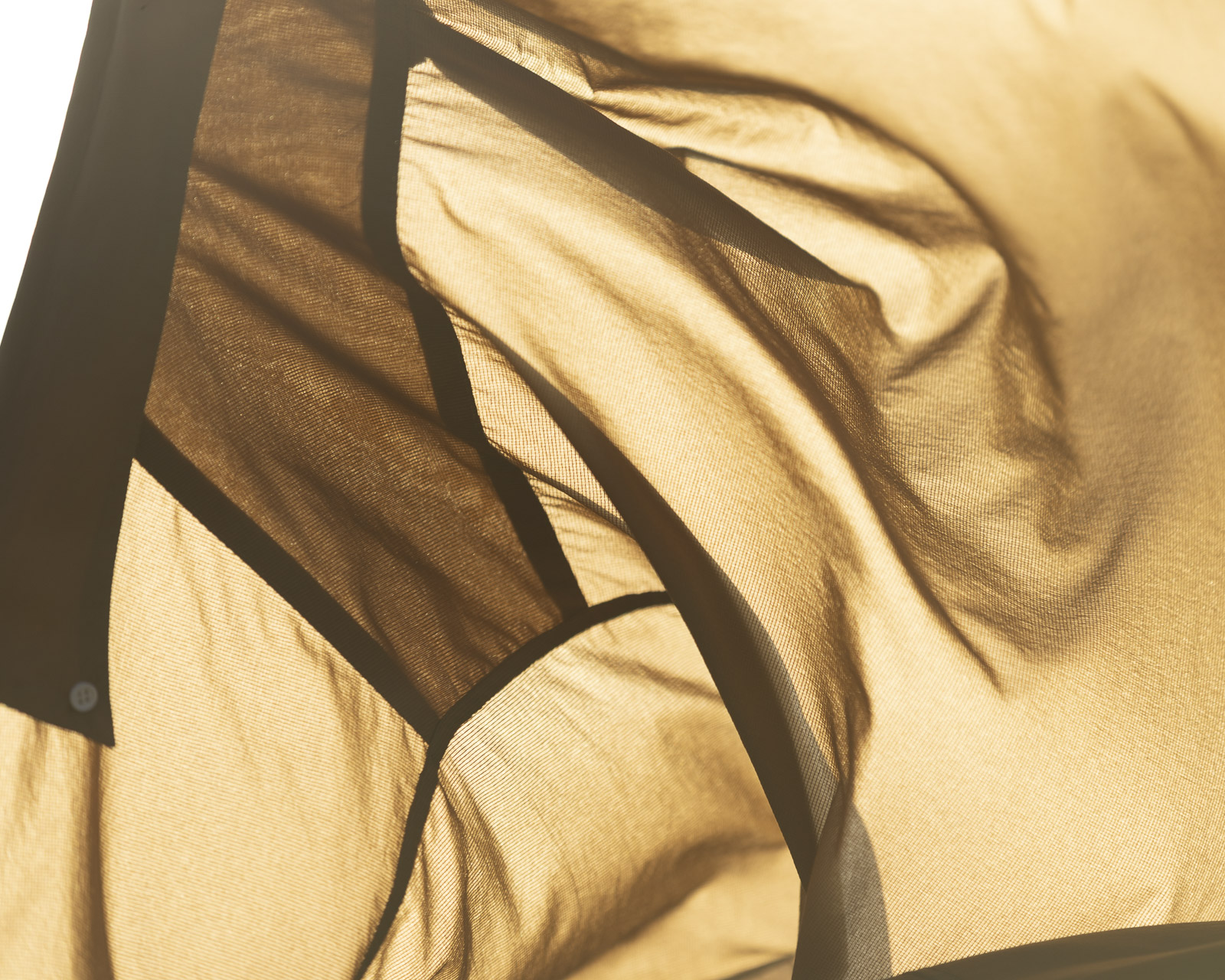
The washi-nylon developed for the Kami Shirt is ultra-lightweight and quick-drying and it absorbs moisture. The washi threads also help suppress odors.
The Kami shirt differed from Yamatomichi’s bamboo polyester Bamboo Shirt, which is also made of a natural-synthetic hybrid fabric. While the Bamboo Shirt “is durable and feels like something you can really put through its paces without worrying about it”, the Kami Shirt seemed to work best for intense activities and heavy sweating, said Watanabe.
You can even wear the Kami Shirt as a base layer. That sets it apart from the UL Shirt, which is polyester and durable but has a water-repellency that prevents it from absorbing sweat.
“The UL Shirt is light, but the Kami Shirt’s lightness is on another level,” said Watanabe. He’s already thinking about other possible products that he could use the new fabric for. “There’s no reason to limit the washi-nylon fabric to shirts. We could also make a wind shell or perhaps a hoodie.”