






108g (Size M)
119g (Size L)
130g (Size XL)
- Introduction
- Beyond Merino
- Product story
- Overcoming wool’s drawbacks
- Form and function
- Breathable
- Comfortable even when wet
- Fast-drying
- Recommended scenes
- DF Mesh Merino vs. 100% Merino
- Positioning among baselayers
- Wool's disadvantages
- Details
- Product review
- Material
- Size guide
- Note before use
- Durability
- Potential color transfer
- Instructions
- Care instructions
- Repair
Introduction
Beyond Merino
DF Mesh Merino is a baselayer series made from Yamatomichi’s original fabric, designed to solve the common weaknesses of traditional 100% merino wool: slow drying, clinginess when wet, and heat buildup.
While retaining the natural comfort, odor resistance, and humidity regulation of wool, its double-face mesh structure lifts sweat away from the skin, dries quickly, and releases excess heat. Layer it under a shell and it traps warmth, while the point-contact inner surface helps reduce discomfort even when you sweat. This makes it a strong choice for high-output activities like trail running and fastpacking.
To take full advantage of the fabric’s high stretch and freedom of movement, it comes in a slim fit that keeps moisture moving away from the skin.
Please note that because this is a mesh-structured wool fabric, wearing it on its own may make it more prone to pilling, holes, or snagging from abrasion caused by backpacks and other gear.
Product story
Overcoming wool’s drawbacks
We consider merino wool to be the best base layer fabric for hiking because it doesn’t smell even after a week of wear. There are, however, those who disagree.
Some say that it gets too hot during highly intensive activities such as hiking or running, that it sticks to the skin when wet with sweat and makes it difficult to move, or that it dries slower than synthetic fabrics.
Yes, we have to admit that merino wool is not flawless.
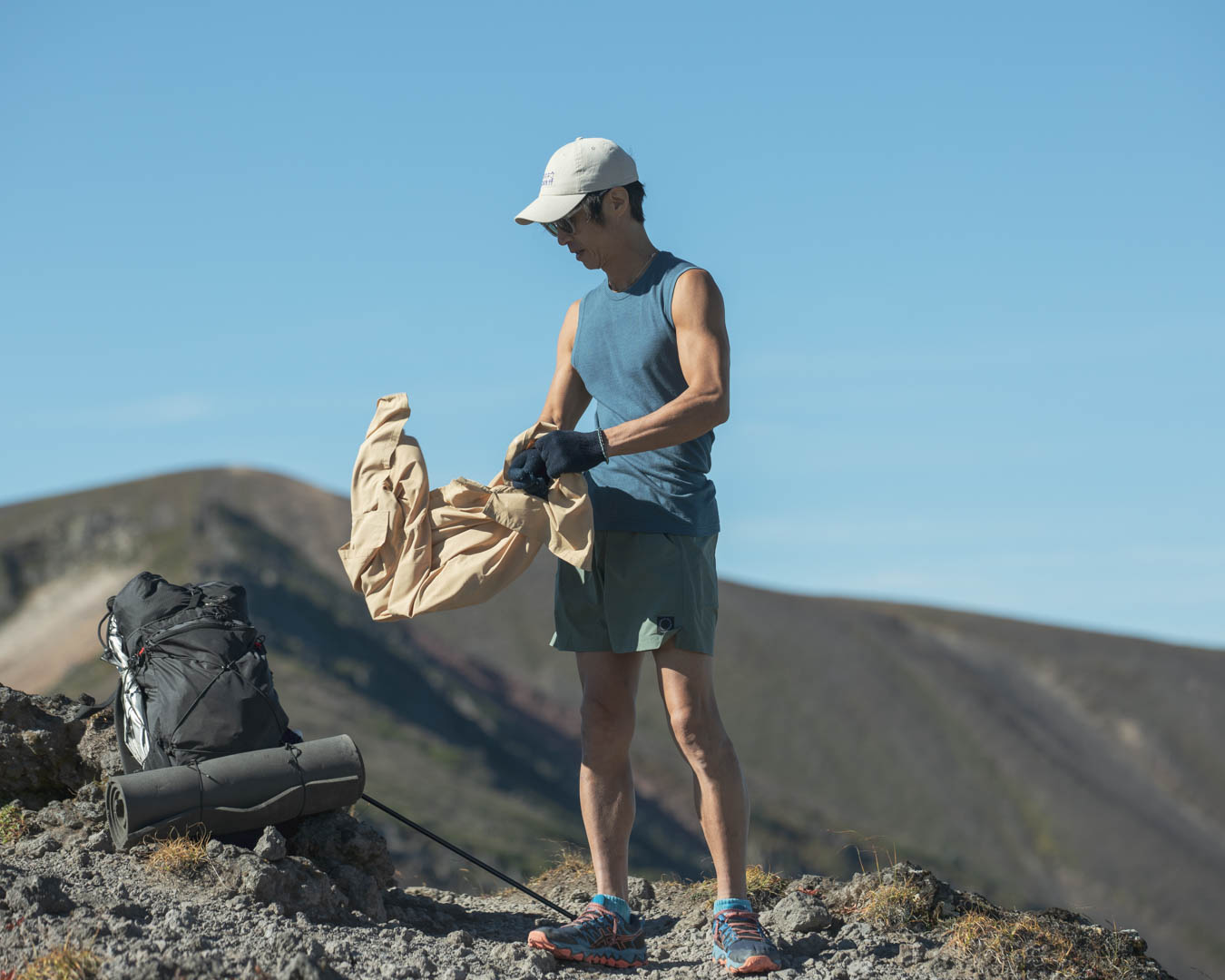
Naomi Kazama, wearing the 2023 version Slate Blue color.
I myself have had the experience of wearing a sweat-soaked merino wool T-shirt that would not dry at the tent site. I was putting it on while sleeping to make it dry. I do love merino wool but sometimes wished it would dry a little faster.
So we decided to create a “super merino wool” for hiking by adding the advantages of synthetic fibers, such as air-permeability, quick-drying property, and comfortable texture even when wet.
From the beginning of the development, our aim was to create a “breathable mesh merino wool” product. However, we wanted something even better. That is, we wanted a hydrophobic mesh and merino wool fabric in a single piece, but it should not look like a mesh fabric at a glance so that it could be worn by itself. Of course, there were many challenges. Our first prototype had the mesh surface on the front, but we later reversed the front and back; This made the mesh fabric come into contact with your skin by multiple points rather than by one large surface. The front side was made flat to increase durability.
We also developed two types of proprietary merino wool yarns; hydrophobic yarn to repel water and hydrophilic yarn to absorb water, which allowed quick absorption and wicking.
As explained in the “Form and Function” section of this webpage, this combination of two types of yarns resulted in the DF Mesh Merino series, successfully overcoming the drawbacks of wool fabric.
To tell the truth, however, the development was not as easy-going as it seems. It took a long time and effort to test, mass-produce and verify the quality and stability.
We spent a long time field testing it as well as at the inspection agency, and the theoretical verification of the fabric. I, of course, tested the fabric myself too. Is the DF a solution for merino wool’s drawbacks? To find the answer, more than 20 testers participated in our field test, and though the majority of feedback was favorable, we pinpointed two concerns.
The two concerns were the mesh fabric’s low durability and the heating performance due to the thickness of the fabric. The good air permeability should make you comfortable at the mountain ridge where the wind is blowing, but you may feel a little too warm at low-altitude mountains in the mid-summer.
That said, the DF performed surprisingly well in the high-altitude mountains where the temperature drastically changes. As I kept hiking the steep uphill during the onsite test, the DF Mesh Merino got sweat-soaked but was instantly dried by the wind blowing at the mountain ridge.
We proudly recommend the DF for merino lovers as well as synthetic base layer users who dislike the wool’s conventional drawbacks. After many trials and errors, we are finally ready to release this exciting new product to you. (Updated 2022)
Form and function
Breathable
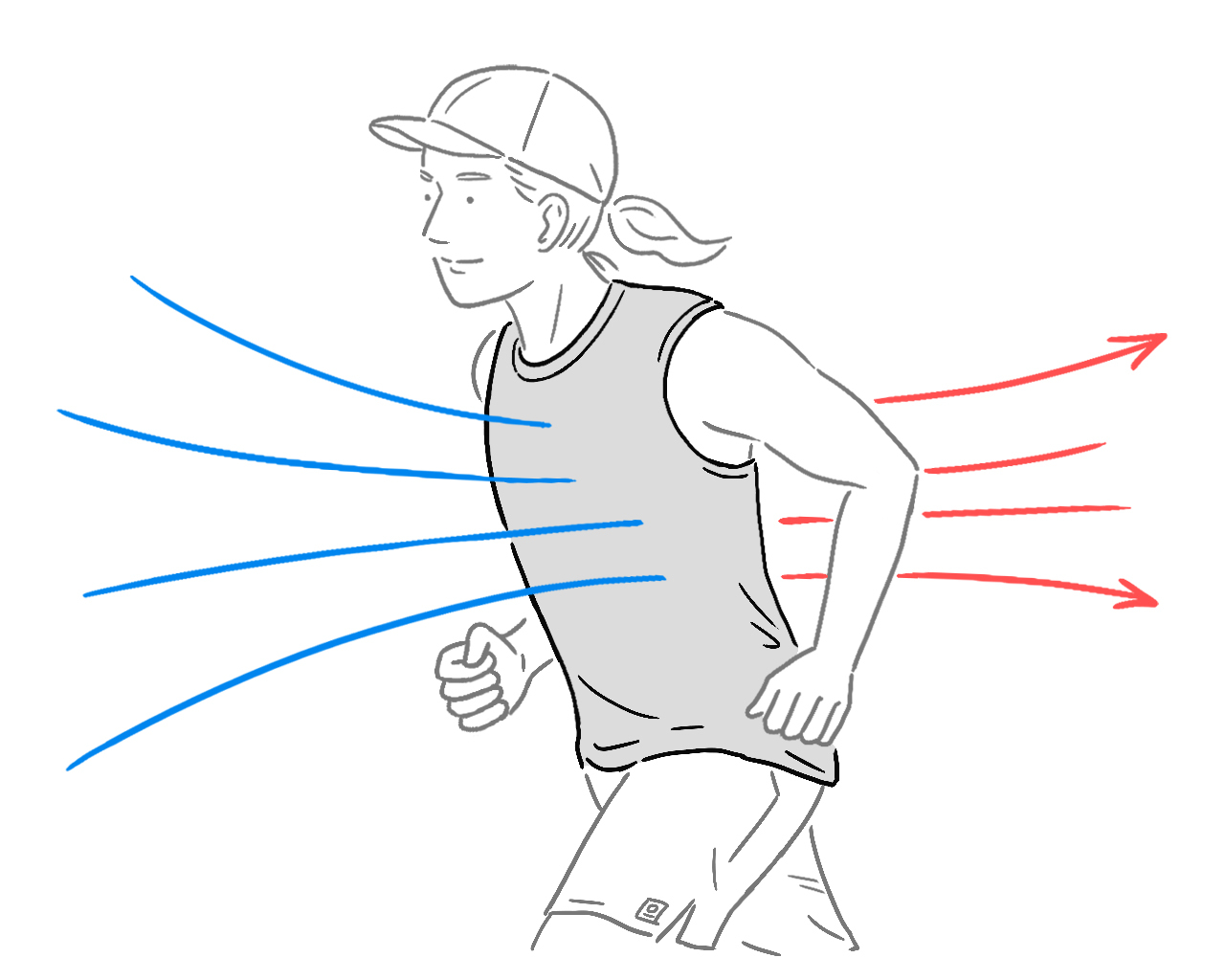
The DF Mesh Merino series has a mesh structure to accelerate the air-permeability. It is far more breathable than the conventional merino fabrics, keeping you dry and cool even when performing intensive and sweaty exercises.
Comfortable even when wet
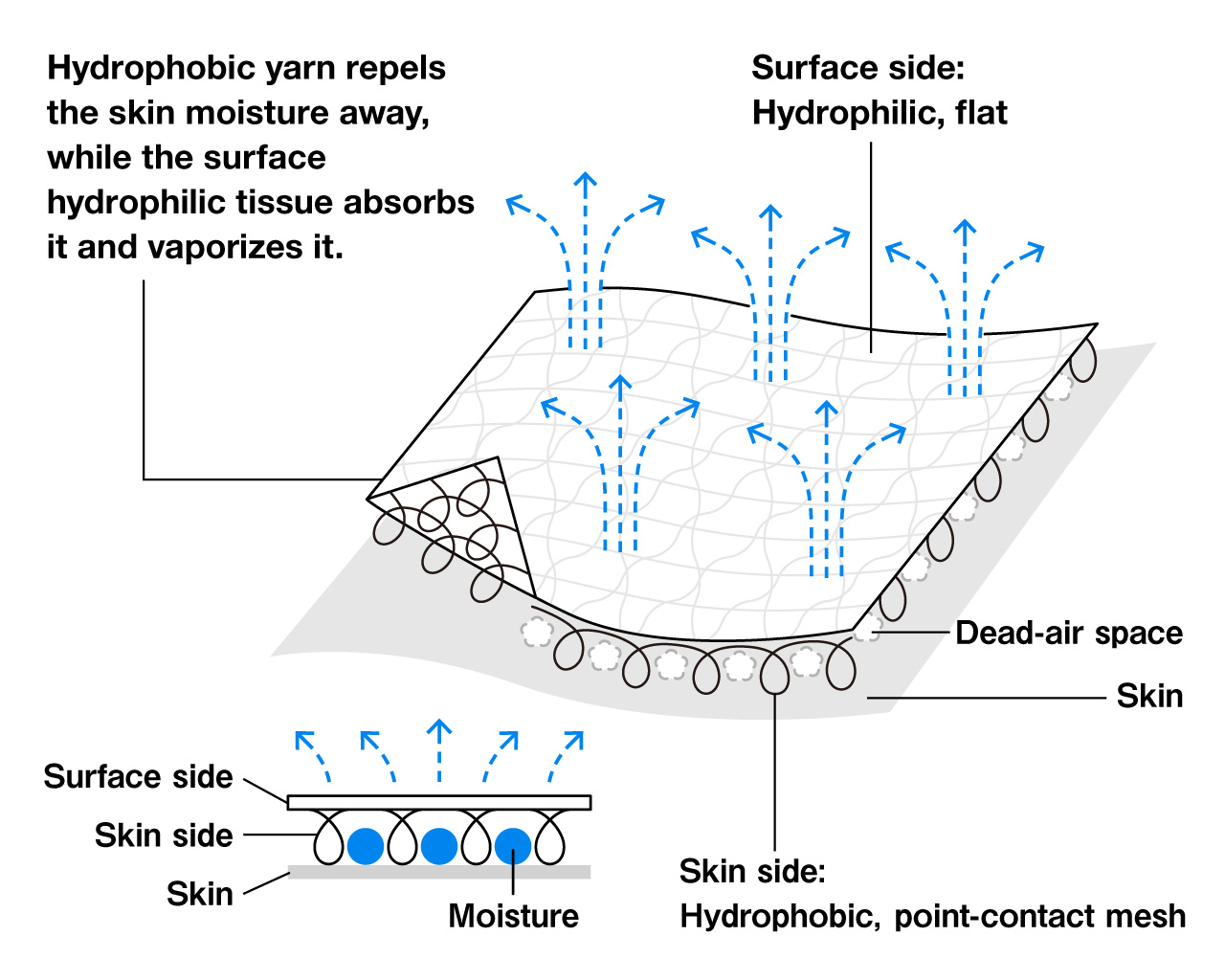
DF Mesh Merino uses 100% merino wool yarn on the skin side for a soft, comfortable feel, while its mesh structure touches the skin only at small points to reduce discomfort when wet.
The skin side is treated with a hydrophobic finish to keep moisture away, while the outer side has a hydrophilic finish to improve moisture absorption. This double-face mesh structure quickly pulls sweat away from the skin, preventing that clingy, sticky feel and keeping you comfortable.
Fast-drying
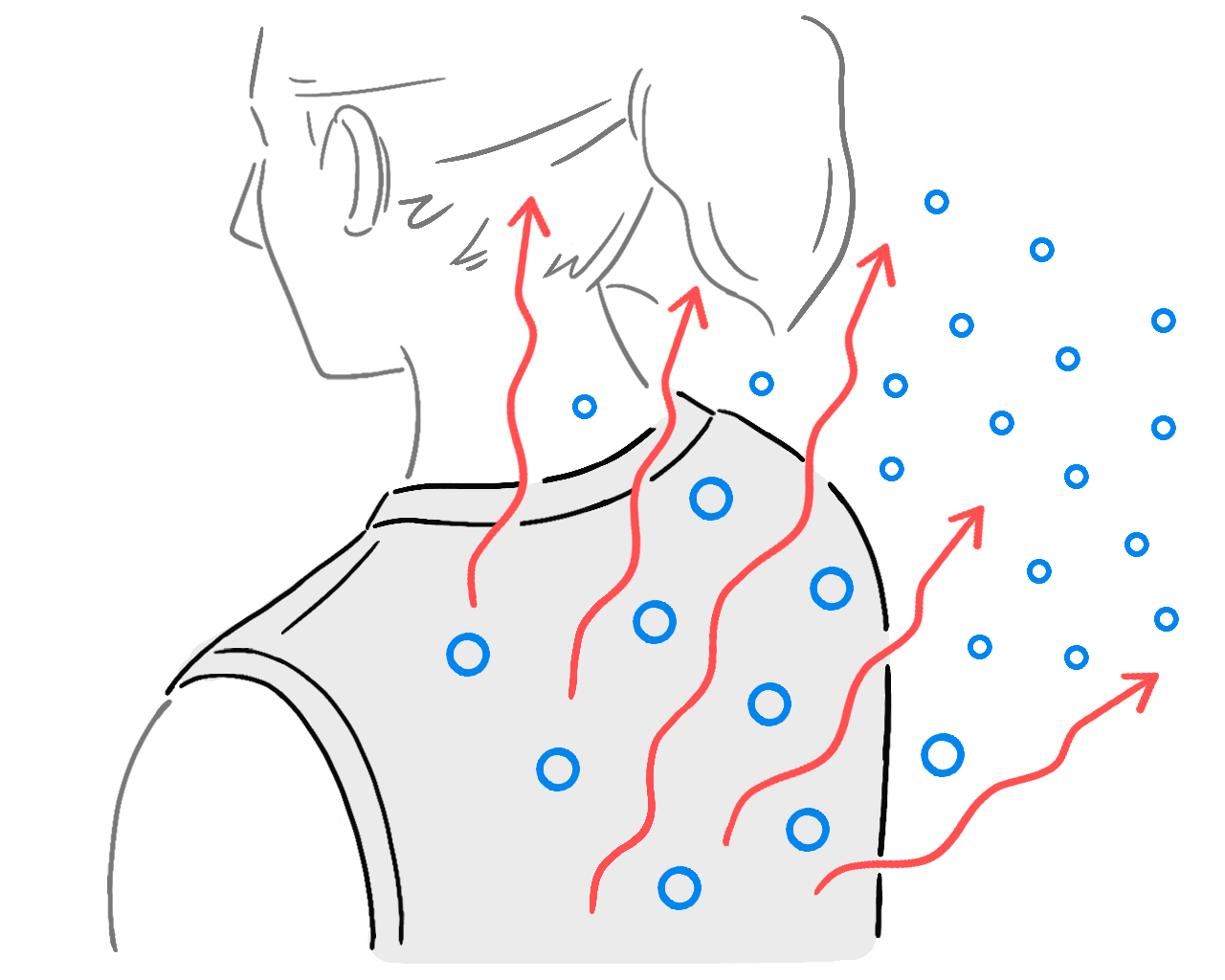
The DF Mesh Merino’s fast-drying properties outperform the conventional merino fabric, preventing you from being cold from your own sweat because of the slow-drying fabric.
Recommended scenes
Long Trails
Unlike many synthetic baselayers, DF Mesh Merino stays fresh thanks to wool’s natural odor resistance. Made with 88% wool, it can be worn for multiple days, helping reduce spare clothing and lighten your pack. It also dries quickly after washing, making it especially useful on long trails.
Trail Running and Fastpacking
With the fabric having some stretch, The DF Mesh Merino works well for high-output activities like trail running and fastpacking. The breathable mesh helps prevent overheating, while the skin side stays dry and comfortable even during heavy sweating. However, its warmth may feel too hot on poorly ventilated trails or low-elevation mountains in midsummer.
Bad weather
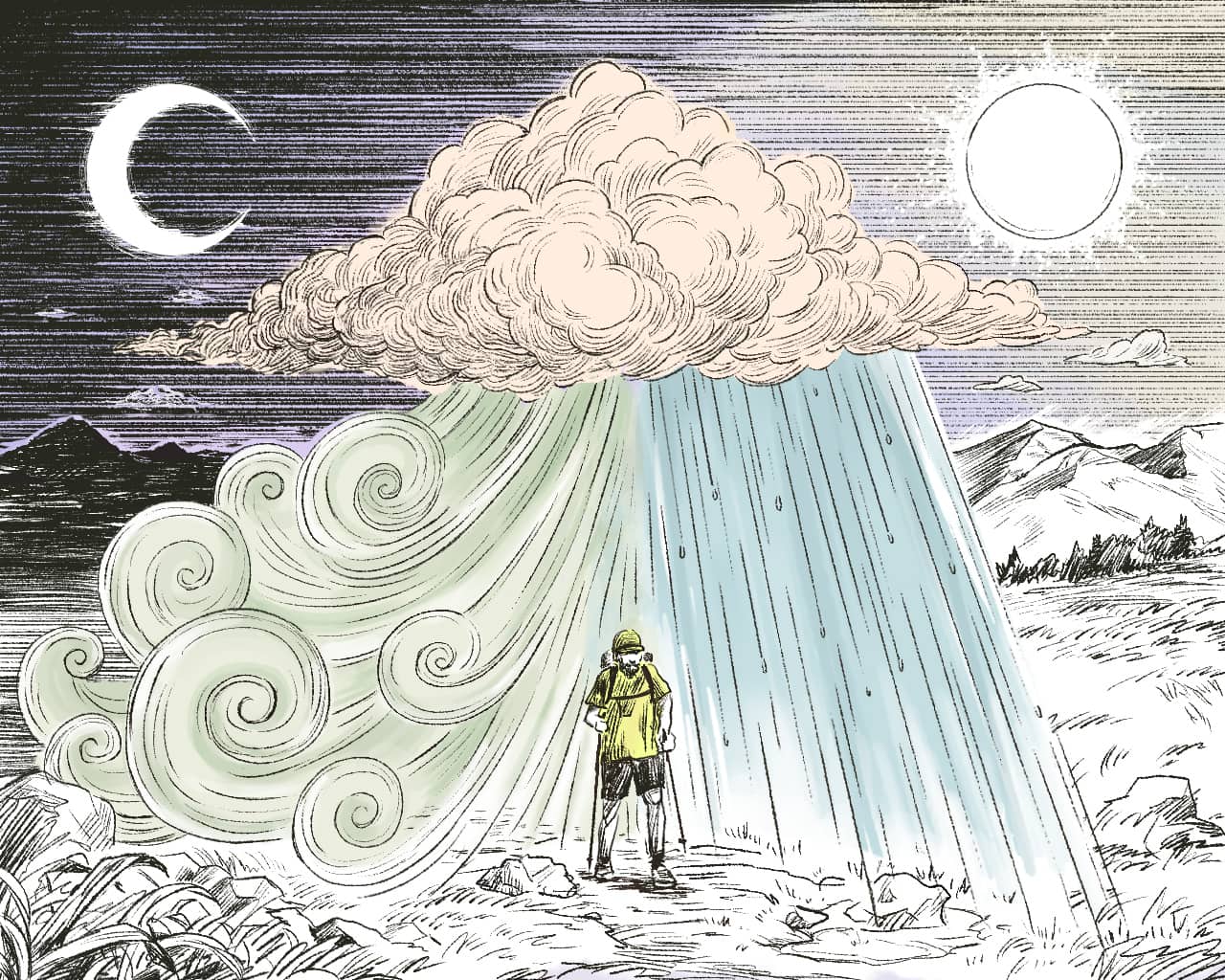
DF Mesh Merino resists chilling when wet from rain or sweat. Worn alone, it breathes; layered under a shell, the mesh traps dead air for warmth. Combined with wool’s natural moisture regulation and heat generation through moisture absorption, it performs especially well in bad weather and big temperature swings.
DF Mesh Merino vs. 100% Merino
According to Yamatomichi’s in-house testing, DF Mesh Merino is slightly lower than Yamatomichi’s 100% Merino in wool’s natural moisture regulation and odor resistance. However, it significantly outperforms it in other areas, with nearly 3 times the breathability, 2.5 times the quick-drying performance, and 1.4 times the warmth.
Its burst strength is roughly the same as 100% Merino, but its abrasion resistance is only about 40% in comparison, so care should be taken to avoid snags, surface pulls, and holes.
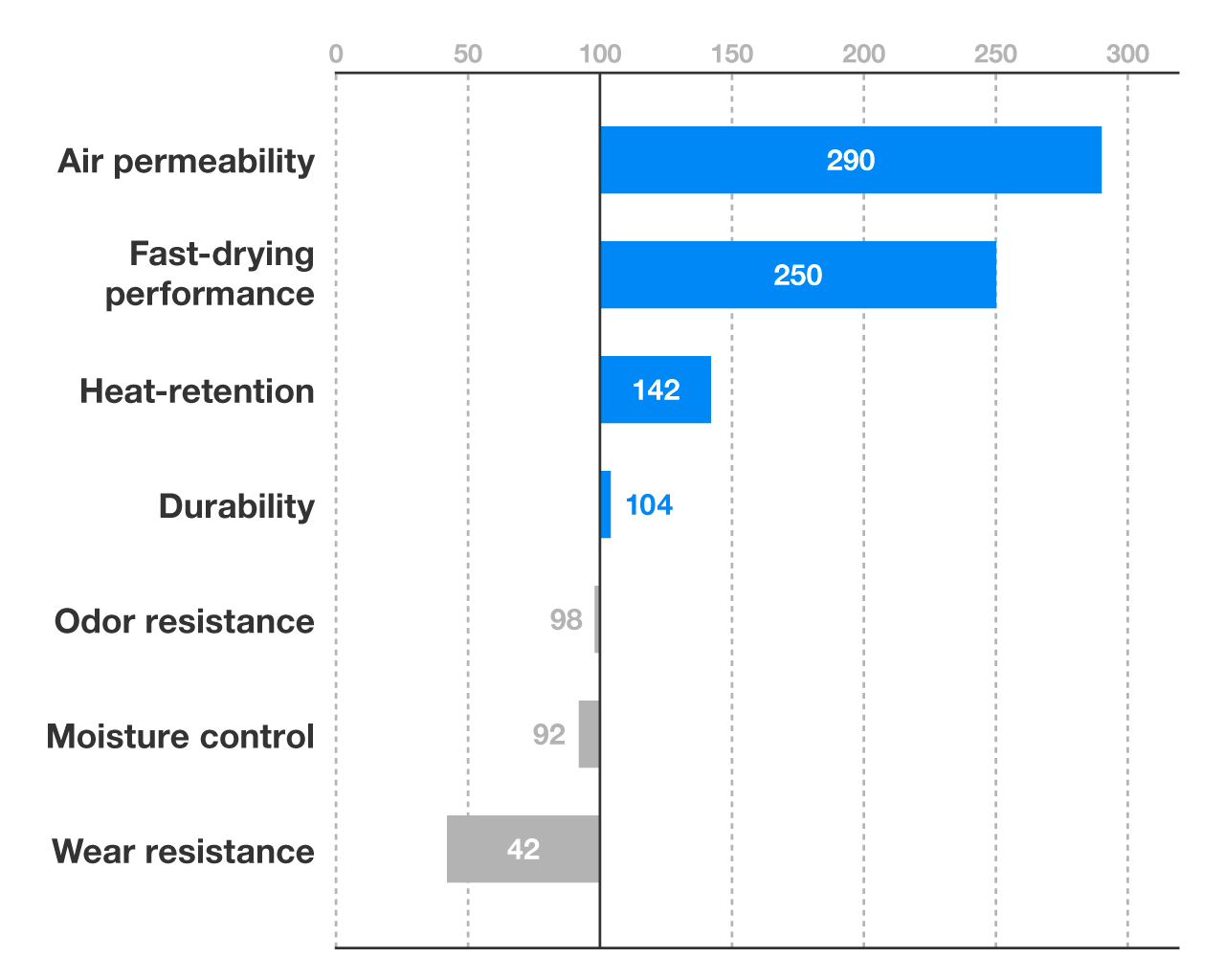
*Each value is shown as an index, with 100% Merino set at 100 (DF Mesh measurement ÷ 100% Merino measurement × 100). Breathability: JIS L 1096 Method L (Frazier method); quick-drying: moisture content after 15 minutes of dehydration; warmth: JIS L 1096 Method A; strength: bursting strength by JIS L 1096 Method A, Mullen method; odor resistance: ammonia absorption rate; moisture regulation: moisture absorption/release comparison between 20°C / 65% humidity and 40°C / 90% humidity; abrasion resistance: JIS L 1096 Method E. DF Mesh Merino abrasion resistance is the average of all colors.
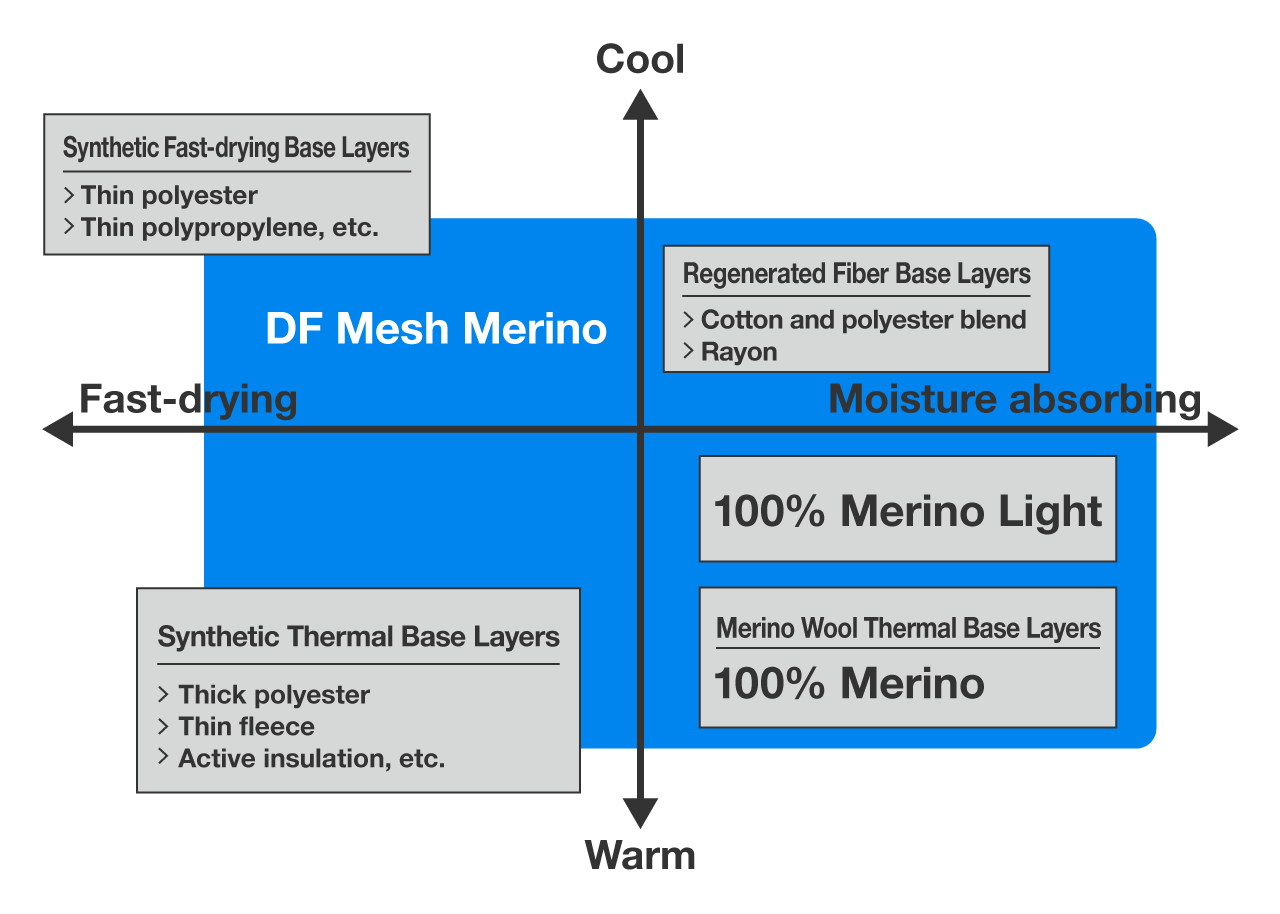
Positioning among baselayers
In general, quick-drying performance and moisture absorption, as well as cooling performance and warmth, tend to work against each other: when one is high, the other is usually lower.
With its original double-face mesh structure, DF Mesh Merino brings these opposing qualities together. It offers a wool-based option even in areas where synthetic baselayers have traditionally been chosen for quick drying and cooling performance.
Product review
In 2023, Yamatomichi staff member JK (Jun Nakamura) completed the Continental Divide Trail (CDT), one of the three great long-distance trails of North America.
In this feature, JK shares his impressions of our gear after the nearly 5,000 km journey, alongside reviews from long-distance hikers and mountain endurance athletes who tested the products during development, as well as insights from our HLC ambassadors.
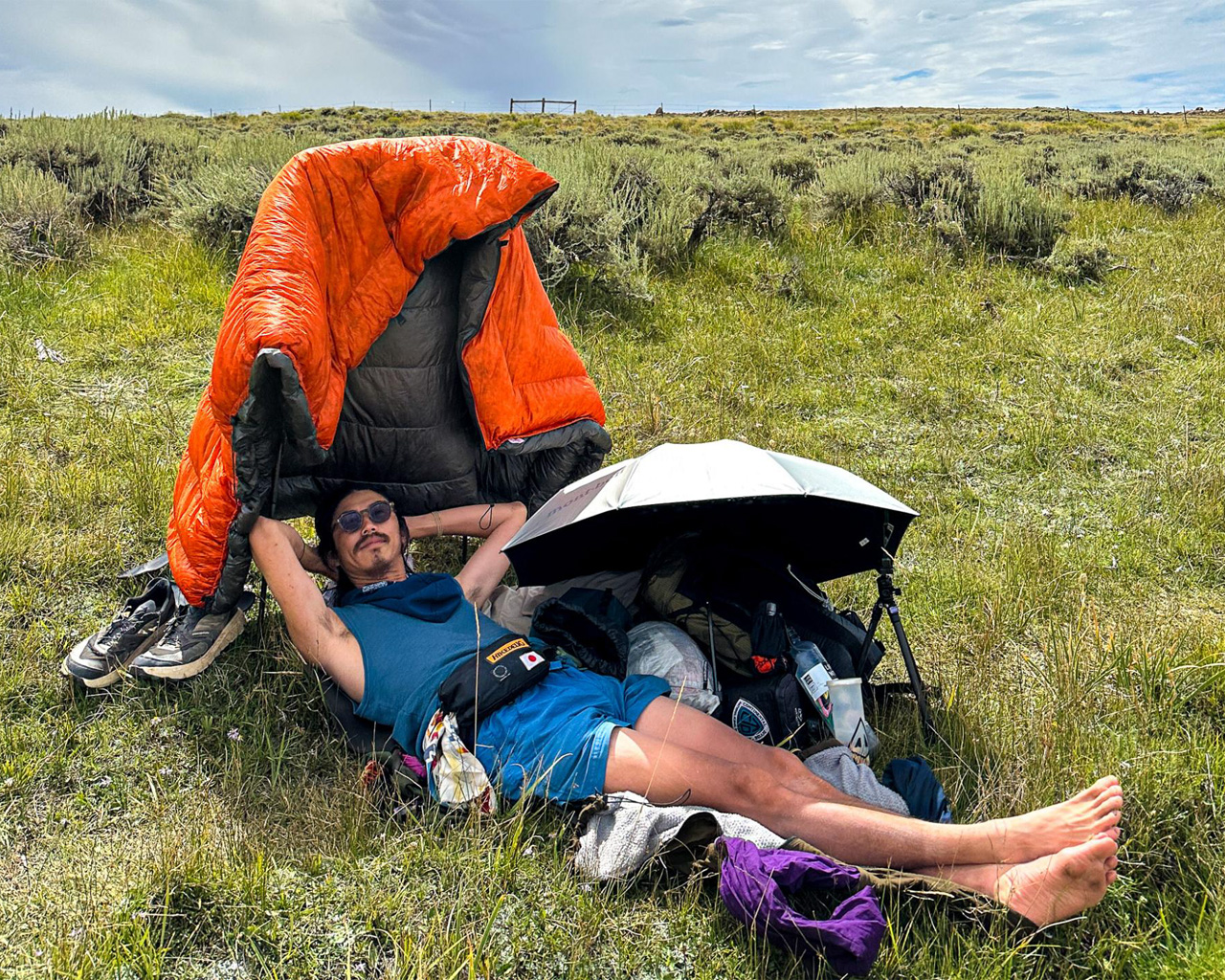

Even when I was sweating, the DF Mesh Merino Sleeveless never felt clingy against my skin. During breaks, it would dry quickly from my body heat and the wind. On the CDT, it wasn’t uncommon for humidity to drop as low as 18%, which accelerated the drying even more—I remember the fabric feeling dry and comfortable the whole way through.
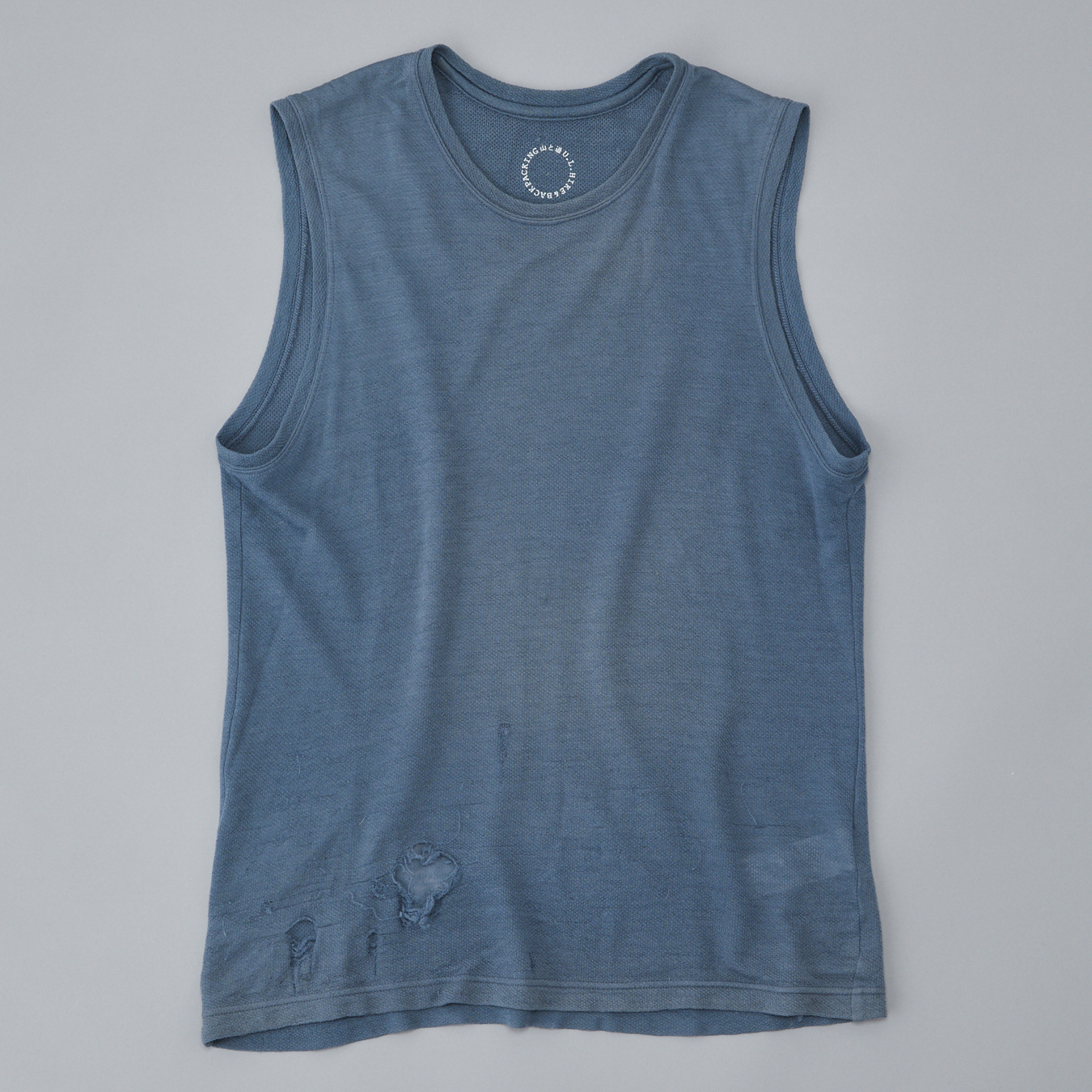
That said, the fabric didn’t come out unscathed. Friction from my hip belt eventually created a hole around the lower front area, and the material around my waist had worn so thin that the double-face (DF) knit had basically become single-face (laughs). I didn’t take any special care with washing either—no laundry net, no delicate cycle. I just tossed it in with everyone else’s clothes and ran it through the dryer full blast.
Still, it held its shape surprisingly well and never became unwearable. It was one of those key pieces that kept me comfortable from start to finish on the long trail.

International Communications / YouTube
Yamatomichi Staff, completed the 4,250km Pacific Crest Trail (PCT), which spans from Mexico to Canada through the United States. Walking this trail made Junki realize the importance of ultralight hiking and joined Yamatomichi later that year. Since then, Junki has been learning and practicing ultralight hiking through Yaamtomich, refining and deepening his ultralight mindset. This year, in 2023, Junki completed the Continental Divide Trail (CDT).
Instagram: @junki.hiker

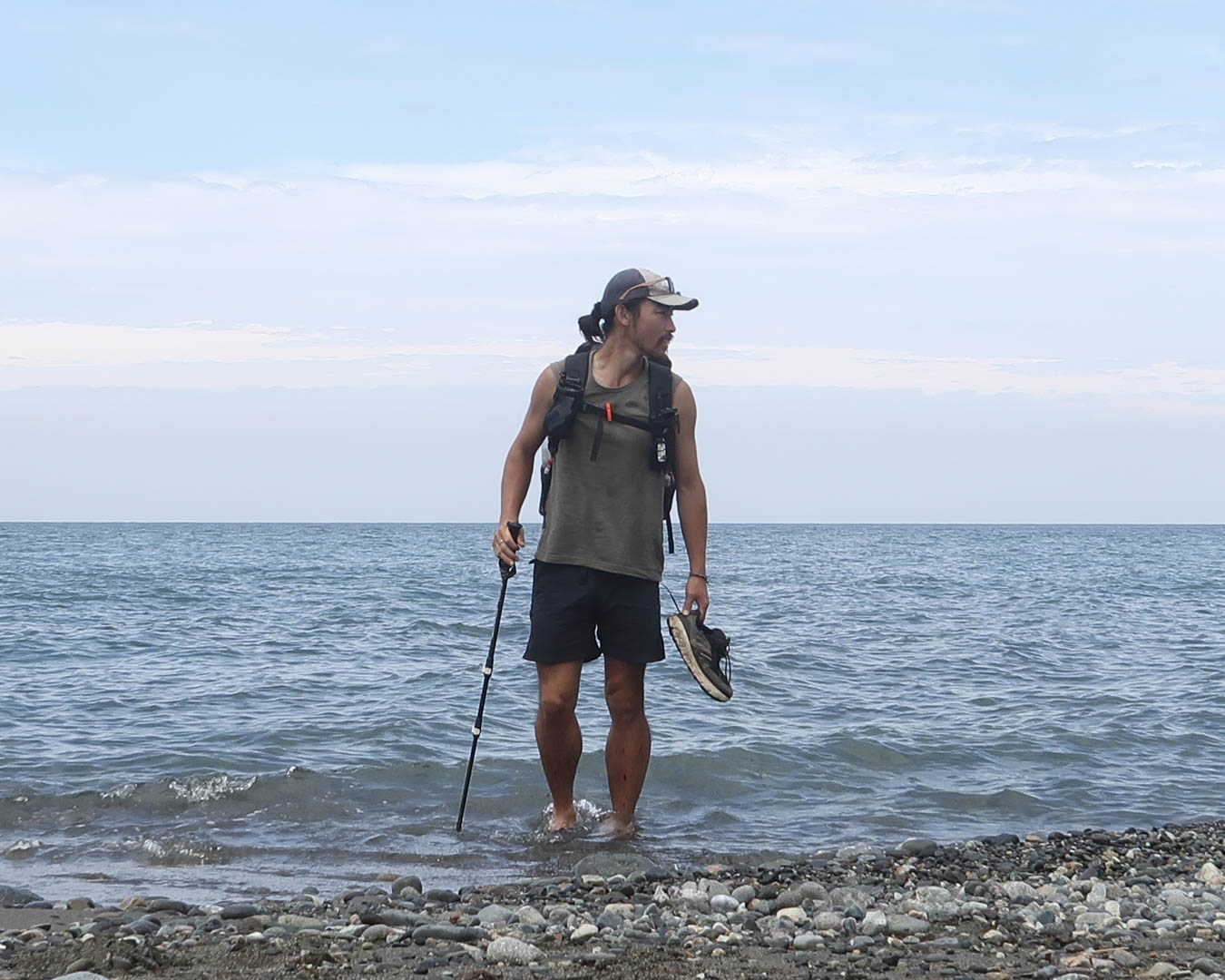
I wore the DF Mesh Merino almost every day during a 23-day summer journey across Honshu. From long road walks to alpine sections above 2,000 meters, it performed consistently well in all kinds of conditions.
On road sections or the initial climb into the mountains, I would be drenched in sweat, but the shirt never stuck uncomfortably to my body or restricted my movement. Even when it was wet, I felt reassured knowing it would dry quickly—so much so that I often skipped putting on rain gear in light showers and just kept walking.
When the wind picked up along a ridge or I started to feel chilled from sweat, layering something fast-drying like the UL Shirt over it helped retain warmth while speeding up the drying process. Even at the end of the day, once I was in my tent, I could keep it on and let it dry while I rested.
Personally, I think this piece will be a go-to base layer during the warmer months—from spring through fall.

Long-Distance Hiker / Owner of Cafe & Bar peg.
In 2013, he cycled around Japan. In 2014, he spent a working holiday in Australia. From 2015 to 2016, he traveled around the world. He thru-hiked the Pacific Crest Trail in 2017, the Appalachian Trail in 2018, the Continental Divide Trail in 2019, and the Michinoku Coastal Trail in 2020.
He shares the lessons and inspiration gained from his journeys and time in nature through social media and audio platforms like podcasts.
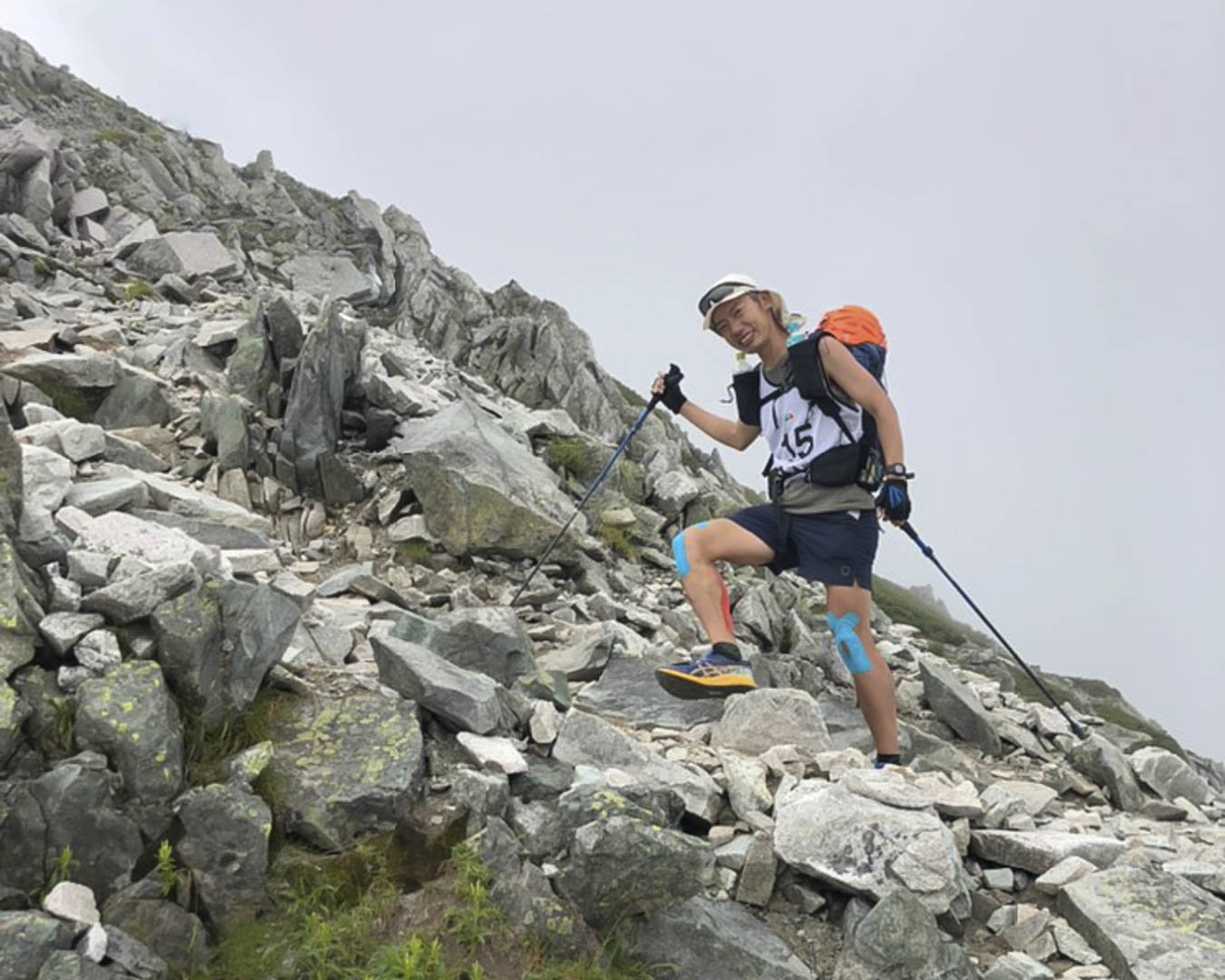
I wore the DF Mesh Merino during the Trans Japan Alps Race (TJAR) held in August 2022. Initially, I was concerned that wool might trap too much heat on hot days, but the fabric allowed just the right amount of heat to escape through the sides. Even when sweating, it didn’t cling to my body, and I stayed comfortable even during long road sections in the daytime.
Up on the alpine ridgelines, the airflow made it feel pleasantly cool, and the texture was soft enough that I could wear it without a mesh base layer underneath—which I really appreciated. I thought it might get chilly at night without an extra layer, especially when wet, but I never felt cold even after getting soaked.
That said, I did notice wear and tear where my pack’s harness rubbed—particularly around the waist—which made me feel that the surface durability isn’t very high. This piece seems best suited for situations where minimizing gear is important or during the early autumn season when you begin to feel a chill in the air.
Beyond hiking, climbing, and fishing, I think it’s also great for cold-season running (especially with sleeves), or as a base layer for everyday wear in fall and winter.

TJAR2022
He completed the Trans Japan Alps Race (TJAR) in 2022, after first participating in 2020.
His passion for mountaineering began in 2012, and he started enjoying weekend hikes around the Tokyo area. In 2014, he was deeply inspired by Great Traverse: One Continuous Journey Through Japan’s 100 Famous Mountains, and learning that Yohei Tanaka had competed in TJAR sparked his interest in the race.
Attending a TJAR debriefing session in 2016, he was captivated by the athletes’ incredible skill and human spirit, which motivated him to begin training seriously. Though he was not selected in the 2018 qualifier, he made his first appearance in the 2020 TJAR. Unfortunately, the race was canceled at Nishikama Ridge due to severe weather.
In 2022, he finally achieved his long-held goal of completing the TJAR.
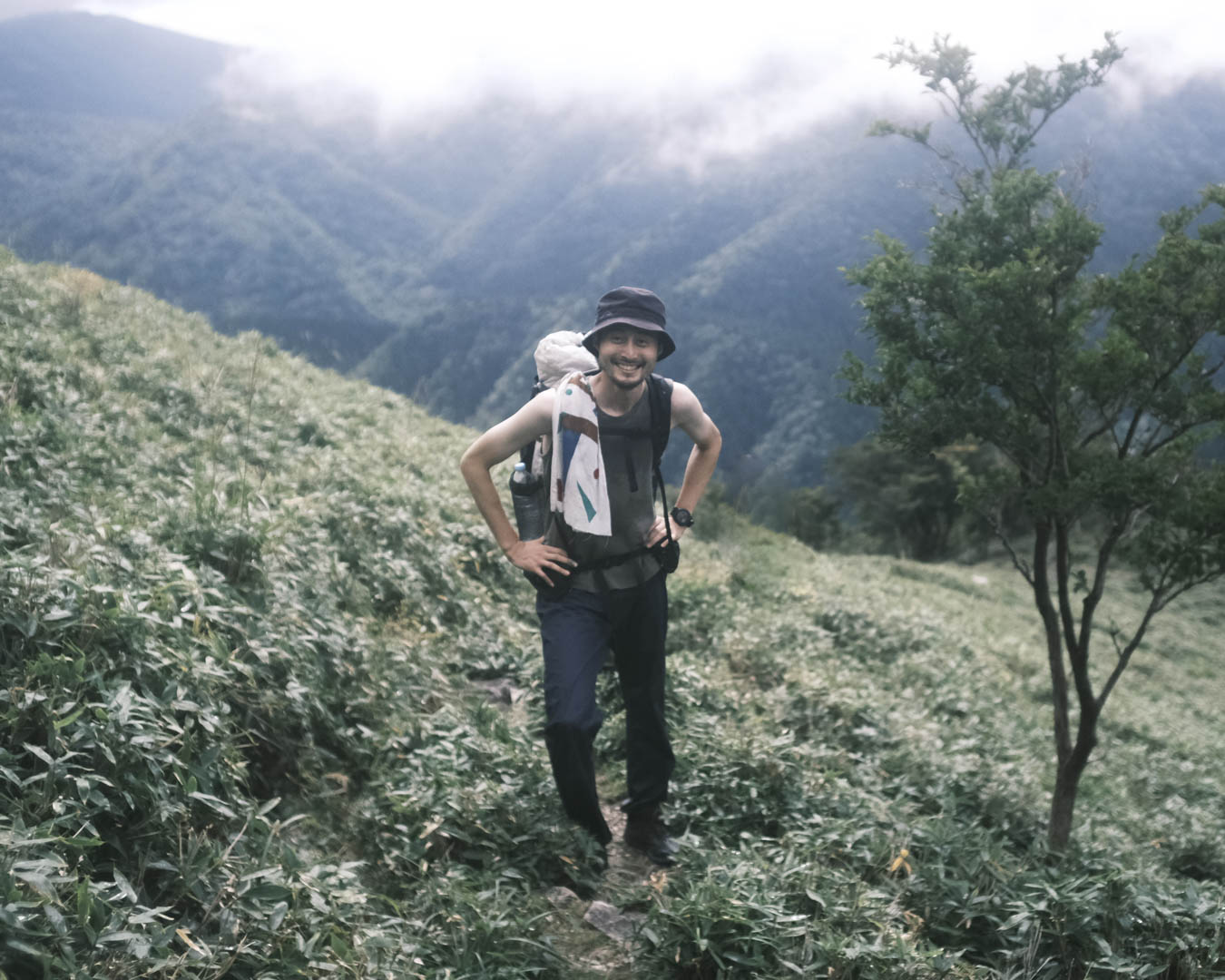
I wore the DF Mesh Merino Sleeveless during a week-long hike across Shikoku in mid-September. Even when it was soaked with sweat during sunny daytime hikes, it barely clung to my skin and didn’t feel uncomfortably wet. When putting my pack back on after a break, I noticed very little chill from the damp back panel—sometimes it dried so quickly during rest stops that I almost forgot it had been wet at all.
During rain or cooler times of day, I layered the UL All-weather Jacket over it. Even when I got completely soaked in heavy rain, the comfort level remained surprisingly high.
That said, because the fabric lifts off the skin easily, I did feel chilly when resting in windy spots—so I’d recommend putting on a layer early in those situations.
Because it resists the sticky, chilling feeling of sweat, I found it ideal as a base layer even in warm conditions. At the same time, I’m curious to test how it performs in colder seasons when layered with other pieces.

Yamatomichi HLC Kita-kanto Ambassador & Outdoor Shop Lunnetes Staff
He first discovered the mountains at age 20, captivated by an indescribable feeling while hiking Mt. Nasu with a friend. His journey into UL culture began with a Yamatomichi sacoche—and soon after, he found joy in MYOG (Make Your Own Gear), learning the thrill of heading into the mountains with equipment he crafted himself.
After leaving his job at a camera manufacturer, he joined the staff at LUNETTES. In addition to hiking, he’s also passionate about fly fishing and telemark skiing.
Material
What to wear is an eternal challenge. In highly intensive activities in conditions with large differences in temperature, you feel too warm and stuffy if the clothes are too warm, while increased breathability could lead to the risk of being too cold.
We recommend 100% merino wool fabrics with excellent moisture control, heat retention, deodorant, and resistance to cooling when wet, etc. However, we have to admit that there have been cases where merino wool is not comfortable, especially when it’s too warm and you sweat heavily. The DF Mesh Merino is the proprietary fabric that we have developed over the past two years to overcome these issues.
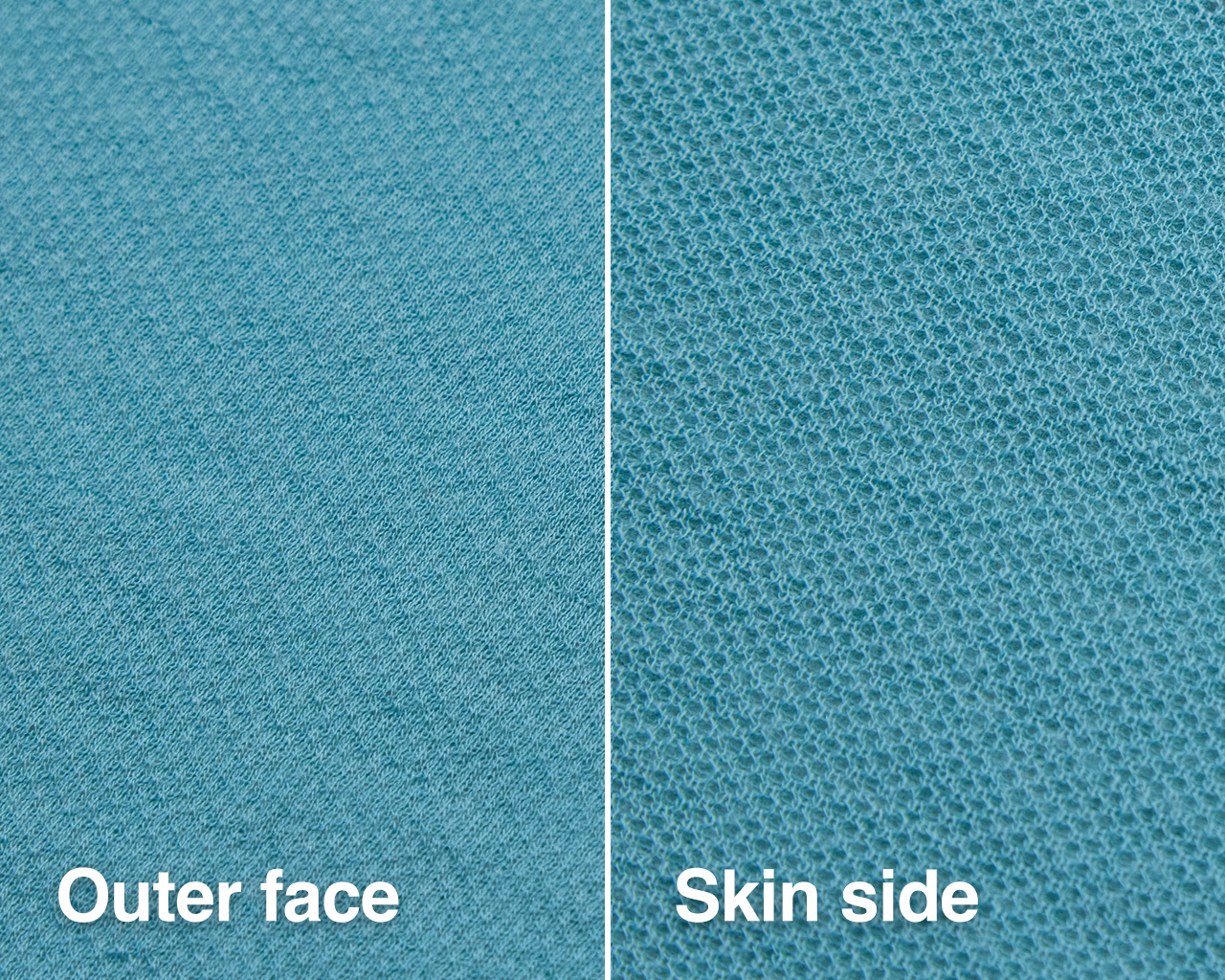
The DF (double face) is a dual-layer mesh structure; The skin side is a mesh made of 100% merino wool and is hydrophobic-finished to keep the water away, contacting your skin by points rather than by a single layer to keep you always comfortable. The surface side, on the other hand, is flat-knitted and hydrophilic-finished for better sweat absorption. The fabric is made of synthetic/merino yarn, that is, a nylon core wrapped by the merino yarn to increase durability and quick-drying properties. As such, the double-face fabric keeps you dry and offers you maximum comfort even under the changing weather.
The excellent air permeability will keep you cool when you are on the move while keeping you warm when you stand still. It is even warmer if you wear a windproof jacket. As a result of the wool blend ratio being approximately 90%, it also exhibits excellent natural-derived properties such as deodorant and moisture control.
Size guide
Size chart
| Size | S | M | L | XL |
|---|---|---|---|---|
| Weight (kg) | 52~60 | 57~67 | 64~77 | 74~85 |
| Chest (cm) | 80~90 | 85~95 | 92~102 | 100~110 |
Product dimensions
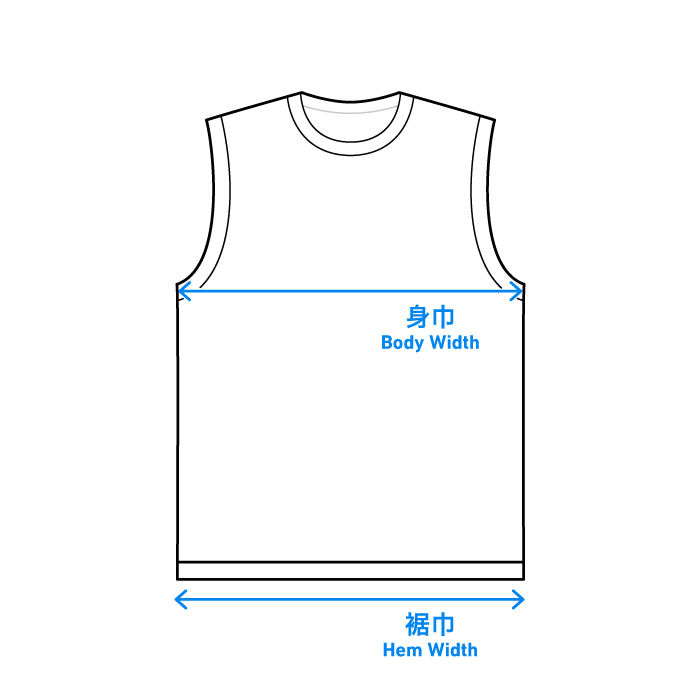
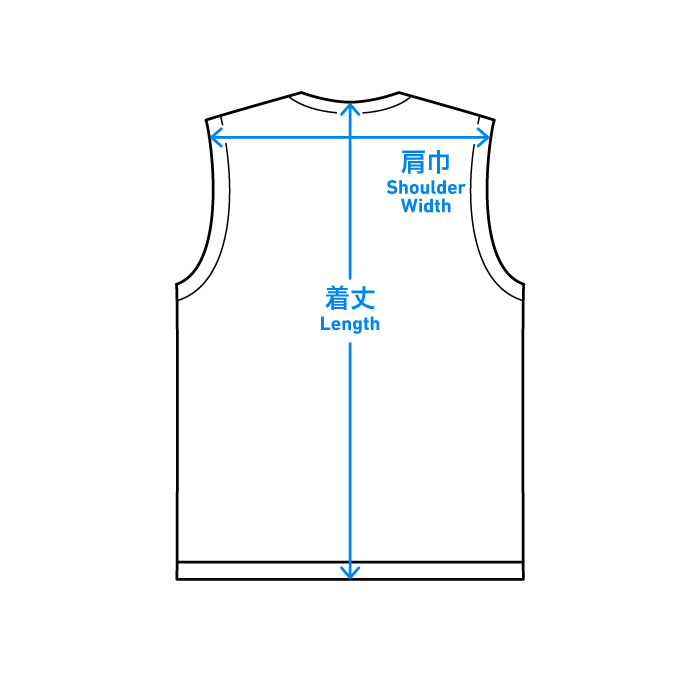
Unit: cm
| Size | S | M | L | XL |
|---|---|---|---|---|
| Length | 65 | 68 | 70 | 72 |
| Shoulder width | 34 | 36 | 39 | 42 |
| Body width | 43 | 45 | 49 | 53 |
| Hem width | 40 | 42 | 46 | 50 |
The measurements above are for the unwashed product at the time of purchase.
- Actual measurements may vary slightly due to the stretch knit fabric and sewing variations.
- The fabric may stretch with wear and shrink after washing. The amount of change varies by item.
- Shrinkage may vary depending on the washing machine and settings used.
- If it feels smaller after washing and drying, gently stretch it with a steam iron to help restore its shape.
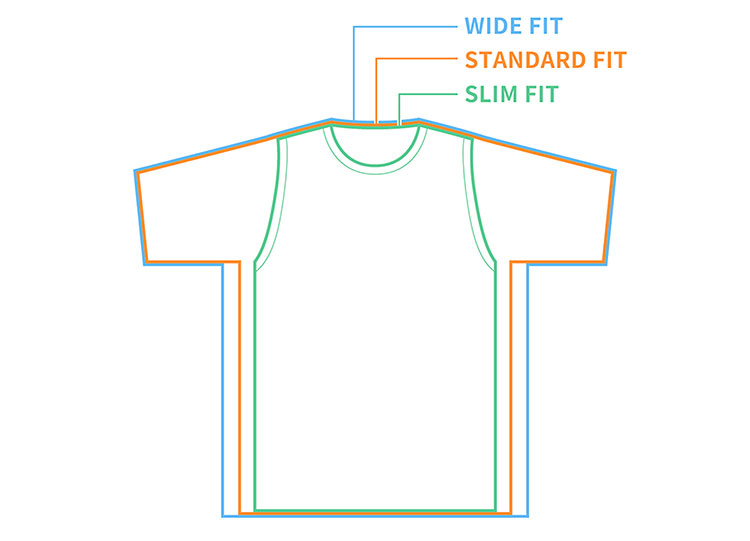
Our DF Mesh Merino Series have a wide-fit, standard-fit and slim-fit: DF Mesh Merino Sleeveless is slim-fit.
Fitting
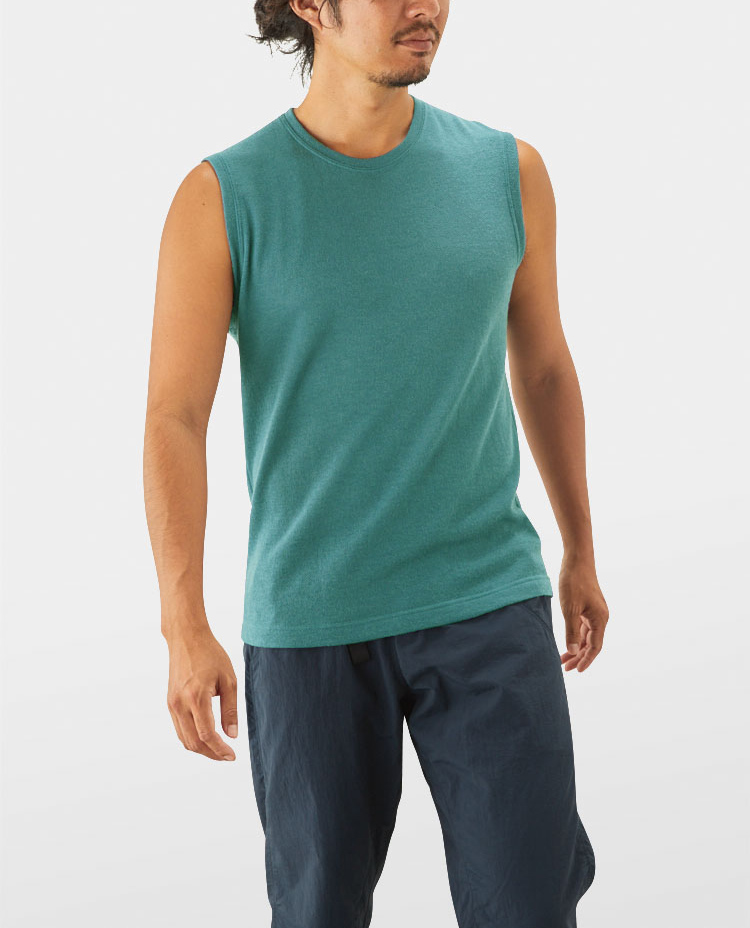
Size L 178cm 68kg
Peacock Green (Hide)
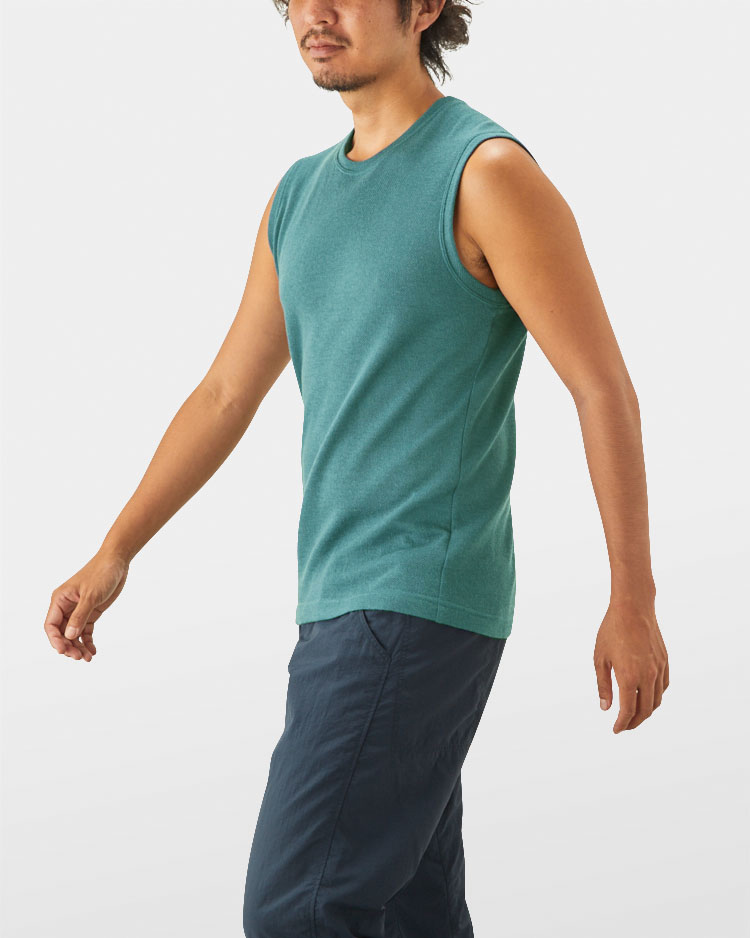
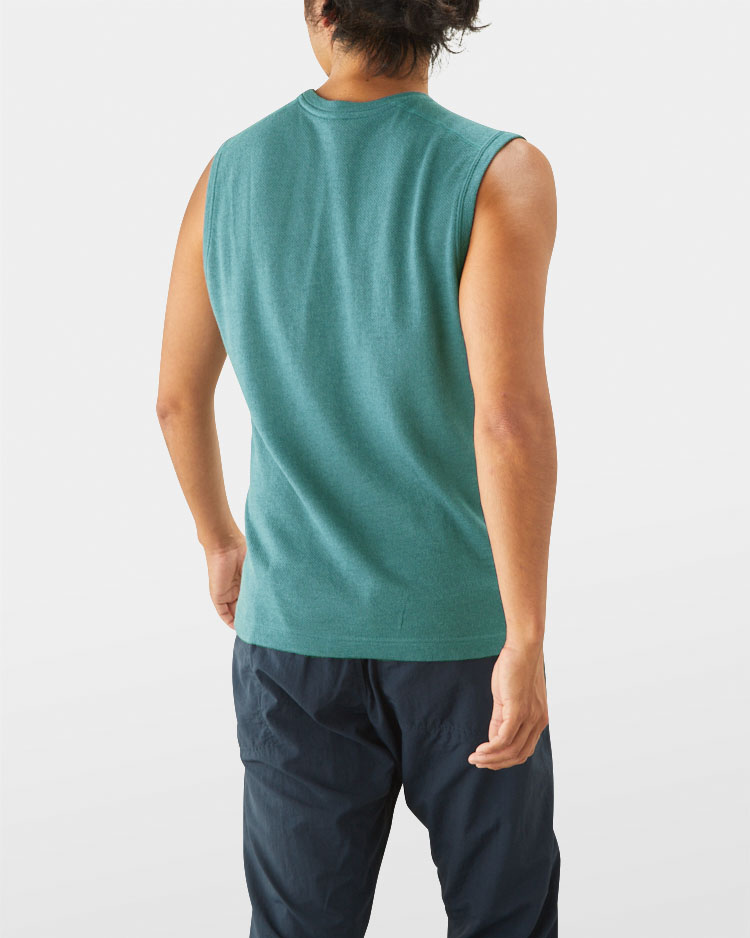
Size L 178cm 68kg
Peacock Green (Hide)
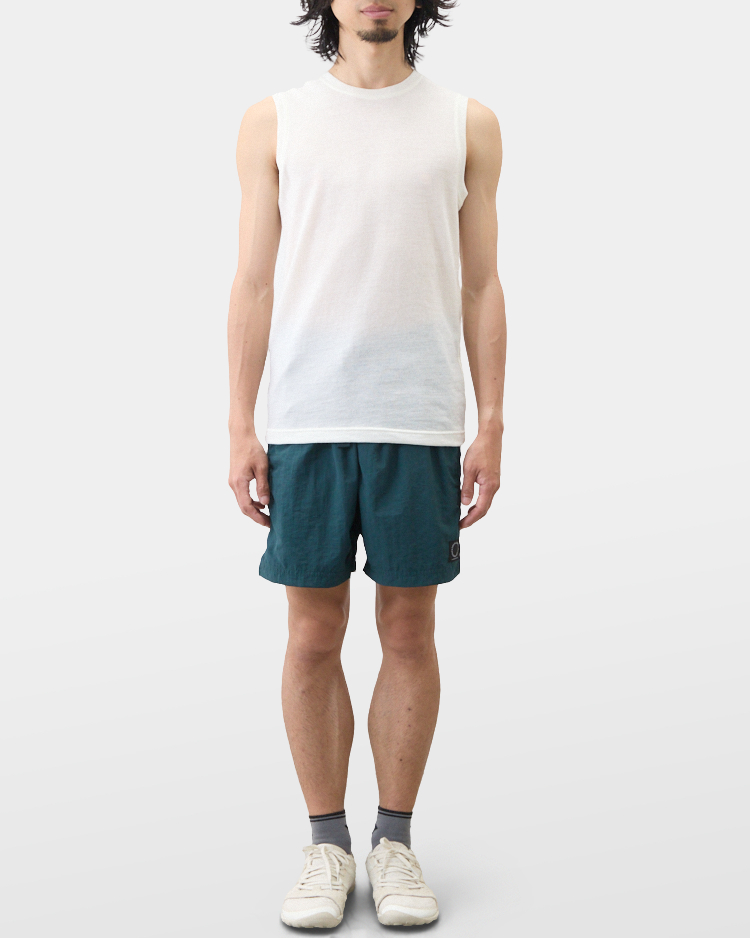
Size S 169cm 54kg
Off White (Atsushi)
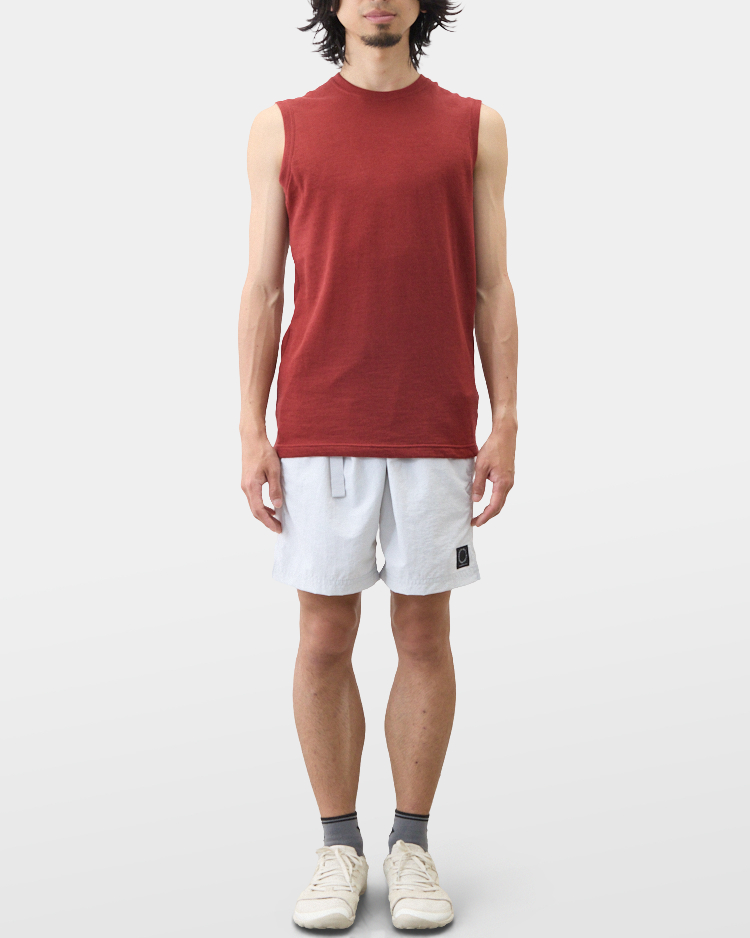
Size M 169cm 54kg
Brick Red (Atsushi)
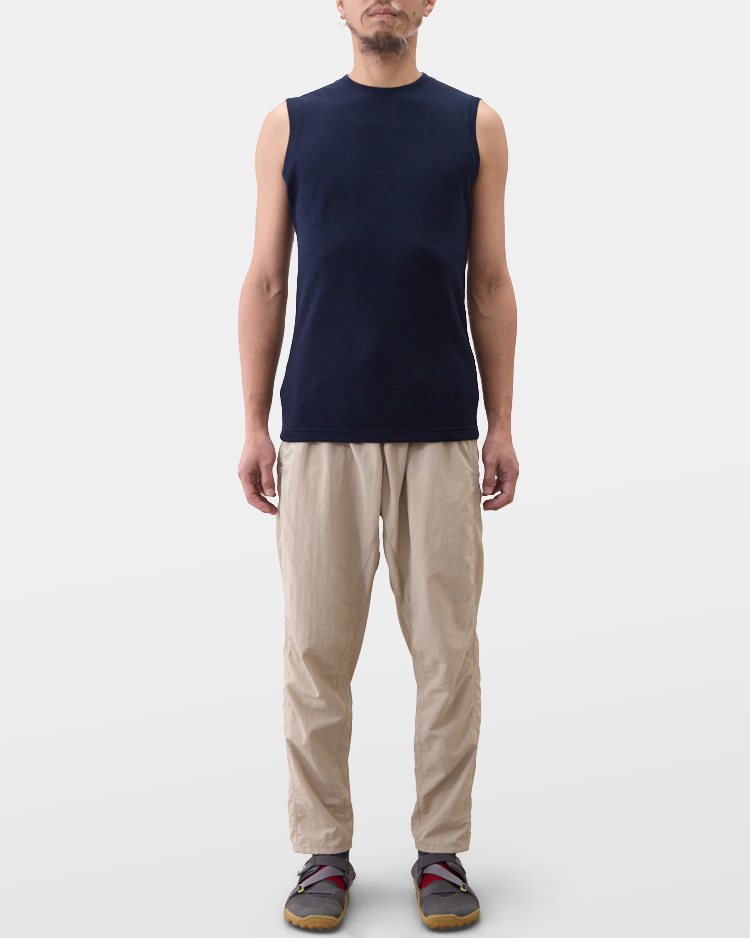
Size M 176cm 60kg
Navy (Oji)
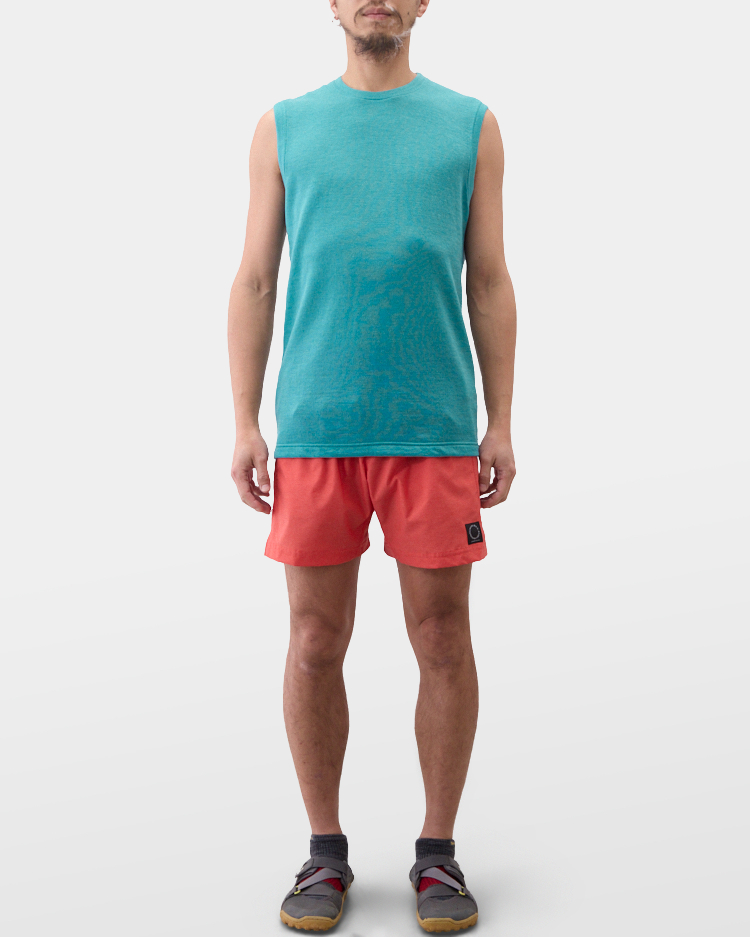
Size L 176cm 60kg
Peacock Green (Oji)
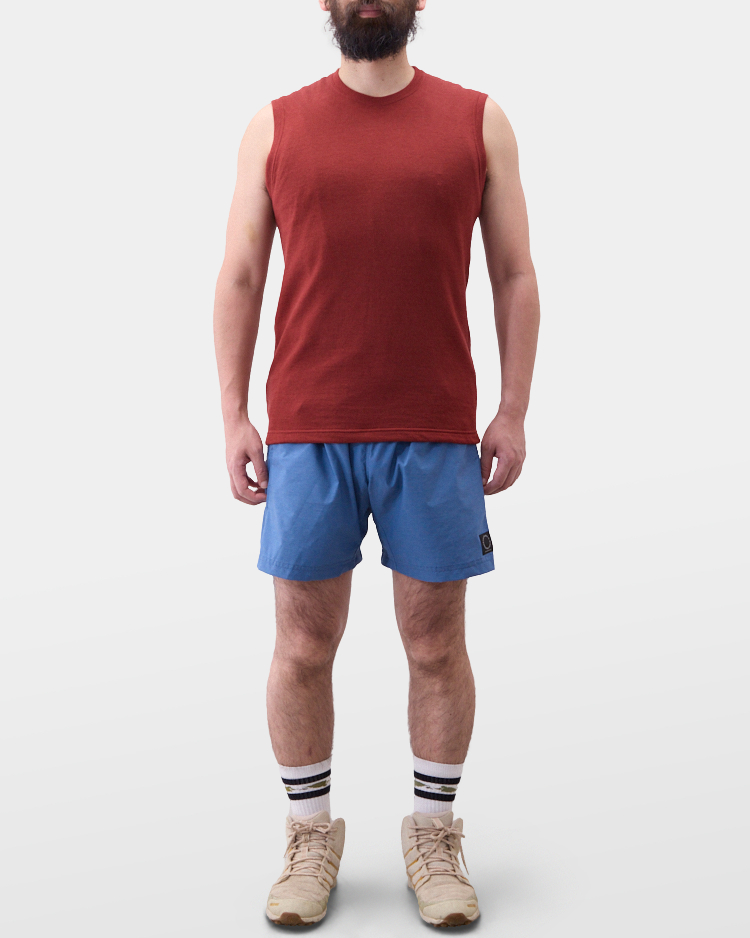
Size L 173cm 76kg
Brick Red (Pony)
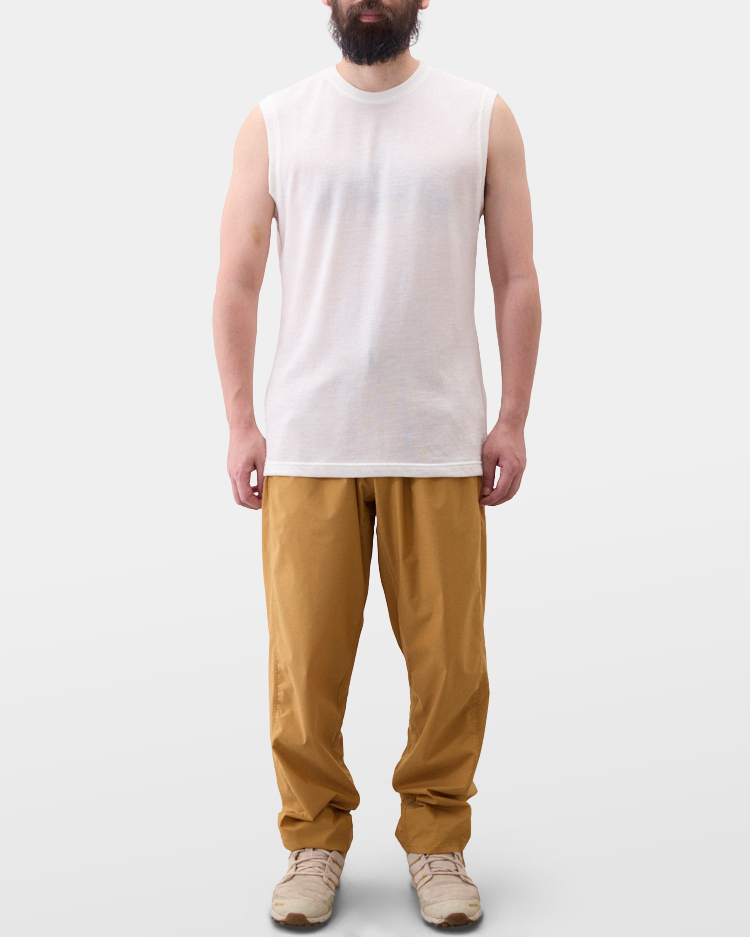
Size XL 173cm 76kg
Off White (Pony)
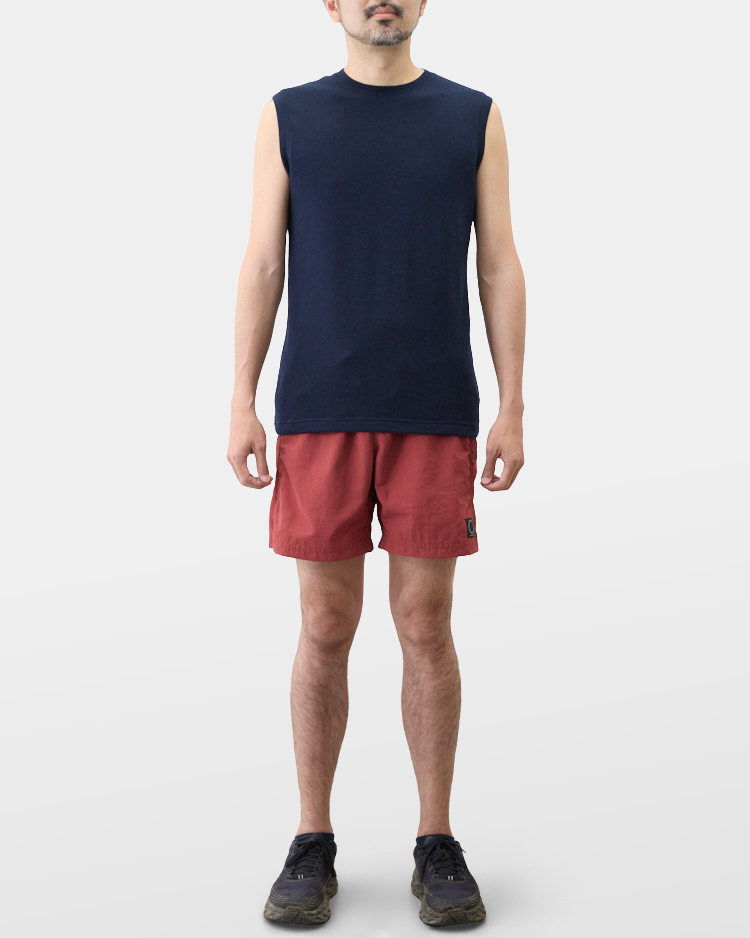
Size L 183cm 65kg
Navy (Tsuka)
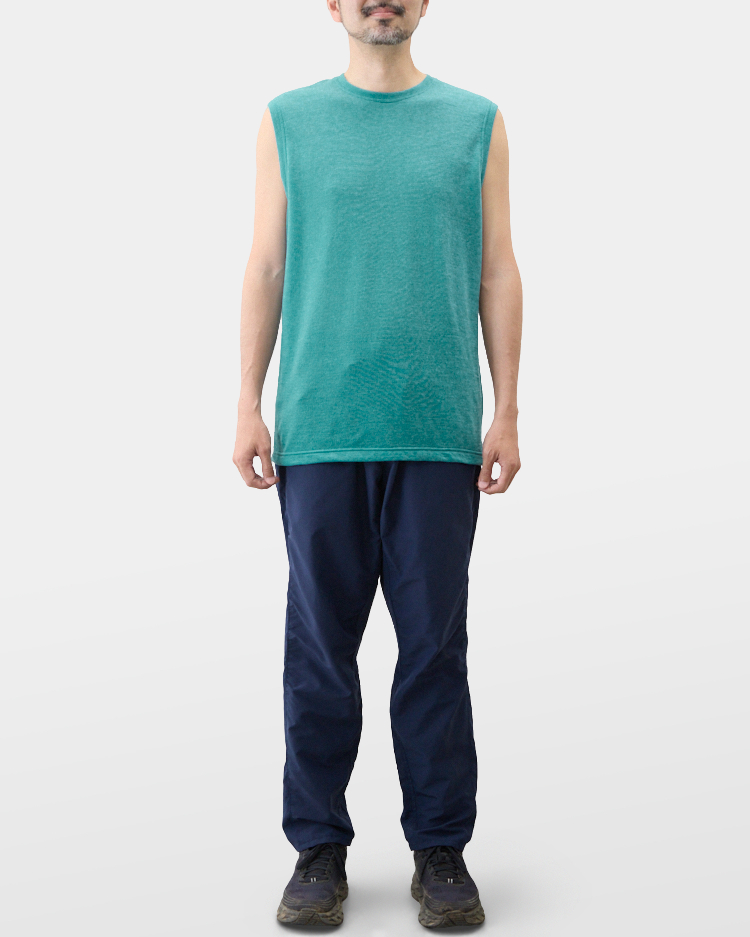
Size XL 183cm 65kg
Peacock Green (Tsuka)
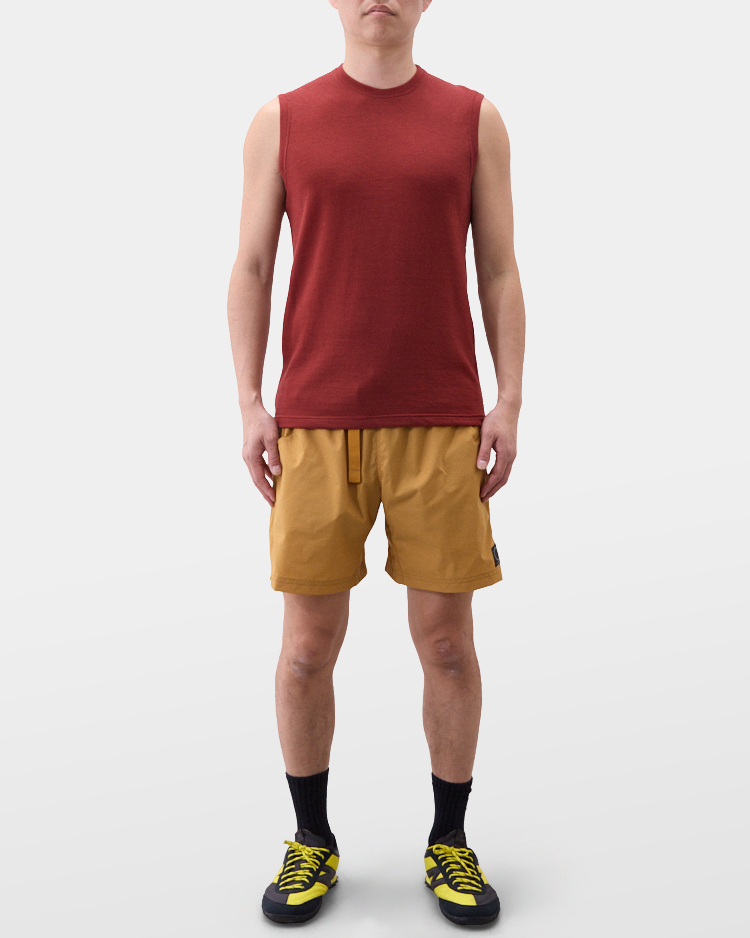
Size L 183cm 77kg
Brick Red (Kenken)
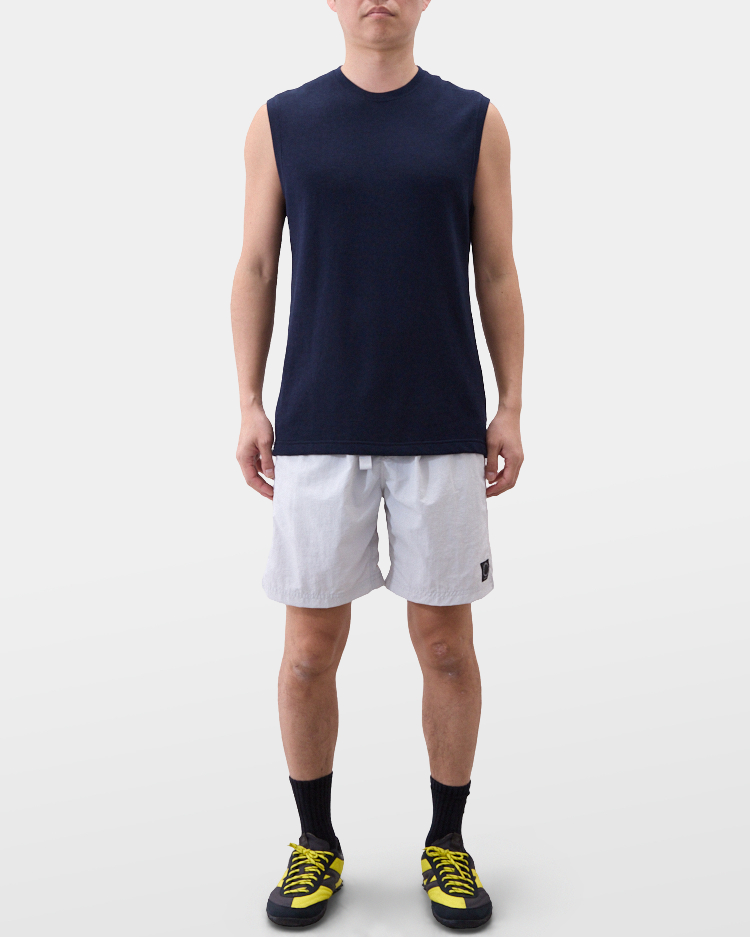
Size XL 183cm 77kg
Navy (Kenken)
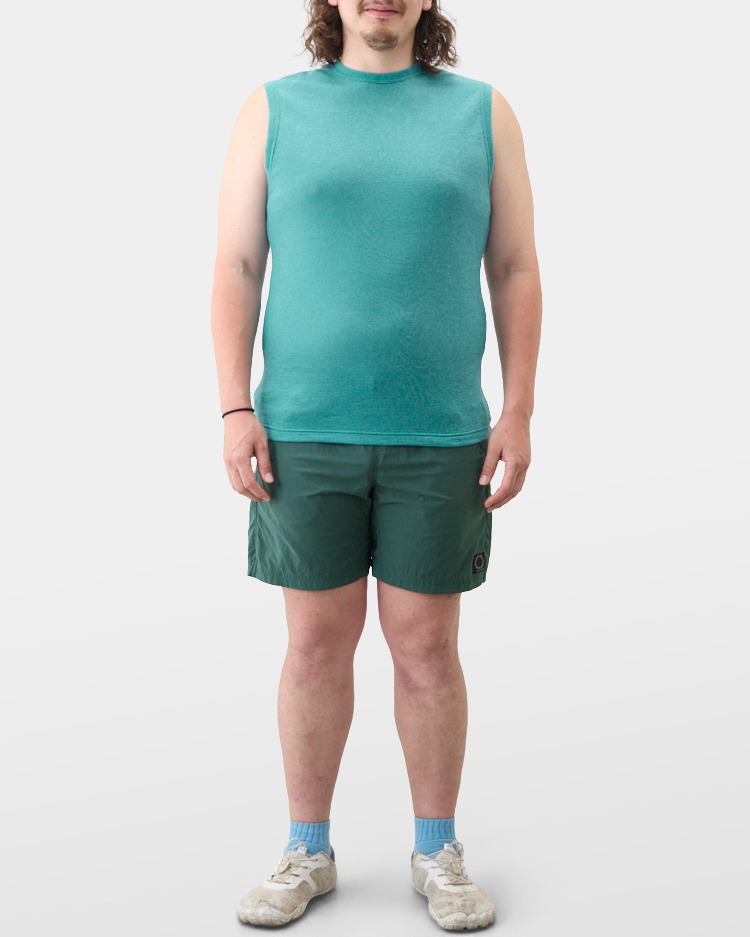
Size XL
182cm 95kg
Peacock Green (Moss)
Size S 169cm 54kg
Off White (Atsushi)
Size M 169cm 54kg
Brick Red (Atsushi)
Size M 176cm 60kg
Navy (Oji)
Size L 176cm 60kg
Peacock Green (Oji)
Size L 173cm 76kg
Brick Red (Pony)
Size XL 173cm 76kg
Off White (Pony)
Size L 183cm 65kg
Navy (Tsuka)
Size XL 183cm 65kg
Peacock Green (Tsuka)
Size L 183cm 77kg
Brick Red (Kenken)
Size XL 183cm 77kg
Navy (Kenken)
Size XL
182cm 95kg
Peacock Green (Moss)
Note before use
Durability
The DF Mesh Merino has an uneven mesh-like surface structure, which can easily develop snags, pillings, and holes by the friction with the backpack straps if it is worn by itself.
Wool is a short fiber material that tends to lose fibers when rubbed against something coarse and hard. It is relatively thin and prone to holes compared to synthetic fibers or cotton. Therefore, the DF requires more care than normal woolen knit fabrics when you walk in the bushes or rocks, or when it is in contact with hard mesh.
Please wear a shell jacket or shirt over it instead of wearing it alone if you use it in a hard situation. The DF fabric is highly breathable and allows the wind to permeate easily, so wearing a shell jacket is a great idea to keep you warm.
Potential color transfer
Please note that color may transfer if this product comes into contact with white or light-colored garments when wet from sweat or rain.
Instructions
Care instructions
- Please wash separately or use the laundry net bag.
- Mesh fabrics are prone to deform or distort. After washing, adjust the shape of the product and dry it flat.
- Hydrophobic and hydrophilic properties are added in the later process and are not natural. They may be weakened with use.
- When you store the item, use mothballs and/or vacuum storage bags to keep out insects.
Care page
Visit our Care page for detailed washing, drying, and general care instructions.
Payment
- We only accept payment by credit card for orders from overseas.
- Bank transfer is available only to customers with a Japanese bank account.
- We accept the following credit cards: Visa, Mastercard, American Express, and JCB.
- To download your receipt, please click the link included in the dispatch notice email, which will be sent once your order has been shipped.
Delivery
- You will receive an order confirmation email after completing your purchase.
- Orders paid by 15:00 JST on weekdays or 13:30 JST on weekends and Japanese public holidays will be shipped the same day. Orders paid after these times will be shipped the following day.
- Shipping and delivery may be delayed due to holiday periods, natural disasters, severe weather, high order volumes, additional order verification, or other logistical issues.
- You will receive a shipping confirmation email once your order has been shipped.
- Orders placed separately cannot be combined for shipping.
Shipping Within Japan
When purchasing this product on its own, Yamato Transport’s lower-cost Nekopos service is available.
Shipping: ¥250
- Your order will be delivered to your mailbox or parcel box.
- Loss or damage is not covered.
- Delivery usually takes one to two days after dispatch, though some areas may take longer.
- Tracking is available.
- Delivery dates and times cannot be specified.
Orders containing two or more items will be packed together in a paper bag or cardboard box and shipped by Yamato Transport.
Shipping: ¥500 / ¥950 to Okinawa
International Shipping
- Orders to North America, Oceania, and Europe are shipped via DHL. Orders to Asia, the Middle East, Central and South America, and Africa are shipped via EMS (Express Mail Service). We are currently unable to ship to Russia due to Japanese postal restrictions.
- Shipping fees and delivery times vary depending on the destination and the size and weight of your order. To check the exact shipping fee, add your desired items to your cart and enter your shipping address.
Packaging Options
When purchasing this product on its own, you can choose your preferred packaging for all shipping methods other than Nekopos, including international shipping.
- Standard Packaging: The shipping label is attached directly to the product packaging. We recommend this option to reduce waste.
- Protective Packaging: The product packaging is placed inside a paper bag or cardboard box. Choose this option if you do not want the shipping label attached directly to the product packaging.
Size exchange
Choosing the right size online can be difficult. To make your purchase easier, Yamatomichi offers a size exchange program for eligible items. To request a size exchange, please use our size exchange form here. Please review the conditions below before submitting your request.
- We only accept exchanges when the item is unused (except for fitting).
- If you would like to exchange your item for a different size, please contact us within seven days of receiving your order.
- Exchanges are available only for the same color in a different size.
- If your preferred size is out of stock, we may suggest a different color instead.
- If the product is no longer available, we may need to return the original item to you.
- All shipping costs are the responsibility of the customer.
- We will send the exchanged item after receiving payment for the return shipping cost via PayPal.
- Please note that some countries may charge customs duties depending on the value of the item.
- We are unable to advise on local customs regulations. Please contact your local customs office directly.
Repair
We accept repairs for all of our Yamatomichi products. For inquiries on repair services including patching the holes, repairing with extra components, or fixing the items damaged over time, please feel free to contact us from the “Repair” section of the SUPPORT page.