




#3: Choosing the Right Backpack
#3: Choosing the Right Backpack
Each month, PRODUCT FOCUS takes a closer look at our products and how our staff actually use them.
With several backpacks that can seem quite similar at first, choosing between them isn’t always simple. The right choice changes with how much you carry, where you’re going, how you like to pack, and how you want the pack to feel on your body.
For this roundtable, staff from our Yamatomichi Kamakura store sat down to talk about the backpacks they use most, when they switch between models, and what they look for in a good pack.
Staff profile

Akira Natsume | Yamatomichi Founder
Akira founded Yamatomichi with his wife in 2011 and continues to lead the company across everything from product development to how we communicate, make, and think about our gear.

Hidenori Maehara “Hide” | Yamatomichi Kamakura Staff
A team leader at our Kamakura office and our HLC ambassador for Kamakura. Hide has a background in physiotherapy and has also thru-hiked New Zealand’s Te Araroa, bringing both a medical and long-distance hiking perspective to the team.
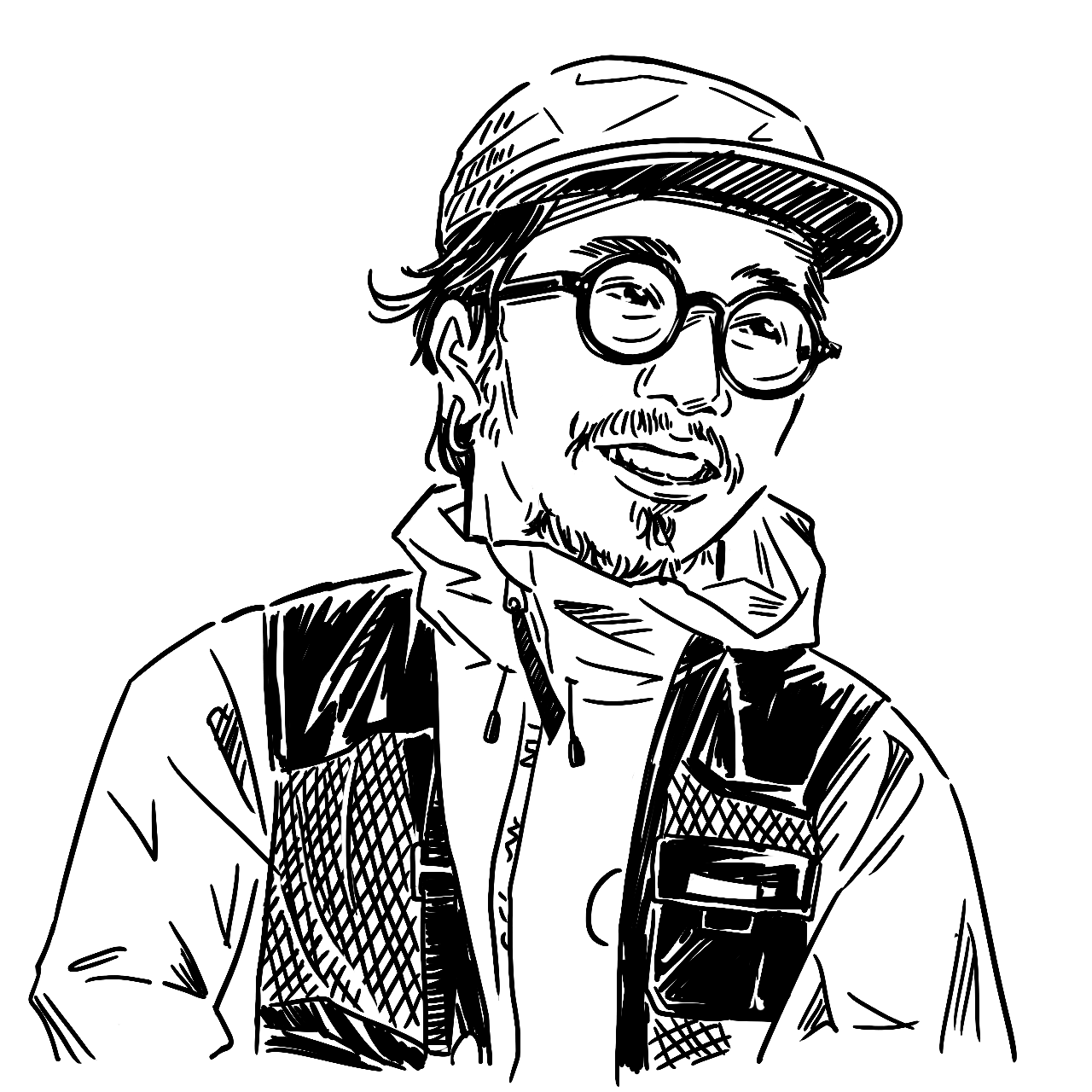
Oji Sonoda | Yamatomichi Kamakura Manager
Oji’s background spans book and article editing, farming, and hunting. He has been an ultralight hiker for more than a decade and also serves as our HLC ambassador for Kamakura.

Yuko Tsunoda | Yamatomichi Kamakura Staff
Drawn into the mountains by the Japanese Alps, Yuko has since walked long-distance routes including the Everest Base Camp trail and the Camino de Santiago. She is especially at home on long trails.
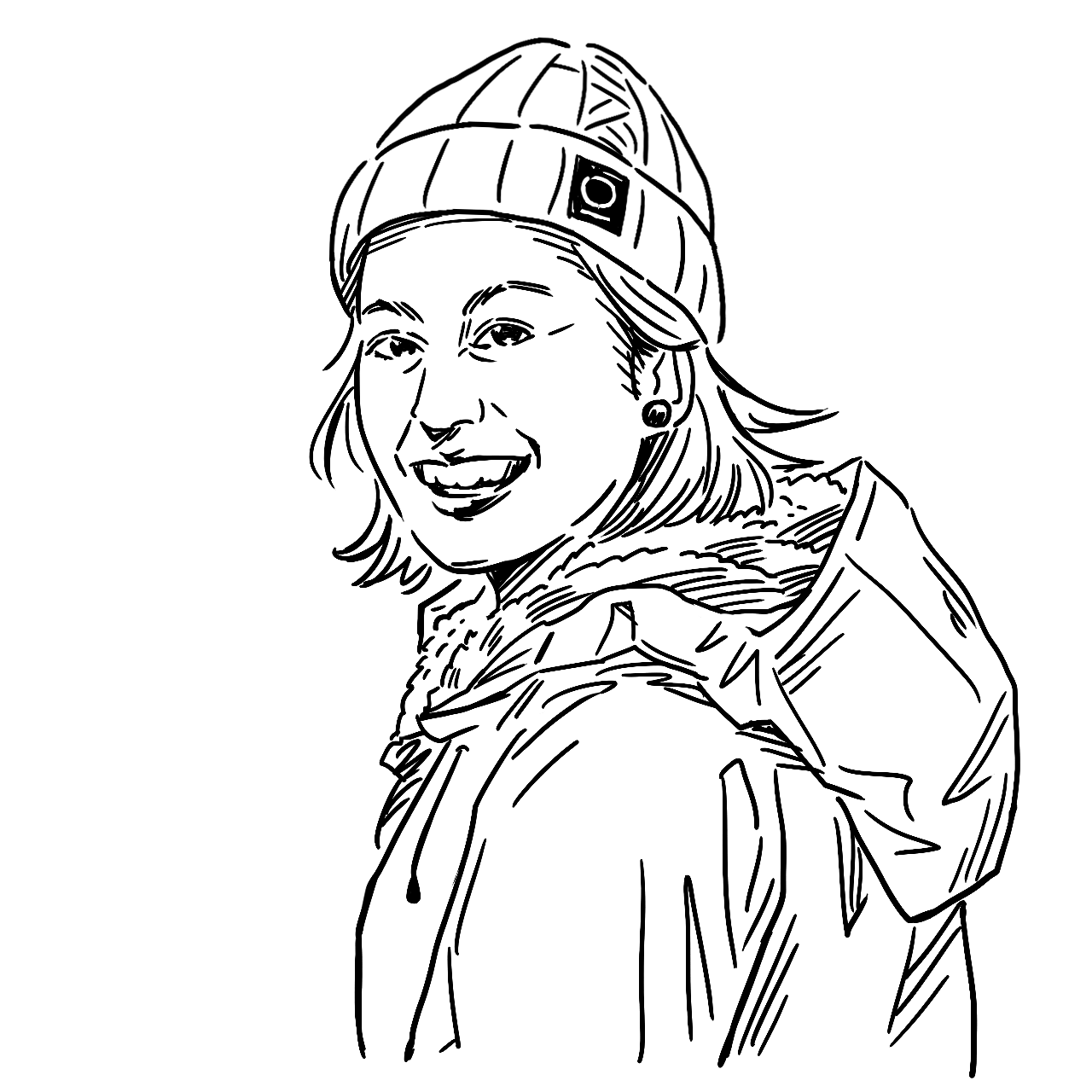
Ayumi Uesugi | Yamatomichi Kamakura Staff / Repair Team
She enjoys combining the things she loves—Cub touring and hiking, travel and the mountains, or hiking and skateboarding—and seeing where those combinations take her.
Akihiro Yamamoto “George” | Yamatomichi Kyoto Staff
A longtime day hiker, George now also enjoys longer ultralight trips, including multi-day tent trips, as well as winter hiking and bikepacking. He also works as an illustrator and is currently spending time with the Kamakura team.
Yuhi Yokoi | Yamatomichi Kamakura Staff
A longtime angler, Yuhi discovered hiking through the trails around Kamakura. He’s now working toward a more ultralight approach, both in the gear he carries and in how he moves through the mountains.
Daisuke Okamura “Beyoncé”
Known on trail as Beyoncé, Daisuke spent years traveling between World Heritage sites before taking on the PCT and Hexatrek. Those long journeys eventually drew him into long-trail culture and a life centered more around walking.
Our founder, Akira Natsume, leads the conversation with staff from our Yamatomichi Kamakura store.
What makes a good pack?
Beyoncé For me, it starts with the thinking behind the pack. When I hiked the PCT, I wanted to carry something made by people I trusted.
I’m drawn to brands that are open about both the strengths and weaknesses of their products. That tells me a lot about the people making the gear.
Maehara I think a good backpack also depends on the person using it. I once had a large Gregory pack with a substantial frame and hipbelt, but my shoulders always hurt. Looking back, I was simply carrying more than it was designed for.
Last year I used the THREE constantly, and eventually I felt like I really understood it. With ultralight gear especially, knowing how a pack is meant to work—and whether it suits you—makes a big difference.
ーSo fit still matters?
Maehara Definitely. Some shoulder straps simply don’t suit my body. A good match comes from both the design of the pack and how you use it.
Oji I like a simple backpack. Something you can just throw on, give the straps a few quick pulls, and it feels right. I don’t want to spend time fine-tuning every adjustment just to get comfortable.
I also think it helps to understand how the pack is designed to sit and carry. Before coming to Yamatomichi, I never really thought about that.
Yuhi I feel the same way about how a backpack is organized. I want to be able to use it without thinking too much.
A shirt goes here, trekking poles there, a bottle in the side pocket. Everything has a natural place, so I’m not stopping to figure out where things should go.
For me, a good backpack keeps your head clear.
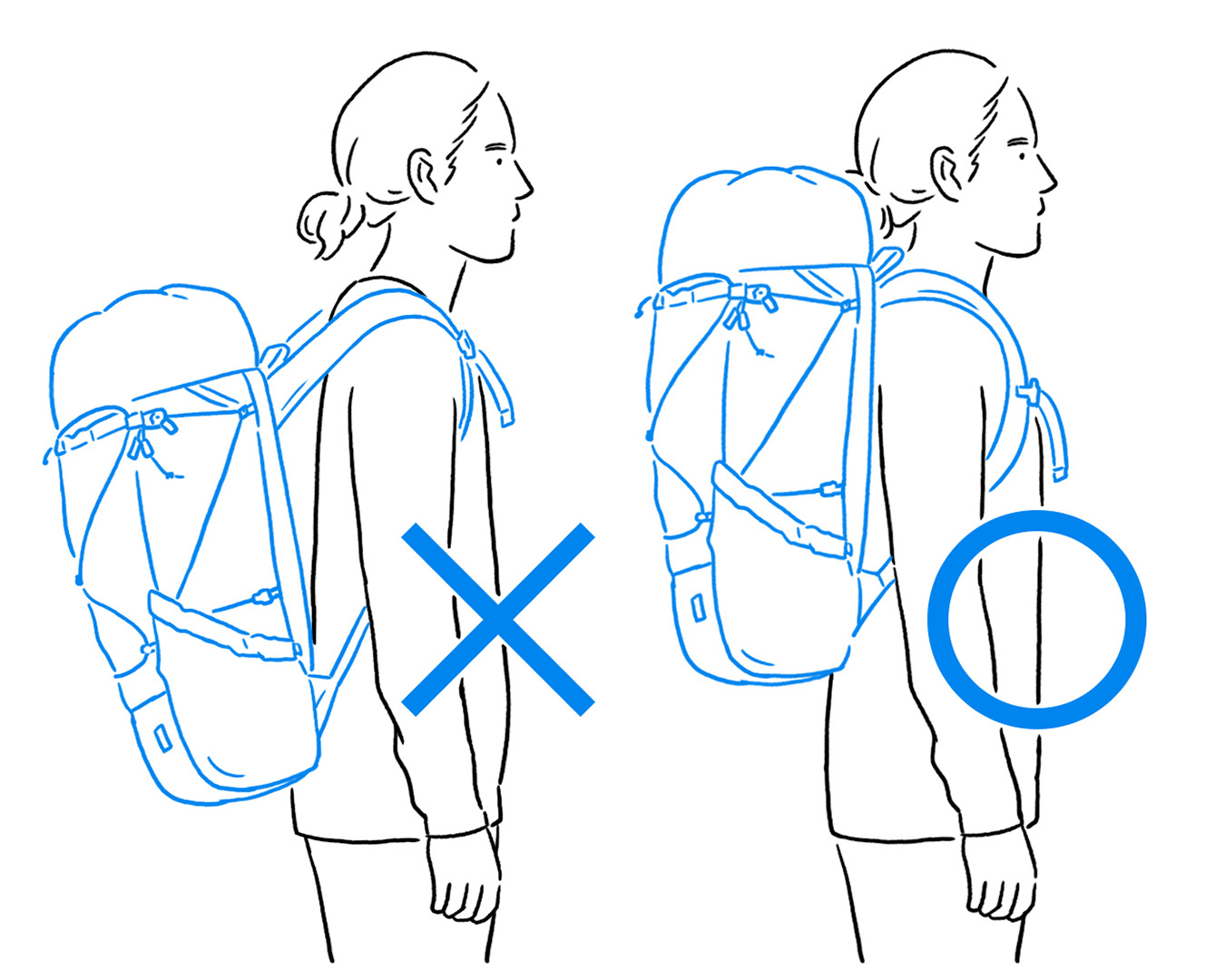
The MINI and MINI2 are designed to sit considerably higher than most backpacks.
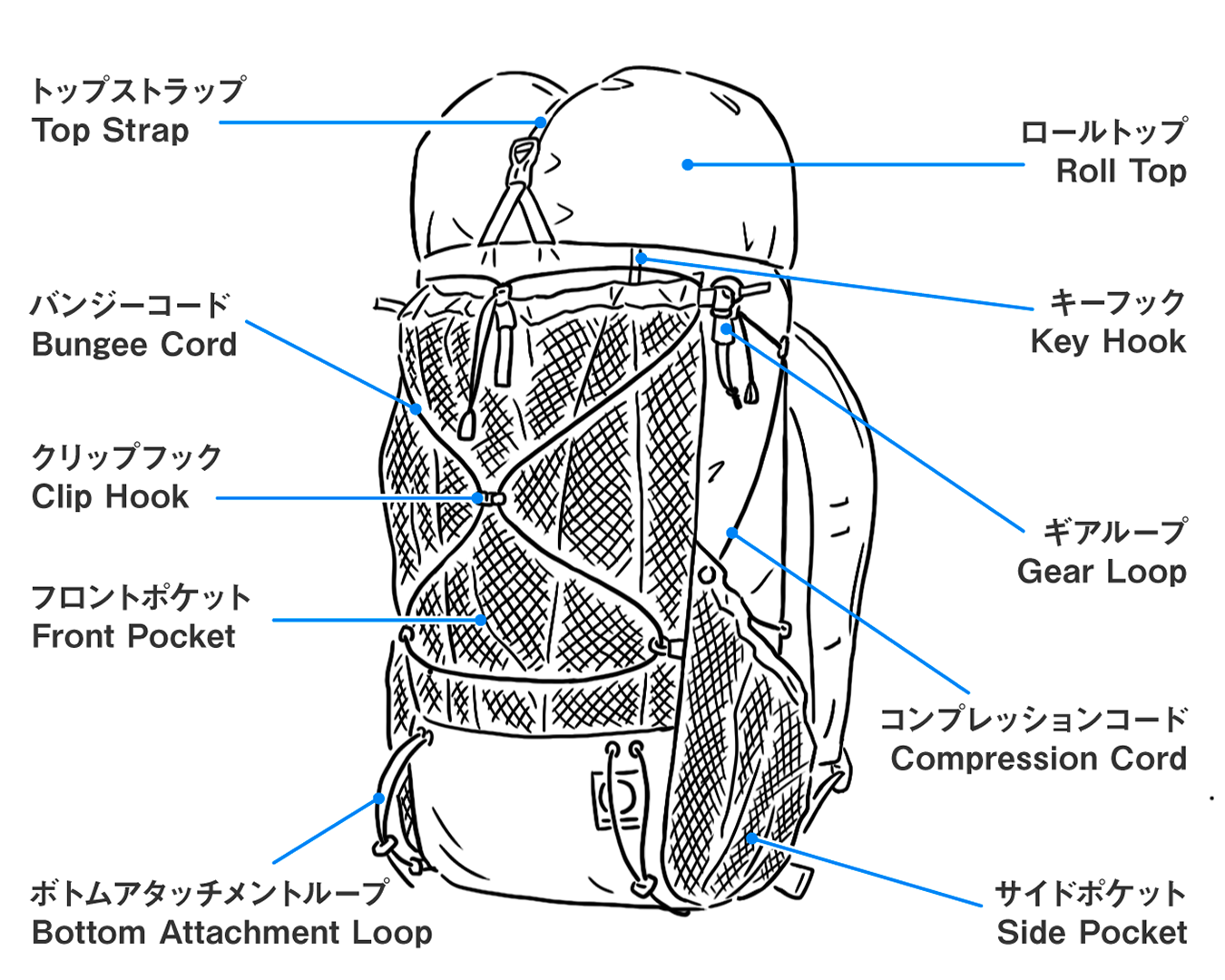
George If something feels off, I like being able to make a small adjustment and immediately feel the difference. That responsiveness is what makes a backpack satisfying to use.
Ayumi For me, a good backpack is one that gets me excited the moment I see it. I like looking at packs in different stores, and sometimes a certain shape or detail just grabs me right away.
It might be something like, “That would make it really easy to carry a rope,” or, “That looks perfect for attaching climbing gear.” Those little design details are what make a backpack feel exciting to me.
Yuko I’ve used a lot of backpacks over the years, and I realized that even when I bought a pack because I thought, “It would be nice to have this feature,” I often never really used it.
So little by little, I started stripping things away. In the end, what suits me best is a very simple backpack—something that carries well without asking me to think too much about it.
Looking back, I’m not sure whether the other packs didn’t fit me, whether I was carrying too much, or whether I just didn’t know how to use them properly. But discovering ultralight hiking changed the way I thought about gear.
The more I simplified things, the more freedom I felt. For me, the best backpack is one that stays close, carries comfortably, and lets me focus on the hike.
Choosing Between the MINI, MINI2, THREE and ONE
ーWhich backpack do you use most right now, and when do you switch?
Maehara Lately I’ve been using the THREE a lot. It’s tough, roomy, and easy to pack without having to think too much about it.
If I want to go really light, I’ll use something smaller. Between the MINI and MINI2, I personally prefer the MINI2 because I like the mesh pocket.
For someone newer to ultralight hiking, though, I often recommend the MINI. The zippered front pocket makes it easier to keep the weight close to your back and avoid overpacking the front.
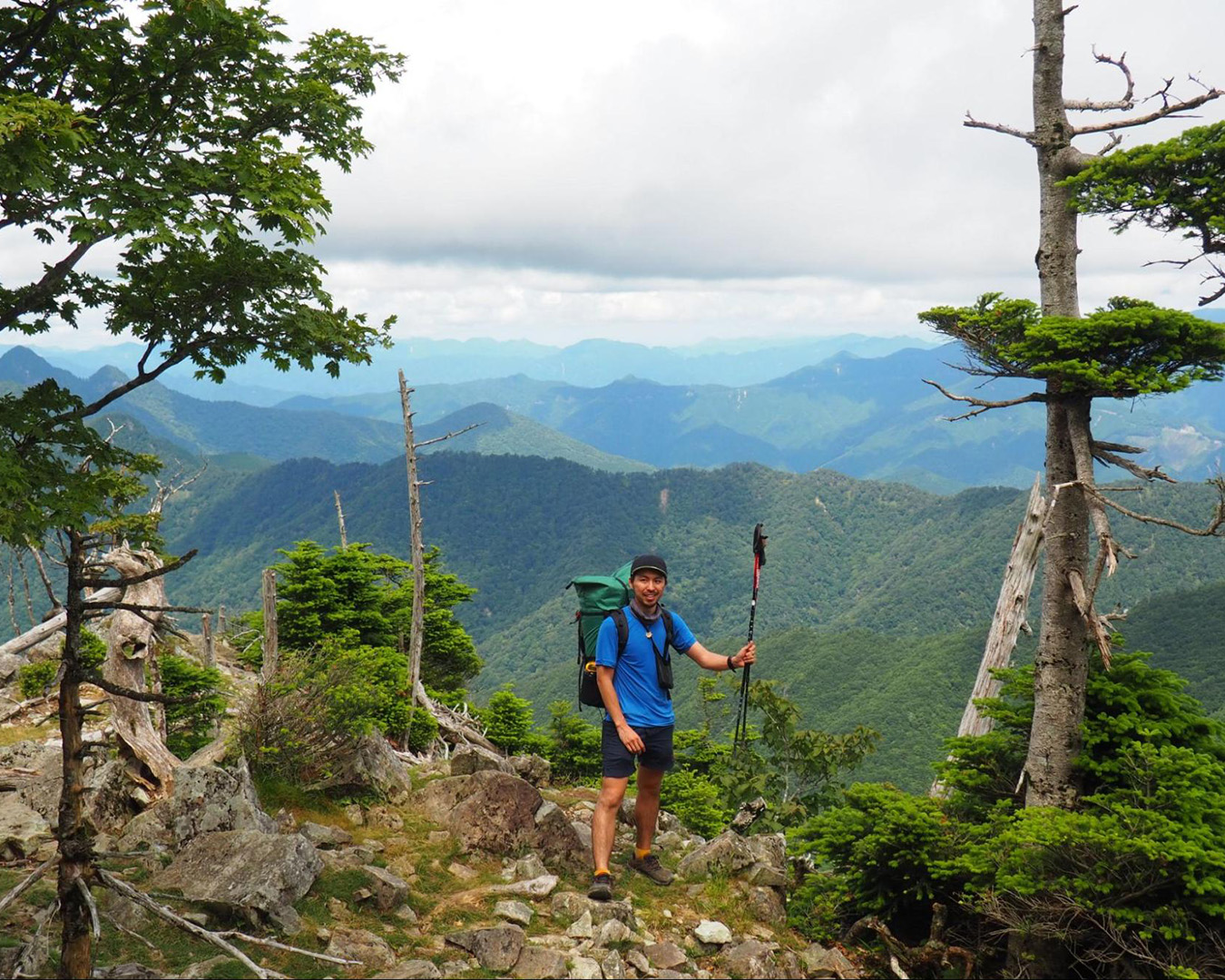
Beyoncé hiking the Omine Okugakemichi with the THREE in 2021.
Beyoncé For trips of three days or more, I usually take the THREE.
Recently, though, I’ve been using the MINI more. I used to prefer the MINI2, and the large mesh pocket is really useful, but things can get messy pretty quickly.
Yuko I’ve also started using the THREE more in cooler seasons. I like that it stands upright when I’m packing and gives me enough room that I’m not fighting to squeeze everything inside.
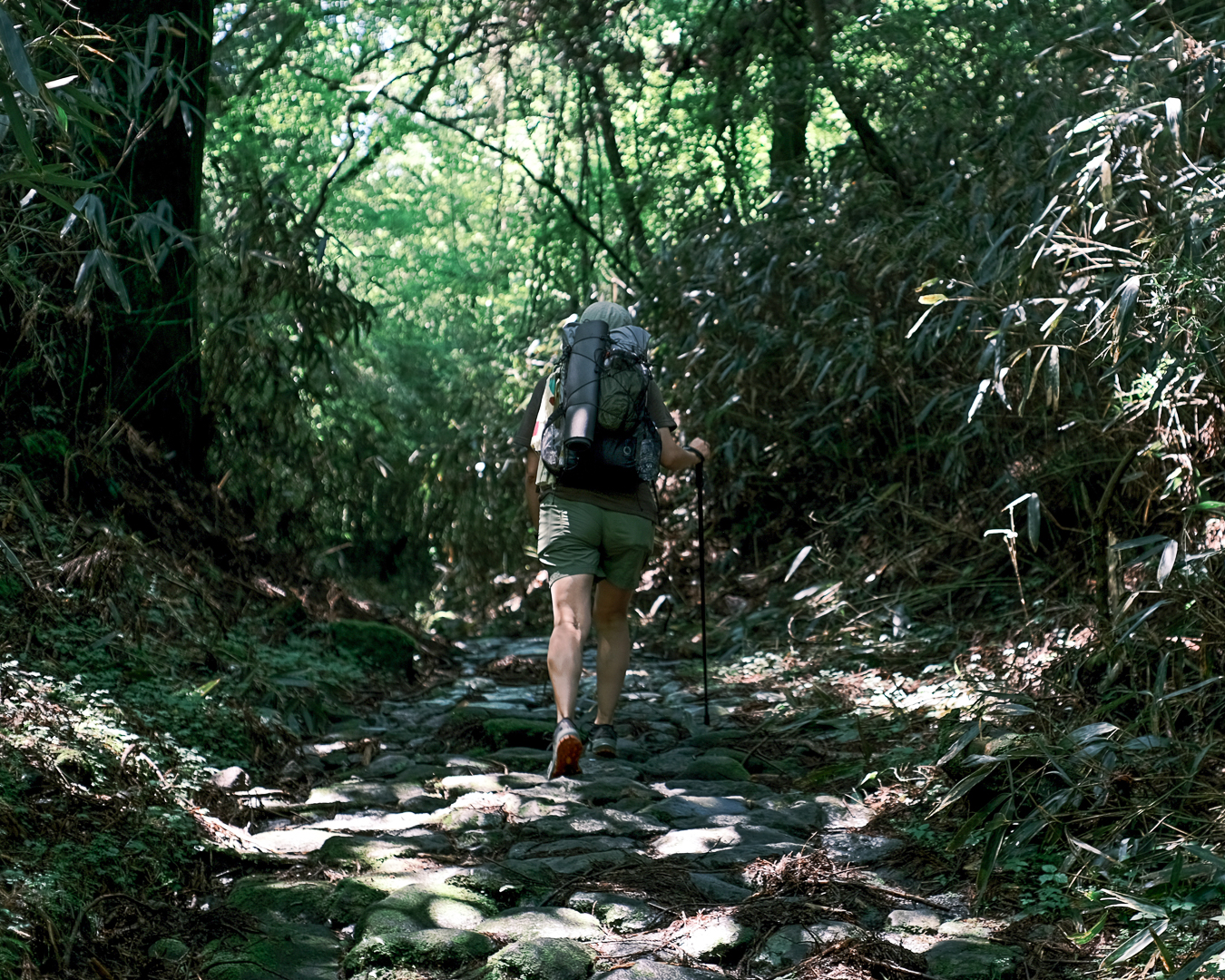
Yuko hiking in Hakone with the MINI2 in 2023.
ーDo you still use the ONE?
Yuko Mostly only in winter these days. My set-up has become even more minimal and the MINI2 or THREE is enough for most trips.
Yuhi I’m similar. I use the THREE on longer trips when I want more room and less fuss. If I’m alone and moving fast, I usually choose the MINI2.
George I’m actually a MINI fan. I love the clean front pocket. I’ve used it for so long that it’s become the pack I naturally reach for.
Ayumi For me, it’s the MINI2. By ultralight standards, the front mesh pocket is basically a suitcase.
I take it climbing a lot, and when it’s time to move to the next route, I can just throw my shoes and everything else into the mesh pocket and go. It swallows almost anything.
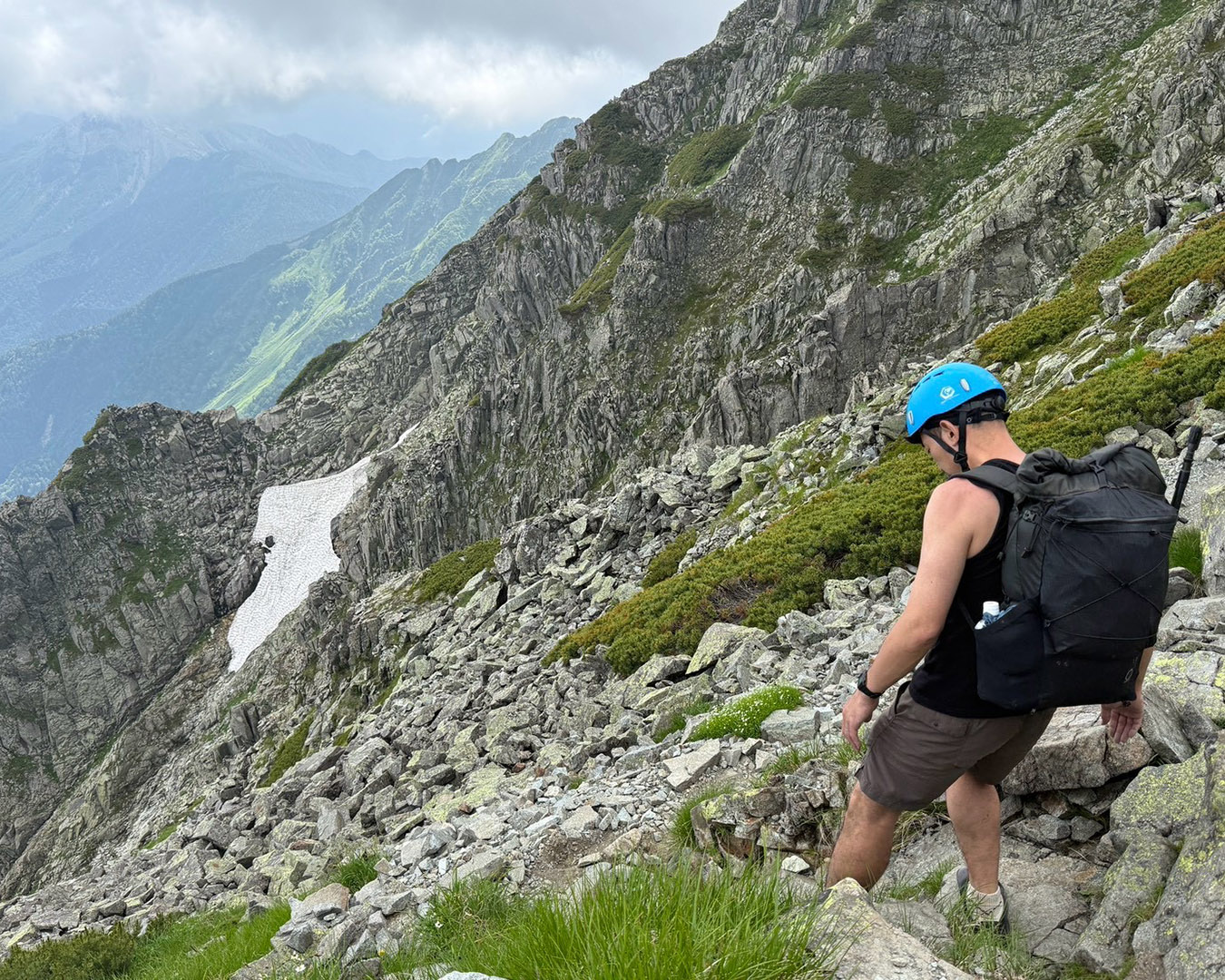
George hiking Mt. Okuhotaka with the MINI in 2025.
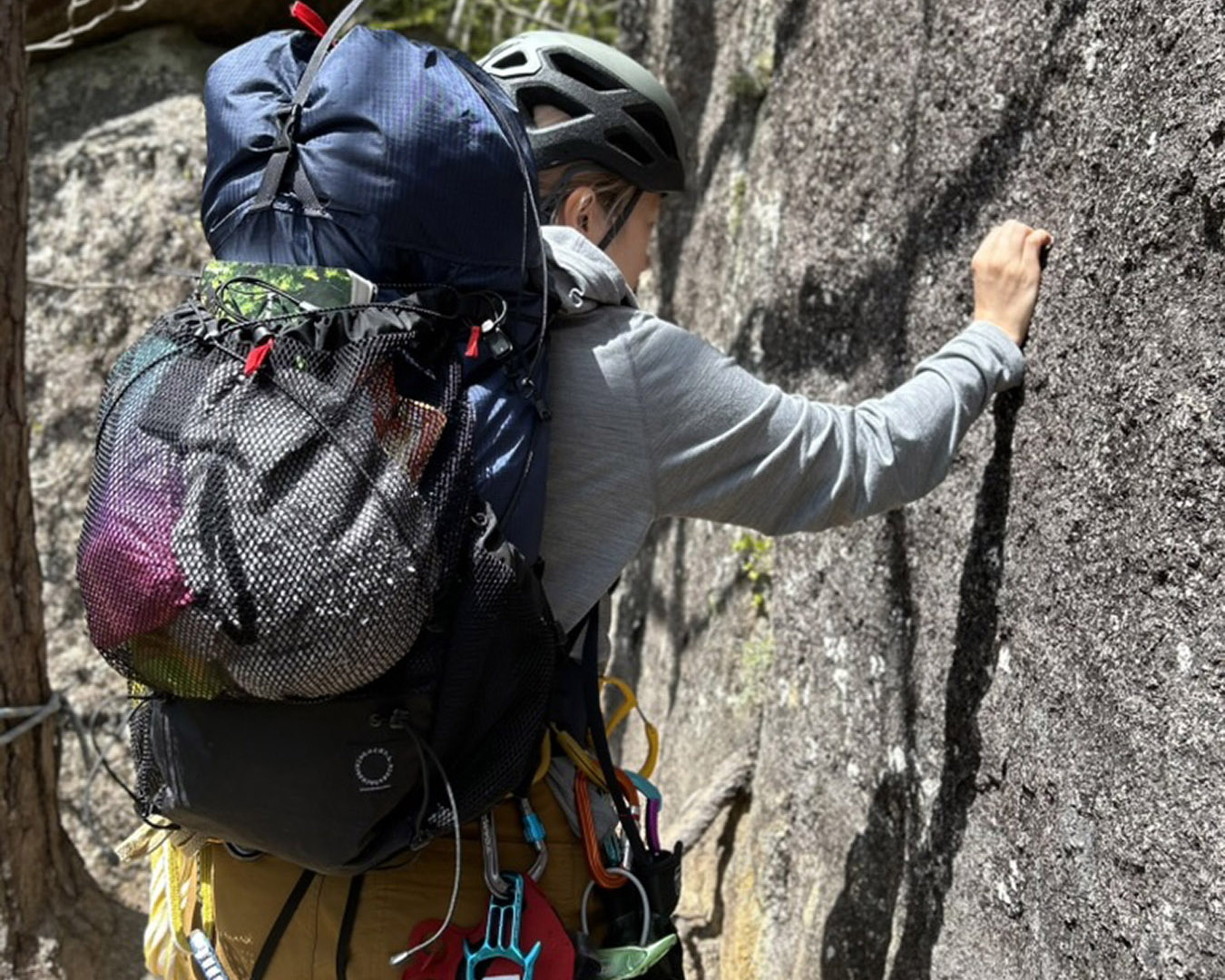
Ayumi moving between climbing areas in Ogawayama with everything packed into her MINI2 in 2024.
Using the MINI as a 20-liter pack
Oji Recently, I’ve started thinking of the MINI as a really good option in the 20-liter range. Both the MINI and MINI2 can be compressed down quite a lot with the side straps, but the big advantage of the MINI is its comfortable padded shoulder straps—something many 20 L packs, especially trail-running packs, tend to sacrifice.
A little trick I like is lining the inside with a UL Pad. It gives the pack more structure and helps everything compress more evenly.
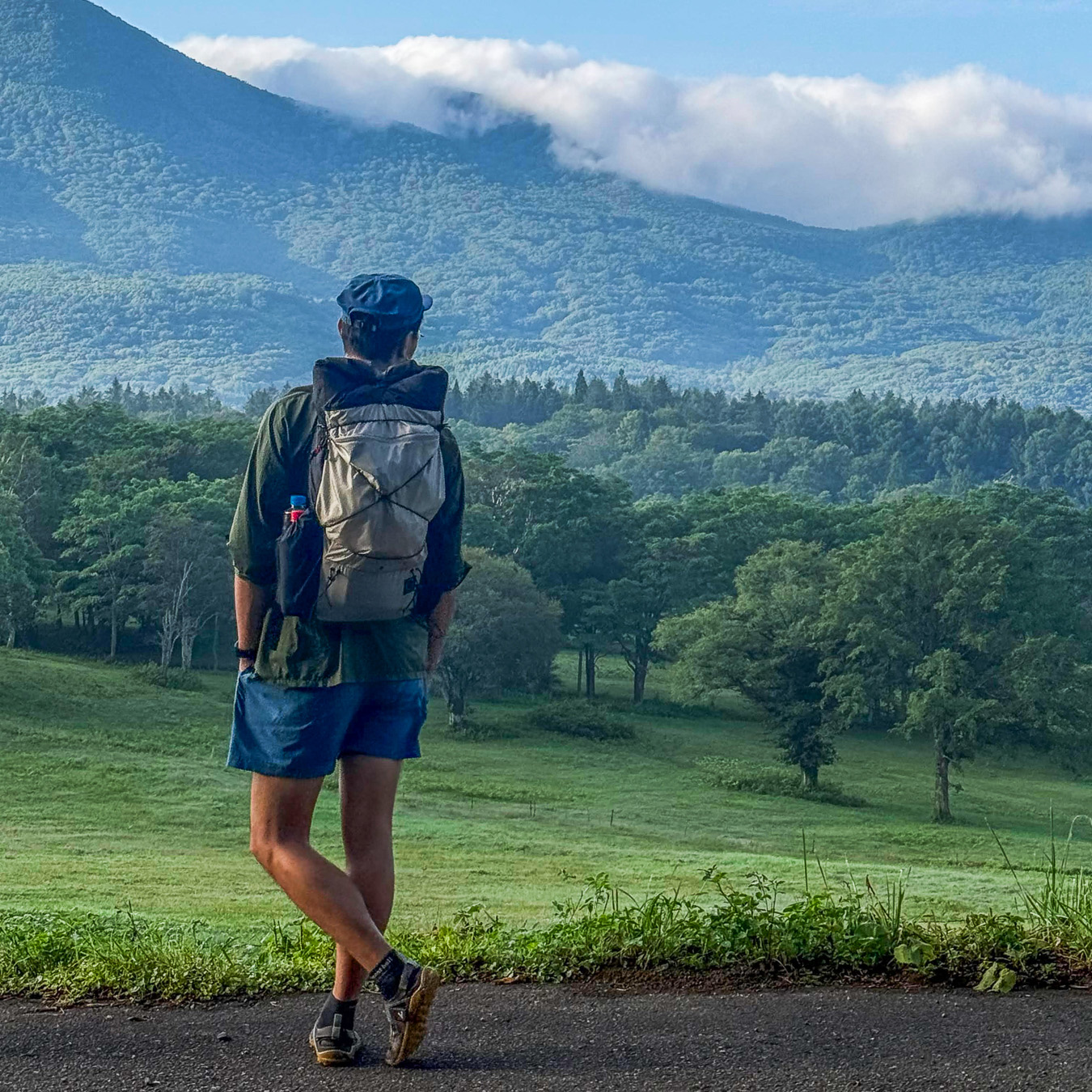
Oji using the MINI at around 20 L by tightening the side compression cords in 2025.
Oji I mostly use the THREE in the snow. The side compression straps wrap around the front, which makes it easy to secure snowshoes or other bulky gear to the outside of the pack.
I use the ONE for long-distance hiking, when I want more room for food and a little extra capacity for the unexpected.
Maehara The THREE also works well for air travel. With the roll top compressed, even the L size can get close to typical carry-on dimensions. I’ll often roll a sleeping pad inside and slide my trekking poles through the middle to help protect them.
Oji The MINI2 can work too, but a fully stuffed front mesh pocket gets bulky quickly. Keeping softer items there makes the pack easier to compress when you need to fit it into a carry-on sizer.
The side compression straps can also be used to attach crampons.

Series: PRODUCT FOCUS Roundtable