



#8 (Kamakura) How we layer for autumn hikes
#8 (Kamakura) How we layer for autumn hikes
For our eighth PRODUCT FOCUS roundtable, our founder, Akira Natsume, sat down with staff from Yamatomichi Kamakura to talk about autumn layering. From hiking in shorts to staying warm in wet weather, they shared how they choose their layers, manage sweat, and prepare for changing conditions in the mountains.
- Staff profiles
- How do you prepare for autumn's changing temperatures?
- Oji's layering for the Shinetsu Trail
- Hidenori's layering for the Yatsugatake Mountains
- George's layering for the Northern Alps
- Yuko's layering for a hard hike
- Yuhi's layering for the Northern Alps
- Do you bring a change of clothes?
- When do you need more insulation?
- When do you choose 100% Merino?
Staff profiles

夏目 彰|山と道 代表
2011年に妻とふたりで山と道をはじめる。今も新しいメーカーのあり方を模索中。
前原 秀則|山と道HLCアンバサダー/グループリーダー
元理学療法士。ニュージーランドの長いトレイルを歩いて、ウルトラライトハイキングに夢中になった人。
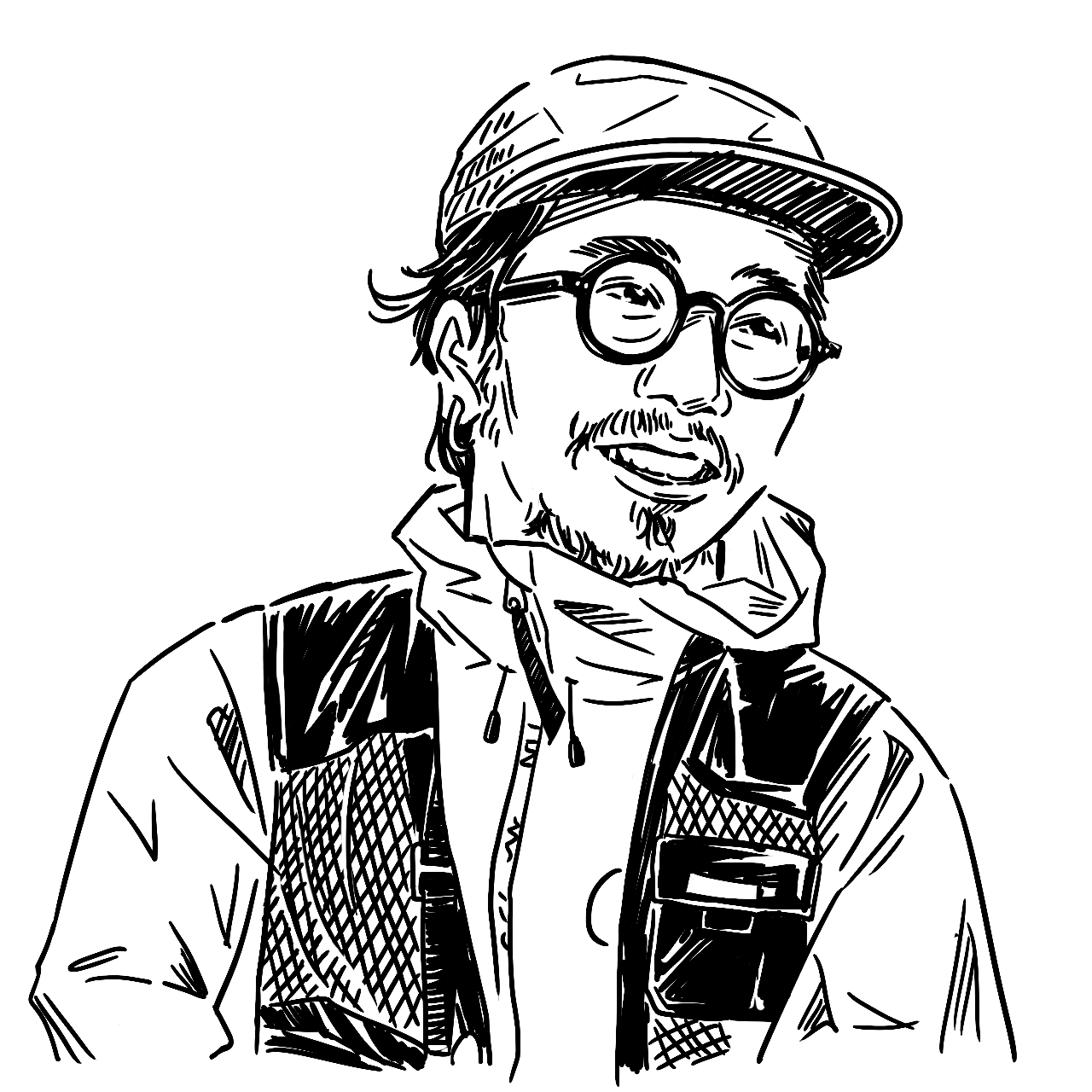
苑田 大士(おーじ)|山と道鎌倉店長/山と道HLCアンバサダー
編集に農業に狩猟と多彩。ウルトラライトのスタイルで山を歩いて10年以上。
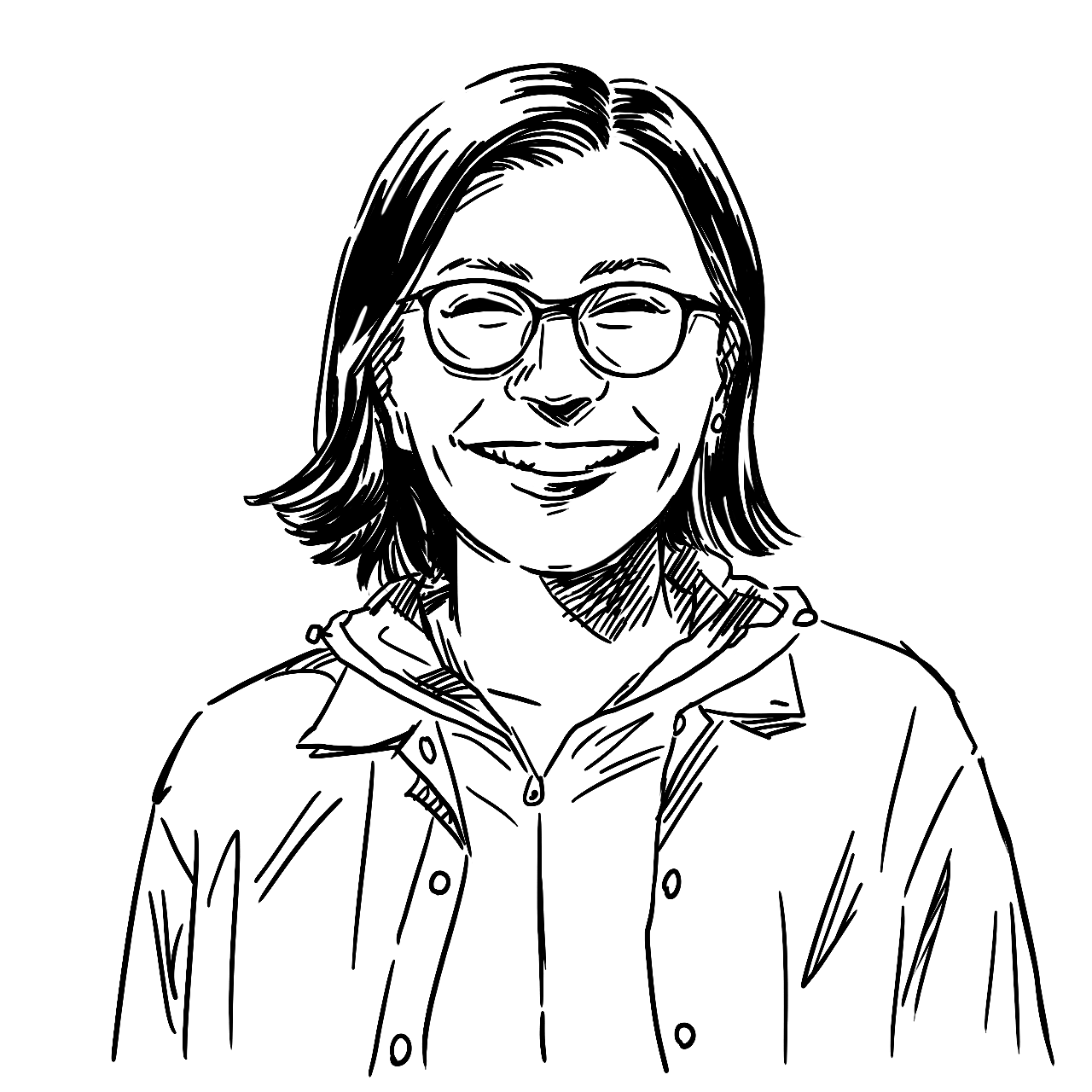
角田 裕子(角ちゃん)|山と道鎌倉スタッフ
北アルプスに惹かれて山の世界へ。エベレスト街道もカミーノも歩いたロングトレイル好き。
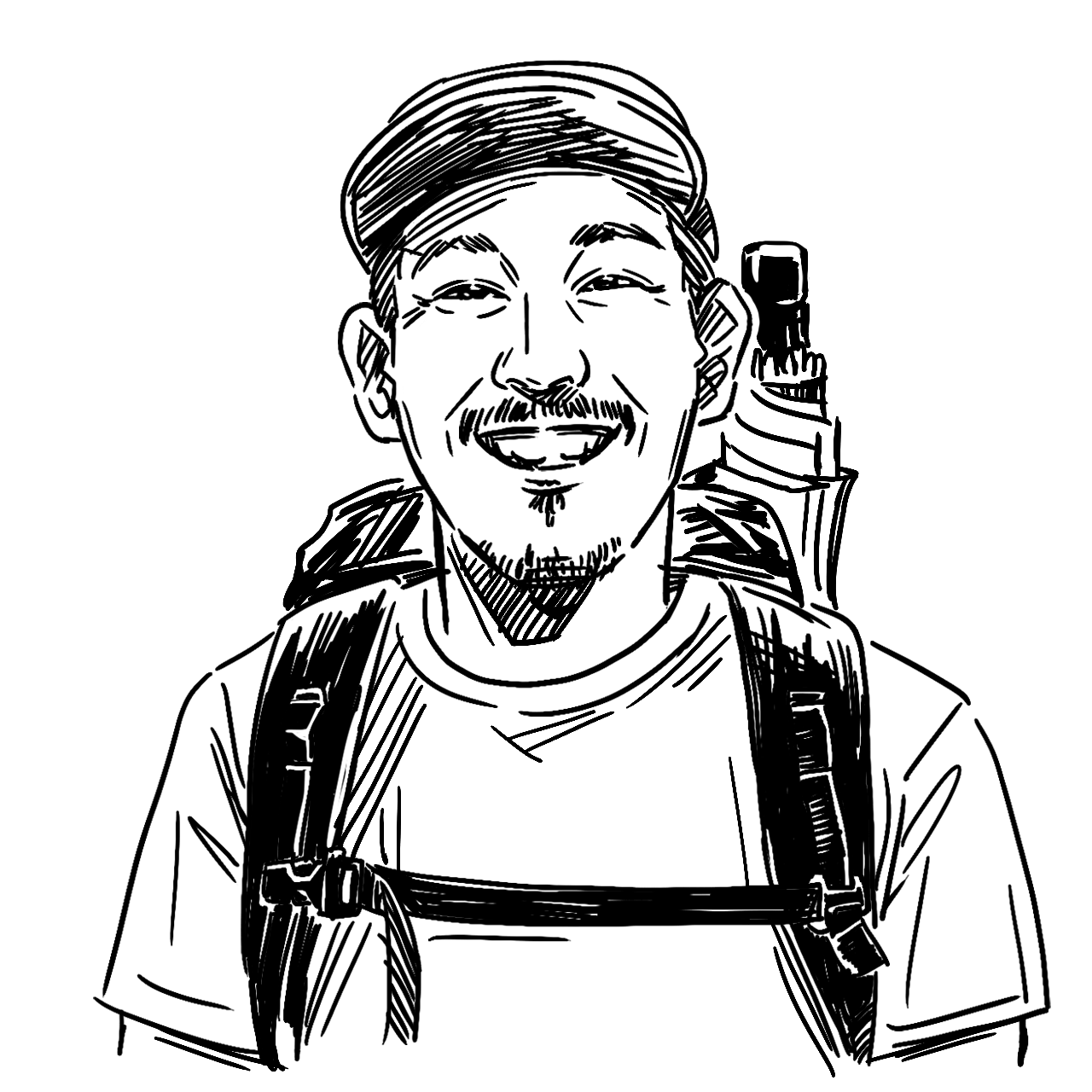
山本 暁洋(ジョージ)|京都から鎌倉に出向中
家族の日帰りハイキングから山へはまる。イラストレーターの顔も持ち、長期テント泊や雪山、バイクパッキングにも挑戦中。
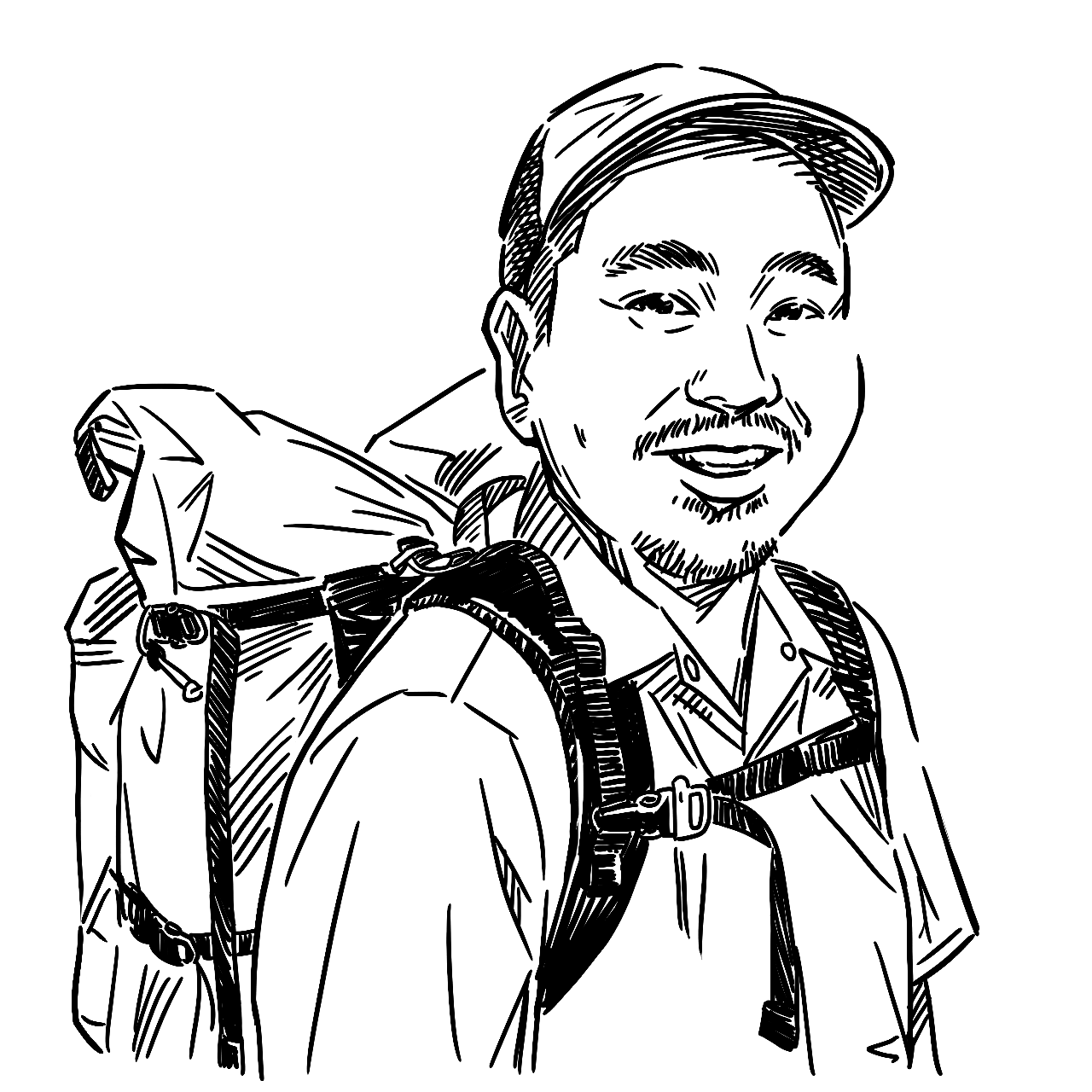
横井 雄飛(おでん君)|山と道鎌倉スタッフ
釣り一筋から鎌倉のハイキングで山に目覚めた人。装備も身体も、ウルトラライト化に挑戦中。
How do you prepare for autumn's changing temperatures?
Hidenori The biggest thing for me is keeping moisture off my skin. In summer, getting a little wet from sweat isn’t such a big deal because it’s warm enough. But in autumn, and especially winter, getting cold from wet clothing can become a serious problem. That’s what I’m most careful about.
Oji I agree. Another big difference is how cold it gets in the mornings and evenings. I also think more carefully about rain. Depending on the temperature and elevation, rain can make the conditions feel much colder, so I want to be prepared for that too.
Yuhi I’ve made the mistake of thinking, “It’s autumn, so I’d better dress warmly,” and then ending up way too hot. (laughs)
I have to remind myself that I run hot. I still dress pretty much like I would in summer while hiking, and carry something warmer for when I stop. I try not to worry so much about the cold that I end up overheating.
Yuko I’m pretty similar. I run hot and sweat a ridiculous amount, so I always think about not getting cold rather than trying to stay warm.
Even in autumn, my basic hiking clothes are pretty close to what I’d wear in summer. I just want to make sure I can add something quickly if the temperature drops or the wind picks up.
George I feel pretty much the same as everyone else. I pay close attention to how cold it might get, not just with clothing but with the rest of my gear too.
But while I’m actually hiking, I still want to be as comfortable as I would be in summer. That’s usually where I start.
Oji's layering for the Shinetsu Trail
ーSo you’re starting with shorts, but you’ve got a plan for when you can’t keep moving at your usual pace.
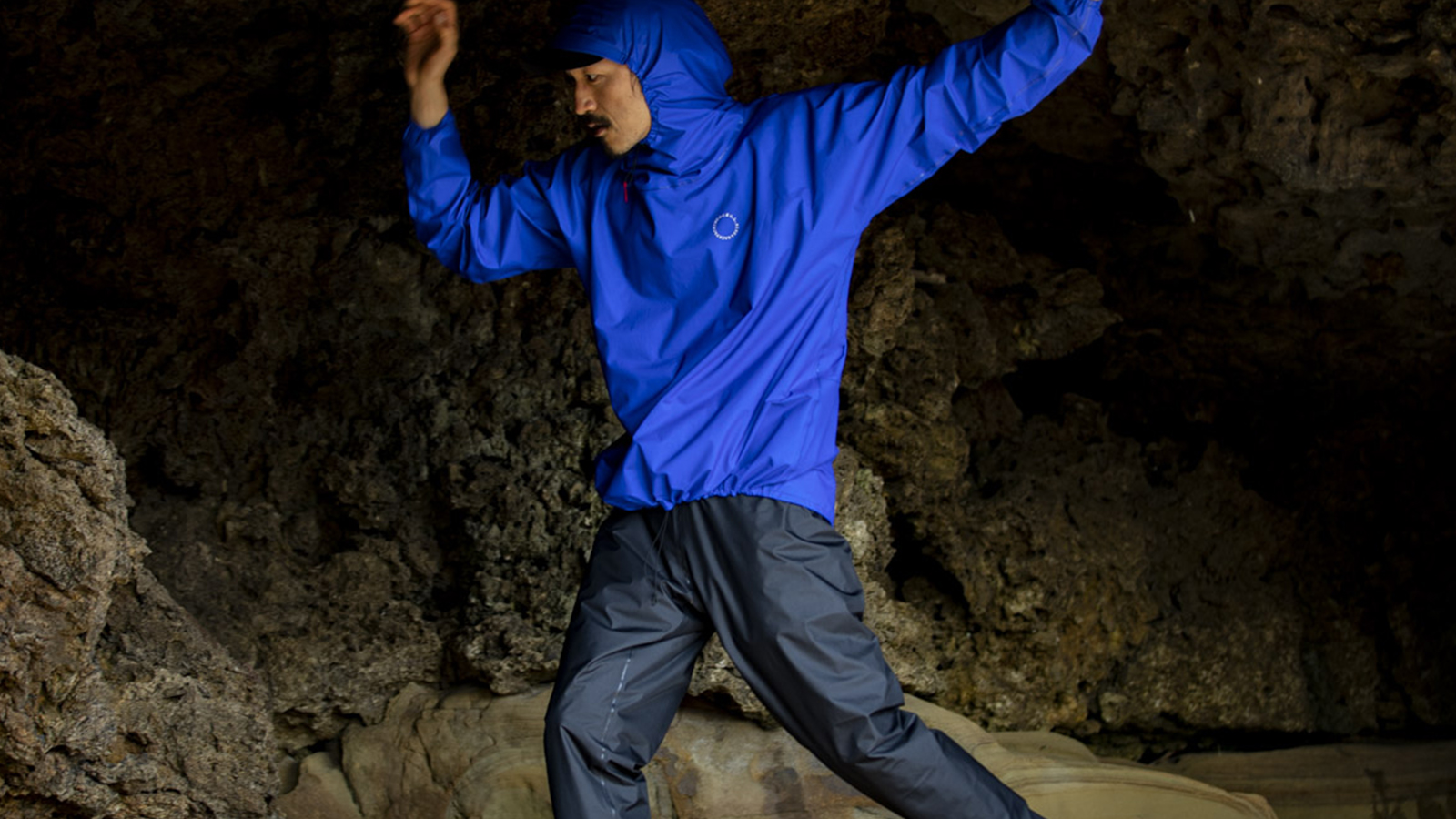
Oji Exactly. I also carry an Active Pullover. It’s mainly for sleeping, but it’s useful as an extra warm layer if I need it. My outer shell is the UL All-weather Jacket.
My hands and feet get cold easily, so I always bring Alpha Socks for sleeping, even when the expected low is around 15°C.
And AW Alpha Mittens are essential for me. Even when I’m hiking in a sleeveless shirt, I sometimes want my wrists covered once the temperature gets down to around 15°C.
That’s basically my setup.
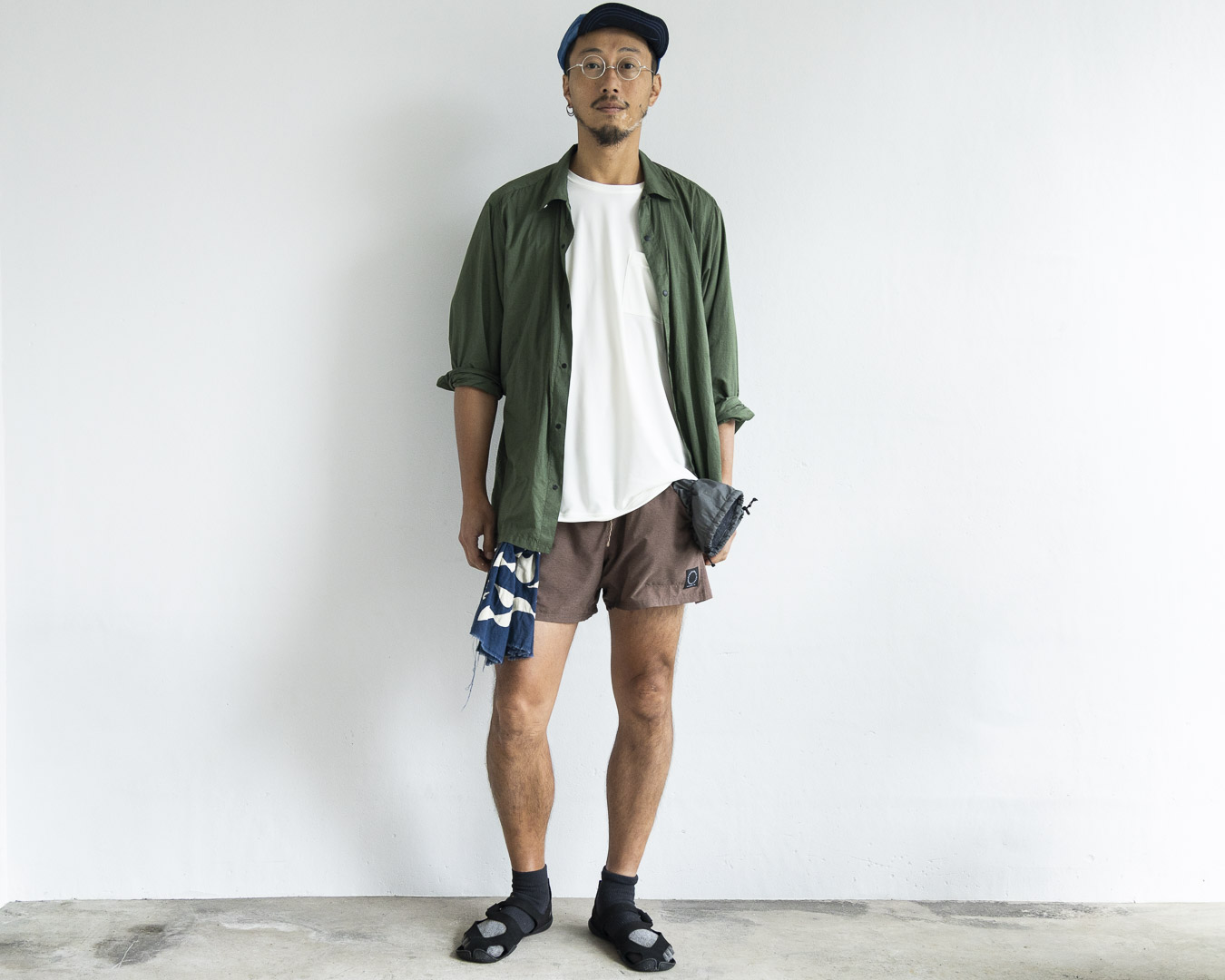
Mid Layer: Kami Shirt
Base Layer: Chemical B Pocket T-shirt
Bottoms: Light 5-Pocket Short Shorts
秋でも行動時はLight 5-Pocket Short Shortsが基本。
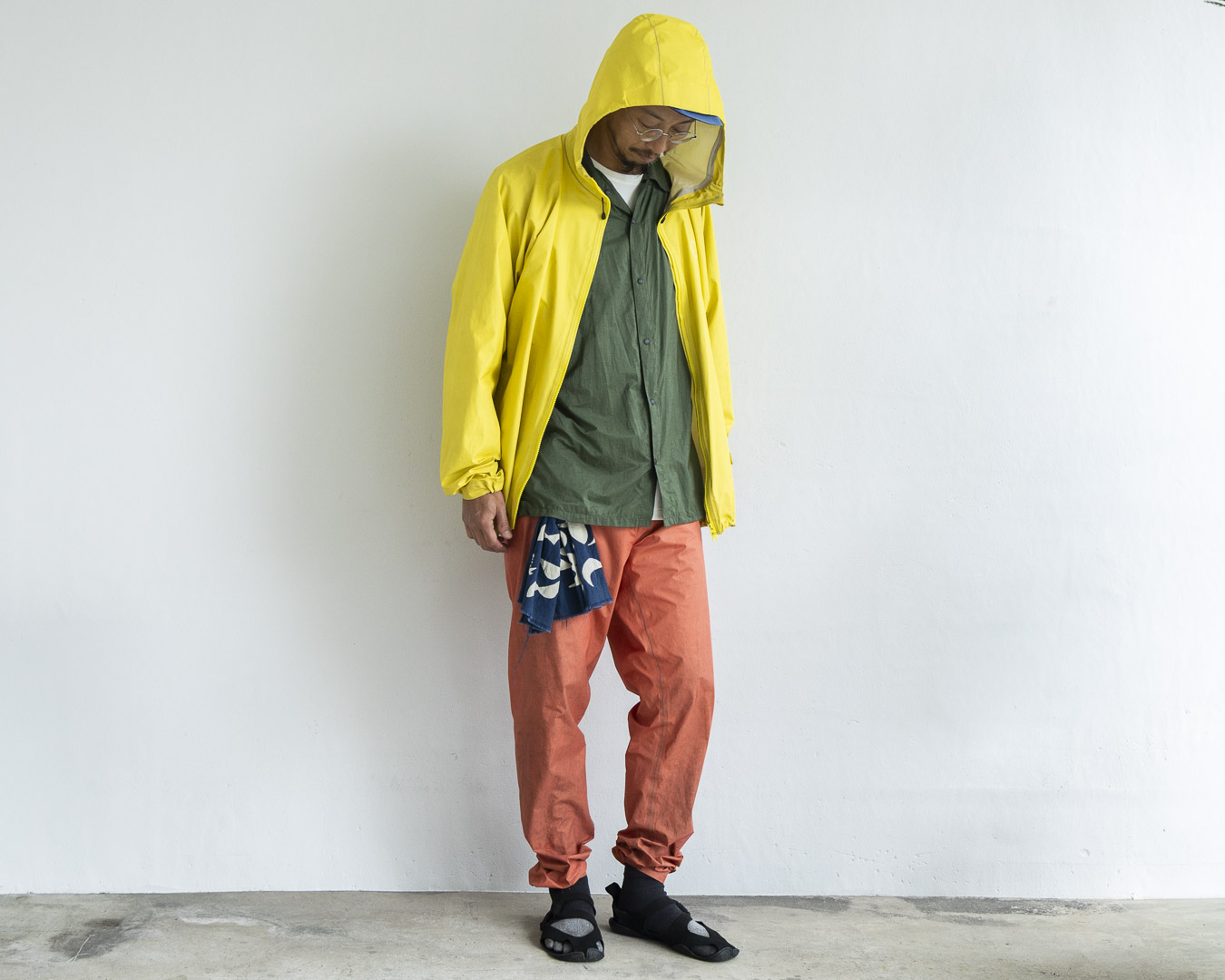
Outer Layer: UL All-weather Jacket
Mid Layer: Kami Shirt
Base Layer: Chemical B Pocket T-shirt
Bottoms: Light 5-Pocket Short Shorts
Bottoms: UL All-weather Pants
悪天候時の行動着。
Oji’s layering setup for bad weather.
ーSo you’re starting with shorts, but you’ve got a plan for when you can’t keep moving at your usual pace.
Oji Exactly. I also carry an Active Pullover. It’s mainly for sleeping, but it’s useful as an extra warm layer if I need it. My outer shell is the UL All-weather Jacket.
My hands and feet get cold easily, so I always bring Alpha Socks for sleeping, even when the expected low is around 15°C.
And AW Alpha Mittens are essential for me. Even when I’m hiking in a sleeveless shirt, I sometimes want my wrists covered once the temperature gets down to around 15°C.
That’s basically my setup.
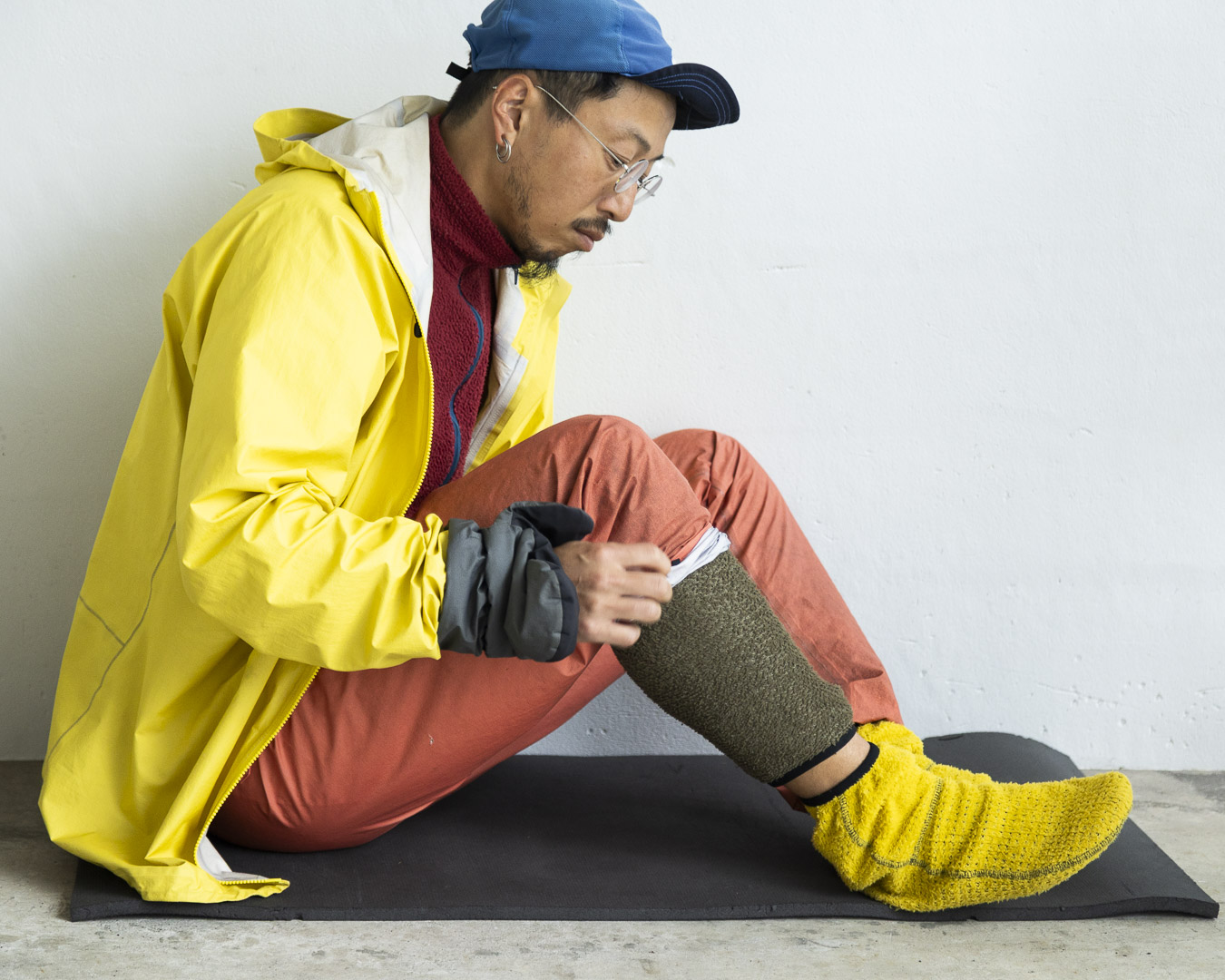
Outer Layer: UL All-weather Jacket
Mid Layer: Active Pullover
Bottoms: Light 5-Pocket Short Shorts
Bottoms: Light Alpha Tights
Accessory: Alpha Socks
Accessory: AW Alpha Mittens
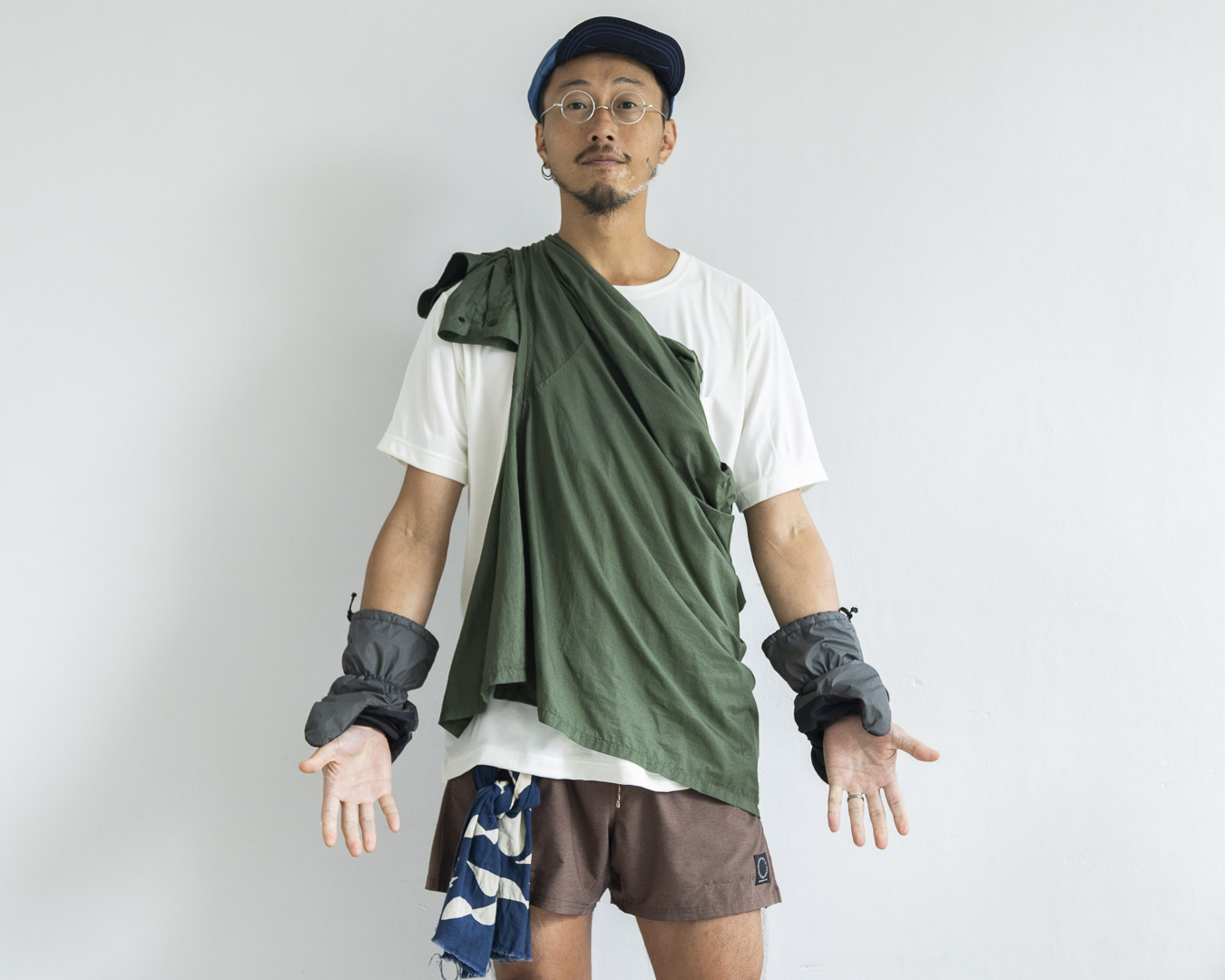
AW Alpha Mittenがおーじの秋冬の必需品。つけたまま手指をすぐに出せるので、体温調整もしやすい。また脱いだKami Shirtを体の前で結ぶのも、腹部を冷やさないアイデア。
Hidenori's layering for the Yatsugatake Mountains
Hidenori I’m imagining a three-day, two-night traverse of the Yatsugatake Mountains in September.
It’s high elevation, but September can still be pretty warm. I also hike faster than average, so I’d choose the 5-Pocket Shorts.
My thighs get cold quite easily, and when that happens my legs start to feel stiff. The 5-Pocket Shorts give my thighs some wind protection while leaving everything below the knees free. I really like that balance.
For my upper body, I’d choose one of two combinations.
If it’s going to be cooler, I’d wear the 100% Light Merino Half Zip Hoody with an Alpha Vest. I prefer the vest with a hooded base layer because the collar of the Active Pullover can feel a bit bulky around the neck.
If it’s warmer, I’d start with a short-sleeve base layer, something like the Chemical B Pocket T-shirt, DF Mesh Merino, or 100% Light Merino, and bring an Active Pullover instead.
I’d also bring the UL All-weather Jacket. I like how easily I can ventilate when I’m working hard.
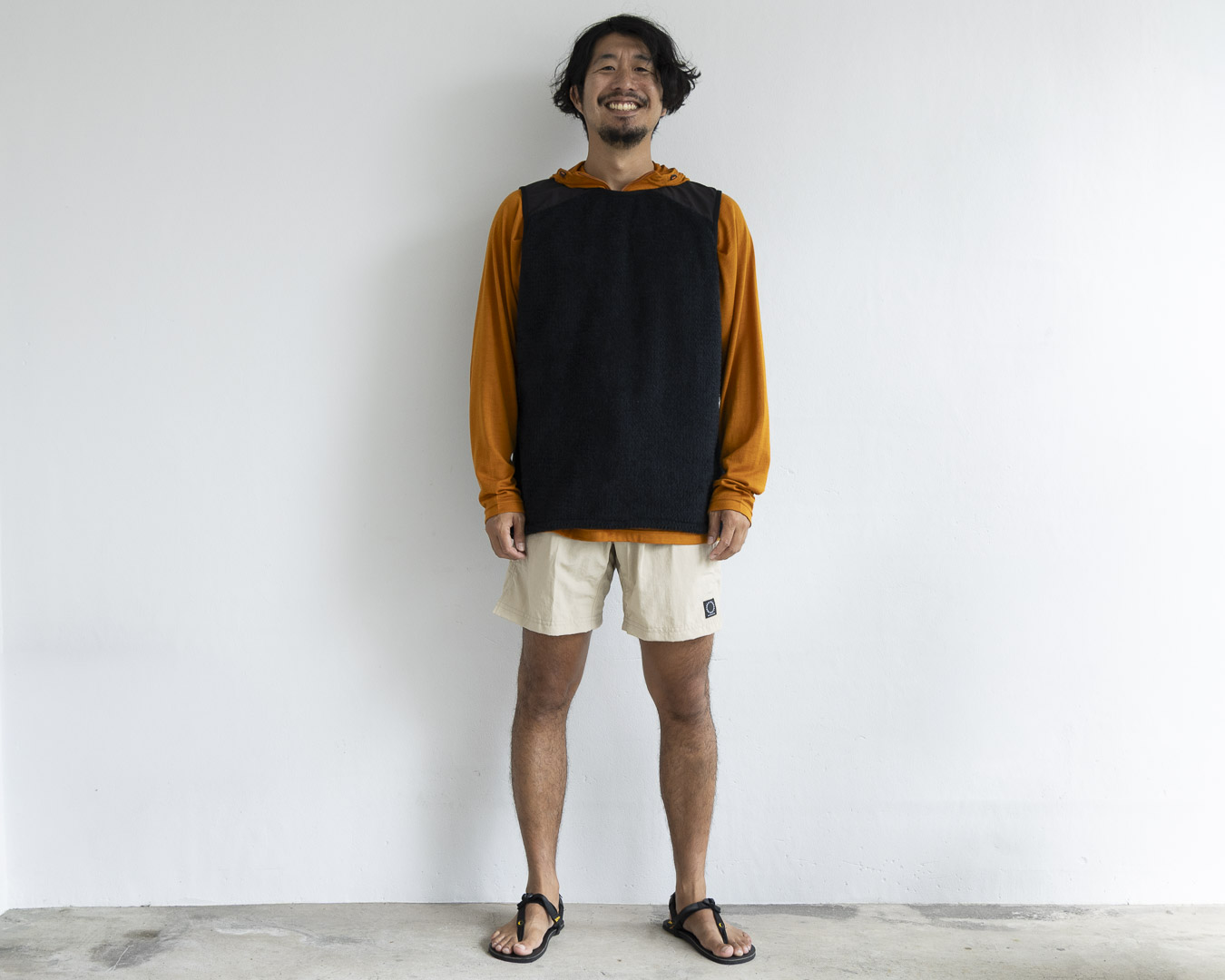
Mid Layer: Alpha Vest
Base Layer: 100% Light Merino Half Zip Hoody
Bottoms: 5-Pocket Shorts
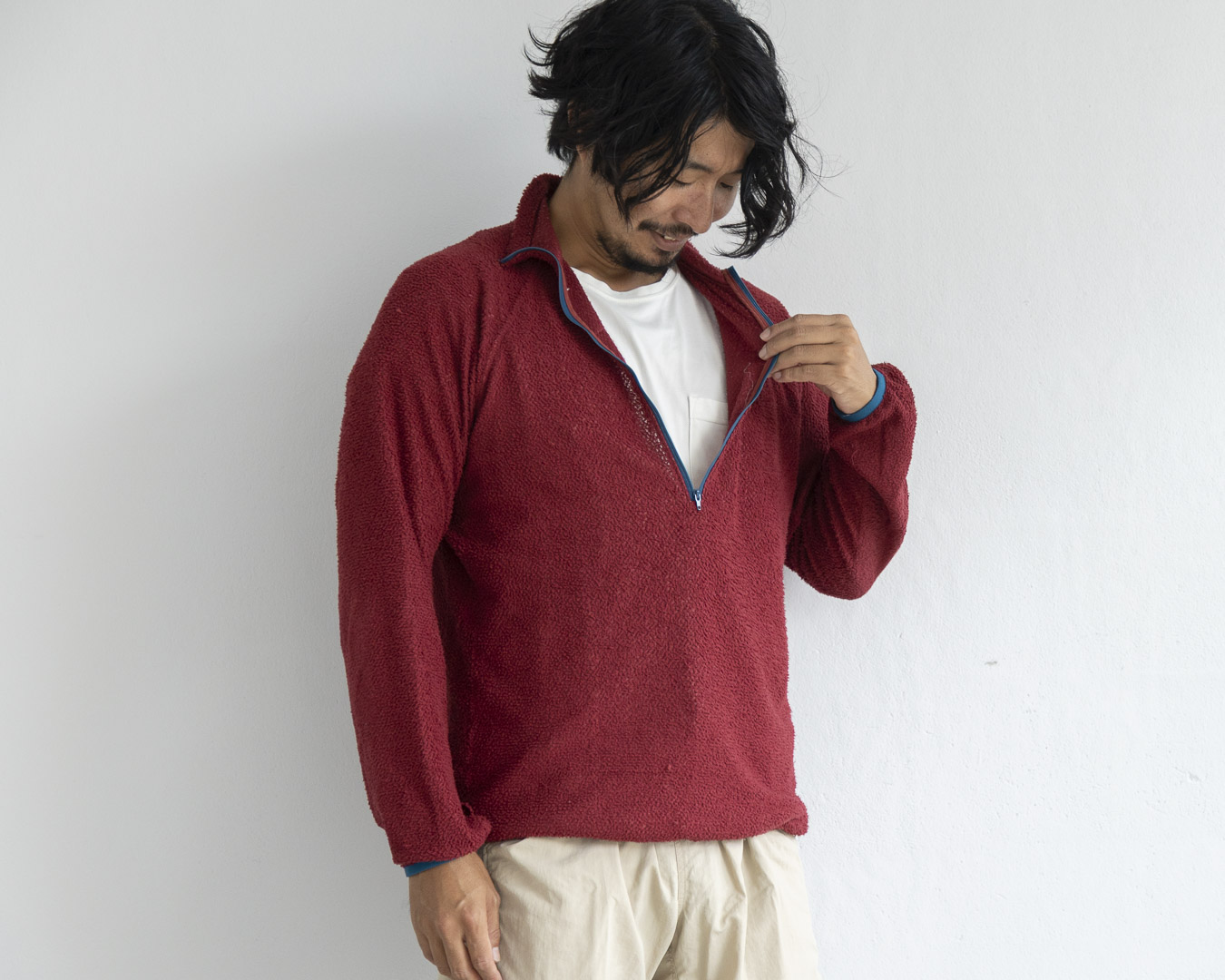
Mid Layer: Active Pullover
Mid Layer: Chemical B Pocket T-shirt
ーSo you and Oji are both still wearing shorts, even as the temperatures start dropping.
Hidenori Yeah. I usually hike at around 60–80% of the standard course time, so I’m generating quite a lot of heat. Shorts feel just right while I’m moving.
And if it gets cold, I can always add the tights or UL All-weather Pants. I try to choose layers that give me plenty of options.
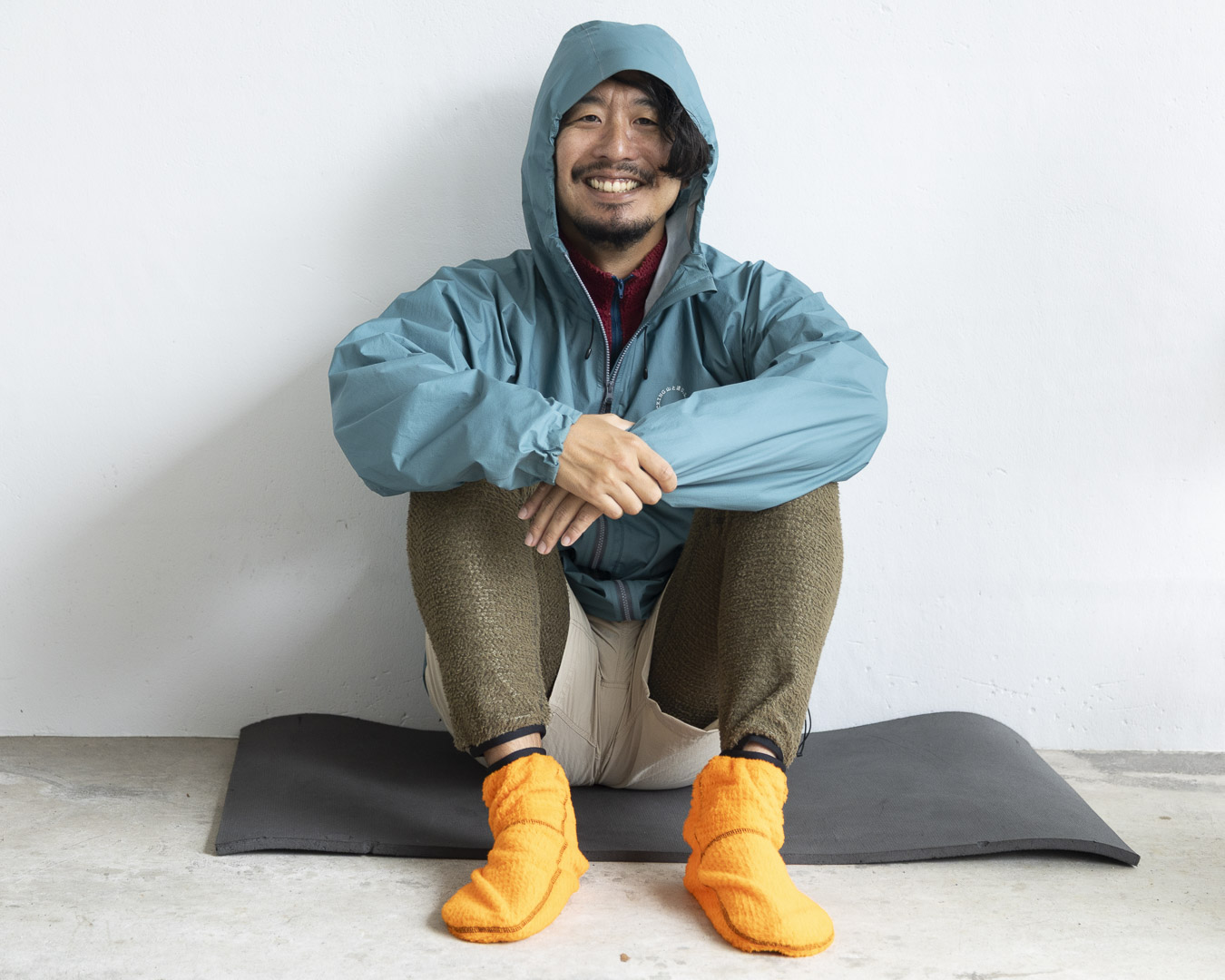
Outer Layer: UL All-weather Jacket
Mid Layer: Active Pullover
Bottoms: 5-Pocket Shorts
Bottoms: Light Alpha Tights
Accessory: Alpha Socks
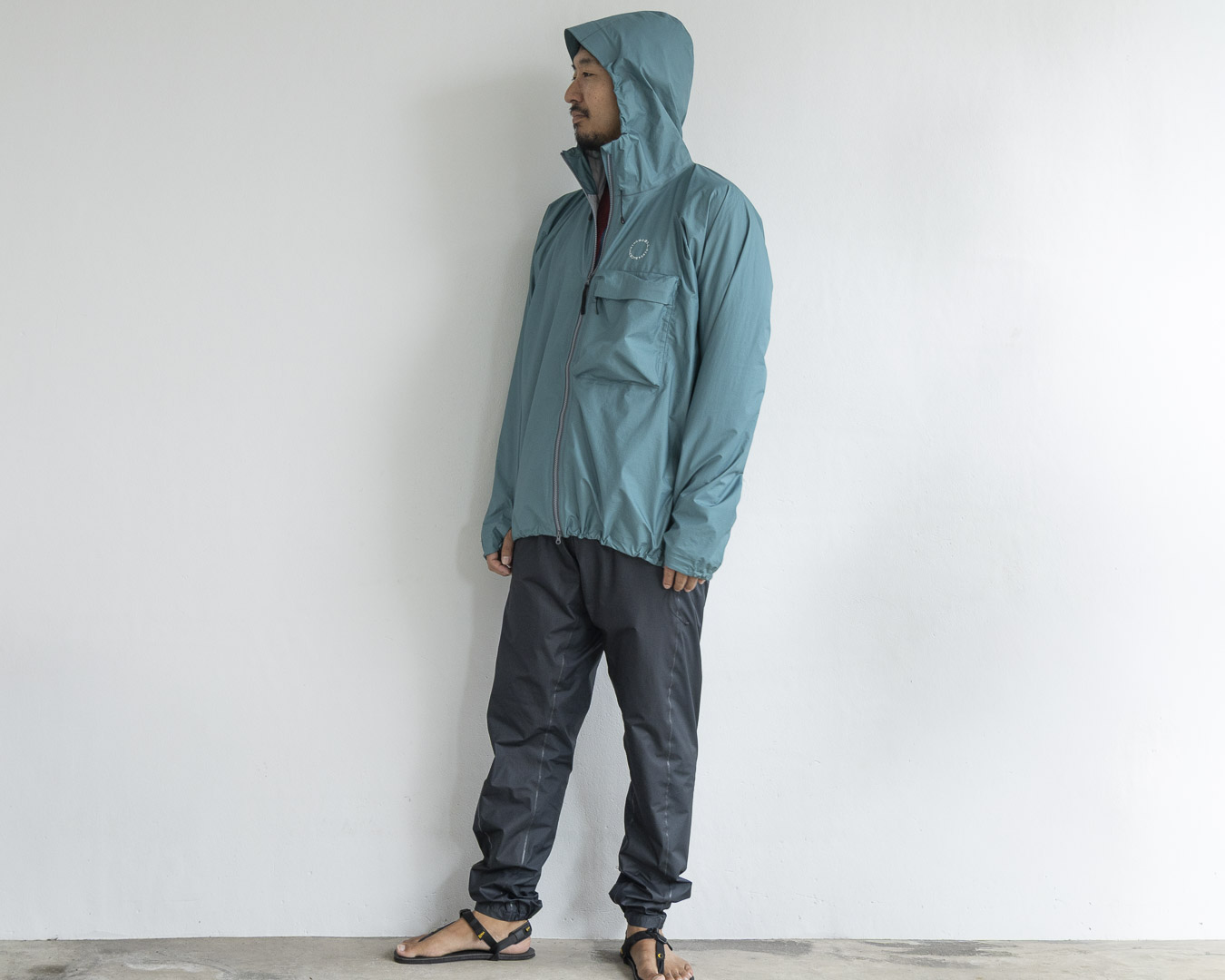
Outer Layer: UL All-weather Jacket
Bottoms: UL All-weather Pants
George's layering for the Northern Alps
George I’ve got a similar setup. I’m imagining September in the Northern Alps, with daytime temperatures around 15–20°C and lows around 5°C.
Like Hidenori, I’d start with the 100% Light Merino Half Zip Hoody.
I’m a big fan of hoods. Even in autumn, the sun can be pretty strong, so I like having something to protect my neck while hiking. When it gets cold, I can cover my ears and part of my face too.
It’s useful for sleeping as well, because it keeps my skin from sticking to the sleeping bag. Having one piece that works from hiking to sleeping helps me keep everything simple.
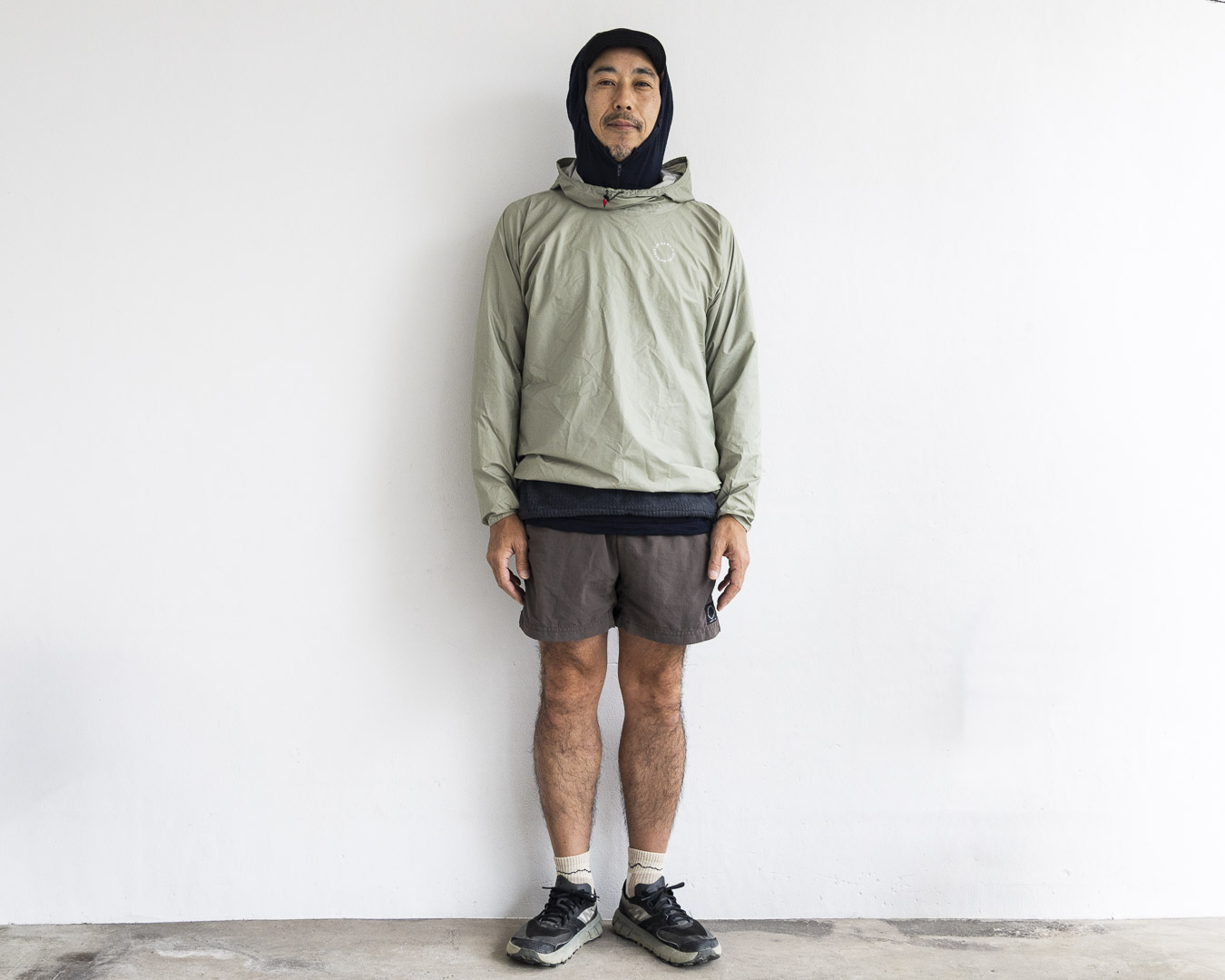
Outer Layer: UL All-weather Hoody
Mid Layer: Alpha Vest
Base Layer: 100% Light Merino Half Zip Hoody
Bottoms: 5-Pocket Shorts
George I also bring an Alpha Vest, but I don’t think of it only as insulation. I use it to create a little space between my base layer and the UL All-weather Hoody.
When a thin shell sits right against your body, you can really feel the cold through it. Even a small layer of air between the two makes a difference.
George uses the Alpha Vest to create an insulating layer of air between his base layer and shell.
George I’m also unusually tolerant of cold. At those temperatures, I don’t need extra socks or much insulation for sleeping.
I’ll wear Light Alpha Tights under my shorts, partly just because I don’t like my legs sticking together in my sleeping bag. I can adjust my sleeping bag for the rest.
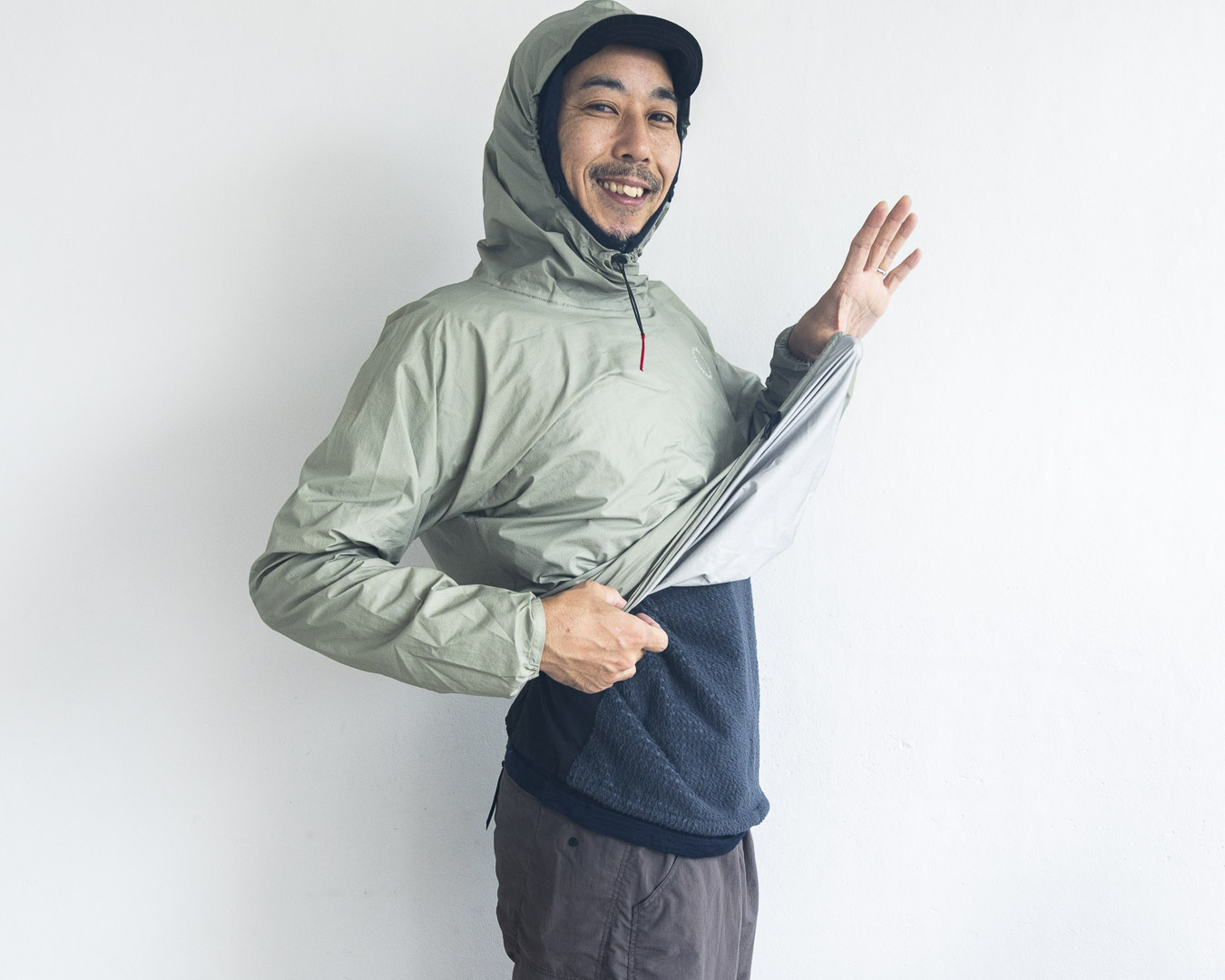
シェルとベースレイヤーの間にAlpha Vestをかませることで暖かく感じるのだとか。
Hidenori You really are good with the cold.
George I am. (laughs)
I bring an Active Pullover too, but honestly, it usually ends up being my pillow. I’ll wear it if I’m sitting around at camp with everyone, but once I’m in my tent, I often take it off.
That’s something I’ve figured out through experience. I’ve tried different combinations and learned what works for me.
ーAnd what about your shorts? Do you have a backup for when it gets cold?
George Absolutely. There’s one piece of gear that completely changed how I think about wearing shorts in autumn: the UL All-weather Pants.
Before joining Yamatomichi, I’d been hiking for seven or eight years, but I still had the same rain pants I’d bought when I started. I hardly ever used them. They were basically something I carried just in case.
Then I realized I could treat the UL All-weather Pants as a wind shell for my legs.
Before, I’d sometimes start hiking in long pants because the morning was cold, only to regret it once the day warmed up. Or I’d wear tights underneath and end up too hot with no easy way to take them off.
With the UL All-weather Pants, I can start in shorts and put them on whenever I need more protection.
They block wind, but they also breathe well and don’t flap around much. Regular rain pants often make me want to take them off as soon as I put them on. These are comfortable enough that sometimes I just leave them on even after the rain stops.
That completely changed autumn hiking for me. I can wear shorts comfortably much later into the season.
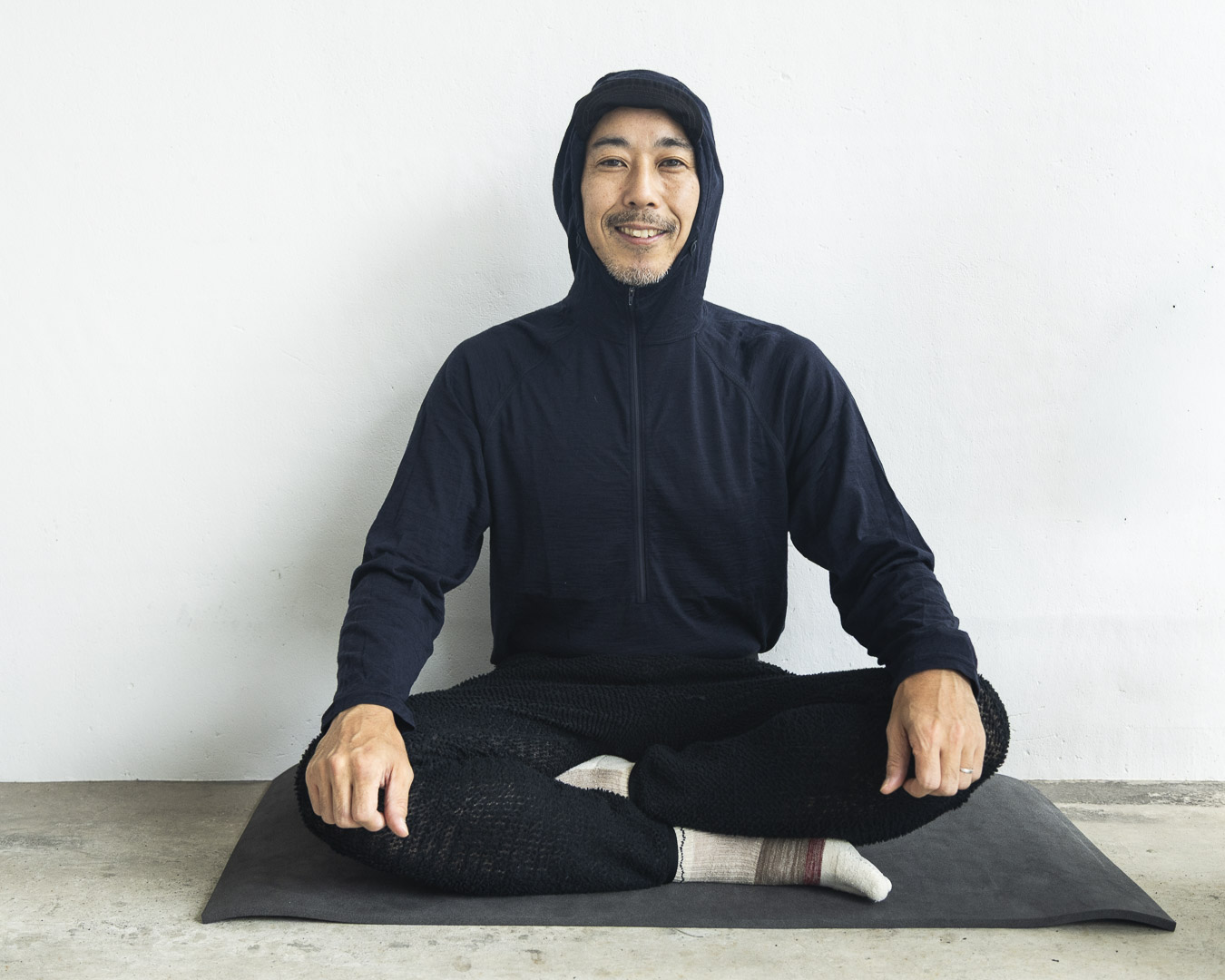
Base Layer: 100% Light Merino Half Zip Hoody
Bottoms: 5-Pocket Shorts
Bottoms: Light Alpha Tights
Yuko's layering for a hard hike
Yuko I’ll talk about what I actually wore during an HLC Kamakura PRACTICE trip last October.
We hiked around Mt. Asama and Mt. Azumaya, at elevations a little over 2,000 m. The forecast was for rain and colder temperatures on the first day, followed by warmer weather once the rain cleared.
I had a hard time choosing between the Chemical B Pocket T-shirt and DF Mesh Merino T-shirt.
PRACTICE is pretty demanding for me, so I knew I’d be sweating a lot. I also expected the weather to warm up, and there was a chance I’d be able to wash my clothes at camp.
In the end, I chose Chemical B because it dries so quickly.
I also brought my usual Alpha Haramaki and Light Alpha Sleeves. I almost always carry those two. With them, I feel like I can handle quite a lot of different conditions.
When it rained, I put on the UL All-weather Jacket, but otherwise those three pieces were enough for my upper body.
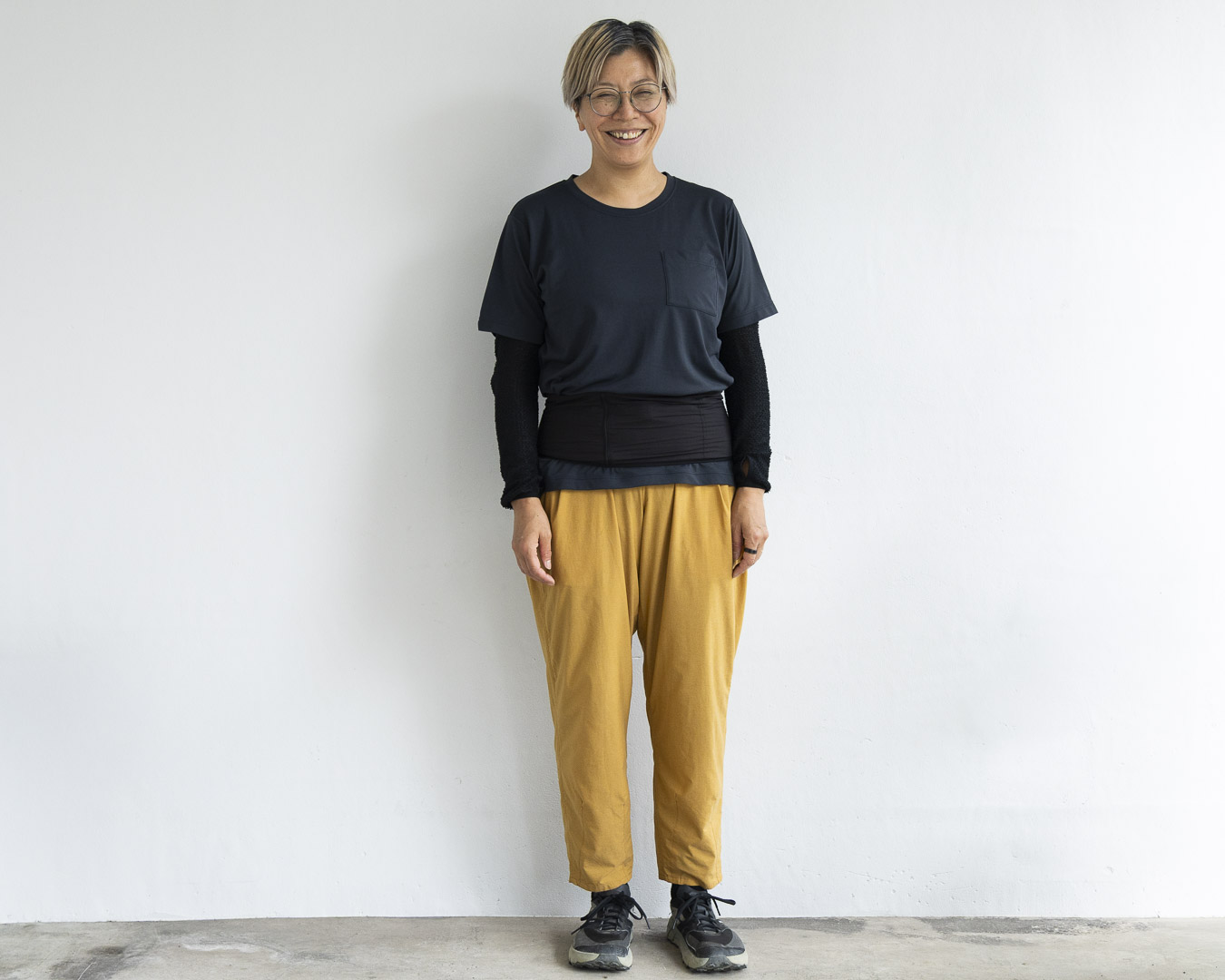
Base Layer: Chemical B Pocket T-shirt
Bottoms: Light 5-Pocket Wide Pants
Accessory: Alpha Haramaki
Accessory: Light Alpha Sleeves
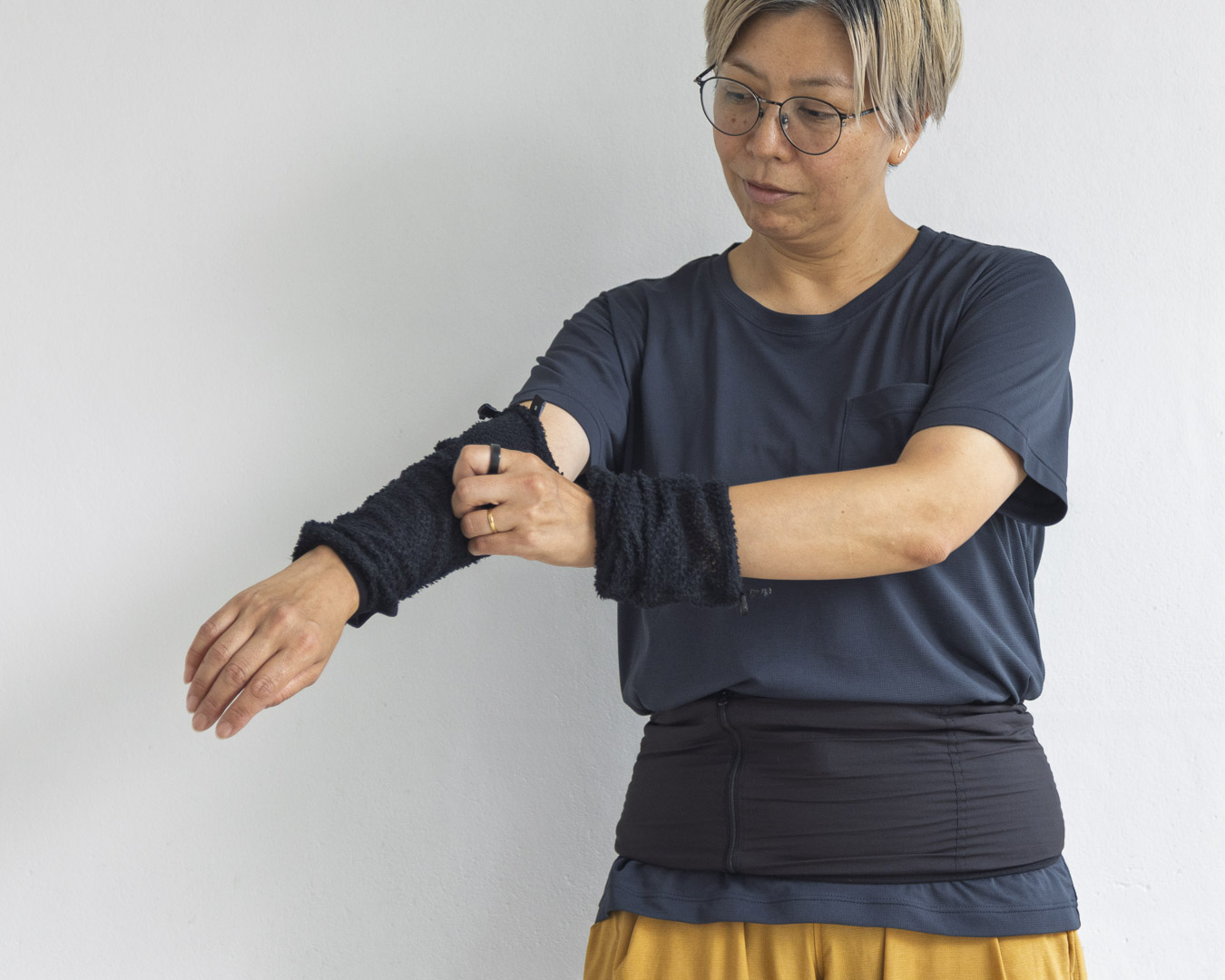
Alpha HaramakiとLight Alpha Sleevesさえあれば、大抵は大丈夫と角ちゃん。
Yuko relies on her Alpha Haramaki and Light Alpha Sleeves for extra warmth.
ーWhy did you choose the UL All-weather Jacket?
Yuko Because I run so hot, ventilation is really important.
Even in the rain, if the wind isn’t blowing rain directly through the opening, I often leave the two-way zipper open above and below with just the middle section closed. That lets me release a lot of heat.
It’s usually my first choice when I know I’m going to be sweating a lot.
Outer Layer: UL All-weather Jacket
Yuko likes leaving the two-way zipper open above and below for ventilation.
Yuko For bottoms, I went with the Light 5-Pocket Wide Pants rather than shorts.
I expected it to get cold, but I also knew the Wide Pants would feel comfortable once the temperature rose because air could move through them.
And if it got really cold, I could wear Light Alpha Tights underneath without feeling restricted.
I wanted something that would work whichever way the weather went.
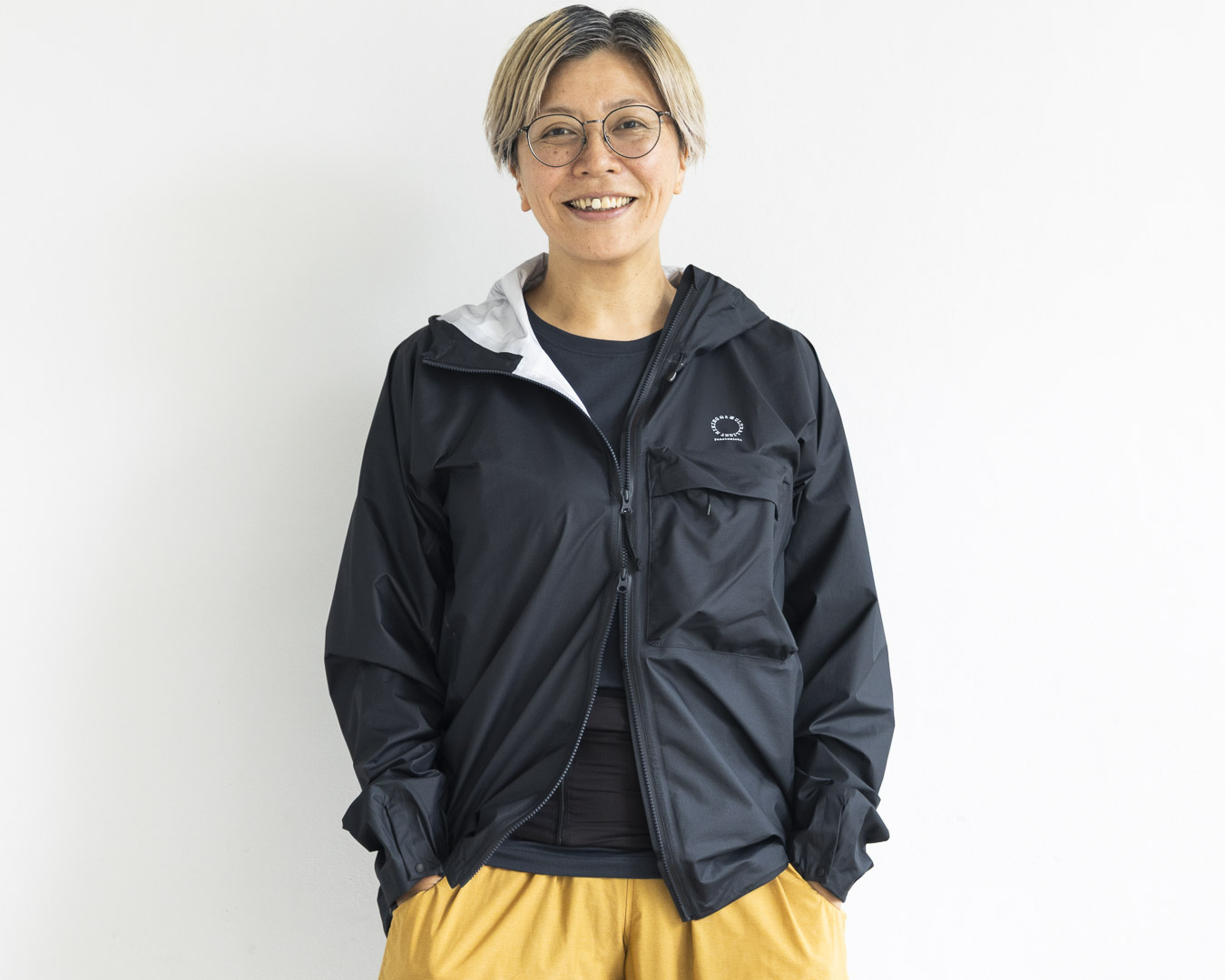
Outer Layer: UL All-weather Jacket
Light 5-Pocket Wide Pants and Light Alpha Tights work well together.
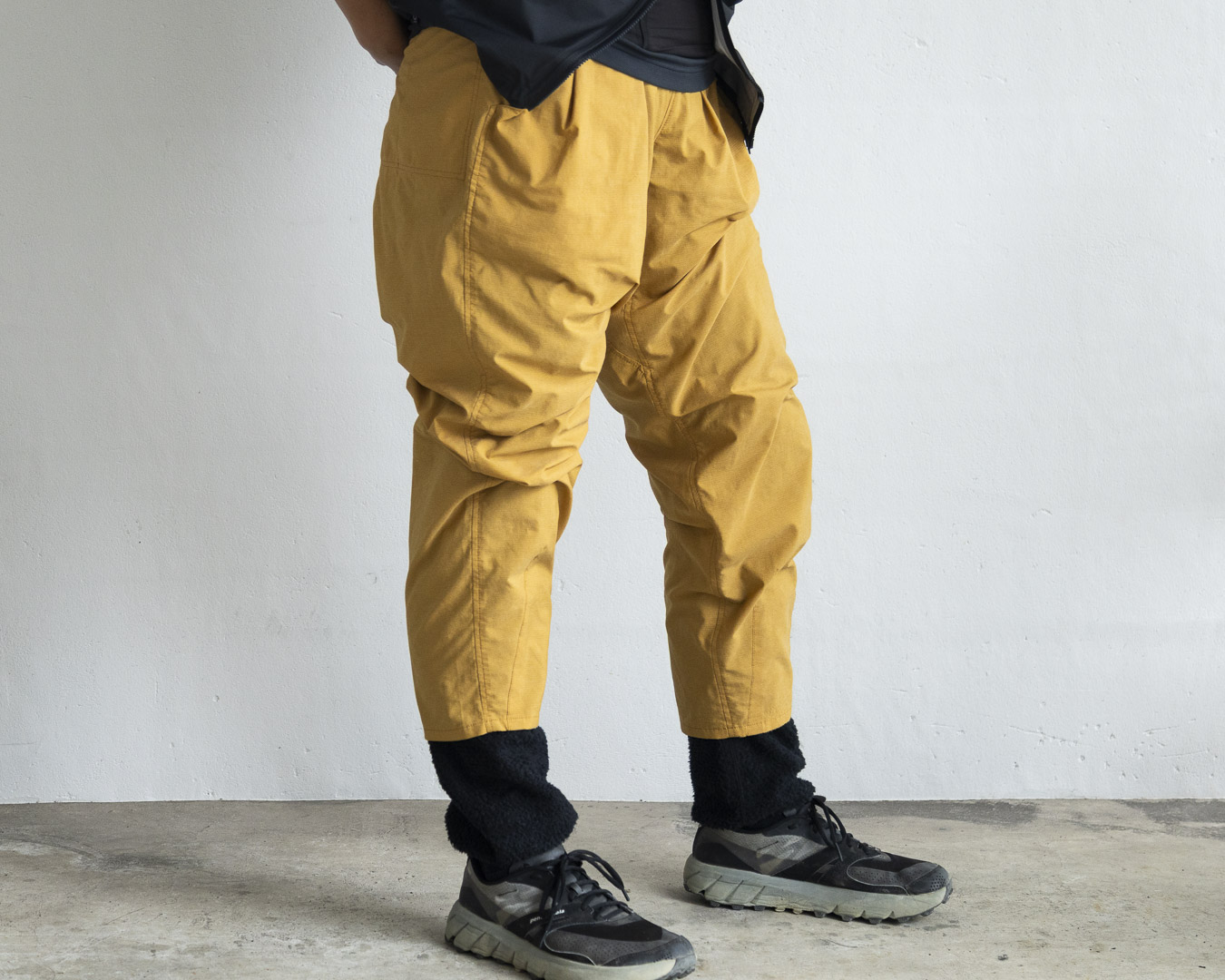
Bottoms: Light Alpha Tights
Bottoms: Light 5-Pocket Wide Pants
Light 5-Pocket Wide PantsとLight Alpha Tightsは相性抜群。
Yuhi's layering for the Northern Alps
Yuhi Yuko pretty much just said everything I was going to say. I was smiling through that whole explanation. (laughs)
I’m imagining the Northern Alps in late September, and my setup is very similar.
For bottoms, I’d wear the Light 5-Pocket Wide Pants and bring Light Alpha Tights for sleeping.
On top, I’d start with the Chemical B Pocket T-shirt. If it gets cold, I’d add an Active Pullover, and if the weather gets worse or the temperature drops further, I’d put the UL All-weather Jacket over everything.
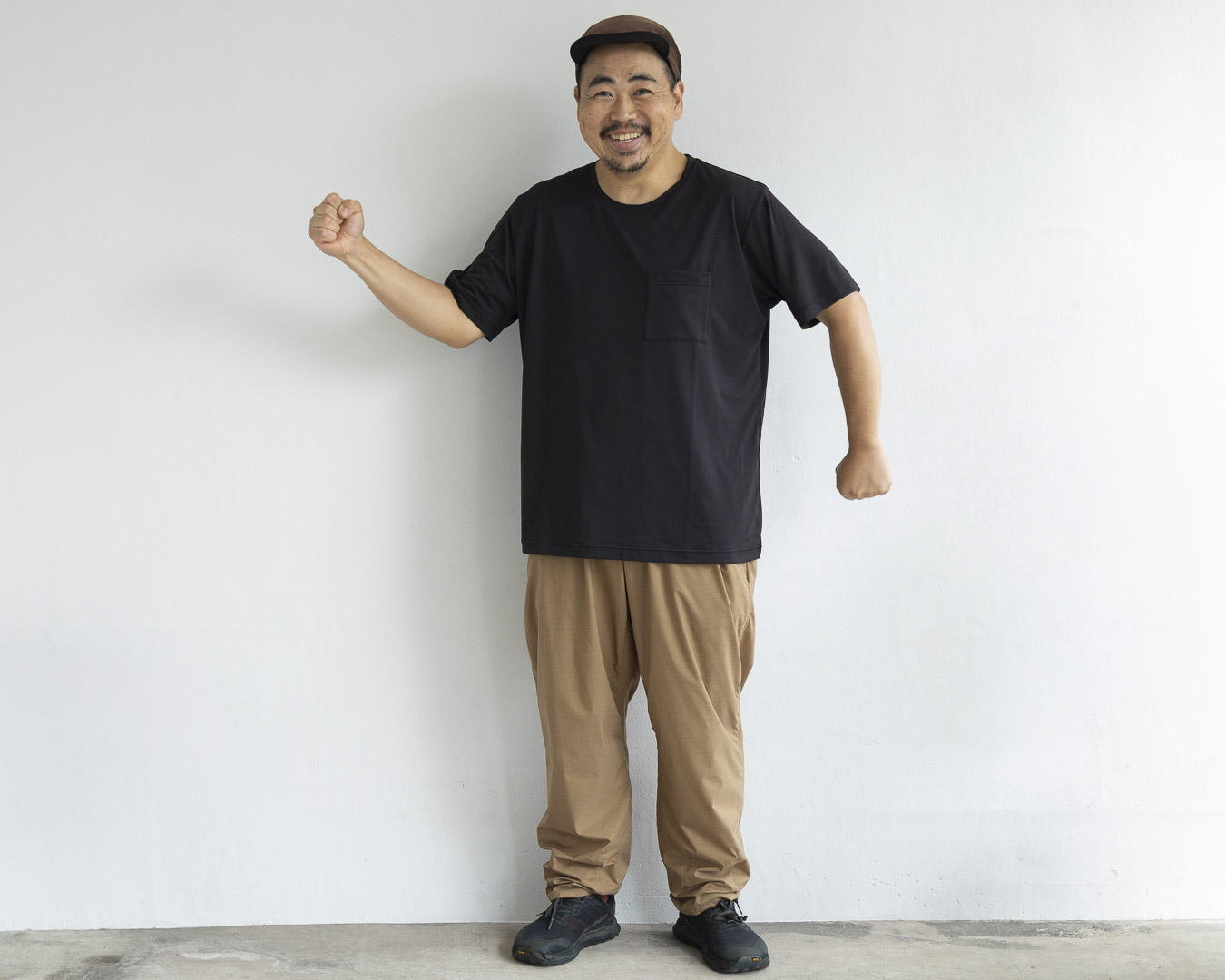
Base Layer: Chemical B Pocket T-shirt
Bottoms: Light 5-Pocket Wide Pants
暑がりなので行動中は基本半袖。
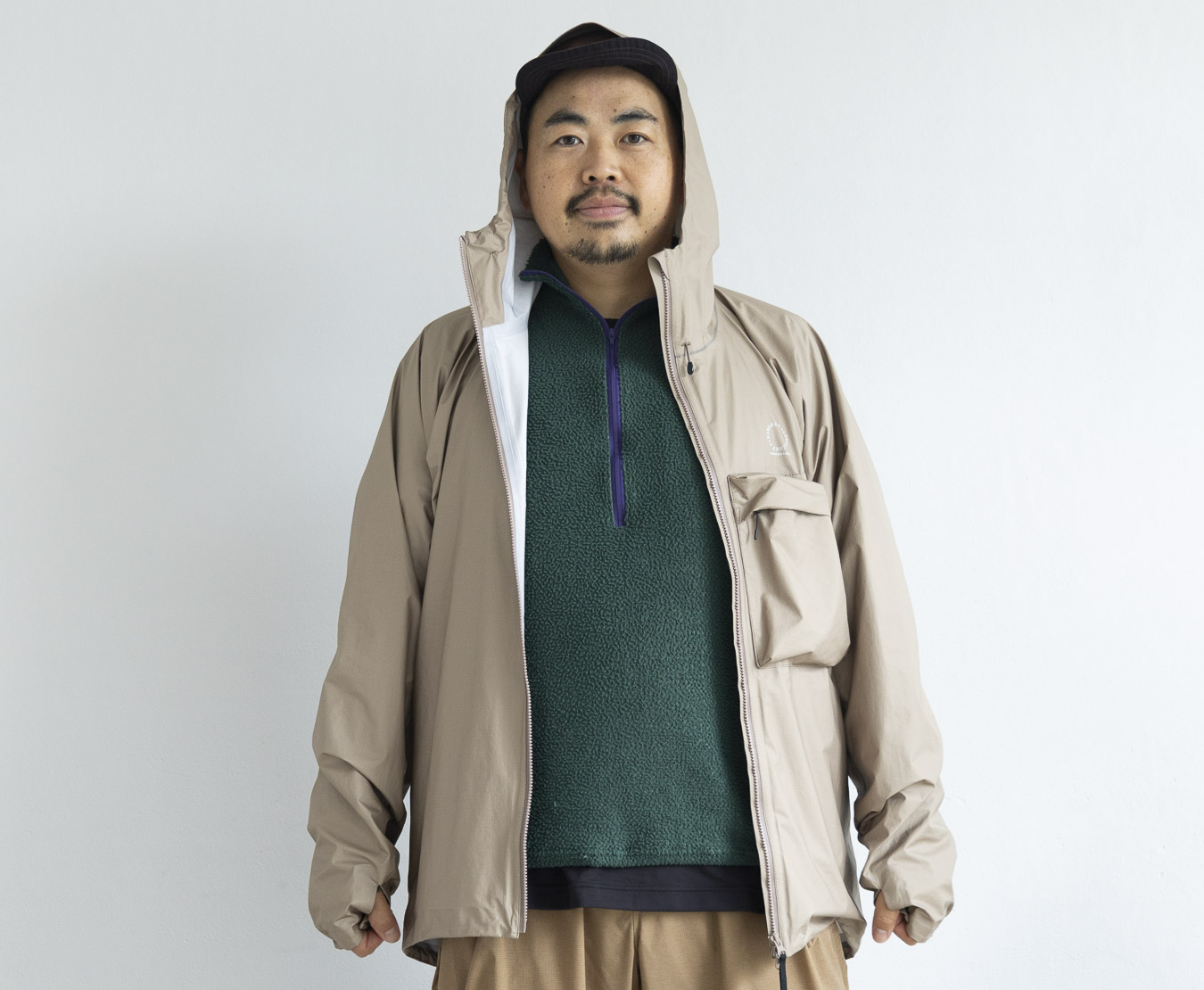
Outer Layer: UL All-weather Jacket
Mid Layer: Active Pullover
行動着を最大限重ねた状態。
おでん君 で、Active Pulloverをまず素肌の上に着て、その上にChemical Bを着て、それで着乾かししながらテントを張って、落ち着いてご飯を食べる頃には全部乾いてるっていう状態にするのが最近好きで。そうすると、汗かきでもちゃんと寝るまでに全て乾いてくれます。
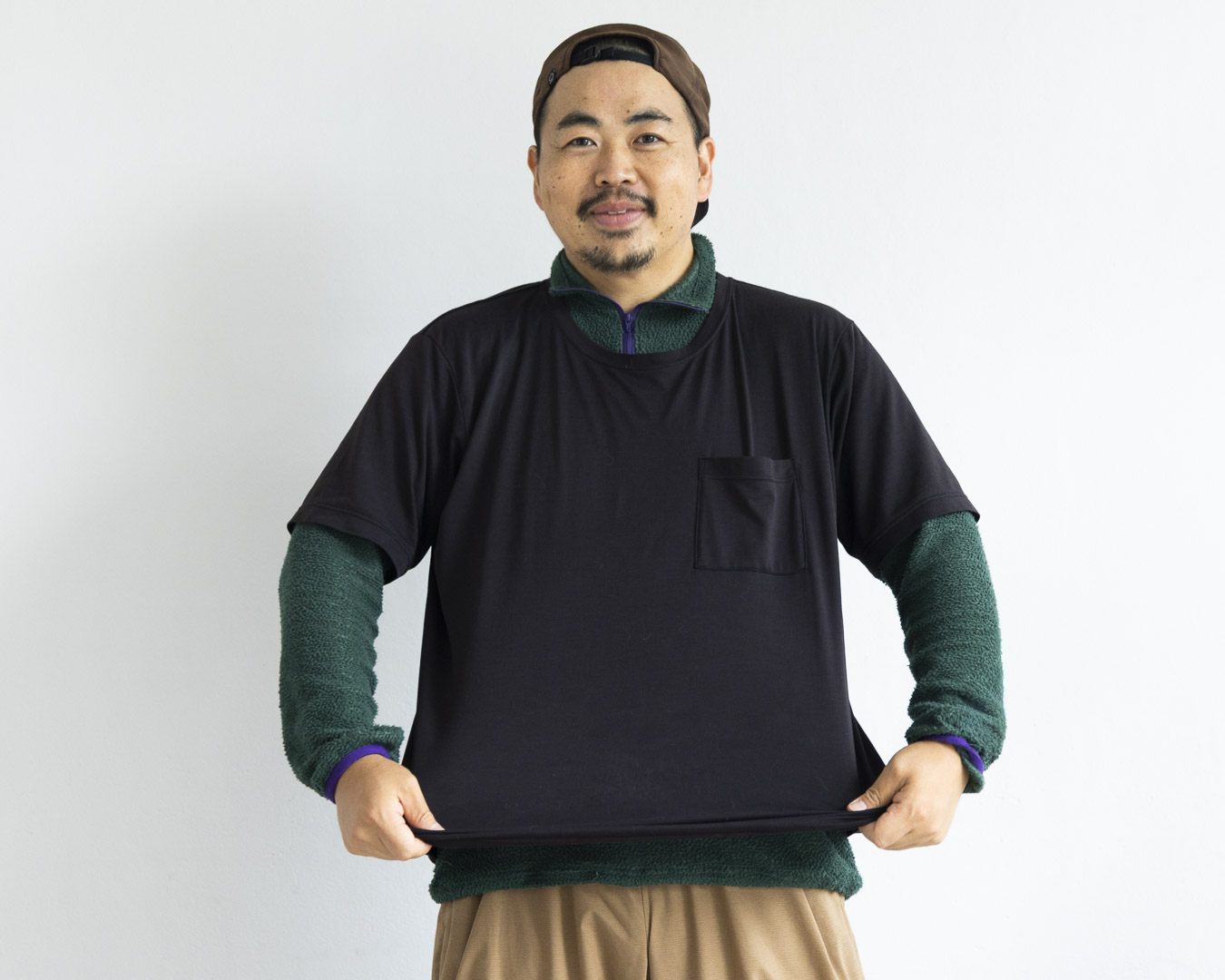
Active Pulloverをベースレイヤーの乾燥機として使うアイデア。ただ単にアクティブインサレーションとしてだけ使うのはもったいない!
How do you dry your clothes on the trail?
ーA few of you mentioned how difficult it can be to dry sweaty clothes in autumn. What do you do when you reach camp?
Yuhi Lately, I’ve been trying something with the Active Pullover.
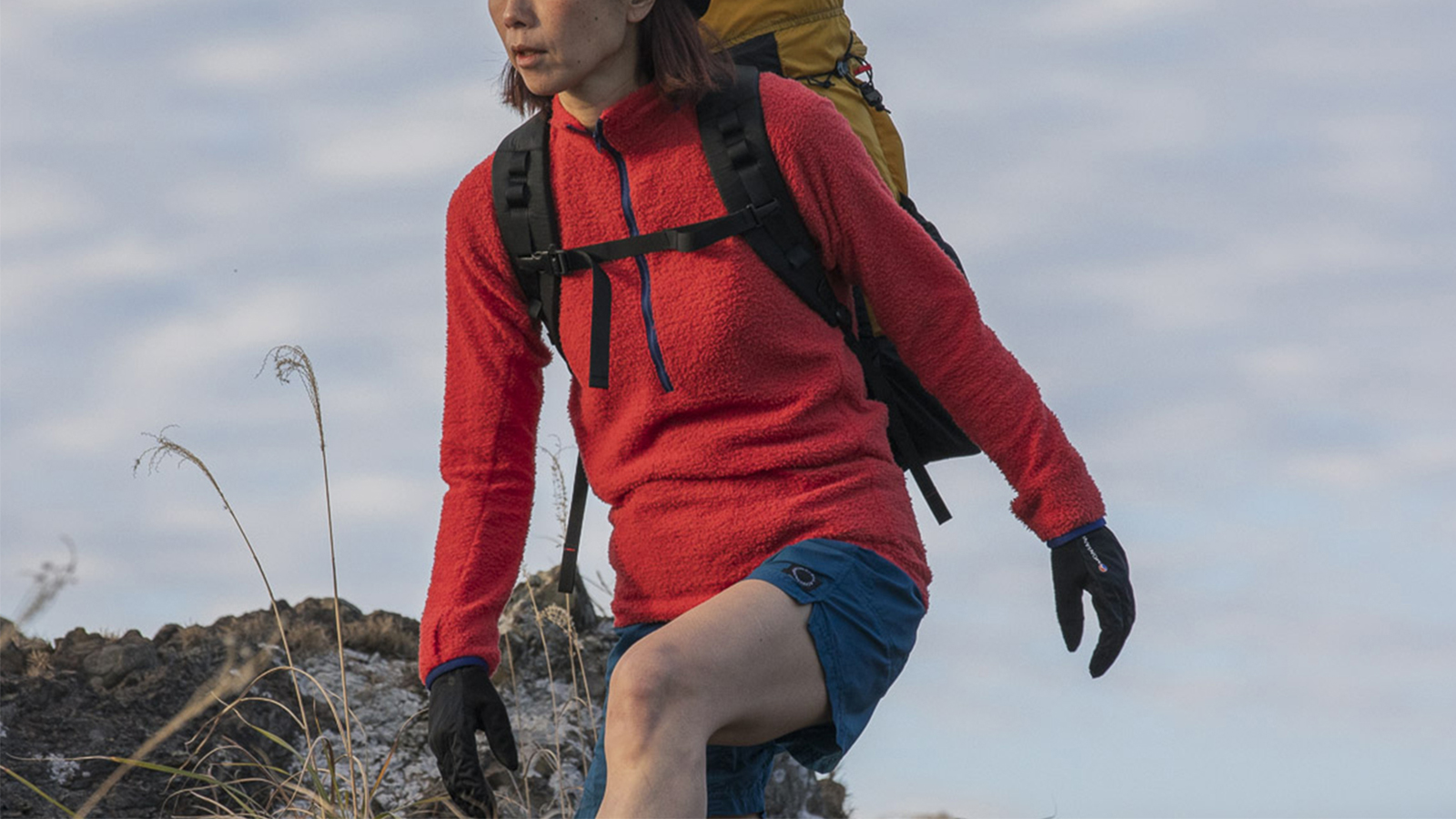
When I reach camp, I take off my wet Chemical B T-shirt, put the Active Pullover on directly against my skin, and then put the Chemical B back on over it.
I keep wearing that combination while setting up my tent and getting dinner ready. By the time I’ve settled in, the layers have usually dried out.
It’s worked really well for me, especially because I sweat so much.
Yuhi uses the Active Pullover to help dry his base layer while wearing it.
Oji I do something similar with the Alpha Vest.
After hiking with a backpack, my back is usually the wettest part of my shirt. So when I get to camp, I’ll sometimes turn the Alpha Vest around and wear it backward over my base layer.
I’ve found that it helps my back dry faster, even when I’m wearing merino.
Actually, putting the merino over the Alpha Vest dries it even faster in my experience.
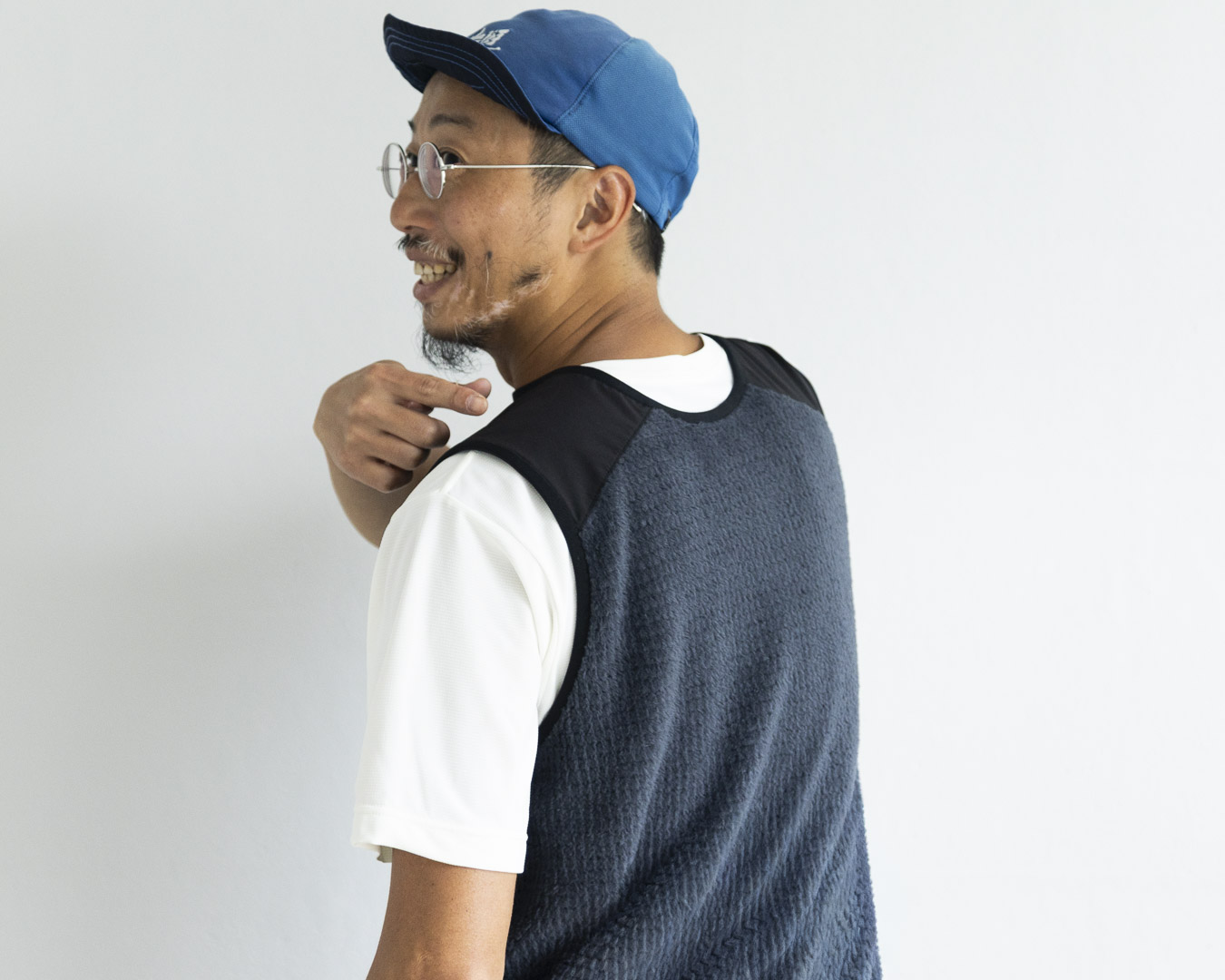
Wearing the Alpha Vest backward helps Oji dry his damp back.
George I had an interesting experience with drying clothes while wearing them.
I was hiking to the Yamatomichi Festival in Ehime when a typhoon forced us to stop at a mountain hut.
Ryo from our Kyoto team and I were both wearing merino, and our shirts were completely soaked with rain and sweat.
I had a spare shirt, so I changed and hung the wet one up inside the hut. Ryo decided to keep his on and try to dry it while wearing it.
His was dry in about three hours. Mine was still soaking wet the next morning. (laughs)
That really surprised me. I’d always thought taking off wet clothes and hanging them up was the obvious thing to do, but in that situation, continuing to wear them made a huge difference.
It also made me realize how much weight you can end up carrying when your wet clothes never dry.
Do you bring a change of clothes?
ーWe’ve talked a lot about how hard it can be to dry clothes in autumn. Does that change what spare clothing you bring?
Hidenori I don’t necessarily bring more spare clothes than I would in summer, but I do carry more insulation.
If something gets wet, I’ll often put on a warm layer to help dry it. But I always bring spare underwear and a base layer.
Oji I usually don’t bring a full change of clothes.
I make sure I have enough warm layers to deal with the conditions, and ideally I’d like to dry my clothing while wearing it rather than carry another set.
George Same here. I usually don’t carry spare clothes either.
Hidenori I’m definitely bringing mine. (laughs)
When I worked at Karasawa Hut, I saw plenty of hikers arrive completely soaked during the autumn foliage season. Some were shivering badly even after getting inside.
Seeing that made me feel that carrying a dry base layer and underwear was worth it.
I bring them in summer too, but as the weather gets colder, having something dry to change into becomes even more important.
Oji I think that’s especially important for people who haven’t experienced getting completely soaked in the high mountains.
If you know how to manage your body temperature and dry your clothing, that’s one thing. But if you don’t have that experience, I really think spare underwear and a dry base layer are essential.
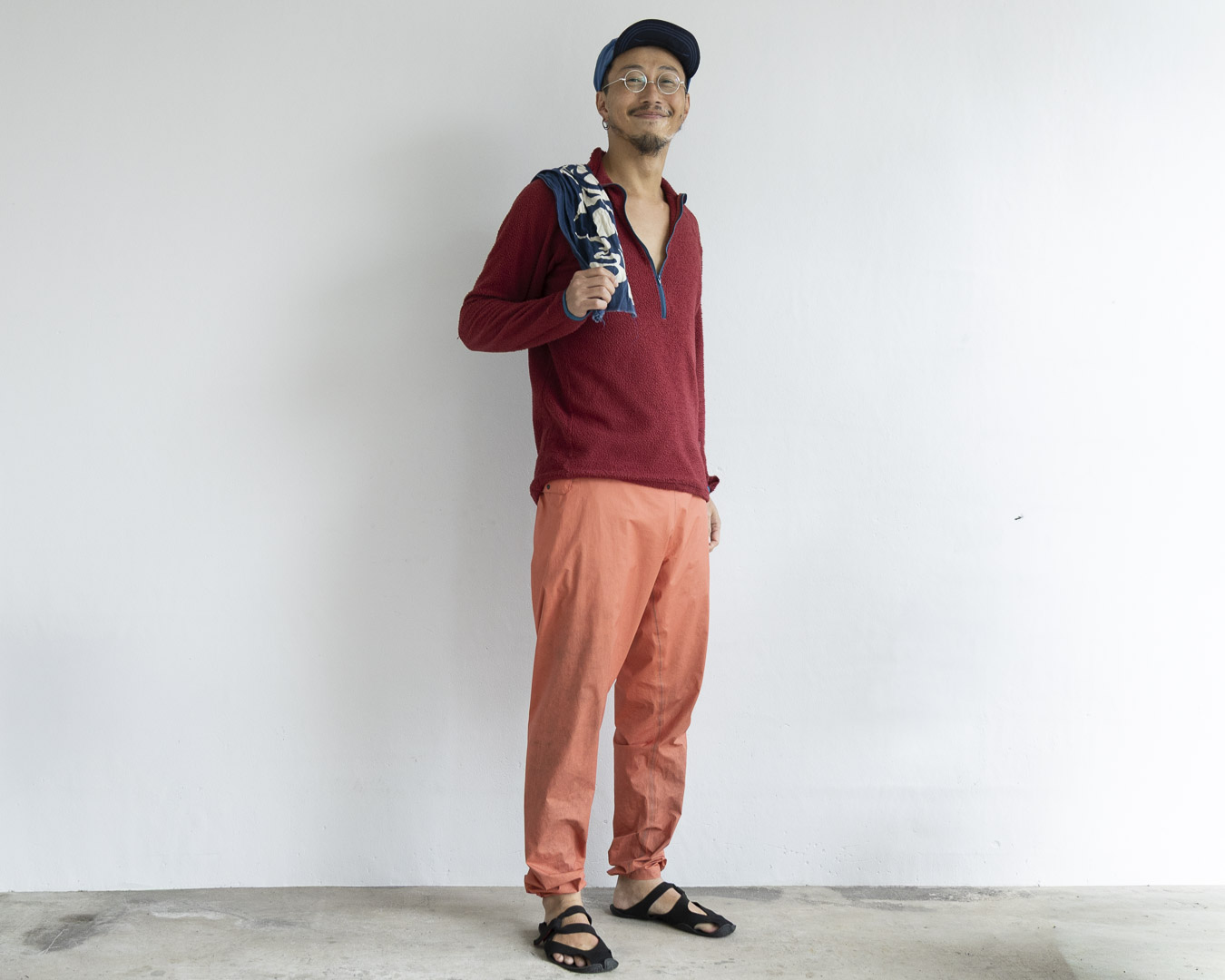
下山後の温泉を出たおーじはこんなスタイル。でも安心してください。写真ではパンツ穿いてますよ。
Yuko I usually bring spare underwear and socks, but not a complete change of clothes. Sometimes I’ll add a short-sleeve or sleeveless shirt.
One thing I always struggle with is deciding whether to wear my warmer layers during the day or save them for camp.
Say it’s raining all day, and I’m getting cold. I could put an Active Pullover under my UL All-weather Jacket, or wear my Light Alpha Tights, and I’d be much more comfortable.
But then those layers might be wet by the time I get to camp.
Sometimes I think I’d rather put up with being a little cold while hiking so I can change into something warm and dry afterward.
It’s a decision I struggle with on a lot of trips.
Hidenori I was actually surprised how few of you bring spare clothes.
Yuko I usually try to manage with the layers I already have.
ーAnd what if you get so cold that you can’t warm yourself up properly?
Hidenori That’s when having something dry to change into really matters. Once you’re seriously cold, you can’t count on your body heat to dry everything.
Oji Exactly. It’s one thing to be experienced and know how to manage those situations. But if you don’t, I wouldn’t recommend trying to get by without spare clothing.
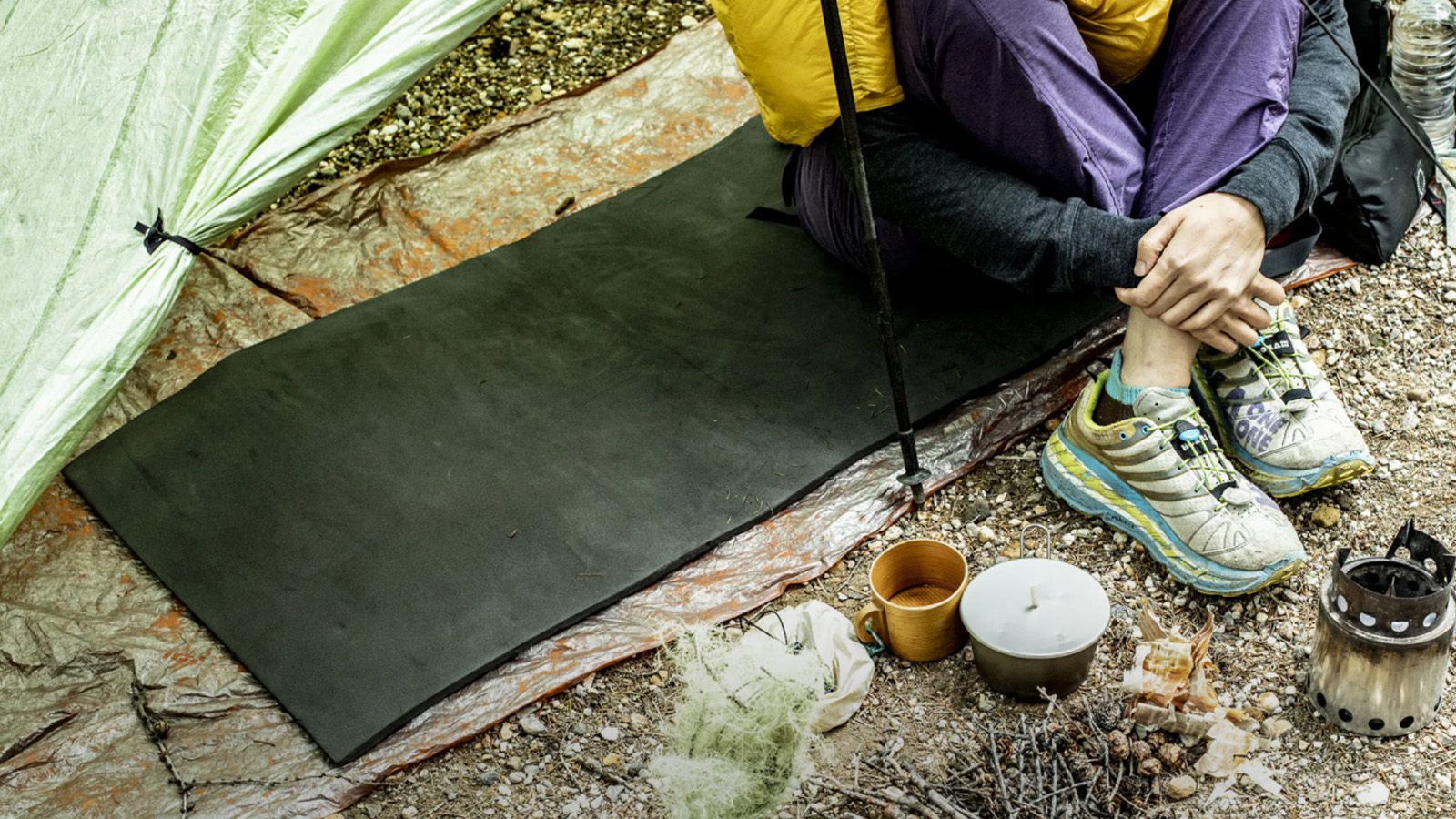
ーIt’s also worth knowing how to use emergency gear, like a survival sheet or Minimalist Pad, to reduce heat loss when conditions get bad.
George I’ve been really cold in the mountains before, but never to the point where I couldn’t keep moving. That’s a situation I definitely don’t want to experience for real.
I think it would be interesting to learn more about those limits in a controlled, safe environment.
When do you need more insulation?
ーWe’ve talked a lot about staying cool while hiking, but when do you start reaching for warmer layers like the Light Alpha Vest/Jacket?
Hidenori I use it quite a lot for hikes around Okutama in late October or November.
It can be pretty cold, but once I start walking, I warm up quickly. I like that I can use it as either a jacket or a vest, depending on how hot I get.
I usually pair it with a long-sleeve 100% Light Merino layer or the 100% Merino Pullover.
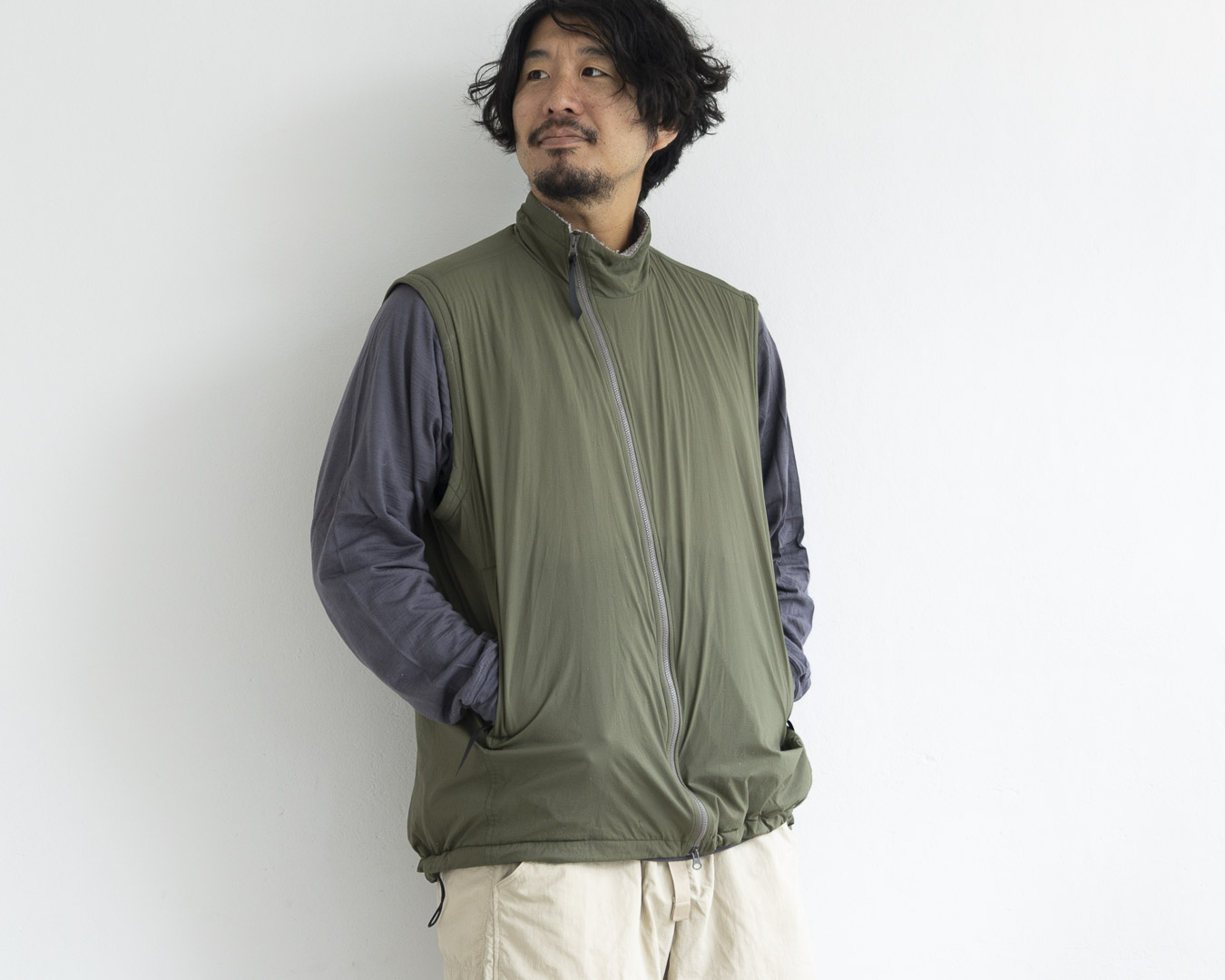
Mid Layer: Light Alpha Vest/Jacket
Base Layer: 100% Merino Pullover
Yuko For me, it’s usually November or later. If I’m hiking in the low mountains, sometimes not until December.
Hidenori But I think that’s partly because we all tend to hike pretty hard.
Sometimes I’ll tell a customer, “You might find this too warm,” and they’ll say it’s completely comfortable for them.
Someone hiking at a slower pace might find the Light Alpha Vest/Jacket useful as early as September. It really depends on how much heat you’re generating.
Oji I wore it in the Southern Alps around mid-October, just before the snow started.
We were walking along ridgelines at around 3,000 m, and it was just right.
Hidenori It gets surprisingly cold up there that time of year, especially with the wind.
Oji Exactly. It blocked enough wind while still giving me some warmth and breathability. I could keep wearing it comfortably without constantly having to adjust my layers.
I think it’s a really good option for the high mountains before winter sets in.
ーAnd what about something warmer, like a down jacket?
Oji For trips in September and October, I often don’t bring down anymore. Since we started using the Active Pullover, I’ve found it can cover a lot of those situations.
Around 0°C, though, I’d reconsider.
Yuko I like that I can use the Active Pullover while hiking too. With down, I’m usually more hesitant to wear it while moving.
If the conditions are right, I’d rather bring something I can use both on the trail and at camp.
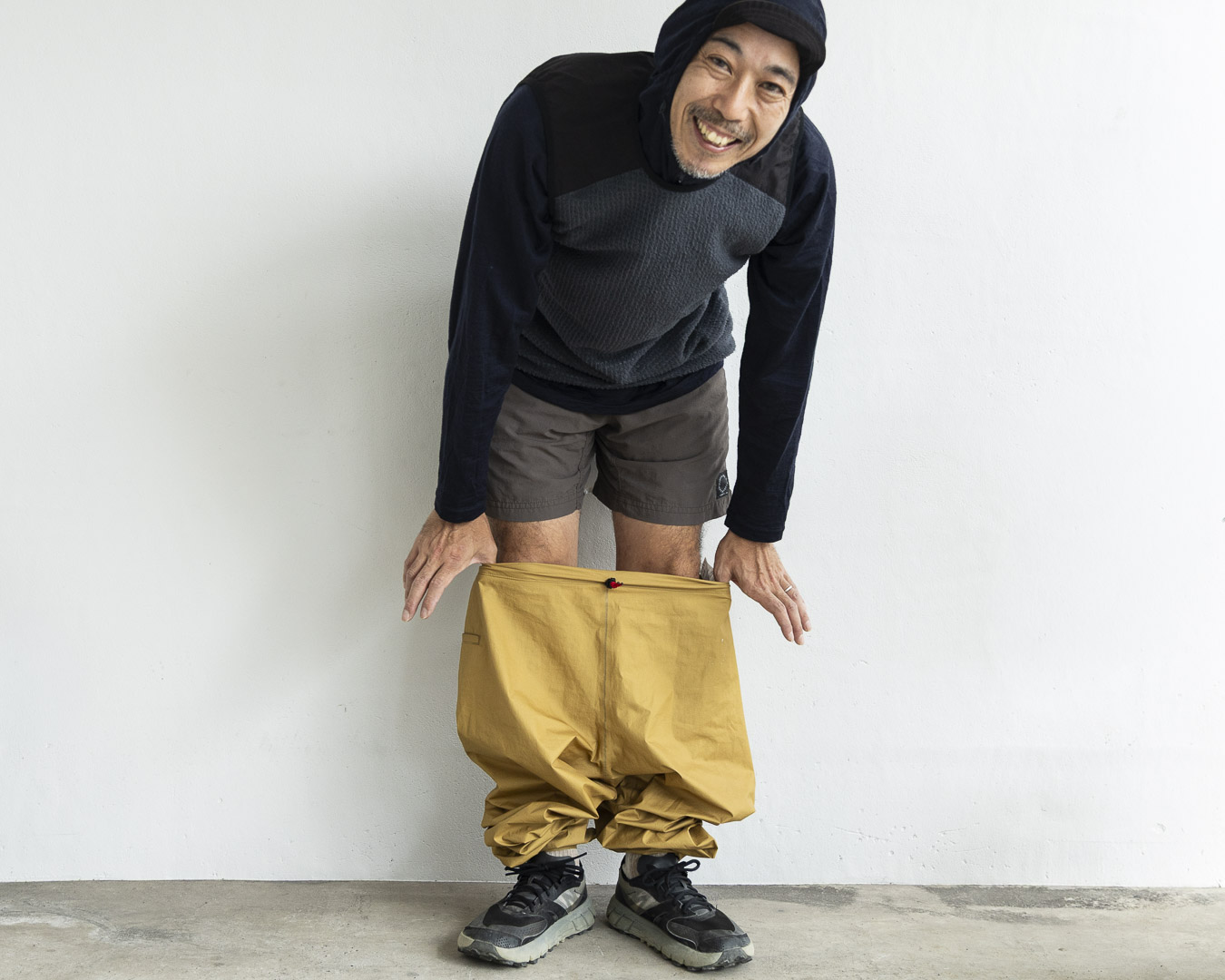
Bottoms: 5-Pocket Shorts
Bottoms: UL All-weather Pants
When do you choose 100% Merino?
ーWe’ve talked a lot about Chemical B and lightweight insulation, but when do you choose something like 100% Merino?
Hidenori I like it for day hikes or when I’m walking at a more relaxed pace with family or friends.
Sometimes I’ll wear a Chemical B Pocket T-shirt underneath a 100% Merino Pullover. The Chemical B handles the sweat against my skin, while the merino layer helps manage the moisture.
It’s also nice because I can get on a train or spend time in town afterward without feeling like I need to change.
If I’m hiking really hard, the Merino Pullover can get too warm for me at this time of year. But for a slower hike, especially when I’m planning to enjoy the town afterward, it works really well.
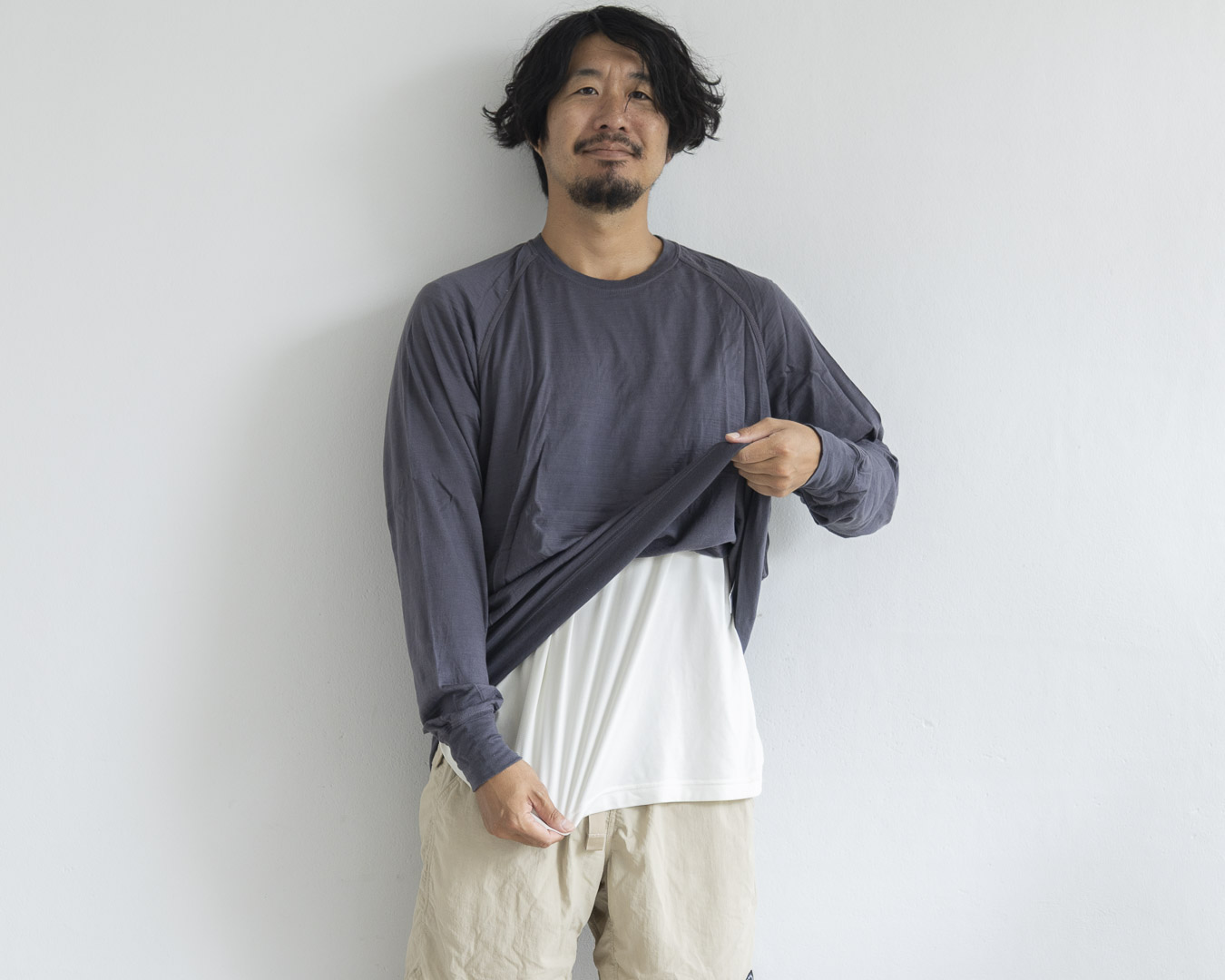
Base Layer: Chemical B Pocket T-shirt
Mid Layer: 100% Merino Pullover
メリノの下にChemical Bを重ねるのも相性が良い。
Yuko I wore the 100% Merino Zip Hoody a lot on the Michinoku Coastal Trail.
Along the coast, the temperature can change quite a bit, so I liked being able to open the front completely when I got warm.
I also really like being able to wear the same thing on the trail and in town.
The Merino Shirt is another favorite. I don’t have to worry much about odor, so for a day hike in the low mountains, I can just wear it home afterward.
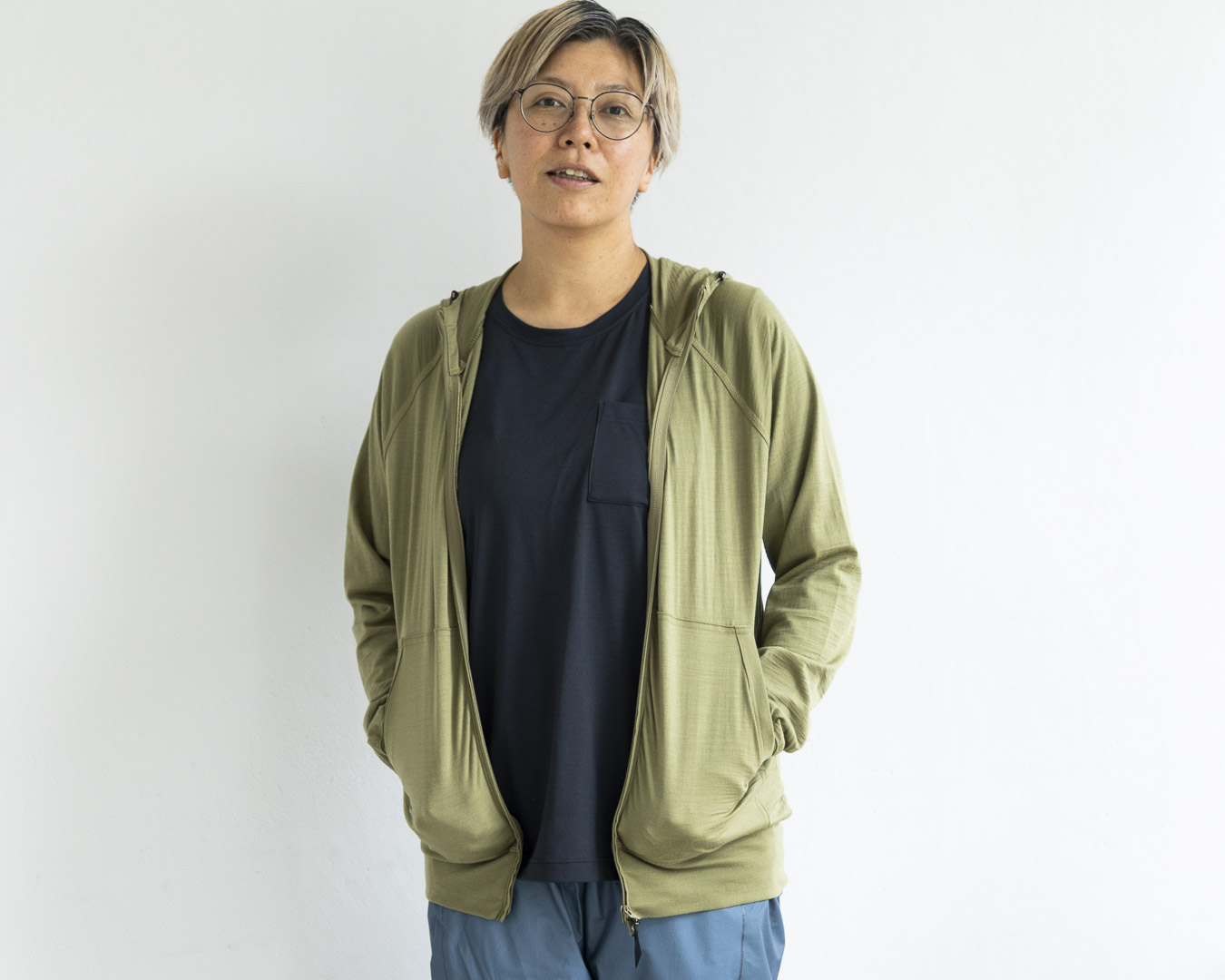
Mid Layer: 100% Merino Zip Hoody
Base Layer: Chemical B Pocket T-shirt
Hidenori I like the 100% Merino Half Zip Hoody too.
I don’t really need the zipper to go all the way down, so the half zip works well for me. And I love the kangaroo pocket. I walk with my hands in there all the time. (laughs)
Like the Merino Pullover, it’s something I reach for when I’m taking things a little slower.
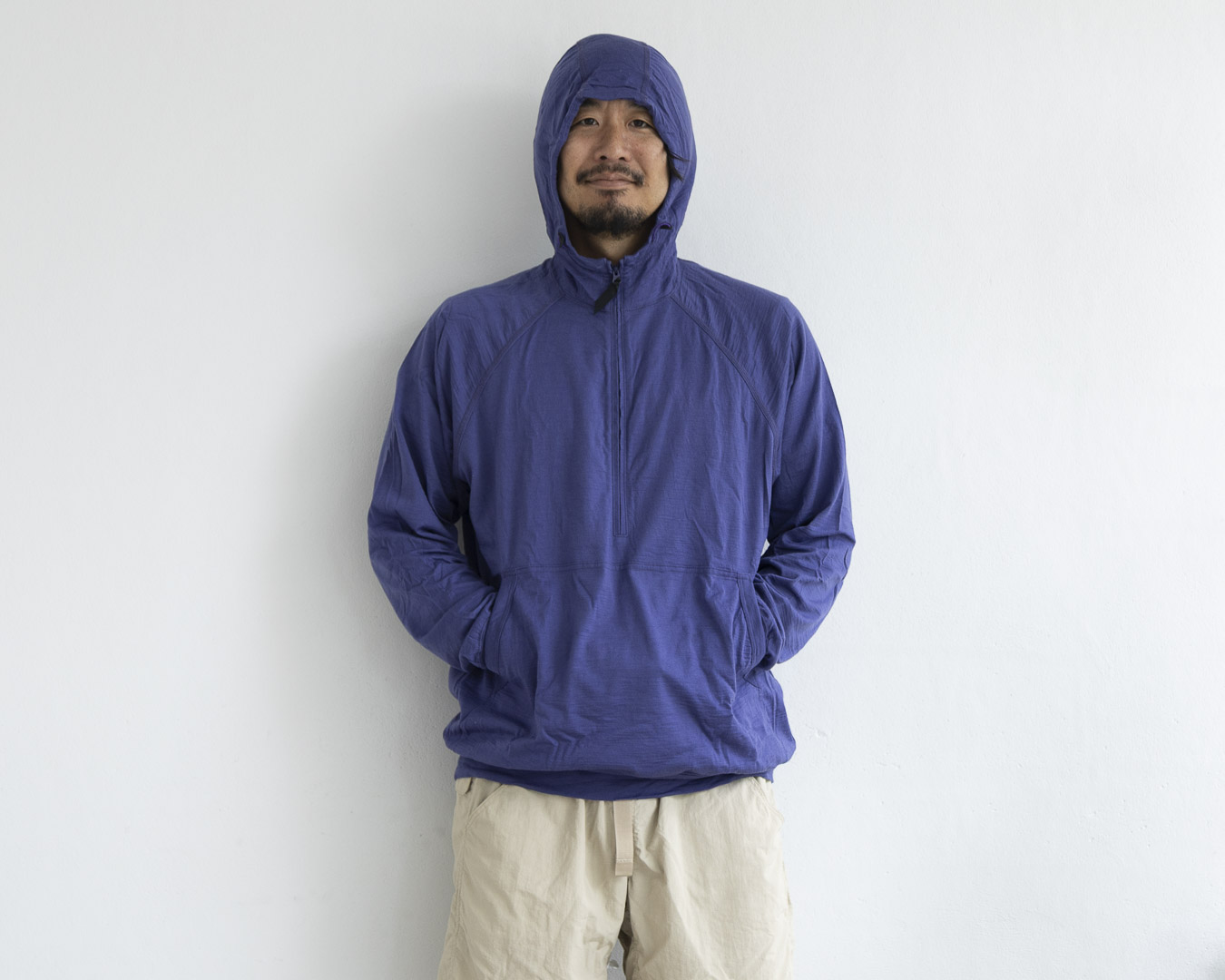
Mid Layer: 100% Merino Half Zip Hoody
中で繋がったカンガルーポケットがお気に入り。
ーWhat I find interesting is that everyone has a different way of layering, but you’re all thinking about what you’ll do when conditions change.
If you’re hiking in shorts and it gets cold, you can put on UL All-weather Pants. If it gets colder still, you have Light Alpha Tights.
It’s not just about what you’re wearing when you start. You’re thinking about what to do next if the weather changes or you can’t keep moving at the same pace.
I think that’s an important way to approach autumn hiking, especially if you’re still figuring out what works for you.
There’s no single right way to layer for autumn hiking. What works depends on how much you sweat, how fast you move, and the conditions you expect to face. We hope these different approaches give you a few ideas for planning your own hikes.
These conversations continue through PRODUCT FOCUS displays and STORE PROGRAMS at Yamatomichi Kamakura. We hope to see you in Kamakura or Kyoto.

Series: PRODUCT FOCUS Roundtable